In Memory Wax a husband's unfaithfulness unleashes the quasi-mythic violence of his wife's bloodiest imaginings. Somewhere between her thoughts and her deeds the reader stands witness to the knowledge that doing justice to one's own experience entails the most grotesque transfigurations. Delta Tells, the eloquent protagonist of Singer's novel, testifies to this belief in a riveting succession of scenes which pit her against the intimidations of an intractable physical the sexual indifference of her husband, the physical jealousies and recalcitrant organs of the women to whom she ministers as midwife, the gravity of her own troubled motherhood, and the authorities who suspect her of committing an unimaginable crime against Nature. Delta's telling of this crime is meant to be the unravelling of anyone who might believe it. And so the husband's desperation to test the truthfulness of his wife's vengeful tale begins to loom as a portentous question about how we gauge the limits of our experience - sexual, intellectual, emotional - or whether any such limits apply.
This second book in a triad beginning with The Charnel Imp did not quite live up to my expectations. In some ways this is a lesser version of that first book. The two books share structural and thematic similarities, but here the settings are less defined and the characters less appealing (a personal view, of course, but one which ultimately kept me from connecting to the text). While Singer's prose retains a degree of the serpentine nature it displayed in The Charnel Imp, I felt it lost its mesmeric effect. The focus is centered even more narrowly in this book on two main characters, one woman and one man, and their complicated, tenuous relationship. Preoccupation with the visceral details of the human body and an accompanying ambiguity around erotic experience is once again on display. As in The Charnel Imp, there is a mysteriousness imbuing the text, though I found it less compelling here, in part because I cared so little for the characters and their individual fates. Finally, the narrative threads of this second novel in the triad are even fainter than in the first, at times resulting in more of a feeling of reading prose poetry than a novel. Despite all of this, though, I look forward to reading the final volume Dirtmouth, for Singer's writing continues to intrigue me.
“Shall I be the regurgitation of the meal you cannot stomach, husband of my life?”
Grueling brilliance.
Alan Singer in the book of gold, Flore Chevaillier’s ‘Divergent Trajectories’
“I am very interested in the limits of the body. In the vulnerability of the body and the ways in which we have reimagined ourselves at these at these limits.”
Re: reading Singer’s writing about the mind/body relationship
“... my syntax, which is typically extended and complicated. I don’t want to give the reader an opportunity to break away from the sensory surface of his or her attentiveness to the world. So there is a kind of physical momentum in the language that makes conceptual abstraction difficult, that makes the impulse to engage in deep character analysis difficult, and brings everything to the surface of the experience of the moment. And to me, experience always begins with the body.”
I will be reading more of his work, very soon. We all need to be reading more of his work. He has a very low number of ratings for all of his books on GR. A great shame as his writing is superb, thick, messy, physical, dense as a jungle which opens up to devastating clearings of pure slash and burn.
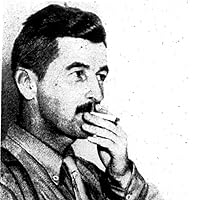
Stunning stunning stunning, my favorite of the triad, so far ;), which should be read in order, so The Charnel Imp, Memory Wax, Dirtmouth. 123. If you can, I rec tracking down his The Ox-Breadth, if you can that is! books just incredible. Oh and line his photo up next to John Hawkes, and it’ll all make perfect sense. Still have Dirtmouth to go, but completion after that.
"The hilly streets lined with modest tin-roofed bungalows sounded under nightly mountain breezes like tedious fingers tapping the drumhead of a rickety tabletop. The lights burning behind waxy casements would blow out like guttering candlesticks when the weather breathed heavier and the night sky pressed upon the valley. But even the valley was high where it lay between upthrust peaks, a tiny gasp sucked back from a precipice. Two roads departed from this rocky cleft and ran as fast as tumbling water to the depths of green countryside below, throwing back reflections of calm, flat vistas to soothe the tottering mountain eye."
With every passage as meticulously crafted as the one above, this work is a real gem, a masterpiece of sorts. It is a difficult and dense work, with deep philosophical intentions, but the effort, the unflinching attention needed to follow, pays off beautifully. Delta Tell feeds her husband Brainard their child in a soup, because she found out he hasn't been being faithful. Without going into too much detail as to where from there this work goes, i'll instead put aim into describing the effect of the language within, because the effect was immense. This is a menacing and sinister work, with crowded prose, precise and measured prose, that one can actually feel the weight of, the pressing down, its heaviness, the way it wraps around mind, body, and applies pressure, suffocates, circles its prey, to prey on prose, a green eyed serpent prose, frightening. With a tension that builds and builds, sustaining, an inescapability, continuing to tighten. Seemingly every passage was written to its fullest potential, possibility, Singer is a real master of language. A disorienting work, but one that holds focus and command. A tightly webbed language, that circles and circles, folding, the feeling of controlling the uncontrollable, of the underside, exposing, and in doing so, slips further and further into complete darkness, stillness, loss, a visceral experience. A perfect example of the "waking nightmare". Comparisons can be rightfully made to Hawkes, even reminded a bit of Blanchot, but don't be mistaken those are just to help triangulate its place in the canon, Singer needn't be held up to others, this work proved he can stand on his own. The highest of recommendations.