

What do you think?

Bernard Samson #1
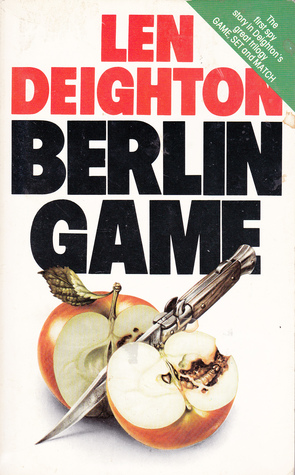
Berlin Game
When a valuable agent behind the Iron Curtain signals he wants out, it's up to Bernard Samson, once active in the field but now anchored to a London desk, to undertake the crucial rescue. But soon, Samson is confronted with evidence that there is a traitor among his colleagues. And to find out who it is, he must sift through layers of lies and follow a web of treachery from London to Berlin until hero and traitor collide."Each scene in this story is so adroitly realized that it creates its own suspense.".
352 pages, Paperback
First published January 1, 1983
About the author
Len Deighton
229 books1,008 followersDeighton was born in Marylebone, London, in 1929. His father was a chauffeur and mechanic, and his mother was a part-time cook. After leaving school, Deighton worked as a railway clerk before performing his National Service, which he spent as a photographer for the Royal Air Force's Special Investigation Branch. After discharge from the RAF, he studied at St Martin's School of Art in London in 1949, and in 1952 won a scholarship to the Royal College of Art, graduating in 1955.
Deighton worked as an airline steward with BOAC. Before he began his writing career he worked as an illustrator in New York and, in 1960, as an art director in a London advertising agency. He is credited with creating the first British cover for Jack Kerouac's On the Road. He has since used his drawing skills to illustrate a number of his own military history books.
Following the success of his first novels, Deighton became The Observer's cookery writer and produced illustrated cookbooks. In September 1967 he wrote an article in the Sunday Times Magazine about Operation Snowdrop - an SAS attack on Benghazi during World War II. The following year David Stirling would be awarded substantial damages in libel from the article.
He also wrote travel guides and became travel editor of Playboy, before becoming a film producer. After producing a film adaption of his 1968 novel Only When I Larf, Deighton and photographer Brian Duffy bought the film rights to Joan Littlewood and Theatre Workshop's stage musical Oh, What a Lovely War! He had his name removed from the credits of the film, however, which was a move that he later described as "stupid and infantile." That was his last involvement with the cinema.
Deighton left England in 1969. He briefly resided in Blackrock, County Louth in Ireland. He did not return to England apart from some personal visits and very few media appearances, his last one since 1985 being a 2006 interview which formed part of a "Len Deighton Night" on BBC Four. He and his wife Ysabele divided their time between homes in Portugal and Guernsey.
Deighton worked as an airline steward with BOAC. Before he began his writing career he worked as an illustrator in New York and, in 1960, as an art director in a London advertising agency. He is credited with creating the first British cover for Jack Kerouac's On the Road. He has since used his drawing skills to illustrate a number of his own military history books.
Following the success of his first novels, Deighton became The Observer's cookery writer and produced illustrated cookbooks. In September 1967 he wrote an article in the Sunday Times Magazine about Operation Snowdrop - an SAS attack on Benghazi during World War II. The following year David Stirling would be awarded substantial damages in libel from the article.
He also wrote travel guides and became travel editor of Playboy, before becoming a film producer. After producing a film adaption of his 1968 novel Only When I Larf, Deighton and photographer Brian Duffy bought the film rights to Joan Littlewood and Theatre Workshop's stage musical Oh, What a Lovely War! He had his name removed from the credits of the film, however, which was a move that he later described as "stupid and infantile." That was his last involvement with the cinema.
Deighton left England in 1969. He briefly resided in Blackrock, County Louth in Ireland. He did not return to England apart from some personal visits and very few media appearances, his last one since 1985 being a 2006 interview which formed part of a "Len Deighton Night" on BBC Four. He and his wife Ysabele divided their time between homes in Portugal and Guernsey.
Ratings & Reviews
Friends & Following
Create a free account to discover what your friends think of this book!
Community Reviews
Displaying 1 - 30 of 730 reviews

January 7, 2018
‘Love is whatever you can still betray. Betrayal can only happen if you love.’
These insightful words by John le Carré could serve as an introduction to one of the great espionage classics, the first book in the incomparable (Berlin) Game/ (Mexico) Set/ (London) Match trilogy.
The second epochal master of the spy story, Len Deighton, turned a critical page when this was published - for, on the same road that le Carré had travelled long before, he quite dramatically began to Humanize his secret agents.
And, at the end of this book, when the first shocking skeleton in the polished British closet is exposed, poor middle-aged Bernard Samson will have to do some pretty heavy-duty personal damage control to survive the round.
For Samson is now neither invisible or safe - even in his own home or workplace. And as Michel Foucault forecasted in the seventies, these days none of us has secrets.
Or, in the words of Gilles Vigneault:
Maintenant que tu connais mes rêves
Maintenant que tu connais mes peurs
Maintenant que tu me sais par cœur
Je ne sais pas quel vent se lève...
But even now, betrayal is no joke.
There’s lightness in this trilogy, though, for throughout there is a new human warmth in Deighton’s books.
It is the last decade of the Cold War. Things are heating up in Whitehall as the iron tenacity of the Soviets appears to weakening.
So there’s a new feeling of hope and enthusiasm on the bench of the Good Guys. And it’s going to be a rousing Home Game - but in more ways than one.
Some folks will lose - big time.
But you feel like slapping jolly old Uncle Silas on the back in camaraderie as he pours you a drink.
You feel like throttling that unbearable corporate yes-man Dicky Cruyer, Bernard’s jabbering and cocky old-school-tie boss.
And Fiona, with her winsome ways and glittering intelligence - how can we not love her as her faithful hubby Bernard does?
But Cave Cano.
All is not what it seems. And all our friendships and free and easy camaraderie will one day come to an abrupt end.
We will all have to pay the piper.
But when those first difficulties arise in his life, stout Bernard plods on, indefatigable.
As he will plod on in the same staid middle-aged way throughout the novel - just like a good, dutiful old cop in a Wambaugh thriller - or even like dour old Oedipus, slowly and ominously fitting in the last grim pieces of an ominous jigsaw puzzle!
Until all the chickens come home to roost, for better or for WORSE...
The Riddle of the Sphinx leads only to final self-discovery amid the ashes of our dreams.
A dynamite book with a knockout punch at the end - and there are more K.O.’s in the remaining two books of this trilogy!
Four big stars.
These insightful words by John le Carré could serve as an introduction to one of the great espionage classics, the first book in the incomparable (Berlin) Game/ (Mexico) Set/ (London) Match trilogy.
The second epochal master of the spy story, Len Deighton, turned a critical page when this was published - for, on the same road that le Carré had travelled long before, he quite dramatically began to Humanize his secret agents.
And, at the end of this book, when the first shocking skeleton in the polished British closet is exposed, poor middle-aged Bernard Samson will have to do some pretty heavy-duty personal damage control to survive the round.
For Samson is now neither invisible or safe - even in his own home or workplace. And as Michel Foucault forecasted in the seventies, these days none of us has secrets.
Or, in the words of Gilles Vigneault:
Maintenant que tu connais mes rêves
Maintenant que tu connais mes peurs
Maintenant que tu me sais par cœur
Je ne sais pas quel vent se lève...
But even now, betrayal is no joke.
There’s lightness in this trilogy, though, for throughout there is a new human warmth in Deighton’s books.
It is the last decade of the Cold War. Things are heating up in Whitehall as the iron tenacity of the Soviets appears to weakening.
So there’s a new feeling of hope and enthusiasm on the bench of the Good Guys. And it’s going to be a rousing Home Game - but in more ways than one.
Some folks will lose - big time.
But you feel like slapping jolly old Uncle Silas on the back in camaraderie as he pours you a drink.
You feel like throttling that unbearable corporate yes-man Dicky Cruyer, Bernard’s jabbering and cocky old-school-tie boss.
And Fiona, with her winsome ways and glittering intelligence - how can we not love her as her faithful hubby Bernard does?
But Cave Cano.
All is not what it seems. And all our friendships and free and easy camaraderie will one day come to an abrupt end.
We will all have to pay the piper.
But when those first difficulties arise in his life, stout Bernard plods on, indefatigable.
As he will plod on in the same staid middle-aged way throughout the novel - just like a good, dutiful old cop in a Wambaugh thriller - or even like dour old Oedipus, slowly and ominously fitting in the last grim pieces of an ominous jigsaw puzzle!
Until all the chickens come home to roost, for better or for WORSE...
The Riddle of the Sphinx leads only to final self-discovery amid the ashes of our dreams.
A dynamite book with a knockout punch at the end - and there are more K.O.’s in the remaining two books of this trilogy!
Four big stars.

August 4, 2022
Bernie Samson has long left the field and works at a desk in London, but when a valuable agent wants to get out of the East Berlin, it is Bernie that is given the job of rescuing him. The task is made much more complicated when Bernie realizes that there is a traitor among his colleagues. I really enjoyed the last third of this after having persevered through one of the slowest starts to a spy novel that I have come across. There is little action, but the core of the story is worth the pain suffered getting to it. Worth the trouble!

November 3, 2010
Deighton is considered one of the triumvirate of great British espionage novelists, along with Ian Fleming and John le Carré and, like le Carre, someone who portrayed spycraft and the Cold War in realistic detail. While I was familiar with the adaptations of his books - the Harry Palmer films, beginning with The Ipcress File and starring Michael Caine, and several TV miniseries in the 80s - I’d never read him. The screen versions may be partly to blame; I came to reading espionage and thrillers quite late and perhaps the dour, slow, subdued 70s movies and 80s TV left a lasting impression that these weren’t going to be my kind of books.
This first novel in the Game, Set and Match trilogy - and, indeed, in the further trilogies Hook, Line & Sinker and Faith, Hope and Charity (I think the titling structure may have put me off a well) - features Bernard Samson, a middle aged MI6 agent. He considers his field days behind him and, while an expert on Berlin (he grew up there as his father was a highly placed officer there after WWII), he feels he has settled in the middle level, held back by his lack of a university education, while those around him are all Oxbridge types (and one upper-class American), with high-powered connections. However, when it comes to light that their best information source in East Berlin may have been compromised, Samson is the only choice to go into the divided city - and, despite his protestations to the contrary - is happy to do so due to his protectiveness toward the network he helped set up and his love of the city in which he had so many formative experiences.
In many ways, my expectations were correct. This is not an action thriller. It is a slow, subdued book full of dialogue rather than gunfights and car chases. The only shooting occurs off-stage as though this is Greek tragedy. At times Samson is reminiscent of Chandler’s Philip Marlowe; tinged with weary cynicism hiding his moral core, occasional biting wit and a willingness to follow the evidence wherever it leads. Deighton uses the dialogue superbly to build scenes and relationships as well as plot, using the conversations to show us and never as info dump or exposition.
Being closer to le Carre than Fleming, it would be easy for Deighton to suffer by comparison; while many of the characters are well-drawn, some are flat (particularly the few women, with the exception of Lisl, Bernard’s old landlady in Berlin). He plots well and there are moments of exquisite tension - indeed, the writing is generally very good. It may have helped that I grew up in this period so it was familiar to me, but I was completely transported back there - without anything being too painfully early 80s, with the exception one character dressing in white jeans and a gold medallion.
Definitely in the same league as le Carre, even if he isn’t a Glasgow club.
This first novel in the Game, Set and Match trilogy - and, indeed, in the further trilogies Hook, Line & Sinker and Faith, Hope and Charity (I think the titling structure may have put me off a well) - features Bernard Samson, a middle aged MI6 agent. He considers his field days behind him and, while an expert on Berlin (he grew up there as his father was a highly placed officer there after WWII), he feels he has settled in the middle level, held back by his lack of a university education, while those around him are all Oxbridge types (and one upper-class American), with high-powered connections. However, when it comes to light that their best information source in East Berlin may have been compromised, Samson is the only choice to go into the divided city - and, despite his protestations to the contrary - is happy to do so due to his protectiveness toward the network he helped set up and his love of the city in which he had so many formative experiences.
In many ways, my expectations were correct. This is not an action thriller. It is a slow, subdued book full of dialogue rather than gunfights and car chases. The only shooting occurs off-stage as though this is Greek tragedy. At times Samson is reminiscent of Chandler’s Philip Marlowe; tinged with weary cynicism hiding his moral core, occasional biting wit and a willingness to follow the evidence wherever it leads. Deighton uses the dialogue superbly to build scenes and relationships as well as plot, using the conversations to show us and never as info dump or exposition.
Being closer to le Carre than Fleming, it would be easy for Deighton to suffer by comparison; while many of the characters are well-drawn, some are flat (particularly the few women, with the exception of Lisl, Bernard’s old landlady in Berlin). He plots well and there are moments of exquisite tension - indeed, the writing is generally very good. It may have helped that I grew up in this period so it was familiar to me, but I was completely transported back there - without anything being too painfully early 80s, with the exception one character dressing in white jeans and a gold medallion.
Definitely in the same league as le Carre, even if he isn’t a Glasgow club.

May 16, 2023
This is a very unusual choice for me, as espionage and spy books have never been my favourite genre. For Christmas I gave my Mum, books 1-3 of this series and my Dad books 4-6 ( such originality!!!). So ever since in my household, the daily discussions about ‘Bernie’ Samson and what he was up to was starting to make me feel like my parents were discussing a distant relative that I had yet to met and I admit I was intrigued and wanted to become introduced to him for myself!
Bernie is an ‘old school’ agent in the Cold War era that is instructed with saving an asset in east Germany that only he knows the true identity of. He reminded me of a type of maverick cowboy that one loves in a western! There are so many twists and turns and traitors that reveal themselves and It is beautifully woven together with really first class writing. I think I enjoyed it so much because the characters were so original and I learnt a lot about that era in East and West Germany. It’s perhaps not a book that will interest my GR friends right now but I’m well and truly hooked to this series and at least I can now join in with the daily family discussions on the series !!!
Bernie is an ‘old school’ agent in the Cold War era that is instructed with saving an asset in east Germany that only he knows the true identity of. He reminded me of a type of maverick cowboy that one loves in a western! There are so many twists and turns and traitors that reveal themselves and It is beautifully woven together with really first class writing. I think I enjoyed it so much because the characters were so original and I learnt a lot about that era in East and West Germany. It’s perhaps not a book that will interest my GR friends right now but I’m well and truly hooked to this series and at least I can now join in with the daily family discussions on the series !!!

May 29, 2024
My expectations for this one were probably too high -- If I'd gone into it blind, I might have awarded it four stars for a more-interesting-than-average plot. But this book has been praised to the heavens and I was expecting more.
Berlin Game? Well, lots of games, certainly. Deighton chose to focus on the difficulty of getting anything done when all the players are essentially independent operators, pursuing their own goals, rather than a well-oiled team. This is especially difficult in a profession where silence and/or misdirection are highly prized. Berlin? Not so much. The first 3/4 of the book take place nearly entirely in a claustrophobic-feeling London, where the characters attend pointless meetings, lifeless parties and sordid hotel rooms. Sex, booze and tobacco are used to deaden feelings rather than arouse them. This was not exactly an advertisement for a career in the covert world.
The problem driving the book was fairly simple: A spy in East Germany had been providing great intelligence for years, but felt the walls closing in on them and wanted to defect to the West. The West, of course, wanted to leave them in place as long as possible, due to the quality of the information coming across. This basic conflict led to a number of subplots that were satisfactorily tied up at the end. But the players were not engaging, and I couldn't really care too much.
As this is one of the better entrants in Len Deighton's catalog, I'll probably pass on further reading.
Berlin Game? Well, lots of games, certainly. Deighton chose to focus on the difficulty of getting anything done when all the players are essentially independent operators, pursuing their own goals, rather than a well-oiled team. This is especially difficult in a profession where silence and/or misdirection are highly prized. Berlin? Not so much. The first 3/4 of the book take place nearly entirely in a claustrophobic-feeling London, where the characters attend pointless meetings, lifeless parties and sordid hotel rooms. Sex, booze and tobacco are used to deaden feelings rather than arouse them. This was not exactly an advertisement for a career in the covert world.
The problem driving the book was fairly simple: A spy in East Germany had been providing great intelligence for years, but felt the walls closing in on them and wanted to defect to the West. The West, of course, wanted to leave them in place as long as possible, due to the quality of the information coming across. This basic conflict led to a number of subplots that were satisfactorily tied up at the end. But the players were not engaging, and I couldn't really care too much.
As this is one of the better entrants in Len Deighton's catalog, I'll probably pass on further reading.

March 11, 2026
Berlin Game is a slow-burn spy thriller, rich with subtle British intrigue, power games, paranoia, treachery and betrayals. Deighton explores the murky space between loyalty and treason with great skill. Bernard Samson is a compelling lead - sharp, grounded, and just enough of an outsider to make his way through a world of stuffy elites, quiet deceit and institutional rot.

December 4, 2022
3.0 Stars — A tense, atmospherically-complex novel that is told from behind the Iron curtain. Lies and subterfuge are — quite tightly — at the centre of this spy thriller. London agent Samson is an alcoholic, an intellectual and a deeply flawed protagonist that you truly do come to root for.
This one didn’t exactly kept me guessing, in-so-much as it’s not on overly complicated or ambiguous puzzler. However it is definitely not a slap-in-the-face good lord how obvious type of jive either. Len Dighton writes extremely well. There is an urgency to almost every page & it is a style all his own. The layers and layers of lies and manipulation are solidly entwined, and speak to more recent times as well as they do in the times of the novel.
Not one I think I’d continue with — but not be used it’s not good, more because there’s just so many incredible books to get to. But I’m glad I ventured!
This one didn’t exactly kept me guessing, in-so-much as it’s not on overly complicated or ambiguous puzzler. However it is definitely not a slap-in-the-face good lord how obvious type of jive either. Len Dighton writes extremely well. There is an urgency to almost every page & it is a style all his own. The layers and layers of lies and manipulation are solidly entwined, and speak to more recent times as well as they do in the times of the novel.
Not one I think I’d continue with — but not be used it’s not good, more because there’s just so many incredible books to get to. But I’m glad I ventured!

May 13, 2017
 Lech Walesa
ETERNAL PARANOIA IS THE PRICE OF LIBERTY
Description: When a valuable agent behind the Iron Curtain signals he wants out, it's up to Bernard Samson, once active in the field but now anchored to a London desk, to undertake the crucial rescue. But soon, Samson is confronted with evidence that there is a traitor among his colleagues. And to find out who it is, he must sift through layers of lies and follow a web of treachery from London to Berlin until hero and traitor collide.
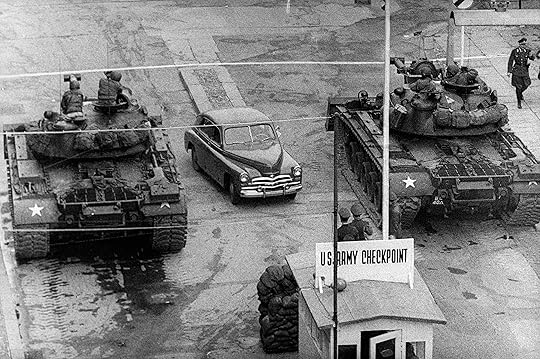
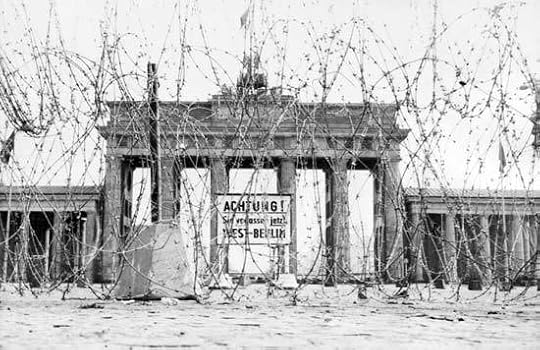
Opening: 'How long have we been sitting here?' I said. I picked up the field glasses and studied the bored young American soldier in his glass-sided box.
'Nearly a quarter of a century,' said Werner Volkmann. His arms were resting on the steering wheel and his head was slumped on them. 'That GI wasn't even born when we first sat here waiting for the dogs to bark.'
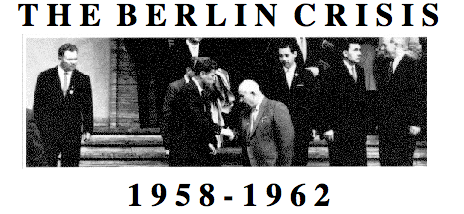

And when you have finished the read, it is well worth visiting the old TV production just for the the contemporary scenes of the wall being built. It stars Ian Holm as the protagonist - it seems Bilbo has been adventuring forever:

CR Berlin Game
TR Mexico Set
TR London Match
4* Winter
3* Ipcress File
3* SS-GB
3* XPD

October 11, 2019
I was under-whelmed when I read my first Len Deighton, “The Ipcress File,” but, after having heard the name, Bernie Samson, a few times, and with a nudge from my Goodreads group, I decided to give him another try and I am pleased that I did.
Published in 1983, “Berlin Game,” is the first novel in the Bernie Samson series. One of the notable aspects of Ipcress, was the fact that the unnamed narrator (obviously, renamed, Harry Palmer in the film version) is an outsider and class is mentioned often. This is mirrored here, with Bernie, although not an outsider of the series (his father was worked there and, rather like River Cartwright in the Jackson Lamb novels, Bernie has grown up with the stories, and the myths – as well as growing up in Berlin). However, Bernie’s wife, Fiona, not only works alongside him, but is from a richer background. There are comments about Bernie’s lack of an Oxbridge education and, throughout the novel, his attempts to get a larger car never seem to quite come off…
An East German agent, code-named, ‘Brahms Four,’ wants to come to the West. Having once saved Bernie’s life, he is to be sent to fetch him. However, what this book is really about is betrayal – not only of the kind that spies indulge in – but the personal kind. I am so pleased that I have discovered Bernie and look forward to reading on.
Published in 1983, “Berlin Game,” is the first novel in the Bernie Samson series. One of the notable aspects of Ipcress, was the fact that the unnamed narrator (obviously, renamed, Harry Palmer in the film version) is an outsider and class is mentioned often. This is mirrored here, with Bernie, although not an outsider of the series (his father was worked there and, rather like River Cartwright in the Jackson Lamb novels, Bernie has grown up with the stories, and the myths – as well as growing up in Berlin). However, Bernie’s wife, Fiona, not only works alongside him, but is from a richer background. There are comments about Bernie’s lack of an Oxbridge education and, throughout the novel, his attempts to get a larger car never seem to quite come off…
An East German agent, code-named, ‘Brahms Four,’ wants to come to the West. Having once saved Bernie’s life, he is to be sent to fetch him. However, what this book is really about is betrayal – not only of the kind that spies indulge in – but the personal kind. I am so pleased that I have discovered Bernie and look forward to reading on.

May 24, 2018
***2018 Summer of Spies***
Whether you’re reading the rather fanciful spy fiction of Ian Fleming or the gritty tales of John Le Carré, there seems to be liquor involved and in rather high quantities. Make Len Deighton’s protagonist, Bernard Samson, another of the spies who is a fan of copious amounts of liquor. I was right on track when I laid in a good supply of gin when starting my Summer of Spies.
Other than the liquor, Deighton’s work leans more toward the grittier realism of Le Carré. I’d never read either one of those authors before this summer and I’m impressed. Berlin Game is set in the same time period as The Spy Who Came In from the Cold and is also concerned with Cold War politics and the Berlin Wall. There’s a traitor in London somewhere and it is up to Samson to suss them out.
It’s not too long, not overly predictable and decently written. I don’t think I’m a big enough fan of the genre to continue on with the series, but I’m glad to know a little bit about Deighton now.
Whether you’re reading the rather fanciful spy fiction of Ian Fleming or the gritty tales of John Le Carré, there seems to be liquor involved and in rather high quantities. Make Len Deighton’s protagonist, Bernard Samson, another of the spies who is a fan of copious amounts of liquor. I was right on track when I laid in a good supply of gin when starting my Summer of Spies.
Other than the liquor, Deighton’s work leans more toward the grittier realism of Le Carré. I’d never read either one of those authors before this summer and I’m impressed. Berlin Game is set in the same time period as The Spy Who Came In from the Cold and is also concerned with Cold War politics and the Berlin Wall. There’s a traitor in London somewhere and it is up to Samson to suss them out.
It’s not too long, not overly predictable and decently written. I don’t think I’m a big enough fan of the genre to continue on with the series, but I’m glad to know a little bit about Deighton now.

January 28, 2020
I was given this book for its Berlin pre-Wall-fall atmospherics, and it completely lives up to my hopes. Anyone who knows Berlin or wants to read about it will enjoy the settings of this book.
The plot was, variously convoluted, thin, and way too heavy with insider espionage jargon. Worse, the tech (printers with punch holes) doesn't date well, and the revelation of the antagonist feels very 1980s.
Cold-war espionage fans may like Berlin Game; readers expecting more action may not.
Again, though, superb Berlin settings & atmospherics.
The plot was, variously convoluted, thin, and way too heavy with insider espionage jargon. Worse, the tech (printers with punch holes) doesn't date well, and the revelation of the antagonist feels very 1980s.
Cold-war espionage fans may like Berlin Game; readers expecting more action may not.
Again, though, superb Berlin settings & atmospherics.
July 17, 2022
Ich bin ein Berliner
Review of the Penguin Modern Classics paperback (May 2021) of the Hutchinson hardcover original (November 1983)
Berlin Game is the beginning of Len Deighton's massive 10-book Bernard Samson series of novels (1983-1996) which consisted of 1 prequel and 3 trilogies (Game Set & Match, Hook Line & Sinker, Faith Hope & Charity).
I remember when I first read Berlin Game that it seemed inspired by John le Carré's Tinker, Tailor, Soldier, Spy (1974) with their common subplots of a search for a Soviet mole in the upper echelon of Britain's Secret Intelligence Service along with the lead protagonist's suspicions of his wife's infidelities. Le Carré's book remains as my top favourite novel of the Cold War spy genre, but Berlin Game is definitely a close second. Deighton's end reveal twist actually tops Le Carré's due to its diabolical nature which leads you to rethink the entire book after the fact, and to consider what clues you might have missed.
The premise is simple enough, the British SIS has a 'Brahms' network in East Germany with a lead undercover agent codenamed 'Brahms Four' who has been passing them economic intelligence for decades. The 'Brahms Four' identity and material is a closely guarded secret known to few members of the SIS, but it is evident that there are leaks getting out which are leading the East Germans and their Russian KGB masters to start zeroing in on the network. 'Brahms Four' is seeking to defect, and as an enticement they may hold a clue to the identity of a highly placed Soviet agent. Desk man Bernard Samson is called back into the field as he is the only person that 'Brahms Four' will trust to ensure their safe passage to the West.
I very much enjoyed this re-read and it confirmed my memory of its highly placed status in Deighton's novels. Its plot of deceptions, betrayals and intrigues is much easier to follow than those of Deighton's earlier unnamed spy series, aka the 'Harry Palmer' and 'Patrick Armstrong' books, where you often didn't understand what was going on until it was explained in the final chapter. Bernard Samson's sardonic and cynical quips with his SIS superiors and his fellow spies are just as enjoyable as those of 'Harry Palmer'.
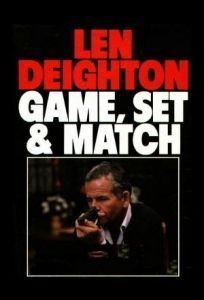
Cover image of the Game, Set and Match DVD boxset. Image sourced from Found That Film.
Berlin Game is the 8th of my re-reads of the Len Deighton novels (I first read almost all of them in the 60's/70's/80's) after having learned of the Penguin Modern Classics republications which were published during 2021 as outlined in the article Why Len Deighton's spy stories are set to thrill a new generation (Guardian/Observer May 2, 2021).
Trivia and Links
Berlin Game was adapted as part of the 13-part TV-series Game, Set and Match (1988) starring Ian Holm as Bernard Samson. Berlin Game is Episodes 1 to 5 of the series. The entire 13-part series can be viewed on a YouTube playlist which begins here.
Review of the Penguin Modern Classics paperback (May 2021) of the Hutchinson hardcover original (November 1983)
Berlin Game is the beginning of Len Deighton's massive 10-book Bernard Samson series of novels (1983-1996) which consisted of 1 prequel and 3 trilogies (Game Set & Match, Hook Line & Sinker, Faith Hope & Charity).
I remember when I first read Berlin Game that it seemed inspired by John le Carré's Tinker, Tailor, Soldier, Spy (1974) with their common subplots of a search for a Soviet mole in the upper echelon of Britain's Secret Intelligence Service along with the lead protagonist's suspicions of his wife's infidelities. Le Carré's book remains as my top favourite novel of the Cold War spy genre, but Berlin Game is definitely a close second. Deighton's end reveal twist actually tops Le Carré's due to its diabolical nature which leads you to rethink the entire book after the fact, and to consider what clues you might have missed.
The premise is simple enough, the British SIS has a 'Brahms' network in East Germany with a lead undercover agent codenamed 'Brahms Four' who has been passing them economic intelligence for decades. The 'Brahms Four' identity and material is a closely guarded secret known to few members of the SIS, but it is evident that there are leaks getting out which are leading the East Germans and their Russian KGB masters to start zeroing in on the network. 'Brahms Four' is seeking to defect, and as an enticement they may hold a clue to the identity of a highly placed Soviet agent. Desk man Bernard Samson is called back into the field as he is the only person that 'Brahms Four' will trust to ensure their safe passage to the West.
I very much enjoyed this re-read and it confirmed my memory of its highly placed status in Deighton's novels. Its plot of deceptions, betrayals and intrigues is much easier to follow than those of Deighton's earlier unnamed spy series, aka the 'Harry Palmer' and 'Patrick Armstrong' books, where you often didn't understand what was going on until it was explained in the final chapter. Bernard Samson's sardonic and cynical quips with his SIS superiors and his fellow spies are just as enjoyable as those of 'Harry Palmer'.
Cover image of the Game, Set and Match DVD boxset. Image sourced from Found That Film.
Berlin Game is the 8th of my re-reads of the Len Deighton novels (I first read almost all of them in the 60's/70's/80's) after having learned of the Penguin Modern Classics republications which were published during 2021 as outlined in the article Why Len Deighton's spy stories are set to thrill a new generation (Guardian/Observer May 2, 2021).
Trivia and Links
Berlin Game was adapted as part of the 13-part TV-series Game, Set and Match (1988) starring Ian Holm as Bernard Samson. Berlin Game is Episodes 1 to 5 of the series. The entire 13-part series can be viewed on a YouTube playlist which begins here.

January 24, 2025
It's a good spy novel, but that's all it is.

September 26, 2025
A solid thriller with a nice twist at the end. Really enjoy these Cold War espionage novels.

September 12, 2009
Len Deighton was a prolific writer. (He's still alive, but not writing.) Between 1962 and 1996 he wrote twenty-six novels, a book of short stories, a book of aviation history, four histories of World War II, several cookbooks, and at least three electronic books. His most famous books are the series about "Harry Palmer" (Michael Caine's character's name in three spy movies, but not in the six novels, starting with "The Ipcress File" and ending with "Spy Story"), the two stand alone spy novels ("Yesterday's Spy," and "Catch a Falling Spy") from 1974 and 1975, and the nine-volume series centered on Bernie Sampson that begin with "Berlin Game."
The Bernie Sampson series is sufficiently complex that the last book, "Charity," comes equipped with a staff diagram of British counterespionage headquarters over the books. Sampson is a professional spy, the son of another professional spy, and the husband of yet another. Born in Berlin, where his father was chief of station, he speaks perfect Berlin dialect German, and carries a Berlin-like attitude to all things. And Berlin attitudes appear to be irreverent, but far from unprofessional. Though an experienced field agent, Sampson is a reasonable senior holder of an operations desk at London Central, so what happens to him is an entree to understanding what happens to British counter-intelligence.
The series is a great read. It's not padded, it's always clever, and it feels like such a reliable guide to the intelligence world that Deighton came to be ranked very quickly with Eric Ambler and Adam Hall, the other masters of the postwar spy world. And it holds up to rereading.
The Bernie Sampson series is sufficiently complex that the last book, "Charity," comes equipped with a staff diagram of British counterespionage headquarters over the books. Sampson is a professional spy, the son of another professional spy, and the husband of yet another. Born in Berlin, where his father was chief of station, he speaks perfect Berlin dialect German, and carries a Berlin-like attitude to all things. And Berlin attitudes appear to be irreverent, but far from unprofessional. Though an experienced field agent, Sampson is a reasonable senior holder of an operations desk at London Central, so what happens to him is an entree to understanding what happens to British counter-intelligence.
The series is a great read. It's not padded, it's always clever, and it feels like such a reliable guide to the intelligence world that Deighton came to be ranked very quickly with Eric Ambler and Adam Hall, the other masters of the postwar spy world. And it holds up to rereading.

November 23, 2014
One of my all-time favourite Deighton books, and of course, his masterpiece series. This series equals the Smiley books (Tinker, Tailor, Soldier, Spy and etc) by Le Carré.
I got the Game, Set & Match videos on CD-ROM (!) shortly after it's single broadcast (which took an incredible hassle to get), which Deighton then banned forever.
I read the books as they were published, and extraordinarily as the Wall came down. Prescient writing. Wow.
I also met Ian Holm by chance at the BBC White City reception area just after the only broadcast (I was working on another production) and we had a nice, long chat about the series. I expressed my admiration for his wonderful performance throughout. (The supporting roles are terrific as well)
The music by Richard Harvey is masterful, as well.
I once did a virtual tour of many of the book's places in East Berlin, but vastly changed in year 2000.
I got the Game, Set & Match videos on CD-ROM (!) shortly after it's single broadcast (which took an incredible hassle to get), which Deighton then banned forever.
I read the books as they were published, and extraordinarily as the Wall came down. Prescient writing. Wow.
I also met Ian Holm by chance at the BBC White City reception area just after the only broadcast (I was working on another production) and we had a nice, long chat about the series. I expressed my admiration for his wonderful performance throughout. (The supporting roles are terrific as well)
The music by Richard Harvey is masterful, as well.
I once did a virtual tour of many of the book's places in East Berlin, but vastly changed in year 2000.

October 19, 2019
I'm still fairly new to Len Deighton having only read The Ipcress File and Horse Under Water so far. They are the first two books in the Harry Palmer series, a series I plan to continue reading.
Berlin Game is the first book in the Bernard Samson ennealogy which I have read referred to as Len Deighton's magnum opus. An ennealogy being the name for a series of nine novels, despite there being a tenth novel - Winter: A Berlin Family, 1899-1945 - which is a prequel to the series.
Berlin Game is set in the 1980s and so not that long before the Berlin wall comes down, and yet none of the characters in the book has an inkling about that momentous development.
The Bernard Samson character is middle aged and he thought his field days were behind him as his life has become more settled and domestic. Needless to say, before too long he is back in the field dealing with a crisis. Bernard has quite a lot in common with the nameless Harry Palmer character in The Ipcress File. Like the unnamed agent, he is working class and operating in a hierarchical and class conscious world. It could almost be the same character, just an older and wiser version.
The less you know about the plot of this book the better but it is a great blend of office politics, domestic insecurity, and cold war paranoia. I can't wait to read more of these books - next up is Mexico Set.
4/5


Berlin Game is the first book in the Bernard Samson ennealogy which I have read referred to as Len Deighton's magnum opus. An ennealogy being the name for a series of nine novels, despite there being a tenth novel - Winter: A Berlin Family, 1899-1945 - which is a prequel to the series.
Berlin Game is set in the 1980s and so not that long before the Berlin wall comes down, and yet none of the characters in the book has an inkling about that momentous development.
The Bernard Samson character is middle aged and he thought his field days were behind him as his life has become more settled and domestic. Needless to say, before too long he is back in the field dealing with a crisis. Bernard has quite a lot in common with the nameless Harry Palmer character in The Ipcress File. Like the unnamed agent, he is working class and operating in a hierarchical and class conscious world. It could almost be the same character, just an older and wiser version.
The less you know about the plot of this book the better but it is a great blend of office politics, domestic insecurity, and cold war paranoia. I can't wait to read more of these books - next up is Mexico Set.
4/5

June 1, 2017
Sprinkled in like seasoning in Len Deighton's masterful spy thrillers are delightful sentences like, "it wasn't his fault that he bore a superficial resemblance to my father-in-law, but I found it a definite barrier." The Berlin Game is a taut and sophisticated thriller that brings the reader inside the desk job lives of British Intelligence as well as behind the Berlin Wall circa 1980.
As in seemingly all human endeavors, intelligence services are rife with office politics and jockeying for position. In this case though it can have international implications and be a matter of life and death for agents in the field. Deighton explores this compellingly.
He excels in his descriptions, both funny and poignant as they paint a picture.
"She was old, a huge woman who overflowed from the armchair, her red silk dress emphasizing every bulge so that she look like molten lava pouring down a steep hillside".
"He'd recovered from his self-doubts of the night before, as all soldiers must renew their conscience with every dawn".
As in seemingly all human endeavors, intelligence services are rife with office politics and jockeying for position. In this case though it can have international implications and be a matter of life and death for agents in the field. Deighton explores this compellingly.
He excels in his descriptions, both funny and poignant as they paint a picture.
"She was old, a huge woman who overflowed from the armchair, her red silk dress emphasizing every bulge so that she look like molten lava pouring down a steep hillside".
"He'd recovered from his self-doubts of the night before, as all soldiers must renew their conscience with every dawn".

January 30, 2012
A wonderful Cold War spy story. With a wow finish.
This book is the first in the Bernard Samson series. There are 9 books in the series. Three trilogies. I have read 5 out of 9 of them.
A lot of the book is dialog and I have a prejudice against books that are heavy on dialog. I enjoyed this one, so it may have to do with the overall style of writing. (Or maybe I should revisit my prejudice.) It helps that there is lots of humor and Bernard is aiming barbs at his bosses and at himself. And the story and background is told quite effortlessly through the dialog and Bernard's thoughts.
This book is the first in the Bernard Samson series. There are 9 books in the series. Three trilogies. I have read 5 out of 9 of them.
A lot of the book is dialog and I have a prejudice against books that are heavy on dialog. I enjoyed this one, so it may have to do with the overall style of writing. (Or maybe I should revisit my prejudice.) It helps that there is lots of humor and Bernard is aiming barbs at his bosses and at himself. And the story and background is told quite effortlessly through the dialog and Bernard's thoughts.

November 3, 2022
I've read a few Deighton books over the years, but for some reason not the Bernie Samson series. But after listening to this first volume, I'll definitely continue. This has that great Cold War atmosphere of cynicism and paranoia that Le Carré always did so well.

February 18, 2024
Deighton's Bernard Samson is a neat cross between Adam Hall's "Quiller" and John le Carré's "George Smiley," both in style and substance (and that's not a bad thing). Deighton combines Hall's wry first-person voice with le Carré's complicated plotting (and odd fascination with both "moles" and cuckolds) to create a book that - if not truly unique - makes a valuable addition to the British Cold War espionage canon, (not to be confused with American espionage fiction - I recently had to break those out into two different bookshelves).
The story gets off to a somewhat slow and confusing start, dealing with an intelligence macguffin involving - German banking secrets? Not the most thrilling plot device, if you're used to ticking time bombs and space lasers, but probably more realistic. Unfortunately, like so many Brit-spook stories (and I’m especially thinking "Slow Horses" here), it spends WAY too much time in London rather than the other 99.9% of the world where British spies are actually supposed to be working; but then it does move for a good chunk towards the end into the titular Berlin where what little "action" the story actually has takes place.
Anyway - good book and glad I read it, (though no promises that I'll return, as there are another eight books in the series and I have SERIOUS literary commitment issues). Still, though, a timely call-back to the days when Russia was the Big Bad - which only shows that what goes around, comes around. Makes me wonder…the First World War was originally just "The Great War" until we decided to do it again 25 years later, and so rebranded as "WWI" and WWII." At what point are we going to face reality and accept that - in a similar situation some 30 years later - we should start calling our present situation "Cold War II"?
And finally - need to add a plug here for the late, great Adam Hall, whose "Quiller" books not only hold their own against those of Deighton and le Carre, but also surpass them in terms of both action and exotic locales. But yet for some reason they have not received the same level of recognition or respect, with none (other than the first, The Quiller Memorandum) reaching 500 reviews on Goodreads. Come on, people!
The story gets off to a somewhat slow and confusing start, dealing with an intelligence macguffin involving - German banking secrets? Not the most thrilling plot device, if you're used to ticking time bombs and space lasers, but probably more realistic. Unfortunately, like so many Brit-spook stories (and I’m especially thinking "Slow Horses" here), it spends WAY too much time in London rather than the other 99.9% of the world where British spies are actually supposed to be working; but then it does move for a good chunk towards the end into the titular Berlin where what little "action" the story actually has takes place.
Anyway - good book and glad I read it, (though no promises that I'll return, as there are another eight books in the series and I have SERIOUS literary commitment issues). Still, though, a timely call-back to the days when Russia was the Big Bad - which only shows that what goes around, comes around. Makes me wonder…the First World War was originally just "The Great War" until we decided to do it again 25 years later, and so rebranded as "WWI" and WWII." At what point are we going to face reality and accept that - in a similar situation some 30 years later - we should start calling our present situation "Cold War II"?
And finally - need to add a plug here for the late, great Adam Hall, whose "Quiller" books not only hold their own against those of Deighton and le Carre, but also surpass them in terms of both action and exotic locales. But yet for some reason they have not received the same level of recognition or respect, with none (other than the first, The Quiller Memorandum) reaching 500 reviews on Goodreads. Come on, people!

December 6, 2015
What a great start to the Bernard Samson series, so much so that my appetite for more titles sustained me through the very good "Mexico Set" and then the less intriguing "London Match". Like many of Deighton's works, his deep knowledge of Berlin gives the reader a you-are-there experience. The complex relationships in head office, his doubts about his wife and the pressure of the field all play credibly through Samson's mind.
Meanwhile, there's a British mole to be extracted from the East while there's growing evidence of MI-6 having their own Soviet agent in their midst. Samson's in the middle of a taut psychological and physical thriller, and the reader might find herself reading past bedtime before it's over.
* * * *
Back in the 1960s, Pete Townsend wrote a yet-to-be-released song that he described to an industry reporter as pure, raw, rock and roll. (I think it was "Don't Get Fooled Again".) Paul McCartney read the interview, and decided to write one of his own, "Helter Skelter." I imagine Deighton reading the rave reviews of le Carre's Karla trilogy of the mid-1970s, watching Alec Guinness bring George Smiley to life on the Beeb, and deciding he could create his own intricate trilogy. "Berlin Game" is as good as le Carre's Smiley books, which are as good as anyone has ever written the modern espionage novel
Meanwhile, there's a British mole to be extracted from the East while there's growing evidence of MI-6 having their own Soviet agent in their midst. Samson's in the middle of a taut psychological and physical thriller, and the reader might find herself reading past bedtime before it's over.
* * * *
Back in the 1960s, Pete Townsend wrote a yet-to-be-released song that he described to an industry reporter as pure, raw, rock and roll. (I think it was "Don't Get Fooled Again".) Paul McCartney read the interview, and decided to write one of his own, "Helter Skelter." I imagine Deighton reading the rave reviews of le Carre's Karla trilogy of the mid-1970s, watching Alec Guinness bring George Smiley to life on the Beeb, and deciding he could create his own intricate trilogy. "Berlin Game" is as good as le Carre's Smiley books, which are as good as anyone has ever written the modern espionage novel

February 12, 2022
Dreary and moribund to it's last page. I kept waiting for some excitement but this was, at times, about as exciting as waiting for a late-night bus that doesn't arrive. Berlin Game is light on action, tediously plotted, and soporifically heavy on the character-study of its dull protagonist.
The evocation of the divided Berlin of that era felt authentic and conscientiously studied. All of the characters were objects of their upbringing and were very prettily drawn in that regard. For me, it was coldly rendered and emotionally unengaging.
This just isn't what I signed up for. I thought this was one of the classics of the spy genre, but I didn't enjoy it at all. Virtually no action, a surprisingly linear plot (the resolution of which was entirely lacking in surprise or verve), and porridge-like characters who glooped and dribbled through the book without ever being worthy of the focus spent on them.
The evocation of the divided Berlin of that era felt authentic and conscientiously studied. All of the characters were objects of their upbringing and were very prettily drawn in that regard. For me, it was coldly rendered and emotionally unengaging.
This just isn't what I signed up for. I thought this was one of the classics of the spy genre, but I didn't enjoy it at all. Virtually no action, a surprisingly linear plot (the resolution of which was entirely lacking in surprise or verve), and porridge-like characters who glooped and dribbled through the book without ever being worthy of the focus spent on them.

May 11, 2026
This is such a wonderful book.
I first read this work about forty years ago and I watched the TV series starring Ian Holm and Mel Martin (I think). In other words, I know the ending but even so this is such a wonderful story.
I read all the Len Deighton books before I read any of John Le Carre's work. I think Deighton and Le Carre are equally good.
Bernard Samson is lower down the spying pole than George Smiley but he's equally as smart and knows his job. In this book, it becomes clear there's a mole in the higher echelons of UK intelligence in London and Samson gradually realises who this person is.
This book covers the undercover work of being an intelligence agent at the sharp end of the spying network, where spies are discovered and either prosecuted or turned. People are arrested and assassinated. Samson has to head to East Berlin to help remove a long-term agent before the Stasi / KGB kill him. He also knows the mole in London will be exposed by his mission.
I first read this work about forty years ago and I watched the TV series starring Ian Holm and Mel Martin (I think). In other words, I know the ending but even so this is such a wonderful story.
I read all the Len Deighton books before I read any of John Le Carre's work. I think Deighton and Le Carre are equally good.
Bernard Samson is lower down the spying pole than George Smiley but he's equally as smart and knows his job. In this book, it becomes clear there's a mole in the higher echelons of UK intelligence in London and Samson gradually realises who this person is.
This book covers the undercover work of being an intelligence agent at the sharp end of the spying network, where spies are discovered and either prosecuted or turned. People are arrested and assassinated. Samson has to head to East Berlin to help remove a long-term agent before the Stasi / KGB kill him. He also knows the mole in London will be exposed by his mission.

August 26, 2023
Did not click with me after 75 pages. Time to move on.

August 14, 2012
The first in the epic Samson series of ten books.
Deighton says that each was a novel in its own right even though each featured the same revolving set of characters dependent on location and date.
One of Deightons loves, Berlin, heavily featured in this and many of the others.
The earlier part of the series I very much enjoyed, Samson, exasperating at times, a mans man, but apparently attractive to many women.
If you don't like the agent/spy genre you may still like this, it's possibly unlike any others you may read.
Trivia 1 : the first three books were made into a major TV series, aired only once I believe Deighton didn't like it and all rights were withdrawn. It is however available as a presumably pirated DVD set on the Internet.
Trivia 2 : have you noticed in the series how Deighton seems to make mistakes in the text, often with drinks. A character finishes a drink even after the glass has been washed up and put away. Another commences with whisky only to be described later as drinking gin and tonic. I think it's on purpose!
Update 9/7/2014
The DVD set I mentioned is downloadable from YouTube in episodes. Having watched the first two I can see why Deighton didn't like it. Most of the characters, despite Deighton having given good descriptions, are very badly cast. The plot line is not followed. Meetings occur that did not happen in the books or happened in completely different ways.
Why?
Deighton was a script writer as well as many other things. His books with very little adaptation could be scripts.
Not badly cast, appalling cast!
Deighton says that each was a novel in its own right even though each featured the same revolving set of characters dependent on location and date.
One of Deightons loves, Berlin, heavily featured in this and many of the others.
The earlier part of the series I very much enjoyed, Samson, exasperating at times, a mans man, but apparently attractive to many women.
If you don't like the agent/spy genre you may still like this, it's possibly unlike any others you may read.
Trivia 1 : the first three books were made into a major TV series, aired only once I believe Deighton didn't like it and all rights were withdrawn. It is however available as a presumably pirated DVD set on the Internet.
Trivia 2 : have you noticed in the series how Deighton seems to make mistakes in the text, often with drinks. A character finishes a drink even after the glass has been washed up and put away. Another commences with whisky only to be described later as drinking gin and tonic. I think it's on purpose!
Update 9/7/2014
The DVD set I mentioned is downloadable from YouTube in episodes. Having watched the first two I can see why Deighton didn't like it. Most of the characters, despite Deighton having given good descriptions, are very badly cast. The plot line is not followed. Meetings occur that did not happen in the books or happened in completely different ways.
Why?
Deighton was a script writer as well as many other things. His books with very little adaptation could be scripts.
Not badly cast, appalling cast!

October 2, 2023
'How long have we been sitting here?' I said. I picked up the field glasses and studied the bored young American soldier in his glass-sided box.
‘Nearly a quarter of a century,' said Werner Volkmann. His arms were resting on the steering wheel and his head was slumped on them. ‘That GI wasn't even born when we first sat here waiting for the dogs to bark.’
Barking dogs, in their compound behind the remains of the Hotel Adlon, were usually the first sign of something happening on the other side. The dogs sensed any unusual happenings long before the handlers came to get them. That's why we kept the window open; that's why we were frozen nearly to death.
'That American soldier wasn't born, the spy thriller he's reading wasn't written, and we both thought the Wall would be demolished within a few days. We were stupid kids but it was better then, wasn't it, Bernie?'
'It's always better when you're young, Werner,' I said.
‘Nearly a quarter of a century,' said Werner Volkmann. His arms were resting on the steering wheel and his head was slumped on them. ‘That GI wasn't even born when we first sat here waiting for the dogs to bark.’
Barking dogs, in their compound behind the remains of the Hotel Adlon, were usually the first sign of something happening on the other side. The dogs sensed any unusual happenings long before the handlers came to get them. That's why we kept the window open; that's why we were frozen nearly to death.
'That American soldier wasn't born, the spy thriller he's reading wasn't written, and we both thought the Wall would be demolished within a few days. We were stupid kids but it was better then, wasn't it, Bernie?'
'It's always better when you're young, Werner,' I said.

December 12, 2024
My new favorite spy novel - relies not on splashy plot twists, but on the intrinsic drama of slow realization and insistent consequence.

December 23, 2015
Offices in theory are places you work productively, shoulder effort as a team and put in a lot of backbreaking work to help make life easy for your customer/customers. And yet since what you are doing is in putting together a diverse group of people a good 8-10 hours of a day, there are bound to be a lot of interactions that you never asked for. There is the usual politics, jostling for positions, gossip, grape vine, the occasional fling and the usual drama of human life. Why would an intelligence agency be any different is a question Len Deighton subtly puts across in his novel. There is of course a larger theme with repercussions for British intelligence and multiple individual lives and yet the raucous and absurd nature of office politics casts a big shadow over the lives of the cold warriors. The story marks a remarkable similarity to John le Carré’s Tinker, Tailor.. and yet Deighton deftly maneuvers his craft through the dark times of the Cold War without ever touching le Carre’s territory. The book focuses more on the human players than the geopolitical arena and that made it all the more human, gritty and believable. Deighton is extremely good at this and that reflects on the story.
The story borrows heavily from that infamous Brit – Kim Philby and his defection to Russia. Just this one dastardly act made him a celebrity and this defection from West to East has formed the theme of countless stories. In ‘Game’, the Brits wring their hands over one of their prized assets in East Germany who may or may not be at the verge of burnout. As they pour over verifying the authenticity of this case, they discover the presence of a KGB mole in their ranks. They then turn their resources to both these tasks, of deciding what to do with their source and also how the mole can be dealt with. Bernard Samson, a man who grew up in Berlin is put to the job and he takes to it like a fish to water. Bernard is a tough man, toughened by years of being in an unforgiving job and someone who struggles to maintain his equanimity in the face of his dominant wife and her relatives. He also has to deal with superiors who while being incompetent on their jobs are highly competent in politicking at the work place. Samson has an uncanny similarity to George Smiley in this matter that he cares two hoots about the politics and goes about with all the stubbornness of a mule to ferret out the mole and also to take a call on their source who is entrenched deep in enemy territory. Deighton distinguishes himself in the human emotions at play among the characters : Samson and his wife, Samson and his superiors are all excellent caricatures of what it means to live a life where your work takes over your psyche. You meet a lot of disgruntled characters who have had enough of political ideologies, patriotic fervor and governmental discipline. In a memorable part of the story, a minor character remarks that once someone starts living in a nation, it does not make much of a difference whether one is under a swastika or under the star and sickle. There is no action in here that characterizes the espionage novels of common lore. Pivotal discoveries and monumental plot points are hidden among regular conversation just as it happens in real life. Even the couple of shootings in the book are all handled subtly, deftly and without a hair out of place.
As satisfying as a neat shot of Scotch at the end of long day. Highly recommended !
The story borrows heavily from that infamous Brit – Kim Philby and his defection to Russia. Just this one dastardly act made him a celebrity and this defection from West to East has formed the theme of countless stories. In ‘Game’, the Brits wring their hands over one of their prized assets in East Germany who may or may not be at the verge of burnout. As they pour over verifying the authenticity of this case, they discover the presence of a KGB mole in their ranks. They then turn their resources to both these tasks, of deciding what to do with their source and also how the mole can be dealt with. Bernard Samson, a man who grew up in Berlin is put to the job and he takes to it like a fish to water. Bernard is a tough man, toughened by years of being in an unforgiving job and someone who struggles to maintain his equanimity in the face of his dominant wife and her relatives. He also has to deal with superiors who while being incompetent on their jobs are highly competent in politicking at the work place. Samson has an uncanny similarity to George Smiley in this matter that he cares two hoots about the politics and goes about with all the stubbornness of a mule to ferret out the mole and also to take a call on their source who is entrenched deep in enemy territory. Deighton distinguishes himself in the human emotions at play among the characters : Samson and his wife, Samson and his superiors are all excellent caricatures of what it means to live a life where your work takes over your psyche. You meet a lot of disgruntled characters who have had enough of political ideologies, patriotic fervor and governmental discipline. In a memorable part of the story, a minor character remarks that once someone starts living in a nation, it does not make much of a difference whether one is under a swastika or under the star and sickle. There is no action in here that characterizes the espionage novels of common lore. Pivotal discoveries and monumental plot points are hidden among regular conversation just as it happens in real life. Even the couple of shootings in the book are all handled subtly, deftly and without a hair out of place.
As satisfying as a neat shot of Scotch at the end of long day. Highly recommended !

November 3, 2012
Originally published on my blog here in August 2004.
While no one who read The Ipcress File could deny that Len Deighton was one of the great spy fiction writers, several of his other novels seem quite tired. With Berlin Game, and indeed the whole of the Game, Set and Match trilogy, everything came together once again; this story would no doubt join Deighton's debut in many fans' lists of the absolute top spy stories. It is not surprising that Bernard Samson dominated the rest of Deighton's output in the same way that Harry Palmer did in the sixties.
From a plotting point of view, there are a lot of points of similarity between the two novels. Both are supreme examples of the "which of my colleagues is a traitor" storyline, and both are told by a world weary, cynical narrator. Both are set mainly in London, but with a second focus elsewhere - in each case, somewhere crucial to the unravelling of the treachery: Berlin here (obviously) and an American nuclear testing facility in The Ipcress File; the London scenes are mainly about office politics. Like Palmer, Samson doesn't quite fit in; twenty years after The Ipcress File, the secret service is still full of Oxbridge types who look down on someone who never went to university at all; both narrators have a serious chip on their shoulder about this, and the attitude is something of a constant theme in Deighton's writing about the secret service as part of the British establishment.
The main difference between the two narrators is in the situations of the narrators in the two novels. Bernard Samson is considerably older, and he is married (to another senior official from "the Department") with two youngish children. Harry Palmer's career began during the Second World War, Bernard grew up in post-war Berlin. These two changes make considerable difference; Bernard is willing to attribute more complex motives to those around him, and recognises shades of grey in treachery which would never occur to Harry. Bernard is so world weary that each betrayal just adds its bit to the total sadness in the world; there is nothing to be surprised about, no real blame to award, for treachery is only to be expected. And yet, even so, those around him describe Bernard as an optimist.
So Bernard Samson is an older, more settled character, and that affects every aspect of Berlin Game, from the amount of action to his analysis of motivations. Even without many of the traditional thrills of the genre, the novel keeps the reader enthralled from beginning to end. It is the characterisation of the narrator which does this - Deighton is subtle enough that we don't just get Bernard Samson as described by himself, but are able to see through that to a real character underneath. The Ipcress File might be more original (Berlin Game being very much derived from it), and it might have had more influence on other writers; but in Berlin Game Deighton has created not just another classic thriller, but one which is in my opinion better than its model.
While no one who read The Ipcress File could deny that Len Deighton was one of the great spy fiction writers, several of his other novels seem quite tired. With Berlin Game, and indeed the whole of the Game, Set and Match trilogy, everything came together once again; this story would no doubt join Deighton's debut in many fans' lists of the absolute top spy stories. It is not surprising that Bernard Samson dominated the rest of Deighton's output in the same way that Harry Palmer did in the sixties.
From a plotting point of view, there are a lot of points of similarity between the two novels. Both are supreme examples of the "which of my colleagues is a traitor" storyline, and both are told by a world weary, cynical narrator. Both are set mainly in London, but with a second focus elsewhere - in each case, somewhere crucial to the unravelling of the treachery: Berlin here (obviously) and an American nuclear testing facility in The Ipcress File; the London scenes are mainly about office politics. Like Palmer, Samson doesn't quite fit in; twenty years after The Ipcress File, the secret service is still full of Oxbridge types who look down on someone who never went to university at all; both narrators have a serious chip on their shoulder about this, and the attitude is something of a constant theme in Deighton's writing about the secret service as part of the British establishment.
The main difference between the two narrators is in the situations of the narrators in the two novels. Bernard Samson is considerably older, and he is married (to another senior official from "the Department") with two youngish children. Harry Palmer's career began during the Second World War, Bernard grew up in post-war Berlin. These two changes make considerable difference; Bernard is willing to attribute more complex motives to those around him, and recognises shades of grey in treachery which would never occur to Harry. Bernard is so world weary that each betrayal just adds its bit to the total sadness in the world; there is nothing to be surprised about, no real blame to award, for treachery is only to be expected. And yet, even so, those around him describe Bernard as an optimist.
So Bernard Samson is an older, more settled character, and that affects every aspect of Berlin Game, from the amount of action to his analysis of motivations. Even without many of the traditional thrills of the genre, the novel keeps the reader enthralled from beginning to end. It is the characterisation of the narrator which does this - Deighton is subtle enough that we don't just get Bernard Samson as described by himself, but are able to see through that to a real character underneath. The Ipcress File might be more original (Berlin Game being very much derived from it), and it might have had more influence on other writers; but in Berlin Game Deighton has created not just another classic thriller, but one which is in my opinion better than its model.
Displaying 1 - 30 of 730 reviews