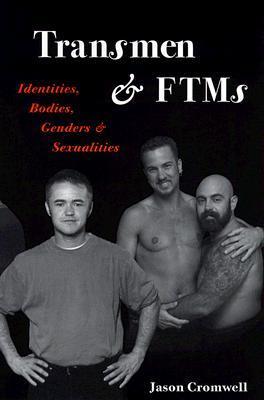
Allows female-to-male transsexuals to speak for themselves and reveal aspects of female gender diversity that do not fit into the ready-made categories of male and female.
This book is valuable as an academic response to (often incorrect or disrespectful) academic texts about trans men & transmasculine people, written by a trans man in 1999. Lots of focus on disproving stereotypes etc. Not giving it a rating because I mostly skimmed it - I bought this expecting more personal testimonies which only ended up being the last chapter or so.
First This review will mention transphobic arguments. The book itself is in my opinion filled with internalized transphobia (if one believes the author behaves exclusively in good faith), uncensored slurs and in general just the typical cold academic description of atrocities.
TL;DR Chapters 4 and 5 are the best ones to what the title of the book conveys, the rest of the book can be useful for a meta analysis of the academic representation of trans people and their own discourses.
I read this book hoping to finally see a transmasculine narrative, to understand better their experiences, their history and luckily an understanding of gender identity not exclusively made with the frameworks designed by white cis feminists and maybe if we are lucky a white trans feminist. Sadly I didn't got a single thing I desired. The introduction to this book is incredible in how well it prepare us for the following readings, the author provide us with an anecdote of him going to a trans support group, which he quite funnily enough provide us with a detailed description of the demographic being almost exclusively white, "passing" and middle class, and decides to the discomfort of everyone (not my own words) to ask their deadnames. The author justification for such act feels as unhinged as the act itself.
The book is written in such a way that it is hard to understand what are the positions of Cromwell, which are the positions of the bibliography that he is using and finally what are the opinions of the interviewees. In regards to Cromwell his opinions seem to be a mix bag between what seems like some internalized transphobia and a belief he is not 100% a real man, some desperate attempts to fit his transgender experience in feminist theories that seem exclusively applicable to cis middle class white women (page 90 and the claims about female socialization being so determinant in what an individual can or cannot be made me quit the book for a week), and the classic "there are good trans people who are transgressive and accept they aren't neither man nor woman and bad trans people who don't do that". In regards to the authors if this were my only presentation to their opinions I would immediately put them in the same burning landfill as Janice Raymond (who funnily enough is also quoted), but sadly because I have tortured myself to read some of these authors I was already aware of some of them. When Cromwell quotes them it is quite hard to understand whether he agrees, disagrees, is adding his own interpretation or more importantly what is he even trying to convey. In regards to the interviews which sadly are quite rare in the book they seem to be quite inoffensive, specially if read in isolation from the rest of the text, but Cromwell previous writing, together with the fact that any quote that cannot be remotely interpreted as transgressive gets psychoanalyzed to explain why the person is wrong, makes me feel extremely wary of how much they represent the real words and not just cherrypicking attempts. The historical aspect seems quite useful, yet the own way Cromwell presents the events leaves a horrible taste consistently. We get stories of transmasculine people who lived fullfiling lives and were able to integrate fully into society as their genders, yet the only reason we know of these people is for the desecration and humiliation they suffered when on the verge of dying or after dying. Somehow Cromwell seems to believe such cruelty justifies the thesis that transgender people should be open about their identities. Apart from that the author insists on correcting not only the way academic wrote about these individuals but also correcting the same individuals, so that they own words are not enough but must again be psychoanalized and given a new reading. Finally it is worth mentioning that some particularly obnoxious discussions that keep appearing online were at the very least existing in the 90's as the book proves particularly the "female and male socialization".
I would make a better written review but just thinking about it makes me depressed.
This book had a lot of fascinating points on discourses during the 90s, both within and outside of the trans community. Some points still remain relevant even today. However, word of caution- This book has a lot of outdated language that ranges from antiquated to offensive, though it is the language that was used at the time.
A very interesting nugget of history for sure, especially for literature surrounding trans men.
This is the first book that I have read about transgender people written by a transgender person. Furthermore, this is the first book I found written by an FTM. I think that the experience of reading this book compared to reading other works by academics on the subject is far more inclusive than the coldness of others. The importance of the work is the voice of the FTM writing his own story and his own reflections upon his life. Cromwell writes diligently to show the false dichotomies and the perception of the sultures around the FTM of the FTM. The importance of the work is in the stylized desire to give compassionate understanding to anyone reading the book. Th book is notsolely written for FTMs and their allies bt written for anyone desiring information from the FTM point of view. FTM voices are often unheard within the spectrum of information given to people even within the context of women's and gender studies. Information within the text is given in order to give a better understanding of FTMs to themselves and to the socially constructed world around them. While the subject of transgender people is still taboo, the support for the topic is becoming more and available as more texts are written by people contending with discrimination and abuse throughout American society. The inequality of the FTM even within the GLBT community is virtually unsurpassed. The text includes a discussion about the pressures between the lesbian and the FTM community as FTMs can be understood as turn coats or desiring mae priviledge. The importance of this discussion is incredible and provides the reader with the supportive information to look directly at the dichotomy of the masculine feminine with and without the internal struggles of the queer community.
This was a pretty interesting read, and covered the subject quite well. The sexuality is definitely with much more gray shades than the classical view of biological sex = gender. I am surprised the topic has been covered so little in research (at least until this book was published); no wonder the FTM and transmen are quite invisible. I also liked the many example cases from different times and different cultures. Cromwell himself is a transman, so it gives a bit less academically cold point of view for the writing to have it written by an insider. What I knew before this book was the whole FTM idea but just very very vaguely. After this book, I think I understand the sexuality (not just the FTM and transmen) a bit better, and it definitely has a whole rainbow of possibilities.
i would have given this book more stars but it was pretty dry and also incredibly outdated (although that's not the book's fault since it's a little older). it had great information but was written like a term paper which made it hard to read. also, the parenthetical references in the text made the book really confusing. but it was still a good read and had a ton of important information. so i would recommend it to people who are interested in hearing from transmen about their own lives and bodies.