
What do you think?
Rate this book


Unknown Binding
First published June 1, 2009




You say you want a revolution
Well, you know...
—"Revolution," by The Beatles (1968)
The fact that the Nazis were notorious for their racist ideology made the hypocrisy of American racism easier to confront and harder to defend, but that didn't keep the enemies of race-mixing from doing their damnedest.
—p.145
{...} while there are dozens of scholarly discussions of the Velvet Underground, there are virtually none of KC and the Sunshine band.This is exactly where Elijah Wald's coming from: he's fascinated by what Americans were actually listening to, the tunes they bought and played and imitated and sang along with on a daily basis, much more so than by the more rarefied and "significant" music that critics and reviewers were writing about.
—p.10
{In the 19th and up through the early 20th Century...} in any town big enough to have even a few people who aspired to middle-class status, black or white, the most numerous and in many ways the most influential professional musicians were teachers.
—p.20
The problem of making a living in music got more serious in the 1920s with the arrival of Prohibition. The Eighteenth Amendment to the U.S. Constitution made the sale and public consumption of alcohol illegal throughout the country as of January 16, 1920, and it was not repealed until the end of 1933. Obviously, this had a profound effect on nightlife of all kinds, and the American Federation of Musicians reported that it "resulted in some 56,000 men or two-fifths of the Federation's membership losing their jobs...in hotels, restaurants, resorts and beer gardens." Given this fact, it is startling how little attention has been paid to the effects of Prohibition on popular music. In histories of the period, jazz is routinely mentioned alongside speakeasies and bathtub gin, and it is easy to get the sense that everybody was partying like crazy, drinking more than ever and dancing up a storm. The reality was far more complicated, which is why repeal was greeted with widespread relief even by a lot of people who did not drink.Nuggets like these continue to appear throughout How the Beatles Destroyed Rock 'n' Roll. Wald did assemble a huge amount of detail (sometimes getting bogged down in those details, I think) to bolster his case for just how much worthwhile music went unrecorded and unremarked, even after individual performances could be preserved and listened to again and again.
—p.65
{...} the more we think we know about a time, the harder it can be to see it clearly. As someone once said, history may repeat itself, but historians repeat other historians.
—p.60
Speaking of credit where due, though... I'm dedicating this review to an online resource providing information about another group of creators who've been shortchanged by most music histories (including Wald's, I'm afraid): the Women in Rock Project, seen via Metafilter in June 2019.
Until the mid-1960s, white and black rock’n’roll styles had evolved more or less in tandem, whether it was Little Richard and Jerry Lee Lewis, the Drifters and the Belmonts, Hank Ballard and Joey Dee, Ray Charles and Bobby Darin, or the Crystals and the Shangri-Las. The black artists may have pioneered more new styles than the white ones, and their share of the rewards was frequently incommensurate with their talents, but they were competing for the same radio and record audiences and appearing in a lot of the same clubs, concert packages, and TV showcases.... That blend of musical and racial integration had defined rock ‘n’ roll since [radio deejay, talent-finder, and ultimately “rock ‘n’ roll” namer and promoter] Alan Freed’s time, but the stream divided with the arrival of “folk rock” (or “rock folk,” as it was often called at first), which stressed poetic or socially conscious lyrics over dance rhythms, and the sonic explorations of the Beatles, the Byrds, the Beach Boys, and the San Francisco groups. (p. 239)One of the reasons I loved reading Wald’s book so much is that I agree with his argument that taxonomies of music which seek to separate art from commerce are arbitrary. You can talk about what you like to listen to and under what conditions. You can talk about the cultural context for a given piece, the influences on and of its authors, and the formal structure of its composition or arrangement, but you should not conflate stylistic differences with quality. There is as much densely-layered, sophisticated crapola as there is simple four-on-the-floor genius, and vice-versa. (Actually, there’s always far more bad music than good, for the simple reason that “good” is as hard to hit upon as it is to universalize and define.) Wald encapsulates this ethos perfectly.
As for art, it seems to be a given that any music intended primarily for [mass social] dancing is, ipso facto, not accepted as serious art. By contrast, classical music -- even mediocre classical music -- is the quintessence of seriousness for most pop listeners, and by the fall of 1965 the number one song in the United States was “Yesterday,” featuring Paul McCartney accompanied by a string quartet.... [T]his did not excite the interest of many highbrow critics, but… with its romantically world-weary lyric, soothing melody, and mild variation of the conventional thirty-two bar song structure... [t]he song was quickly covered by every old-line orchestra leader and vocalist who dreamed of being more than a nostalgia act, and by August 1966 Billboard proclaimed it a modern standard, noting that there were already over 175 versions on the market, including recordings by Lawrence Welk, Xavier Cugat, and Mantovani, as well as by country singers, cabaret artists, and the Supremes.... That breadth of appeal was what set the Beatles apart from their contemporaries. (p. 233)So if you want to be taken seriously, you should get your showtune stylings arranged for strings, not because there’s actually something inherently serious about a quartet of musicians (the Beatles were already that), but because of the semiotics of a cello and viola coupled with two violins we’ve Pavloved from Franz Joseph Haydn.
One thing I want to stress is that I am trying to write history, not criticism -- that is, to look at some of the most influential movements and stars of the twentieth century and explore what links and divides them without worrying about whether they were marvelous or pernicious, geniuses or frauds, or whether I personally enjoy their work.... As it happens, that is how most histories of popular music are written: We tend to leave classical and symphonic styles out of the story, as if they existed in a separate world, just as historians of classical styles tend to give at best a glancing nod to pop trends. In a choice that seems odd to an outsider, the classical music historians also tend to regard most of the new, classically based orchestral compositions of the twentieth century -- radio, film, and television scores, easy listening and mood music, the orchestral sections of Sgt. Pepper -- as falling outside their field. And, equally oddly, the jazz and rock canons tend to mimic the classical canon in this respect, ...hav[ing] no more interest in Paul Weston, Nelson Riddle, and Henry Mancini than classical historians have, and only minimally more interest in Glenn Miller. And while there are dozens of scholarly discussions of the Velvet Underground, there are virtually none of KC and the Sunshine Band. (p. 10)Whoah, whoah, whoah. Easy there, big guy. Your ears have undertaken an experiential smorgasbord not borne by many a published music writer. There’s much more pride than shame in keeping an open, if not uncritical, mind.
As with jazz, [rock ‘n’ roll] was not defined in musical terms. [Just as there were distinctions from piano ragtime, Dixieland, big band swing, bebop, and into later jazz styles, t]here were clear rhythmic differences between the way Haley’s Comets played “Shake, Rattle and Roll” and the way it was played by the black rhythm and blues veterans who backed Big Joe Turner’s version of the song, and I have no problem with historians who consider those differences a musical dividing line between R&B and rock ‘n’ roll. But that semantic distinction was not made in the 1950s.... In 1956, when “rock ‘n’ roll” had become a common phrase, it was also used for both artists, as well as for gospel-flavored vocal groups, hiccuping hillbilly singers, and airbrushed teen idols. (p. 170)However, one big difference between Wald and Willis is that Wald seems willing to baldly expose his own contradictions. The book’s title is unforgiveable. Had it not been for Bill Kerwin’s advocacy, it would have kept me from enjoying the author’s scholarship. So a big shout-out to Bill for helping me see through to the subtitle and thereafter to the book’s contents.
Indeed, jazz -- in our modern sense of the term -- had a special relationship to recording.... Unlike printed music, records made it possible to mass-produce a unique performance, and in that way they were not just different from sheet music but its exact opposite. The whole point of written music is to help a wide variety of performers to play the same thing, but records preserve what is different in the way a particular performer sounds. So, to the extent that we think of jazz as a music of improvisation and personal touch, it can survive only through recordings. Without recording... [Louis] Armstrong’s genius would exist only in legend. (p. 90)By extension, unless an aspiring musician has a transcription of a particular improvisatory solo, the only way to reproduce it is to listen to that recording closely and repeatedly. What’s more, Wald observes, audiences who become overly familiar with a particular performance are more likely to prefer it, and therefore to demand it be reproduced in live performance. However, this tends to undermine the very spontaneity that inspired the original production, inevitably rendering the live product in many respects inferior to the recording. It’s a vicious cycle.
The clear winners in the ASCAP fight were neither the Society nor the networks but BMI and the jukebox industry. BMI shortly became independent of the radio czars who had established it -- antimonopoly laws made that imperative -- and it has been ASCAP’s main competition ever since.... On the whole, though, the main thing the ban proved was that songwriting and publishing were not really threatened by new technologies; they just needed to iron out the fine points of royalty payments, then could continue business more or less as usual. (pp. 130-2)I think this bit of history has obvious parallels to the new normal that the internet imposed on a foolishly luddite recording industry in the first decade of the 21st century. So I’ll spin off from this quote into the tangent that forms my second main takeaway from reading Wald and like content at the intersection of art, technology, and seemingly outdated law. Since the 1998 infliction of the Sonny Bono copyright extension (life plus 70 years! but blame the Europeans for first adopting it, not Mickey’s corporate parents) and the Digital Millenium Copyright Act fiasco (imposing criminal penalties for technological circumvention of DRM, whether fair use or not!), copyright law has been well lambasted -- without effecting change -- by critics ranging from Matt Mason to the Electronic Frontier Foundation to Lawrence Lessig to Cory Doctorow to... pretty much everyone who cares about the dissemination and creation of new ideas (so, not the RIAA). The DMCA was partly a reaction to both Napster and the DeCSS movement. The former was an early peer-sharing site that encouraged online distribution of files (primarily unlicensed MP3s). The latter was a methodology for decrypting DVD content to enable discs bought in one geographic “Zone” (say, Sweden) to be playable in another (say, Japan). Both technologies enabled and promoted copyright infringement outside of the existing home recording exemption (which had basically re-legalized homemade mixtapes for personal use), by facilitating digital copying and distribution. Did the new laws make the technologies go away? No. They had the wholly predictable effect of pouring water on a nascent grease fire (accelerated by the RIAA’s and MPAA’s joint refusal to promote competing technologies that would facilitate legal, royalty-paying online exchanges of digital content). Instead of suppressing or outcompeting illegal uses, they simply pushed them less visibly underground and into myriad venues with less accountability or scruples.
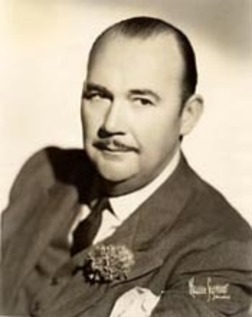
[The historian Charles] Rosen notes that one of the things that makes it hard for us to appreciate new and unfamiliar styles is that they demand that we accept not only sounds that are strange to us but also the absence of qualities that we consider necessary. One reason that the music of [Paul] Whiteman and the Beatles was so phenomenally popular was that it blended styles that older listeners found abrasive and unmusical with familiar elements, so those listeners could enjoy it without abandoning their previous standards and feel broadminded and modern without essentially changing their tastes. But as Rosen writes, ‘The appreciation of a new style is as much an effort of renunciation as of acceptance.’ And the same holds true for any idea, old or new, that is drastically different from our own.(p. 11)Hear, hear! Music to my ears.


