

What do you think?

Percy Bysshe Shelley
In this series, a contemporary poet selects and introduces a poet of the past. By their choice of poems and by the personal and critical reactions they express in their prefaces, the editors offer insights into their own work as well as providing an accessible and passionate introduction to the most important poets in our literature.
Music, when soft voices die,
Vibrates in the memory --
Odours, when sweet violets sicken,
Live within the sense they quicken.
-- To
Music, when soft voices die,
Vibrates in the memory --
Odours, when sweet violets sicken,
Live within the sense they quicken.
-- To
128 pages, Hardcover
First published June 1, 2011
About the author
Fiona Sampson
65 books80 followersFiona Ruth Sampson, MBE is an English poet and writer. She is published in thirty-seven languages and has received a number of national and international awards for her writing.
Sampson was educated at the Royal Academy of Music, and following a brief career as a concert violinist, studied at Oxford University, where she won the Newdigate Prize. She gained a PhD in the philosophy of language from Radboud University Nijmegen in the Netherlands. She advises internationally on creative writing in healthcare, a field whose development she pioneered in a number of projects and publications. As a young poet she was the founder-director of Poetryfest – the Aberystwyth International Poetry Festival and the founding editor of Orient Express, a journal of contemporary writing from Europe. She has received a number of international writers' fellowships: I.A. Literary Association, Skojcan, Slovenia, 2015, Greek Writers’ Union Writers’ and Translators’ House, Paros, 2011, Estonian Writers’ Union House, Kasmu, 2009, Heinrich Boll House, Achill Island, 2005, Fundacion Valparaiso, Spain, 2002, Hawthornden Castle, 2001, Fondacion da Casa de Mateus, Portugal, 2001. She held an Arts and Humanities Research Council Fellowship at Oxford Brookes University 2002-5, a CAPITAL Fellowship in Creativity at the University of Warwick 2007-8 and a Visiting Research Fellow at the School of Advanced Study, University of London, Institute of Musical Research & Institute of English Studies: 2012-15.
From 2005-12, Sampson was the editor of Poetry Review, the oldest and most widely read poetry journal in the UK. She was the first woman editor of the journal since Muriel Spark (1947–49). In January 2013 she founded Poem, a quarterly international review, published by the University of Roehampton, where Sampson is Professor of Poetry and the Director of Roehampton Poetry Centre.
She lives in Herefordshire.
Sampson was educated at the Royal Academy of Music, and following a brief career as a concert violinist, studied at Oxford University, where she won the Newdigate Prize. She gained a PhD in the philosophy of language from Radboud University Nijmegen in the Netherlands. She advises internationally on creative writing in healthcare, a field whose development she pioneered in a number of projects and publications. As a young poet she was the founder-director of Poetryfest – the Aberystwyth International Poetry Festival and the founding editor of Orient Express, a journal of contemporary writing from Europe. She has received a number of international writers' fellowships: I.A. Literary Association, Skojcan, Slovenia, 2015, Greek Writers’ Union Writers’ and Translators’ House, Paros, 2011, Estonian Writers’ Union House, Kasmu, 2009, Heinrich Boll House, Achill Island, 2005, Fundacion Valparaiso, Spain, 2002, Hawthornden Castle, 2001, Fondacion da Casa de Mateus, Portugal, 2001. She held an Arts and Humanities Research Council Fellowship at Oxford Brookes University 2002-5, a CAPITAL Fellowship in Creativity at the University of Warwick 2007-8 and a Visiting Research Fellow at the School of Advanced Study, University of London, Institute of Musical Research & Institute of English Studies: 2012-15.
From 2005-12, Sampson was the editor of Poetry Review, the oldest and most widely read poetry journal in the UK. She was the first woman editor of the journal since Muriel Spark (1947–49). In January 2013 she founded Poem, a quarterly international review, published by the University of Roehampton, where Sampson is Professor of Poetry and the Director of Roehampton Poetry Centre.
She lives in Herefordshire.
Ratings & Reviews
Friends & Following
Create a free account to discover what your friends think of this book!
Community Reviews
Displaying 1 - 9 of 9 reviews

June 4, 2016
Shelley speaks to my soul.
Percy Shelley was a great man. He had dreams for the future; he had dreams of a paradise achievable on Earth. His poetry speaks for itself. He was a man ahead of his time. Had he been alive today, he could have done great things. I have a lot of admiration for this poet, his style, his beliefs and his work. I don’t think I truly liked poetry till I read some of his work. It opened my eyes to many things: it made me realise that the Romantic generation were more aware of the world than we are today.
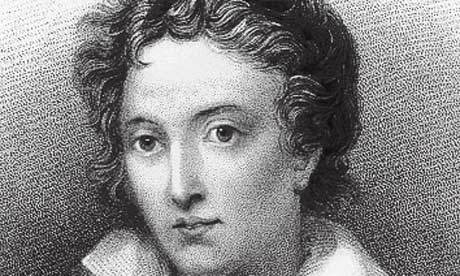
There is something rather poetic in the fact that Shelley drowned at sea after visiting Byron in Greece. It’s the sort of heroic end that he might have written about. It was such a wasted opportunity though. He died before he was thirty, and the works he produced in his limited years were spectacular. Imagine what he could have gone on to do had he lived another twenty years.
This is a small taster of his work, a mere look at the surface of his splendour. Most of his shorter works are in here, the small poems. But, his best works were the long ones. Works such as Queen Mab and Prometheus Unbound. It’s poetry born of real genius. But, that’s not to overlook his shorter works. Mont Blonc, the first poem I truly loved, is in here after all. Here’s the beginning:
The everlasting universe of things
Flows through the mind, and rolls its rapid waves,
Now dark—now glittering—now reflecting gloom—
Now lending splendour, where from secret springs
The source of human thought its tribute brings
Of waters—with a sound but half its own,
Such as a feeble brook will oft assume,
In the wild woods, among the mountains lone,
Where waterfalls around it leap for ever,
Where woods and winds contend, and a vast river
Over its rocks ceaselessly bursts and raves.
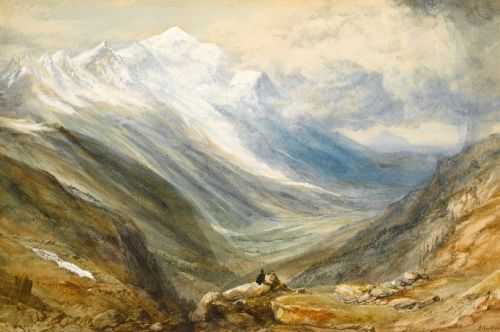
Shelley gives a vison of poetry. It comes from nature; it comes from life and from love. There is a sense of divinity behind it, not a deity, but something more spiritual. A sense of beauty and wonderment that the poetic mind can tap into and experience; thus, it brings its tribute: its gift of words and art. It can appear foreboding, perhaps even intimidating in its awe inspiring nature, but behind it is solemn harmony. The beauty of the natural world inspires Shelley’s mind; it creates it from the nothingness of the universe.
This is real; it’s inspirational and powerful, that much so it appears otherworldly in its magnificent existence to Shelley. The sights he sees allow him to imagine. The non-believers, those that do not possess the poetic mind, those that destroy nature, those that do no experience man’s affinity with the natural world, will not feel this: they will not see what Shelley sees. As the poem progresses this becomes stronger:
And what were thou, and earth, and stars, and sea,
If to the human mind's imaginings
Silence and solitude were vacancy?
What is man if he cannot experience this? He has an absent mind and misses the glory. For Shelley, the moment this poem captures is everything. It is the essence of life: it is the essence of poetry. Very much in the Wordsworthian vein, he establishes his connection with nature. It's emotive and strong, but much better if you read the whole thing. It's not long.
Here's a good online version if you're interested: https://www.youtube.com/watch?v=LRwmQ...
So this is a good taste of Shelley’s work, but there are much better volumes to try. For example, both the penguin and oxford classic versions have many more poems in including the longer works. So I wouldn’t try this version. I gave it five stars though because it’s Percy Shelley, and that man knew how to write poetry. Now I know I’ve said this before in a review (Heart of Darkness by Joseph Conrad) but I’ve truly found a topic for my dissertation. I read this around two months ago now. Since then I’ve read most of Shelley’s full works (I’ll be reviewing them at a later date) and have come up with what I want to write on: Shelley’s utopian vision of the future. I‘ve already began researching.
Shelley is wonderful.
Percy Shelley was a great man. He had dreams for the future; he had dreams of a paradise achievable on Earth. His poetry speaks for itself. He was a man ahead of his time. Had he been alive today, he could have done great things. I have a lot of admiration for this poet, his style, his beliefs and his work. I don’t think I truly liked poetry till I read some of his work. It opened my eyes to many things: it made me realise that the Romantic generation were more aware of the world than we are today.
There is something rather poetic in the fact that Shelley drowned at sea after visiting Byron in Greece. It’s the sort of heroic end that he might have written about. It was such a wasted opportunity though. He died before he was thirty, and the works he produced in his limited years were spectacular. Imagine what he could have gone on to do had he lived another twenty years.
This is a small taster of his work, a mere look at the surface of his splendour. Most of his shorter works are in here, the small poems. But, his best works were the long ones. Works such as Queen Mab and Prometheus Unbound. It’s poetry born of real genius. But, that’s not to overlook his shorter works. Mont Blonc, the first poem I truly loved, is in here after all. Here’s the beginning:
The everlasting universe of things
Flows through the mind, and rolls its rapid waves,
Now dark—now glittering—now reflecting gloom—
Now lending splendour, where from secret springs
The source of human thought its tribute brings
Of waters—with a sound but half its own,
Such as a feeble brook will oft assume,
In the wild woods, among the mountains lone,
Where waterfalls around it leap for ever,
Where woods and winds contend, and a vast river
Over its rocks ceaselessly bursts and raves.
Shelley gives a vison of poetry. It comes from nature; it comes from life and from love. There is a sense of divinity behind it, not a deity, but something more spiritual. A sense of beauty and wonderment that the poetic mind can tap into and experience; thus, it brings its tribute: its gift of words and art. It can appear foreboding, perhaps even intimidating in its awe inspiring nature, but behind it is solemn harmony. The beauty of the natural world inspires Shelley’s mind; it creates it from the nothingness of the universe.
This is real; it’s inspirational and powerful, that much so it appears otherworldly in its magnificent existence to Shelley. The sights he sees allow him to imagine. The non-believers, those that do not possess the poetic mind, those that destroy nature, those that do no experience man’s affinity with the natural world, will not feel this: they will not see what Shelley sees. As the poem progresses this becomes stronger:
And what were thou, and earth, and stars, and sea,
If to the human mind's imaginings
Silence and solitude were vacancy?
What is man if he cannot experience this? He has an absent mind and misses the glory. For Shelley, the moment this poem captures is everything. It is the essence of life: it is the essence of poetry. Very much in the Wordsworthian vein, he establishes his connection with nature. It's emotive and strong, but much better if you read the whole thing. It's not long.
Here's a good online version if you're interested: https://www.youtube.com/watch?v=LRwmQ...
So this is a good taste of Shelley’s work, but there are much better volumes to try. For example, both the penguin and oxford classic versions have many more poems in including the longer works. So I wouldn’t try this version. I gave it five stars though because it’s Percy Shelley, and that man knew how to write poetry. Now I know I’ve said this before in a review (Heart of Darkness by Joseph Conrad) but I’ve truly found a topic for my dissertation. I read this around two months ago now. Since then I’ve read most of Shelley’s full works (I’ll be reviewing them at a later date) and have come up with what I want to write on: Shelley’s utopian vision of the future. I‘ve already began researching.
Shelley is wonderful.

Did Not Finish
October 20, 2020DNF at page 39.
I'm disappointed! I was really interested in Percy Bysshe Shelley's work, but for someone who doesn't study literature and has very little knowledge of form and structure in poetry, all of this was going straight over my head. There were some really pretty sections that I had highlighted, and some stanzas I thought were beautiful, but I can't bring myself to read the rest when I know I won't enjoy my time.
I'm disappointed! I was really interested in Percy Bysshe Shelley's work, but for someone who doesn't study literature and has very little knowledge of form and structure in poetry, all of this was going straight over my head. There were some really pretty sections that I had highlighted, and some stanzas I thought were beautiful, but I can't bring myself to read the rest when I know I won't enjoy my time.

Read
September 26, 20223.25

March 6, 2014
“The flower that smiles today
Tomorrow dies;
All that we wish to stay
Tempts and then flies.”
A few years ago I encountered Shelley for the first time. I took a class in English Romanticism, and I knew that when it came to Shelley, I was lost. On the day of my exam I was dreading him; and of course I was forced to speak about him and his poem "Ode to the West Wind".
But in the preparation room, something happened. I was forced to concentrate on Shelley's words, to give them my full and undivided attention. And suddenly I realized he wasn't as difficult as I had thought; he merely needed me to pay attention.
Since then, I have harbored a deep love for Shelley, and especially "Ode to the West Wind". Last night my boyfriend read "Ode to the West Wind" aloud for me with his beautiful English accent, and I fell in love with the poem all over again. It is so graceful; despairing and yet hopeful. The last line is almost unearthly beautiful in all its simplicity: “If Winter comes, can Spring be far behind?”
Tomorrow dies;
All that we wish to stay
Tempts and then flies.”
A few years ago I encountered Shelley for the first time. I took a class in English Romanticism, and I knew that when it came to Shelley, I was lost. On the day of my exam I was dreading him; and of course I was forced to speak about him and his poem "Ode to the West Wind".
But in the preparation room, something happened. I was forced to concentrate on Shelley's words, to give them my full and undivided attention. And suddenly I realized he wasn't as difficult as I had thought; he merely needed me to pay attention.
Since then, I have harbored a deep love for Shelley, and especially "Ode to the West Wind". Last night my boyfriend read "Ode to the West Wind" aloud for me with his beautiful English accent, and I fell in love with the poem all over again. It is so graceful; despairing and yet hopeful. The last line is almost unearthly beautiful in all its simplicity: “If Winter comes, can Spring be far behind?”

April 11, 2018
Simply cannot be helped but to read these poems aloud.
February 11, 2021
Fantastic selection of Shelley's poems. Great read for a snow day.
January 15, 2013
Some good poems, but most of it didn't really catch my attention.

April 20, 2014
A lovely little collection of some of Shelley's best poems.

Did Not Finish
May 23, 2015Couldn't get through this collection. Not that they are bad, just not for me.
Displaying 1 - 9 of 9 reviews