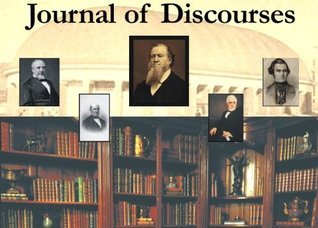
Updated February 18, 2012. (Reason for Recreated from scratch to fix errors that had been reported, and added many features)This is the Deluxe Study Edition of the Journal of Discourses. It includes the complete text of all 26 volumes of the Journal of Discourses. Also included is the complete LDS Standard Works. We call it the 'Deluxe Study Edition' because we have enhanced it with features that no other edition has. Here is a list of the features • Complete, fully-linked, table of contents for quick access to all 1,444 addresses• NEW! Speaker Index listing each speaker and all of his addresses fully linked for quick access. (Easily peruse all the addresses of any of the 52 speakers)• NEW! Includes and is linked to the complete LDS Standard Works. We added scripture references next to the passages and linked them to the complete scriptures. Includes over 8,500 scripture references verses linked from the Journal of Discourses. ( This feature is a work in progress and we will continue to release updates as we find and create more links to the scriptures.• NEW! Illustrated Photo & Sketch section. We've included a photo and brief sketch of 43 of the speakers. ( This is a work in progress and we will continue to update this section as we add more data for each speaker.)The Journal of Discourses (often abbreviated J.D.) is a 26-volume collection of public sermons by early leaders of The Church of Jesus Christ of Latter-day Saints (LDS Church). The first editions of the Journal were published in England by George D. Watt, the stenographer of Brigham Young. Publication began in 1854, with the endorsement of the church's First Presidency, and ended in 1886. The Journal is one of the richest sources of early Mormon theology and thinking. It includes 1,444 sermons given by over 50 church leaders, including most numerously Brigham Young, John Taylor, Orson Pratt, Heber C. Kimball, and George Q. Cannon. George D. Watt recorded the first four volumes of sermons himself, and he continued to contribute through volume twelve, but at least eleven other stenographers were involved. Brigham Young has by far the most sermons recorded in the Journal, with 390. It was said Brigham Young secured stenographic reports of his addresses. As he traveled among the people, reporters accompanied him. All that he said was recorded. Practically all of these discourses (from December 16, 1851 to August 19, 1877) were published in the Journal of Discourses, which was widely distributed. The public utterances of few great historical figures have been so faithfully and fully preserved.Though never accepted as Mormon canon, the Journal was highly esteemed in its day. The preface to the 8th volume, written by Apostle George Q. Cannon, stated "The Journal of Discourses deservedly ranks as one of the standard works of the Church, and every rightminded Saint will certainly welcome with joy every Number as it comes forth from the press as an additional reflector of 'the light that shines from Zion's hill.'" Today, however, the LDS Church has expressed some reservations about the Journal. Below is the current, official position of the church on the "The Journal of Discourses is not an official publication of The Church of Jesus Christ of Latter-day Saints. It is a compilation of sermons and other materials from the early years of the Church, which were transcribed and then published. It includes practical advice as well as doctrinal discussion, some of which is speculative in nature and some of which is only of historical interest. ... Questions have been raised about the accuracy of some transcriptions. Modern technology and processes were not available for verifying the accuracy of transcriptions, and some significant mistakes have been documented.
John Taylor was the third president of The Church of Jesus Christ of Latter-day Saints (LDS Church) from 1880 to 1887. He is the only president of the LDS Church to have been born outside of the United States.
For those looking to evangelize to the Mormons, this is an extremely helpful tool having this on Kindle. Being able to find quotes of these self proclaimed apostles and prophets giving false information, highlighting those quotes, and engaging with your intended audience is necessary in exposing the false teachings and evil perpetrated by these guys of the past. These sermons very clearly indicate the mindset of classical Mormonism in contrast to modern day Mormonism.
I haven’t read every book in this series, but I’ve read many of them and can vouch for it being well sourced and cited. Mormon history in all of its raw glory, and shame. If more members read this series, the church would likely struggle to keep up with all the resignations letters, IMO. I wasn’t ready for the information found within. The racism, sexism, and bigotry in the church from its conception is well documented. If you’re a member and want to keep the warm fuzzies the church gives you, I’d recommend skipping this series. And any other historically accurate portrayals of early Mormon history.
This book is as important to LDS members as the Book of Mormon. If every member read this book and lived the teachings, we wouldn't be as lost as we are now. That's all I have to say about that.