Through the examples of biblical and contemporary women, readers will find practical, comforting steps for dealing with loneliness. Offers help in finding support from others, celebrating uniqueness, and gaining strength for single–parenting challenges.
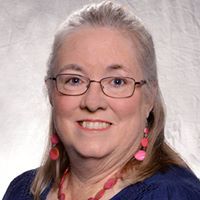
I am a wife, mother and national speaker who has authored 17 books, including "When Women Walk Alone," "Drama Free" and my most recent, "12 Ways to Experience More with Your Husband."
Through my speaking across the country, personal discipleship of women, and writing and teaching, I strive to help women find strength for their soul through a more intimate relationship with Jesus Christ. Once they realize He is the Only One who satisfies, life takes a new, exciting twist. We can then take our frustrations and turn them into a deeper desire for God.
I live in Southern California with my husband of 30 years. We have an daughter who works for the Walt Disney Company.
I love writing, reading, outdoor activities and Jazzercise!
I needed to read this book and will be reading it again several times…why? You ask. There are so many truths that are so relevant in my life right now and this book helped me to put things into perspectives. I feel alone almost every day. I am blessed and at peace but sometimes I feel so very alone. I am not depressed, I just stay at home a lot and my husband is in his own world (cannot explain) but, God knows and has helped me to not allow my husband’s ways to bring me down. I am not judging my husband, God has spoken and told me to just love him and let him know God loves him. Enough about that…I am just trying to make a point about this book….It is filled with so much of God’s love, His Word, His grace, His Caring and much more. I cannot tell you how much the “For Personal Application” section at the end of each chapter has helped me too. And the “For further Study” section after each chapter has helped too… Those of you who know me or have read my reviews before…I have always said and believe the Bible is the best book every…and test everything you read or hear with its truths…And this is fact……I am saying this book is a great encouragement book to see Gods word in a truthful way!
I HIGHLY recommend any books that Cindi writes because she shares His Truth.
May Gods Love and peace guide and engulf you all the days of your life, Cindi, in Jesus Matchless Name Amen.
I didn't really like this book. It wasn't what I thought which was a book for single women. Instead the author spent most of her time lamenting her loneliness as a married person. I know that married people get lonely too....but it's not the same as the loneliness that single people struggle with. As a single woman I can't relate to sitting across from someone and feeling lonely because there isn't anyone sitting across from me. I was just disappointed in how many references there were to marriage in the book. I thought it was going to be mostly directed toward single women.
The idea behind the book is important. There are many seasons in the course of a woman’s life where we walk alone. However, I wanted more as a solution and less of personal stories. I didn’t finish the book.
Very applicable to probably just about every woman at one time or other in life. I could just start clapping out loud when I read in chapter 8 her encouragement to listen to your head not your heart! Amen to that. Of course this advice is reinforced with Jeremiah 17:9 "the heart is deceitful above all things and beyond cure. Who can understand it?" This was a quick, easy read and yet packed full of wisdom for women of all situations. I do think it is sad how often women are "walking alone" even when they are not really alone. I guess that is just how it is. So, yah, lots of sad stories here and yet those same sad stories often brought happy stories later- not always, but most times. The second part of Psalm 30:5 "weeping may endure for a night, but joy cometh in the morning." I enjoyed this book- it's comforting to know as a woman I am not the only one who has felt this way. I also had to chuckle a litttle at something I noticed going on- a "suffering olympics" of sorts. Us ladies do that sort of thing.
I wanted to read this book because I walk alone spiritually. I was hoping that, by reading this book, I would learn to accept the reality of my aloneness, would learn to feel okay about it, and would stop wanting it to be different. I was initially disappointed that the book seemed more about fixing the aloneness rather than learning to accept it. However, as I read the book slowly for a second time her message became clearer to me and resonated with me.
In the beginning of the book Ms. McMenamin clearly states her objective in writing this book. “We will not be learning how to avoid these seasons of loneliness, but rather, we will learn how to strengthen ourselves in order to be ready when that path unfolds before us…I want to help you walk from the desert of aloneness to the oasis of abundance by seeing your alone times not as obstacles to your growth, but as opportunities to draw closer to the heart of God.” She goes on to say that “God often draws us out to the desert where we’re feeling alone to show us a side of Himself we might not otherwise see if we were in an arena of abundance.”
I fervently believe this last statement and have experienced God drawing me out to the desert to teach me some valuable lessons. If you are interested in reading about this time in my life, go to From Aloneness to Abundance | ISN’T ENOUGH MINISTRIES, LLC (wordpress.com)
In reading this book I realized that I am in another season of aloneness and need to deepen my trust in God and strengthen my dependence on him. Some points Ms. McMenanim made that were especially encouraging and/or eye opening for me were: • True worship focuses on God, not our feelings. True worship exalts him to the point that our problems pale in comparison to the light of His glory. • …some reasons we may feel alone spiritually but often can’t explain why. We feel alone when no one shares the passions of our heart. We feel alone without someone to talk about spiritual things. We feel alone when no one else understands or senses what God is doing in our lives. • Even though life might look at times like it’s spinning out of control, there’s a God who knows what He’s doing. He’s weaving a lesson, preparing a promise, readying a revelation of Himself…He’s writing His glory story. • When we go through difficult circumstances He will see to it that those situations mold us into the person He wants us to be. • Our hearts usually want what we want rather than what God wants…We can trust listening to our head, and not our hearts, when we have the truth of God’s word running through our minds to balance the temporal feelings that fluctuate about in our hearts.
Though there was much in this book which helped and encouraged me, there were some things that disturbed me deeply. One of these was a story about a woman, Jennifer, who lives with an unbelieving husband. “Jennifer has found that by placing her husband’s needs first–above her own and anyone else’s–she is honoring him and giving him a chance to see God through her.” The author goes on to say that Jennifer believes “her first obligation as a servant of God is to be obedient and submissive to her husband.” This distresses me because I believe our first obligation as a servant of God is to be obedient and submissive to God, and because this is an old covenant view of marriage.
Throughout the Old Testament (the old covenant), men treated women as property. Women were identified by the men in whose household they lived (the daughter of so-and-so, the wife of so-and-so, the sister of so-and so). Women were bought, sold, traded, and given away, just like other property the men owned. Women had no say over their own destinies. They were seen by men to have no inherent value. When Jesus ushered in the new covenant, he looked at women through a lens based on equality. He did not see women as property and did not treat them as such. “Jesus affirmed the equality of women in the midst of a culture that denied them basic human rights. He called them to be his disciples during a time when religious leaders taught that it was disgraceful even to teach a woman.” ((J. Lee Grady, 10 Lies the Church Tells Women) “To think of women as disciples in training for leadership violated Jewish custom, but Jesus broke the mold in His relationships with women.” (Richards & Richards, Women of the Bible)
When Satan tempted Jesus in the desert Jesus told him “The Scriptures say, “You must worship the Lord your God and serve only him’” (Luke 4:8). When a teacher of religious law asked Jesus which is the most important commandment, Jesus replied “You must love the Lord your God with all your heart, all your soul, all your mind, and all your strength. The second is equally important: ‘Love your neighbor as yourself’” (Mark 12: 30-31). The second commandment infers equality between self and neighbor or self and anyone else. Therefore, a husband’s needs and a wife’s needs are equally important. One’s needs should not be placed above the other’s needs. They are on a level plane.
The pattern Jesus set regarding how he saw and how he treated women continued after his death and resurrection. In Acts 1:14 we see a clear example of the apostles embracing the new status of women. “They all met together and were constantly united in prayer, along with Mary the mother of Jesus, several other women, and the brothers of Jesus.” The significance of this is that women were present. When Jews gathered for prayer in the first century only men were present. In this verse we are told that followers of Christ (men AND women) were assembled to pray. This is a radical break from their tradition.
The Apostle Paul, following the example Jesus and his disciples set, also saw women as partners in ministry and treated them as such. In his letter to the church in Galatia, Paul said, “There is no longer Jew or Gentile, slave or free, male and female. For you are all one in Christ Jesus” (Galatians 3:28). This is a clear statement of gender equality.
Not a devotional but a really motivating read. Not just for single women but women from all walks of life in a variety of situations searching for making their walk with God stronger.
I noticed a woman reading this book in church several months ago; she is recently widowed and struggling after being married to the same man for 45 years. I have been single for over 30 years, by choice now, and still recovering from domestic violence. I discovered this book crossing my path several times recently and took it as a sign from the Universe that there was something in it that I needed to read, understand or assimilate into my life at this time. While is does not offer pat answers or easy solutions to present world circumstances, which make it more difficult for some women to remain single, it did offer practical advise and wisdom from the lives of women in the Bible who came to a new sense of who they were created to be when they allowed God to be part of their life in a new and deeper way. Sometimes the read was a little too "churchly", but even those points of view were helpful. I am happy being alone at this time in my life and reading this book helped me reconcile some old issues and come to accept my current reality with joy and peace.
I thought I was starting a book that was hopefully going to be an encouragement about being a single Christian woman. However this book is so much more and perhaps more encouraging because of that. She addresses all women who feel alone in various scenarios and seasons, and points us all to the same answer: Christ. I believe this book would be an encouragement to any Christian woman. We have all experienced a season of aloneness or will at some point in our life and need to find our joy in the Lord.
A friend gave me this book. It is about putting Jesus at your right hand and walking life with Him. For me it is a tough read. I wasn't raised in a church and my husband taught me about unconditional love. I lost him 11 yrs ago. Living life with out him has been challenging. The aloneness does open doors of being closer to Jesus.
We read this book for our small group. And the transformation that each one of has experienced was so tangible tonight. When you are walking through a spiritual desert, you need to be led to that Oasis. This book will help you along that journey, to find your peace in God.
This book is not just for single women, it's for married women as well who feel alone in their marriage for many different reasons. A very insightful book.
Powerfully relative to every woman I know, whether married or single. I've read on my own, and a second time as a group study, what healing and encouragement came from studying together, sharing our testimonies and reflections on how God has used this book to realign ourselves to trusting God in all seasons of life.
I really enjoyed finding this little treasure of a boom at a used book store. This books spoke directly to my heart, it offered both inspiration and guidance. It's a great resource to help build confidence in being alone and understanding that there is a purpose for it you just need to work with God to figure out what that is. ❤️this book!