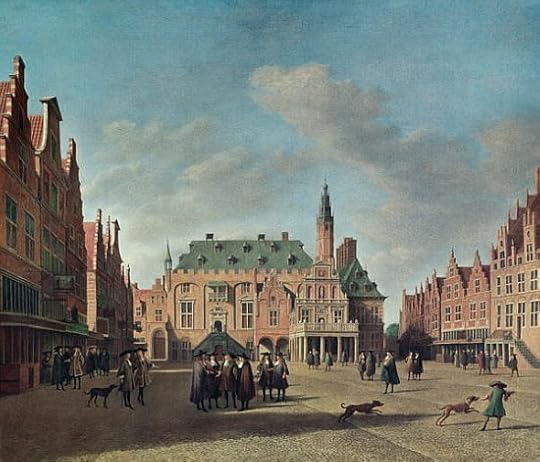
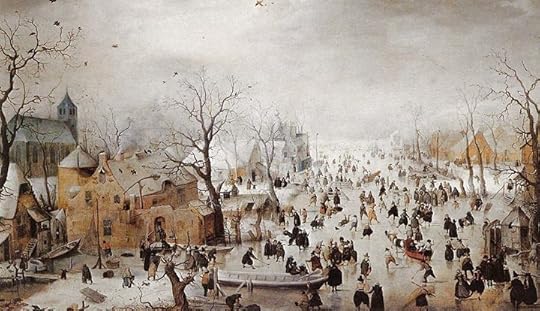
Le Voyage en Hollande de Diderot est l'une des oeuvres les moins connues et les moins souvent éditées du philosophe.Il constitue pourtant une étape significative de la réflexion politique de Diderot dans ses dernières années. Au XVIIIe siècle, en effet, aller en Hollande, c'est aller voir comment fonctionne une république, comment s'appliquent la tolérance et la liberté d'expression. Éventuellement, c'est aller dans un pays qui est terre d'asile pour les hommes, mais aussi pour les textes, qu'on peut y faire éditer assez facilement. L'enquête de Diderot participe de cet esprit-là ; et comme il n'est pas le premier à découvrir la Hollande républicaine, libre (et bourgeoise, bien sûr), on ne saurait s'étonner qu'il puise sans fausse pudeur dans les documents déjà amassés par ses prédécesseurs.La présente édition - établie par l'historien Yves Benot en 1982 - est la première à indiquer toutes les variantes des trois copies essentielles de ce texte souvent amusant. Elle s'est efforcée de multiplier les rapprochements susceptibles d'éclairer les sources de nombreux passages, parfois de signaler les erreurs commises au fil de la plume par le philosophe. Elle permet de mieux comprendre la Hollande d'avant la monarchie de 1815, mais aussi le voyage philosophique au XVIIIe siècle.
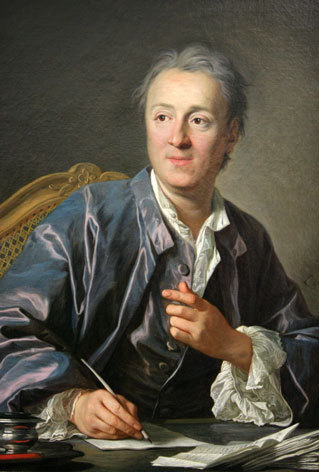
Work on the Encyclopédie (1751-1772), supreme accomplishment of French philosopher and writer Denis Diderot, epitomized the spirit of thought of Enlightenment; he also wrote novels, plays, critical essays, and brilliant letters to a wide circle of friends and colleagues.
This artistic prominent persona served as best known co-founder, chief editor, and contributor.
He also contributed notably to literature with Jacques le fataliste et son maître (Jacques the Fatalist and his Master), which emulated Laurence Sterne in challenging conventions regarding structure and content, while also examining ideas about free will. Diderot also authored of the known dialogue, Le Neveu de Rameau (Rameau's Nephew), basis of many articles and sermons about consumer desire. His articles included many topics.
Diderot speculated on free will, held a completely materialistic view of the universe, and suggested that heredity determines all human behavior. He therefore warned his fellows against an overemphasis on mathematics and against the blind optimism that sees in the growth of physical knowledge an automatic social and human progress. He rejected the idea of progress. His opinion doomed the aim of progressing through technology to fail. He founded on experiment and the study of probabilities. He wrote several articles and supplements concerning gambling, mortality rates, and inoculation against smallpox. He discreetly but firmly refuted technical errors and personal positions of d'Alembert on probability.
Preparing to board on a klm flight in a few days, I thought that Diderot’s account of his trip would be a good prelude for my own visit. I encountered this book thanks to Yann .
As I was surprised to see what a highly structured account Diderot’s is, my muse Kalliope-the-Grand spoke to me: silly, silly Spirally-kalliope, what did you expect? Didn’t Denis Diderot undertake the production of the exemplary L’Encyclopédie?
Denis Diderot only traveled once outside his own country and went to the two countries that appealed to his French contemporaries: Russia and the Netherlands. Peter the Great had established a strong cultural link between his St-Petersburg and Diderot’s land and the Low Countries had already been a favoured destination for the liberally minded Europeans.
Diderot spent just over eight months traveling through the Northern and Southern Netherlands in 1773-74. The Southern parts were then part of the Austrian Empire, something which he bemoans since this acts as a barrier between the admired Northern and France.
Overall the account is not very personal. He proceeds by examining in an encyclopedic fashion the political, economic and fiscal, judicial and cultural systems. This excellent edition provides plenty of notes and a solid introduction from which we learn that Diderot’s account, in spite of being based or prompted by his own real visit, fed consistently on previous sources. There are therefore some inconsistencies with dates and observations.
Interesting was his criticism of the figure of the Sadthouder, primarily a military appointment, but which was hereditary. The expected tension between this autocratic figure, with aspirations to becoming a Monarch, and the Republic and its resistance to such claims, created the dynamics of the political development of the Netherlands of the time. For us it is fascinating to read how Diderot, in the 1770s, was acutely, and ominously, sensing the antagonism of these two political forces.
I enjoyed reading about some particulars. Potatoes were the staple starch while bread was expensive and more heavily taxed--which surprised me given how relatively new potatoes were. Wealthy women wore diamonds and gold and rings on the index and thumb. There is no mention of girls wearing pearl earrings. The overall cleanliness, high literacy, the commercial spirit – applauded in its efficacy because it is designed by commercial men and not bureaucrats, the low levels of violence, clearly impress Diderot positively. He praises their painters (mainly Rembrandt) but thinks that their architecture and sculpture is not up to the French standards.
The most personal note is his admission of how much he has liked the fish he has eaten and in particular how captivating the coastal sight of the sea has been for him. Diderot first saw the sea then.
And the closing lines, when he admits that as he is returning home, the curiosity of visiting a foreign land is indirectly proportional to the eagerness to meet his loved ones: his friends, his wife and daughter.
So sweet... this traveling rational and enlightened man…!!!
Cet ouvrage comprend la relation par Diderot d'un voyage philosophique en Hollande. L'introduction expose en effet de manière détaillée les principes que le philosophe s'est proposé de suivre, et qu'il invite à imiter, afin de réussir son voyage. Principes qu'il n'hésite évidemment pas à violer le premier, comme celui de se garder de faire des généralités.
Sous un apparent désordre, on a sous les yeux une grande variété de thèmes qui sont abordés; politique, mœurs, histoire, art, économie, justice, etc... et l'avantage est évidemment de prévenir la lassitude du lecteur en le surprenant toujours par quelque nouveauté.
L'appareil critique est assez fourni: l'érudit qui s'en est chargé a pris le soin de relever les parties que Diderot avait vraisemblablement emprunté dans d'autres ouvrages, et qu'il n'avait donc pas tiré de sa propre expérience.
Au delà des informations politiques, de l'exposé de cette République qui parvient à faire vivre la tolérance, la liberté et la prospérité, l'ouvrage fourmille de petites anecdotes qui en font tout le sel. Une très agréable lecture.