

What do you think?

O Czechowie
Seven years after the death of Anton Chekhov, his sister, Maria, wrote to a friend, "You asked for someone who could write a biography of my deceased brother. If you recall, I recommended Iv. Al. Bunin . . . . No one writes better than he; he knew and understood my deceased brother very well; he can go about the endeavor objectively. . . . I repeat, I would very much like this biography to correspond to reality and that it be written by I.A. Bunin."
In About Chekhov Ivan Bunin sought to free the writer from limiting political, social, and aesthetic assessments of his life and work, and to present both in a more genuine, insightful, and personal way. Editor and translator Thomas Gaiton Marullo subtitles About Chekhov "The Unfinished Symphony," because although Bunin did not complete the work before his death in 1953, he nonetheless fashioned his memoir as a moving orchestral work on the writers' existence and art. . . . "Even in its unfinished state, About Chekhov stands not only as a stirring testament of one writer's respect and affection for another, but also as a living memorial to two highly creative artists." Bunin draws on his intimate knowledge of Chekhov to depict the writer at work, in love, and in relation with such writers as Tolstoy and Gorky. Through anecdotes and observations, spirited exchanges and reflections, this memoir draws a unique portrait that plumbs the depths and complexities of two of Russia's greatest writers.
In About Chekhov Ivan Bunin sought to free the writer from limiting political, social, and aesthetic assessments of his life and work, and to present both in a more genuine, insightful, and personal way. Editor and translator Thomas Gaiton Marullo subtitles About Chekhov "The Unfinished Symphony," because although Bunin did not complete the work before his death in 1953, he nonetheless fashioned his memoir as a moving orchestral work on the writers' existence and art. . . . "Even in its unfinished state, About Chekhov stands not only as a stirring testament of one writer's respect and affection for another, but also as a living memorial to two highly creative artists." Bunin draws on his intimate knowledge of Chekhov to depict the writer at work, in love, and in relation with such writers as Tolstoy and Gorky. Through anecdotes and observations, spirited exchanges and reflections, this memoir draws a unique portrait that plumbs the depths and complexities of two of Russia's greatest writers.
360 pages, Paperback
First published January 1, 1952
About the author
Ivan Bunin
584 books343 followersIvan Alekseyevich Bunin (Russian: Иван Алексеевич Бунин) was the first Russian writer to win the Nobel Prize for Literature. He was noted for the strict artistry with which he carried on the classical Russian traditions in the writing of prose and poetry. The texture of his poems and stories, sometimes referred to as "Bunin brocade", is considered to be one of the richest in the language.
Best known for his short novels The Village (1910) and Dry Valley (1912), his autobiographical novel The Life of Arseniev (1933, 1939), the book of short stories Dark Avenues (1946) and his 1917–1918 diary ( Cursed Days, 1926), Bunin was a revered figure among anti-communist White emigres, European critics, and many of his fellow writers, who viewed him as a true heir to the tradition of realism in Russian literature established by Leo Tolstoy and Anton Chekhov.
He died November 8, 1953 in Paris.
Ratings & Reviews
Friends & Following
Create a free account to discover what your friends think of this book!
Community Reviews
Displaying 1 - 14 of 14 reviews


November 14, 2011
things I want to remember:
Chekhov not being able to choose which pants to wear to see Tolstoy
Chekhov wanting mousetraps as a present so he could catch mice and set them free
Chekhov's watch saying 'the lonely person sees a desert everywhere'
Chekhov changing the conversation from his writing to herrings & his use of field glasses
Bunin's rage at Gippius, Gorky etc for their misrepresentations of Chekhov
Bunin basically being like, MY BEST FRIEND CHEKHOV.
Chekhov not being able to choose which pants to wear to see Tolstoy
Chekhov wanting mousetraps as a present so he could catch mice and set them free
Chekhov's watch saying 'the lonely person sees a desert everywhere'
Chekhov changing the conversation from his writing to herrings & his use of field glasses
Bunin's rage at Gippius, Gorky etc for their misrepresentations of Chekhov
Bunin basically being like, MY BEST FRIEND CHEKHOV.
December 5, 2021
Il libro è incompiuto, è una serie di appunti, a volte ripetitivi, che Bunin stava sistemando in vista di una pubblicazione. Abbastanza interessante per capire la personalità di Cechov.
January 30, 2018
Very detailed....Marullo excels again.
January 23, 2010

"To Chekhov's Memory" by Alexander Kuprin.
To mark the 150th anniversary of Anton Chekhov's birth, a unique, first-hand portrait of Anton Chekhov final years in Yalta.
Read by Ben Whishaw.
Broadcast on:
BBC Radio 3, 7:45pm Friday 22nd January 2010
Categories:
Factual, Arts, Culture & the Media, History, Music, Classical
Produced by Sasha Yevtushenko.
-----------
About the author (wiki sourced):
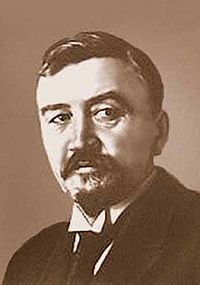
Aleksandr Ivanovich Kuprin
Born August 26 [O.S. September 7:] 1870
Narovchat, Penza Oblast
Died August 25, 1938 (aged 68)
Leningrad
Occupation writer, pilot, explorer, and adventurer
Genres short stories
Literary movement Naturalism
Notable work(s) Junior Captain Rybnikov
This entire review has been hidden because of spoilers.

January 29, 2019
Un giovane fortunato, anche se ha solo 13 anni in meno frequenta il piu grande geniodel tatro russo fnio allasuamorte, e scopre in vecchiaia di essere ststo il suo più stimato amico...
Rende l'omaggio scrivendo questo libro di ricordi invero un po legnoso....
molto interessante la seconda parte sull'amore di Cechov per un scrittrice ricambiato, in maniera molto elegante ed eterno, con un verso del "Gabbiano"
Rende l'omaggio scrivendo questo libro di ricordi invero un po legnoso....
molto interessante la seconda parte sull'amore di Cechov per un scrittrice ricambiato, in maniera molto elegante ed eterno, con un verso del "Gabbiano"
September 22, 2011
Chekhov was wonderful etc. Some sweet anecdotes, nothing terribly interesting. I have learned however, that he hated cats. Also, that Kuprin is a terrible writer. Anyway, I remember reading before that Bunin wrote an entire book on Chekhov? I wonder if that's worth looking into.

January 24, 2010
Ben Whishaw reads Alexander Kuprin's first-hand portrait of Anton Chekhov's life.
May 21, 2017
Excellent memoir about a very interesting man. Chekhov is one of my favorite authors, and this was an intriguing read.

September 5, 2024
Bunin scrisse, anzi dettò, questo libro a metà '900 quando già era molto malato, poco prima di morire.
Questi ricordi dell'amicizia con Cechov, risalente a mezzo secolo prima, si presentano coi caratteri del frammento, dando l'impressione di una non risistemazione, lavoro che probabilmente l'autore avrebbe compiuto.
A ravvivare il ricordo dell'antica amicizia contribuì la pubblicazione postuma delle memorie di L. Avilova, scrittrice che Bunin stesso conosceva, in cui emerge l'amore impossibile e gelosamente custodito tra lei e Cechov.
Dalle rimembranze di Bunin, la figura di Cechov si delinea ben nitida: un uomo con "la voce severa e il sorriso infantile", "sempre amichevole, per non dire affettuoso" ma nel contempo con un riserbo nobilissimo, aristocratico; "non sopportava i parolai" e aveva "avversione per l'artificio e la maniera": "le artificiose bizzarrie che fioriscono nella letteratura moderna lo ferivano".
Questi ricordi dell'amicizia con Cechov, risalente a mezzo secolo prima, si presentano coi caratteri del frammento, dando l'impressione di una non risistemazione, lavoro che probabilmente l'autore avrebbe compiuto.
A ravvivare il ricordo dell'antica amicizia contribuì la pubblicazione postuma delle memorie di L. Avilova, scrittrice che Bunin stesso conosceva, in cui emerge l'amore impossibile e gelosamente custodito tra lei e Cechov.
Dalle rimembranze di Bunin, la figura di Cechov si delinea ben nitida: un uomo con "la voce severa e il sorriso infantile", "sempre amichevole, per non dire affettuoso" ma nel contempo con un riserbo nobilissimo, aristocratico; "non sopportava i parolai" e aveva "avversione per l'artificio e la maniera": "le artificiose bizzarrie che fioriscono nella letteratura moderna lo ferivano".
December 30, 2024
«Io non posso fare altro che testimoniare con tutto il cuore che si trattava di un uomo di eccezionale levatura morale, la cui educazione ed eleganza erano da intendersi nell’accezione più alta dei termini, un uomo straordinariamente semplice e franco, e nel contempo dolce e gentile, un uomo sensibile e affettuoso, e di grande onestà intellettuale.»
Read
April 24, 2025Un vivido ritratto della personalità peculiarissima di Anton Čechov, dove la realtà dell’uomo di lettere russo fa da allegro e leggero sfondo, permettendoci di respirare l’aria di Jalta e Mosca, fra i giganti dell’epoca, le dinamiche dell’editoria e le critiche. In questo libro Ivan Bunin, primo russo ad essere insignito del premio Nobel per la letteratura, si propone di raccontare il vero Čechov — e non quello millantato da personaggi come Zinaida Gippius — attraverso esperienze vissute in prima persona e lettere ufficiali. Sfortunatamente ci troviamo di fronte ad un opera abbozzata del quale ci rimangono compiuti pochi capitoli.
Tra i capitoli più riusciti spicca il sesto, che per la prima volta attribuisce grande importanza al ruolo giocato dalla poco nota Lydia Avilova nella vita di Čechov — un aspetto a lungo ignorato, ma considerato fondamentale da Bunin. Do 5 stelle nonostante l’incompiutezza per il forte interesse che mi suscita e ha sempre suscitato la letteratura russa e Čechov specialmente.
Tra i capitoli più riusciti spicca il sesto, che per la prima volta attribuisce grande importanza al ruolo giocato dalla poco nota Lydia Avilova nella vita di Čechov — un aspetto a lungo ignorato, ma considerato fondamentale da Bunin. Do 5 stelle nonostante l’incompiutezza per il forte interesse che mi suscita e ha sempre suscitato la letteratura russa e Čechov specialmente.
March 17, 2013
Очень живо, интересно и с юмором написано. Жаль, что Бунин не успел закончить эту книгу. Была приятно удивлена тем, что Бунину тоже не нравились пьесы Чехова, а нравились его рассказы. Эта книга вызвала во мне желание читать и перечитывать рассказы Чехова. Рекомендую.

April 10, 2019
Several authors here, not just Gorky or just Kuprin or just...
Will add actual review when actually done (I should probably not be writing this much now, since last time I wrote a partial review while I was reading, Kindle wouldn't let me add to it when I was _done_ reading..)
Will add actual review when actually done (I should probably not be writing this much now, since last time I wrote a partial review while I was reading, Kindle wouldn't let me add to it when I was _done_ reading..)
Displaying 1 - 14 of 14 reviews