Deuxième volet du best-seller incontournable de L'ASSOCIATION qui est avant tout le récit bouleversant d'une enfance iranienne dans les années 80, de la guerre à l'exil. Quand l'autobiographie dessinée rejoint l'Histoire.
Marjane Satrapi (Persian: مرجان ساتراپی) was born in Rasht (Iran, 22nd November 1969 - Paris, june 4th, 2026). Conditioned by the extremism of the 1979 Revolution, her parents sent her to Vienna in 1983 to finish her studies at the French Lyceum in the Austrian capital. She later returned to Tehran and enrolled in the School of Fine Arts, but, in 1994, she moved to France before graduating. She studied at the School of Decorative Arts in Strasbourg (currently, Haute école des arts du Rhin) and later moved to Paris. According to specialists, Marjane Satrapi is one of the most prominent names in international comics, author of what is, for many, one of the best graphic novels ever published: Persepolis (2000), an autobiographical story that narrates her childhood and adolescence in Iran, of which it has been said that “few works have had such an ability to permeate pop culture and, at the same time, be one of the best historical narratives of our time”. Persepolis won the Angoulême Coup de Coeur Award for Best New Author at the Angoulême Festival. In 2001, the second volume also received the award for Best Script at Angoulême. The third and fourth volumes achieved even greater popularity, garnering international success. In 2007, she teamed up with Vincent Paronnaud to turn the comic into an animated film. The adaptation won the Film Critics Grand Prix at the Cannes Festival in 2007 and the César Award for Best Adapted Screenplay in 2008, in addition to being nominated for Best Animated Feature at the 2008 Oscars. Other notable works of hers include Broderies (2003) (Embroideries, 2005) and Poulet aux prunes (2004) (Chicken with Plums, 2006), which was also adapted to film in 2011. In 2023, she coordinated the book Femme, vie, liberté (Woman, Life, Freedom, 2024) together with political scientist Farid Vahid and historian Abbas Milani, both Iranians, and French reporter Jean-Pierre Perrin, in addition to an international group of seventeen comic book authors (including Spaniards Patricia Bolaños and Paco Roca and several Iranians). In this work, she illustrates the revolts that occurred in Iran after the murder of Mahsa Amini in 2022 at the hands of the so-called "morality police", and denounces the repression and lack of human rights that, according to Satrapi, Iranian society, especially women, suffer at the hands of the regime. The Persian version of this book is accessible online for free to all Iranians.
In addition to the film adaptation of Persepolis, Satrapi has directed the films La Bande des Jotas (The Gang of Jotas, 2012), The Voices (2014) and Radioactive (2019), a biography of scientist Marie Curie. Another discipline in which she has stood out has been painting, with important exhibitions in Parisian galleries such as the Galerie Jérôme de Noirmont. This year, a tapestry designed by Satrapi commissioned by France’s statutory Mobilier Nacional is on display at the Hôtel de la Marine in Paris to mark the upcoming Olympic Games in Paris. Commander of France’s Order of Arts and Letters, Marjane Satrapi holds honorary degrees from the Belgian universities UC Louvain and KU Leuven. She was elected member of the French Academy of Fine Arts in 2024.
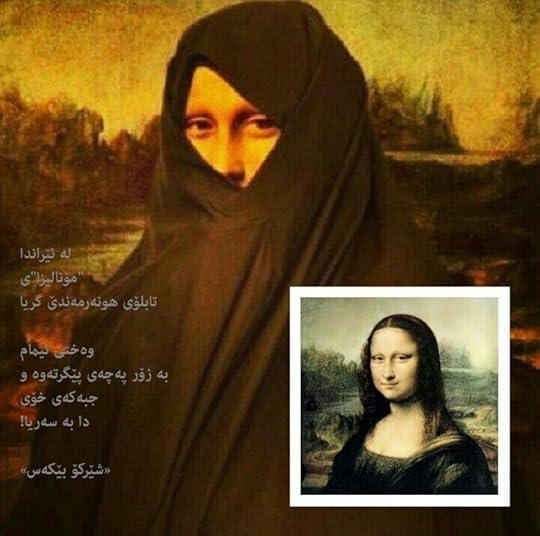
in Iran...........................................................................در ایران Mona Lisa..................................................................مونالیزا The artist's painting cried.................تابلوی هنرمندی گریست When Imam(Khomeini).......................................هنگامی که امام Covered the hairs by force....................با زور موهایش را پوشاند and pulled his aba on his head.....و عبای خود را بر سرش کشید Sherko Bekas
حجاب در ذهن اکثر مردم ایران بمعنای پاکی است و نداشتن حجاب و آراستن خود بمعنای بی بندو باری. اما اینها فقط نشان از ذهن بیمار ما دارد. این تعبیر بدان معناست که ریش تراشیدن ما مردها به معنای هرزگی باشد. ما هنوز درک نکرده ایم که طبیعت زن بیشتر از ما مردها عاشق زیبایی است و این هیچ ربطی به پاکی یا بی بندوباری ندارد در واقع هیچ روشنفکری با حجاب نه موافق است نه مخالف. این فقط ربط و بستگی به خود زن و اعتقاداتش دارد. اما در جامعه ما مردان و زنانی هستند که بر حجاب اجباری پا می فشارند. به قول بانو مسیحا "آیا این مردان می توانند فقط یک روز از صبح تا شب با روسری سر کنند؟" شاید اگر اینکار را می کردند کمی می فهمیدند که زنان چه می کشند یا از زنانی که به حجاب اجباری اعتقاد دارند می پرسم که اگر در کشوری آزاد به زور حجاب شما را بردارند چه حسی خواهید داشت؟ مونالیزاها حدود چهار دهه است که در ایران از این ظلم و اجبار می گریند ...و فریادشان به جایی نمی رسد
کاش ما کمی به این نصیحت هندوها که در قوانین "منو" در چند هزار سال پیش نوشته شده عمل می کردیم: هرگز با دیگران کاری نکن که اگر با تو بکنند، تو را ناراحت و معذب کند
:قسمتی از کتاب در زندگی با آدم های احمق زیادی سروکله خواهی زد. اگر آنها به تو آسیب رساندند، به حساب حماقت شان بگذار...چون هیچ چیز مانند کینه و انتقام جویی بد نیست...همیشه وقار خودت را حفظ کن و با خودت صادق باش «نصیحت مادربزرگ به مرجان»
El final me ha dejado destrozado. En general, esta segunda parte me ha gustado muchísimo más que la primera por varios motivos. El primero es que la vena revolucionaria de la protagonista, Marjane, comienza a aflorar. Es esa vena revolucionaria la que me ha encantado en este volúmen, pues ha sido con lo que más me he identificado de la historia. Además, hay ciertas situaciones de humor con comentarios o momentos del día a día, que hacen que la historia te llegue más porque la hacen más humana. Al fin y al cabo, la guerra y la presión política a veces es tan dura que parece irreal. Pero no, la autora consigue que su revolución se vea claramente, y te hace ver la importancia de tener ideas propias y de poner en jaque a los poderes políticos. El segundo motivo ha sido quizá el sentimentalismo que Satrapi alcanza en esta entrega, pues ya no solo el final, sino en varios capítulos, la manera de contar la historia y presentar a personajes secundarios es simplemente magistral. Y consigue que te emociones y te plantees seriamente qué harías en situaciones similares.
Sin duda, Persépolis 2 es una novela gráfica maravillosa. Estoy deseando poner mis manos en la tercera y cuarta parte.
Sinopsis: En el segundo tomo, la situación es cada vez más difícil. Muchos conocidos de la familia de la autora son torturados o asesinados, y los padres de Marjane deciden enviar a su hija al Liceo francés en Austria. El libro termina con una Marjane de catorce años despidiéndose de sus padres y su abuela en el aeropuerto. Me ha parecido un libro duro, sobre la vida, en este caso la niñez-adolescencia de la autora Marja. Se centra en los acontecimientos sucedidos en la época que va del 1979-1984, centrándose en la guerra contra Irak, pero también en la represión interna en el país, y como era el día a día. Finaliza con su salida del país yendo a Europa, concretamente a Austria. 8/10
Ese final me ha dejado con un nudo en la garganta... :( Este volumen me ha gustado más, sólo por el hecho de que se nota la transición de la niñez a la madurez y mayor consciencia de Marjane, a pesar de que sigue siendo una niña.
Hay tantas cosas que me han hecho hervir de rabia, situaciones que escapan de la lógica... por dios... es impactante, y cuesta mucho entender, comprender que esto sigue pasando.
Estos tomos se leen de una sentada y me tienen completamente enganchada. La forma de narrar en viñetas y a través del punto de vista de una adolescente la guerra entre dos países me parece muy interesante y estoy deseando leerme el siguiente para saber como continua.
En el blog ya está la reseña del primer tomo y espero hacerme pronto con el tercero para continuar la lectura ya que se leen de una sentada y me dejan con ganas de más.
En este volumen vemos el desarrollo de Marje, de como ha madurado a pesar de que sigue siendo una niña, entiende de manera más clara lo que pasa a si alrededor! Con un final un poco triste!
La grande partie de cette BD se passe durant la guerre contre l'Irak. C'est aussi le début de l'adolescence de Marjane. Cependant, avoir un esprit rebelle comme elle dans une Iran islamique peut parfois être dangereux.
Ce second tome est aussi bon que le premier même s'il est moins touchant. C'est parfois triste de voir une famille aussi libérale perdre ses droits au fur et à mesure que je nouveau régime affermit son pouvoir.
J'aime bien le style de Marjane Satrapi qui est aussi très rigolo.
هر چند ساتراپی همچنان طنز داستان رو مثل جلد اول این مجموعه حفظ کرده بود ولی قبول تغییرات و اتفاقات بعد انقلاب و بعدش جنگ ایران و عراق برای مردم اون قدر سخت و فجیع بود که میشه این جلد رو ناراحت کننده و غمبار تلقی کرد. این جلد جایی به پایان می رسه که والدین مرجان (نویسنده) در نهایت مجبور شدن تنها فرزندشون رو برای ادامه زندگی تو 14 سالگی به اطریش بفرستند
Este segundo tomo me ha gustado bastante más que el primero que es más introductorio, en este la historia se torna mucho más cruda y oscura, me ha gustado mucho, después de este si que le tengo verdaderas ganas al siguiente tomo. Aunque es verdad que a pesar de todo pienso que una historia como esta se vería mejor en una novela, daría lugar a darte más detalles políticos sobre los sucesos, pero eso es algo completamente personal, ya que soy consciente de que el haberlo hecho así tiene unos objetivos concretos.
*4.5 Even better than the first one! This one is darker as Marjane Satrapi is older in war time but it still has a certain charm. She has a wonderful way of being able to keep it very personal but still informative for anyone who is not super knowledgable about the war (like me). I also felt like I got to know Marjane in this comic book installement and it was just overall great!
¡Mejoró muchísimo! Se me sigue haciendo de esas historias que duele al leerse pero que aún así valen mucho la pena. Se me hace muy fuerte ver la evolución que va teniendo nuestra protagonista y como poco a poco su visión hacía ciertos aspectos se va oscureciendo (y también como simplemente empieza a aceptar algunas cuestiones). Esta historia te ayuda a valorar todo lo que tienes y asustarte por lo horribles que podemos llegar a ser los humanos. Nadie merece vivir así.
An updated review can be found in Persepolis: The Story of a Childhood ------------------------------------------------------- Full review found in The Complete Persepolis
Just like the first volume, Marjane Satrapi’s story has my whole attention – I read this in one go because I simply couldn’t put it down. I felt so, so sad while reading, because nobody deserves to go through as much as she did. Again, I highly recommend this.
Comme le premier tome, c'est super intéressant, facile d'accès et j'ai beaucoup d'empathie pour l'autrice. C'est une partie de l'histoire que je ne connaissais pas du tout et ce petit livre, construit avec des beaux dessins et des courts chapitres est à la portée de tout le monde. Je recommande.
Este tomo ha sido mi favorito de 2 que he leído. Tiene un 'inbetween' de la inocencia y el paso a la adolescencia de la autora, lo que lo hace muy interesante.
The change of pace and atmosphere from the first to this second volume is so clear that it's almost like 10 years have passed between the Marjane of the first volume and this one. But no, it was "just" 2 years in war, seeing the country suffer.
I thought it was so interesting the development of her storytelling and how she was able to more clearly address the war and its impacts. When she shared about the bombings and seeing people die as the first time she was seeing true violence it really caught my attention.
Marjane still writes from a place of high privilege and the anecdotes she shares about her parents, their parties, the travels, all signal a reality of very few at the time. This book would be very different if the privilege didn't existed, and it probably wouldn't exist at all if that were the case.
I'm enjoying the experience of reading it in French with the bookclub, as we're detailing each chapter and also discussing the language aspects.
Shows the teenage transformation. With lack of parents support, Marji manages to build herself up. Living in a completely new country, adhering to their customs and traditions was easy for her, but she refused to give into the pleasures of life. The parents come into the scene only in the latter half of the book. They are too good. I guess it's coz of the only child behaviour. They seem to be well developed, with a keen sense of understanding of their daughter. Amongst the wars going on, and gradually coming to peace with revolts on social rights, Marji establishes her place in the world, and the illustrator does the best art, minimalist and perfect. Gives hope to be able to build something amidst the everlasting crisis.
The second book is the perspective of a little Marjane to the war between Iran and Iraq. In the following we see how the war affected the life of people,which was already complicated under the influence of the Islamic regime.
This book is a bit more heavy than the first one, I think the author simply had more memories on the war than on the revolution. Thus I found it a bit darker, but the protagonist is still cute and witty, and this definitely brings lightness to reading.
I saw the movie of Persepolis first, and now I’m positively surprised of so many details that the actual book provides. In the movie this period of Marjane’s life is almost skipped.
zanimljiva mi je retrospektivna pozicija jer se bez obzira na to što je pisano mnogo posle rata, a u ime devojčice od 12-14 godina, oseća iskrenost i nekako svesnost čitave te ratne situacije, ali taman koliko treba, a da ne ispadne pametovanje iz pozicije odrasle osobe koja je to proživela (ovo je dosta loša artikulacija onoga što želim da kažem, no dobro - iako je pisala u ime sebe od 12-14 godina, sa svojih mnogo više, nema dodavanja "znanja" ili svesti o tom vremenu)
Entre mas leo esta historia me quedo con una sentimiento encontrado de no querer seguir leyendo y querer saber que pasa. La historia es muy buena, sin embargo no es una historia feliz. Es como la vidad, las cosas no siempre son como una espera. Sin embargo esta vida tuvo muchas dificultades sociales y politicas.
Estoy llorando después de terminar este volumen. No sé cómo demonios la gente puede creer en revoluciones y políticos. Realmente, lo que puede sacar adelante a un país es la integridad, la honestidad y el trabajo duro. Los fanatismos son el hundimiento de un país.
Se complica la situación del país, se complica la situación familiar, se complica por la edad y rebeldía que empieza a emanar de la protagonista. Me deja sin palabras como puede explicar y transmitir tanto en unas viñetas.