

What do you think?
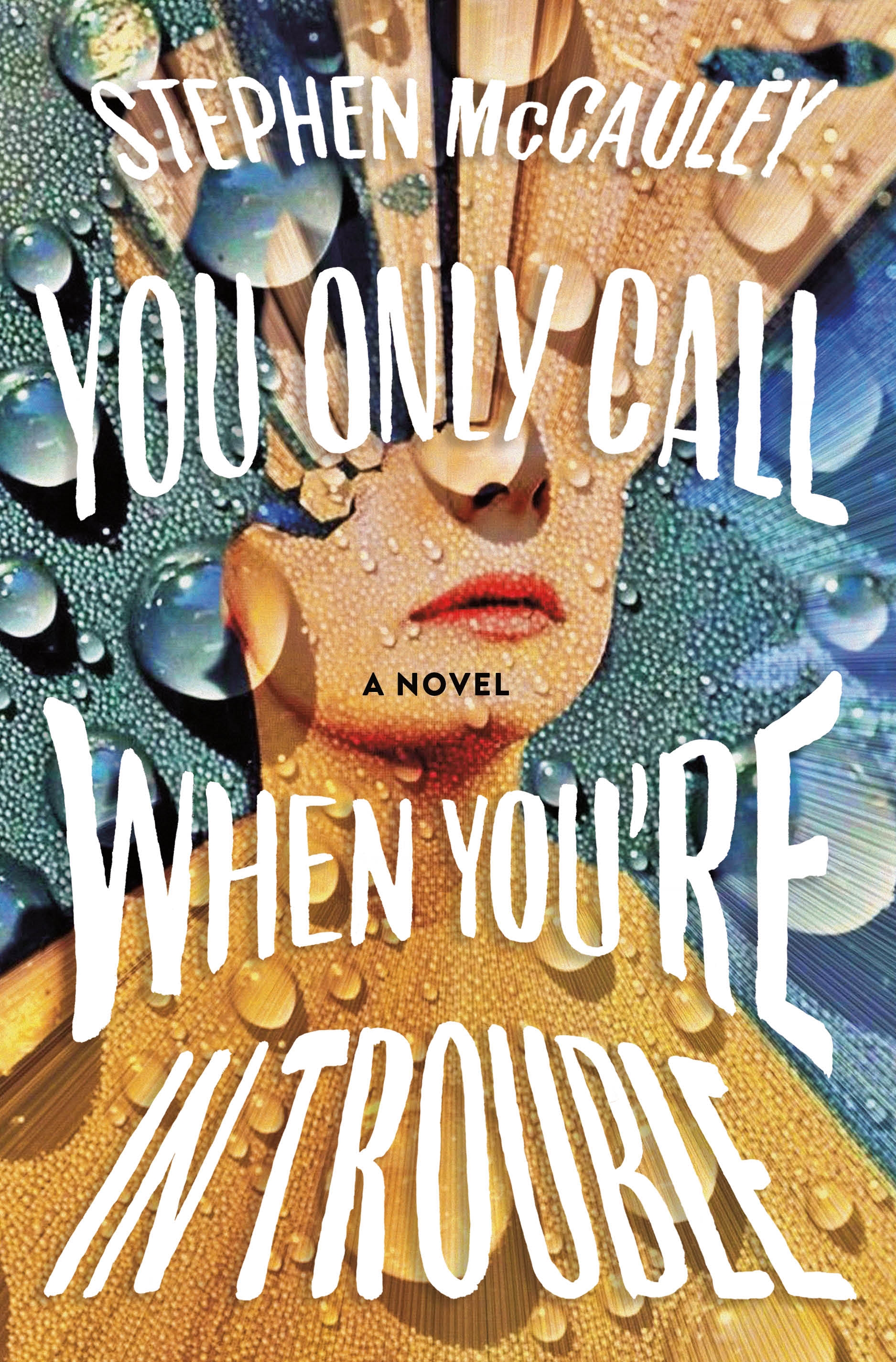
You Only Call When You're in Trouble
“I don’t think I will find a book I love more this year.”
—Jane Green, New York Times bestselling author
“Funny, poignant, joyous, explosive, but most of all affirming of our connections to one another. You Only Call When You're in Trouble is a book to cherish. A book that loves you back. What more could you want, my gosh? Read it!”
—Andrew Sean Greer, Pulitzer Prize-winning author of Less Is Lost
Is it ever okay to stop caring for others and start living for yourself?
After a lifetime of taking care of his impossible but irresistible sister and his cherished niece, Tom is ready to put himself first. An architect specializing in tiny houses, he finally has an opportunity to build his masterpiece—“his last shot at leaving a footprint on the dying planet.” Assuming, that is, he can stick to his resolution to keep the demands of his needy family at bay.
Naturally, that’s when his phone rings. His niece, Cecily—the real love of Tom’s life, as his boyfriend reminded him when moving out—is embroiled in a Title IX investigation at the college where she teaches that threatens her career and relationship. And after decades of lying, his sister wants him to help her tell Cecily the real identity of her father.
Tom does what he’s always done—answers the call. Thus begins a journey that will change everyone’s life and demonstrate the beauty or dysfunction (or both?) of the ties that bind families together and sometimes strangle them.
Warm, funny, and deeply moving, You Only Call When You’re in Trouble is an unforgettable showcase for Stephen McCauley’s distinctive voice and unique ability to create complex characters that jump off the page and straight into your heart.
—Jane Green, New York Times bestselling author
“Funny, poignant, joyous, explosive, but most of all affirming of our connections to one another. You Only Call When You're in Trouble is a book to cherish. A book that loves you back. What more could you want, my gosh? Read it!”
—Andrew Sean Greer, Pulitzer Prize-winning author of Less Is Lost
Is it ever okay to stop caring for others and start living for yourself?
After a lifetime of taking care of his impossible but irresistible sister and his cherished niece, Tom is ready to put himself first. An architect specializing in tiny houses, he finally has an opportunity to build his masterpiece—“his last shot at leaving a footprint on the dying planet.” Assuming, that is, he can stick to his resolution to keep the demands of his needy family at bay.
Naturally, that’s when his phone rings. His niece, Cecily—the real love of Tom’s life, as his boyfriend reminded him when moving out—is embroiled in a Title IX investigation at the college where she teaches that threatens her career and relationship. And after decades of lying, his sister wants him to help her tell Cecily the real identity of her father.
Tom does what he’s always done—answers the call. Thus begins a journey that will change everyone’s life and demonstrate the beauty or dysfunction (or both?) of the ties that bind families together and sometimes strangle them.
Warm, funny, and deeply moving, You Only Call When You’re in Trouble is an unforgettable showcase for Stephen McCauley’s distinctive voice and unique ability to create complex characters that jump off the page and straight into your heart.
336 pages, Hardcover
First published January 9, 2024
Ratings & Reviews
Friends & Following
Create a free account to discover what your friends think of this book!
Community Reviews
Displaying 1 - 30 of 537 reviews

January 15, 2024
You Only Call When You're in Trouble by Stephen McCauley is a Blend of Family and Literary Fiction!
In alternating chapters, we hear from the three main characters who are related, co-dependent, and sucking the life out of each other...
Tom is a gay sixty-something architect and father figure to his niece Cecily. He's experiencing a bad break-up with his long-time boyfriend, Alan, and struggling with several challenges at work.
Cecily is a professor in the thick of a Title IX investigation at the university she's currently suspended from. The stress of the accusation is playing havoc with her career path and her relationship with her boyfriend, Santosh.
Dorothy is Cecily's egotistic single mother and Tom's high-maintenance sister. She's using her life savings to open a retreat center in Woodstock, N.Y. with her business partner, and wellness expert, Fiona Snow.
And now, after thirty-four years, Dorothy decides she wants to tell Cecily who her father is...
You Only Call When You're in Trouble is my first glimpse at McCauley's writing style and storytelling. I found it to be a read filled with the flawed characters he's well-known for and a story that's humorous, engaging, and entertaining.
The humor is the kind you hear in your head about situations and individuals but wouldn't dare to speak them aloud. It's this continuous narrative of honest thoughts and opinions streaming through the story that kept me glued and continuously giggling. As I listened and giggled, with AirPods in my ears, my hubby looked at me like I was nuts.
This was an immersion reading experience through the gifted Digital Reading Copy and Advanced Listening Copy. The audiobook narrated by André Santana is my preference, but either format will deliver a great experience.
You Only Call When You're in Trouble is full of family and relationship drama from beginning to end. It holds serious, life-changing topics delivered in a witty, honest, and fun-loving narrative. By the end, I found these characters to be slightly more tolerable in an oddly endearing way and I recommend this book to readers who might feel the same!
4.25⭐
Thank you to NetGalley, Henry Holt and Co., Macmillan Audio, and Stephen McCauley for a DRC and an ALC of this book through NetGalley. It has been an honor to give my honest and voluntary review.
In alternating chapters, we hear from the three main characters who are related, co-dependent, and sucking the life out of each other...
Tom is a gay sixty-something architect and father figure to his niece Cecily. He's experiencing a bad break-up with his long-time boyfriend, Alan, and struggling with several challenges at work.
Cecily is a professor in the thick of a Title IX investigation at the university she's currently suspended from. The stress of the accusation is playing havoc with her career path and her relationship with her boyfriend, Santosh.
Dorothy is Cecily's egotistic single mother and Tom's high-maintenance sister. She's using her life savings to open a retreat center in Woodstock, N.Y. with her business partner, and wellness expert, Fiona Snow.
And now, after thirty-four years, Dorothy decides she wants to tell Cecily who her father is...
You Only Call When You're in Trouble is my first glimpse at McCauley's writing style and storytelling. I found it to be a read filled with the flawed characters he's well-known for and a story that's humorous, engaging, and entertaining.
The humor is the kind you hear in your head about situations and individuals but wouldn't dare to speak them aloud. It's this continuous narrative of honest thoughts and opinions streaming through the story that kept me glued and continuously giggling. As I listened and giggled, with AirPods in my ears, my hubby looked at me like I was nuts.
This was an immersion reading experience through the gifted Digital Reading Copy and Advanced Listening Copy. The audiobook narrated by André Santana is my preference, but either format will deliver a great experience.
You Only Call When You're in Trouble is full of family and relationship drama from beginning to end. It holds serious, life-changing topics delivered in a witty, honest, and fun-loving narrative. By the end, I found these characters to be slightly more tolerable in an oddly endearing way and I recommend this book to readers who might feel the same!
4.25⭐
Thank you to NetGalley, Henry Holt and Co., Macmillan Audio, and Stephen McCauley for a DRC and an ALC of this book through NetGalley. It has been an honor to give my honest and voluntary review.

January 22, 2024
I've been reading more adult releases this year and this one was on my radar. While it wasn't the best book, I found the characters to be intriguing.
You Only Call When You're in Trouble follows family members Tom, Cecily, and Dorothy. Tom has been a support system for Cecily and Dorothy for years and desperately wants to be able to do something for himself. Just when he's in a place where he can focus on his major architectural project, he finds out that Cecily is under Title IX investigation with her university and Dorothy suddenly wants to reveal to Cecily the true identity of her father.
What Worked: I love a book about family mess, and this definitely has plenty of it. From the relationship that Tom has with his sister and niece to the dynamics they all share with their friends, the reveals in this book left my jaw unhinged. I also think that McCauley did a wonderful job addressing the complexity of academia. Cecily is under a Title IX investigation for an alleged inappropriate relationship with a student. The investigation is, in a lot of ways flawed, but pushes Cecily to recognize what would most benefit her in her career. There were also some hilarious moments. I'm not sure if that was the intention of McCauley, but there were moments where I found myself chuckling at the characters especially those that included Dorothy.
What Didn't Work: Like other reviewers have stated before me, I felt like there was a gap in character development. While a lot of the personality traits that we find in each character are realistic, I feel like there were some full circle moments that were missing. The book also has some pacing issues. While I was ultimately intrigued by Cecily's narrative, Tom and Dorothy fell apart for me as I got closer to the end of the novel. It's almost as if the reveal of Cecily's father slowed down the potential development of them as characters. The dynamic between Cecily and Tom is endearing and I loved how much he cared for his niece; however, he's a piece of work and is probably the least likable character out of the three of them.
Overall, a solid read and I'll be checking out more from McCauley in the future.
You Only Call When You're in Trouble follows family members Tom, Cecily, and Dorothy. Tom has been a support system for Cecily and Dorothy for years and desperately wants to be able to do something for himself. Just when he's in a place where he can focus on his major architectural project, he finds out that Cecily is under Title IX investigation with her university and Dorothy suddenly wants to reveal to Cecily the true identity of her father.
What Worked: I love a book about family mess, and this definitely has plenty of it. From the relationship that Tom has with his sister and niece to the dynamics they all share with their friends, the reveals in this book left my jaw unhinged. I also think that McCauley did a wonderful job addressing the complexity of academia. Cecily is under a Title IX investigation for an alleged inappropriate relationship with a student. The investigation is, in a lot of ways flawed, but pushes Cecily to recognize what would most benefit her in her career. There were also some hilarious moments. I'm not sure if that was the intention of McCauley, but there were moments where I found myself chuckling at the characters especially those that included Dorothy.
What Didn't Work: Like other reviewers have stated before me, I felt like there was a gap in character development. While a lot of the personality traits that we find in each character are realistic, I feel like there were some full circle moments that were missing. The book also has some pacing issues. While I was ultimately intrigued by Cecily's narrative, Tom and Dorothy fell apart for me as I got closer to the end of the novel. It's almost as if the reveal of Cecily's father slowed down the potential development of them as characters. The dynamic between Cecily and Tom is endearing and I loved how much he cared for his niece; however, he's a piece of work and is probably the least likable character out of the three of them.
Overall, a solid read and I'll be checking out more from McCauley in the future.

June 24, 2023
Just as the main character, Tom gets drawn back into the drama of his family life, I get drawn to these types of books. He is considering retiring and new down time, but gets caught up in different problems with his extended family to the point he sidelines his entire life.
There is his flighty, impulsive, caring sister Dorothy who has her daughter Cecile. Dorothy always knows she can depend on her brother, Tom both for emotional and financial support.
Cecile is now in her 30’s and does depend significantly on her Uncle Tom. She has managed to create a fairly successful life, working as a Professor and is in love with Santos, her significant boyfriend. She has been brought up on Title IX charges involving a student that could derail her career. She lets her boyfriend’s mother speak to her terribly and then thanks her for her advice. She won’t speak to Santos about any of this. So, she needs some maturity.
The problem I had was all the family behaves like this. In different ways, each is completely lacking in insight and have no ability to set boundaries of any kind. I didn’t necessarily dislike them, as I felt each was trying, but just found it difficult to get too invested in anyone. As the story finally progresses and it looks like Tom, Dorothy, and Cecile all are going to make some much needed changes in their life, I felt cheated as the end didn’t really give a final outcome to each person’s situation.
I felt the novel had potential, but ultimately fell short for me.
Thank you NetGalley, Stephan McCauley, and Henry Holt & Company for a copy of this book. I always leave reviews of books I read.
There is his flighty, impulsive, caring sister Dorothy who has her daughter Cecile. Dorothy always knows she can depend on her brother, Tom both for emotional and financial support.
Cecile is now in her 30’s and does depend significantly on her Uncle Tom. She has managed to create a fairly successful life, working as a Professor and is in love with Santos, her significant boyfriend. She has been brought up on Title IX charges involving a student that could derail her career. She lets her boyfriend’s mother speak to her terribly and then thanks her for her advice. She won’t speak to Santos about any of this. So, she needs some maturity.
The problem I had was all the family behaves like this. In different ways, each is completely lacking in insight and have no ability to set boundaries of any kind. I didn’t necessarily dislike them, as I felt each was trying, but just found it difficult to get too invested in anyone. As the story finally progresses and it looks like Tom, Dorothy, and Cecile all are going to make some much needed changes in their life, I felt cheated as the end didn’t really give a final outcome to each person’s situation.
I felt the novel had potential, but ultimately fell short for me.
Thank you NetGalley, Stephan McCauley, and Henry Holt & Company for a copy of this book. I always leave reviews of books I read.

January 27, 2024
Kindly gifted by the publisher, thanks! :)
All my opinions are my own:)
----
Nice story about family and how things can get complicated even when the love is there.
I thought there could been some more deeper character development and expanding on certain events but overall I enjoyed reading this one (while also being glad it wasn't my family).
It was sweet how close Tom and Cecily were :)
Tom I thought could have used some therapy. Most likely he wouldn't have gone though.
There was a vibe of slightly suffocating but unable to walk away that I picked up on throughout. It added a certain heaviness to the story, felt like you couldn't quite make your way out of it.
At the end, the story kind of stops and leaves things kinda resolved.
Fitting really, since life isn't always wrapped up in a neat bow.
3.5 stars 🌟
All my opinions are my own:)
----
Nice story about family and how things can get complicated even when the love is there.
I thought there could been some more deeper character development and expanding on certain events but overall I enjoyed reading this one (while also being glad it wasn't my family).
It was sweet how close Tom and Cecily were :)
Tom I thought could have used some therapy. Most likely he wouldn't have gone though.
There was a vibe of slightly suffocating but unable to walk away that I picked up on throughout. It added a certain heaviness to the story, felt like you couldn't quite make your way out of it.
At the end, the story kind of stops and leaves things kinda resolved.
Fitting really, since life isn't always wrapped up in a neat bow.
3.5 stars 🌟

January 12, 2024
I absolutely loved this! The only downfall that it had in it was the plethora of characters, but other than that, this was just astoundingly amazing in every way!
Stephen McCauley is an absolute genius when it comes to writing about desperately flawed people. He weaves the story in a way that makes the reader engaged in the lives of these characters. Another achievement in the writing style that opens the readers mind, sits them down and plays a movie within.
My reading experience was one where you knew a master storyteller was at the helm, and you were in good hands!
5 stars ⭐️!!!
Stephen McCauley is an absolute genius when it comes to writing about desperately flawed people. He weaves the story in a way that makes the reader engaged in the lives of these characters. Another achievement in the writing style that opens the readers mind, sits them down and plays a movie within.
My reading experience was one where you knew a master storyteller was at the helm, and you were in good hands!
5 stars ⭐️!!!

December 10, 2023
Thank you for the ARC from Henry Holt & Co in exchange for an honest review.
I wanted to love this book. But there were too many missing pieces, too many gaps in personal awareness and development. First, the summary is somewhat misleading. The story isn't really about Tom, the story is set and told from the perspective of three main characters, Tom, Dorothy and Cecily (with one random chapter about Fiona). All of them have periods of self awareness in the story but they never truly have that aha moment that allows them to improve or move on - drove me crazy. Maybe Cecily did, but without providing spoilers, I thought it just missed the mark.
I found Tom to be an especially unlikeable character that sees that he always puts others first but doesn't also see that he enjoys putting those other people first - it's sometimes much easier to do that than to pay attention to yourself (and then blame those people for your situation later). The only redeeming character I found was Charlotte - she was a much needed breath of fresh air.
I'm sure to some people this will be a very fun and enjoyable novel that they can relate to. Unfortunately I found it frustrating.
I wanted to love this book. But there were too many missing pieces, too many gaps in personal awareness and development. First, the summary is somewhat misleading. The story isn't really about Tom, the story is set and told from the perspective of three main characters, Tom, Dorothy and Cecily (with one random chapter about Fiona). All of them have periods of self awareness in the story but they never truly have that aha moment that allows them to improve or move on - drove me crazy. Maybe Cecily did, but without providing spoilers, I thought it just missed the mark.
I found Tom to be an especially unlikeable character that sees that he always puts others first but doesn't also see that he enjoys putting those other people first - it's sometimes much easier to do that than to pay attention to yourself (and then blame those people for your situation later). The only redeeming character I found was Charlotte - she was a much needed breath of fresh air.
I'm sure to some people this will be a very fun and enjoyable novel that they can relate to. Unfortunately I found it frustrating.

February 2, 2024
3.5⭐️
This was an entertaining family drama, heavy on the D-R-A-M-A! The story follows Dorothy, her daughter Cecily and her brother Tom who is more like a father to Cecily than an uncle. All 3 are dealing with individual dramas as well as some interconnected family struggles. I found Cecily’s story the most intriguing but Dorothy’s POV was the most entertaining for me, she cracked me up. I had a really hard time connecting to Tom and his story, I loved his affection for Cecily but outside of that he was my least fav character to follow.
There were some pacing issues for me, but it evened out more in the second half of the book. I thought the way it ended gave just enough detail while still leaving a lot open to interpretation which worked for me but may not work for someone who wants everything wrapped up in a neat bow. I think it could have used a touch more character development to make it really shine, but I still really enjoyed and would recommend it.
Thanks Henry Holt Books for the gifted copy!
This was an entertaining family drama, heavy on the D-R-A-M-A! The story follows Dorothy, her daughter Cecily and her brother Tom who is more like a father to Cecily than an uncle. All 3 are dealing with individual dramas as well as some interconnected family struggles. I found Cecily’s story the most intriguing but Dorothy’s POV was the most entertaining for me, she cracked me up. I had a really hard time connecting to Tom and his story, I loved his affection for Cecily but outside of that he was my least fav character to follow.
There were some pacing issues for me, but it evened out more in the second half of the book. I thought the way it ended gave just enough detail while still leaving a lot open to interpretation which worked for me but may not work for someone who wants everything wrapped up in a neat bow. I think it could have used a touch more character development to make it really shine, but I still really enjoyed and would recommend it.
Thanks Henry Holt Books for the gifted copy!

November 19, 2023
***Won an ARC via giveaway
Family is complicated, and this book embraces a particularly complicated one. This was a wonderful read. Great characters, with realistic, complicated lives and relationships. The story is alternately funny, sad, mysterious, and frustrating in all the ways normal life is. The ending wraps things up for the reader, but not so neatly that it isn’t believable.
Family is complicated, and this book embraces a particularly complicated one. This was a wonderful read. Great characters, with realistic, complicated lives and relationships. The story is alternately funny, sad, mysterious, and frustrating in all the ways normal life is. The ending wraps things up for the reader, but not so neatly that it isn’t believable.

January 5, 2024
Thank you to Goodreads, the author, and the publisher for this giveaway.
I started this book with high hopes and was drawn in quickly to the immediate chaos of family and personal drama. It gave me “A Streetcar Named Desire” vibes during the first half; a sort of train wreck you don’t want to see, but also can’t look away from, and a curiosity to see who survives.
The story is centralized around Tom, his sister Dorothy, and her daughter Cecily. The plot itself is a good idea, it just lacked the thoroughness needed for so many main characters to be fully realized and the supportive characters given any finality. At the end there were a few major holes in how each of the characters ended up, and one of the secondary characters just straight disappears.
My biggest issue with the story overall was Cecily’s relationship with Santosh. I genuinely couldn’t see any solid reason they were together in the first place, and their actual moments in their relationship felt cringy.
Left with questions and some plot holes, it’s just not my cup of tea.
I started this book with high hopes and was drawn in quickly to the immediate chaos of family and personal drama. It gave me “A Streetcar Named Desire” vibes during the first half; a sort of train wreck you don’t want to see, but also can’t look away from, and a curiosity to see who survives.
The story is centralized around Tom, his sister Dorothy, and her daughter Cecily. The plot itself is a good idea, it just lacked the thoroughness needed for so many main characters to be fully realized and the supportive characters given any finality. At the end there were a few major holes in how each of the characters ended up, and one of the secondary characters just straight disappears.
My biggest issue with the story overall was Cecily’s relationship with Santosh. I genuinely couldn’t see any solid reason they were together in the first place, and their actual moments in their relationship felt cringy.
Left with questions and some plot holes, it’s just not my cup of tea.
This entire review has been hidden because of spoilers.

November 13, 2023
Thank you to Netgalley and Henry Holt & Co. for providing an eARC in exchange for an honest review!
A great contemporary read about family drama and the ties that bind, full of comedy and heart. You Only Call When You're In Trouble follows three protagonists: down-on-her-luck college professor Cecily, her eccentric, flighty mother Dorothy, and Dorothy's brother Tom (an architect specializing in small structures, like guesthouses, and reeling from a recent separations). The characters are real and sympathetic, and their problems and conflicts are intriguing and build tension without ever leaning too far into melodrama. The writing style was quick and dry and witty, which made this an enjoyable read and also a fast one! It reminded me of a less comedic version of a book by Elyssa Friedland or Andrew Sean Greer.
5 stars! Would absolutely recommend!
A great contemporary read about family drama and the ties that bind, full of comedy and heart. You Only Call When You're In Trouble follows three protagonists: down-on-her-luck college professor Cecily, her eccentric, flighty mother Dorothy, and Dorothy's brother Tom (an architect specializing in small structures, like guesthouses, and reeling from a recent separations). The characters are real and sympathetic, and their problems and conflicts are intriguing and build tension without ever leaning too far into melodrama. The writing style was quick and dry and witty, which made this an enjoyable read and also a fast one! It reminded me of a less comedic version of a book by Elyssa Friedland or Andrew Sean Greer.
5 stars! Would absolutely recommend!

January 14, 2024
TW: Language, drinking, toxic family relationships, cheating, alcoholism, toxic parent relationships, sexual assault, depression, anxiety
*****SPOILERS*****
About the book:
After a lifetime of taking care of his impossible but irresistible sister and his cherished niece, Tom is ready to put himself first. An architect specializing in tiny houses, he finally has an opportunity to build his masterpiece—“his last shot at leaving a footprint on the dying planet.” Assuming, that is, he can stick to his resolution to keep the demands of his needy family at bay.
Naturally, that’s when his phone rings. His niece, Cecily—the real love of Tom’s life, as his boyfriend reminded him when moving out—is embroiled in a Title IX investigation at the college where she teaches that threatens her career and relationship. And after decades of lying, his sister wants him to help her tell Cecily the real identity of her father.
Tom does what he’s always done—answers the call. Thus begins a journey that will change everyone’s life and demonstrate the beauty or dysfunction (or both?) of the ties that bind families together and sometimes strangle them.
Release Date: January 9th, 2024
Genre: Fiction
Pages: 336
Rating: ⭐
What I Liked:
1. The cover is a stunner
2. Storyline sounded good
What I Didn't Like:
1. I was bored
2. All the characters are unlikeable and whiny
Overall Thoughts:
I really wanted to know the story behind Cecily and her suspension from school for sexual assault. I feel like the just gave it up to early and let us know what had happened. Honestly I feel like they should have kept it going a little bit longer to keep the mystery happening. Unfortunately that's the only mystery in this whole entire book it feels like and once that's given up you're just kind of dragged along with this story.
I just didn't find Tom to be very caring or interesting. He goes on and on about how much he cares about his boyfriend (ex) but then all he talks about is what is he's wearing or do you want to get back together because I'm horny. I just didn't find Tom a very caring human so I find it hard to believe he even cared about Cecily or anyone else.
Final Thoughts:
Dnf at page 100. Book was interesting when I first started it but as I progressively moved on it just got lesser and lesser interesting. It felt like the story never progressed and we were just stuck in this like limbo of characters doing the same thing over and over again.
Normally I would push through a book because I had the audiobook from the publisher but I just don't care where this book goes. I think perhaps if the characters were more interesting or the story was less boring and I could really be more invested
IG | Blog
Thanks to Netgalley, Macmillan Audio, and Henry Holt & Company for this advanced copy of the book. All thoughts and opinions are my own.
*****SPOILERS*****
About the book:
After a lifetime of taking care of his impossible but irresistible sister and his cherished niece, Tom is ready to put himself first. An architect specializing in tiny houses, he finally has an opportunity to build his masterpiece—“his last shot at leaving a footprint on the dying planet.” Assuming, that is, he can stick to his resolution to keep the demands of his needy family at bay.
Naturally, that’s when his phone rings. His niece, Cecily—the real love of Tom’s life, as his boyfriend reminded him when moving out—is embroiled in a Title IX investigation at the college where she teaches that threatens her career and relationship. And after decades of lying, his sister wants him to help her tell Cecily the real identity of her father.
Tom does what he’s always done—answers the call. Thus begins a journey that will change everyone’s life and demonstrate the beauty or dysfunction (or both?) of the ties that bind families together and sometimes strangle them.
Release Date: January 9th, 2024
Genre: Fiction
Pages: 336
Rating: ⭐
What I Liked:
1. The cover is a stunner
2. Storyline sounded good
What I Didn't Like:
1. I was bored
2. All the characters are unlikeable and whiny
Overall Thoughts:
I really wanted to know the story behind Cecily and her suspension from school for sexual assault. I feel like the just gave it up to early and let us know what had happened. Honestly I feel like they should have kept it going a little bit longer to keep the mystery happening. Unfortunately that's the only mystery in this whole entire book it feels like and once that's given up you're just kind of dragged along with this story.
I just didn't find Tom to be very caring or interesting. He goes on and on about how much he cares about his boyfriend (ex) but then all he talks about is what is he's wearing or do you want to get back together because I'm horny. I just didn't find Tom a very caring human so I find it hard to believe he even cared about Cecily or anyone else.
Final Thoughts:
Dnf at page 100. Book was interesting when I first started it but as I progressively moved on it just got lesser and lesser interesting. It felt like the story never progressed and we were just stuck in this like limbo of characters doing the same thing over and over again.
Normally I would push through a book because I had the audiobook from the publisher but I just don't care where this book goes. I think perhaps if the characters were more interesting or the story was less boring and I could really be more invested
IG | Blog
Thanks to Netgalley, Macmillan Audio, and Henry Holt & Company for this advanced copy of the book. All thoughts and opinions are my own.

January 13, 2024
‘You Only Call When You’re In Trouble’ by Stephen McCauley follows the family unit of Tom, Cecily, and Dorothy. With humor, honesty, and warmth it enraptures the complicated mess of family, relationships, career turmoil, and setting boundaries to save your well-being.
Brother and Sister, Tom and Dorothy have a relationship that is more similar to a parent and child. Tom has always taken the role of being a responsible caretaker while Dorothy has been a free-spirited nonconformist in all aspects of her life, including motherhood. This has left Tom playing surrogate father to his niece Cecily since Dorothy claims to not know the identity of Cecily’s birth father.
The story begins as this dysfunctional co-dependent dynamic has reached its boiling point…
Alan, Tom's boyfriend has left him since he always prioritizes Cecily. While heartbroken and in denial, his new work struggles have him scheming to make sure he’s not forced into an early retirement.
Cecily’s battling a Title IX investigation due to an encounter with her student has put her career and her relationship in jeopardy.
Dorothy is risking everything for her latest endeavor while deciding to reveal a secret she has kept from her family for decades.
This book was like a family reunion gone wrong in the best way. I LOVED the writing style and I thoroughly enjoyed the plot. It’s so fun when the build-up in tension for each character's storylines all collide together. The pacing worked for me as Stephen seamlessly shifted POVs between the 3 of them and the side characters were great additions that made me laugh a lot.
We all play roles in our families that can be difficult to shake and what has worked in the past might not work forever. I haven’t read this type of family unit before and it was so refreshing. All of their separate dramas were interesting and even though I didn’t want to say goodbye to the characters, im happy it ended with realistic and cathartic conclusions for them all.
If you like reading about complicated family relationships with sarcastic dry humor and a teeny bit of romance, I recommend adding to your TBR!
Thank you HH for the copy💕 I will now add Stephen’s earlier work to my reading list!
4.25⭐️
Brother and Sister, Tom and Dorothy have a relationship that is more similar to a parent and child. Tom has always taken the role of being a responsible caretaker while Dorothy has been a free-spirited nonconformist in all aspects of her life, including motherhood. This has left Tom playing surrogate father to his niece Cecily since Dorothy claims to not know the identity of Cecily’s birth father.
The story begins as this dysfunctional co-dependent dynamic has reached its boiling point…
Alan, Tom's boyfriend has left him since he always prioritizes Cecily. While heartbroken and in denial, his new work struggles have him scheming to make sure he’s not forced into an early retirement.
Cecily’s battling a Title IX investigation due to an encounter with her student has put her career and her relationship in jeopardy.
Dorothy is risking everything for her latest endeavor while deciding to reveal a secret she has kept from her family for decades.
This book was like a family reunion gone wrong in the best way. I LOVED the writing style and I thoroughly enjoyed the plot. It’s so fun when the build-up in tension for each character's storylines all collide together. The pacing worked for me as Stephen seamlessly shifted POVs between the 3 of them and the side characters were great additions that made me laugh a lot.
We all play roles in our families that can be difficult to shake and what has worked in the past might not work forever. I haven’t read this type of family unit before and it was so refreshing. All of their separate dramas were interesting and even though I didn’t want to say goodbye to the characters, im happy it ended with realistic and cathartic conclusions for them all.
If you like reading about complicated family relationships with sarcastic dry humor and a teeny bit of romance, I recommend adding to your TBR!
Thank you HH for the copy💕 I will now add Stephen’s earlier work to my reading list!
4.25⭐️

February 6, 2024
Note: Because I listened to this book, I may spell characters’ names incorrectly; as much as I can, I will try to give the correct spelling.
Tom has edged into his 60s and realizes that his best years are perhaps behind him, especially career-wise. But now he has one last chance to make an impact. He has designed a guesthouse (a masterpiece!) for a wealthy couple, both of whom he’s known for years but who don’t feel any loyalty toward him as their architect. Meanwhile, his beloved niece Cecily is being investigated for a Title IX violation and his impulsive sister Dorothy has just sunk her savings into a retreat center led by the supposedly insightful Fiona. While Tom may wish that he could finally live his life without running to the aid of his sister or niece, it doesn’t seem as if that time has yet arrived in You Only Call When You’re in Trouble by Stephen McCauley.
You Only Call When You’re in Trouble is a wonderfully warm-hearted and thoughtful story about family told from multiple viewpoints, the family at the center of the story as well as peripheral ones. We see how mothers differ, from Stephen’s, who, upon the death of his father, tells him that he’s the man of the family now and forever instills Tom’s duty-bound sense of responsibility to Sanjosh’s (Cecily’s partner) mother who is the head of her family even with her husband alive. We see how families differ from the traditional ones with both parents to Cecily’s with her single mother and her uncle as stand-in father.
McCauley does a superb job of showing the humanness of these characters even those we feel we already know, imparting information that makes us alter our opinions. Cecily begins the novel as an earnest woman who allows life to happen to her but sees that that is no way to live a life, certainly not the life that she realizes that she wants and deserves. Of all of the characters, perhaps because of her youth, she changes the most and its extremely satisfying to read about her metamorphosis.
Indeed, You Only Call When You’re in Trouble is a quietly fist-pumping novel, giving the reader a happy “Yes!” of an ending but also one that is regretfully open-ended. I wanted more. I wanted to see what the years ahead were going to bring Tom, Cecily, and Dorothy. I hope good things.
I have never read any Stephen McCauley before but I will seek out his past novels now and hope that they are as good as this one!
Regarding the audio narration. For the most part Andre Santana did a good job, allowing me to become immersed in the story. However, some of his pronunciations pulled me out of the story, though not permanently.
Many thanks to Macmillan Audio for providing a copy.
Tom has edged into his 60s and realizes that his best years are perhaps behind him, especially career-wise. But now he has one last chance to make an impact. He has designed a guesthouse (a masterpiece!) for a wealthy couple, both of whom he’s known for years but who don’t feel any loyalty toward him as their architect. Meanwhile, his beloved niece Cecily is being investigated for a Title IX violation and his impulsive sister Dorothy has just sunk her savings into a retreat center led by the supposedly insightful Fiona. While Tom may wish that he could finally live his life without running to the aid of his sister or niece, it doesn’t seem as if that time has yet arrived in You Only Call When You’re in Trouble by Stephen McCauley.
You Only Call When You’re in Trouble is a wonderfully warm-hearted and thoughtful story about family told from multiple viewpoints, the family at the center of the story as well as peripheral ones. We see how mothers differ, from Stephen’s, who, upon the death of his father, tells him that he’s the man of the family now and forever instills Tom’s duty-bound sense of responsibility to Sanjosh’s (Cecily’s partner) mother who is the head of her family even with her husband alive. We see how families differ from the traditional ones with both parents to Cecily’s with her single mother and her uncle as stand-in father.
McCauley does a superb job of showing the humanness of these characters even those we feel we already know, imparting information that makes us alter our opinions. Cecily begins the novel as an earnest woman who allows life to happen to her but sees that that is no way to live a life, certainly not the life that she realizes that she wants and deserves. Of all of the characters, perhaps because of her youth, she changes the most and its extremely satisfying to read about her metamorphosis.
Indeed, You Only Call When You’re in Trouble is a quietly fist-pumping novel, giving the reader a happy “Yes!” of an ending but also one that is regretfully open-ended. I wanted more. I wanted to see what the years ahead were going to bring Tom, Cecily, and Dorothy. I hope good things.
I have never read any Stephen McCauley before but I will seek out his past novels now and hope that they are as good as this one!
Regarding the audio narration. For the most part Andre Santana did a good job, allowing me to become immersed in the story. However, some of his pronunciations pulled me out of the story, though not permanently.
Many thanks to Macmillan Audio for providing a copy.

February 11, 2024
While the writing was great here there was just something about the characters and their journeys I didn't connect with, maybe it was the kind of non-acknowledgement of how privileged each and every character was.
You Only Call When You're In Trouble follows a family of three, Tom, the 'put upon' brother, Dorothy 'the wild child who cultivates failures' and Cecily, her daughter and Tom's niece, who has life issues and asks for the help of her uncle more than her mother.
This was an easy read and no matter what my feelings for the characters, I didn't struggle through it or feel like putting the book down. I picked it up and was pretty absorbed so I thought it was an engaging read. My problem was mostly that I was just so unsatisfied with the characters, who they were, what they discovered about themselves and their relationships, that I can't say I enjoyed it overall.
Dorothy who is supposed to be this big irresponsible failure to her family at some point talks about how she has 150k in the bank while also owning an expensive property and investing funds. My mom's backstory of single motherhood and drug addiction has some similar points, but she had to borrow a hundred dollars for her NEEDED prescription the other day . Like these people are obscenely privileged and wealthy to many. They all act like they are on the verge on ruination with only this little nest egg of expensive properties and a full bank account to fall back on and when most of their 'troubles' are completely self inflicted (Tom: you didn't have to build the guest house or pay for her expensive private school - thats what loans are for or cheaper state schools).
I also feel we are told more than shown where Tom's put upon attitude comes from and made me disconnect from him quite a bit.
Overall, the characters were a miss but I wouldn't hesitate to check out other works by McCauley. The writing was lovely with some interesting asides and good pacing.
You Only Call When You're In Trouble follows a family of three, Tom, the 'put upon' brother, Dorothy 'the wild child who cultivates failures' and Cecily, her daughter and Tom's niece, who has life issues and asks for the help of her uncle more than her mother.
This was an easy read and no matter what my feelings for the characters, I didn't struggle through it or feel like putting the book down. I picked it up and was pretty absorbed so I thought it was an engaging read. My problem was mostly that I was just so unsatisfied with the characters, who they were, what they discovered about themselves and their relationships, that I can't say I enjoyed it overall.
Dorothy who is supposed to be this big irresponsible failure to her family at some point talks about how she has 150k in the bank while also owning an expensive property and investing funds. My mom's backstory of single motherhood and drug addiction has some similar points, but she had to borrow a hundred dollars for her NEEDED prescription the other day . Like these people are obscenely privileged and wealthy to many. They all act like they are on the verge on ruination with only this little nest egg of expensive properties and a full bank account to fall back on and when most of their 'troubles' are completely self inflicted (Tom: you didn't have to build the guest house or pay for her expensive private school - thats what loans are for or cheaper state schools).
I also feel we are told more than shown where Tom's put upon attitude comes from and made me disconnect from him quite a bit.
Overall, the characters were a miss but I wouldn't hesitate to check out other works by McCauley. The writing was lovely with some interesting asides and good pacing.

February 27, 2025
I found this to be an interesting novel about incredibly flawed yet comic characters who are not only struggling through life and self but also always seem on the verge of self awareness yet never achieve it. I loved every moment of this and while the ending fell a bit under, enough that I can't justify a 5 star rating, it was still an overall beautiful story.

January 28, 2024
I have read more family dramas lately, and I picked this one up mostly based on the wonderful title (but also that cover amiright?) and it did not disappoint. In this dysfunctional family we have Tom, his sister Dorothy, and his niece Cecily. Tom adores his niece who is going through some trouble at the college where she teaches, and neither are close with his sister Dorothy, who gives him a call to help her tell Cecily who her father really is. He always finds himself in the middle, and he always helps even though he knows this is the case. I loved spending time with this family and all their flaws, there was plenty of humor in here which I appreciated and I loved how it all wrapped up. The audio was an absolute delight and this was a great read in between a few thrillers.
Thank you to Macmillan Audio for the ALC to review.
Thank you to Macmillan Audio for the ALC to review.

January 19, 2024
Here’s a dynamic that I can’t say I’ve ever read about before—niece/uncle! What a breath of fresh air this one was. Cecily and her uncle, Tom have a very special relationship. Not knowing the identity of her father, Cecily always viewed Tom as the father figure in her life. With a not-so reliable mother, Tom was always the one she called when she was in trouble. He would always answer, and help dig her out of a hole. This novel is full of drama, drama, drama and extremely character-driven. The reader receives the inside scoop on both Tom and Cecily’s personal lives. Everything from their romantic relationships, career issues, and grievances regarding Dorothy, their mom/sister. If you love reading about complex family dynamics, then this is definitely the book for you. You Only Call When You’re in Trouble is out now! I give it 4/5 stars!

January 25, 2025
A lovely story with eclectic characters about family, love, and overcoming what life throws into our paths. I would absolutely recommend this one!

January 29, 2024
3.5 stars
A gently warm and funny family story, though the family’s a little offbeat. Tom is Cecily’s uncle, though he’s more like the father Cecily never had. Cecily’s mother, Dorothy, is beautiful but feckless, and Tom has always stepped in to rescue both, financially or emotionally, but especially Cecily, who’s the emotional centre of Tom’s world. Cecily is at least grounded, a tenure-track professor, though she’s currently being investigated for an inappropriate relationship with a student, threatening both her career and her actual relationship. Tom, an architect. is currently experiencing a spot of professional trouble himself; he’s been told in no uncertain terms that he’d better land his latest prestige project or he can kiss his job goodbye. Dorothy invites them both to Woodstock, New York, where she’s about to unveil her latest money-burning project, a wellness centre fronted by a very unpleasant self-help guru. Oh, and she needs Tom’s help in telling Cecily who her father is (she’s always refused to say anything about it, but it seems it’s time). Bohemian, hippie-dippy Woodstock is the perfect place for all the chaos to unfurl, and for Tom and Cecily to find some new ways forward through their personal and professional difficulties.
A gently warm and funny family story, though the family’s a little offbeat. Tom is Cecily’s uncle, though he’s more like the father Cecily never had. Cecily’s mother, Dorothy, is beautiful but feckless, and Tom has always stepped in to rescue both, financially or emotionally, but especially Cecily, who’s the emotional centre of Tom’s world. Cecily is at least grounded, a tenure-track professor, though she’s currently being investigated for an inappropriate relationship with a student, threatening both her career and her actual relationship. Tom, an architect. is currently experiencing a spot of professional trouble himself; he’s been told in no uncertain terms that he’d better land his latest prestige project or he can kiss his job goodbye. Dorothy invites them both to Woodstock, New York, where she’s about to unveil her latest money-burning project, a wellness centre fronted by a very unpleasant self-help guru. Oh, and she needs Tom’s help in telling Cecily who her father is (she’s always refused to say anything about it, but it seems it’s time). Bohemian, hippie-dippy Woodstock is the perfect place for all the chaos to unfurl, and for Tom and Cecily to find some new ways forward through their personal and professional difficulties.

June 19, 2025
2025 is the year I try to go back and read some of the books on my "want to read" list, most of which have ended up there because I tried to win it through a GR Giveaway here. This is one of those titles, and it's just...I really don't know how to describe it.
Is there family drama? Absolutely. But most of it is due to actions by the characters, who make bad choices damn near all the time. And they almost all seem very wishy-washy, as if they make these bad decisions because they're so afraid to make ANY decision. If I could have smacked these people and told them to snap out of it, I absolutely would have done so.
Does this have a happy ending? Depends on how you define "happy". So yes and no.
Is this like watching a slow car wreck involving people you don't really like? HELL YEAH!!! Which still has me scratching my head as to why I actually finished it. I didn't really connect with any of the main characters, nor did I like any of the supporting cast. So why did I keep reading, especially when I've finally gotten to a point in my life where I no longer feel compelled to finish every book I start? I have no idea. No, really, I just do NOT know why I kept going...guess it's the car wreck analogy again. Just couldn't look away.
Is there family drama? Absolutely. But most of it is due to actions by the characters, who make bad choices damn near all the time. And they almost all seem very wishy-washy, as if they make these bad decisions because they're so afraid to make ANY decision. If I could have smacked these people and told them to snap out of it, I absolutely would have done so.
Does this have a happy ending? Depends on how you define "happy". So yes and no.
Is this like watching a slow car wreck involving people you don't really like? HELL YEAH!!! Which still has me scratching my head as to why I actually finished it. I didn't really connect with any of the main characters, nor did I like any of the supporting cast. So why did I keep reading, especially when I've finally gotten to a point in my life where I no longer feel compelled to finish every book I start? I have no idea. No, really, I just do NOT know why I kept going...guess it's the car wreck analogy again. Just couldn't look away.

October 15, 2023
I can vividly remember reading The Object Of My Affection by Stephen McCauley when it was published in 1987 and I was a 27 year old single woman living in Chicago. I was thrilled to receive a copy of Stephen McCauleys latest book which is to be published in 2024 and provide this review thanks to the author, publisher and NetGalley.
The descriptions of his main characters and the situations they experience is extremely well written.
It is entertaining and intriguing to read how Tom, his sister .Dorothy, and his niece Cecily navigate the struggles of their lives.
I loved this book!
The descriptions of his main characters and the situations they experience is extremely well written.
It is entertaining and intriguing to read how Tom, his sister .Dorothy, and his niece Cecily navigate the struggles of their lives.
I loved this book!

January 7, 2024
This book hit me right in the feels. Estranged family relationships and learning to live with the decisions you make hits pretty close to home. Absolutely loved the very last chapter.
December 13, 2023
This novel is so very good. It drew me in from the first page and kept my interest throughout. I enjoyed the stories within the story. I highly recommend it. Thank you to the author, Stephen McCauley, Henry Holt and Company and Goodreads Giveaways for the opportunity to receive this book.

March 7, 2024
I tore through the first half of this book but slowly lost steam. I think perhaps there were too many characters tossed in that didn’t really add anything but extra pages. Loved the dynamic between Tom and Cecily, Tom and Alan, Tom and his career, Cecily and Neeta; felt underwhelmed by Fiona, Santosh, Molly (kept thinking she had secret motives that were never paid off), and Victor (felt unnecessary). I’ve known women like Dorothy—he captured that personality type perfectly. Overall, glad I read it. Will likely read whatever the author puts out next🤷🏻♀️
January 20, 2024
I couldn’t put this down. I was touched by all the characters in this book (and there were a lot). This was a story about making family and relationships work when the world seems against them. It wasn’t sad, predictable, or too dramatic. I constantly read lines that were simple and relatable in a way that sometimes shocked me. Loved it!

February 3, 2024
This book was just okay. I picked it up based on an NPR review, mostly because it was “funny.” Not so much. The beginning dragged, but I liked the ending.

September 3, 2024
A brighter sunnier world is easy to picture in this modern family dramedy with a gem of a guncle at its core.

March 19, 2024
How to Exist: Boundaries Edition
Successful adulthood, as a shared experience, seems to be best encroached upon as a continual stream of human discoveries made in hindsight. As such, it seems worth mentioning that we will probably learn the most important, esoteric truths after tripping over them and faceplanting. You freak out just one time at a wedding reception, crashing into a table of hors d’oeuvres while sobbing—next thing you know, you’re sitting on a tufted couch unpacking your mother’s penchant for leaving you at home for days on end with nothing more than a freezer full of Bagel Bites and some off-brand soda. Societally, we seem to be more consumed than ever with the questions that stem from these, our most shameful and discordant moments:
1.) How did I get to where I’m currently at? and
2.) What, if anything, can I do about it?
“Here” can function either as a cursory glance at one’s personal situation or a close scrutiny of our culture’s makeup. Such emerge the underlying questions looming over us like storm clouds: what is the best way to be, anyway, and why does it seem like everyone around me is conspiring to make it harder for me to become that? Seeking to be a healed, well-developed adult in 2024 seems at once complex, frequently challenging, and unavoidably necessary, especially when one is given to an honest mind and at least a few moments of contemplative silence. ‘Nomsayin’?
This book seems to tackle these admittedly overexposed questions with humility, a fair dose of levity, and the precision of a scalpel’s edge. Frankly, “You Only Ever Call When You’re in Trouble” is a masterwork in what I’ve dubbed the “Greta Gerwig-ification” of fiction. In it, we closely tail a single, fractured family, along with the many dissolving relationships left in the wake each of the three (okay, maybe four) members leave behind them. Meanwhile, we take a journey through the family dynamics that play into the underpinnings of their most personal misgivings.
This works at both the lexical and storytelling levels, because while this makes for a truly captivating read, you can also see the blind spots contributing to the multitude of issues present in their lives. While identifying with many of the characters, I could also see exactly what I would say to each, would they be the kind of friend I could brunch with..
This book is also marvelously written, frankly. Stephen McCauley seems to possess the “everyman” empathy that previous generations crowned John Updike the spokesperson of. He also has a rather keen sense of moral conviction, not too unlike literature’s other big “John”. Unlike Steinbeck, however, McCauley seems far more interested in posing questions rather than presenting solutions.
He writes the lives of his spectrum of characters beautifully, putting each through the crucible with a sense of honesty and delicacy. There is humor, certainly, but it never feels too tongue-in-cheek (we get it, John Franzen, you are funny in the most Mensa way conceivable). Everyone is at a hard impasse, it seems, but no one in this novel takes themselves quite so seriously (even when they, perhaps, should). Ultimately, YOCWYT reads like a kind of atlas of 2024’s zeitgeist: how we define success, the upbringings that inform those definitions, our obsession with holistic wellbeing, and how to navigate the minefield of easy, false answers presented to us daily.
If you have ever experienced a season of life in which you hyperfixated on ”attachment styles”, family psychology, personal development; or if you are currently in the process of dismantling your less-than-healthy coping mechanisms, McCauley will likely be right up your bowling alley. Our ramshackle mental health revolution is a confusing one, certainly, fueled by algorithms and described in myriad testimonies a lá Bessel van der Kolk. This book is a brilliant offering, asking us to look at how we choose tackle the complex, captivating relationships that keep us wide-awake at night and pleasantly dissociative during the day; all those tricky thought distortions that drive us to—and away from—one another at our most pivotal moments.
Successful adulthood, as a shared experience, seems to be best encroached upon as a continual stream of human discoveries made in hindsight. As such, it seems worth mentioning that we will probably learn the most important, esoteric truths after tripping over them and faceplanting. You freak out just one time at a wedding reception, crashing into a table of hors d’oeuvres while sobbing—next thing you know, you’re sitting on a tufted couch unpacking your mother’s penchant for leaving you at home for days on end with nothing more than a freezer full of Bagel Bites and some off-brand soda. Societally, we seem to be more consumed than ever with the questions that stem from these, our most shameful and discordant moments:
1.) How did I get to where I’m currently at? and
2.) What, if anything, can I do about it?
“Here” can function either as a cursory glance at one’s personal situation or a close scrutiny of our culture’s makeup. Such emerge the underlying questions looming over us like storm clouds: what is the best way to be, anyway, and why does it seem like everyone around me is conspiring to make it harder for me to become that? Seeking to be a healed, well-developed adult in 2024 seems at once complex, frequently challenging, and unavoidably necessary, especially when one is given to an honest mind and at least a few moments of contemplative silence. ‘Nomsayin’?
This book seems to tackle these admittedly overexposed questions with humility, a fair dose of levity, and the precision of a scalpel’s edge. Frankly, “You Only Ever Call When You’re in Trouble” is a masterwork in what I’ve dubbed the “Greta Gerwig-ification” of fiction. In it, we closely tail a single, fractured family, along with the many dissolving relationships left in the wake each of the three (okay, maybe four) members leave behind them. Meanwhile, we take a journey through the family dynamics that play into the underpinnings of their most personal misgivings.
This works at both the lexical and storytelling levels, because while this makes for a truly captivating read, you can also see the blind spots contributing to the multitude of issues present in their lives. While identifying with many of the characters, I could also see exactly what I would say to each, would they be the kind of friend I could brunch with..
This book is also marvelously written, frankly. Stephen McCauley seems to possess the “everyman” empathy that previous generations crowned John Updike the spokesperson of. He also has a rather keen sense of moral conviction, not too unlike literature’s other big “John”. Unlike Steinbeck, however, McCauley seems far more interested in posing questions rather than presenting solutions.
He writes the lives of his spectrum of characters beautifully, putting each through the crucible with a sense of honesty and delicacy. There is humor, certainly, but it never feels too tongue-in-cheek (we get it, John Franzen, you are funny in the most Mensa way conceivable). Everyone is at a hard impasse, it seems, but no one in this novel takes themselves quite so seriously (even when they, perhaps, should). Ultimately, YOCWYT reads like a kind of atlas of 2024’s zeitgeist: how we define success, the upbringings that inform those definitions, our obsession with holistic wellbeing, and how to navigate the minefield of easy, false answers presented to us daily.
If you have ever experienced a season of life in which you hyperfixated on ”attachment styles”, family psychology, personal development; or if you are currently in the process of dismantling your less-than-healthy coping mechanisms, McCauley will likely be right up your bowling alley. Our ramshackle mental health revolution is a confusing one, certainly, fueled by algorithms and described in myriad testimonies a lá Bessel van der Kolk. This book is a brilliant offering, asking us to look at how we choose tackle the complex, captivating relationships that keep us wide-awake at night and pleasantly dissociative during the day; all those tricky thought distortions that drive us to—and away from—one another at our most pivotal moments.

January 14, 2024
Witty and heartfelt, about family and love and disappointments, hopes and dreams, focused on three members of one family: Cecily, 30, an academic who loves her Pakistani boyfriend and loves teaching and has found herself and her career and her love life in trouble because of a student, her mother Dorothy, a woman who raised Cecily as a single mother, amidst a group of friends, a woman who never stops hoping and planning and living her life, even as she mostly doesn't win, and Cecily's uncle, Dorothy's brother, Tom, the one they both lean on, for money, for emotional support, an architect who specializes in building small spaces and whose own life is in turmoil. The ins and outs of their lives over a period of time, wound through with social commentary that is pointed but light. Enjoyable.

January 23, 2024
Stephen McCauley's first novel was published in 1987, but this new one was the first for me, and I am delighted to have found him. He is commonly described as a comic novelist; it's not broad, laugh-out-loud funny, but rather the comic sensibility of the removed onlooker like Shakespeare, Swift, Thackeray, and, yes, Jane Austen. His characters are complex and multi-layered, and I found myself invested in all of them. McCauley shows an empathy for each, a tolerance and understanding for foibles and a pride in achievements. The plot is complicated, and the resolution is satisfying if a little too sudden and slick-quite appropriate for literary comedy. His prose style is bright and spiced with dry wit and irony. I haven't enjoyed a contemporary novel so much in quite a while, and I look forward to enjoying McCauley's earlier work.
Maureen Corrigan's review on January 17, 2024:
https://www.npr.org/2024/01/17/122494...
Maureen Corrigan's review on January 17, 2024:
https://www.npr.org/2024/01/17/122494...
Displaying 1 - 30 of 537 reviews