The word 'chastity', at first sight, may seem intimidating, something to be dismissed out of hand. It is, however, something very different to celibacy.
At a time when religion is in decline in the Western world and when it often seems that the senses have run riot, Erik Varden shows that chastity, the single minded direction of the senses, is a loveable quality and one that affects and beautifies humankind.
The terms sexuality and wholeness indicate that to be sexual is to exist in a state of incompleteness longing to be restored. Wholeness points to a healing embrace that we desire so greatly. In Biblical language, chastity is a function of simplicity of sight. We are no longer torn apart by our passions and our desires, indeed they may reach their fulfilment. Body and spirit, male and female, order and disorder, passion and death can move from creative tension to a new kind of wholeness.
Varden's text is enriched by a wide range of references to scripture, literature, music, painting and sculpture.
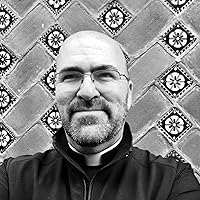
Erik Varden is a monk and bishop, born in Norway in 1974. In 2002, after ten years at the University of Cambridge, he joined Mount Saint Bernard Abbey in Charnwood Forest. Pope Francis named him bishop of Trondheim in 2019.
Primer libro que leo de Erik Varden. Es un prodigio de referencias culturales para mí desconocidas. Varden entiende bien y conoce con profundidad el sentir del hombre posmoderno y sus anhelos más hondos...detecta y descubre la ausencia de un sentido antropológico doloroso y tragico. Y lo que es más valioso: sabe presentar desde esa búsqueda de sentido, el mensaje cristiano con una autenticidad atrayente. Una gran aportación.
Far from a didactic lecture on the virtue, this was a gently lyrical (and at times surprising) exploration of human nature and the human heart. The heart of the person as expressed in sexuality, with all the complexity and potential therein.
This is an excellent book on the human person and our complex reality of sexuality, which touches all of one’s life whether married, celibate, or single. I definitely recommend this read for all who are looking for a more profound understanding of the beautiful integration that is chastity in the human person.
Great little work encouraging us to see chastity not as the absence and denial of a good thing but a full orientation towards the good. This Roman Bishop does a commendable job recognising how both the faithful celibate and married couple point each other in different ways to the true reality of the church. The only thing really knocking this down to a four star is the fact that Varden far too often practices etymological haruspicy in an attempt to find the true meaning behind words, which is a practice that at best I am skeptical of.
an appealing work of christian anthropology, drawing on a variety of sources from 'high' culture to patristics (as varden always does in his blog writings), primarily seeking to correct the stale connotations around chastity and redefine it more holistically (which is, expectedly, successful) and full-bloodedly (which is, apart from a couple of highlights — i.e. mackay brown's "magnus" paragraphs; "for she loved much" analysis — less so)
the absence of any mention of homosexuality was a glaring and disappointing omission in a work that otherwise seemed neatly tied together and touched on closely adjoining topics. pleasant reading overall, with a lot of enjoyable insights and commentary, but as a whole not much more than an appendix of sorts to the theology of the body
It was not what I expected at all but very good nonetheless ! To know what to expect, the reader has to focus on the second part of the title "reconciliation of the senses" more than on the first part "chastity" for this book is not so much a study of chastity as it is one of human desires and the ingrained connection between our senses and our bodies. I have to say that I was quite blown away by the first part of the book as Father Varden focused on the Incarnation and the true meaning of the Son being "The image of God the Father" and of us being made in the image of God only if we "dwelled in the Son". To speak on the human body Father Varden also referenced a book called "The cave of treasures" (and this book jumped on my to read list) and its themes of the different vestments that God gave to Adam from the robes of glory and their loss through nakedness, to the man-made shame of fig-leaves and finally to the God given skin-garnments also called in arabic "mercy clothed".
After this absolutely stellar first part, I have to admit that I liked the second part much less, even though it was quite interesting. The second part of the book focused on the complementarity of the female and male body and on the desire and ache that a woman or a man has for his other part to make him/her whole. It was very interesting, but most of the references and examples were of a secular nature and as much as I understood that Father wanted there to point at a universal human experience, I did not feel very comfortable with some of them. Finally at the end of the book, Father Varden approached the subject of the challenges of the practice of chastity, citing the examples of saints, martyrs but also of monks through the sayings of the desert fathers. There Father presented to us chastity as a path of return to the honest, uncorrupted and innocent gaze of a child but also warned us against judgements on our brothers and sisters struggles on this path.
All in all, this book was very interesting and is effectively a study of the senses adressed to the christian community as a whole, no matter each individual's state of life. I only regretted two things : the amount of secular, and sometimes a bit unsettling references, but I do understand what Father Varden tried to do by presenting us the complete human experience of desires in their original unspoiled states as well as in their corrupted ones. And my second regret concerned the very little part adressed to actual Chastity and virginity in this vast thesis, as it was only really adressed in the last pages of the book.
I would still recommend this book, for the reader will learn many things in it, and I admit that I have a great admiration for the author, as any bookish person has in front of well-read polyglot !
A lovely contemplation on how the virtue of chastity, as properly understood, allows one to become truly human. That is, to live as one who was created in the image and likeness of God. I will revisit this book time and time again!
On a side note—the combination of Bishop Varden’s spiritual depth and intellectual prowess is unparalleled in the Church today. His writing is always a great source of spiritual fruit in my life—I can’t recommend it enough. Here is a link to his blog— https://coramfratribus.com
Absolutely beautiful. I'm so so glad I read this. We rarely truly ponder chastity as a virtue. It's only ever hotly debated, criticized, or enforced. Varden shows how complex and layered human desire is, without being dogmatic or didactic about sexuality at all. Insightful, even for non-Christians.
Erik Varden is a gifted writer whose previous book The Shattering of Loneliness: On Christian Remembrance I much appreciated. In Chastity: Reconciliation of the Senses, Varden examines what strikes most of the world as one of the most "puritanical" virtues (indeed, it would be too narrow to limit chastity purely to sexuality as the cultivation of temperance in most all areas of life is good practice, but as Louise Perry notes in The Case Against the Sexual Revolution: A New Guide to Sex in the 21st Century, we have reached a point in Western society in which virginity, especially even male virginity, is disparaged).
Like C.S. Lewis in The Four Loves, Varden mines church tradition and high culture to inspire and texture his reflections. Yet I think that this dilutes the book in the end; yes, for being a monk and bishop Varden has insightful ruminations about chastity (I appreciated how tenderly he writes of those who succumb to sexual temptation; rather than vilifying them for moral offence - though he acknowledges failings as sin - he recognizes how often those who fall are either driven to darkness by loneliness or enthralled to addiction) but it still seems a bit too cerebral, even disembodied, to appeal to Richard Wagner's opera Tristan and Isolde or poetry for material in which to draw out how we such pursue chasteness in our callings in modern life. Yes, appeals to art can provide some shared work to which we look to in order to explore meaning and significance together, but I am not sure Emil Boyson's poems will stimulate the undergrad to temperance. But then, I am also being unfair; most people who pick up a book on chastity these days are likely readers who already recognize its goodness, rather than an apologetic for it, and in that case, Varden's book offers percipient reflections.
A beautiful and provocative book, all in all. There are two images which will particularly stick with me: the gyrovagrant and the omnivagrant (the former being like a mule who is tethered and can only circle and empty well, while the latter is free to go anywhere), and the idea of mankind possessing an iconic nature beneath his fallen human nature. The latter is tied to the unfallen state in which we were created, clothed in glory and innocence. I like the idea of a God-intended nature being hidden in our depths, towards which our desires call, buried beneath the murk of fallen nature and confused in its experience. These insights take up the first quarter of the book and is really spectacular reading and inspiring of new vision.
Going on from this, the book presses for new sources and angles from which to understand and explore the Gospel’s call to chastity. He leans on modern literature and theatre in ways that are at times edgy but always thought provoking and profound. These sections proceed from a consideration of man’s visceral experience of Eros, emotionally, spiritually, and psychologically. In the third quarter he moves to a consideration of the Sayings of the Desert Fathers which is perhaps the least profound segment in its content, not because of the sayings themselves, but merely because it is ground well-covered by many before him - chastity as a change of sight/way of seeing, etc.
This is a beautiful and wise book. I have read it twice now and am sure I will read it many more times in the future. Lots of good Syriac material in there as well, both from St Ephrem and the Cave of Treasures.
Having finished my first read-through of this book, with a quick glance back at the first few paragraphs, I think this book’s purpose is as follows: to uncover the true meaning of chastity from beneath the abuses, misconceptions, and caricatures that have buried it for some time now. Bp. Varden has wonderfully put out a reminder to us all – intended for both the Church and the world – that chastity is no mortifying suppression of our ‘true self’, but rather a reintegration and reconciliation of all that makes us human into that blessed order God made us to live in. Rather than presenting a systematic definition of chastity, which is honestly what my engineering-trained brain was looking for as I went into this book, Varden illuminates the virtue by ‘appealing to universal experience, then trying to read such experience in the light of revelation.’ On this front, I think he absolutely succeeded. Calling upon playwrights, musicians, artists, authors, monks, composers, martyrs, poets, rabbis, and more, he uses art in all its forms to beautifully paint the ‘tensions’ that all humans live in. The point of this? To remind us that these tensions are unnatural and provisional, yet precious parts of the human experience that remind us of where we come from, where we are, and where we are going. “That is why I am keen to ground my reflection on chastity in the narrative of a dignified substance divinely adorned, then stripped of glory, reduced to a state of confused desire, ever wanting more than earthly life can provide yet able, even among thorns, to know moments of exultant joy, proceeding homeward – whether or not one knows where home is – robed in mercy.”
I'm not sure what exactly to say of this. A Roman Catholic book on sanctification that combines helpful wisdom, useful spiritual insights and strange (to protestant ears) anecdotes and details of monasticism.
It is helpful at teaching its reader to consider all Things as signs pointing to God and hence all desires as desires that ought to be directed (directly or indirectly) to him; with any other path being disordered and ultimately dissatisfying.
Whilst I found parts of this helpful, I probably don't recommend it.
I was a big fan of this book, especially Bishop Varden's many references to art. He often seemed to be speaking to me. Also, he concludes by talking about the picture of St. Matthew on the cover, and tomorrow providentially is his feast day!
The author of the book is Erik Varden, who holds the titles of both monk and bishop. The primary focus of the text is a semantic exploration of chastity. It is important to note that chastity should not be equated with celibacy. While celibacy represents a specific and relatively uncommon vocation, chastity is a virtue that is applicable to everyone.
The institutionalization of chastity may have contributed to feelings of frustration and deviation, primarily due to a narrowed perspective that was originally meant to expand emotional capacity but ultimately restricted it to a suffocating degree. By confining chastity solely to the mortification of the senses, it becomes a mechanism that undermines the development of one's character.
The English word 'chaste' has its roots in the Romance languages, deriving from the Latin 'castus,' which itself can be linked to the Greek adjective 'katharos,' meaning 'pure.'
This work represents the author's endeavor to liberate the concept of chastity from the confines of overly restrictive classifications, thereby enabling it to expand, extend its reach, and engage in a more liberated expression, potentially even to the point of vocalization.
As an individual committed to the practice of chastity, I found this book to be satisfactory. I was unaware at the time of purchase that the author held the position of a bishop. While there is nothing inherently problematic about this, I noted that the text was predominantly focused on Orthodox Christian themes. The content related to his faith significantly outweighed the discussions on chastity. Nevertheless, when the author addressed chastity directly, I found his insights to be profoundly relatable.
Only took 2 years to finish this book but Bishop Varden again calls us to remember that the ascetic life of contemplation of the Divine is not merely the task of the desert fathers and mothers but of all the baptized.
Reading about chastity from a Trappist monk’s (now bishop’s) perspective helped me to broaden my understanding of it as a virtue. Thinking about it in terms of what our unfallen bodies would have naturally known made it clear that grace is such a necessity in striving for Heaven in a world cut off from Eden. I also liked how Varden linked chastity with integrity, giving us a broader sense of what it truly means to live chastely in any relationship with others.
I appreciated the many linguistic, literary and musical references that were made throughout, although I found the book a bit too brief for the subject matter.
El libro podría resumirse en una sola palabra: Fascinante. El autor, noruego, converso y obispo -en ese orden- trata el tema de manera sencilla y elocuente, y para muestra un boton:
“Quiero fundamentar mi reflexión sobre la castidad en el relato de una sustancia dignificada y divinamente adornada, luego despojada de gloria, reducida a un estado de deseo confuso, queriendo siempre más que lo que la vida terrena puede ofrecer y sin embargo capaz, aun entre espinas, de vivir momentos de alegría exultante, avanzando hacia su casa —sepa o no dónde está—, revestida de misericordia.”.
Hágase lector un favor e hínquele el diente cuanto antes. Es un texto corto, además; ideal para templar el espíritu en medio de los tiempos que corren /AE
Really interesting look at chastity - not just in the sense we're all thinking of, but in terms of all the senses. Bp Varden looks at the idea of 'wholeness' and understanding what makes us soul and body, and how that fits in with how God calls us. "When God proceeded to form man with his right hand, he made him from the four created elements: heat and cold, dryness and moisture. Another wonder: making an image of Himself, why would God make use of such beggarly stuff? He did it so that, by them, all things would be subject to man and show their purpose through him." p.37
At the beginning Varden talks about how Adam moved outside the garden of Eden and slowly we have moved further and further away (The Cave of Treasures) and how we were clothed in skins; turning this into being clothed with light after the coming of Jesus.
He then moves on to talk about 'Tensions' (in the senses and body), and 'Negotiating Passion', how we can find redemption through forgiveness of our sins, but also how we can sustain our 'purity of soul' from the wiles of the devil (but how he can still use our past to haunt us). "St Mary of Egypt, who spent an energetic career as a prostitute in Alexandria for seventeen years, told Abba Zossima that she lived, after her conversion, with vivid mental and physical memories of her professional life for a corresponding seventeen years." p.137
The book does talk about chastity in relation to sexuality as well but looks at chastity with a more holistic view than merely being sexual. "Sexuality is more than a matter of physical need, physical functions. It is 'an overflowing, an inundation of soul'. p.68 It further talks about how chastity is often misunderstood even within the Church: "An error Christians have often made is to assume that chastity is somehow normal; but no, it is exceptional." p121
I liked the way the author used many stories regarding music to show his themes. In 'Tensions' we see about the 'fatal eros' and how our emotions are connected with so much of our being that it feels like it can be fatal. "He [Christoph Schlingensief] says he has come to believe that Wagner's music is dangerous music, celebrating not life, but death." p.90 "Eros, be it through high art, touches depths in us for which we have no words. It calls forth a sacrificial impulse of which we may not be aware - except in the darkness of the night."p.91
Ultimately, in a world which is now almost devoid of ethics and morals, it is a reminder of what we, as Christians, are called to do by God and His Church.
Maravillosa obra. Me ha acompañado en una Pascua contemplativa. Pudiera parecer que no es un libro que aborde directamente la cuestión de la muerte y resurrección de Jesús (a efectos de acompañar en una Pascua), pero la realidad es que es un libro para toda época. Para reflexionar sobre la condición humana, las virtudes y la lucha espiritual para llevarlas a plenitud, sobre todo en estos tiempos. La edición y traducción, además, es magnífica y llena de detalles y matices que enriquecen mucho la lectura y la reflexión
Chastity is a word that we find uncomfortable but through this excellent deep dive into the concept, Varden enables us to see that chastity is more about being fully directed in one direction and in doing so freed from the fragmentation that we often feel when pulled in multiple directions by different desires.
Erik Varden’s understanding of chastity is one that has really helped me to think deeper about desire and my purpose as a person in such a way that has enabled me to be inspired and empowered to live a life fully alive.
I would recommend this book for all and especially those who feel like they are lost in a fragmentation of their inner life, confused as to what they are meant to be.
This book is absolutely incredible and I would recommend it to anyone! Varden masterfully weaves so many novels, plays, musicals, scripture, and artwork into his writing. I loved it!
“To do something beautiful for its own sake, for the intrinsic delight of it, without thought of gain: this, I'd say, is a way of beginning to live chastely in this world, poised to balance elegantly on whatever surging billow providence provides as a means to bear us homeward, towards the shore.”
I love the connections the author makes to the transcendentals. Deep and insightful book, but best for readers who have a good philosophical anthropology foundation.