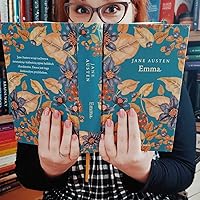
Η Λόις Ρεντλ θα έφευγε από το γραφείο του κ. Σαντλς για να ξεκινήσει τη νέα της δουλειά ως ιδιαιτέρα γραμματέας κοντά στη λαίδη Μόρον, σε ένα περιβάλλον που της ήταν ολότελα άγνωστο μα που, όπως φανταζόταν τουλάχιστον, θα ήταν ευχάριστο και θα την ανέβαζε κοινωνικά. Φυσικά μετρούσε και ο μισθός που ήταν πολύ μεγάλος. Όμως ο νέος της διορισμός θα άρχιζε με κάποιο δυσοίωνο περιστατικό.
Ένας νέος άντρας, ο Μάικλ Ντορν, με ευχάριστο παρουσιαστικό και επίμονους τρόπους, θα προσπαθούσε να της μεταδώσει κάποια δυσπιστία και επιφυλακτικότητα για τις προοπτικές που ανοίγονταν μπροστά της. Η Λόις, άνθρωπος που δεν δεχόταν ποτέ παρεμβάσεις στην ιδιωτική της ζωή, θα αδιαφορούσε και θα έβαζε στη θέση του τον φορτικό συμβουλάτορα της. Πόσο πολύ θα μετάνιωνε θα το μάθαινε μόνο η ίδια, όταν λίγο αργότερα μια σειρά από ανεξήγητα περιστατικά θα έρχονταν να αναστατώσουν τη ζωή της βάζοντάς την μάλιστα σε κίνδυνο.
Richard Horatio Edgar Wallace (1875-1932) was a prolific British crime writer, journalist and playwright, who wrote 175 novels, 24 plays, and countless articles in newspapers and journals.
Over 160 films have been made of his novels, more than any other author. In the 1920s, one of Wallace's publishers claimed that a quarter of all books read in England were written by him.
He is most famous today as the co-creator of "King Kong", writing the early screenplay and story for the movie, as well as a short story "King Kong" (1933) credited to him and Draycott Dell. He was known for the J. G. Reeder detective stories, The Four Just Men, the Ringer, and for creating the Green Archer character during his lifetime.
I enjoyed the story, the atmosphere and the characters. It's fast paced enough and so keeps the readers' interest. Some things where rather revealed abruptly and I would have liked to know what happened to some characters involved in the case that weren't mentioned in the end. The punishment of the main villain wasn't satisfactory also.
Αν εξαιρέσουμε τις δύο πρώτες σελίδες που μάλλον φταίει η μετάφραση, το υπόλοιπο μου άρεσε πολύ ως γραφή, ως υπόθεση και ως ατμόσφαιρα. Δεν μου άφησε απορίες, κράτησε το ενδιαφέρον μου μέχρι το τέλος και όλοι οι χαρακτήρες έπαιξαν κάποιον ρόλο στην ιστορία. Δεν ένιωσα να υπάρχει κάπου "κοιλιά". Δεν μπορώ να καταλάβω γιατί έχει πάρει άσχημες κριτικές.
Gosh but I wish British authors would learn to spell! It becomes a constant headache having to correct their mistakes, seeing words like kerb, centre, neighbour, and gaol and having to mentally substitute the correct curb, center, neighbor, and jail. There's the constant 'ise' where 'ize' is correct and 'se' where 'ce' should be. What makes it worth the effort is if the story itself holds your interest. In the case of Edgar Wallace's THE STRANGE COUNTESS it was a struggle.
The plot itself is good enough, and perhaps in 1925 wasn't as time-worn as it seems today, only then I realized I'd seen it in a movie adaptation of the work and there wasn't much excitement after that.
Wallace was an extremely successful writer. He was a crappy human being, but he definitely was successful and is generally my go-to author when I need a pick-me-up. But because it held no surprises I found myself taking a more critical eye at his style. Wallace's stories are fast-paced and the action seldom lags. They zip along to where several hours will pass without your realizing it. And for the most part, he uses simple uncomplicated words.
His protagonists though... Take Michael Dorn in this story. He is a typical Wallace hero in that nothing escapes him. He's always there when needed. If the girl is about to be run down by an auto, he's there to pull her aside. He always knows what the villain is plotting and, save for the part toward the end where the girl just has to be captured, is always around to frustrate him. He has all the background on the villain, yet never steps in to arrest him until the end. He's omniscient but doesn't act on it when it counts.
Then there's 'that' issue. Wallace dictated his stories onto cylinders which his secretary then transcribed. If the secretary wasn't sure what Wallace was saying, he'd make up something on his own. This dictated style lends the tale an air of conversation, as though you were sitting at your grandpa's knee and hearing him spin a tall tale. The problem with this conversational style is too many things slip in which could be done away with. For instance, Wallace's dreadful overuse of 'that'. My gosh, but he will use the word three times in a single sentence. It's perhaps not something you'd notice in everyday speaking, but to read it over and over becomes grating. Modern writers tell you to eliminate 'that' completely. 'He told me that he knew that' improves considerably without it.
A bit of editing would have cleared these errors, but I don't think Wallace had time for editing since he was constantly having to churn out novels to pay his horse racing debts. Which subsequently left his family penniless when he died.
THE STRANGE COUNTESS concerns a girl brought in to be a secretary to a countess. From the start, she has a number of near-accidents that could cost her life. This goes on and on until the truth is revealed, a rather far-fetched truth relying on the long arm of coincidence. I don't think Wallace had any idea how to end the thing and came up with a pull-it-out-your-ass explanation. The villains who plotted extortion, fraud, kidnapping, and murder, in the end, go unpunished, or if anything did happen it goes unmentioned, and the behind-the-scenes guy who backed the entire rescue operation is as unlikely as they come.
Still, hey, it's not a bad novel. Read it, let it zip along, and don't judge it with too critical an eye and you'll have a good time with it.
Don’t Countess Your Chickens Before They Are Hatched
Okay, this is a most inane pun, maybe it’s not even a pun at all, but just execrable dross. However, after reading Edgar Wallace’s The Strange Countess, I felt this seemed the most natural thing to say on the novel in which an obstreperous stalker turns out to be a detective who protects the interests of a young orphan against the machinations of a sinister countess.
As I wrote in one of my other reviews on a Wallace novel, the author usually shut himself up in a room with a bountiful supply of cigarettes and tea and then dictated his story into wax cylinders, which usually took him two or three days. Two or three days to write a novel! While the outcome can surely not be expected to be of lasting literary value, of conjuring up a haunting atmosphere or creating memorable characters, there is definitely some power in most of those novels. I had hardly read two or three chapters into The Strange Countess when I found myself hopelessly hooked, being handed over from one of the short chapters to the next one, seeing where some of the quite obvious hints were going to lead to, but being baffled by others. The whole background story is, of course, very hard to believe and depends on a lot of coincidences so that even the author himself does not bother to shed any light on one of the most important premises of the plot – how the Countess found out about our heroine Lois Reddle. But one is quite willing to accept this since the yarn is fun reading.
Unfortunately – and this makes me give rather three than four stars –, at the end Wallace seems to have run out of cigarettes, or tea, or wax cylinders, or time, or stamina, or – can we suppose this? – inspiration because all of a sudden, the novel comes to a close, and we see the hasty hand of the writer trying in a slipshod manner to tie up all the lose endings. This way, we fail to learn what really happens to the strange countess and her mean accessories. Probably, Wallace was already planning another of his potboilers and did not really care about the countess any more.
Many of the character types in this book are typical of Edgar Wallace. However, along with those characters and the familiar sort of action came several mysteries I couldn't figure out. Why does the Countess Moron care about Lois and her mother? How does the violin playing man figure in the story (because he must, he is mentioned so often)? Why was the detective following Lois in the first place and how did he know about the secret that she discovers in the first few chapters. I enjoyed having all these questions wrapped up in the fast paced ending.
Above all, it is elevated the unexpected subplot of Lizzie and the, oh so subtly named, Count Moron. I really loved it every time they appeared and especially enjoyed the Count's story arc.
I am a huge fan of the German Wallace adaptations of the sixties. I once tried to read one of his books and found it awful. But now I gave him another chance (while struggling to make my way thru a Henry James novel). And to my surprise I really liked it. The story is absurd but it is nicely written with more than a touch of humor. The solution to the mystery was quite obvious but then I have watched the movie version at least five times.
I especially liked it when the heroine discovers that she must be the daughter of the woman in prison. Her name was Lois Margerita just like hers. And she had a scarf at the elbow. Can this be a coincidence? She wisely decides that it cannot be. The conclusion that the woman must be innocent because she is her mother on the other hand does maybe not follow for strictly logical reasons.
Ο Ουώλλας γράφει ένα μυθιστόρημα, το οποίο αντικατοπτρίζει τη κουλτούρα και τη κοινωνική ζωή της δεκαετίας του '20 (1925). Το βιβλίο διαθέτει φινέτσα, ίντριγκα, μυστήριο και επικίνδυνες οικογενειακές σχέσεις. Ωστόσο, η πλοκή δεν έχει γρήγορη ροή, ειδικά, στο 1ο μέρος, και το τέλος διχάζει.
Αυτή η ιστορία μυστηρίου μεταφέρει τον αναγνώστη από τη μια συναρπαστική περιπέτεια στην άλλη με όλη την επιδεξιότητα και την ευρηματικότητα των προηγούμενων επιτυχημένων βιβλίων του κ. Γουάλας. Κάποιος μένει άναυδος από την αγωνία καθώς τα πολλά στοιχεία ξετυλίγονται μόνο και μόνο για να ακολουθήσουν άλλα, ακόμα πιο πεισματάρικα. Μια όμορφη γυναίκα έχει περάσει είκοσι σκληρά χρόνια στη φυλακή, για ύποπτη δολοφονία. Η κόρη της μαθαίνει για τη σχέση μετά από μια τυχαία επίσκεψη στη φυλακή. Τα πραγματικά γεγονότα γίνονται γνωστά μόνο μετά την ανακάλυψη σκοτεινών πλεκτανιών για τη δολοφονία της κόρης Ωραία φιγούρα ο πανταχού παρόν ντεντέκτιβ Ντόρν , αλλά το τέλος άκρως απογοητευτικό ....
Εκπληκτικό βιβλίο που θα σας συναρπάσει με τη μυστηριώδη ατμόσφαιρα που αποπνέει και την αγωνιώδη του πλοκή, ενώ παράλληλα θα σας γλυκάνει με την ερωτική ιστορία που εκτυλίσσεται διακριτικά.
2,5/5 εντάξει είναι λίγο γλυκαναλατο αλλά γράφτηκε το 1925 και έχει έναν ντετέκτιβ γοητευτικό παντογνώστη στα χνάρια του Σέρλοκ χολμς και μια ωραια αστυνομική πλοκή .
I like detective novels, so I jump up with joy everytime my eye catches a glimpse of thin - usually yellow - books. This one was a complete failure. The heroine and her friend were a disaster as characters, really weak and without any particular role in the novel, just existing. It is also bothersome that although there is a man stalking the heroine from the beggining of the novel, and then even intruding her house - and her bedrooom - the two girls describe this incident as "inappropriate", not even illegal, and the next day our heroine, heads for her stalker's office to ask him politely not to do that again or he will call the police...
Really now?!
The plot was not that thrilling, it keeps you pseudo-interested as you can imagine why all the fuss is about.
The bad guys are not interesting either and as for the detective of the story, he is like Chuck Norris, he just knows. A Sherlock-wannabe, and a really bad one.
I do not like being mean, but this book got me frustrated because although it is tiny, it took me 2 weeks to finish...
Nagyon régóta nem olvastam már klasszikus krimit, pedig egy időben faltam például Agatha Christie könyveit. Hercule Poirot pedig, mind a mai napig kedvenc karakterem, filmen is. A nagy krimirajongásom ellenére, mégsem ismertem Edgar Wallace munkásságát. Sőt, azt sem tudtam, hogy Egar Wallace valaha is a világra jött. Ó, micsoda műveletlenség, hiszen Agathával ellentétben, ő 176 darab regényt írt. A színműveket és újságcikkeket most nem számoljuk. Ráadásul ő, csak 56 évet élt, míg Agatha 85-öt. Ráadásul, a nagysikerű film, a King Kong forgatókönyvét is ő írta. folyt.köv.
This was the most boring mystery novel I 've ever read.The mystery was non-existent and at times I caught myself wondering what the fuss is all about. At the end there is a kind of revelation but the plot unravelling was so weak the characters horrible and the detective so soulless that it doesn't make any difference. Boring, boring,boring.
The only thing that kept this book from being a one-star was the side plot involving two supporting characters. Lizzie and Selwyn were the only interesting people in the book. The rest were totally predictable, boring, and unbelievable.