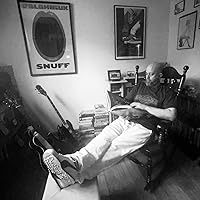
William Nack is widely acknowledged as one of the finest sports writers of the past half-century. He has won the prestigious Eclipse Award, given annually for the best magazine piece on horseracing, an unprecedented six times. Laura Hillenbrand, best-selling author of Seabiscuit, recently called his acclaimed biography Secretariat the "gold standard" of horse books. But Nack's "turf" goes far beyond the racetrack. In this, his first collection, Nack's finest horse racing journalism is coupled with his legendary, one-of-a-kind profiles of athletes from Sonny Liston to Formula One driver Alex Zanardi, Rocky Marciano to Rick Pitino, and Keith Hernandez to Willie Shoemaker. And that is not all. From his compelling history of Yankee Stadium, to his inspiring account of Bob Kalsu, the only professional American athlete to die in Vietnam, to his poignant portrait of Cincinnati Reds catcher Willard Hershberger, who, at fifteen, discovered his father dead of a self-inflicted gunshot wound and later committed suicide himself, Nack serves up riveting stories of people and places. He also uncovers some of the dirtiest secrets in sports from the shady world of hit men and greedy owners who hire them to kill their horses for insurance payoffs to weightlifting muscle men, who, while stoked up on steroids, have gone on murderous rampages. Whether writing about famous athletes-human and equine-or weighing in on some of the most controversial events and personalities in sports, William Nack has few equals.
William Nack is an American journalist and author. He wrote about sports, politics and the environment at Newsday for 11 years before joining the staff of Sports Illustrated in 1978 as an investigative reporter and general feature writer.
Since leaving S.I. in 2001, Nack has freelanced for numerous publications, including GQ and ESPN.com. He also served as an adviser on the made-for-TV-movie Ruffian (2007) and the Disney feature Secretariat (2010).
These essays were originally printed in the pages of Sports Illustrated magazine during the 80's and 90's. At the end of each piece is the date of publication and usually an update about the subject telling what had happened to him between the time the article appeared and the date of the book's publication (2003).
I say only 'him' because in each of the 26 essays, the main subjects were men. Or male horses. No female athletes. I do hope that somewhere someone has written essays about the outstanding women in sport during those years. I'm sure there were one or two. But let's move on, shall we?
My Turf was divided into five sections: Turf Writing, Boxing, Baseball, Football, and 'Bonus Pieces' which featured a mix of essays that didn't fit into the other sections. The one about chess champion Bobby Fischer was my favorite in 'Bonus Pieces'. I had joined the chess club in my freshman year of high school because of him, and some of my fondest memories of those long ago school days are the tournaments I played in as part of the club; going with some of the older guys to the YMCA to play the regulars there; and watching a professional chess tournament in a big hotel downtown. It was a fascinating world to me at the time. I was a pretty good player, too!
Meanwhile, back at the book. The Turf Writing section starts off with a piece about the awesome Secretariat. But it will make you cry, because it is about how Nack learned that the champion was ill and was going to be put down because of severe laminitis. I prefer to remember Secretariat the way I saw him (only on tv, but I saw him!) during his Triple Crown races. Here is the Belmont, the third and hardest of all. No one who was alive and paying attention back then will ever forget this. I know I won't. It was breathtaking! https://www.youtube.com/watch?v=V18ui...
Nack also talked here about jockeys Willie Shoemaker and Robbie Davis. The Shoe was a legend from the day he was born, weighing just one pound, thirteen ounces. His grandmother bathed him, wrapped him in a doll's blanket, put him in a shoebox, and then put the shoebox on the open door to the oven, which she had lit to 'low'. This warmed him up enough so that he finally gave the first cry that the doctor never expected to hear. Nothing ever stopped him after that. And Robbie Davis? He was involved in one of the most horrific racing accidents I've read about, and although it sent him into an emotional tailspin, he battled back from it and became a better man.
The six essays in Boxing told me more about the men I had heard of all my life than I ever imagined knowing. I watched a lot of sports with my dad and brother when I was younger, and never missed The Wide World Of Sports. I saw the Ali-Frazier fights and agreed at the time with my Dad that Frazier simply 'looked more like a boxer'. It was only later that I could appreciate Ali's finesse and grace. The piece here about Joe Frazier startled me with the hatred he felt for Ali and the crude things he said. In one way I could understand it, but what I could not understand was how Frazier allowed himself to feel that hatred for so many years after they were both retired from boxing. That was a sad piece to read. But the essay about young Ali, when he was still known as Cassius Clay, now that was charming. Imagine doing your roadwork running while wearing heavy steel-toed boots! And to think of the Ali we all came to know as being so shy around girls that he fainted the first time he was kissed? The ring persona was obviously just a small part of the big man, wasn't it.
I found it interesting how many of these athletes became top in their games more in order to prove themselves than for any other reason. And mostly they were trying to prove themselves to their fathers, who invariably were either abusive or absent. Low self-esteem, huge amounts of anger, a fear of poverty, the desperate need to feel good about themselves somehow. These were all factors in the success of nearly all the human subjects in this book. I am curious if superstar female athletes are driven by the same issues, or is it just a guy thing?
Overall this book was a wonderful look at the lives of more than a few legends in our own times. Names I have heard all my life and a few I never heard of at all but now will never forget.
Why are sports writers so much more lively than the rest of the journalists? Damon Runyon, Ring Lardner, Red Smith, Grantland Rice. Please add William Nack to the list.
He was a reporter on Long Island's Newsday when he impressed his editor by knowing the winner of every Kentucky Derby since it began in 1875. Would he like a chance to cover horse racing, his editor asked him? Did he! In his memo requesting transfer to "the turf" he wrote: "After covering politicians for the last four years, I'd love the chance to cover the whole horse."
And so it went. He left Newsday for Sports Illustrated where he covered all sports for decades. My Turf is a collection of some of his pieces, essays about Rocky Marciano, A J Foyte, Bobby Fischer, Yankee Stadium, and Dubai's horse race winners, including my favorite, a description of the day Secretariat was put down, a story that had me in tears. A wonderful writer and a wonderful book, whether you care about Willie Shoemaker, Keith Hernandez, and Cassius Clay or not. (You will when you finish William Nack's book.)
When I was 16 my uncle took me to the OTB so he could bet on the ponies. He used to get the fever, shake and sweat, laying out all the money he had in the world. It ruined him financially and he recovered, thankfully. I hated seeing him like that, hopping from one tv screen to the next, sweating bullets. And then when it was over he was either high from the win or sullen for the loss.
I thought this book was going to be more about those types of scenarios, more dirt-under-the-fingernails-and-blood-on-our-shirts type stories. Instead, we got some competent but fairly weak pieces about the horses themselves or about the riders. And it was all fairly tame.
Even when it came to the boxing, it seemed as if he were writing all the things that we already know (with the exception of a few little bar room tales) and gave us nothing we could really sink our teeth into. I felt like I was forgetting most of the information as I turned the pages.
But I will say this- I did learn a few things I didn't know before I picked up the book. So not all of it was forgettable. Some of it was fun, some of it wasn't. All in all, it panned out even. I made up for the losses.
I definitely think that if I had read these maybe once a week, one article a week, I would have enjoyed the articles more. But back to back to back, it seemed like overload.
I wanted it to be seedier. I wanted it to be bloodier, and filled with more gossip. I wanted third-hand accounts of stories that may or may not have been true. I wanted sensationalism. But in the end, it was real and it was raw and worth the read.
I have been a longtime fan of William Nack and looked forward to reading this collection of articles. The first article is one I had read before, after the death of Secretariat. Death is a dominant theme in this book. Consecutive chapters on Gene “Big Daddy” Lipscomb and Ernie Davis tell of great players who died long before their time. Nack also writes of murders associated with body building. Among these tragic figures, with tragic defined in multiple ways, are Sonny Liston, Bobby Fischer and Rick Pitino. Finishing the book on Memorial Day weekend, it was appropriate that the final chapter focused on The Lonesome End, Bill Carpenter, who played for Army’s football teams in 1958 and 1959 (captain). He served our nation in the Army, with two tours of duty in Vietnam. He retired with the rank of Lieutenant General. Wonderful end to the book.
Couldn't wait to open up my copy of Sports Illustrated as soon as it came in the mail back in the 70s and 80s and it was always a good week when I saw that there was a piece by William Nack.
I haven’t been to the horse track in many years and was never really much of a railbird. The last time I went, I won a good bit of money (for me) and the rush of blood from that felt a little too much like addiction. Now, after reading “My Turf,” I definitely will not be going back. William Nack’s essays on the “Sport of Kings,” aren’t meant as some expose of an unsavory subject, and a couple are downright inspiring. It’s the darker tales that stand out, though, especially the one about a “horse fixer” who kills nags for the insurance money. I won’t go into the details of his method, or the even more sordid tactics he resorts to foil the more astute insurance claims investigators. Suffice it to say that the tale is more than enough to give any animal lover nightmares. Topics covered in other sections of the book range from profiles of famous boxers to the examination of the idiosyncrasies and psyches of specific baseball players. The label of “dumb jock” was never a fair sobriquet to hang on the bulk of players—except for some stars of gridiron who abjectly failed their Wonderlic tests. It’s here, though, in these essays, that the complexity of the sportsman’s mind—the almost Zenlike levels of concentration—get a good airing. Many of these men, especially those trained by their fathers, demonstrate a curiously arrested range of emotions, broken in some way by the pressure of being the vessel through which other men live. Nonathletic essays are reserved for the third and final section. My favorite here was the profile of chess prodigy and arguably the grandest of grandmasters, Bobby Fischer. William Nack, knowing the man to be an eccentric and a recluse, keeps his distance from his subject, shadowing him around LA from haunt to haunt. He observes, with awe and at one remove, as Fischer peruses the catalogue at the LA County Library. He talks with the man’s friends, who, knowing Fischer’s media aversion, tell him to get lost. This thwarted endeavor is so well-written that it doesn’t feel like a failed attempt, but a successful piece written on the subject of failure. Or rather, on deciding that one’s own success should not always come at the expense of someone they must hurt. Even in an industry as mercenary and usually bereft of consideration as pro sports journalism, there are still a few good eggs. It helps, of course, that Nack can write, and that he knows his “turf” well enough to speak with authority, while also having the knack (Nack's knack, hehe) to present his knowledge to the layperson. Recommended for sports fans, especially horseplayers.