

What do you think?
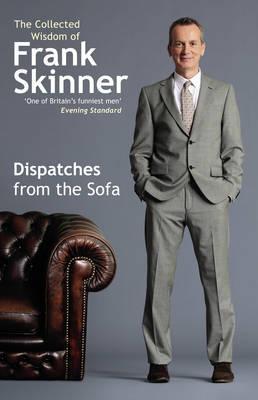
Dispatches From the Sofa: The Collected Wisdom of Frank Skinner
For the past two years, Frank Skinner has written a weekly column for The Times . Without fail, he sat down and wracked his brain to think of something to write 900 words about. Dispatches from the Sofa is the brilliant result.Pondering such random topics as the potential demise of Margaret Thatcher, the love-hate relationship with your football club, the banking crisis and the evil phenomenon of Jedward, this is wit and wisdom, and a fine sense of the absurd, all rolled into one.
336 pages, Hardcover
First published September 1, 2011
Ratings & Reviews
Friends & Following
Create a free account to discover what your friends think of this book!
Community Reviews
Displaying 1 - 14 of 14 reviews

August 23, 2013
This is a collection of columns Frank did for a newspaper and you can tell that the format must have frustrated him. A lot of the time you feel he is desperate to slip a knob gag in, so to speak, but feels that it might undermine the point that he is trying to make. Then, when he tries to write something serious about, say, Shakespeare, as a reader you are thinking "Come on Frank, slip a knob gag in".
The limited amount of words that clearly needed to have been adhered to imposes further constraints. Mind you, when he's off and rambling about his relationship with God you're rather glad of it. The problem is, for me, it's quite difficult to take Frank at his word. Like Jeremy Clarkson, you often find yourself thinking, "That's a really good point, but as it's coming from you, I can't take it seriously." Comedians seem often to be such serious blokes, troubled, deep and meaningful, but they've chosen a career that makes them seem lightweight, frivolous and meaningless. Worse, they know it. But what are they to do? Poke more fun at themselves?
Frank might be pleased, in the end, to read that I think this is perfect toilet reading, as no doubt he's spent many of a reflective hour sitting atop, or clinging on to, the throne. This collection is an easy diversion, best read in short bursts.
The limited amount of words that clearly needed to have been adhered to imposes further constraints. Mind you, when he's off and rambling about his relationship with God you're rather glad of it. The problem is, for me, it's quite difficult to take Frank at his word. Like Jeremy Clarkson, you often find yourself thinking, "That's a really good point, but as it's coming from you, I can't take it seriously." Comedians seem often to be such serious blokes, troubled, deep and meaningful, but they've chosen a career that makes them seem lightweight, frivolous and meaningless. Worse, they know it. But what are they to do? Poke more fun at themselves?
Frank might be pleased, in the end, to read that I think this is perfect toilet reading, as no doubt he's spent many of a reflective hour sitting atop, or clinging on to, the throne. This collection is an easy diversion, best read in short bursts.

April 10, 2022
Not to everyone taste.
Frank Skinner has an odd sense of humour.
I enjoyed it though, especially as I listened to Frank reading the book himself. Love the Midlands accent.
Frank Skinner has an odd sense of humour.
I enjoyed it though, especially as I listened to Frank reading the book himself. Love the Midlands accent.
November 1, 2020
The Working Class Dr Johnson
It’s 2010 and Frank Skinner, working-class Brummie comedian, has somehow become the Times’ bit-of-rough columnist. He warns us jokingly not to vote from David Cameron (‘or Camera-on, as I call him’). He bemoans the rise of the talentless pop star as exemplified by Jedward. He scoffs gently at Boris Johnson, as at a harmless buffoon. And there is the odd mention of a handful of swine flu cases being referred to as a ‘pandemic’. In 2010, people didn’t know how well off they were…
A West Midlands origin is, perhaps surprisingly, far from the only thing Skinner has in common with one of his heroes, Dr Johnson. They’re both from humble backgrounds (though Skinner’s is much the humbler), religious, witty, and ‘more full of precept than a copy-book’ (ie opinionated). But maybe there’s another similarity: to get the best of the man you have to see him in person. These pieces are not notably funny but at times you can see how, delivered verbally in his dry Brummie way, they would have been.
One thing they ought to do is dispel any idea that Skinner is simply an ordinary bloke who happens to be smart and funny. Realistically, if that were so he wouldn’t be where he is today; and in fact the glimpses we get here of his personality and private life aren’t always all that appealing.
His is a distinctive voice, in that he can embrace both football and poetry with genuine enthusiasm, and he doesn't think according to orthodoxy or party lines - I've often thought for example, as he says, that rather than trying to get everyone to vote you should only vote if you understand what you're voting for. But the only really exceptional thing about him is his unashamed (though, as he says, critical) loyalty to and advocacy of Catholicism. In the C21st that’s something which has become, in the eyes of the largely neo-atheist media, only a couple of removes from joining the Gestapo. Actually there are quite a few Catholics in public life but most of them are, like Tony Blair, unwilling to ‘do God’; those who are, usually, are only the most appalling posh converts – Brideshead Revisited types – who represent everything that is most reactionary and only go to confirm the stereotypes. Yet intelligent, liberal Catholicism of Skinner’s stamp is far from uncommon and it has never been represented more effectively, or to a wider audience, than in these columns.
I haven't looked at his efforts at dabbling in fiction at the end of the book. It takes some self-regard to publish the first two chapters of a novel you've been unable to progress with.
It’s 2010 and Frank Skinner, working-class Brummie comedian, has somehow become the Times’ bit-of-rough columnist. He warns us jokingly not to vote from David Cameron (‘or Camera-on, as I call him’). He bemoans the rise of the talentless pop star as exemplified by Jedward. He scoffs gently at Boris Johnson, as at a harmless buffoon. And there is the odd mention of a handful of swine flu cases being referred to as a ‘pandemic’. In 2010, people didn’t know how well off they were…
A West Midlands origin is, perhaps surprisingly, far from the only thing Skinner has in common with one of his heroes, Dr Johnson. They’re both from humble backgrounds (though Skinner’s is much the humbler), religious, witty, and ‘more full of precept than a copy-book’ (ie opinionated). But maybe there’s another similarity: to get the best of the man you have to see him in person. These pieces are not notably funny but at times you can see how, delivered verbally in his dry Brummie way, they would have been.
One thing they ought to do is dispel any idea that Skinner is simply an ordinary bloke who happens to be smart and funny. Realistically, if that were so he wouldn’t be where he is today; and in fact the glimpses we get here of his personality and private life aren’t always all that appealing.
His is a distinctive voice, in that he can embrace both football and poetry with genuine enthusiasm, and he doesn't think according to orthodoxy or party lines - I've often thought for example, as he says, that rather than trying to get everyone to vote you should only vote if you understand what you're voting for. But the only really exceptional thing about him is his unashamed (though, as he says, critical) loyalty to and advocacy of Catholicism. In the C21st that’s something which has become, in the eyes of the largely neo-atheist media, only a couple of removes from joining the Gestapo. Actually there are quite a few Catholics in public life but most of them are, like Tony Blair, unwilling to ‘do God’; those who are, usually, are only the most appalling posh converts – Brideshead Revisited types – who represent everything that is most reactionary and only go to confirm the stereotypes. Yet intelligent, liberal Catholicism of Skinner’s stamp is far from uncommon and it has never been represented more effectively, or to a wider audience, than in these columns.
I haven't looked at his efforts at dabbling in fiction at the end of the book. It takes some self-regard to publish the first two chapters of a novel you've been unable to progress with.

October 13, 2018
Obviously he writes comedy but even so I was surprised that he wrote quite well. Although it was a collection of columns the topical elements tended to prompt more general musings, which were less time-specific and therefore still relevant 10 years on.
To an extent, Skinner succumbs to the writing style of 'typical columnist' but his personality does come through, and is capable of original thought, a bit like David Mitchell in that you don't already know what his opinion will be before he gives it. Sometimes this leads to slightly contradictory opinions, such as questioning why we need alcohol to socialise but later stating he has never experienced the same warmth he sometimes got while drinking since going sober. On the other hand, he does admit he can be wrong, as with his column revisiting a critical stance he took against libraries.
It was amusing rather than hilarious and I couldn't tell you whether his Hamlet short story or 'two chapters of an unfinished novel' were any good because I wasn't immediately gripped so didn't continue, but I quite like Skinner the person, certainly more so than his act. And it helped that I agreed with him more often than not.
To an extent, Skinner succumbs to the writing style of 'typical columnist' but his personality does come through, and is capable of original thought, a bit like David Mitchell in that you don't already know what his opinion will be before he gives it. Sometimes this leads to slightly contradictory opinions, such as questioning why we need alcohol to socialise but later stating he has never experienced the same warmth he sometimes got while drinking since going sober. On the other hand, he does admit he can be wrong, as with his column revisiting a critical stance he took against libraries.
It was amusing rather than hilarious and I couldn't tell you whether his Hamlet short story or 'two chapters of an unfinished novel' were any good because I wasn't immediately gripped so didn't continue, but I quite like Skinner the person, certainly more so than his act. And it helped that I agreed with him more often than not.

November 2, 2018
This is an intelligent and humorous book which was a pleasant surprise. My first memories of Frank Skinner were of him being a laddish comedian in the 90's. But this is a well written and at times thought provoking book that entertains. It is comprised of his newspaper columns but never feels like it contains filler. A really enjoyable book that maybe a slightly audience might appreciate more.
July 30, 2019
Funny look at happenings from a Frank pespective
Enjoyed Frank's view of daily life and the distorted hypocrisy of supposedly influential people. Didn't get to read his column so to have the column in one book is much better for me.
The book shows Frank to have an opinion on most things, usually with a light hearted approach, but also shows he could influence people's choices with the written word in the tabloid media as he does in tv.
Enjoyed Frank's view of daily life and the distorted hypocrisy of supposedly influential people. Didn't get to read his column so to have the column in one book is much better for me.
The book shows Frank to have an opinion on most things, usually with a light hearted approach, but also shows he could influence people's choices with the written word in the tabloid media as he does in tv.
August 7, 2020
An interesting read. It is very dated as there's reactive articles to events at the time and I've long since forgotten them. No context to help jog the memory! I preferred his previous book on getting back to touring.
February 6, 2018
Pure entertainment. Very honest, very witty and a very easy read. Even if you don't agree with everything FS says, it's still great fun to read.
September 27, 2024
Quite a dated book now, lucky enough to be old enough to get the references quoted.
A few funny moments and very much class Frank, but feel is was just "ok".
A few funny moments and very much class Frank, but feel is was just "ok".

November 20, 2024
What a pile of fucking shite. This man is just a miserable arsehole
May 10, 2013
I enjoyed the pieces in this book - witty, clever word play and showing the author as a profound moral thinker. Wasn't quite so sure about the two chapters of an unfinished novel... Perhaps a bit too clever. My head was hurting by the end of chapter two and I wasn't anxious for a third

November 25, 2014
I love Frank but this book (which is a collection of newspaper articles, Clarkson style) just does not do the fella justice at all.
Struggled to finish it as it was pretty boring and many of the articles were very similar.
Struggled to finish it as it was pretty boring and many of the articles were very similar.

July 20, 2012
Ok. Funny in places but not enough considering it's by Frank Skinner. Some nice opinion pieces and surprisingly well written and thought out.

February 25, 2015
An interesting read with a number of very thought-provoking ideas.
Displaying 1 - 14 of 14 reviews