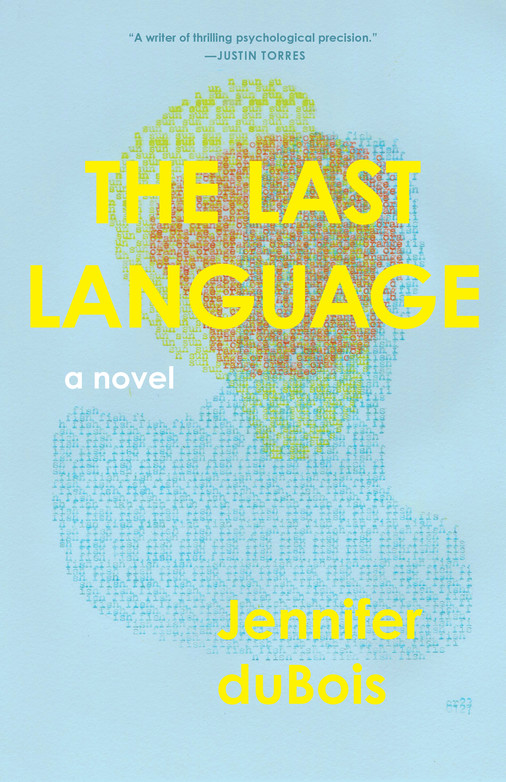
From Jennifer duBois, “one of a handful of living American novelists who can comprehend both the long arc of history and the minute details that animate it” (Karan Mahajan) and “a writer of thrilling psychological precision” (Justin Torres), comes a spellbinding new novel.
A few months after the death of her husband, Angela is ejected from her doctoral program in linguistics at Harvard University. Spinning and raw, and with few other options, the young widow and her four-year-old daughter move into her mother’s house in Medford, Massachusetts.
Trained with an understanding of spoken language as the essential foundation of thought, Angela finds underpaid work at the Center, a fledgling organization that is developing an experimental therapy aimed at helping nonverbal patients with motor impairments. Through the Center, Angela begins to work closely with Sam, a twenty-seven-year-old patient who has been confined to his bedroom for the majority of his life. Following some faltering steps, Sam takes to the technology, proving to be not just literate but literary, and charming. Angela is initially stunned, then drawn intensely to Sam, and they develop an intimate relationship.
When their secret is discovered, Sam’s family intervenes and brings charges. As Angela tells her story in the form of an unrepentant plea addressed from prison to her beloved, we are plunged into a Nabokovian hall of mirrors in which it is hard to know whom or what to believe. Is this a haunting story of doomed love, a manipulative account of pitiful self-delusion, or, as the state has charged, a criminal assault of a victim who doesn’t have the agency or intelligence required of a willing participant in a love affair?
Provocative and profound in its exploration of what makes us human, this is an extraordinary novel from one of our most acclaimed contemporary writers.
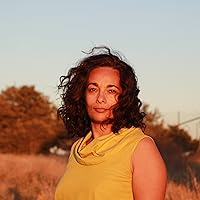
Jennifer duBois is the recipient of a 2013 Whiting Writer’s Award and a 2012 National Book Foundation 5 Under 35 award. Her debut novel, A Partial History of Lost Causes, was the winner of the California Book Award for First Fiction and the Northern California Book Award for Fiction, and was a finalist for the PEN/Hemingway Prize for Debut Fiction. Jennifer earned a B.A. in political science and philosophy from Tufts University and an M.F.A. in fiction from the Iowa Writers’ Workshop before completing a Stegner Fellowship at Stanford University. Her writing has appeared in such publications as The New York Times, The Wall Street Journal, Playboy, The Missouri Review, Salon, The Kenyon Review, Cosmopolitan, Narrative, ZYZZYVA, and has been anthologized in Imaginary Oklahoma, Byliner Originals’ Esquire Four and Narrative 4’s How To Be A Man project. A native of western Massachusetts, Jennifer currently teaches in the MFA program at Texas State University.
I read The Last Language in one fevered session, completely in the grip of the dizzying, queasy moral maze Jennifer duBois has created here. The narrow perspective is such a clever way to tell this story because it so closely parallels Angela’s facilitated communication with Sam. When all we have is her account, how can we ever know what is true? Who has the ability to decide whether Angela is speaking for the ‘real’ Sam or simply ventriloquising through him? Are her final words defiant denial or a kind of confession? I will be coming back to this one, but for now: wow, what a superb, riveting, disturbing novel. I loved Cartwheel – which, like this, was based on a real-life case – but The Last Language surpasses it.
I received an advance review copy of The Last Language from the publisher through Edelweiss.
Mystery-thriller meets love story meets academic skullduggery in this almost-familiar -yet-unusual tale by a winning author. All of her novels are absorbing; her characters cross boundaries in a way that has the reader always guessing where the emphasis of truth lies. If you’ve never read Cartwheel, it's based on the Amanda Knox story, but duBois puts her own spin on it, and follows her literary imagination instead of just journalistic headlines. Her creativity as a writer is realistic, vast, and her characters are driven, intense. Her latest novel will drive you mad with your own ignorance!
Language and character strengthen the plot in this initially puzzling book, despite--or is it because of--the narrator, Angela? She sounds candid to a fault, telling her story from a confined space. I often wondered, because of past books I’d read, if she was like a main character in Happiness Falls by Angie Kim. Or the narrator in His Bloody Project: Documents Relating to the Case of Roderick Macrae by Graeme MaCrae Burnet. Or just a more educated Dorothy in Oz. She was a linguist kicked out of Harvard grad school. I was feeling my way blindly through much of it, trying to find an opening in a dense wall. If you can handle not having a handle…!
We have to trust (or not) that Angela is telling us the facts from her disadvantaged point of view. Is she honest, does she have integrity? Does she have some wisdom, is she measured and controlled? Her story—how reliable is her telling?
The reader doesn’t have an alternate viewpoint from anyone else because the narration filters all thoughts through Angela. She warmly talks to the reader, and the more she tells us, the more I wanted to know. Yes, she hooked me on page one, and that’s a talent. For more details, read the cover. No, don’t.
I’ll say this. Angela is part of the group of linguists that believe language is the foundation of consciousness. The downside is that it begs the question of whether speech can be taught to someone who didn’t already have it in them.
Angela needs a job--her husband died, she has a toddler, and she lives with her mother. She starts work at the Center, training to teach Sam (at his home), a young man roughly her age (late twenties) who is nonspeaking, non-communicative, with severe motor impairments, and who also lives with his mother in Medford, Massachusetts. Sam is fetching and charismatic--certainly to Angela. Her role, as therapist, is to teach Sam “facilitated communication”—a therapy program invented by speech pathologists, using a bulky device that resembles a typewriter. It was controversial but boasted some promising results (this is 2001).
The student learns an alternate version of spoken words, using this speech device. Sam, her only client, reached all his milestones until age 18 months, according to his mother, when he just stopped interacting and acknowledging, and became an isolated island of one. He presents as an adult with profound autism. Is language inside him? Angela’s job is to teach him the new communication tool, and pull the language out of him.
And this started a beautiful friendship. Angela will fill you in on all the drama. The more engaging she is, the more I wanted to hang on. It’s a slow burn, so don’t wait for some death-defying adventures, as the pain is all in the psyche. I hope I’ve given enough info to tittle your tattle. The pacing was occasionally not pacey, but it is a thoughtful, provocative, scandalous, and love-of-words book with well-drawn, quixotic characters. It is based on a true story (or, perhaps, inspired by a true story).
“Languages often distinguish between causing and letting, between acting on something and enabling its exposure to a secondary force.”
A big thank you to Milkweed, who sent me a copy to read and render my honest review.
This book was absolutely haunting, and will definitely stick with me for a long time. Be warned that it’s very dark, but it’s also extremely compelling. This is definitely not a feel-good book, but it did make for a fascinating read.
I’m judging this a bit harshly, because it was funny, well written, disturbing, and thought provoking—maybe even deep and metaphorical.
The reason I could not help but be harsh: The narrator is a (fictional) PhD student in linguistics. I have an actual PhD in linguistics. And the author does really interesting things and explores various angles about whether language in human beings grants meaning, expresses meaning, or creates meaning. Which are, obviously, questions I’ve done a great deal of thinking about and reading about and studying about. And I think to a non-linguist, the way she goes about this may be eye opening.
But the author also name drops just about every general linguistic theory topic that I cover in my intro level linguistics classes. Which, to be fair, is impressive; she does this all quite accurately. But it does feel a bit like some kind of narrative pedagogical exercise, like, let’s see if we can teach the general principles of an entire course of study in the form of a novel. So it felt a bit “teachy” in a forced way.
But, like I said, there were actually really interesting questions posed through the story about the application of these linguistics principles, and about human identity in general.
And I do feel the author is extremely smart and her prose is witty, but often the funny parts felt a bit forced and self-aware, so that it felt like the author trying to insert something funny rather than coming organically from the character.
Five stars for its ability to make me think about the book after I finished it. As an SLP, I know exactly where I fall on the moral and ethical issues of facilitated communication (ugh), but there was a layered complexity of reality and the narrator’s perception of reality that kept me engaged beyond the ick factor of the story line. I think if I’d ever read Nabokov, I would have gotten even more out of the novel.
This is duBois’s best novel yet. I felt conflicted from the get-go and I’m dying for my friends to read it so we can discuss. The epistolary form addressed to Sam is a perfect vessel for Angela’s willful ignorance about her involvement. It had me turning sentences over and over again because it’s hard to know whether it’s Angela being straightforward or trying to buy favor. A satisfying read.
Has that Nabakovian quality of seducing you with the vocabulary and sentence construction so that large plot moves happen suddenly but naturally, so that despite hanging on every word you still end up feeling surprised and partially hoodwinked and with the strong urge to go back and read it over to figure out where along the way exactly did I miss the sleight of hand. Extremely fun read. I will be returning to this one.
4.75 This book is beautiful and complex and a little messed up which is why I like it
There are an abundance of quotes I enjoy but here is one I really love:
“In Russian—in many languages —possession is expressed not with a verb but a subject. Something less like "I have it" and something more like "it is on me." To an English speaker, this makes the act of having sound strangely passive: as though the thing in your possession could, at any moment, get up and walk away. But think about it a little, and this is true of most things. Think about it a little longer, and it's true of everything, in the end.”
This book follows a linguistics major named Angela who is trying some new technology that allows non-verbal persons to speak using a typewriter. As part of the therapy Angela must guide the hands of her clients to press the keys they wish. Her first case working alone with a 30 year old man who lives with his mother takes many twists and turns and makes you really consider how much verbal language shapes who we are and how others see us. It challenges the perception that people without verbal language must think and feel like children inside, incapable of more comlex thoughts.
I enjoyed this book but at times all the linguistics lingo made it hard to read and kind of dull. There was too much heady-ness and less emotional feel to the book. But perhaps that was the author's point as the story is told entirely from Angela's point of view.
I'm trying to get through some books over the holidays. I decided to read Jennifer duBois' The Last Language after discovering it on a "top books" list somewhere out there on an obscure blog. It was published this year, and I was disappointed to see it hasn't had a ton of traction on the blogosphere. I highly recommend this book and read it in less than 24 hours. I get tired of seeing the same books recommended on mass media websites, which is one of the reasons I became a book blogger.
Currently, this book only has 34 reviews on Goodreads, but they are very strong, with a stellar rating of 4/5. The book clearly draws from the real-life case of Dr. Anna Stubblefield, a professor of philosophy and chair of her department at Rutgers. Anna was sentenced to prison for taking advantage of a non-verbal adult male who is disabled. According to court records, Anna got to know the male by attempting to communicate with him using "facilitated communication." Facilitated communication is no longer considered a reputable method of communicating. Anna developed a sexual relationship with this male, claiming he consented using facilitated communication with her. However, when other people tried to replicate conversations with the man, he was unable to communicate. Anna was sentenced to 12 years in prison, but was recently released after only 2 years.
As someone who is a professor, I was curious to see how duBois would interpret this case. She could have exploited it, or sensationalized it, but I felt as though she was fair in her depiction of how a highly educated person might begin to believe in facilitated communication. Angela, the main character of the book who is presumably modeled after Anna, is an unreliable narrator at best. She is a former doctoral student of linguistics, kicked out of her program for reasons that are at first unclear. She is also a mother and recent widow, though she does not spend much time mourning.
She is hired to work with Sam, a young man who is non-verbal and lives with his mother. Angela begins to spend her nights and days with Sam, consumed with what we are told is productive facilitated communication between the two of them. When Sam's mother tries out the technique, however, Sam cannot communicate with her. It is only through Angela that Sam becomes alive with words, which is suspect to say the least. As you can guess, their relationship progresses, resulting in tragic consequences.
I have taken linguistics courses and am an anthropologist, so I really enjoyed Angela's musings on the nature of cognition and language. duBois did a magnificent job communicating the questions that arise in linguistics. For instance, can a person conceive of a concept without language? How does culture dictate our ability to communicate and give words to concepts and ideas? "Russian has one word for “light blue” and another for “dark blue”; Russian speakers do not register these as variations of the same color. While the Herero of Namibia have the same word for blue and green; to them, this is a single hue."
"Saudade (Portuguese): a feeling of melancholic longing for an irretrievable person or place. Has analogues in Welsh (hiraeth) and German (Sehnsucht) and perhaps in some combination of our “nostalgia” and “utopia,” derived from Greek, especially if we consider that utopos originally just meant “nowhere.”
Communication with Sam becomes a way for Angela to push back against her former linguistic colleagues who believe in linguistic determinism: that cognition and thought first required language, and that "there was nothing to discover within people who didn’t have it (language) already." Or, in other words, "a person cannot conceive of what he cannot name." If you are looking for answers to why Angela believed facilitated communication worked, or if Sam truly could communicate, you won't get them. There is a haunting ambiguity to this book just like the real-world case of Anna, who appeared to be two things at once: a person who cared deeply and advocated fiercely for disabled people and someone who took things much too far with a vulnerable person who could not verbally consent to a relationship or speak for himself.
A couple things really stood out during my reading of this book. First, duBois is a phenomenal writer. She subtly conveys so much emotion and feeling with analogies and linguistic theories about the relationship between language and cognition. Here's an example of such writing: "Language is when someone paints the hoof, and means the deer. But what if the deer just steps in paint, and walks directly onto the wall?"
"One thing all truths have in common: they are only visible from certain distances."
Secondly, duBois shows that there are subtexts and complexities to human connection. Human relationships are not just words; they are a tilt of one's head toward another, a finger brushing against a loved one's face, a nudge of the foot under the table. Non-verbal communication is inherently human and loaded with emotion. Perhaps her intentions were for us to believe the unstable Angela, to buy into her conviction that Sam wanted to be with her and that he could understand her. Whatever the case, this book left me with more questions than answers, which is precisely why I enjoyed it so much.
Recently widowed, Angela gets kicked out of her doctoral linguistic program at Harvard. Along with her five year old daughter, she moves in with her mom and gets a job as an underpaid and over qualified speech specialist. Her first patient is twenty seven year old Sam who's limited to living in his bedroom. Sam is someone who is nonverbal but through hard work, Angela gets him to communicate. She discovers Sam is a highly gifted individual, someone who's well read and has all the cognitive abilities of anyone his age. The complexity starts when both individuals move their relationship into the physical realm. Intense and a highly rewarding read, one that takes a deep dive into language, human empathy and understanding.
Incredible. A seriously intellectual book that is simultaneously emotionally devastating. I love linguistics so this book resonates powerfully with me. I am also a hopeless romantic so the feelings and emotions carry their own weight. I would say the strength of the narrative is its ability to be read and understood as both entirely real and entirely a figment of the narrator’s imagination and desires.
One huge editing problem for a book about words and language: it is Finno-Ugric, not Finno-Ulric. 🙄
I first learned about Jennifer duBois searching specifically for works by graduates of the prestigious Iowa Writers’ Workshop. I added CARTWHEEL to my Want to Reads based on a synopsis on Goodreads which compared her writing to that of Curtis Sittenfeld, my favorite author. When I finally read CARTWHEEL this summer, I was blown away by it. The language used throughout was gorgeous, the narrative was highly compelling, and I found the hinted at inner lives of the characters who didn’t get the chance to narrate their own sections fascinating. I found the comparison to Sittenfeld well-earned and I had added duBois’ other books to my WTRs even before I was finished reading because of how impressed I was by what I was experiencing. Unsurprisingly, I ended up giving the book 5 stars.
When I learned that she had a new book coming out this year, I was thrilled. I asked my local library to purchase a copy even before its publication date and eagerly checked my online account for days after the release date for THE LAST LANGUAGE to find out when it would be available for me. What I knew of the plot—that it concerned a woman who faces legal jeopardy after beginning a romantic relationship with a person under her care with profound physical disabilities, and that it invited questions about the ethics of such actions—was highly intriguing. I was already prepared to recommend the book to my wife, who studied linguistic anthropology in college and who works with developmentally disabled individuals currently.
Yet my feeling upon finishing the book is that it was good. You heard right: this is a good book. For anybody else, this would be fair praise indeed but for the expectations I’d built up for duBois it amounts to something of a disappointment. From reading other reviews on Goodreads, I take it that the book’s power is generated from the recognition, at the end of the story, that protagonist Angela truly did create Sam, the nonverbal client she works with; that is, on a surface level she seems caught in a Kafka-esque nightmare as she alone is aware that Sam is a fully functioning adult of above average intelligence while everybody else sees a woman sexually assaulting a victim who cannot consent… but in reality, I guess, Angela is truly fabricating Sam’s “speech”, such at it is. In this reading, the narrative takes a dark turn as the reality of the situation sinks in. I didn’t have this revelation reading it, though. I have to assume that’s a failure on my part rather than duBois’. Perhaps a re-read would help me better see the through the trees to the dramatic irony beyond. In truth, it’s not a long book at all (just 224 pages), so there is some temptation, though I already had another book lined up when I finished this one so I haven’t taken take the opportunity. Perhaps if I had come to this interpretation of the book on my own I would feel more enthusiastic about it. Who can say?
But then, it is hard to say. I did not feel as though there were the number of insightful or thought-provoking moments here as there were in CARTWHEEL. I take notes of quotes and thoughts I have when reading, in preparation for these reviews, and I only wrote one quote this time. It was a moment early on when Angela describes a nonverbal teenager who, through the miracle of a text-to-speech breakthrough, was able to speak to his mother… only to tell her how much he hated her ham sandwiches. Angela says that it makes her cry to think of “all those mother’s sandwiches, all the misplaced care they’d meant, and how every not-ham sandwich of the future would be a way for her to say: you have spoken, I have heard you, you are known. Even if that child never said another word again.” Marvelous. Beyond this, I didn’t really save any other quotes. Which is not to say there were no other lovely bits of language here, only that none made me reach for my phone to take it down. For that reason, I view this as a lesser outing than CARTWHEEL was.
So, the combination of these two things—the lower number of (in my opinion) bits of genius than I’d anticipated and my straightforward acceptance of Angela’s narrative on her own terms despite the fair warning I’d received that there was likely more here than meets the eye—left me feeling a little underwhelmed. My feeling at the end was 3.5-stars, but since I have to choose, I’m inclined to give J.d. the benefit of the doubt and round it up to 4. I enjoyed the read, I thought the slow-motion car crash reading was engrossing, but I expected to be crowing from the rooftops about THE LAST LANGUAGE and I don’t really feel that way. I’m still eager to read the remainder of duBois’ catalog, and if I find myself as impressed as I still believe is probable, then I’ll likely return to this at some point for a re-read and to write a second-take review.
This entire review has been hidden because of spoilers.
I would give this 3.5 stars, if I could. In this novel, we meet a woman who is reeling after the loss of her husband, and a major setback in her career. She begins working with a nonverbal man and helps him learn to communicate. This book was written very clinically, which makes sense given the subject matter, but because of this choice of writing style, I felt detached from the characters. I wanted to see how the book would end up, so my interest was kept, but ultimately, I wish the main character was a bit more likable.
4.5, surprising and engrossing and mysterious. Makes you feel guilty as the reader, constantly questioning your position and what you know. In a fun way.
Lolita, light of my life, fire of my loins. My sin, my soul. Lo-lee-ta: the tip of the tongue taking a trip of three steps down the palate to tap, at three, on the teeth. Lo. Lee. Ta.
Guys What actually did I just read. Honestly like I'm still searching for the meaning of this book in hopes that it wasn't just written to make me question my belief in humanity?
I think my overall expectations were met but I think that's because the author left us tools in the first have to decipher the second half of this novel in a productive-ish kind of way. I will be quite honest in saying that I was confused, disgusted, and mildly horrified by this novel, but ultimately, I think that was the whole point of the novel? I feel like whenever I read a book that is purposely supposed to be thought provoking in a negative way I find myself searching for the reason why it had to be written that way and I'm not quite sure why as of right now. Hopefully before class I find that meaning.
I did throughly appreciate how the author guided us on how to read this book if you knew where to look. I think obviously writing a book like this one dealing with such topics and an immoral main character you have to be very carefully with how you construct the narrative. While we are reading from Angie's point of view it's so clear how "in love" she is with Sam. Despite the false constructed cute scenes between the two of them there is this menacing undercurrent. Especially if you caught the references to Pale Fire that I think really pointed out how blatantly incorrect this main character is. Dubois even writes that the is a "self-serving narrator" who is a "delusional academic" I think that this is the best way to even go into reading the Last Language. I think that Angela is in fact both of these things at once and it is the job of the reader to decipher the details and the actions between Sam and her.
A skill that I will utilize later is play between telling the reader one thing while meaning something entirely different. I think if someone else wrote this book it could have come out completely different. Balancing between what the speaker is telling the reader and what the author is trying to tell the reader is an incredibly fine line. I think DuBois straddles it quite well in a way that is infuriating and heart-breaking. I think the scene that does this so well is the scene where they have finally been caught and the mother, Moira, Sam, and Angie are all in the kitchen. This is done so incredibly well. We the reader are fighting with the idea of whether or not this is real despite having seen the whole thing in her POV. Strictly in her Point of View it is, however, reading between the lines in the scene we can see that it's not. When Moira is like Sam hasn't said anything personal it shifts the entire view of every other scene between Sam and Angie. Then when she's like the clock when are frantically searching through our memory to see if it has ever been mentioned before, only for her to admit that she guessed.
I will be thinking about this book for a long time. Might have to reread eventually. I wavered between 4.5 and 5. Then the last page settled it. 5 stars.
Such a strange story. I’m not sure what I think.. at times I believe she and Sam were communicating… and then again was she making it up? She was clearly going through trauma. Very bizarre but well written and thought provoking.
“In Russian—in many languages—possession is expressed not with a verb but a subject. Something less like “I have it” and something more like “it is on me.” To an English speaker, this makes the act of having sound strangely passive: as though the thing in your possession could, at any moment, get up and walk away. But think about it a little, and this is true of most things. Think about it a little longer, and it’s true of everything, in the end.”
This novel offers an interesting ethical dilemma that it does not solve. It represents a full circle account of linguistic determinism so that the reader must determine whether language is required to be a person. Either a full-blown love story unfolded between two consenting adults or the narrator took advantage of a vulnerable victim who could not offer consent. The philosophical, ethical, and linguistic themes were outlined in internal conflict rather than as a lecture. I think it is a brilliant concept told in compelling storytelling.
Angela is a recently widowed linguistics scholar who is asked to take a leave after a confrontation with a colleague. She ends up being trained in an experimental technology that brings language to nonverbal people. There she meets client Sam who she is able to teach to communicate using the new technology. Or does she?
Angela is not a reliable narrator, as even she says in the beginning, offering to tell the story that puts her in the best light. We also know from the beginning that she is in the midst of legal trouble due to something that happened in her work with Sam. (That something is not very difficult to figure out.)
What I liked about this: it raises the question of how central language is to our personhood, to our thinking. Angela is a linguistic determinist who believes we can't think without language, so being exposed to Sam, who had a rich interior life prior to being able to communicate it, disrupts her thinking. The book is peppered with linguistic references that show the cultural differences that arose from, or are expressed by, language differences.
While the element of scandal, and Angela's unreliable narration, definitely add to the stakes and tension in the novel, I would have liked this novel better if it had raised the same questions with more subtlety--so it was more of a question around the nature of language and less of a question around Angela's mental state.