Jump to ratings and reviews
Rate this book

[No Bones] [By: Burns, Anna] [October, 2010]

Rate this book
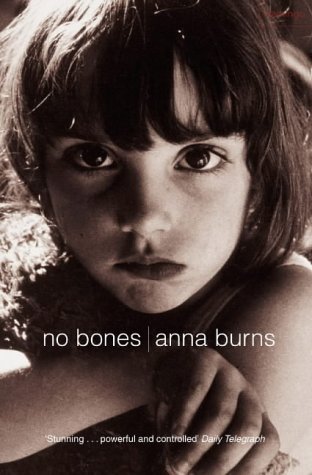
No Bones, Anna Burns's magnificent debut, is a heartbreaking but astonishingly funny account of growing up in Belfast during the "Troubles." Without meaning to diminish this wonderful and inventive work, it's possibly more accurate to describe it as a series of interlocking stories rather than a novel. At its center is Amelia Lovett, a naïve, sensitive girl who matures, although never losing her youthful incredulity, as the book progresses. Her often tragic life story is recounted through an array of characters, vernacular voices, and episodes that with mordant humour track the sheer brutality of the era. Burns unflinchingly portrays the casualness, even banality, of the violence. The 9-year-old Amelia easily drifts from collecting buttons to plastic bullets; teenage girls shoot each other in the playground; wayward youths are kneecapped, and even a walk home from a disco can result in a "protracted, grisly and truly awful end." What Burns manages to capture, through comic exaggeration, is a real sense of how fragile the boundaries of normality are. The sectarian killings are matched by equally senseless domestic feuds and conflicts. Amelia's mother's observation that "she could see that beating the crap out of her sister was one thing; kicking an IRA man to death or nearly was another" offers a measure of just how distorted their values have become. Amelia reacts to the madness around her by internalizing the violence, choosing to harm herself rather than first by becoming an anorexic and then an alcoholic. Burns has produced a compassionate, bitterly acute, witty portrait of the darkest days of Northern Ireland's history. No Bones could well emerge as Belfast's Dubliners. --Travis Elborough, Amazon.co.uk

Paperback

First published January 1, 2001

43 people are currently reading
3135 people want to read

About the author

Anna Burns

15 books1,142 followers
Anna Burns (born 1962) is an Irish author. She was born in Belfast and moved to London in 1987. Her first novel, No Bones, is an account of a girl's life growing up in Belfast during the Troubles.

Awards:
Winner of the 2001 Winifred Holtby Memorial Prize
Shortlisted for the 2002 Orange Prize (No Bones)
Winner of the 2018 Man Booker Prize (Milkman)
National Book Critics Circle Award 2019 Nominee (Milkman)
Women's Prize for Fiction 2019 Nominee (Milkman)
Winner of the 2020 International Dublin Literary Award (Milkman)

Ratings & Reviews

What do you think?
Rate this book

Friends & Following

Create a free account to discover what your friends think of this book!

Community Reviews

5 stars
167 (18%)
4 stars
324 (35%)
3 stars
274 (30%)
2 stars
91 (10%)
1 star
48 (5%)
Displaying 1 - 30 of 166 reviews
Profile Image for Hugh.
1,293 reviews49 followers
October 3, 2018
I knew nothing of Anna Burns before Milkman was longlisted (and more recently shortlisted) for this year's Man Booker Prize. It is my favourite book on that list, so when I heard that her debut novel was also about growing up during the Troubles, I was very keen to track down a copy.

This book has many of the same elements - it is full of horrific situations but told with such outrageous humour and exaggeration that it is also very entertaining. Unlike Milkman, the story spans almost the whole of the Troubles. Its protagonist Amelia Boyd Lovett is a young girl when it begins in 1969. There is roughly one chapter a year until the story ends in 1994, some narrated by Amelia, others by an omniscient narrator who brings a wider perspective and explores peripheral characters.

As in Milkman, the focus is on the impossibility of maintaining a normal life in the violent madness of Catholic Belfast, and Amelia's escapes into bulimia, alcoholism and mental illness are described with a mixture of visceral horror and high comedy. The ending finds a note of partial redemption.

This is not as polished or as accomplished as Milkman, but it is still a memorable and impressive debut novel.
Profile Image for Paul Bryant.
2,408 reviews12.5k followers
August 14, 2019
If I’d have stopped reading this half way through I’d have said wow, what a blast, a fantastic new voice, brilliant black comedy about the Irish Troubles, fragments of the life of this wee sprot, this tiny girl trying to grow up amidst the kneecappings and the rubber bullets, and the chapter called Miscellany and Drift 1978 is one of the greatest things I read this year, blah blah, rave rave.

But if I started reading half way through (& since all these chapters are discrete & there’s no continual plot except to look upon Amelia through your fingers expecting the next horror to fall on her head any minute now you could easily do so) I would have said this is a so-called black comedy but what a mess, where it’s not confused it’s feeble and the social satire has the subtlety of afternoon tea with the incredible Hulk, steer clear.

What a game of two halves! I was totally enthralled with Anna Burns’ young-person’s-guide-to-The-Troubles but after that it becomes a mental health memoir with way too much doolally wackiness.

Four stars up to page 134, barely two stars for the rest.

Ouch! I feel like I got up in the night and stubbed my toe. Hop, hop, curse.
Profile Image for Gumble's Yard - Golden Reviewer.
2,188 reviews1,795 followers
November 8, 2018
Thursday 1969

The Troubles started on a Thursday. At six o’clock at night. And seven whole days later, for Amelia was counting, she could hardly believe it, for here they were, still going on.


In the week of Anna Burns much deserved win in the 2018 Booker prize – I attended an event at London’s most famous bookshop – Foyles, where the Man Booker winner gave a reading and was interviewed by the literary editor of the New Statesman.

In the New Statesman, simplified write up what was a key interview she is quoted as saying

“In my first book, No Bones, the critics seemed to think I was writing about a dysfunctional family to show up the dysfunctional society, but it was actually the other way round. The Troubles was the backdrop and the family stuff felt more important and urgent. I think it’s because I’ve resolved something about family issues that I can now do the “bigger” issue – which actually, for me, is the lesser issue.”


My own recollection is that her answer was more complex. I recall her saying that her first book “No Bones” was dealing with her issues as an individual; her second “Little Constructions” with her issues with the family unit; and that finally now in her third book “Milkman” she was able to consider her issues with the society in which she grew up.

And reading this, her first novel, I think that more nuanced picture is a more accurate reflection – as the book deals I think with the long run mental effects of a dysfunctional family (in a dysfunctional society) on an individual.

And although Northern Ireland is key to the novel – the latter parts of it are set in London, and Burns has said in contemporaneous interviews that even incidents which were taken as being from Belfast were in fact ones that took place in a troubled Islington housing estate.

The main character of the story is Amelia Lovett – living in a working class Catholic family in the Ardoyne – a seven year old when the book starts in 1969, the beginning of the Troubles.

Thereafter the book is made up of 23 chapters – which progress the story of Amelia, her family and her circle of acquaintances over the next 25 years. In some Amelia is the point of view character, occassionally the first party narrator, sometimes a side character and sometimes the story is about her family or wider circle.

In the second chapter (An Apparently Motiveless Crime – 1969-1971) we see the situation spiraling into violence as Amelia’s cousin, a Brit serving in the Army, is initially welcomed by his extended family, but then later murdered.

Treasure Trove, 1972 introduces us to a recurring image in the book – Amelia’s chest of treasures including her collection of thirty-seven British Army rubber bullets, as well as to the indifference and brutal violence which characterises life in the Lovatt family.

As time progresses we go through shootings, punishment beatings, bombings, vigilantes, teenage pregnancies, domestic abuse - all played out at the societal and family unit level.

And as she grows in this environment, Amelia descends into anorexia, self-abusing sexual promiscuity, alcoholism and then later in England into a complete mental breakdown ending in institutionalisation.

Later chapters set after her move to England - Trigger 1991, Safe House 1992, A Peace Process 1994 – have titles which are far more explicitly based around her own mental health than around the Northern Ireland situation.

Much of the foundational work of “Milkman” – situations, characters, writing style – can be seen in this book. However its structure means that it is much more varied than “Milkman’s single, distinctive voice. Whereas “Milkman” has been described as a black comedy – this book is on the whole much less funny and much bleaker – particularly when dealing with the issues of addiction, self-abuse and mental illness, albeit a glimpse of the humour of “Milkman” does reappear in the last chapter, which also offers one of the few bright notes in the book as Amelia starts to tentatively rebuild her mental health.

“They could go to this place, whatever it was, have this thing, this daytrip, then come back and be themselves again at the end. It wasn’t as if they’d lose anything. It wasn’t as if their lives would be transformed by one, singular, extraneous outing. It wasn’t as if their long established, insular identities which they relied upon so heavily, could be ravaged and taken away from them just like that. So yes, they decided a day trip was within reason, just so long as they could come back and be miserable later on.”


Overall an excellent debut, itself marking the start of a 17 year literary journey which culminated in the best Booker winner for many years.
Profile Image for Jin.
837 reviews145 followers
June 21, 2022
Milkman von Anna Burns ist eines meiner großen Lese-Highlights. Ich war so beeindruckt von der Erzählsprache und der Atmosphäre, dass ich mit hohen Erwartungen auch Amelia angefangen habe zu lesen. Der Anfang war "wunderbar"; Die Geschichte ist nicht einfach, es wird wenig erklärt, die Sprache ist neutral und auch in vielen Vorfällen wird der Leser einfach reingeschmissen. Der Leser sammelt hier und da Fetzen über Jahre und Kapitel hinweg in der Hoffnung am Ende ein ganzes Bild zu bekommen. Die grobe Gesamtstruktur hat mir zwar gefallen, aber die Geschichte hätte noch aufgeräumter sein können. Oder ein besserer roter Faden. Im Gegensatz zum Anfang und Ende fand ich den Mittelteil etwas langsam und ausufernd, eine kürzere Fassung hätte mir mehr gefallen. Das Buch schwankt zwischen 3 und 4 Sternen.
Trotz allem bin ich ein Fan von Anna Burns und freue mich schon auf das nächste Buch von ihr!

** Dieses Buch wurde mir über NetGalley als E-Book zur Verfügung gestellt **
Profile Image for Eternauta.
250 reviews20 followers
December 8, 2019
Το βιβλίο περίμενε σχεδόν 12 χρόνια, υπομονετικό αν και εμφανώς ταλαιπωρημένο από συνεχείς μετακομίσεις και μακροχρόνιους εγκλεισμούς μέσα σε υγρά υπόγεια και χαρτόκουτες. Για κάποιον λόγο μετά την πρώτη απόπειρα ανάγνωσης καταχωνιάστηκε στα βιβλία που "πρέπει" να διαβάσω κάποια στιγμή. Ίσως να έφταιξε ότι το ξεκίνησα καλοκαίρι ενώ το βιβλίο κουβαλάει τη μουντή , θαμπή , βρεγμένη αύρα του Belfast. Όπως και να'χει, μουχλιασμένο σχεδόν, και σίγουρα παραμορφωμένο από τις ταλαιπωρίες (όπως άλλωστε και η ηρωίδα του) το άνοιξα ξανά πριν απο λίγες ημέρες. Και εκεί αρχίζει μια από τις πιο μαγευτικές, καθηλωτικες αναγνώσεις που έχω κάνει ποτέ τα τελευταία χρόνια. Πραγματικά καθηλωτική εμπειρία, που γίνεται ακόμα πιο έντονη όταν κανείς γνωρίσει και την ίδια τη δημιουργό του, ταπεινή , low profile, διακριτική αλλά γεμάτη απίστευτο ταλέντο και μαγεία που ξεχειλίζει ορμητικά όταν κάποιος αποφασίσει να ανοίξει τη μαγική πορτούλα και να διασχίσει το κατώφλι του κόσμου της.

Για τα δύσκολα χρόνια της Βόρειας Ιρλανδίας έχουν γραφτεί πολλά. Σε αυτό το βιβλίο δεν θα βρείτε ιστορικά στοιχεία, πολιτική προπαγάνδα ή νοσταλγία. Είναι μια μακρόσυρτη επιστολή εκδίκησης και ειρωνείας σε μια κοινωνία αιχμαλώτων που έμαθε να τραβάει χαιρέκακα στον βούρκο της κάθε απόχρωση ζωντάνιας που τολμούσε να ξεφυτρώσει εδώ κι εκεί. Η βία των όπλων κυριαρχεί ως background αφού η πραγματική της ζημιά είναι ο τρόπος που παγιώνεται ως πεζή καθημερινότητα σε ένα τοπίο αστικού ολοκληρωτικού πολέμου. Προφανώς από εκεί μπορεί κανείς να αποδράσει είτε νεκρός είτε ακρωτηριασμένος , σωματικά και συναισθηματικά. Μόνη άμυνα φαίνεται να είναι η παιδική αφέλεια και μια περιρέουσα και ευφυέστατη αίσθηση (αυτο)σαρκασμού.

Πολύ δυνατό!!!
Profile Image for Mark Bailey.
248 reviews41 followers
June 20, 2022
This is the second Anna Burns novel I've read. No Bones is her debut, but I read her Man Booker Prize winning 'Milkman' first. 

It follows a young woman named Amelia growing up in Belfast during the troubles. Not dissimilar to Milkman, it's darkly hysterical, unsettling, enigmatic and bleak.

Amelia is part of the dysfunctional Lovett family from Ardoyne in North Belfast (like Burns herself). Focusing on a year of her life over a 25 year period, it deftly portrays the the effects of a complex, ongoing conflict on working class lives.

Themes of anorexia, suicide, sexual assault, violence, sectarianism and alcoholism combine to form an intimidating and unnerving tale.
Profile Image for Jonathan Pool.
709 reviews131 followers
December 7, 2018
The debut novel from the recently anointed Booker prize winner, Anna Burns (for Milkman ).
Milkman has garnered praise from multiple quarters. I think this success reflects an innovative writing style that champions defiance in the face of brutal times; and clear injustice. Anna Burns’s own life back story is interesting in its own right, and a retrospective look back at Northern Ireland in the late c.20th is compelling.
What of No Bones? As a precursor to Milkman, No Bones also delivers a richly innovative fictional view of the Northern Ireland of the Troubles (1969-1994). Its every bit as hard hitting as Milkman- actually more so- and uses a resigned matter-of-factness to shine a light on the awful sectarian violence in Northern Ireland. As a companion to Milkman it’s well worth the read.
No Bones more directly addresses the uneasy, unsettling presence of the British army in Ulster. The early pages of the book nod towards early Irish revolutionary history over two hundred years before; with the Tone family. Children make up games using their own imagination. Chillingly a boy, still a child, but ‘nearing internment age’ invents a game with small figurines called “forgotten prisoners”; the models are chained to walls in cellars.
The society at large reveals various unpleasant goings on behind closed doors, and within families. Is this a consequence of the state of secrecy and inherent violence in Northern Ireland; and/or does this reflect society in the wider UK during the 1970’s and 1980’s? Gangs at school, and the danger of being an outsider are a universal. In No Bones you are an outsider if you don’t riot following a hunger strike. Local gangs of youngsters have their local turf wars- but in Ireland overstepping the mark draws the attention of the elders and kneecapping is the consequence. This is a country of the “Troubles” permeating through society.
Unlike Milkman, No Bones does specifically give names to the characters. It’s hard not to feel pity for Amelia who seems to draw victimisation from all quarters, from a young age. At home she’s witness to sexual perversion, as an adult she’s targeted for sexual gratification. Amelia was a character who reflected, for me, a society that had withdrawn into itself as a consequence of the years of distrust, divisiveness and suspicion.
Be wary of the company you keep, and for Amelia, she’s at least street wise enough to know that when getting into a car
“She didn’t put on her seatbelt either for it was best to be on the safe side at all times” (188)
The damage inflicted on this girl was then manifest in her ultimate breakdown.
Milkman could hardly be described as a light read, but Anna Burns’s style was such that resigned humour carried the reader through important messages. No Bones is harsher (than Milkman) in telling of the effects of civil breakdown in Northern Ireland, and this is not surprising for a book published only four years after the Good Friday peace agreement of 1998.
Profile Image for Rachel.
Author 6 books27 followers
March 31, 2015
I loved this. I see from other reviews that this is a book which people either love or hate. I certainly fall into the first category. The writing style is hard - there is no doubt Anna Burns makes you work as a reader but that is no bad thing. Parts of the book are funny, sad, dark, and most of all painfully truthful. Having grown up at the same time as Anna' main character in the west of Scotland during the Troubles this just brought to life the terrible price paid by people just a short distance away in Northern Ireland.

Not one for you if you want a comfortable story but then some things are so terrible they deserve to be told no matter how uncomfortable they make us all feel.
Profile Image for Tom Byrne.
4 reviews8 followers
June 27, 2013

Burns uses her experience growing up in Belfast to present an unsentimental, realistic, and troubled perspective that is bound to make readers squirm.

Northern Ireland is an enigma for many readers, with a past, present, and future understood only through sound bites and partisan scholarship. WIthout apology, Burns allows readers to come to their own conclusions.

Profile Image for Anna.
2,108 reviews1,014 followers
May 17, 2022
This novel of life Belfast during the Troubles is, not entirely surprisingly, grim as fuck. It follows Amelia Lovett through her childhood during the 1970s, teenage years in the 1980s, and into adulthood, with digressions following family members and acquaintances. The episodic structure works very well, keeping the narrative taut. The tone is deadpan, even sardonic:

A few things happened at the same time. First there was that film starring Robert De Niro, the one that had the Russian roulette in. Then there was that treasurer fella from Sinn Fein, the one who was supposed to be minding all the money but who was secretly spending it instead. Finally there were the fed-up and easily bored delinquents, who took it upon themselves to dress up and muck around and pretend to be vigilantes for a day. These three things came together the way three things generally do and produced a fourth, unexpected thing. Some in the know though, said that was a load of rubbish, that the fourth had nothing to do with the other three, that it was a long time coming, but in the end, it would have happened anyway.


This narrative style parallels how characters in No Bones survive pervasive sectarian conflict by cultivating some sense of detachment. The mental strain of constant danger and conflict is carefully dissected via Amelia's experiences and those of her family and acquaintances. Frequent arbitrary deaths, street and domestic violence, and poverty have traumatic effects. Burns depicts ubiquitous alcoholism and mental illness, including detailed examination of eating disorders, depression, and psychosis. Squalid details of sexual violence and child neglect are presented dispassionately. Many scenes are hard to read, but all written with lucid insight and conviction.

The novel ends in 1994 as the possibility of ceasefire grows, although the Good Friday Agreement would not follow for another few years. After the bleakness of what preceded it, I appreciated the cautious hope of the final chapter:

Amelia, looking a lot better than she'd looked in a long time, in fact ever, recklessly continued to throw out ideas and suggestions without seeming to think once about the consequences.
"I mean just that," she said, looking round, a big smile on her face which must have been an accident, nothing like it ever having happened on Amelia Lovett's face before. "A day out," she said. "We can go sightseein', go to the beach, the hills, stroll about, not worry, take fresh air, buy sticks of rocks, have tea in teashops, those sorts of things, relaxing sorts of things, all sorts of things. Why don't we?"
Unbelievable. Inconceivable. And what exactly did she mean by 'not worry'? They backed off, for Amelia was different. And she'd been in hospital in England, they'd heard. Not just an ordinary hospital either. A mental sort of hospital.


No Bones gives a striking insight into the social and psychological toll of the Troubles. The narrative voice remains compelling despite the extreme bleakness of events.
Profile Image for Till Raether.
404 reviews219 followers
November 22, 2021
I really don't know how to rate this book, I'm giving it 5 stars for how I impressed I was with it, how much joy it gave me, until the final chapter, when a Japanese character with a really poorly transcribed accent turns up (as in: "leally" bad). I have no idea if this is done on purpose to cast doubt over the omniscient narrator's reliability or whether it's seriously done for comic effect. It just makes no sense and frankly, it makes at least parts of the final chapter seem unbearably simple-minded.

Up to that point, I liked this book almost as much as Milkman. I decided to re-read Milkman and in order to do that, familiarize myself at last with Burns' previous two novels, No Bones being her first. It's a near perfect book, in my opinion. Just never give a non-native speaker a comic-book accent. Just don't. Blergh.
This entire review has been hidden because of spoilers.
Profile Image for Marguerite Kaye.
Author 249 books341 followers
May 27, 2011
I didn't know what to think of this book. I've given it three stars because it was compelling and at times hilarious and really well written, but it also made me very, very uncomfortable and occassionally confused and I was left completly - I just don't know. I really admired the writing and the author for writing it, and to treat such sensitive subject matter in such a way was bold, really bold. Overall, this book was an experience, I just can't say what kind.
Profile Image for Lee Foust.
Author 11 books212 followers
October 18, 2024
No Bones is a terrific read, in my opinion, despite some formal issues that may or may not give away the patchwork nature of its composition. That is to say, the novel is made up of some 23 chapters, each of which could really be read as a short story in and of itself. The one thing that holds them together as a novel is the presence in each of Amelia, ostensibly our protagonist, even if often the individual chapters/stories focus on other characters. There's also a shift from third to first person in a couple of the chapters, which surely makes them stand out, and to which some will surely object as betraying the concept of a work of art being an organic whole needing to adhere to a set of unities--even if the artist may choose those unities themselves. But, well, given our postmodern condition, I didn't let these formal considerations ruin my appreciation for the terrific writing and strong emotions this text provided. I loved it, warts and all.

I am curious, however, both as a fellow writer and as a human being born in exactly the same year as No Bones's author Anna Burns, as to how this novel came to be written, and its patchwork nature--and existence as the first full novel by said author--signals to me that the texts were probably written one at a time, perhaps initially as stories, using whatever person seemed appropriate to the tale told, and then were simply arranged chronologically to create something of a buildungsroman of a young woman experiencing the war in Northern Ireland as a child, internalizing that and other forms of familial violence, and trying to heal herself eventually and go through, as the final chapter calls it "A Peace Process." This supposition also, of course, makes the novel appear all the more autobiographical--since the process it describes is also often accompanied by therapy-sponsored attempt to assess oneself, one's addictions, and the traumatic reasons why one might behave against one's own interests in a sort of diary or book of memories.

But, is this not a terrific unifying theme for a novel? Yes! So, oddly, the criticism that the novel is not novel-ish enough or unified enough, might also lead a reader to what exactly is unifying about it and why, in my opinion, it's a perfectly fine form for a novel. (It perhaps bears noting that said criticisms were certainly corrected in Burns's next novel, the Booker prize winning Milkman, so I imagine these criticisms were probably made about No Bones back when it was published and Burns proved herself a writer up to the challenge of writing a more traditionally formed novel in her unique voice/idiom. That novel too, is fantastic, if, in a way, less original than this one because more adhering to the unities of time and character and place that we've come to expect from the modernist novel. Milkman will surely please those who thought No Bones was alluring but didn't like it all, or found it choppy, or thought it wasn't quite up to their expectations as a novel. Milkman also pleased me because of Burns's terrific and effecting writing, even though I like experimental writing in general so found No Bones also terrific.)

This supposition, in turn, might lead one to question the author's literary skill since the material is so damned startling and dramatic that probably anyone--a reader might assume--who's had such a traumatic life could produce a startling text. Make no mistake, however, I believe that this novel is fabulous more for Anna Burns's terrific writing than for the horrifying events herein described. Even so, the novel is terrifying to someone who's never lived in a war zone. But not even so much by the violence described, and the odd reactions to violence--insanity, paranoia numbness, addiction, or even enthusiasm and Russian Roulette--but how it's all presented here with equal doses of horror and humor, how Burns so consistently exposes the absurdity of everything happening both inside and around Amelia in all of its chaotic incomprehensibility with the kind of narrative aplomb that is nothing short of hysterical. This, I think, is the world: almost always all the more funny the more horrible.
Profile Image for Monet The Book Sniffing Unicorn.
103 reviews31 followers
March 4, 2015
I don't really know where to begin or what to say about this book. It was hot mess from the start.

The story begins with a young girl, and her life growing up in troubled times in Ireland. If the story kept with that theme it really could have been a good story. But every chapter was a completely different story (none of which had anything to do with the next or previous), at times different people, and all of it was so over the top, raunchy or just stupid. Most of the chapters did nothing for the "story" if you can even call it a story. There were so many times I would get to the end of the chapter and think, "What the fuck just happened?!?!" There were times I had to walk away and read something else, but when I would return to try to finish this book I was lost all over again. All of the characters are forgettable. The author tries so hard to get that shock value, that she has ruined any integrity the "story" had. There are plenty of ways to talk about shocking events like rape, miscarriage, abusive families, murder and suicide without being so ridiculous or stupid. I don't need to know about the random girl in the neighborhood whose baby died... what does this have to do with this terrible "story"?!

This isn't a book I would pass on to friends to read, or recommend.
Profile Image for Hannah.
192 reviews6 followers
April 7, 2009
This book covers the "Troubles" in Northern Ireland from the 1960s to the 1990s. It is told primarily from the perspective of one young girl who grew up in the midst of Belfast in those years.

I don't usually mind reading about difficult things. The perspective of this book is really interesting, and eventually turns into an analysis of mental health as much as a tale of Ireland. It's all of the despicable characters who eventually made me not love the book. I'm glad I read it, but wouldn't recommend it to friends. There are just so many examples of people doing awful things to each other with little or no direct provocation (plenty of past examples to follow and indirect provocation, but sometimes nothing direct at all). I understand that life can be like that sometimes, but it was difficult to read page after page.

Overall, I would suggest reading this only if you understand that it is a catalog of how people constantly damage one another, sometimes beyond repair.
Profile Image for Claire.
161 reviews
March 4, 2011
I hate this book.

I'm almost done and can't even finish it.
In fact. Not only can I not finish it, but I can't even bring myself to start another book. That's how much I hate it.

It started out fine. I liked it in the beginning. But then it just fell apart. It turned into utter chaos. I'm sure I'm supposed to like it. I'm supposed to think that the deteriorating clarity in the novel reflects the deteriorating mental and physical situation of the characters, but to me it just seems like a mess. It falls apart into a big crazy mess at the end just like a lot of Stephen King's recent works. Like instead of tying everything up into a nice story with a beginning, a middle, and an end, the author just decide to take the lazy way out and just freaking car bomb the whole thing.
Profile Image for John Pettey.
33 reviews1 follower
January 28, 2022
Anna Burns. You can see the genius if you can withstand the madness. This is her first novel which I read after her Booker winner, 'Milkman'. You can see a path forward to 'Milkman' from here. I will re-read it and I'd love to meet Ms. Burns some day.
This is the story of Amelia Lovett growing up in Belfast during The Troubles. The characters are impossibly different from one another (I loved Helena) but some chapters are maddening.
I wouldn't be your friend if I recommended it but it had genius in it for sure.
Profile Image for Kim.
2,713 reviews12 followers
April 7, 2024
Setting: Belfast, Northern Ireland & London; 1969-1994.
This book primarily is the story of Amelia Boyd Lovett and her family - Amelia is eight years old in 1969 as The Troubles start and her whole life changes. Being unable to play with her friends in the street as they have become accustomed to is the least of their worries as families up and down their street are burned out during the nights of sectarian violence - and with her father being away in the merchant navy unable to offer any protection, the role falls on the women of the family. The tale of Amelia's life moves forward a year or two at a time and features violent incidents, episodes of addiction, a move to London and a mental breakdown interspersed with some periods of stability....
Similar to her later novel, Milkman, in setting and theme, I found this initially more readable and quite liked the story. That was until just before halfway when the story of one of the minor characters was taken up, together with his stay in a mental hospital and his thought processes at the time - confused as you would expect but also confusing for the reader. When this was repeated later in the book in relation to the central character herself my enjoyment waned somewhat - and I couldn't really see the point of the closing scenario at all. So, what would probably have been a four-star read earlier on ended up as a 3-star read - 7/10.
Profile Image for Akanksha Chattopadhyay.
76 reviews91 followers
February 13, 2019
DNF-ed at 60%.
The lurid oversimplification of history, packed in with material that adds only to the book's shock value, had become too much to handle by this point.
Profile Image for tortoise dreams.
1,232 reviews59 followers
September 6, 2019
A Catholic girl in Northern Ireland growing up during the Troubles, from age 7 to 32.

Book Review: No Bones is Booker Prize winner (for Milkman) Anna Burns' first novel, and similarly addresses the war zone that was Northern Ireland. Echoes of Milkman are abundant (yes, there's a milkman here, too, but everyone has names). If this novel is an only slightly distorted, many-year photograph of that brutal religious warfare, then Milkman is the unretouched negative: less clear, more stark. The novel contains an abundance of detail that can only be supplied by one who lived through those horrifying times. The story mostly follows young Amelia, living in the Catholic Ardoyne section of Belfast from 1969 when the British troops arrived to 1994 when there were stirrings of peace for the Northern Irish Troubles (a typically Irish ("it'll be grand") euphemism for a time that should have been called the Horrors). Each chapter is a terrifying stop along the way of that 25 year arc. A bit of knowledge about those extraordinary and abnormal times is necessary to fully understand No Bones, although they are expansively and painfully described. "Amelia was in blank mode. Amelia was at a funeral. She knew how to behave at funerals." Overarching all the moments and horrors are the simple lessons that insanity begets insanity and that violence begets violence: not in some trite circle, but in a magnifying and geometrically rising line, creating more horrors that beget greater horrors. The insanity of those desperate times drive the residents (especially the still-plastic children) to varying levels of fear, madness, and violence in response. In a community besieged, following on a history of 800 years of oppression, violence turns inward, murder is always imminent, British soldiers kill pet dogs, logic becomes unreasoning, rubber bullets become toys. As society deteriorates, so do families. As individuals begin to fall apart, descending into obsession and madness, people become wholly involved in the terror viciously joining in the bloodshed, or become numbed, insulated, isolated, escaping into drink or psychosis. "The build-up to committing murder, as anyone will tell you, takes its toll on a person." Schools are no refuge, but only places of more and inescapable violence. The reader can only wonder whether the images and descriptions are grotesque exaggerations devolving into dark humor or simple reportage. As death leads to death there's no time to dwell on lost friends, there's just too many, so a moment to acknowledge and then back to a life that is anything but normal. "They'd all heard and forgotten about Danny Megahey ... already, he was gone." For Amelia the guilt of the many deaths she never took time to properly grieve drives her into anorexia, madness, and an institution. Although there are many examples of sexual violence, mental illness, and unexpected death, one of the most powerful scenes in No Bones was simply Amelia describing how to get from one part of town back to Ardoyne, following a long and circuitous route so as to stay safely on Catholic streets, yet someone following the same path an hour later will die anyway. Burns' writing style reflects those Irish authors who came before her, a worthy part of the great Irish tradition, but she's wholly her own writer. No Bones seems like a first novel, however, in that Anna Burns tries to do too much: is this dark humor, is this a description of mental illness, is this a factual account of atrocities on both sides, is this reality become unbearable and distorted into grotesque fantasy. Is this a novel that reflects the complex chaos of the times by becoming complex chaos. The changing points of view are abrupt. At times it seems the descriptions of psychotic reactions will never stop. An eerie account of a shadowy time, a revealing journey for those strong enough to take it. [3½★]
Profile Image for Tittirossa.
1,061 reviews330 followers
October 29, 2025
boh, va bene la scrittura immaginifica, d'accordo la costruzione post-moderna destrutturata, stupendo il continuo cambio di registro, magistrale la capacità di assumere tante voci.
mah, dopo un po' passa la voglia di leggere.
eh, la lettura non può solo essere fatica, un briciolo di piacere me lo devi concedere.
Profile Image for Emelie Talledo.
327 reviews11 followers
February 19, 2024
A less brilliant version of ‘Milkman’ (an all-time favorite of mine)
Profile Image for Madeline Altman.
69 reviews2 followers
March 4, 2025
Anna Burns has a rather odd writing style - the linear story was interspersed with tangents about other characters - but I enjoyed the depiction of life just outside of Belfast during the height of the Troubles.
Profile Image for Bethany Creese.
18 reviews
June 10, 2023
this was the strangest book. i usually like strange, but i did not enjoy this book. the story was very disjointed and uncomfortable, and all of the characters were so unlikeable.
Profile Image for Colette Godfrey.
148 reviews1 follower
March 26, 2025
3 1/2 stars. I liked the structure, a 'slice of life' from each year over late 70s to early 90s, and some of the chapters were brilliant for me. Other chapters felt like wading through treacle, I could see why they were written that way (and some foreshadowing for the style of 'Milkman'!)
Profile Image for J.Elle.
904 reviews128 followers
July 28, 2007
This started out well.."Amelia remembered when the Troubles began." The way troubles is capitalized, I felt excited to learn what they were. At first, there were typical Troubles like her brother stealing her chest of "treasures" when she was six or the new puppies having to be drowned because no one wanted them or could care for them, then the Troubles escalated to things like one girl hitting another girl in the face with a typewriter, a Dad hanging himself for losing someone else's money and his son finding him and various random killings always involving a fire poker out in the street that no one did anything about, finally (about halfway through the book and where I put it down for good), the Troubles became things like a girl realizing she was pregnant, then pulling the baby out of her womb with her own hand in the middle of the street (at that point in her pregnancy, it was only the size of her thumb) and realizing by it's apparently recognizable face who the father was (as she couldn't even remember having sex) and then, deciding to stuff it back in herself so it could keep growing. These are Troubles I am not interested in.
Profile Image for Larissa.
60 reviews10 followers
July 3, 2022
Ich habe mich nun über Wochen dazu gequält, immer wieder ein paar Seiten in Amelia reinzulesen, doch wie gesagt, es war mehr Qual als Lesegenuss. Wenn ich merke, ich muss mich richtig dazu zwingen, ein Buch in die Hand zu nehmen und muss beim Lesen ganze Passagen mehrfach lesen, weil ich so gar nicht bei der Sache bin, dann ist das für mich ein eindeutiges Zeichen, dass ein Buch einfach nicht zu mir passt und mir wirklich nichts geben kann. Deshalb habe ich Amelia nun nach gut einem Drittel abgebrochen. Ich komme nicht rein in dieses Geschichte, bei der ich wirklich nicht verstanden habe, was nun genau im Mittelpunkt steht und worum es gehen soll. Ich kann mit dem Schreibstil einfach nichts anfangen und diese unzähligen Namen, deren Figuren für mich allesamt gesichtlos blieben, geben mir den Rest. Ich glaube dieses Buch ist so speziell, dass es nur einen relativ kleinen Leserkreis ansprechen kann und man sollte sich vor dem Kauf auf jeden Fall die Leseprobe vornehmen.
Profile Image for Rima.
231 reviews10.9k followers
March 20, 2017
Meet Amelia Boyd Lovett. Every single night and every single day Amelia goes upstairs to look at her treasure in a big battered suitcase: a miniature plastic sheep, a Black Queen chess piece...and thirty-seven black rubber bullets she's collected ever since the British Army started firing them...
~
One Goodreads review said that No Bones tries too hard to be messed up by being pervy and twisted. I thought it was an ironic and dysfunctional way to show how violence in Ireland affects children.
Displaying 1 - 30 of 166 reviews

Can't find what you're looking for?

Get help and learn more about the design.