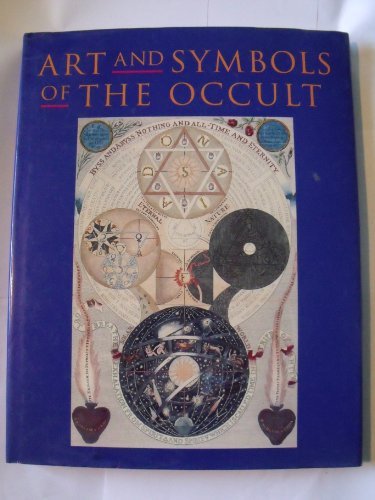
In this lavishly illustrated volume, insightful commentary accompanies a spectacular collection of art rich with occult symbolism drawn from the traditions of alchemy, astrology, tarot, Kabbalah, magic, and Tantra.
James Wasserman was an author and occultist, best known for his full color publication of the Papyrus of Ani, Book of the Dead. A member of Ordo Templi Orientis since 1976 and a book designer by trade, he has written extensively on spiritual and political liberty.
Wasserman began his career in 1973 at Weiser Books, then the world’s largest bookstore and publishing company specializing in esoteric literature. He worked with Brazilian occultist Marcelo Ramos Motta to publish the Commentaries of AL in 1975, for which he wrote the introduction. He supervised the 1976 Weiser edition of the Book of the Law in which the holograph manuscript was appended to the typeset text for the first time in a popular volume. In 1977, he arranged to professionally re-photograph the Frieda Harris Tarot paintings for an improved second edition of Aleister Crowley's Thoth Tarot deck, to which he contributed the booklet of instruction.[5][6] While still working at the bookstore, he met and befriended the legendary filmmakers and occultists Harry Smith and Alejandro Jodorowsky.
In 1977, he left Weisers to found Studio 31, where he produced the Simon Necronomicon, a volume purporting to be the mythological Necronomicon made famous by H.P. Lovecraft. In 2008, it was re-issued in a high quality 31st anniversary edition by Ibis Press. In 1994, Wasserman assembled a team of scholars, photographers and editorial staff to produce a full-color version of The Egyptian Book of the Dead, based on the Papyrus of Ani. The book was described as offering "much of value in presentation, layout and commentary" by John Baines, professor of Egyptology at the University of Oxford.
A short book (mostly pictures) of occult art, interpretations of the art, and how the arts applied to both broad religious and ecumenical (Christian denominations) histories. As with many items of this ilk, we see how the past "pagan" religions were "reinterpreted" (read: stolen) and formed into early Christian iconography and rede. I speak no ill against those of that religious bent, I am merely stating the facts as seen in the arts displayed in this book.
All that being said: I wish it was a bit longer, went through some of the darker images such as those by Hieronymus Bosch, Antonio Manetti, and others who were influenced by both the occult and magic of old.
Just wow. The author's knowledge is quite impressive - he takes the reader into a synthetic journey through a very complete array of occult topics, with a bibliography and many references available for further reading, if the reader is inclined to do so. All is laid out with wonderful illustrations and in superb quality edition/binding. Found this online, second hand at a bargain price. I would say that any student of the mysteries that buys this will be very pleased. Now I'll look for more books by Wasserman. Fabulous.