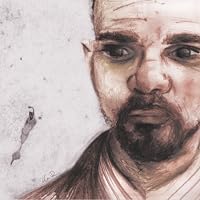
Stephen H. "Steve" Shagan (October 25, 1927 – November 30, 2015) was an American novelist, screenwriter, and television and film producer.
Shagan was born in Brooklyn, New York to Rachel (nee Rosenzweig) and Barnard H. "Barney" Shagan. Barney ran a pharmacy, Shagan's Pharmacy, at 49 Atlantic Avenue, Brooklyn, New York, with his brother, Samuel. After Barney's death the pharmacy went bankrupt and Samuel liquidated the assets at public auction in 1949. Steve dropped out of high school and joined the United States Coast Guard when World War II broke out. While in the Coast Guard he started writing to pass the time.
Shagan came to Hollywood in 1958 with his wife, Elizabeth Florance "Betty" Ricker, whom he married on November 18, 1956 in New York City. At first he did odd jobs, like as a stagehand at a little theater and pulling cables at MGM Studios in the middle of the night. Eventually he started working on scripts and then produced the Tarzan television show on location in Mexico. Betty talked him into to quitting and just concentrate on writing. Betty, a former fashion model, was the daughter of Philomena (nee Pisano) and Al Ricker. Her mother, a dancer, later remarried, to Mayo J. Duca, a Boston jazz trumpet player. Philomena Pisano was the daughter of Katherine "Kitty" Bingham and Fred Anthony Pisano, of the musical-comedy vaudeville team of Pisano and Bingham.
Shagan wrote the screenplay for and co-produced the 1973 film Save the Tiger, for which he was nominated for the Academy Award for Best Original Screenplay and won a Writers Guild of America Award. His novelization of Save the Tiger, which was his first novel, was actually published a year prior to the film's release. He had written the script first, and while he was shopping it around Hollywood, he wrote the novel to help him deal with the stress of trying to sell the script, which took two years to get produced. As he was finishing the book his typewriter broke and author Harold Robbins loaned him his.
Shagan went on to write the novel City of Angels and its film adaptation, Hustle, both released in 1975. He then wrote the screenplay for and co-produced Voyage of the Damned, for which he received another Academy Award nomination, this time for Best Adapted Screenplay. This was followed by Nightwing, which he adapted from the novel of same name by Martin Cruz Smith. He then adapted his 1979 novel The Formula into a 1980 film of the same name, which he also co-produced and which reunited him with Save the Tiger director John G. Avildsen. Of the performances by Brando and Scott in The Formula, Steve Shagan reportedly stated: "I sensed a loss of purpose, a feeling that they didn't want to work any more and had come to think of acting as playing with choo-choo trains."
Subsequent films written by Shagan include The Sicilian, which he adapted from the novel by Mario Puzo, and Primal Fear, based on the novel by William Diehl. Shagan also wrote the teleplay for the made-for-television movie Gotti, for which he was nominated for an Emmy Award for Outstanding Writing for a Miniseries or a Special.
Shagan died at his home in Los Angeles, California, on November 30, 2015.
Portrait of America suffering a nervous breakdown. Alas, Hollywood! No, this is not a novelization of the 1973 Jack Lemmon classic directed by Steve Shagan. It's the other way around. Shagan had pitched the studios a story of a wealthy, middle-aged man coming to grips with his failures and the country's, for years without any takers. The novel, SAVE THE TIGER, finally gave him some street cred, and financing. Harry is an over-the-hill, out-of-it businessman in the Los Angeles garment industry who can't understand why the old ways of doing things, mob-financing, juggling the books, pimping out lady friends to clients, don't work in 1970s America. The younger generation he meets on the streets, burned-out Black militants and second generation girl hippies, make him feel old, tired, and a foreigner in his own country. Shagan seemed to believe once upon a time there was a better America that the Sixties erased, linking this novel to films such as EASY RIDER and THE HOSPITAL. But nostalgia, based on a false reading of history, won't save Harry or the reader. Shagan the novelist thinks dramatic situations, Harry's client suffering a heart attack during sex, Harry contracting a mobster to burn down his garment store, make for high drama. Nope, not in this retread.