Jump to ratings and reviews
Rate this book

Craze Gin & Debauchery in an Age of Reason

Rate this book
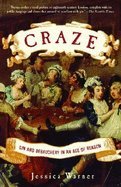
An intimate, irreverent history of the 'gin craze' in eighteenth-century London 'Gin took London by storm in the first half of the 18th century. It 'was the original urban drug,' says Warner in this intriguing slice of social history. 'Cheap, potent, and readily available,' it aided London's poor in escaping the wretchedness of their lives and was considered a public menace by Daniel Defoe and Samuel Johnson. (Hogarth's famous print Gin Lane imagined a nightmarish world destroyed by a demonic drink.) Warner gives us the whole story of where it came from (Holland), who drank it (a large percentage were women), how it was perceived (as a threat to the nation), and how legislative efforts to curb consumption fared (badly).

Paperback

First published January 1, 2002

12 people are currently reading
372 people want to read

About the author

Ratings & Reviews

What do you think?
Rate this book

Friends & Following

Create a free account to discover what your friends think of this book!

Community Reviews

5 stars
26 (11%)
4 stars
60 (26%)
3 stars
90 (40%)
2 stars
37 (16%)
1 star
10 (4%)
Displaying 1 - 30 of 38 reviews
Profile Image for Chris.
91 reviews483 followers
February 24, 2008
You’d think a book about the havoc gin wreaked on London between 1720 and 1750 would be totally awesome; Ms. Warner goes out of her way to prove me wrong. I’ll try to briefly tackle the things that bother me in her work:

1) Directly from the author’s afterward; “An historian is not unlike a pirate’s parrot…both perch on the shoulder of someone whose intellect dwarfs their own, both squawk phrases picked up somewhere else, and neither creature fully understands what it is saying.”. Wow. I’m all for brutal honesty, but seriously, if you plan on publishing historical nonfiction I am not impressed when the author plainly admits they have no f---ing clue of what they are putting to parchment. This statement somewhat encompasses all of my issues with the book.

2) Granted, this is an historical account written 300+ years after the fact, and naturally the author will need to rely on references. However, the book is 225 legitimate pages and has 40 pages of ‘notes and sources’, the first page of which has 21 cited examples. That’s 840 lines/quotes ripped off directly from outside sources, and average of almost 4 per page…. Ms. Warner isn’t doing a whole lot of ‘writing’ per se, mainly just organizing other people’s accounts, which is suitable for this type of fare, but at these amounts it’s beyond excessive.

3) The highest level of consumption in London’s gin-swilling history was at 2.2 gallons per year. Some people will say the s--- was ‘stronger’, etc etc… Let me set you straight right now. I don’t care how ‘strong’ it was, the strongest anything can be is 100% pure ethanol (200 proof) and since everything from soap lee to urine was added to this s--- I’m sure it wasn’t that high in alcohol content, especially when the whole reason the epidemic started was due to the cheap nature of the product, meaning it’s most likely very weak and watered down (water being a pretty cheap commodity when your source is a river-walk away plus you live on a f---ing island). Regardless of the proof, that’s one shot of hooch every 4.2 days. Even at 100% alcohol you’re not getting f---ed up.

4)For someone whose only authentic work in the entire 225 pages is her recounting the unbelievable lengths she went for research, she sure didn’t seem to do a f--- of a lot with it. She occasionally makes some valid connections between her data, but on the whole I was pretty disappointed, as these few moments of clarity were repeated ad infinitum.

5) Repetition on an unbelievable scale. If I had a buck for every time she mentioned that ‘local justices and constables were volunteers unwilling to devote time to arresting their neighbors’, that ‘informers against gin were universally despised’, and that ‘the Gin Act of 17XX was a dismal failure’, I’d probably go buy a dinner at Burger King and Fear and Loathing on DVD.

On the positive side, there are some amusing anecdotes about the ravages gin brought to the simpletons of England back in the day, but not nearly as many of worth that I had expected.

All things considered, this was a pretty sad book. If you don’t know that poor people are likely to succumb to illicit substances and that poverty is the root of crime and not the drugs they ingest, that the rich have absolutely no vested interest in helping to raise people from levels of grinding poverty instead of incarcerating the poor, that politicos are s---bags incapable of making positive contributions to society, and that gin tastes like piss because piss was once a key ingredient, then maybe this is the book for you. Otherwise, save your time, because there is no glamour in a book about a ‘craze’ when people weren’t legitimately drinking worth a s--- when you could be getting bird-shi--y at your local “Puss-and-Mew” instead.

ODD NOTE: When doing a google image search on my g/f, this book actually comes up as one of the first hits. Surprisingly, no naked pictures of her do.
Profile Image for Susan Ferguson.
1,086 reviews21 followers
May 4, 2013
An interesting look at the effort to stop sales of gin in London in the 1700s. There were several different gin acts, but only one managed to reduce the sales - when they reduced the license to sell gin so anyone could afford it, gin lost some of its popularity as a government protest. Then, there came hard financial times where crop failures and draught caused the crops to be used for other than distilling and besides nobody could afford gin. This finally reduced the drinking of gin although it never stopped it completely. The author takes a scornful look at reformers who wanted to outlaw gin for the "good of the workers" - undercutting the work supply, people would rather drink than work, women were drinking gin and neglecting children, etc.
I got a little turned off on it by the use of "liberal", "right-wing", "proletariat", and so on strung through the history. I am almost sure the people of the 1700s did not think in those terms.
Then, she links the drinking of gin to the taking of drugs today. It is a good analogy, perhaps not perfect, but good. It would have been interesting to see the effort to stop gin compared to the effort of Prohibition in the early 1900s. In fact, I thought at first that was where the book was headed. Warner claims the drinking of gin and drugs cannot be stopped by making the sale or use illegal. That its use is caused by a complicated and underlying series or mix of things. Which makes sense.....
The book could perhaps have been put together a little better without a lot of repetition involved, but it was a fairly well researched book.
Profile Image for Kathleen (itpdx).
1,313 reviews30 followers
August 29, 2008
This book got better as it went along. But I wanted to point out to the author that this is a popular history book. I found the quotes of formal, 18th-century prose not worth the time to try to decipher. In a popular history, it is OK to paraphrase! And then I found she used terms that I am not familiar with, like "fisc". Is this Canadian or British? I can find no definition that seems to fit the context.

I found the experiments in law enforcement interesting--using informers, non-jury "trials", real "activist judges" (both those out drumming up business and those trying to avoid it). You can see how the present British and US systems developed based on some of these experiences of law-makers and citizens.

I found the author's comparison of the response to the gin craze with current responses to various drug problems instructive but I don't feel that they always hold up. I can definitely see that marijuana use has a counter-culture component; and the media has certainly highlighted the impact of meth on children; but not necessarily the obverse. And I understand that meth has had a significant impact in rural areas. (The author seems to think all drug "problems" are in cities). But this book was published in 2002 so maybe she had not had a chance to "study" meth.
Profile Image for Honey.
4 reviews
June 18, 2021
I'm a big fan of microhistories, and had high expectations for something that sounded as exciting as the gin craze of the 1700s. However, I found the writing weak, and several points were constantly restated, which came off as somewhat condescending (as if I couldn't remember a point that was made less than a chapter ago) or as if the author was trying very hard to meet word count. I, like other reviewers, also found the exceptionally common use of quotes (many of which state the exact same points) grating after a while. I think this book would've benefitted from being much shorter.

Noting something another reviewer mentioned, the 2.2 gallons per capita figure does not seem that high, but doing the math for vodka (most popular hard alcohol in the U.S.) consumption per capita in the U.S. in 2019 gets you somewhere around 0.5 gallons per capita...so I would say that it does seem like a pretty high figure, once one thinks about it.
385 reviews1 follower
December 2, 2020
A brief but interesting history of England's Gin Craze in the first half of the eighteenth century. Warner makes the point that efforts to control or to outlaw the mass distribution and drinking of a horrid but potent drink had more to do with fear and loathing of the working poor, now primarily in growing urban centers, especially London, than any real concern about addiction, poverty, sanitation. Only in the late 1740s did London's power elite adopt a highly moralistic attitude (fueled by Hogarth's print "Gin Lane") and clamp down on the rampant, unregulated selling of distilled spirits.
Profile Image for Cindy.
304 reviews285 followers
February 10, 2024
This book could use some big picture and overviews instead of driving right into the at times tedious details. Even better would be some narrative arches to draw the reader in and illustrate concepts better. This is not quite an academic text, but not quite for a general audience. Although it leans more toward the latter, it suffers from both explaining too much and not enough. An extra star because I learned a few things. Now I need gin to celebrate.
64 reviews1 follower
January 1, 2025
Interesting little book about the first drug scare and in the West and the related crackdown. Warner is really good at looking at this from a social, economic and political lens, and digging in deep to how those intersect with each other. Examining question like who was selling gin? What was the motive of the crackdowns? What were the economic and tax implication associated with alcohol regulation? At times she got a little in the weeds focusing on some minutia or other but most of the time the anecdotes contained were used to illustrate a specific post and well integrated into the larger argument she was making. The book seems especially relevant to Canada in 2024 as the debates around drug policy of once again have sprung up. Nothing's new.
Author 1 book4 followers
September 18, 2017
Entertaining look at life in 18th century London and the politics of trade and regulation. Ends with t desultory, but interesting comparison to the crack era in the United States.
Profile Image for Colin.
5 reviews7 followers
January 27, 2024
This book is a lot like a night spent drinking gin: it starts out promising, everything is interesting and fun, and by the end you have a headache and just want to go to bed.
103 reviews1 follower
August 5, 2014
Really interesting topic, super poor execution. Again, this is a really poorly written book. It sounds like a graduate thesis that Warner decided to capitalize on and publish as a book for the masses.

The details in this book are tedious and extraneous, to a point that the valid points that Warner tries to make are very hard to follow. All of the sources make this sound like a history research project that was used for a graduate level course where she is trying to use sources to support her conclusions.

This had so much potential. I'm thinking Sarah Vowell or Erik Larson. This book could have easily been there in readability and amusement potential. If she wanted to be more serious, she could have still done so with a little less dry library feeling.

The section on how crack is like gin, at least in public policy was weak and tacked on at the end. She could have made more references to prohibition of booze and more mention of the war on drugs. There was a good tie in there, but again, it was poorly executed and diminished by the overwhelming amount of material, redundancy, and sources focusing on gin for the vast majority of the book.

I did really enjoy her insight on how drugs are only attacked under certain circumstances (have to be new, perceived as stronger than previous drugs, etc, etc). I also appreciated her observation that drugs are only targeted during times of peace. Warner's discussion of how drugs are used as a surrogate scape goat for other social problems and how the effect (drugs) are often targeted instead of the cause (poverty, infrastructure, lack of family planning, etc).
Profile Image for Steven.
574 reviews27 followers
June 30, 2009
An interesting little book which, in discussing the gin craze in London between the 1720s and 1750s and the legislative attempts to control it, points out the parallels to today's attitudes toward drug crazes. Warner gives much detail about the legislative maneuvering by the upper crust of British society to try and control the masses and their addictions -- more out of a concern for maintaining the social order than out of concern for their fellows. The best part of the book is the small final chapter in which she draws connections between these 18th century efforts at social control and our own issues with crack and other drugs today. Just a brief excerpt that I found poignant:
When we react against a new drug and the effects it might have on other people's behavior, we are also reacting against the culture in which the drug has taken root. This is what makes the rhetoric of the eighteenth-century reformers so refreshing: unlike modern reformers, they were unabashedly elitist. What they had to say may not have been attractive, but at least it was honest.

Not that this book is entirely serious -- there are plenty of anecdotes about mobs and informants and vigilante justice related to the sale and regulation of (and addiction to) "spiritous liquors." But it will sure make you think about the relationships between social harmony and mind-altering substances.
Profile Image for Brett.
1,759 reviews14 followers
December 6, 2012
This is an interesting look at what the author feels is the first modern drug "epidemic", & the most thought-provoking part of the whole work may well be the epilogue, in which she compares the overall effects of the gin craze on British society, who used it & why, & what the average person as well as the government & ruling classes thought & felt about it to the American crack cocaine epidemic of the 1980's. The similarities she draws are rather striking.
I am a huge fan of social history, & this one takes a good look at the basic workings of cheap, widely available alcohol on the everyday lives of the British urban poor of the time. It's a relatively short, quick read, & as such a general overview, but none the less engaging for that. The thing that really stands out throughout the course of the book to me is how eighteenth-century London is both remarkably similar to & at the same time unimaginably divergent from our own lives in modern America. Along the same lines, it's interesting to see what motivated large groups of people on the margins of society choosing to potentially endanger their lives, or at least their livelihoods, to escape the essentially brutal drudgery of a hardscrabble existence for a while here & there - & just exactly why that desire for escape was perceived as so very threatening, dangerous, & subversive by those in power.
47 reviews
September 22, 2022
This is, quite frankly, complete tosh. A potentially fascinating topic has been made as dull as ditchwater by someone who claims to be a historian but who is actually just a polemicist who possesses no writing discipline and flits about from topic to topic with no real plan. As others have said in other reviews, the book reads like some kind of student dissertation, and why the editors didn't throw it back and ask for a complete re-write is a mystery.

Apart from the fact that no serious attempt has been made to chronicle what the gin craze actually entailed, or what its consequences were, the biggest problem with the book is that Warner opts not to tackle anything in chronological order. The result is that you have a confusing mess of a story that leaves the reader less, rather than more, enlightened at its end.

I honestly gained more from reading the short Wikipedia entry on 'Gin Craze' than I did from the 266 pages of Warner's book - in fact that entry unloosened some of the knots that Warner had tied me in.
Profile Image for Pamela W.
256 reviews7 followers
September 6, 2008
So far I'm thinking I should stick with drinking gin -vs- reading about it. This book reads like the text from my 10th grade American history class, which was right after lunch and therefore almost impossible to stay awake for, given that I was digesting my francheesie or whatever I ate from the cafe. After all, in American History, you never really made it beyond the 1920's-30's so every year was a regurgitation of the patriots, slavery and abolition, etc. In other words, bloody boring. Like this book, thus far. Although I love the concept of a "puss and mew" vending machine, which was a box with a drawer and a gin hawker hiding inside selling drams of gin anonymously. The code worked like this: Buyer walks up and says "puss", anonymous vendor in box replies "mew" and thus a transaction may take place. Only the British could cook up an illegal sales transaction based on a puss and mew call and response. That's why we love them so.
6 reviews
January 2, 2011
Really a fun book, and a good window on the culture that doesn't make it into the history books. Two criticisms: it's a bit polemical, with an obvious divide between the "good guys" and the "bad guys" (I think I agree with her assessment on this, but any cartoonization of history will tend to make me skeptical of the author's position), and it sort of dies at the critical three-quarter mark. Right when we need to be hearing something new, there's a bunch more of the same. Still, it's a quick read and well worth the lark.
Profile Image for James.
Author 26 books10 followers
January 28, 2016
I found this dry and repetitive. I'm sure that it would be a fine Ph.D. dissertation, but as a colorful slice of history it falls flat. I'm sure that the lurid subtitle, Gin and Debauchery in an Age of Reason, along with the racy cover picture hyped up the sales, but this is a boring read. History does not have to be clothed in such rags as this. "Craze" became only, I believe, the third book in my life that I did not finish. I gave it a big chance but reading well over half of the book before deciding that I was learning little and getting nothing from this work.
Profile Image for ***Dave Hill.
1,025 reviews28 followers
December 23, 2010
A fine review off one of the earliest "War on Drugs" -- the push to suppress the spread of gin drinking (and selling and distilling) in Britain in the 1730s-1740s. Much of the rhetoric is familiar to today's drug wars, and many of the lessons (mostly of failure) are the same: demand will drive supply, and blaming drugs on the problems amongst the underclass is a cheap and easy way to avoid having to actually address those problems.
Profile Image for Jennifer.
51 reviews2 followers
April 5, 2014
Very little about the associated social history. Lots of extraneous details about various laws and government figures and fighting among opposing (self) interest groups. The reformers were more abut control and raising the mores of the "lower classes". Lots of money, power plays, and hypocrisy of course. Political and legal scholars would enjoy. Not so much the general public.
21 reviews
February 1, 2008
Overview of the various Gin acts of the early 18th century in Britain and the attempt of one class to control the behavior of another. Well written, doesn't quite live up the the cleverness of its opening chapter but interesting ideas and correlation to the crack epidemic.
Profile Image for Kristy.
638 reviews
February 21, 2008
An interesting history of how the upper-classes react when the working poor start drinking gin in addition to their beer. Sometimes a little repetitive, but a quick and worthwhile look into a very early drug war.
Profile Image for Mark Russell.
Author 435 books384 followers
January 24, 2009
A fairly interesting dissection of the gin craze of 18th century London. Apparently, a population of drinkers who'd known only beer didn't realize that you weren't supposed to drink gin in pints. What ensued was the crack epidemic of its day.
Profile Image for Katelyn.
197 reviews3 followers
February 22, 2010
I had to read this for a English history assignment. The book was very informative, but the author repeats the same sentences over and over again. She also could have stopped writing with 100 pages to go and still made her argument.
Profile Image for Adrienne.
65 reviews4 followers
May 14, 2012
I enjoyed this book, it was very informative & I would recommend it. Keep a highlighter or pencil for underlining though as I would not want to read it twice over. Fitting for a book about Gin to be dry.
Profile Image for Lynne Pennington.
80 reviews6 followers
March 17, 2016
Almost a book-length term paper! Lots of research and lots of detail on an interesting subject. I especially liked the quotes from Fielding, Defoe, and others----makes you realize when it comes to politics, there really is nothing new.
22 reviews
January 2, 2018
This book somehow makes the subject kind of dull, and reads in parts like it was the author's grad school thesis. The last chapter, which compares the elite view of the "gin craze" with the elite view of the "crack epidemic" of the 1980s, could have been interesting but it reads like a polemic.
Profile Image for Lori.
34 reviews1 follower
December 17, 2008
I lied- I didn't read the whole thing because it bored me too much. I tried, but it was like reading a really long term paper. zzzzzzzzzzzz.
Displaying 1 - 30 of 38 reviews

Can't find what you're looking for?

Get help and learn more about the design.