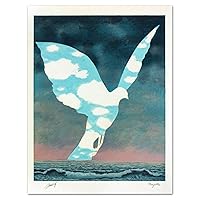
This debut collection of poetry demonstrates an illuminating diversity and consummate virtuosity in its keen observations of, and response to, the world around
Amy Clampitt was brought up in New Providence, Iowa. She wrote poetry in high school, but then ceased and focused her energies on writing fiction instead. She graduated from Grinnell College, and from that time on lived mainly in New York City.
To support herself, she worked as a secretary at the Oxford University Press, a reference librarian at the Audubon Society, and a freelance editor. Not until the mid-1960s, when she was in her forties, did she return to writing poetry. Her first poem was published by The New Yorker in 1978. In 1983, at the age of sixty-three, she published her first full-length collection, The Kingfisher.
Clampitt was the recipient of a 1982 Guggenheim Fellowship, a MacArthur Fellowship (1992), and she was a member of the American Academy of Arts and Letters and the American Academy of Poets. She died of cancer in September 1994.
I took my time with this lovely collection of poems and read just a few each day. The ones that had particular meaning for me were the ones about her experience of nature. They often echoed my own observations this summer while taking joy in the small things of life.
From Poetry Magazine: "It was not until the publication of The Kingfisher, when Clampitt was sixty-three years old, that her work received significant attention, with critics praising in particular the allusive richness and syntactical sophistication of her verse."
I was not familiar with Amy Clampitt's work. I'm not even sure how I came across it, except that I'm always on the hunt for poetry, so it should be no surprise to find some.
The poems I appreciated most in this collection were heavily descriptive of Nature - she really goes for precision, almost to scientific degrees - which in my view illustrates that link between precise language and understanding which is crucial to grasping the world from the outside in (science) and the inside out (poetry).
She likes birds, too. Oh how did you guess. (It all makes sense. She worked as a reference librarian for the Audobon Society.)
In "Marine Surface, Low Overcast" she takes on the challenge of describing how the water surface looks and how it looks as if it would feel. Can you imagine? It seems a little like one of those impossible tasks given to persons trying to win the hand of the fairy-tale princess. "Go collect the four winds in this burlap bag and bring them to me, and only then can you marry my daughter!" Righty-ho, Mr. King.
Impossible, but she puts her mind to it.
"this wind-silver rumpling as of oatfields, a suede of meadow, a nub, a nap, a mane of lustre lithe as the slide of muscle in its sheath of skin,
laminae of living tissue, mysteries of flex, affinities of texture, subtleties of touch, of pressure and release, the suppleness of long and intimate association...
down galleries of sheen, of flux, cathedral domes that seem to hover overturned and shaken like a basin to the noise of voices, from a rustle to the jostle of such rush-hour conglomerations..."
Amy Clampitt's career as a poet was far too short---just 11 years. But she created a body of work any poet would be proud of. "The Kingfisher" was her amazing debut collection back in 1983 when she was 63 years old, and it stands today was one of the best collections of the second half of the 20th Century. For that matter, it has staying power. As I read and reread it in 2018, I hear echoes of Gerard Manley Hopkins AND Wallace Stevens. Her love of words as music, her encyclopedic incorporation of art, geography, botany, nature, travelogue, biography can make some of her poems dense. But each one bears rereading. Even those that seem most approachable at first have depths of feeling, thinking and experience. Read and savor.
A friend shared one of Clampitt's poems during National Poetry Month, and I liked it enough to tackle an entire book of poems. With many poems, I succeeded in enjoying and understanding them. Others I enjoyed, although I felt as though I was looking at a landscape through a fog. And there were a few that had me fairly well stumped after reading them three times over, that were simply beyond my intellectual capacity. Often times her sentence structure was such that I would have to go back to the start of a sentence, then skip over the middle of it which expanded on or diverged from the initial point, in order to find the sentence's conclusion and get a firm hold on her idea. But I did appreciate the complexity of her language, even if I didn't always "get it," and I also loved that she wrote on a variety of topics.
The next day I read a greeting-card-type poem posted on Facebook and wow, did I suddenly realize how good Clampitt was at her craft! Clampitt was never bland or trite, to be sure. There is richness and originality in her work.
I remember in middle school how grateful I was for the quadratic formula. It was so predictable, and dependable. And don't you know that my teacher expected me, after using it enough times, to know all the different ways that the formula's rules worked. Clampitt's poems are like a quadratic formula. The only problem is I don't know if I really understand all the rules she expects me to bring to her poems. But maybe if I memorized all her rules, I would really feel the poems in this book. As of this reading they just seem to accrue.
i'm not going to read this whole book just now but i think i will come back to it and maybe it would be a good thing to keep at my desk, to prick the language *hearing* part of my brain. she's funny, too:
"The orphanage of possibility has had to be expanded to admit the sea mouse." (first lines of "Sea Mouse")
Amy Clampitt was one of the poets who made me feel as though I could relax into and explore my experiences through poetic language. This particular collection seized on aspects of intellectual and emotional life that have always preoccupied me and her observations and graceful, precise language are still extraordinarily moving to me.
An ingenuity too astonishing to be quite fortuitous is this bog full of sundews, sphagnum- lined and shaped like a teacup.
A step down and you’re into it; a wilderness swallows you up: ankle-, then knee-, then midriff- to-shoulder deep in webfooted understory, an overhead spruce-tamarack horizon hinting you’ll never get out of here.
But the sun among the sundews, down there, is so bright, an underfoot webwork of carnivorous rubies, a star-swarm thick as the gnats they’re set to catch, delectable double-faced cockleburs, each hair-tip a sticky mirror afire with sunlight, a million of them and again a million, each mirror a trap set to unhand unbelieving,
that either a First Cause said once, “Let there be sundews,” and there were, or they’ve made their way here unaided other than by that backhand, round- about refusal to assume responsibility known as Natural Selection.
But the sun underfoot is so dazzling down there among the sundews, there is so much light in the cup that, looking, you start to fall upward.
This poet, Amy Clampitt, came to me highly recommended by my graduate poetry instructor, because of her frequent focus on themes of the natural world — and this dazzling poem of hers, her first published in the New Yorker, and my favorite from this collection, tells me why.
In truth, many of the poems in this, her first collection, left me on the cold side because the diction was so convoluted, the subtlety so extreme, that I couldn’t figure out what she was trying to say. The form sometimes seemed to sap the meaning.
On the other hand, I notice now that fire is an element in many of the most powerful poems that linger in my memory, as in the long poem A Procession at Candlemas where she meditates on the many midwesterners like herself, migrants to New York City, who travel home along the highway:
Moving on or going back to where you came from bad news is what you mainly travel with: a breakup or a breakdown, someone running off
or walking out, called up or called home: death in the family. Nudged from their stanchions outside the terminal, anonymous of purpose
as a flock of birds, the bison of the highway funnel westward onto Route 80, mirroring and entity that cannot look into itself and know
what makes it what it is. Sooner or later every trek becomes a funeral procession. The mother curtained in Intensive Care— . . . bereavement altering the moving lights to a processional, a feast of Candlemas.
And the final section of poems, subtitled Hydrocarbon, begins with a meditation on Prometheus and the discovery of oil in Pennsylvania — and from there progresses in horror. In The Dahlia Gardens a Quaker whose name, Norman Morrison, was still remembered many years later in Viet Nam, immolated himself in front of the Pentagon, between a bank of flower gardens and the Potomac River.
a manifesto flowering like a dahlia into whole gardens of astonishment— the sumptuous crimson, heart’s dark, the piebald saffron and the scarlet riding the dahlia gardens of the lake of Xochimilco
Benares, marigold-garlanded suttee, the burning ghats alongside the Ganges: at the An Quang pagoda, saffron robes charring in fiery transparency, a bath of burning
we've reams of hopkins-imitators & they're still growing. Clampitt's not so bothered about that label in this, her debut, which wears him in its title. But I like her so much I think she gets away with it. Perhaps a little of what helps is that she's developed a critical eye, this being her debut at sixty three. So there's a stillness, a nod to the legible, which is often enough forgot;
no threat in sight, no hint anywhere in the universe of that
apathy at the meridian, the noon of absolute boredom
I read her second collection (What the Light was Like) last year & I was a fan & it's gorgeous to compare the two, Light being in some ways more conceptual in scope (the keats section??) whereas the confidence w/ which Amy's immediately got in The Kingfisher is striking & unbelievable for a debut. There're still some slip-ups, I absolutely find poems like 'Lindenbloom' less convincing with that opening -
Before midsummer density opaques with shade the checker- tables underneath, in daylight unleafing lindens burn green-gold a day or two ...
but then it picks itself up again & I want to forgive it by closing:
pollen dust no transubstantiating pope or antipope could sift or quite precisely ponder.
ANyway the main attraction here is the famous elegy / anxiety poem for her mother, 'A Procession at Candlemas' which (perhaps tellingly ) drops a lot of the Hopkins & works into a little epigrammatic style, a kind of wisdom lit qua Jorie Graham or something. Actually it's almost a compulsive aphorism ('bad news is what you mainly travel with', 'sooner or later / every trek becomes a funeral procession', 'change as child-bearing'). but I'm impressed by the lucidity of some here;
even a virgin,
having given birth, needs purifying–– to carry fire as though it were a flower, the terror and the loveliness entrusted
into naked hands, supposing God might have, might actually need a mother: people have at times found this a way of being happy.
It is masterfully crafted poetry that demands your attention. There's intelligence, beauty, and music on every page. The rhyme, near rhyme, assonance, and consonance accumulates in these poems.
In this collection, you will encounter words and names of people and places you don't know. Luckily though, you have a smartphone.
If you enjoy intelligent, lyrical, challenging poetry, read Amy Clampitt's The Kingfisher.
Frankly, a perfect collection. Clampitt is assuredly one of the best of the past 50 years, and her debut contains some of her most remarkable masterpieces: "beach glass," "stacking the straw," and "berceuse." Clampitt's breadth is a feat in itself, with clear accomplishments here in nature, social, and political poetry. It would be quicker to list the poems that I did not consider excellent than to list those that I did; everything here is worth reading.
A work of genius—erudite and sophisticated, yet accessible and satisfying.
Favorite Poems: “A Procession at Candlemas” “The Dakota” “Beethoven, Opus 111” “Good Friday” “Rain at Bellagio” “Letters from Jerusalem” The Burning Child”