In presenting to the public my third volume of Detective Stories, I desire to again call attention to the fact that the stories herein contained, as in the case of their predecessors in the series, are literally true. The incidents in these cases have all actually occurred as related, and there are now living many witnesses to corroborate my statements.
This edition from New Century Books contains Direct Link Technology
Notorious agency of Scottish-American detective Allan Pinkerton broke strikes and disrupted labor efforts to unionize.
People best know this spy for creating the national agency. In 1849, people in Chicago first appointed Pinkerton. In the 1850s, he partnered with Chicago attorney Edward Rucker in forming the northwestern police agency, later known nationally and still in existence today as Pinkerton consulting and investigations, a subsidiary of Securitas Aktiebolag.
Business insignia of Pinkerton included a wide open eye with the caption, "We never sleep."
People posthumously published exploits of his agents, perhaps some ghostwritten for promotion.
Since no one has commented on this yet, I will. Given it's relative obscurity, I eagerly await another post on this. This is a collection of three tales by Allan Pinkerton, the founder of the first private detective agency. They are purportedly true and based on his experiences, but they are very readable and read much like the pulp crime stories that would later gain so much popularity. I think they are more than an academic curiosity; I find them very entertaining.
Based on an early encounter with a late entry in the series, True Detective Stories From the archives of the Pinkertons, I had thought that all the Pinkerton dime novels would have the pithiness of an agency report, 'the roots of the hard-boiled style.'
Alas, no. This book has two Pinkerton 'cases' so padded and embellished by the ghost writer, that they amount to shaggy dog stories.
Never mind the questionable ethics of the founding father- both of these cases involve inordinate (and no doubt costly) amounts of gaslighting. That might be interesting, if it rang true; but it seems stagey and melodramatic, and let's say by no means guaranteed to work.
The second story was better than the first, and so, although I regret the time spent reading them, I will grant a second star and say these weren't a complete waste of time.
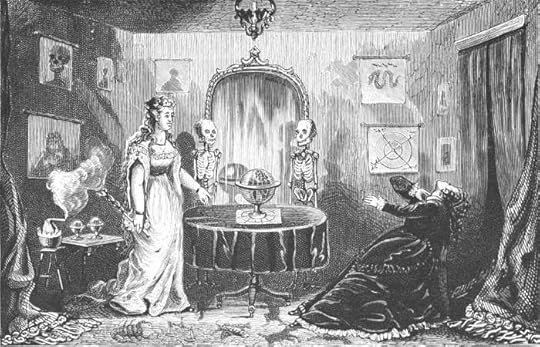
"'Death!' shrieked Mrs. Thayer, and then she fell back lifeless."—Page 199.
This is not the copy I read. The book I read was a facsimile of the 1875 printing. Thank you Black Squirrel publishing! I only read The Murderer and the Fortune Teller. I am absolutely floored that I enjoyed a 140 y/o book so much!