Jump to ratings and reviews
Rate this book

The Lay of the Love and Death of Cornet Christopher Rilke

Rate this book
Rilke, Rainer Maria. The Lay of the Love and Death of Cornet Christopher Rilke. Translation by M.D. Herter Norton. First revised Norton edition. New York, W.W. Norton, 1963. 13 cm x 19,5 cm. 69, (10) pages. Original Softcover. Very good condition with some minor signs of external wear. From the library of swiss - american - irish poet Chuck Kruger. [The Norton Library].

76 pages, Paperback

First published January 1, 1904

11 people are currently reading
630 people want to read

About the author

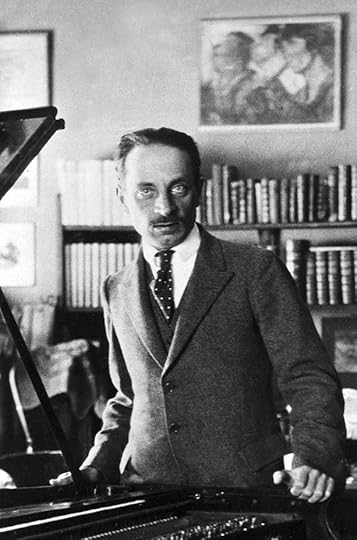
Rainer Maria Rilke

1,799 books6,942 followers
A mystic lyricism and precise imagery often marked verse of German poet Rainer Maria Rilke, whose collections profoundly influenced 20th-century German literature and include The Book of Hours (1905) and The Duino Elegies (1923).

People consider him of the greatest 20th century users of the language.

His haunting images tend to focus on the difficulty of communion with the ineffable in an age of disbelief, solitude, and profound anxiety — themes that tend to position him as a transitional figure between the traditional and the modernist poets.

His two most famous sequences include the Sonnets to Orpheus , and his most famous prose works include the Letters to a Young Poet and the semi-autobiographical The Notebooks of Malte Laurids Brigge .

He also wrote more than four hundred poems in French, dedicated to the canton of Valais in Switzerland, his homeland of choice.

Ratings & Reviews

What do you think?
Rate this book

Friends & Following

Create a free account to discover what your friends think of this book!

Community Reviews

5 stars
206 (28%)
4 stars
264 (36%)
3 stars
198 (27%)
2 stars
39 (5%)
1 star
9 (1%)
Displaying 1 - 30 of 76 reviews
Profile Image for Ilse.
552 reviews4,442 followers
April 30, 2025
Riding, riding, riding, through the dag, through the night, through the day. And the heart has become so tired, and the longing so vast.

In a micro-epic prose poem, Rainer Maria Rilke sings the tale of the young standard-bearer Christoph Rilke (allegedly one of his forebears), travelling in 1664 with the army in the Austro-Turkish war, unfurling a hallucinatory, feverish dance in a vertiginous cadence of war, inebriation, sexual initation and death. In 26 suggestive, visual scenes, Rilke vividly paints a sensual, melancholy dreamscape depicting homesickness, longing, a soldier’s life of hardship, vulnerability and strength. Seeking tenderness and solace, the young soldier finds death like a moth drawn to a flame after one night of passion with a countess who embodies several facets of feminity at once – a mistress as well as a mother, and a certain death.

The tower room is dark. But they light up each other’s faces with their smiles. They grope their way forward like blind people and find each other like a door. Almost like children who are terrified of the night, they cling to each other. And yet they are not afraid. There is nothing that could be against them: no yesterday, no tomorrow; for time has fallen away. And they are blossoming out of its ruins.

rosas-die-weise-von-liebe-und-tod-des-cornets-christoph-rilke-c-
(photograph by Herman Sorgeloos)

However Rilke later considered the Cornet a minor youth work ‘a poem so meagre, its language so undeveloped, that the only thing that could excuse its continued existence is just that glamour, that swing, that breathless voyaging for which clouds scurrying across the moon that night were more the model than anything I knew, and could know, by legend, of that forefather of mine’, the Cornet at a certain moment became his most popular work, found in the knapsacks of soldiers at the frontline and multiplied into hundred thousands of copies by 1920. Conceived in one autumn moon night in 1899, Rilke refined and revised the Cornet until giving it its definitive form in 1906, gaining impetus when republished in 1912 by Insel at instigation of Stefan Zweig. To his astonishment and dismay, the decadent-romantic tale later slipped into patriotic-nationalistic exploitation, just like he couldn’t prevent that the intense musical quality of the lyrical language inspired some composers to design musical adaptations out of it, which he regretted as he thought amalgamating both art forms not a legitimate artistic expression, disliking his work to be illustrated as well (when a friend suggested to approach Kokoschka for illustrations, Rilke objected).

Wondering about the popularity of the Cornet, Rilke conceded that ‘From a single instant of robust youthfulness a movement of sorts may have flowed into those lines, a little something of ungiven and ungiveable happiness, a story that can still communicate with us even today’. Wise and almost prophetic words, as the themes and rhythm of the Cornet nowadays still inspire, thinking of the choreography Anne Teresa De Keersmaeker recently created on it in 2015, just like Frank Martin’s symphonic song-cycle Der Kornet (1945) is still performed.

Man and woman, love and death – ever moving themes, cast in impressionistic colours of melodious phrases.
Profile Image for la poesie a fleur de peau.
508 reviews63 followers
August 4, 2022
"Lentamente apaga-se o castelo. Todos estão pesados: exaustos ou apaixonados ou embriagados. Depois de tantas vazias, longas noites de campanha: camas. Camas largas de carvalho. Nelas reza-se de outra maneira, já não como nos sulcos miseráveis do caminho, que, quando se quer adormecer, são como sepulturas.
«Meu Deus, que seja feita a tua vontade!»
Na cama são mais breves as preces.
Mas mais íntimas."

Excerto de "A Balada de Amor e Morte do Porta-estandarte Christoph Rilke", Rainer Maria Rilke
Trad. Bruno C. Duarte, Edições do Saguão

***

Rilke procurou distanciar-se deste poema ao longo da sua vida e esse movimento não teve qualquer repercussão na forma como o público o foi recebendo. Por um lado reconheço que está muito aquém das obras maravilhosas deste autor (o Livro de Horas, o Livro das Imagens, as Elegias do Duino são obras a que regresso ciclicamente, é um dos meus autores favoritos) e, por outro lado, compreendo o encanto que gerou e que continua a gerar — um pouco como as palavras que abrem o poema, "Cavalgar, cavalgar, cavalgar, pelo dia afora, pela noite adentro, pelo dia afora", também o poema parece ter seguido incansavelmente o seu rumo e desprender-se das rédeas do poeta.

Vejo o poema como algo que só amiúde evoca as narrativas da Antiguidade Clássica: para mim o imaginário mais rapidamente evoca uma união entre pinturas pré-rafaelitas e simbolistas; as passagens são breves, sucedem-se como se fossem fragmentos de sonhos... deixam impressões, rastos de sensações, de desejos, de ansiedade.
Profile Image for André Carreira.
24 reviews25 followers
June 5, 2016
In this tale, Rilke conjures up the violence and energy and despair of war; he does so through the use of symbolism and conscientious scarcity of prose. Imagery is often metaphorical and sentences are mostly short, pungent. They exceed themselves and, all at once, we sense the power of the author's imagination and feeling.
One would find the lack of battle descriptions and gruesome deaths something odd, were it not for Rilke's magical and (sometimes) childlike sense of humanity, his symbolic focus on the women for whom the men fight to return and on the dreams that may be left buried, with no name.
He wrote this while still young, inspired by lineage and claims to aristocracy, allegedly killed alongside Christoph Rilke.
Nonetheless, it is not really about one soldier that he writes, but all of them.


I believe many people who write reviews, and mostly so-called "literary critics", get to the point when they feel they must write against their own sense of futility. This, then, is the measure of the nothing I had to say.

If anything is divine, Rilke's work is divine.
Profile Image for G.
Author 35 books197 followers
January 13, 2019
Prosa poética de un sonido único. Un soldadito -corneta, alférez o portaestandarte-, Cristóbal, alter-ego de Rilke. Su amante ilegal, alegoría para nada disimulada en estos cantos, Lou Andreas-Salomé. La guerra, la muerte. Versos de sintaxis sobria con semántica desbordante. Es esa poesía tranquila que parece moverse poco, pero lo quema todo, como el fuego. Juega bastante con la luz, el brillo, los sonidos de la naturaleza. “Alles ist hell, aber es ist kein Tag. Alles ist laut, aber es sind nicht Vogelstimmen”. Mi traición: Todo es claridad, pero no por ser de día. Todo es sonido, pero no por los cantos de los pájaros. Parece que Lou Andreas deslumbró al poeta alguna noche de plenilunio natural o de producción propia. “Die Turmstube ist dunkel. / Aber sie leuchten sich ins Gesicht mit ihrem Lächeln”. La habitación de la torre estaba oscura, pero sus risas iluminaban sus rostros. Tremendo metejón con Lou Andreas, que por otra parte recolectó a varios personajes del nivel de Rilke, como Nietzsche y Freud, además de otros varios psicoanalistas. Por momentos estos cantos se ponen un poco neorrománticos, redunda la noche, la rosa, los pétalos y ese erotismo extraño de la separación forzosa que opera como hiper-sensualidad. Vulgar, pero muy eficiente en algunas culturas según parece. Hoy todavía se entiende, pero quizás en algún futuro será necesario algo de trabajo filológico para captar el fenómeno pasional que está en la base de estos cantos.
Profile Image for Teresa.
1,492 reviews
August 7, 2018
Se Rilke desvalorizou estes textos, que considerava como "menores", não serei eu a contrariá-lo...


=================================

"E tu esperas, aguardas a única coisa
que aumentaria infinitamente a tua vida;
o poderoso, o extraordinário,
o despertar das pedras,
os abismos com que te deparas.

Nas estantes brilham
os volumes em castanho e ouro;
e tu pensas em países viajados,
em quadros, nas vestes
de mulheres encontradas e já perdidas.

E então de súbito sabes: era isso.
Ergues-te e diante de ti estão
angústia e forma e oração
de certo ano que passou."

Rainer Maria Rilke (O Livro das Imagens)

description

Rainer Maria Rilke nasceu em Praga, República Checa, no dia 4 de Dezembro de 1875 e morreu em Montreux, Suíça, no dia 29 de Dezembro de 1926.
Profile Image for Mohammad Ali Shamekhi.
1,096 reviews312 followers
October 24, 2015
مهمترین نکته: دو ستاره را به این کتاب داده ام، نه اصل آن

نخست باید اعتراض کنم به چاپ بد کتاب. از نظر زیبایی چاپ، فاجعه است کتاب. فونت ها و چینش متن ها همه حکایت از بی سلیقگی دارند

در مرتبه ی بعد باید خدا رو شکر کنم که اصل آلمانی اثر هم در این کتاب آمده است. در صفحات سمت راست ترجمه ی فارسی و در صفحات سمت چپ اصل آلمانی و ترجمه ی انگلیسی آمده اند. ظاهرا هم ترجمه از روی انگلیسی است، هر چند عبداللهی آن را با آلمانی مقابله کرده. اشتباهات ظاهرا معدودی دارد - مثلا کلمه ای را در جایی اشتباه ترجمه کرده یا در جایی به تبع متن انگلیسی جمله ای کوتاه رو در ترجمه انداخته و ... . کلا متن فارسی خواننده رو از متن آلمانی دور نمی کنه و ترجمه ی بدی نیست. اما به نظرم حس شاعرانگی رو منتقل نمی کنه. اصل آلمانی و ترجمه ی انگلیسی در واقع نثر شعری اند و نه نظم ( حداقل در این چاپ که اینگونه به نظر من آمدند )، اما مترجم ترجمه را مثل نثر پشت سر هم نیاورده. به نظرم این کار زائدی بوده. جدای از این متن فارسی در خیلی موارد روح نداره - یعنی آهنگ کلام و روایتش در ترجمه زمخت شده.


سوای ترجمه، باید ستایش خودم رو در مورد اصل نوشته ی آلمانی ابراز کنم. فضایی رازآلود و حماسی که من واقعا در خیلی جاها غرق شعف و وجد می شدم از خوندنش. واقعا خوندن داره

در جایی دیدم خود عبداللهی همین کتاب رو همراه با کتاب دیگری از ریلکه به فارسی ترجمه کرده. فکر نمی کنم آنجا دوزبانه باشه اما باید دید متن ترجمش چجوریه در مقایسه با این
Profile Image for Marlene A..
131 reviews3 followers
March 21, 2022
“Aus dunklem Wein und tausend Rosen rinnt die Stunde rauschend in den Traum der Nacht.”

“Die Weise von Liebe und Tod” ist ein episches Gedicht, das von Cornet Christoph Rilke, einem Vorfahren Rilkes, im Krieg gegen die Türken erzählt.

Wieder einmal stiehlt Rilke mein Herz. Niemand schreibt so wie er; niemand fängt die Welt so ein in Worten wie er; niemand biegt Sprache so nach den Empfindungen des Herzens wie er.
Rilke lesen ist Wehmut. Es ist auch viel anderes, aber für mich ist es meist das. Auf meinem Weg in die Unterwelt soll er mich dereinst begleiten.

“Und der Mut ist so müde geworden, und die Sehnsucht so groß.”
Profile Image for Laurent De Maertelaer.
804 reviews163 followers
October 21, 2018
Ik kwam dit wonderlijke boek tegen tijdens mijn zich wijd vertakkende lectuur en besloot het nog eens te lezen. Bovendien vond ik het deze week toevallig in een antiquariaat, in een andere versie dan die ik al had. Wat een bezwerende, diepe tekst is dit toch: 'Rijden, rijden, rijden, door de dag, door de nacht, door de dag.' Rilke schreef het op 1 nacht: hoe dan ook een rijke, vruchtbare en uitzonderlijke nacht!
Profile Image for José Simões.
Author 1 book51 followers
February 10, 2021
O porta-estandarte não será o grande poema de Rilke. O sucesso de vendas e as sucessivas reedições levaram mesmo o autor a distanciar-se deste texto, talvez por considerar que essa obra, que segundo a sua mitologia pessoal "lhe surgiu numa única noite de Outono", lançava uma ominosa sombra sobre os seus poemas maiores. Pois nem tanto nem tão pouco. Esta prosa poética ou poema narrativo constrói-se numa aparência de simplicidade, entre o simbolismo e uma lírica quase homérica. Como se de um sonho se tratasse, atravessamos os dias com Christoph Rilke, antepassado mítico ou não do autor, a quem incumbiram de carregar o estandarte de batalha. E se antes utilizei a comparação aos poemas homéricos foi porque muitas das passagens mais belas evocam a dualidade natureza-guerra tão presente na Ilíada. E só por isso já valia a pena ler este texto.
Profile Image for Inês Ferreira.
146 reviews
February 23, 2023
5,5/10

Nada há ali que pudesse estar contra eles: nenhum ontem, nenhum amanhã; pois o tempo desmoronou-se. E eles brotam como flores dos seus escombros.
Ele não pergunta: O teu consorte?
Ela não pergunta: O teu nome?
A verdade é que se encontraram para serem um para o outro uma nova espécie.
Darão a si mesmos cem novos nomes e irão de novo roubá-los a todos entre si, de mansinho, como alguém que tira um brinco.
Profile Image for Andreu Ramírez.
41 reviews
December 31, 2022
- Del oscuro vino y de miles de rosas se derrama la hora rumorosa al sueño de la noche. -

- Erigen horas hechas de conversaciones de plata, y, en ocasiones, alzan las manos de tal forma... que tienes que pensar que estuvieran arrancando delicadas rosas que no ves de algún lugar al que no llegas. -
Profile Image for Robert Isenberg.
Author 26 books107 followers
April 27, 2010
I've long desired to translate Rilke -- one of the greatest poets ever to write in German -- and luckily, many American editions are printed bilingually. When I found a copy of "Die Weise von Liebe und Tod" in the library for 50 cents, I figured I could translate (with dictionary on hand), and then cross-reference it with a definitive English version.

As it happens, this book is unusually easy to read. Rilke wrote it early on, and there is a narrative woven throughout, reading more like the tone-poems of Baudelaire's "Paris Spleen" than as his more traditional verse. Words are reused -- and they show symbolic significance -- and we see clear character development of Christoph Rilke, presumably one of Rainer's ancestors, a forelorn soldier who is torn between love and duty.

Rilke shows war in all its grittiness -- prostitutes and alienation included -- and the chilling violence of 17th Century Germany is interpreted with the nightmarish spin of a witness to World War I. Unlike Rilke's more spidery language (which translates VERY awkwardly into English), this work is accessible and emotionally powerful.
Profile Image for Cristina.
Author 4 books51 followers
March 15, 2014
Besides this epic poem, I must admit that I have'n read much from Rilke, just a few poems. I must say, that The Lay of the Love and Death of Cornet Christopher Rilke is indeed an incredible piece of writing (it is really short).
When I read something I really like to get the whole picture in my head, so I really...REALLY... like descriptive literature, but the image I got from this poem is is that of a dream-like-action.
I honesty could not make the difference between what was real and what was the cornet's thought. The style is beautiful, hypnotizing, it makes you enter into a strange world and slowly you can literally see and feel through the eyes of the character.
Profile Image for Manuel Lorite Arauzo.
14 reviews
January 8, 2025
"Reiten, reiten, reiten..."

Mágica experiencia literaria. Evocadora, llena de sensaciones. Indescriptible, hay que leerla.
Profile Image for Kateřina Valová.
206 reviews6 followers
February 4, 2018
"Barevný dřevoryt, který zpívá, přitahuje překladatele svou temnosvitnou uhrančivostí spoutanou řádem, ztlumenou steskem. Je to báseň, která přímo dráždí k pokusům, vytrhnout ji z mateřštiny původního slova a snažit se ji přesadit do jiné mateřštiny, jak chutná, jak svítí to vlastní v ní, to na původním slově méně závislé: básnická vidina, ztělesněný sen." Václav Renč

Píseň o lásce a smrti je sérií magických obrazů, pomocí naprosto minimálního počtu slov kouzlí před očima pestrobarevné výjevy s množstvím detailů, včetně zvuků, vůní, pocitů a nálad. Jako by Rilke používal nějaká trojrozměrná slova. Knížka působí jako takový malý klenot, který si člověk bere do rukou znovu a znovu, při slavnostních příležitostech, s obřadností a posvátnou úctou, a pořád se nemůže vynadívat na všechny ty blyštivé odlesky, dokonale vybroušené hrany a zvláštní temný chlad.

Profile Image for Kos90.
1 review
March 7, 2025
There is a whole world here and I was immersed from the first word. Incredible and romantic imagery, rich and tender with much longing and many beautiful passages that I’ll be re-reading for years.

Watch-fire. They sit round about and wait. Wait for someone to sing. But they are so tired. The red light is heavy. It lies on the dusty boots. It crawls up to the knees, it peers into the folded hands. It has no wings. The faces are dark. Even so, the eyes of the little Frenchman glow for a while with a light of their own. He has kissed a little rose, and now it may wither upon his breast. Von Langenau has seen it, because he cannot sleep. He thinks: I have no rose, none.
Then he sings. It is an old sad song that at home the girls in the fields sing, in the fall, when the harvests are coming to an end.

Profile Image for J B.
247 reviews44 followers
September 6, 2017
This was a short book. This is why I read it. It seems like an early work by Rilke but I still enjoyed it. I think it has good rereadabilty as a short narrative poem.
Profile Image for Monica Go.
530 reviews38 followers
January 13, 2025
Another good one. Very poetic, I've never read a story this way and I enjoyed it. Such good writing. Ans in this edition there are pictures of Rilke's life.
Profile Image for İlker Şaguj.
135 reviews10 followers
October 10, 2021
Rilke'nin Türkçe'deki iyi çevirilerinden, Yüksel Pazarkaya çevirilerine nazaran daha tercih edilebilir.
862 reviews20 followers
March 3, 2016
“And the night is near around him and cool. And he asks a woman who bends toward him, Are you the night?”

A minor Romantic prose-poem written by the young Rilke, an adolescent fantasy of sexual initiation and heroic death, based on his kinsman Christoph, a young soldier who served and died in the Austro-Turkish war of the early 1660s. The poem became wildly popular, outselling some of Rilke's later, more mature works. This translation is by Stephen Mitchell, whose translations of Genesis and The Book of Job I have thoroughly enjoyed.
21 reviews1 follower
August 19, 2008
Riding, riding, riding.......into the black blank space of war. If there ever was a Goth poem this is it: "His gloves lie on the floor. His flag stands steeply, leaned against the window-cross. It is black and slender. Outside a storm drives over the sky, making pieces of the night, white ones and black ones. The moonlight goes by like a long lightning-flash, and the unstirring flag has restless shadows. It dreams." Worth reading to moody storm like music.
Profile Image for Laginestra.
187 reviews41 followers
Read
November 16, 2010
Strano testo, il Cornet. Frammenti poetici, fotografie antinarrative, accostate e ordinate, quasi a lasciare a noi lettori il dipanamento del filo che dal "cavalcare" iniziare conduce al triste "ridente gioco d'acqua". Già. Strano testo, il Cornet.
Profile Image for Robert Simmons.
20 reviews7 followers
February 2, 2012
My first Rilke, to whom Gass directed me, and the influence on Gass is certainly apparent. Given the bold clarity of form and the flashes of montage-like poetic detail, Rilke seems even proto-Eisensteinian in this short piece.
Profile Image for Dana Kabel.
7 reviews3 followers
March 26, 2013
Best epic poem ever, and my favorite Rilke work. I've read this book at least a dozen times over the years.
Profile Image for Kim.
55 reviews
October 6, 2015
Just like a good poem this deserves many readings. This beautiful little book was translated from German. The language is beset with colorful images. A book to ponder and enjoy.
Profile Image for Mo.
214 reviews2 followers
May 28, 2016
My first foray into the poetry of Rilke. An archetypal tale with an enchanting lyricism and a strong "voice," a sense of the uniqueness and individuality of the poet.
Profile Image for Sytske.
37 reviews
March 14, 2018
Beautiful prose. The whey the story is told is very intriguing.
Displaying 1 - 30 of 76 reviews

Can't find what you're looking for?

Get help and learn more about the design.