

What do you think?
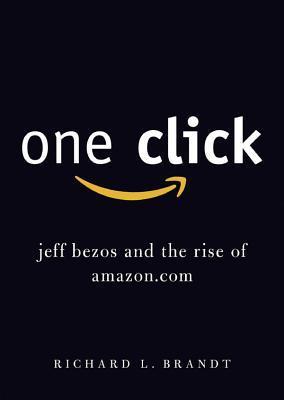
One Click: Jeff Bezos and the Rise of Amazon.com
An insightful look at how Amazon really works and how its founder and CEO makes it happen.
Amazon's business model is deceptively make online shopping so easy and convenient that customers won't think twice. It can almost be summed up by the button on every Buy now with one click.
Why has Amazon been so successful? Much of it has to do with Jeff Bezos, the CEO and founder, whose business strategy and unique combination of character traits have driven Amazon to the top of the online retail world. Originally a computer nerd rather than a businessman, he had the vision to capitalize on the untapped online marketplace for bookselling and continues to discover new marketing opportunities, from groceries to auto parts. He's a calculating machine, energetic, passionate, highly aggressive, and out to radically transform retail.
Through numerous interviews with Amazon employees, competitors, and observers, Richard Brandt has deciphered how Bezos thinks, what drives his actions, and how he makes decisions. Anyone in business can learn a lot from the example of Amazon's ongoing evolution.
Amazon's business model is deceptively make online shopping so easy and convenient that customers won't think twice. It can almost be summed up by the button on every Buy now with one click.
Why has Amazon been so successful? Much of it has to do with Jeff Bezos, the CEO and founder, whose business strategy and unique combination of character traits have driven Amazon to the top of the online retail world. Originally a computer nerd rather than a businessman, he had the vision to capitalize on the untapped online marketplace for bookselling and continues to discover new marketing opportunities, from groceries to auto parts. He's a calculating machine, energetic, passionate, highly aggressive, and out to radically transform retail.
Through numerous interviews with Amazon employees, competitors, and observers, Richard Brandt has deciphered how Bezos thinks, what drives his actions, and how he makes decisions. Anyone in business can learn a lot from the example of Amazon's ongoing evolution.
1 pages, Audio CD
First published October 27, 2011
Ratings & Reviews
Friends & Following
Create a free account to discover what your friends think of this book!
Community Reviews
Displaying 1 - 30 of 479 reviews

unread-forever
May 31, 2013It seems like ages ago that Amazon and I met-cute while fox & dolphin hunting on a small private island reserve off of the Southern California coast. Oh how the years move by. And yet, after all the early displays of yearning and passion, after all of the screaming bouts of sadomasochistic blood-sport and nonconsensual body modification that constitutes our "love"-making, I am proud to report that our so-called love still stands strong, still runs deep. The sympathy and even the - dare i say such a maudlin word - "empathy" that Amazon has given me in support of my goal of utter global domination has been truly invaluable. And endearing!
Just last night, while enjoying a repaste of a light pear & walnut salad, fine wine, and a simple clarified butter & ginger sauce served over a minced infant crudo, I noticed my darling Amazon gazing fondly into my one good eye. Now Amazon knows that fond gazes always give me heartburn, so I inquired: what was amiss? Amazon smiled and stated lovingly that I looked like the sort of gentleman who would gladly destroy an independent bookseller if it meant 5 more dollars in my wallet. I replied "Surely you are not just now noticing this!" We laughed merrily and toasted each other. 'Tis a wondrous thing when forward-looking minds find themselves in meaningful agreement.
Later, we curled up to watch our favorite movie, the enchanting "You've Got Mail". Tom Hanks is so adorable when he is trying to run an independent bookseller into the ground!
Just last night, while enjoying a repaste of a light pear & walnut salad, fine wine, and a simple clarified butter & ginger sauce served over a minced infant crudo, I noticed my darling Amazon gazing fondly into my one good eye. Now Amazon knows that fond gazes always give me heartburn, so I inquired: what was amiss? Amazon smiled and stated lovingly that I looked like the sort of gentleman who would gladly destroy an independent bookseller if it meant 5 more dollars in my wallet. I replied "Surely you are not just now noticing this!" We laughed merrily and toasted each other. 'Tis a wondrous thing when forward-looking minds find themselves in meaningful agreement.
Later, we curled up to watch our favorite movie, the enchanting "You've Got Mail". Tom Hanks is so adorable when he is trying to run an independent bookseller into the ground!

March 18, 2013
This book is insulting. The author had no access whatsoever and doesn't acknowledge any interviews or primary data collection. Several of the sources are actually publicly available YouTube videos.
In essence, it is a well-written 4th grade book report.
To add insult to injury, there are some very awkward word uses in here including several laugh-out-loud cliches like "spit over a bridge".
The book gets off to a weird start. I actually thought that my copy may have been missing some pages because it was paced so quickly. By page 17 I am learning about a lawsuit that happened in 2010. On that page you are hit with the sweeping conclusion, "Innovations and new patents at Amazon will never cease."
I am normally not this grouchy but seriously, there are some great corporate histories out there (The Perfect Store, First in Thirst, The Facebook Effect) and this just is not one of them.
The good news is that I got to page 65 on the bus ride home, and wrapped up the complete book (with references) in about two hours.
In essence, it is a well-written 4th grade book report.
To add insult to injury, there are some very awkward word uses in here including several laugh-out-loud cliches like "spit over a bridge".
The book gets off to a weird start. I actually thought that my copy may have been missing some pages because it was paced so quickly. By page 17 I am learning about a lawsuit that happened in 2010. On that page you are hit with the sweeping conclusion, "Innovations and new patents at Amazon will never cease."
I am normally not this grouchy but seriously, there are some great corporate histories out there (The Perfect Store, First in Thirst, The Facebook Effect) and this just is not one of them.
The good news is that I got to page 65 on the bus ride home, and wrapped up the complete book (with references) in about two hours.

February 15, 2013
الكتاب خيب ظني!
كان أحسن بكثير مما توقعت، يحكي قصة صعود أمازون، أكثر ما بقي في ذهني اهتمام جيف بالنمو أولا قبل الربح، ثم تغير ذلك للربح، في نفس الوقت مع المحافظة على مصادر الأفكار الجديدة من الموظفين انفسهم.
أعجبني الاستثمار في المديرين و تدريبهم جيدا قبل زيادة الفرق، و تحديد حجم الفريق بحيث تكفي 2 بيتزا. لفت انتباهي الروح التي يبثها في الفريق، و حجم الموظفين الكلي و معدل النمو الذي سار عليه.
و أيضا، الطريقة التي تتطور بها تفكيره، و التي حافظ بها على أحلامه و نهج حياته العملية أعجبني كثيرا.
أظن الكتاب مهم لكل أولئك المقبلين على أي مشروع متعلق بالانترنت عموما. شخصيا تعلمت منه الكثير.
كان أحسن بكثير مما توقعت، يحكي قصة صعود أمازون، أكثر ما بقي في ذهني اهتمام جيف بالنمو أولا قبل الربح، ثم تغير ذلك للربح، في نفس الوقت مع المحافظة على مصادر الأفكار الجديدة من الموظفين انفسهم.
أعجبني الاستثمار في المديرين و تدريبهم جيدا قبل زيادة الفرق، و تحديد حجم الفريق بحيث تكفي 2 بيتزا. لفت انتباهي الروح التي يبثها في الفريق، و حجم الموظفين الكلي و معدل النمو الذي سار عليه.
و أيضا، الطريقة التي تتطور بها تفكيره، و التي حافظ بها على أحلامه و نهج حياته العملية أعجبني كثيرا.
أظن الكتاب مهم لكل أولئك المقبلين على أي مشروع متعلق بالانترنت عموما. شخصيا تعلمت منه الكثير.

May 12, 2012
Maybe Walter Isaacson spoiled me in his amazing biography of Steve Jobs, and maybe the biography of a company simply can't be compared to the biography of a great man, but this book was a disappointment. Don't get me wrong, I'm still very glad I read it. And it was a very quick read. But I felt like the book was written with a sort of paint-by-number journalism. The whole thing felt obligatory, and not full of life like Isaacson's biography of Jobs.
I got out of this book what I needed: some details about the founding of Amazon and its current financial state. But did I miss something or did the author fail to say that Amazon is actually profitable?
I also felt as if the chapter on the all-important topic of Amazon's possible destruction of the existing book business was not nearly as insightful and deep as we need.
Ah, well. I borrowed it from my local library on my very own Amazon Kindle—which read substantial portions of the book to me out loud—so I can't complain.
I got out of this book what I needed: some details about the founding of Amazon and its current financial state. But did I miss something or did the author fail to say that Amazon is actually profitable?
I also felt as if the chapter on the all-important topic of Amazon's possible destruction of the existing book business was not nearly as insightful and deep as we need.
Ah, well. I borrowed it from my local library on my very own Amazon Kindle—which read substantial portions of the book to me out loud—so I can't complain.

February 19, 2013
الكتاب ده يُعتبر كده: A must read
لأي حد بيشتغل في تكنولوجيا المعلومات و له علاقة بالبرمجة سواء في الصناعة أو الاستثمار والسوق أو الجامعات
الكتاب صغير جدا في الحجم، و بالرغم من ذلك أخذ مني وقت طوييييييل جدا حتي انتهيت منه
كان يحبطني لأيام كثيرة!!
بعد قراءة الفصل الأول توقفت كثيراً و غضبت من نفسي و من أساتذتي و علي طلبتي!!
فعلاً زي ما قال چيف عن أمازون:
It's the kitty hawk of the e-commerce
براءات الاختراع ل one click أبهرتني!!
و كمان طريقة التفكير في اختراق المستقبل و عمل كلمة سر بحركات بالجسم علي الكينكت ثبتتني!!
و طبعاً اخر الكتاب و استثمار چيف في شركة لمركبات الفضاء للتنزه في الفضاء و جعل ذلك ممكناً ....جعلني أفقد عقلي تماماً :)
لمن يهتم هم يعينون حالياً: blueorigin.com :)
هو رجل يستثمر في المستقبل بمعني الكلمة و هو ممن ينقلون البشرية نقلات نوعية بالفعل
هدفه ليس تحقيق ربح قدر ما هو تقديم الجديد و المختلف و المطلوب مهما كلفه ذلك
لم أعلم أن أمازون ظلت لكل تلك السنوات غير ربحية بل تخسر في بعض السنوات و مع ذلك ظل يستثمر بها
طالما تغني أساتذة كليتنا في جامعة القاهرة بأنهم لا يعلمونا شئ سوي: "طريقة تفكير"
أرجو من أي شخص سيشارك في العملية التعليمية في كليات هندسة أن يقرأ "طريقة تفكير" هذا الرجل لأنها بالتأكيد ستغير طريقة تفكيره!! :)
و أنا كأم أعيش بأمريكا جعلني أبحث عن تلك المدارس الخاصة بالأطفال الموهبين و التي تتبع برنامج ذكر بالكتاب اسمه vanguard
و البحث لا زال قائماً
عجبني جدا طريقة تعيين الناس بالشركة :)
انه لا يعين علي الخبرة انما علي قدر الإبداع و يعين فقط من يؤمنون أنه لا يوجد مستحيل :)
هناك جملة في بداية الكتاب تقول:
Life is too short to hang around unresourceful people
هناك جملة في نهاية الكتاب لطيفة جدا تقول أن چيف يؤمن ب:
It is always day one :)
كتاب يستحق المذاكرة :)
لأي حد بيشتغل في تكنولوجيا المعلومات و له علاقة بالبرمجة سواء في الصناعة أو الاستثمار والسوق أو الجامعات
الكتاب صغير جدا في الحجم، و بالرغم من ذلك أخذ مني وقت طوييييييل جدا حتي انتهيت منه
كان يحبطني لأيام كثيرة!!
بعد قراءة الفصل الأول توقفت كثيراً و غضبت من نفسي و من أساتذتي و علي طلبتي!!
فعلاً زي ما قال چيف عن أمازون:
It's the kitty hawk of the e-commerce
براءات الاختراع ل one click أبهرتني!!
و كمان طريقة التفكير في اختراق المستقبل و عمل كلمة سر بحركات بالجسم علي الكينكت ثبتتني!!
و طبعاً اخر الكتاب و استثمار چيف في شركة لمركبات الفضاء للتنزه في الفضاء و جعل ذلك ممكناً ....جعلني أفقد عقلي تماماً :)
لمن يهتم هم يعينون حالياً: blueorigin.com :)
هو رجل يستثمر في المستقبل بمعني الكلمة و هو ممن ينقلون البشرية نقلات نوعية بالفعل
هدفه ليس تحقيق ربح قدر ما هو تقديم الجديد و المختلف و المطلوب مهما كلفه ذلك
لم أعلم أن أمازون ظلت لكل تلك السنوات غير ربحية بل تخسر في بعض السنوات و مع ذلك ظل يستثمر بها
طالما تغني أساتذة كليتنا في جامعة القاهرة بأنهم لا يعلمونا شئ سوي: "طريقة تفكير"
أرجو من أي شخص سيشارك في العملية التعليمية في كليات هندسة أن يقرأ "طريقة تفكير" هذا الرجل لأنها بالتأكيد ستغير طريقة تفكيره!! :)
و أنا كأم أعيش بأمريكا جعلني أبحث عن تلك المدارس الخاصة بالأطفال الموهبين و التي تتبع برنامج ذكر بالكتاب اسمه vanguard
و البحث لا زال قائماً
عجبني جدا طريقة تعيين الناس بالشركة :)
انه لا يعين علي الخبرة انما علي قدر الإبداع و يعين فقط من يؤمنون أنه لا يوجد مستحيل :)
هناك جملة في بداية الكتاب تقول:
Life is too short to hang around unresourceful people
هناك جملة في نهاية الكتاب لطيفة جدا تقول أن چيف يؤمن ب:
It is always day one :)
كتاب يستحق المذاكرة :)

October 5, 2012
Those familiar with the work of technology journalist Richard L. Brandt will be acquainted with his style of blending biography and business history, as he has previously done with Larry Page, Sergey Brin, and Google. In One Click, Brandt profiles Amazon founder and CEO Jeff Bezos. Readers expecting an in-depth, definitive history of Amazon or a complete portrait of Bezos may be disappointed. This relatively short (224p) profile draws largely on publically available information and resources. Those who have followed Amazon and Bezos in the news will find little fresh information.
Where this book does shine is in reviewing the critical role of Amazon in the transformation of book selling in America over the last twenty years. Brandt highlights the business strategies and technologies that enabled this success. However, the section on the most recent change, e-books, is already beginning to date less than a year after publication. This is an innate peril of writing about living a living entrepreneur and business in a rapidly changing field. Unlike a posthumous biography, Brandt’s profile is likely to be quickly superseded by future accounts.
Although this book discusses common criticisms of Bezos, the author is largely friendly towards his subject. Brandt’s thesis seems to be that analysts have consistently underestimated Bezos’s business acumen to their detriment. By concluding with a discussion of Bezos’s investment in space travel and research, Brandt suggests that the sky is the limit for this entrepreneur.
http://shayshortt.wordpress.com/2012/...
Where this book does shine is in reviewing the critical role of Amazon in the transformation of book selling in America over the last twenty years. Brandt highlights the business strategies and technologies that enabled this success. However, the section on the most recent change, e-books, is already beginning to date less than a year after publication. This is an innate peril of writing about living a living entrepreneur and business in a rapidly changing field. Unlike a posthumous biography, Brandt’s profile is likely to be quickly superseded by future accounts.
Although this book discusses common criticisms of Bezos, the author is largely friendly towards his subject. Brandt’s thesis seems to be that analysts have consistently underestimated Bezos’s business acumen to their detriment. By concluding with a discussion of Bezos’s investment in space travel and research, Brandt suggests that the sky is the limit for this entrepreneur.
http://shayshortt.wordpress.com/2012/...

December 14, 2016
This book talks about the great Amazon company and the person behind it, Jeff Bezos. It takes you to the childhood days of Jeff and how his work at the farm with his grandfather toughened him up and then covers the early days of Amazon when it was only about selling books. It was Jeff himself who was responding to customer complaints by emails and do some packaging in these early days.
Chapter by chapter, it sheds light on the major highlights and milestones in this company and how it expanded to this giant company it is now. One key take is his relentless customer obsession which gave them an edge over others and gain more market share. He sacrificed profits for a decade as he put the customer ahead of everything and that ensured his vision gets materialized.
The book is called "One Click" which is the one-click buy button Amazon customers enjoy over other bookstores (interestingly, this feature was patented and, hence, others were not allowed to provide it in their websites). There is so much interesting and dramatic stories around this one-click in the book.
Jeff is also a big fan of space exploration so guess what? He, secretly, formed a company (called "Blue Origin" to pursue this passion with the vision of making it commercially viable to send people to the space and have a look and return.
One chapter also covers what people working in Amazon think of him. Not everything is positive. You'll see the negative side of him (he is a human at the end of the day, right?)
Chapter by chapter, it sheds light on the major highlights and milestones in this company and how it expanded to this giant company it is now. One key take is his relentless customer obsession which gave them an edge over others and gain more market share. He sacrificed profits for a decade as he put the customer ahead of everything and that ensured his vision gets materialized.
The book is called "One Click" which is the one-click buy button Amazon customers enjoy over other bookstores (interestingly, this feature was patented and, hence, others were not allowed to provide it in their websites). There is so much interesting and dramatic stories around this one-click in the book.
Jeff is also a big fan of space exploration so guess what? He, secretly, formed a company (called "Blue Origin" to pursue this passion with the vision of making it commercially viable to send people to the space and have a look and return.
One chapter also covers what people working in Amazon think of him. Not everything is positive. You'll see the negative side of him (he is a human at the end of the day, right?)

September 28, 2021
This is a great overview of the history of Amazon and the life of Jeff Bezos.

April 14, 2012
As a writer, I think it is very important to keep up with the latest happenings in the publishing world, and Amazon just so happens to be at the top of the totem pole as of the past decade. Whether or not we agree with the Wal-Martesque approach that Jeff Bezos has taken with the book industry, his methods deserve some attention. OK enough with the blah.
The book hit on the biography of Bezos, but it was more like a cotton candy version full of fluff and sugar-coated. It is not a Walter Isaacson biography by no means. Actually it is more of a biography of Amazon, with ties and links, no punt intended, to products and developments associated with the site's CEO. If you are looking for an in-depth insight to Bezos, skip this book.
However, as for Amazon, the biography was rather telling.
I did not know that Amazon was in control of the Netflix streaming content, and as the book was published in late 2011 I assume is still the case. This was interesting. Also, Amazon has stakes in the future of space exploration, which given Bezos personal interest is not surprising.
Now for the book industry.
While Amazon is sending the Big 6 of publishing in circles with their tails tucked between their legs, the dot.com company purchases most of its material from independent bookstores. I know from experience that almost all of the books I've purchased from Amazon have been from independent booksellers including Goodwill, so this is something to keep in mind as an author. If you want to have a stake in the world's largest bookstore without going all e-Book or via Amazon's Create Space publishing company, simply have your books published and make your rounds to all of the independent bookstores so your book is supplied. Of course, if you don't use the Create Space publishing link, you can't sell your books directly via Amazon (it will take away your very necessary Buy Now button) so you'll be at the mercy of your advertising methods to attract customers. Yadayadayada just some thoughts.
Also, while Amazon seems big and large and overwhelming as far as the Web marketplace, they may be more bark than bite. The company is constantly coming up against huge barriers including as of late the tax issues in various states. Also, the Big 6 isn't backing down at all, and you can bet that if the publishing companies can come up with a way to knock Amazon down to size, they'll do it in a blink of an eye. Not saying that is the right thing to do, but it's clear that too many people are losing money and too many toes are being stepped on for everyone to just sit back and let Amazon take over the world...and outer space.
I recently heard a study on NPR that the publishing industry and book companies are not losing business because of e-Books or e-Readers or Amazon. The real problem we are facing is the decline in LITERACY. When people don't want to read a book, it doesn't matter what format it is in. The lack of demand isn't going to push the marketplace for book sales, and ultimately, the quality of books will begin to decline and eventually fade out. The last time such an incident occurred, it was prior to the establishment of free education in public schools. Before then, poetry was the focus as readers had a lack of reading ability.
Also, while the number of books available have sky rocketed, there are two factors: the number of books free to the public domain that are older than the 1920s, and self-published books riddled with typos and signs of speedy delivery lacking of any indication the author has studied the craft of writing. So free older titles and cheap crappy titles are what is flooding the market.
So read this book if you want to gain insight about the future of the world's biggest bookseller.
The book hit on the biography of Bezos, but it was more like a cotton candy version full of fluff and sugar-coated. It is not a Walter Isaacson biography by no means. Actually it is more of a biography of Amazon, with ties and links, no punt intended, to products and developments associated with the site's CEO. If you are looking for an in-depth insight to Bezos, skip this book.
However, as for Amazon, the biography was rather telling.
I did not know that Amazon was in control of the Netflix streaming content, and as the book was published in late 2011 I assume is still the case. This was interesting. Also, Amazon has stakes in the future of space exploration, which given Bezos personal interest is not surprising.
Now for the book industry.
While Amazon is sending the Big 6 of publishing in circles with their tails tucked between their legs, the dot.com company purchases most of its material from independent bookstores. I know from experience that almost all of the books I've purchased from Amazon have been from independent booksellers including Goodwill, so this is something to keep in mind as an author. If you want to have a stake in the world's largest bookstore without going all e-Book or via Amazon's Create Space publishing company, simply have your books published and make your rounds to all of the independent bookstores so your book is supplied. Of course, if you don't use the Create Space publishing link, you can't sell your books directly via Amazon (it will take away your very necessary Buy Now button) so you'll be at the mercy of your advertising methods to attract customers. Yadayadayada just some thoughts.
Also, while Amazon seems big and large and overwhelming as far as the Web marketplace, they may be more bark than bite. The company is constantly coming up against huge barriers including as of late the tax issues in various states. Also, the Big 6 isn't backing down at all, and you can bet that if the publishing companies can come up with a way to knock Amazon down to size, they'll do it in a blink of an eye. Not saying that is the right thing to do, but it's clear that too many people are losing money and too many toes are being stepped on for everyone to just sit back and let Amazon take over the world...and outer space.
I recently heard a study on NPR that the publishing industry and book companies are not losing business because of e-Books or e-Readers or Amazon. The real problem we are facing is the decline in LITERACY. When people don't want to read a book, it doesn't matter what format it is in. The lack of demand isn't going to push the marketplace for book sales, and ultimately, the quality of books will begin to decline and eventually fade out. The last time such an incident occurred, it was prior to the establishment of free education in public schools. Before then, poetry was the focus as readers had a lack of reading ability.
Also, while the number of books available have sky rocketed, there are two factors: the number of books free to the public domain that are older than the 1920s, and self-published books riddled with typos and signs of speedy delivery lacking of any indication the author has studied the craft of writing. So free older titles and cheap crappy titles are what is flooding the market.
So read this book if you want to gain insight about the future of the world's biggest bookseller.
August 20, 2013
I was a bit surprised at how short the book was (part of it was because my Kindle told me I was only 80% complete before I started delving into the footnotes). One Click was a quick, interesting overview of Jeff Bezos and the early years of Amazon. Overall it felt like a pretty typical mini-biography and there were definitely times when there was probably more to the story, but was cut short for the sake of making the book fit with the title "one-click" implying an easy way to get from start to finish. I expected as much when I started reading, but I was completely caught off-guard by the end.
The book covers a wide variety of topics not just concerning Amazon. It starts with Bezos' history from childhood to jobs he had before becoming CEO of Amazon and goes on with minimal details to describe some of Amazon's successes and failures. I was most surprised by how abruptly the book ended. Brandt briefly delves into Bezos' activity and involvement with his space venture company, Blue Origin, about its lofty goals and high aspirations. Then it ends a chapter with something along the lines of "don't bet against Bezos," and that's it. Fin. Considering how this book was published in 2012, I'm not 100% sure that there could have been more to talk about before ending the book in such a manner (such as perhaps talking about Bezos' strive to maintain minimal profit and in response how current stockholders and investors seem to demand nothing else from Bezos), but there definitely was the possibility of going into some more recent events.
Nevertheless I enjoyed the quick read as Amazon is for me, like most people, the go-to place for online shopping, and I learned a lot about Bezos, Amazon, and what it takes to grow a company to such a large scale.
The book covers a wide variety of topics not just concerning Amazon. It starts with Bezos' history from childhood to jobs he had before becoming CEO of Amazon and goes on with minimal details to describe some of Amazon's successes and failures. I was most surprised by how abruptly the book ended. Brandt briefly delves into Bezos' activity and involvement with his space venture company, Blue Origin, about its lofty goals and high aspirations. Then it ends a chapter with something along the lines of "don't bet against Bezos," and that's it. Fin. Considering how this book was published in 2012, I'm not 100% sure that there could have been more to talk about before ending the book in such a manner (such as perhaps talking about Bezos' strive to maintain minimal profit and in response how current stockholders and investors seem to demand nothing else from Bezos), but there definitely was the possibility of going into some more recent events.
Nevertheless I enjoyed the quick read as Amazon is for me, like most people, the go-to place for online shopping, and I learned a lot about Bezos, Amazon, and what it takes to grow a company to such a large scale.
This entire review has been hidden because of spoilers.

January 19, 2013
I recently updated my beloved Kindle version 2 to a Paperwhite, which made me curious to find out more about the man behind the device that has made such an impact on my own life.
'One Click' is good as a potted history of Amazon, the rise (and rise) of which traces the advent of Internet commerce itself. Amazon's progress from humble, haphazard start-up to its current status as e-commerce behemoth (I did not even know it sold power tools or shoes) is a remarkable story. What is perhaps a little bit depressing is that book-selling is actually a rather small part of the overall Amazon business, both in size and turnover.
Less elusive is the character of Jeff Bezos himself; Brandt does his best with what resources he had at hand to paint as balanced a portrait of the man as he could, as well as delving into the 'cult of Amazon' and the management style of its founder (who inevitably emerges as something of an eccentric). Apparently Bezos no longer grants interviews, and only speaks publicly on company occasions.
Obviously this is not meant to be the 'definitive' biography, a la Steve Jobs. Instead 'One Click' is a perfectly serviceable, solid introduction that is entertaining and informative.
P.S. I think this was published in 2011; it could really do with an update, and a more detailed chapter on the launch / impact of the Kindle (especially the latest iterations) and Kindle Fire, and Amazon's venture into cloud computing services.
'One Click' is good as a potted history of Amazon, the rise (and rise) of which traces the advent of Internet commerce itself. Amazon's progress from humble, haphazard start-up to its current status as e-commerce behemoth (I did not even know it sold power tools or shoes) is a remarkable story. What is perhaps a little bit depressing is that book-selling is actually a rather small part of the overall Amazon business, both in size and turnover.
Less elusive is the character of Jeff Bezos himself; Brandt does his best with what resources he had at hand to paint as balanced a portrait of the man as he could, as well as delving into the 'cult of Amazon' and the management style of its founder (who inevitably emerges as something of an eccentric). Apparently Bezos no longer grants interviews, and only speaks publicly on company occasions.
Obviously this is not meant to be the 'definitive' biography, a la Steve Jobs. Instead 'One Click' is a perfectly serviceable, solid introduction that is entertaining and informative.
P.S. I think this was published in 2011; it could really do with an update, and a more detailed chapter on the launch / impact of the Kindle (especially the latest iterations) and Kindle Fire, and Amazon's venture into cloud computing services.

April 3, 2012
This is mostly a company history of Amazon, hitting the highlights such as the founding, development of features, operations, competing, buying Zappos, developing the Kindle, and so on. I thought that much of what I read I had seen previously in magazine articles, many of which were mentioned in the book. There wasn't as much personal info on Bezos as I would have expected, and I'm not sure I learned what makes him tick. As a company history, this was just OK, not delving very deeply into the issues faced and being very choosey in the stories covered. It is not a book with recommendations on running your own business, but I pulled out a couple of things that Bezos did that are repeatable: make the customer number one, if possible when starting invest like crazy, and realize some investments can take decades to work out. Not much gold there, so read it for the company's story.

November 9, 2018
We used to joke that the ideal Amazon site would not show a search box, navigation links, or lists of things you could buy. Instead, it would just display a giant picture of one book, the next book you want to buy.
One Click blends a biography of Jeff Bezos with a business history of Amazon. For a site I use to purchase anything and everything, I knew little how the company started, much less how it became the behemoth it is today. I was even unaware Amazon started out exclusively as an online bookstore (yay books!). One Click provided a decent summary of Bezos’s background, Amazon’s creation, and the opportunities Bezos took advantage of for company advancement. However, I felt there were issues with this book’s tone and format.
Obviously as someone obsessed with books, I was thrilled to hear Amazon started as a bookstore. Brandt provides some interesting statistics around Amazon’s rise to power in the bookselling world and ramifications resulting from their control in the market (e.g. consequences from their pressure on publishers to drop costs and revenue losses for big chain bookstores like Barnes and Noble). I was somewhat reassured by his declaration that small, independent bookstores weren’t being crushed by Amazon, having already learnt to weather the change in demand after retailers like Walmart and B&N broke into the book business.
My primary issue with One Click was its format. The structure was incredibly ambiguous with a timeline that was all over the place. Each time a new event was introduced, I was at a complete loss for when in Amazon’s history it belonged. One chapter described the entire ordeal of Bezos’s “one click” patent, while the next jumped back in time for an entirely unrelated event, followed up by a chapter presenting a (chronological) run-through of Amazon’s development (which included repeat information from the previous two chapters!). If not in an audiobook format, perhaps I could’ve flipped back to find relevant years and dates, but a book shouldn’t waste your time like that.
A smaller pet peeve was this book’s tone of voice. The very first chapter began by pointing out flaws in Bezos’s character, establishing a negative slant for the rest of the book. Even when Brandt stated something positive about the company or Bezos’s strategies later on, I constantly felt like I was waiting for the other shoe to drop. The author certainly remained consistent, but I would have preferred something more neutral (if not positive). This just personally wasn’t a style I was looking for.
Overall, I found the subject matter interesting, thus the extra half a star, but the flaws of this specific book left me disappointed. As a (relatively) brief summary of Bezos’s life and Amazon’s evolution, this worked, but I would find a different book for more detail (with a less frustrating content structure).
The Trusty Bookmark | Instagram | Pinterest

December 27, 2025
Published in 2011, so much has happened over these last ~15 years that I wonder what a follow-up book would look like. But this was still a very worthwhile read, showing the early days of Amazon's history. So many things worked in their favor, helping them become a very successful company. For example, remember when you didn't have to pay tax, unless you lived in Washington state? At any rate, great book and recommended!
Favorite passage:
"It's important to note that Amazon isn't invincible. Bezos has a simple formula that's not so simple to pull off: Outinnovate the competition and give customers what they want. Companies that have been around long enough to get comfortable forget those mandates. They focus on profits and stock price, believing that raising prices and laying off employees is the way to win. Bezos does not make that mistake." (p. 112)
Favorite passage:
"It's important to note that Amazon isn't invincible. Bezos has a simple formula that's not so simple to pull off: Outinnovate the competition and give customers what they want. Companies that have been around long enough to get comfortable forget those mandates. They focus on profits and stock price, believing that raising prices and laying off employees is the way to win. Bezos does not make that mistake." (p. 112)

November 30, 2021
An interesting summary of the rise of Amazon. 3 stars

March 13, 2013
It is one of the best books I have ever read. I recommend it for any technology entrepreneur. It narrates the story of Amazon and how Jeff Bezos struggle a lot in the beginning of Amazon.This book makes me sure that money & profit shouldn't be your main target, I know that no business could survive without money but you have to set long term plans and concentrate on providing a good service for your customer..money & profit would come later..I learnt not to loose hope.. work hard & think out of the box if you want to build a great company that would change the world..I would like to mention an important part of bezos philosophy [ you can invent your way out of any box if you believe that you can ] ;).. when Bezos Started Amazon, no one really imagine that Amazon would be a world wide company.. now Bezos Investing on a company called in a space company, he wants to make it easy for normal ppl to visit space, although it is hard to believe that ppl could do that nowadays but for sure in the future we would be able... I really enjoyed reading this book.. Special Thanks for the author Richard L. Brandt :)
April 27, 2012
A biography on Jeff Bezos, the owner of Amazon.com and the growth of amazon. A very short biography but lacks the ability to keep the reader engaged.Unlike other good biographies, it follows a poor narration and the over interference of statistical data turned the book bit boring to read. More of like a compilation of various news paper cutting and actually got nothing new to offer

February 12, 2014
This is a much more slender book than 'The Everything Store' by Brad Stone, and it accordingly gets into far less detail. Giant swaths of Amazon's history are left out of this one. Also, this book came out in 2010, so much of the meteoric rise of eBooks, led by the Kindle, was just conjecture at the time. But it was still a very interesting book and I'm glad I read it.

December 18, 2012
Instead of hero worship, could have focused a little more on the actual strategies. Much of the information given is common knowledge. Although intended to be a case study, it is actually written in a biographical style. Must read if you want to learn about Bezos.

October 28, 2019
First I was surprised to see yet another book about Amazon in my little library app and then I was even more surprised to find out the Brad Stone's book being published 2 years after this one! The main difference seems to be that the 2013 Everything Store had insider access to Amazon so the account might be more accurate on some details, but Richard L Brandt has written a pretty solid chronology of the company. And when the history seemed to be cut off around 2011, I was totally caught off guard. I totally expected this to be a shiny new summary of the one of the world's biggest companies. This one totally misses out on the rise of AWS, Alexa and all the weird-ass new devices that I still cannot believe people are actually letting into their homes. Furthermore, actually paying money for the company to install spying devices into their living quarters. But sadly this needs a "vol 2" of the summary. In that sense it's another case of a "biography" written too early.
Today you probably don't have any good reason to read this one instead of Brad Stone's book, not that it was substantially better, but at least it has 2 more years worth of data. But of course I would much rather have read the 2019 updated edition of either of those books to get a short summary of what the behemoth has been up to lately.
Today you probably don't have any good reason to read this one instead of Brad Stone's book, not that it was substantially better, but at least it has 2 more years worth of data. But of course I would much rather have read the 2019 updated edition of either of those books to get a short summary of what the behemoth has been up to lately.

October 4, 2019
If you have any interest in knowing how Jeff Bezos started and built up Amazon, there is a small chance that this book will quench your thirst. But it is quite tedious, and not in a hmm, I didn't know that but now that I do, I'm happy kind of way, but more like a, yes, yes, get on with it sort of way. There are just so many uninteresting parts. I listened to it as an audiobook (reader's voice did not add any interest at all) and had I had any other books available, I would have stopped, but I thought, hey, I might as well learn something. Sadly, there were no real takeaways.
June 9, 2020
The book is about Amazon.com, It was written in 2011. I was expecting to read more about AWS but just one chapter was on that subject. It makes sense, given that back in 2011 there was not much to talk about AWS. It is good if you wanna learn more about Amazon.com.

April 13, 2021
As far as "First parts of trilogies charting the life and times of galactic supervillains," it's better than The Phantom Menace.
Shout-out to the owners of GoodReads, who are surely trying to figure out how to sell me cardborad boxes with junk inside them.
Shout-out to the owners of GoodReads, who are surely trying to figure out how to sell me cardborad boxes with junk inside them.

August 16, 2017
I understood Amazon to be a retail powerhouse, but I had no idea the numerous companies Jeff Bezos had invested in (or creates) beyond Amazon.com.
Very informative and interesting.
Very informative and interesting.

April 1, 2020
Interessante in generale. Un po’ superficiale su alcuni aspetti della storia di JB e sopratutto troppo datato.

March 28, 2021
This was a very interesting book. Even though I lived through all of Amazon's history, I wasn't that steeped in the culture that was following the company as it was detailed in the book. It makes me think of companies and articles I'm following today and how history will report on them one day. Here are a few notable takeaways I had. It was interesting to hear how things were for Amazon during the .com bust. They went from growth focused to profitable focused. They hired an executive away from Pepsi, Joseph Galli to help with the cuts and profitability measures. He was in the number two spot, COO, for approximately 18 months. This is straight from the Apple playbook where they hired John Sculley and it didn't end great at Amazon either. The accomplished executive, with an impressive track record, isn't always a good fit. This isn't to say anything bad about any of the executives, it simply means it wasn't the right person, for the right company at the right time. This is an often-overlooked truth. People are great at arm-chair quarterbacking decisions. Remember history highlights success and failure stories, often putting the cart before the horse and making subjective, causal analogies that are more correlative in nature when you dig down into the weeds. The Pepsi executive ended up leaving right before Amazon's quarterly earnings citing family reasons and he moved to Pennsylvania to be closer to his kids in Baltimore with his ex-wife. He took another CEO role, but most haven't heard anything about him since he left Amazon. Amazon lost close to 90+ percent of the stock and had to continue to fight hard to keep things going after he left. Eventually all the measures paid off and they saw their stock price rise 40+% after they announced the profit. From there it continued to take off. Jeff Bezos saw Steve Jobs present the iTunes music store and was inspired to continue his plans to do similar for books. This is a good reminder that smart people are inspired by smart people. They seek out these beacons of business to learn from them and leverage lessons. Bezos had the idea for Kindle and hired engineers from Palm and Apple. They created a secret research laboratory called 126 where teams were working on this idea. Bezos eventually presented the Kindle plan on stage to show how books could be consumed differently. Analysts were not too impressed and pointed out all the problems, expensive, device was $400, books were around $10 or more each. Also, the screen had some limitations. Eventually they used new technology to help with simulating the ink on paper and giving the feel of a real page. I think Kindle innovations are often underappreciated as many things Amazon pioneered. It's cool to see smart CEO's watching and recognizing skill and talent from other CEO's. Steve Jobs goes down as one of the GOAT's, especially when it comes to his presentation skills. The share price of Amazon on IPO was $18. This is encouraging when I think of some companies I'm betting on now. Time and a series of good decisions, sometimes a lot of luck can lead to long shot bets paying off tremendously. Jeff Bezos wanted John Doehr as an investor in the early days and generated interest among other firms to help get the investor he wanted and got him on the board too. It's cool to see Bezos process for recruiting good talent as well as key investors. His process to get John Doerr as an investor in the early days of Amazon was textbook Bezos. Walmart sued Amazon for stealing employees and their trade secrets. Amazon demonstrated that Sam Walton used a similar strategy and was pretty open on his acquisition of talent and knowledge from other companies and industries. The lawsuit was eventually thrown out with some reassignments of staff and assurances made to limit harm to Walmart. What was more telling was a 100+ billion company was worried about a $600 million bookseller. They dynamics between Walmart and Amazon were very telling. News flash, it's 2021 and the battle goes on. The competition of these two well-led companies is fascinating when you look deeper into it. I wouldn't bet against either of them in the long term. It will be interesting to see how this comment ages in 2040. Amazon branched into CD’s after books. Bezos always talked about doing all Amazon could as long as they could do it well and there was a customer demand. There were some newspaper ad battles between Amazon and competitors like Barnes and Noble. Amazon referred to itself as David and the large book retailers as Goliath. They responded with how much money Amazon had and how Amazon was essentially the Goliath in the equation now. Jeff Bezos replied “Oh”. Once Amazon had key investor John Doerr and went public, they had a lot of money, but they were determined not to be profitable. This is actually great leadership even though profitability is the ultimate goal. Forgoing short term gains for long-term profitability and moat building is a key part of Amazon's secret sauce. In fact, Jeff Bezos said trying to be profitable in the early day would have been very stupid. He invested heavily into R&D and improving Amazon's competitive advantage. They expanded their staff, their compute, their logistics, their shipping warehouses. Everything grew and got better. Many other Internet companies tried this approach only to fail. This is a reminder to run your race and play your game as a company. Learn from companies like Amazon, but don't imitate them. Take the things that work for you and throw away the things that don't apply. Wisdom is often knowing the difference between those. two. The invest heavy in R&D and ignoring profitability isn’t always a winning strategy and definitely isn’t a one size fits all situation. Jeff Bezos mastered the physical goods early on while Steve Jobs mastered the digital with iTunes. It wasn’t long before Bezos started exploring digital options and devices and created the Kindle. As they hired people, they kept raising the bar and hiring smarter people. The saying was that he wanted people to be glad they were hired a year ago as they wouldn’t qualify today. I loved this perspective. How many companies maintain the status quo as gatekeepers keep out smart people who intimidate them. Smart companies strive to hire people so smart that people hired a year earlier are glad they got in early as it would be a challenge today. The process continued to improve as did the talent Amazon attracted. They were obsessed with growth without regard for profitability at a company picnic they had a t-shirt with a hotdog on it and a sun talking about having a bite and thinking how big they could be. Jeff Bezos had more programming knowledge than much of his developers as he was a programming guru. I read another book called Liftoff where Elon Musk said Jeff Bezos wasn't a great engineer. This is a reminder that there are levels to everything. Smart people associate with other smart people. When you’re a CEO you're not expected to be a great engineer too as that's incredibly rare. Both Bezos and Musk are once in a lifetime leaders. In the early days, Bezos got the company an Oracle database ODBC which was a little bit overkill in the early days. He wanted to get a capable system early on so they wouldn’t have to switch later with growth. While he over engineered the computer systems, his specialty, he also reiterated and ran items in experimental form to deliver quickly to customers. I think it's interesting that many startups now run-on AWS and have the ability to right size their infrastructure. In the early days you had to invest significant capital to create a system that scales. Today, you can scale as you grow with a system inspired by the man who over-engineered his systems in the beginning. Amazon did many things in a hack kind of way. They were sending out books and found ways to work the system. Bezos learned to order a book and set up another order for books that he knew couldn’t be fulfilled. This allowed him to bypass the 10-book minimum order rule. He’d order the book he wanted and 9 that he knew wouldn’t be available and bypassed the requirements. Smart leaders learn the rules so good that they can find those hidden angles and loopholes. Bezos recognized and did this. The title of the book One-Click was how Amazon leveraged an operational patent to gain a competitive advantage on the competition. Amazon "hacked" the competition by patenting the One-Click checkout process. Some would say that's a cheap move, Bezos would say you often have to think incredibly hard about things before you can make them incredibly simple. One-Click only seems simple in hindsight. It was an impossible challenge, until Amazon did it. The customer rating system we all know and use on a daily basis grew organically as well and found that having people rating books both good and bad. This was something that appears easier and common sense in hindsight. In the early days, it was very counter intuitive. As you'd have the bad reviews right there with the good ones. People today still try to game the Amazon algorithm when it comes to reviews, but we still check them out before we buy just about anything. Amazon made the hard simple. The one-click patent really was a stroke of genius. It enabled Amazon to have a competitive advantage as anyone else would have to pay royalties if they use it. The book talked about Bezos early days when he was selling books and went to a book seller conference in a small hotel to learn more about the business. He met a guy Richard Howarth who was incredibly customer obsessed - one of Amazon’s key traits. One time a woman came to his store and a plant in his window above the parking lot spilled on her car and made it dirty. She came in and complained. Howarth offered to take her to car wash which was closed. He eventually brought her to his house, got a bucket and washed it himself. She came back and bought some stuff. Jeff Bezos had a similar passion about making it right for customers, but his focus was to do it before there was a complaint and he was focused on the design. This reminds me of Scott Adams "Systems over goals" approach. Bezos once heard a grandmother was so happy with the experience, but she had to have her grandson come over to open the box as it was taped shut like Fort Knox. Immediately upon hearing this feedback Bezos] changed the packaging process. How many CEO's pay attention to the customer like this? More importantly, how many will change a small detail like packaging? The patent on an operational element of a company is frowned upon by businesses, but if it gives a competitive advantage and allows you to serve customers it’s a win win. Barnes and Noble tried to get around patent by designing express checkout which was two clicks to reduce friction. Amazon took them to court and won in defense of their patent. The patent process is powerful. It provides a competitive advantage and no matter how people view that advantage, if you can do it in the service of your customers. Smart businesses leverage this powerful tool. Jeff Bezos decided to start Amazon was to use a Regret Minimization Framework, basically a way to see which decision he’d regret more. It ended up being Amazon over his pre-Amazon life, which was pretty darn good by most standards. He supposedly told the movers to start heading West from New York and didn’t know where he was going to start the company. He called them about halfway and told them to go to Seattle. The book talks about the "Cadabra" name which the attorney said cadaver? when Jeff was talking to him on the phone about incorporating the name. About 7 months later Jeff changed the name to Amazon. He said it was easy to spell and it’s the biggest river. The book talked about the early talent acquisition and some of the initial tech/engineers/employees who joined Amazon. The choice of Washington had several factors. He wanted a state with a lower population as he didn’t want too many people, customers from the state to have to pay extra state taxes, close proximity to distribution factories - Portland, OR was 6 hours away. The fact that he was considering his customers when picking the state to ultimately found the company, underscores his customer obsession. The book talks a little about some of the dot com companies that went under during the time of the founding. One they mentioned was Lucent technologies. The funny thing is I knew someone who worked there before it went under which puts it in perspective. This book was a great book full of good stories and anecdotes that spoke to me personally. I definitely recommend checking it out.

March 1, 2021
Interesting to learn more about him but felt as if maybe I knew most of what was here? The biggest failure in these kind of books is its not penned by the subject nor are they interviewed, so they often feels like elongated tabloid pieces. Alot more to say about the guy as time goes on I'm sure.

April 24, 2021
เล่าเรื่องราวของตัว Jeff Bezoe และการกำเนิดของ Amazon แต่ที่อยากจะบันทึกไว้คือปรัญญาของ amazon คือ
1. ให้ความสำคัญกับลูกค้า
2. การประดิษฐ์คิดค้นซ้ำแล้วซ้ำเล่าอย่างไม่ลดละ
3. การมองในระยะยาว
4. ทุกวันเหมือนวันแรก
1. ให้ความสำคัญกับลูกค้า
2. การประดิษฐ์คิดค้นซ้ำแล้วซ้ำเล่าอย่างไม่ลดละ
3. การมองในระยะยาว
4. ทุกวันเหมือนวันแรก

January 22, 2022
If you are looking for a broad vision on how this guy’s brain work, you might just step into a huuuge load of information, to understand the juggernaut that amazon business is today.
I would re listen-read it as many times to take out simple yet powerful advice to lean in as a curious yet distractive leader.
Yet as most business books, it could’ve cut down most of the things that are not useful.
I would re listen-read it as many times to take out simple yet powerful advice to lean in as a curious yet distractive leader.
Yet as most business books, it could’ve cut down most of the things that are not useful.

September 16, 2012
Loy Machedo’s Book Review - One Click by Richard L. Brandt
When you compare the Biography of Steve Jobs (630 pages) and then compare the Biography of Jeff Bezos (190 pages), you will without a doubt know something is missing.
A large chunk of it.
In those 190 pages, Ricahrd L. Brandt the award-winning magazine writer tries to summarizes Jeff Bezos & Amazon for a quick read.
Here are a few bits that I picked from this book.
• Jeff Bezos was a Brainy Kid and one among the top in his class with unusual academic talent.
• Amazon was literally started in a garage.
• The company had started in 1994 when there was No Internet Commerce as yet.
• The odds against Jeff Bezos vision for a book store were not only scoffed at, they were outright mocked by the so called Industry Experts.
• The 1-Click patented model of Amazon gave the company the extra boost which would make them stand out.
• The Amazon acquisition & Investments included IMDb, PlanetAll, Drugstore.com, zBubbbles, HomeGrocer.com, Gear.com, Della & James And yes, the most intelligent Choice – Zappos.
• Amazon Suffered Intensely with the Dot.com Bubble Crash – which was a big surprise. I didn’t know Amazon went through a Rough Patch. By 2000, it recorded annual losses of $1.4bn and was 'the biggest money loser on the internet', making Bezos as the author put it 'internet poster child to internet whipping boy'.
• In 2010 Amazon was worth more than $80bn, having launched the Kindle and pioneered cloud computing.
But the book does bring in its share of criticism. And that is the totality of the 2 Juggernauts.
If you are seeking for a book that clearly takes you deep inside the mind of Jeff Bezos or into the Intricate World of Amazon, then no, this book will not do you any favors. In 190 pages, you just cannot do justice to One of the Largest Online Book Stores in the World (or is it moving towards the Largest eCommerce Store in the world?) and one of the most admired personalities of the Dot-Com era.
I would summarize by stating that if you are looking for a summary of what Amazon is all about to what its founder and mastermind is like, then this book honors its end of the bargain. I didn’t find anything outstanding but at the same time I wasn’t disappointed. So if you want my recommendation, I simply say, go ahead and buy the book.
Overall Rating
7 out of 10
Loy Machedo
loymachedo.com
When you compare the Biography of Steve Jobs (630 pages) and then compare the Biography of Jeff Bezos (190 pages), you will without a doubt know something is missing.
A large chunk of it.
In those 190 pages, Ricahrd L. Brandt the award-winning magazine writer tries to summarizes Jeff Bezos & Amazon for a quick read.
Here are a few bits that I picked from this book.
• Jeff Bezos was a Brainy Kid and one among the top in his class with unusual academic talent.
• Amazon was literally started in a garage.
• The company had started in 1994 when there was No Internet Commerce as yet.
• The odds against Jeff Bezos vision for a book store were not only scoffed at, they were outright mocked by the so called Industry Experts.
• The 1-Click patented model of Amazon gave the company the extra boost which would make them stand out.
• The Amazon acquisition & Investments included IMDb, PlanetAll, Drugstore.com, zBubbbles, HomeGrocer.com, Gear.com, Della & James And yes, the most intelligent Choice – Zappos.
• Amazon Suffered Intensely with the Dot.com Bubble Crash – which was a big surprise. I didn’t know Amazon went through a Rough Patch. By 2000, it recorded annual losses of $1.4bn and was 'the biggest money loser on the internet', making Bezos as the author put it 'internet poster child to internet whipping boy'.
• In 2010 Amazon was worth more than $80bn, having launched the Kindle and pioneered cloud computing.
But the book does bring in its share of criticism. And that is the totality of the 2 Juggernauts.
If you are seeking for a book that clearly takes you deep inside the mind of Jeff Bezos or into the Intricate World of Amazon, then no, this book will not do you any favors. In 190 pages, you just cannot do justice to One of the Largest Online Book Stores in the World (or is it moving towards the Largest eCommerce Store in the world?) and one of the most admired personalities of the Dot-Com era.
I would summarize by stating that if you are looking for a summary of what Amazon is all about to what its founder and mastermind is like, then this book honors its end of the bargain. I didn’t find anything outstanding but at the same time I wasn’t disappointed. So if you want my recommendation, I simply say, go ahead and buy the book.
Overall Rating
7 out of 10
Loy Machedo
loymachedo.com
Displaying 1 - 30 of 479 reviews