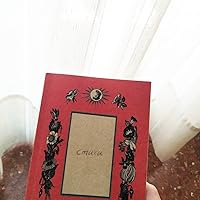
Though published a decade before the Bolshevik Revolution, The Tragic Menagerie possesses a sensibility that is modern in its descriptions of a childhood of passionate affections and unsettling revelations. This fictionalized autobiography follows the tomboyish Vera, who counts among her friends bears, wolves, and a wild crane, as well as local peasant girls. Sent to a German boarding school and exiled from her kingdom, Vera turns into a demonic, disobedient student, rejecting a life she finds constraining and artificial. Only when she returns to her natural world can her deeper compassionate and imaginative self emerge.
Lydia Dmitrievna Zinovieva-Annibal (Russian: Лидия Дмитриевна Зиновьева-Аннибал) (1866–1907) was a Russian prose writer and dramatist.
Zinovieva-Annibal was associated with the Silver Age of Russian Poetry. She hosted a literary salon, 'The Tower', with her husband, the poet Viacheslav Ivanov. Her short novel Tridsat'-tri uroda (Thirty-Three Abominations) was one of the few works of its day to openly discuss lesbianism.
Este libro lo leí para conocer a la autora a la que en absoluto desconocía, había escuchado algo de ella por allí, pero nada. Fue bastante interesante, el libro va de una colección de memorias de una niña que tiene con diferentes animales. En cada una se nota algo triste, algún vacío grande que pocas veces llega a ser cubierto, si no es que en ninguna.
Le pongo tres estrellas porque en ocasiones me pareció un poco pesado, la niña se va en elucubraciones que si bien si tienen un sentido interesante, en momentos a mi me pareció demasiado. Me quedé un poco con la sensación de querer encontrar algo de la misma autora y no sólo en este texto.
I was absolutely enchanted by this almost metaphysical memoir that uses animal or even biological life as some kind of grand metaphor about human existence. It’s also a great coming of age story. It’s an exquisitely brutal story. The transformations can only be compared to those in Ovid.
Did not love this translation, am hoping at a future date there will be sufficient interest to release a new translation possibly by Richard Pevear & Larissa Volokhonsky (dare to dream). There is an updated translation of 'Monster' in Russian Short Stories Pushkin to Buida (penguin, 2006, edited by Robert Chandler) that shows the works potential in english translation, it's a fascinating experiment in symbolist writing that has been forgotten by time.
La chica nos narra lo más relevante que le sucede en toda su vida, viviendo en un pueblecito donde poco se puede hacer. Es de esos libro que tan solo debería gustar por leer una voz que nos encandila, pero no es el caso. Nada me ha llamado la atención.
this is the most beautiful, most heart wrenching book i’ve ever read. this just so accurately describes how painful empathy and compassion for animals can be and how difficult it is to come to terms with the way the world works. vera’s evolution throughout the book is so fascinating and the early chapters really resonated with me. i’ve never read such a detailed, heart wrenching account of a sensitive young girl’s relationship with nature and it was beautiful and i saw an important part of myself reflected in it. some of these chapters just felt so viscerally real. i will think about this book forever.
I wanted to read this as I had read and very much enjoyed one of the author's stories, 'The Monster', in a Penguin collection of Russian short stories. Finally getting to read the rest of 'The Tragic Menagerie' was a tale of two halves for me. I adored the feeling and tenor of 'The Bear Cubs', 'Zhurya', 'Wolves', 'Dear Dasha', 'The Monster' and 'The Midge', which together made 88 of 185 pages. Unfortunately I didn't much care for 'The Devil', which is 70 pages long, and thus my enjoyment of the second half was much diminished. But I would have happily paid for the first 88 pages alone. This reminds me a little of the best of Andrei Platonov insofar as the author has an uncommon, even haunting, affinity for the lives of animals and the world pulsing around us every minute of every day.
CHILDHOOD AND ITS RESPONSES TO THE NONHUMAN WORLD, THE ADULT INSTITUTIONAL WORLD, AND THE RELATIONSHIP BETWEEN THE TWO
Zinovieva-Annibal’s capture and depiction of the way a child thinks and feels—the things a child thinks about, cares to think about, and cares about as well as the logic and rhythm of childhood reasoning and feeling—is pitch perfect. As translator Jane Costly put it, “She aims, in this prose, to recapture the world of a child—and a child whose emotional resonance is particular, even acute.” And perhaps even more than childhood, girlhood—though a particular sort of girlhood: keen, willful, and with emotional affinities and sensitivities for the nonhuman world, particularly wild animals. (I wonder: Is this a potential literary child heroine for an ecofeminism?)
The novel works wonders on many levels. Through the prism of Vera, the novel, especially in the early chapters, allows the reader to bring fresh—or forgotten—eyes to the strange, unsettling, and sometimes disturbing relationship that exists between humans and wild animals, an odd cocktail of affection and cruelty depicted in the novel. While normally even fictional stories involving human cruelty toward animals would be emotionally difficult for me, this was different. First, almost none of that sort of thing is graphically portrayed; rather, it is merely told in a rather matter of fact way. Second, somehow the novel carries you along in such a way that it doesn’t allow you to get emotionally stuck on any of that sort of thing. All in all, I’d say the experience of reading this novel even had a slightly therapeutic dimension rather than a disturbing character, perhaps because the cruel practices and tragic consequences were often matters discussed rather than depicted (i.e., more tell than show). What we are mostly shown is Vera’s emotional responses to cruel practices and that we can relate to in a positive way.
Another motif in the novel is religion. Via the prism of Vera, the novel permits the reader to see religion with, at different times, sometimes new and sometimes forgotten eyes, which, to me, felt productive and beneficial.
Lastly, in a partially veiled, mysterious way, is the depiction of Vera’s sexual awakening, which involves the discovery and playful exploration of sadomasochistic impulses––including a fetish-like obsession for a whip––and, later, her attraction to girls and women and her relations with other girls. None of this graphic or anything. In keeping true to the innocence of childhood experience, it is, again, slightly shrouded and mysterious, slightly impressionistic, while still being unmistakable and unambiguous.
Reviewed: The Tragic Menagerie (European Classics) (1909) by Lydia Zinovieva-Annibal, translated by Jane Costlow, published by Northwestern University Press 1999.
there’s a way the book watches its own characters instead of just moving them around. it notices how people shrink inside their own lives without ever saying it directly. even the quiet parts feel loaded, as if something is happening just off frame and you’re only catching the edge of it.
what stood out to me is how it doesn’t rush toward meaning. it lets things sit where they are, sometimes uncomfortably so??? grief, regret, tenderness, they literally just accumulate until you realize you’ve been holding them the whole time while reading.
it also pays attention to the small human habits that usually get ignored. the pauses before answering. the way someone changes the subject too quickly. the things people pretend they didn’t feel. it makes everything feel observed rather than explained :))
by the end, it’s less about what happened and more about what was endured.
I did not enjoy this collection nearly as much as I thought I would (after reading one of the stories, "The Monster" in an anthology). Honestly, that is probably more of a function of my current stage in life. Being a toddler mom is not a time to read this distillation of "big feelings": everything hits a bit too close to home and is frankly overwhelming.
Every tree is my father, every old woman I meet is my mother, every innocent beast, who lives by the earth, is my brother, and the grass is my sister ...
Engaging read. Also, in response to everyone in my class who thought that whole last section was just "young girls being young girls?" She was gay, guys. Very. Very. Gay.