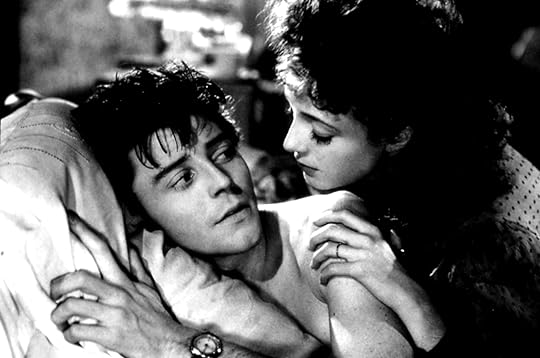
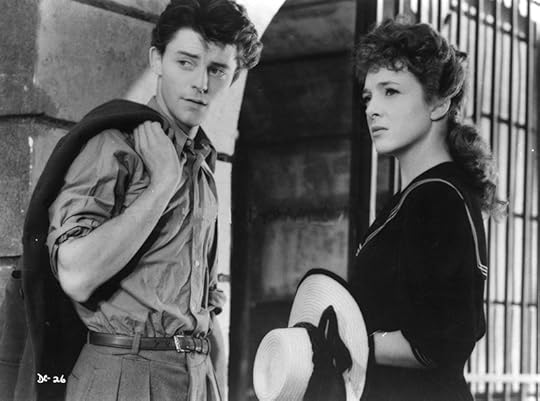
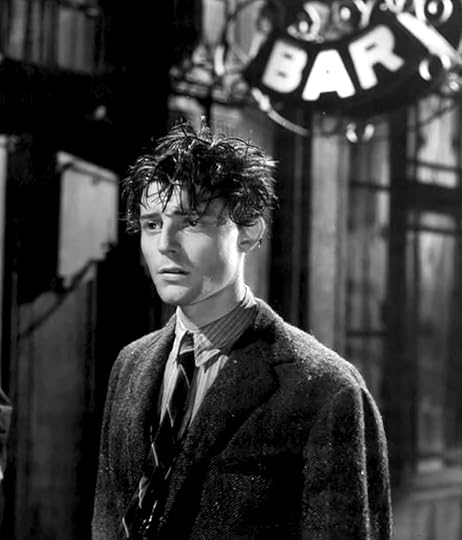
Two days ago, I read this novel. Did I like it? Quite frankly, I loved it. I just couldn't put this novel down. I must have read it an hour or so. I got up a bit more earlier that morning so I had time to read it with my morning coffee (it is not a very long novel but still it is amazing how easy it was to find one's self glued to those pages- and I was glued to them! I mean that in a nice way for it was a good feeling being so lost in the story). What a beautiful and unique piece of writing it is! The Devil in the Flesh was (for me) one of those pleasant surprises that life sometimes offers. It made my day better! You know when you pick up a novel from your shelf that you didn’t notice before and as soon as you start reading you get immersed into it? That was the case with this one.
Le Diable au corps (translated as The Devil In the Flesh) is a novel that Raymond Radiquet wrote as a teenager. Let nobody told you that you’re too young to write! Yes, you can feel his age in the novel- but it doesn’t take anything from the novel, if anything it makes it more realistic. I think novels like this prove that one is never too young to write. Naturally, I thought of Sagan, another French writer, who made her debut quite early as well. I think that Sagan was about the same age when she wrote Bonjour Trieste as Raymond when he wrote The Devil in the Flesh. While I liked Sagan’s debut novel, I was even more enchanted by her latter works. Unfortunately, I won’t be able to say the same about Raymond because he died young. He did write others things besides this novel and I plan to track them down but his opus is rather limited. Unfortunately, Raymond didn’t live to write many other works.
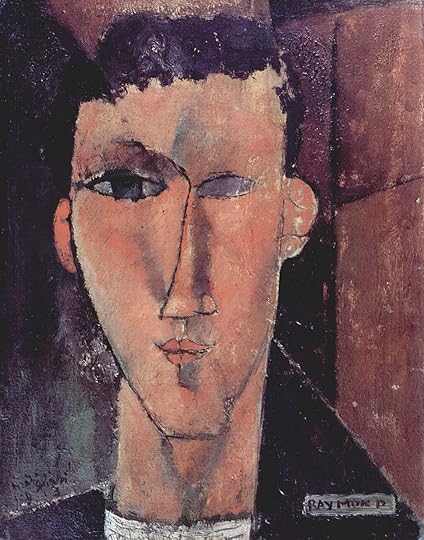
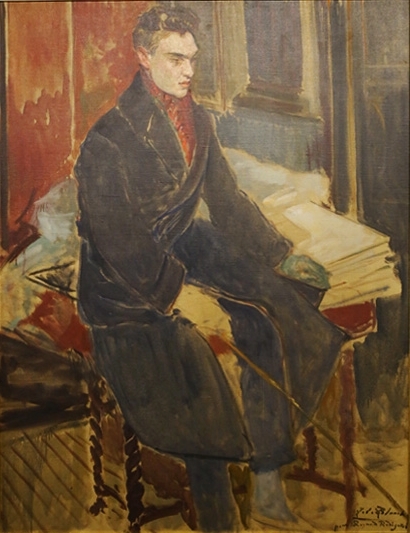
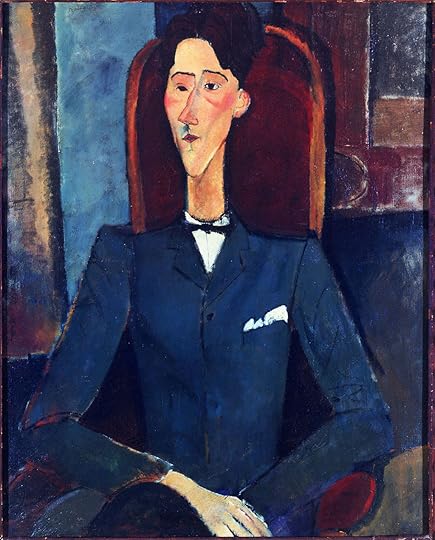
Believe it or not, this was by first book by this French writer. I don't think I even heard of Raymond before, which is odd because I love French literature, but well, it happens. In his time, Raymond was quite a celebrity and he is still considered as one of the important French writers of that period. He moved in the modernist circles and supposedly he was friends with Picasso, Max Jacob, Jean Hugo and Jean Cocetou. He was even painted by Modigliani. Huxley praised his writing. So, even that young he was quite well known.
I did some research about Raymond right after I had finished the book. It was probably because I loved the book so much that I had this need to know more about the author. It turns out that the story is quite autobiographical ( I will talk about the story in a bit, just bear with me for a while). Raymond was born in 1903 and died in 1923, when he was only 20 years old. Isn’t that sad? I suppose that we can be cynical and say that his premature departure might have had something to do with the high sales of this novel, but if this book is anything to go by, he really was an amazingly talented writer. The success of the book really doesn’t have anything to do with his death. I think we can be reasonably sure that he would have written many more great books, if only he has lived a bit longer.
This novel tells a story about a sixteen-year-old boy (or young man) that falls in love and has an affair with a married woman (who is nineteen herself so in a way she is still a girl too). The two met before she is married and take a liking to one another. The boy is slight narcosis, quite aware of his good looks. Upon meeting the girl, he immediately tries to win her over. It seems like a game to him, but there is this feeling he is compelled to do it. For all his seeming confidence, he is quite insecure and unsure of himself. In this sense, he reminds me of a protagonist of Stendhal The Red And The Black. Like in that novel, here we have a young man who by trying to prove his own courage to himself manages to charm a woman. In addition, in both novels these young men end up developing strong romantic feelings for woman in question. I can certainly see parallels between these two novels, but they do not take anything from the originality of this novel.
The story of this novel is set in the time of the first world war and it was published shortly after it. It caused a scandal when it was published, which makes me think of Sagan once again. However, I doubt that this novel would raise any eyebrows today. It is not exactly a reversed Lolita. Yes, the young man is only sixteen but the married woman is only slightly older than him. She loses her virginity only weeks before he does (with her), so there is no sense of sexual predatory that could make someone uncomfortable. However, the novel doesn’t try to present their relationship in idolized terms. It focuses on the sincerity of their emotion, but it is evident that their relationship comes with a price- for both.
The protagonist does feel like a teenager and you can understand his point of view. He is in love but clueless as what to do about it. He is haunted by selfishness of the youth, but at the same time he experiences love for the first time- and who is to say that his first love is not a true one? I really liked the love story this novel explores, even if it is not an unorthodox one- and perhaps precisely because it is so unusual. Our love birds are flawed, but all the more real for their flaws. The sexual dimension is a part of this romantic relationship. However, there are no explicit or graphic scenes in the novel- none what so ever. However, the novel does talk about adultery quite openly. It doesn’t glorify it, though, it just doesn’t talk about adultery from a moralist point of you. Is it a bit reminiscent of Anna Karenina with its theme of a married woman falling in love and defying the society in the process? I would say yes; the female protagonist does make me think of Anna for more reasons than one. She is so brave and determinant. I actually loved all the characters in this novel, they were so well portrayed. To conclude, I do recommend this novel. It is such a delicate and unique love story!