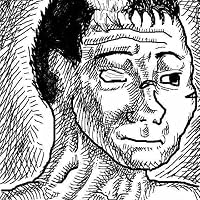
Aleksander Krawczuk is a Polish historian and academic. He was a Minister of Culture from 1986 to 1989.
During World War II he was a soldier in the Home Army . In 1949 he graduated from the Faculty of Philosophy and History of the Jagiellonian University in Krakow . He worked at the same university, specialized in the history of antiquity. Since 1985 - professor. He published many scientific and popular science works on ancient history, as well as novels on historical topics and essays.
In 1986-1989 he was the Minister of Culture of Poland in the governments of Zbigniew Messner and Mieczysław Rakowski . From 1991 to 1997 - Deputy of the Seimas from the Union of Democratic Left Forces.
November 11, 1997 was awarded the Grand Cross of the Order of the Rebirth of Poland. In 2009 he received the gold medal "For merit in the culture of Gloria Artis"
This was a very good book. Especially strong at the second half when it was completely focused on Constantine’s actions with the Christian Community. It explained some Christian aspects of his rule and the symbols Constantine is connected to.
The beginning of the was detailed in its set up other times and places. what I especially enjoyed was, the amount of detail about people and battles. To make it easier to understand, providing pictures the actual people from the statues or map would have been helpful.
When we got to Constantine and Christian period, it was spectacular.
I thoroughly enjoyed this book and am impressed at how well it is referenced in the amount of research the author did. As a insight, I have a masters in the theology and I did a lot of work with the early Christian times.
I’m not 100% sure this book is for everyone, but people with a strong interest like me, should gobble it up. Overall, a great book.
I received an advance review copy for free, and I am leaving this review voluntarily.
Here Krawczuc comes again to enlighten us on the roots of our beliefs in his own particular style of simple words and great writing. His methods are to seek historical documents from various sources and try to present them with as little interpretation as possible, while also managing to convey the emotional tapestry of the time in vivid colors. Maybe I'm biased by my interest in the way history seems to repeat itself, and despite it being written by the victors, there are these tidbits about the tax system, the development of bureaucracy, the morals and the politics of the ruling class which I find fascinating.
I won't go deeply into the conclusions - there are so many interesting things to say about the epoch and its reverberations to the present that it would be impossible to put in a review. What I do want to say is that Constantine was as much a good ruler as an ambitious and manipulative one, with good and bad sides like so many before him. What I liked most about Constantine was that he thought - as the emperor stated - that rich people must shoulder the burden of the state for the sake of the general good, while the poor should benefit from the wealth of the church. He even issued an edict on taxation which attempted to defend the poor against abuses by tax officials, for these, in collusion with the rich, “burdened the less wealthy beyond measure.” What I liked least was that vast expenditures on the army and the border fortifications, on the one hand, and on the expanded bureaucratic apparatus, on the other, necessary to satisfy his ambition, ravaged the economy and laid waste the countryside, the tax burden on the civilian population rose sharply because of the enormous cost of maintaining the army. Also, the Council of Nicaea clearly showed how, going forward, the secular government intended to intervene in internal Church matters, vigorously assisting certain ecclesiastical factions in their struggle with others. In fact, Constantine treated theological problems rather indifferently, and if the surviving texts are to be believed, his own views on the subject were exceptionally vague. The emperor used harsh repression against the opponents of the mainstream Church for purely political reasons. He desired a monolithic unity of the Church, believing that the cohesiveness of its organization and doctrine should correspond to the current political situation when—after so many years of division—there was again only one empire and only one emperor.
I wish today's rulers would read this kind of books and learn to use history for the greater good. I'm not saying the punishments for crime should be the same or teachers should be exempt from taxes, or that we need to instate one or other system, I just think they need to remember that learning and intelligentsia was held in the highest esteem, and crime was punished mercilessly. For example, child traffickers had hitherto been thrown into the mines, but the emperor decided that if a slave or a freedman committed the crime, he was to be thrown to the wild beasts during games; if he was a free man, he was to fight in the circus as a gladiator, but the thing should be so arranged that he should die without fail. Death was even prescribed to those creditors who, to settle an unpaid debt, seized oxen used for plowing or slaves working the land; for such seizures, the emperor pointed out, caused delays in the payment of tribute to the state. However, relatively humanitarian provisions are also found in Constantine’s laws. He forbids the branding of criminals on the face, motivating it by the fact that the human face is shaped “in the image of heavenly beauty”: legs or hands should be branded instead. He recommends that prisoners under investigation should not be shackled too tightly or held in dungeons but should be brought out into the sunlight at dawn each day.
Today, we are inclined to forget we did not invent the world - we inherited it, and our efforts should be directed only to make it better.
I received an advance review copy for free via BookSirens, and I am leaving this review voluntarily.
انا متردد بين النجمتين ولا الثلاث نجوم العمل كأحداث رائع لكن كطرح ثقيل كأنه كتاب اجتماعيات، حتى الراوي العليم اصبح مدرساً لان الكاتب يقول مثلا: ذهب فلان الى المنطقة الفلانية التي هي اليوم تعتبر يوغسلافيا، هذا بالسرد وليس هامشاً السرد يتكلم ع حال الامبرطورية او مدينة لا عن شخص بعينه فلا اشعر بالشخوص التي بالرواية احببت التاريخ الديني والتاريخ نفسه لكن لا تقل لي انها رواية اظن ان المؤلف وقع بشرك الاختصار، فتحول العمل الى ماهو عليه ايضا العناوين جدا سطحية لا ادب فيها
This has challenged serval of my beliefs about Constantine which is good always for to hand questions when looking at history, to be open to new ideas.
The fundamentals that he turned the Christian faith ir rather the Church into an institution it's how it happened that our author challenges. He referred to Christians as a cult which was a often used accusation even Paul acknowledged, albeit a few hundred years earlier. There is a lot of information and many common accepted sources are question but more by reference assumtion than by proof in my view but you may well disagree. Its ok to disagree with the difference of opinion on history as there is a lot we don't really know as much as we want to.
So I've giveb this 4 stars as I personally would have liked more proof to back up facts as opposed to saying he biased because…… but the references have left me with many questions so I feel its a good read just wanted a bit more to back up his views.
I received an advance review copy for free, and I am leaving this review voluntarilyI received an advance review copy for free, and I am leaving this review voluntarily.
I greatly enjoy the historical works of Aleksander Krawczuk, his writing style is for the masses with perspective of the times, people and community.
Constantine for me is fascinating figure where we find a mixture of historical facts. Krawczuk excels pointing out where historical works of the past were embellished through the use of other historical writings closer to the time of the events. This gives great insight into this history and how it was the beginning. Conflicts did exist with some resistance, exile and other means for punishment and solution.
Historically you will find parallels to mistakes of the time of Constantine being repeated today in many governments. This comes from people's lack of desire to view the important of history to prevent the same mistakes being made.
This work is very detailed on a very complex Emperor and the times of Rome. It wasn't all as straight forward with Christianity as we can be lead to believe. There were many factors not taught we will learn though this book.
I highly suggest it for everyone.
I received an advance review copy for free, and I am leaving this review voluntarily.
I received an advance review copy for free, and I am leaving this review voluntarily.
To keep this short and sweet (just like this book): If you want an entertaining and informative read about the reign of Diocletian and Constantine and get a grip of the many co-rulers (along with usurpers) in this time period and also the refreshing tidbits from the author’s vast knowledge of the antiquity to expand your view, this is a recommended read.
This book is more consistent and chronological than the rest I have read of Aleksander Krawzcuk, which makes it easy to keep the many rulers and usurpers apart instead of mashing them up (as many of the names sound the same).
There is also a deep dive into Christianity and why Constantine chose to support this religion. Constantine also was an advocate for paying people to take education so we might have something to learn on that behalf (if the Roman Empire is anything to go by).