Jump to ratings and reviews
Rate this book

Residenza per signore sole

Rate this book
La Residenza K, un palazzo di mattoni rossi che ospita donne nubili, appare agli abitanti di Tokyo come una dimora tranquilla per signore per bene, ma nasconde in realtà un passato sinistro. Quando dalla portineria sparisce misteriosamente il passe-partout, la chiave universale che apre tutte le centocinquanta stanze affacciate sui lunghi corridoi dei cinque piani, le inquiline cominciano a vivere nell’ansia. Ogni camera, infatti, oltre a un’immensa solitudine, custodisce colpe che ciascuna di loro tiene scrupolosamente per sé: strani furti, incidenti sospetti e persino un suicidio aleggiano tra quelle mura, abitate da donne assorte nel ricordo dei tempi andati. E adesso, in previsione dello spostamento dell’edificio che deve far posto a una strada, queste donne temono che succeda qualcosa di orribile: i lavori potrebbero portare alla luce un crimine avvenuto anni prima, e con esso tanti altri segreti che le pareti spesse della Residenza K – e la sua curiosa portinaia con la passione per i libri – serbano con discrezione. Pubblicato per la prima volta nel 1962, "Residenza per signore sole" è un grande classico del noir giapponese. Una perla rara, ricca di tensione e atmosfera, che ricorda i thriller di P.D. James, conservando però l’inconfondibile tocco di magia che continua a far innamorare della letteratura del Sol Levante le lettrici e i lettori di tutto il mondo.

175 pages, Paperback

First published January 1, 1962

204 people are currently reading
4634 people want to read

About the author

Masako Togawa

18 books64 followers
Masako Togawa (戸川昌子) was a Japanese novelist, Chanson singer-songwriter, actress, feminist, LGBTQ+ activist, former night club owner, metropolitan city planning panelist and music educator. She was born in Tokyo, in 1933.

Masako Towaga began writing in 1961, backstage, between her stage appearances, and her first work The Master Key was published a year later, in 1962, for which she was awarded the prestigious Edogawa Rampo Prize. The story is set in the same apartment she grew up in with her mother. Her second novel, The Lady Killer , followed in 1963, becoming a bestseller. It was adapted for both TV and film, and nominated for the Naoki Prize.

She wrote more than thirty novels and was one of the most popular mystery writers in Japan, with many of her stories based on her own life experience.

She died in 2016.

Ratings & Reviews

What do you think?
Rate this book

Friends & Following

Create a free account to discover what your friends think of this book!

Community Reviews

5 stars
595 (15%)
4 stars
1,556 (41%)
3 stars
1,257 (33%)
2 stars
262 (7%)
1 star
54 (1%)
Displaying 1 - 30 of 529 reviews
Profile Image for Julie .
4,247 reviews38k followers
May 15, 2018
The Master Key by by Masako Togawa, Simon Grove (Translator) is a 2017 by Pushkin Vertigo publication.

Originally published back in 1962, this ‘puzzle’ mystery has been translated into the English Language and is now available in digital format.

Although I consider myself somewhat well versed on mystery novels and the various sub-genres, I wasn’t quite sure what was meant by ‘puzzle mysteries’, which, of course, piqued by interest, on top of the cultural aspects and the vintage/classic angle I’m always a sucker for.
The story is centered around the K apartments for single ladies, which is about to be moved due to the widening of a highway. As the story progresses the past and present slowly merge as the truth behind the death of an infant is revealed amid shocking revelations.

The apartment's master key plays a prominent role in the way these tightly held secrets emerge from the shadowy corners of loneliness, obsession, and sorrow, and the deceptively benign activities transpiring at the K apartments for women.

The story is short, but it packs a big punch. It was almost like reading a group of connected vignettes with the post war backdrop of Tokyo creating a stunning atmosphere. These ‘vignettes’ are all a piece of the puzzle, which gradually comes together, piece by piece, to give the reader the full, entire picture.

Fate! It can stab you in the back any time, upsetting the most carefully thought out activities. Fate doesn't care what the upshot is.

Very clever! The definition of a puzzle mystery is rather vague, but it is supposed to focus on solving the puzzle, without spending a great deal of time on the development of the characters. However, I did get a nice glimpse into the secret lives, and human foibles, of these women, as a tragic story unfolds.

I’ve never read a mystery quite like this one, and the more I pondered on it, the more appreciation I had for the author’s ingenuity. I am very interested in reading more books by Masako Togawa if I can locate any with translations.
I recommend this book to anyone who enjoys mysteries that are a little outside the box, are masterfully written, and keeps you guessing or if you enjoy vintage mysteries.

4 stars
Profile Image for Susan.
3,017 reviews570 followers
October 30, 2017
This novel was first published in 1962 and is one of the new Pushkin Vertigo re-issues, which re-print international crime classics. “The Master Key,” is set in an apartment block for single women, called ‘The K Apartments,’ in 1951. The whole building is about to be lifted, and moved four metres, in order to enable the widening of the room. This dark, unusual story, is built around this event and goes backwards in time, introducing us to all of the characters and the possibility that the builders will unearth the many secrets of the apartment inhabitants.

Secrets, there certainly are. From the burial of a child’s body (this occurs virtually in the first scene, so isn’t a spoiler), a popular religious cult, a woman who hordes rubbish and lives within a cupboard, the lonely, lost and dysfunctional. All of these women, now mostly elderly and retired, who endeavour to fill their days; while within the building the pass key – the master key which opens all of the apartments – is lost and means that nobody is truly safe from prying eyes. This really is a very creepy read. I really do enjoy the Pushkin Vertigo series and have discovered some very unusual authors through this imprint. I received a copy of this book from the publisher, via NetGalley, for review.


Profile Image for Algernon (Darth Anyan).
1,838 reviews1,163 followers
January 11, 2022
[9/10]

This one key, meant for the use of the wardens, can open every one of the hundred and fifty rooms in the building, and is still missing. For the last six months, everyone in the building has more or less lived in dread and uneasiness. After all, the women who have lived alone for so long in these apartments have their secrets, little aspects of their lives known only to themselves, and now someone unknown is free to pry into them, to intrude.

This novel merits its place among the classics of Japanese crime fiction. I wish I had discovered it earlier, and paid more attention to this particular subgenre, because, frankly, the book is quite impressive in its elegant construction and subtle, understated depiction of intense loneliness and despair.

The setting is an apartment building constructed in Tokyo towards the end of the world war two, destined as accommodation for single women working in the capital. As the years pass, and as many men have died in the war, most of these once young women are still single and living in the building as pensioners, alone and poor with few prospects of a change in their fortunes.

They merely stay alive; they have no activity except to dream about the past. At such times as this, I have a sort of hallucination: I imagine how, in rooms on the third floor, the fifth floor, old women pass their days in silence still gazing at the broken fragments of the dreams of youth, every now and then letting fall a sigh that echoes down the corridor, until they combine on the stairway and roll down to the cavernous hallway, raising one long moan around where I sit.

Since this is framed as a crime story, the prologue describes the kidnapping of a child seven years previously, a hit and run accident that appears to be connected to the case, and the suspect behaviour of one of the women living in the building. The catalyst for change is the scheduled moving of the whole building (with the inhabitants still inside) on special heavy duty equipment, in order to enlarge a main thoroughfare.

But the real story here is about privacy and secrets. It’s about the fragile edifice of lies and misdirections we employ to protect our public image and our self-respect. It’s about the perverse appeal of prying into these secrets, once you have the means to access them. Since this novel was written before we put every private shred of our existence online, the way to do it is to gain access to a master key that can open every door in the building. This key is supposed to be kept always in the room of the custodians, and only be used in emergencies with at least two people present. Yet, six months before the moving of the building, the key had disappeared.

These apartments were founded with the intention of preserving the modesty and so enhancing the status of working women. That one little key was the guarantor of these aims, but in the wrong hands it becomes a threat. In such circumstances, locked doors lose their meaning!

The following chapters may or may not have a connection to the crime from the prologue. They do have though this common thread between a secret life and a prying eye. Between privacy and temptation. For me, the glimpse at the lonely, tragic lives of these single old ladies was of more interest that the clever twists and turns of the main plot.

Kaneko Tamura is one of the caretakers, who likes knitting and to take naps on the job. She’s likable and even a bit funny, but inside there is insecurity and envy. In the same building Tamura guards lives Toyoko Munekata, one of her former schoolmates, who had a successful career in university, and now does research papers in her room. The temptation to use the master key and to pry into the papers of Munekata is too strong to resist.

The next one to be tempted is Noriko Ishiyama, a former art teacher, now a shy, dirty mouse hiding in a cupboard and stealing fish bones from garbage pails. She’s a hoarder and a crazy old bat to the other residents, but several clues and the missing master key she finds in her own room (thrown there by Tamura), send Noriko into her own search for secrets.

Suwa Yatabe was once a child prodigy with a promising career ahead of her as a concert violinist. Now she barely makes a living giving private lessons in her room. Yet she also may have hidden there a stolen Guarnerius violin worth a fortune. With the master key missing, someone may be out to expose Suwa.

Yoneko Kimura is another retired teacher from a girls highschool. She’s having some troubles managing her meager pension, but mostly she is bored out of her mind with nothing to do. So she starts to write to her former pupils, one of whom is Keiko, the mother of the kidnapped child seven years previously. When another series of small clues and an answering letter from Keiko point towards somebody in the building, Yoneko turns into an amateur sleuth and tries to get her hands on the master key, so she can investigate the room of the main suspect.

Chikako Ueda is a recluse, a mentally disturbed woman who acts like she has something to hide. But is that enough to accuse her of premeditated murder?

During the next few days, Yoneko could not take her mind off the vision of Chikako Ueda, plying her embroidery needle in her room as she waited for a man who did not come. People lived in a world of fantasy, she reasoned. Yoneko felt isolated and empty at the thought that she herself had no such fantasy to give hope and point to her life. This was why her life since retirement had been so blank and meaningless as she felt it was.

These slice of life portraits reminded me strongly of some of the best contemporary movies by Kurosawa. It’s a sort of poetic realism that includes both kindness and misery and resignation. I would have loved the book for these chapters alone, but the author has not forgotten that he is writing a crime novel, even as I got sidetracked by the human interest angle. The last chapter, before the epilogue which I am not going to spoil for you, is told from the point of view of the puppet master, of the secret agent who manipulated these women into using the master key and exposing the secret lives of their neighbors. While the revelations are satisfactory from a detective point of view, what I took away from this last chapter is the reflection on the role of accident and randomness in the development of the story. An attitude that strongly encourages me to include the novel among the noir canon:

My feelings were not directed at anything or anyone in particular, but at the caprices of fate which can bring about changes in the best laid plans of mice and men, as the saying goes. Fate! It can stab you in the back any time, upsetting the most carefully thought out activities. Fate doesn’t care what the upshot is.

This was my first novel I tried from Masako Togawa. I hope I will find the time to read more from her and from other similar Japanese writers. I love the diversity of the genre outside the main American market for pulp and noir.

We were like children building magnificent sandcastles only to see them washed away by the tides of fate. [...] Life is just a passing dream, and we are the toys of mocking fate.
Profile Image for K.J. Charles.
Author 65 books12.1k followers
Read
April 8, 2023
Absolutely cracking Japanese mystery from the 1950s. Very much of its own kind rather than the Christie-ish type of mystery: it's set in an apartment block for single women, a child has been kidnapped and gone for seven years, and a number of the women are about to cross paths in unexpected interlocking ways. Extremely clever, and drily unsentimental because if you thought about the pain and loneliness and futile lives here, it would break your heart six ways. Absolutely terrific and an unobtrusive, well written translation to boot.
Profile Image for Laura .
447 reviews222 followers
February 16, 2024
I had just read Togawa's The Lady Killer, so I went into this book with similar expectations - and I was surprised to find that this is quite a different book. On the surface it seems to be another murder-mystery - and the structure is similar, for example, Togawa uses the frame of Prologue and Epilogue and then Parts One through Eight to a very similar effect, however, the bulk of The Master Key is devoted to relating the details of the lives of several old ladies who live in the K Apartments. When I say bulk - I actually did the calculation and worked out that the framing story - which is the murder-mystery only takes up 12.5 per cent of the whole.

I wrote my first review yesterday -and lost it - a computer glitch, but I related how for most of this book, I was going to give it two, maybe three stars - because the lives of the ladies are quite sad, and to be honest not too interesting, and it's quite difficult to see how it relates to the dramatic opening sequence - a chid is buried in concrete in the basement of the K Apartments for Ladies.

By the time, I had reached the end, however, I was convinced of another FIVE star read. The Epilogue is of such resounding nastiness - it took my breath away and I also understood why this book was awarded The Edogawa Rampo Prize.

Although the framing story makes the novel look like a murder-mystery, as I noted above, it only takes up about 13 % of the whole. The other 87% is about the elderly ladies - and I found it difficult to understand this imbalance - certainly there are endless machinations to obtain the master key and to pry into the secrets behind each door, but why the depth of detail, the loneliness, and the lack of purpose?

The K Apartments block had been built for the exclusive use of single ladies. It was erected some 50 years earlier: "designed by a foreigner, so that single ladies could emancipate themselves . . . the young ladies who had first occupied its rooms have grown old with the building."

Part 2 - During the Construction Work - Miss Tojo reflects

Man is an animal that seeks to know the reason for his existence, and just as a prisoner will scratch the wall of his cell to ascertain that he is still alive, and to mark the passing of time, so we guinea pigs had become so obsessed by the promise not to spill one drop of water that we agreed to put them to the test. . . . it was perhaps a slightly strange outcome that she should have persuaded the majority to partake in what was after all a rather unscientific experiment. For the consensus was not for all to conduct a standard experiment, but for each to lock herself in her room and carry out the test in her own fashion. There was to my mind a certain irony in this. Still, as the practice of the ladies living in the apartments has always been to live their own lives without interfering in the affairs of others, it could not be helped. So that is the reason why all went to their rooms and locked themselves in an hour ago, providing the contrast between the bustle outside and the tomblike stillness within.


This is a strange passage to have at the beginning of the book, page 14, and it is almost impossible for the reader to connect the dramatic opening scenes with the ominous tone and distancing language that the receptionist, Miss Tojo uses. It was only as I read and contemplated the stories about the old ladies, that I started to penetrate Togawa's real thrust; and secondly there is such a resounding difference in social values, that a Western reader will struggle to comprehend the underlying themes of her text.

Children are essential to the continuation of the family, and to life and thus a single lady in Japanese society is considered a defunct and useless person. She has not fulfilled her life's purpose - " . . . the tomblike stillness within." This is a difficult concept for a modern reader - and I am not sure where Togawa positions herself - as a feminist throwing off the traditional roles of Japanese wowen, or as a post-war survivor recognising - that the foundations of Japanese life have been removed just as the foundations of the K Apartments are dug out from beneath the ladies.


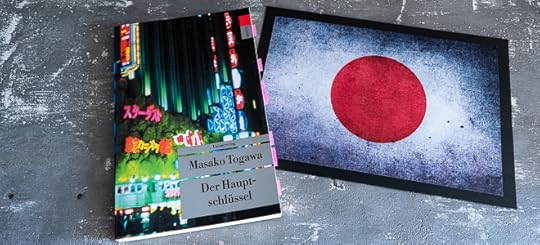
'Der Hauptschlüssel' - is the German translation of The Master Key. I like this photo, because the flag indicates how Togawa is appreciated as a national voice.

Reading the two novels together certainly helped me to understand Togawa's agenda, which is to write about the devastation caused by the second World War - and that becomes abundantly clear when you reach the Epilogue in The Master Key but she also writes about the impact that the war had on women who are without partners, and the loss not simply of their personal happiness but of the loss in terms of the children - in which they had no control, no choice.

And there I will end my review. If you pay attention to the stories about the old ladies, you will eventually see how they underpin the story of the children in the framing story.
Profile Image for daph pink ♡ .
1,301 reviews3,283 followers
August 23, 2023
I finished this novel an hour ago, and I still find it hard to comprehend what transpired. Anyone can be stunned by the way it is braided together to provide the shocking conclusion. Due to a lot of characters, at times it did feel a little unbelievable(given a few things that happened) and difficult to understand. The setting and the way everything was written, jumping back and forth in time, were both excellent choices.
Profile Image for Marie-Therese.
412 reviews214 followers
January 30, 2018
Another excellent entry in the Pushkin Press Vertigo series which features 20th century crime fiction from around the world, most originally published sometime between the 1920s and the 1970s.

First published in 1962, 'The Master Key' is a twisty mystery set in an apartment building reserved for single Japanese working women (a residence apparently very similar to the one Togawa grew up in with her single mother after her father's untimely death). While occasionally displaying some attitudes that were dated even at the time of publication, it is so skillfully composed and so engrossing that this hardly seems to matter.

In 'The Master Key', a series of crimes, some petty and some truly heinous, occur among a group of women related more by proximity and coincidence than anything else. Despite what seem certain implausibilities, a finely woven net is cast and all the players are drawn in. Togawa moves back and forth in time and varies the narrative voice frequently, building suspense along with a bit of initial confusion. The reader really has to pay attention to keep up and I think this is a mystery best read in one sitting, but once the story gets going it's hard to put the book down anyway. Recurring characters are seen from both the inside (in first-person or third-person limited perspective narratives) and the outside and at different points in time, and this helps to flesh them out and move them beyond stereotypes in what is, after all, a brief and brisk novel.

While Togawa's narrative is unsentimental, sometimes even hard-eyed, it's hard not to feel for these characters, each caught in a web only partly of her own making. The final, ugly fillip in the Epilogue (so reminiscent of another famous tragic interaction between Japanese women and American men*) makes the story even more moving.

Profile Image for Martina ⭐.
158 reviews44 followers
July 26, 2024
Questo libro mi ha veramente sorpresa e sconvolta. Una storia tortuosa e piena di dettagli si svolge all'interno di una residenza per donne nubili. Tutte le protagoniste sono ben caratterizzate e nonostante un pò di confusione iniziale, il libro poi spicca il volo e ti fa immergere completamente negli intrighi di ognuna di loro. Tanti segreti e colpi di scena che portano ad un finale inaspettato. Molto convincente e caratteristico.
Profile Image for Patrick Sherriff.
Author 97 books99 followers
April 9, 2018
I didn't start reading this with much enthusiasm -- an English translation of a Japanese locked room mystery written in 1962 made me think it would be of only academic interest in my pursuit of an understanding of what makes the Japanese mystery genre tick -- but blow me down if I didn't actually start enjoying it as a piece of fiction. Sure, you could read it as a tedious impossible puzzle to be solved, or you could read it, as I did, as an interesting slice of Japanese life with a few hints of horror thrown in. Not bad, and especially as it was a mystery told without the need for a know-it-all sleuth. There was also the hint of another real-life mystery. On the copyright page the publisher is requesting the translation copyright holder to please get in touch. Well, there must be a mystery there worth telling too...

Download my starter library for free here - http://eepurl.com/bFkt0X - and receive my monthly newsletter with book recommendations galore for the Japanophile/crime fiction/English teacher in all of us.
Profile Image for Nancy Oakes.
2,018 reviews918 followers
July 8, 2010
Like a 3.75 rounded up.

An oldie but still a goodie, The Master Key begins with a highly-publicized architectural experiment: engineers are about to move an entire five-story building to make way for widening an existing road. The engineers have assured the women who live there that they can remain in their apartments for the move, and that they won't notice a thing. They've even convinced the inhabitants of the building that they should all fill a glass with water and watch it ... they won't even see a ripple. And as the story opens, that is what many of the women are doing. Then -- three flashbacks: an accident involving a man wearing women's clothing, the burial of a child's body in the building's basement, and the tale of the kidnapping of the young son of an American army officer stationed in Japan.

The K Apartments for Ladies is not only a residence, but is also the world which these women occupy. It is a place where, according to one woman, a person can imagine that

old women pass their days in silence still gazing at the broken fragments of the dreams of their youth, every now and then letting fall a sigh that echoes down the corridor, until they combine on the stairway and roll down to the cavernous hallway, raising one long moan...

Ironically, the original purpose of the building was to serve as a place where "Japanese women could emancipate themselves," where single young ladies could live alone. Fifty years earlier, when the building was constructed, that was almost unheard of, and people would often look at it with "envious curiosity." However, now the residents are growing old, living with the "bright days of their pasts," now passing their time largely in a lonely existence of solitude and withdrawal. Rather than being free, women are now stuck there, with nowhere else to go, keeping parts of their past lives away from the prying eyes of others. And in the face of a changing outside world, many live there in order to continue old traditions. Now, with the theft of the building's master key, the safety of their world has been violated. Someone has access to things the residents would rather keep buried. In the midst of this world of secrets and solitude, there is one person who has no qualms about prying into the proverbial skeletons in the closets. The looming threat of deadly gossip would be, in some cases, too much to bear. Along with the moving of the building, the theft of the master key threatens to bring about that "one chance in a hundred" of the collapse of the world which these women inhabit, by making public the things they have kept hidden for a good portion of their lives.

The question of who took the key and why is only part of this story. Secrets upon secrets are revealed as the author delves into the lives of a few of these women to produce a novel that starts out on a high note of tension and stays that way up until the very end. But The Master Key is not only a mystery novel; it also offers a psychological portrait of aging women dealing with their pasts and the loneliness of their present situations.

The story is told from several different points of view so the novel may be a bit confusing at times. The characters and their hidden lives are what drive this book, but I found myself having to go back a few times to remember who was who and pick up the threads of their individual narratives. While that was a bit distracting, the sleight-of-hand twist at the end made it all worthwhile, as did the sense of place that came alive in the very atmosphere of this stifling and gloomy apartment world in which these ladies live. And although it was written in 1962 and may seem a bit dated, the suspenseful tone that starts at the beginning does not let up until the end.
Profile Image for La pecera de Raquel.
273 reviews
June 10, 2022
A raíz de las obras de un edificio de apartamentos en Japón se descendena una historia donde se desarrollan tres hechos aparentemente sin conexión entre sí, la pérdida de una llave maestra que abre todos los apartamentos del edificio, la muerte de una de las mujeres que lo habita y el secuestro de un niño

Mi opinión completa aquí a partir del minuto 14:00

https://www.youtube.com/watch?v=d7Dud...
Profile Image for Liz Barnsley.
3,761 reviews1,077 followers
December 22, 2017
The Master Key was a quick read for me, strangely tense despite it’s often matter of fact tone – and actually I would call it less a thriller than a multiple arc character study – although, of course, there is a dark deed at the heart of it.

In a series of interlocking stories we meet the residents of the K apartments for young ladies – most of them not so young these days – in and around the time the building is due to be moved. The basement hides a secret however and as we read the truth about it is unraveled.

What I loved about this one was not so much the crime element but the social element, the stories behind the story that unfolds. The author messes with the order of things, with a strong intuitive writing style that really reveals the human sides of the characters being introduced. It weaves a slight magic as you read, immersing you into a very different time, culture and reality.

I thought it was brilliantly done. A very different yet very addictive and oddly endearing read considering the subject matter.

Recommended.
1,987 reviews109 followers
December 22, 2020
Brilliant! This is a mystery set in a boarding house for women. The master key allows residents to sneak into each other’s rooms to spy and reveal clues to the reader. But which clues will lead to the resolution of the mystery and which are distractions. I approached this as a cozy mystery. I should have been paying much closer attention. 4.5 stars
Profile Image for Yukki.
68 reviews10 followers
January 3, 2024
Superato un inizio alquanto confusionario, con sbalzi temporali repentini sul passato e futuro, il libro assume man mano sempre più intensità.
Un mesto racconto di una storia complicata con dovizia di particolari che si intrecciano tra le protagoniste della residenza e non. Vite, segreti, curiosità, delusioni, amarezze, rimorsi; un insieme di vicissitudini che portano, collezionando in modo perspicace indizi, a scoprire la cruda verità sulla mente umana.
Decisamente non mi aspettavo alcuni twist tanto da farmi rimanere a bocca aperta svariate volte sul finale e quindi alla loro rilevazione. Nulla è come sembra.
Profile Image for Lolly Willowes.
23 reviews12 followers
June 5, 2023
Nel Giappone degli anni 50 le donne sole, celibi o vedove, si trovano a vivere in una specie di limbo, questo limbo si materializza nella forma di una residenza per signore sole. Un luogo sospeso nel tempo, anzi imprigionato in esso, dove le occupanti vivono come in collegio per preservare sicurezza e decoro. La vita all'interno della residenza K sa di polvere, cecità e orizzonti soffocati. In questa ambientazione prende vita un giallo narrato come un puzzle. Fatto di salti temporali e vicende intrecciate. Nella solitudine le curiosità e le frustrazioni delle donne si amplificano, diventano ossessioni, sfociano nel crimine. Un microcosmo di tristezze e rimpianti pronto ad esplodere. O sarebbe meglio dire implodere perché il finale è anticlimatico. La tensione si stempera gradualmente mano a mano che si risolvono i vari nodi ed il mistero finale lascia irritati più che sconvolti. Però è un libro efficace che già dalle prime pagine cattura. Il vero fulcro di questa storia è la donna. Sola, afflitta, incompresa, disturbante e disturbata che isolata dal mondo si trasforma in una pianta carnivora che assale sè stessa. Le protagoniste, nel perseguire i propri scopi, sembra regrediscano allo stato di ragazzine solo parzialmente capaci di prevedere ed accettare le conseguenze delle proprie azioni. Gli unici uomini presenti sono figure negative eppure capaci di destabilizzare completamente quel micromondo femminile.
Un libro che racconta una storia ingiusta con la tipica levità giapponese e che merita di essere letto.
Profile Image for Kirsty.
Author 80 books1,472 followers
November 9, 2017
This was a strange, surprising delight. It's set in a Japanese apartment complex/boarding house for unmarried women. The entire building is going to be picked up and moved to make way for a new road – the residents are assured that they will barely notice it moving, so much so that they could put a glass of water on the table and it won't spill. The fact that just about all of them DO put a glass of water on the table and then stare it it shows you how deeply unexciting their lives are. However, there is a dead child buried beneath the building, and soon all will be revealed.

My favourite part of this book was the characters – they're so brilliantly drawn, and so strange. Each has her own history and quirks, all of which come to light after the theft of a master key which unlocks any apartment door. One woman, a professor, obsessively copies out her late husband's research papers, even though they're gibberish. A hoarder digs through the kitchen bins to steal fish heads to stave off the calcium deficiency she falsely believes she has. A failed violinist tells a child that her paralysed middle finger is caused by witchcraft. As the women's stories unfold, the sense of loneliness, regret and claustrophobia builds. Also, Simon Grove's translation is great – the prose flows beautifully, and I was hooked from the start.

If you're used to a more immediate, formulaic crime novel then this might feel strange initially, but if you're looking for a more offbeat mystery then I'd recommend this.
Profile Image for Khairul Hezry.
747 reviews141 followers
January 23, 2022
Started off well enough. A man dressed as a woman is killed by an errant driver. A baby is buried in the basement of an apartment building. A child of an American Major and his Japanese wife is kidnapped and never returned even though part of the ransom was paid. The master key to the apartment building is missing and now a crowd is gathering to see the entire building shifted a few feet to one side (while the residents are sitting quietly inside) because the road needs to be widened. All these are somehow connected. The problem is that untangling the knots of the mystery was so uninteresting that I found myself skipping pages all the way to the reveal at the end. And it's not even a thick volume. It's a book you can finish in a day (or two if you're particularly busy). The characters aren't very interesting despite their quirkiness and the secrets that they harbour.

Maybe it's not the book. Maybe it's me. Maybe Japanese noir isn't for me. EDITED TO ADD: it has been suggested the fault could be in the quality of translation. While good, the translation nonetheless failed to capture the nuances of the Japanese language. Perhaps that's why I couldn't get into it.

Or maybe I'm just not into Japanese noir.
Profile Image for LW.
357 reviews93 followers
May 26, 2024
Gli esseri umani, tutti, vivono portandosi sulle spalle un'illusione

All'inizio la storia si sviluppa molto lentamente (e occhio, si fatica a tenere a mente tutti i nomi delle inquiline ,tra Yoneko, Keyko, Chikako, Tōjo, Toyoko, Tamara, Kimura, è facile perdere il filo! )
Però.
Poi l'intreccio si fa sempre più interessante, ti prende :)
Bella l'ambientazione e l'atmosfera : un misterioso edificio , un po' labirintico, con 150 stanze in 5 piani ,la Residenza K per signore sole , con le sue regole, le consolidate consuetudini, le due custodi , e nelle stanze , donne assorte nella nostalgia dei propri ricordi..
Un giorno scompare la chiave passepartout che può aprire ognuna di quelle 150 porte, dietro cui si celano segreti e silenzi ...

Noir giapponese molto intrigante , tra 3 e 4 stelle .

Profile Image for Patrick Sherriff.
Author 97 books99 followers
July 25, 2018
I didn't start reading this with much enthusiasm -- an English translation of a Japanese locked room mystery written in 1962 made me think it would be of only academic interest in my pursuit of an understanding of what makes the Japanese mystery genre tick -- but blow me down if I didn't actually start enjoying it as a piece of fiction. Sure, you could read it as a tedious impossible puzzle to be solved, or you could read it, as I did, as an interesting slice of Japanese life with a few hints of horror thrown in. Not bad, and especially as it was a mystery told without the need for a know-it-all sleuth. There was also the hint of another real-life mystery. On the copyright page the publisher is requesting the translation copyright holder to please get in touch. Well, there must be a mystery there worth telling too...

Download my starter library for free here - http://eepurl.com/bFkt0X - and receive my monthly newsletter with book recommendations galore for the Japanophile/crime fiction/English teacher in all of us.
Profile Image for Alberto Avanzi.
462 reviews7 followers
March 8, 2022
Un romanzo complesso, difficile da definire ma comunque bellissimo. Breve, ma denso e ricco di emozioni. Un romanzo (parzialmente autobiografico) incentrato essenzialmente sulla solitudine, la solitudine di queste donne che vivono in una sorta di residence, con un piccolissimo appartamento individuale per ognuna di loro, dove la privacy è annullata dall’esistenza dei passepartout a disposizione del personale e dal quale escono per andare a lavorare. Questa residenza più che a una casa fa pensare a un convento, o meglio ancora a una prigione. E’ un romanzo giapponese del 1957, parzialmente autobiografico, che quindi descrive una situazione lontana da noi nel tempo e nello spazio, una cultura dove la donna ancor più di adesso era considerata moglie e madre, e in caso contrario doveva dedicarsi anima e corpo al lavoro. Emblematico il divieto di incontrare uomini nella residenza, quasi una scelta irreversibile quella a cui sono chiamate queste donne, costrette a rinunciare a una cosa fra lavoro e famiglia.
Conosciamo e viviamo quindi le storie, intrecciate fra loro, di queste donne. Dramma, thriller, horror, magia si alternano, con un’atmosfera generale cupa e malinconica, ma spezzata da colpi di scena degni dei maestri del thriller.
Non vi voglio svelare di più sulla trama per permettervi di gustare appieno la lettura, come è successo a me. Vi dico solo che la storia viene raccontata con quello stile che abbiamo già visto in altri autori giapponesi, con quel modo soffuso e apparentemente distaccato che alla fine si rivela più coinvolgente che mai.
Profile Image for Jaanaki.
130 reviews43 followers
August 27, 2018
An isolated block of 150 apartments occupied only by single ladies and manned by two receptionists.Some of the ladies have secrets to hide . A master key exists that can unlock any apartment and it gets stolen.A child's body lies buried under the apartment which is yet to be discovered . The woman in the fifth floor is still waiting for someone to return to her even after seven years and she prepares dinner every night for this anticipated guest who never comes.The "Master Key ",by Masako Togawa connects all this to give us a good old fashioned mystery thriller with unexpectected twists and turns till the end.
✨✨✨✨✨✨✨✨✨✨✨
The author Masako Togawa was apparently a lady who wore many hats as a singer ,composer,city planner,night club owner and novelist.For me ,the most interesting fact about this book is that it is all about the women.The women carry the show all through the book with their inner fears , insecurities, jealousies,cunningness,secrets and wits.
Do pick it up if you love mysteries and have a special corner for Japanese mysteries
Profile Image for Ivonne Rovira.
2,531 reviews251 followers
September 7, 2020
The Master Key most reminds me of not a mystery novel — although it has its elements of mystery — but of a film, The Usual Suspects, which shares a chameleon-like shiftiness. The novel begins as a mystery — the son of an American Army major in Japan and his Japanese wife disappears — at the same time as a schoolteacher buries a dead child.

But Masako Togawa’s masterpiece shifts to a character study of the residents of the five-floor K Apartments for Ladies. And then it shifts again. And again. And yet again. The ending was like a punch to the solar plexus — it was that unexpected! No wonder I found it on a list of highly recommended off-beat mysteries.
Profile Image for Akylina.
291 reviews70 followers
December 6, 2017
A very well-crafted and quirky mystery novel which hooked me from the very beginning. I really enjoyed how the different stories of each character all came together in the end and the mystery kept being unveiled until the very last page. All the characters were so unique and well-rounded and the story of each individual was also compelling on its own. It was definitely refreshing, a mystery very unlike the usual ones and definitely one which deserves everyone's attention.

A copy was provided to me by the publisher via NetGalley.
Profile Image for Afi  (WhatAfiReads).
606 reviews428 followers
February 6, 2022
Compelling, intriguing and one of the most shocking revelations and if not, quirky and weird to be in a book that is less than 200 pages. The prose was revolting, the vibe of the book that gives a slight noir feeling for it as well as the nuances and metaphors that the author had included in the book in the main theme revolving Loneliness, on how humans can act in the desperation of finding something to fill out their lives that seemed empty.

Personal Ratings: 4🌟

The Master Key has one of the most compelling prologue that hooks your right in. A cult classic in the Japanese Crime thriller world that is in the lines of literature and a really good crime mystery. Its a book that, if you take things only at surface value, you'll find the book to be a well-written crime mystery. But, if you delve in just a bit deeper, you'll find that every line that the author wrote interlaced on the acts of humans to fill in voids in their life, and I for that had enjoyed the nuances that the author had thrown to the readers.

Short Summary
In the suburbs of Tokyo in 1951, a boarding house that houses only women of different ages has somehow lost its Master Key to the 150 rooms. Kidnappings, murders as well as strange things had happened with the occupants of the boarding house. Its a story of different individuals having different motives and means in life. A chilling thriller with a mellow and noir vibe that is a mixture of life, and the perspectives of different individuals that lives in a shareplace.

Personal Thoughts

"These apartments were founded with the intention of preserving the modesty and so enhancing the status of working women. That one little key was the guarantor of these aims, but in the wrong hands, it becomes a threat. In such circumstances, locked doors lose their meanings."


This book was just so... very... weird.... from the very start. And weird is good in a crime thriller and this book delivered it. This book is not only a page turner, it had defined various moments and things in life in a way that makes you feel .. just.... very... disturbed about everything. The idea of the boarding house itself is noble, but, in the era of 1950's, the place has gained more long-term tenants, which means there are more older ladies that lives in the place.

The one thing that I really like about the book is how the author had really depicted the lives of different women in this house. The writing changed its POV's to different tenants of the place and all revolves around the Master Key that is missing. At first, you'll feel like, OKAY, so where is this going? But as the plot progresses on, and everything was revealed, you'll be in the state like this,


to this


and this


I literaly stared 10 minutes at the book and going back to the pages and going WTF JUST HAPPENED :') The revelation caught you by surprise and boy was I just mindblowned at the ending.

The book also handles the overall theme of loneliness and how every single person at the boarding house is doing something , (sometimes out of the ordinary), to fill in the hollowness of their own heart. Its both saddening and just a depiction of what can drives a person when extreme loneliness kicks in. Its one that also portrays the reality of the Japanese and how the rate of suicide is high amongst them. The conversations that you have with yourself, that can drive one to insanity or one to live in extreme measures was shown in this book. The author did a splendid job in showing how loneliness is not a friend to people. For real, the way the author wrote this story to be seen in the multiple POV of the residents of the place had gave me an insight of the people living in the place, and well, its not as pretty.

"Fate made a fool of me in the end, after all. Life is just a passing dream, and we are the toys of mocking fate."


A compelling story that is a page turner and one that climbed up into one of my favs! Definitely recommended for those who is a fan of cult classic crime thrillers and just reading of old women doing weird things :')

Thank you to Pansing Distributions for generously providing me a review copy of the book.

Disclaimers: All my reviews are my thoughts of the book and according to my personal preferences. Even though I had received a review copy, it does not affect my review and honest thoughts for the book.
Profile Image for hans.
1,156 reviews152 followers
January 14, 2022
Another great published by Pushkin Vertigo. Always love their collection and this book despite being first published in 1962 with its post-war references it feels quite contemporary to me.

A strong hook of prologue with such a unique setting (the location is truly the main character!) and I like how the author really enhanced the boarding house attributes by exploring each bit of its room, structure and even the atmospheric view around the house. Love how it goes chronologically to each women's story. A gripping episodic of their backstories, the unfolding secrets that soon interrelated-- so quirky and stirring, no sleuth whatsoever, just a missing master key and a good plan.

I love that albeit being a crime mystery, it feels light and not heavily burden me with its red herrings. Fancy it pinch of noir and eerie nuances, the crime part was not that hard to digest and frankly, bit predictable too. But, I am totally invested with all of the characters-- they were complex yet fallible, and too mischievously eccentric.

The final part was really blown me. The characters' twists were the best but this one heroine who decides to drag her secret and plan all the way just to make it reveals by itself, was doing it too cunningly. No wonder few reviews said it was clever, totally agree to it. Bit pity though that she was also get deceived by her own motive at the end.

"𝘍𝘢𝘵𝘦 𝘮𝘢𝘥𝘦 𝘢 𝘧𝘰𝘰𝘭 𝘰𝘧 𝘮𝘦 𝘪𝘯 𝘵𝘩𝘦 𝘦𝘯𝘥, 𝘢𝘧𝘵𝘦𝘳 𝘢𝘭𝘭. 𝘓𝘪𝘧𝘦 𝘪𝘴 𝘫𝘶𝘴𝘵 𝘢 𝘱𝘢𝘴𝘴𝘪𝘯𝘨 𝘥𝘳𝘦𝘢𝘮, 𝘢𝘯𝘥 𝘸𝘦 𝘢𝘳𝘦 𝘵𝘩𝘦 𝘵𝘰𝘺𝘴 𝘰𝘧 𝘮𝘰𝘤𝘬𝘪𝘯𝘨 𝘧𝘢𝘵𝘦."

If you enjoy both crime and mystery fiction and craving for the mystery part to be a bit more, I would highly suggest this book (and this would be a great recommendation for a beginner mystery reader too)!

Huge thanks to Pansing Distribution (Definitely Books) for this gifted copy!
Profile Image for Jeanette.
4,088 reviews836 followers
December 6, 2017
This is a book you can read in just a few hours. It's told "out of order" but it concerns the lives of the women who live in "K Apt." 5 floors and over a period of many years beginning in 1951 Japan (Tokyo).

The Master Key is the one that fits all the apartments in the building. And its use the connection to all the parts of this tale? Many parts- all placed like puzzle pieces.

It's very Japanese. And told in that definitive style, IMHO. "Flat-out now" I call it. There are no overblown embellishments. This happened. She did this. That was placed there. I saw both of them. They did not see me. That kind of "now" speak with few trailing phrases. Emotive and connective cognition- that is all up to you, the reader.

Interesting! But I picked up the "sharper than a tack" voice too soon to make me try to connect much of the other minutia detail in order to play deep into reader detective. I was quite skeptical. So I rather didn't own much that felt embedded to tension other than to find out who killed the kidnapped child. And I was clearly correct in not overthinking motive or identity to follow the words down closed door corridors.

But all is almost an analogy. As we are dithering about such detail of guilt and outcome (solving or placing blame) when the "master key" message of "oversee" is actually never so self-involved.

This, seems to be IMHO, an exercise to rather pattern with the minimalist Japanese "art" style in floral, painting, gardens etc. Maybe I'm wrong but if she didn't try to do that, I would say she still succeeded.
Profile Image for e b.
130 reviews13 followers
July 7, 2018
I used to screen a wonderful old Gregory Peck thriller called "Mirage" for friends but warned them that compared to the suspenseful mystery that occupies the first three quarters of the film, the explanation in the fourth is blah. But, I argued, no explanation would be satisfactory for the intriguing set-up.

Same thing here. In spite of what seems a very pedestrian translation, I was delighted with the way this book unfolded, presenting us with a different resident of this oppressive apartment building, each with their own mysterious dilemma and secrets, building delectably to... two chapters that took all of my goodwill and beat the living hell out of them. I don't even have a problem with the overall explanation, but when it gets down to the specifics there are just too many coincidences and lucky chances that it all felt ridiculous and over-baked. I especially had no use for the last chapter, which exists only because Togawa didn't want to leave even one (ultimately irrelevant) thread dangling.

I would still recommend it to someone who wants a mystery that is off-the-wall and very much it's own beast without being too inaccessible, but with a major caveat.
Profile Image for Iza Brekilien.
1,574 reviews129 followers
February 15, 2024
Weird but good.
I read it for a professional reason : my coworker wanted me to find out if it this book written in the 1950s was a literary novel or a crime one. It's definitely a crime novel, but not in a straight way.
In this K building live bachelor women and the possible crime that we guess has just happened at the beginning is the opportunity to find out about the different lives of these women. What are their secrets ? What are they trying to hide ? Murder ? Theft ? Lies ?
The pace is neither slow nor fast, there are a lot of small stories that you guess are all linked, but you won't probably find out until the end - those last two chapters will make your jaw drop !
Profile Image for Rae.
558 reviews42 followers
October 4, 2022
I love this sort of thing.

The Master Key is a twisty, punchy novel made up of interwoven character pieces. There are secrets and lies aplenty, and lots of sneaking about.

The ending is bonkers and ties it all together with a bow!

Short, streamlined and sucks you in.
Displaying 1 - 30 of 529 reviews

Can't find what you're looking for?

Get help and learn more about the design.