

What do you think?

I, Iago
“Nicole Galland is exceptionally well versed in the fine nuances of storytelling.”
— St. Petersburg Times “Galland has an exceptional gift.”
—Neal Stephenson The critically acclaimed author of The Fool's Tale , Nicole Galland now approaches William Shakespeare's classic drama of jealousy, betrayal, and murder from the opposite side. I, Iago is an ingenious, brilliantly crafted novel that allows one of literature's greatest villains--the deceitful schemer Iago, from the Bard's immortal tragedy, Othello --to take center stage in order to reveal his "true" motivations. This is Iago as you've never known him, his past and influences breathtakingly illuminated, in a fictional reexamination that explores the eternal is true evil the result of nature versus nurture...or something even more complicated?
— St. Petersburg Times “Galland has an exceptional gift.”
—Neal Stephenson The critically acclaimed author of The Fool's Tale , Nicole Galland now approaches William Shakespeare's classic drama of jealousy, betrayal, and murder from the opposite side. I, Iago is an ingenious, brilliantly crafted novel that allows one of literature's greatest villains--the deceitful schemer Iago, from the Bard's immortal tragedy, Othello --to take center stage in order to reveal his "true" motivations. This is Iago as you've never known him, his past and influences breathtakingly illuminated, in a fictional reexamination that explores the eternal is true evil the result of nature versus nurture...or something even more complicated?
370 pages, Paperback
First published April 24, 2012
About the author
Nicole Galland
15 books466 followersNicole Galland writes critically-acclaimed novels in several different genres. She is mostly know for historical fiction, but recently teamed up with Neal Stephenson to write the New York Times bestselling, time-travel-themed The Rise And Fall of D.O.D.O. (HarperCollins, 2017). She'll be releasing its sequel, Master of the Revels, in February of 2021.
Her historical novels (all published by HarperCollins or imprints) include: The Fool's Tale; I, Iago; Revenge of the Rose; Godiva; and Crossed: A Tale of the Fourth Crusade. Her debut, The Fool's Tale, was a "Barnes & Noble Discover Great New Writers" selection.
Nicole has written two contemporary comic novels, Stepdog, and On The Same Page.
With a collective of six other authors (including Neal Stephenson and Greg Bear) Nicole co-authored the Mongoliad Trilogy (published by 47N), and under the pen name E. D. deBirmingham, also wrote the Siege Perilous, a Mongoliad sequel.
Galland is a "Shakespeare nerd" at heart. With actress/director Chelsea McCarthy she is the co-creator of Shakespeare for the Masses at the Martha's Vineyard Playhouse, and writes a tongue-in-cheek column for the Martha's Vineyard Times.
Her historical novels (all published by HarperCollins or imprints) include: The Fool's Tale; I, Iago; Revenge of the Rose; Godiva; and Crossed: A Tale of the Fourth Crusade. Her debut, The Fool's Tale, was a "Barnes & Noble Discover Great New Writers" selection.
Nicole has written two contemporary comic novels, Stepdog, and On The Same Page.
With a collective of six other authors (including Neal Stephenson and Greg Bear) Nicole co-authored the Mongoliad Trilogy (published by 47N), and under the pen name E. D. deBirmingham, also wrote the Siege Perilous, a Mongoliad sequel.
Galland is a "Shakespeare nerd" at heart. With actress/director Chelsea McCarthy she is the co-creator of Shakespeare for the Masses at the Martha's Vineyard Playhouse, and writes a tongue-in-cheek column for the Martha's Vineyard Times.
Ratings & Reviews
Friends & Following
Create a free account to discover what your friends think of this book!
Community Reviews
Displaying 1 - 30 of 188 reviews

November 16, 2019
He would leave this mortal coil understood by nobody but me. Is that not a kind of love?
Maybe more of a 1.5 girl, idk
I, Iago is a half prequel, half retelling of Othello told from Iago's point of view. The first 2/3 of this book are Iago's backstory and the events leading up to him meeting Emilia and Othello, and then later Desdemona and Cassio. The last third is the events of the play Othello, but from Iago's point of view.
The first 2/3 wasn't awful but wasn't great. The events moved slowly and I felt the narrative kept me at a huge distance from Iago. Even though it's from his point of view, and this is a character study, I didn't feel particularly invested in his point of view. But the historical fiction element was interesting and I was liking the creativity the author put into exploring Iago's history and his meetings with the various characters. But mostly I was holding out for the events of the play to start
spoiler warnings for the events of Othello if you care about being spoiled for a 400 year old play)
When they did it went ... to shit. So many of the choices the author made just made me feel icky. Instead of this being an interesting exploration of a villain it turned almost, sympathetic? The scene of him killing Emilia had a weird romantic undertone which made me uncomfortable. I also thought the author replicated so many of the worst tropes of this play, like the racism and the sexism. And yes, he's the villain, but many of these tropes were presented passively and didn't play into Iago's villainy.
For example, when Othello kills Desdemona, there's a racial undertone that it was an implication Iago didn't calculate on because 'a civilised Venetian man wouldn't have done it'. Throughout the events of the book, we get this sense Iago was just a guy who accidentally had a plan that got way out of hand because people like Othello aren't 'normal'. I basically thought this did too much to remove most of Iago's characterisation and actions in the play and cast him as the tragic hero which ... no? The tragedy is that innocent people like Cassio and Roderigo and ESPECIALLY DESDEMONA AND EMILIA.. DIED??
Anyway, this is getting ranty so to conclude. I think this author didn't really tackle the character with the nuance or complexity this book needed. The majority of the book is a plodding historical fiction with a character at the centre who is not nearly as dynamic or interesting as he could have been. And the books fell into replicating the same beats and tropes when it could have done something interesting to present the play in a new way.

July 23, 2012
I, Iago is one of the best books I’ve ever read.
It’s a book I’ve been waiting for my whole life - one that takes the blame off a villain who is very nearly a scapegoat, and spreads that blame evenly among the other characters. I mean, honestly - were Romeo and Juliet not being just the least bit spoiled and immature? They had to have each other, and if they couldn’t have each other, then they didn’t want to live anymore? Apparently a lot of people call this “romance”; in my house that’s called depression. I’ve always found Romeo and Juliet to be very nearly entirely to blame for their own deaths, and yet they are called the heroes and others the villains. The same with Othello - Iago deserved the lieutenancy over Cassio, and yet Othello placed his own romantic life with Desdemona over his duties as a general and his responsibility to Venice. Iago was, in my mind, merely doling out justice. This book supports that theory and shows that no one is born a villain - they are pushed down that path and turned into a villain by others. And who is really to blame, when you get right down to it - Frankenstein, or the doctor who created him? Iago was the perfect gentleman until others began to break the rules for their own personal gain. Iago broke the rules to bring justice back to his world. And how villainous is that, really?
Halfway through, I was determined to give this book only 3 stars, because I believed the author was giving far too much backstory that was completely unneeded, but once I reached the end of the book everything that I had just read was fell perfectly into place to create the most dramatic ending I’d ever read. Without reading the first half, the second half would have been far less dramatic and satisfying. It was like waiting in a long line at an amusement park - I was anxious to get to the fun part, but I inched along all the while knowing that the wait would be worth it. The fun part couldn’t have existed without the wait.
And so this book will get a treasured place on my bookshelf. It was beautifully written; Shakespeare could not have written the language better himself. It was witty and funny, and the end was a whirlwind of emotions. Every sentence was like a breath of fresh air, simply because of the wording the author chose. I could read this book over and over again. It was simply astonishing.
It’s a book I’ve been waiting for my whole life - one that takes the blame off a villain who is very nearly a scapegoat, and spreads that blame evenly among the other characters. I mean, honestly - were Romeo and Juliet not being just the least bit spoiled and immature? They had to have each other, and if they couldn’t have each other, then they didn’t want to live anymore? Apparently a lot of people call this “romance”; in my house that’s called depression. I’ve always found Romeo and Juliet to be very nearly entirely to blame for their own deaths, and yet they are called the heroes and others the villains. The same with Othello - Iago deserved the lieutenancy over Cassio, and yet Othello placed his own romantic life with Desdemona over his duties as a general and his responsibility to Venice. Iago was, in my mind, merely doling out justice. This book supports that theory and shows that no one is born a villain - they are pushed down that path and turned into a villain by others. And who is really to blame, when you get right down to it - Frankenstein, or the doctor who created him? Iago was the perfect gentleman until others began to break the rules for their own personal gain. Iago broke the rules to bring justice back to his world. And how villainous is that, really?
Halfway through, I was determined to give this book only 3 stars, because I believed the author was giving far too much backstory that was completely unneeded, but once I reached the end of the book everything that I had just read was fell perfectly into place to create the most dramatic ending I’d ever read. Without reading the first half, the second half would have been far less dramatic and satisfying. It was like waiting in a long line at an amusement park - I was anxious to get to the fun part, but I inched along all the while knowing that the wait would be worth it. The fun part couldn’t have existed without the wait.
And so this book will get a treasured place on my bookshelf. It was beautifully written; Shakespeare could not have written the language better himself. It was witty and funny, and the end was a whirlwind of emotions. Every sentence was like a breath of fresh air, simply because of the wording the author chose. I could read this book over and over again. It was simply astonishing.

July 18, 2013
Iago tops any list of Shakespeare's most evil characters, hands down. He isn't driven by a code of business like Shylock or ambitions for her husband like Lady Macbeth. Rather, based on the flimsiest imagined grievances (passed over for promotion; suspects his wife is sleeping with his boss), he ruins the marriage, careers, and lives of multiple innocent people, even killing his wife himself.
But wait - why is Iago the villain and Othello a (tragic) hero? Othello kills his wife too, just because he suspects adultery. He's insanely jealous, a rotten husband, a dangerously unstable general, and a very poor judge of character. Why do we give him a pass and lay all the blame on Iago?
Nicolle Galland's novel recasts Iago, not Othello, as the tragic hero and infuses him with much needed humanity. The first half tells Iago's backstory, childhood, and rise to become the #2 military man in Venice. He's no white knight, but he is a complex, human character we can easily relate to. The second half of the novel essentially retells the events of Shakespeare's play through Iago's eyes. Here it loses some steam because you already know what's going to happen, not just at the end but in individual scenes and conversations. It's still compelling, though, not least because it presumes that Iago did not expect his schemes to end so tragically and violently but becomes increasingly helpless as events spin out of his control.
But wait - why is Iago the villain and Othello a (tragic) hero? Othello kills his wife too, just because he suspects adultery. He's insanely jealous, a rotten husband, a dangerously unstable general, and a very poor judge of character. Why do we give him a pass and lay all the blame on Iago?
Nicolle Galland's novel recasts Iago, not Othello, as the tragic hero and infuses him with much needed humanity. The first half tells Iago's backstory, childhood, and rise to become the #2 military man in Venice. He's no white knight, but he is a complex, human character we can easily relate to. The second half of the novel essentially retells the events of Shakespeare's play through Iago's eyes. Here it loses some steam because you already know what's going to happen, not just at the end but in individual scenes and conversations. It's still compelling, though, not least because it presumes that Iago did not expect his schemes to end so tragically and violently but becomes increasingly helpless as events spin out of his control.

March 1, 2012
"I knew to the depths of my soul that nothing I did was errant, that in the greater sense, I acted out of righteousness, however vengeful and indirect it seemed."
In Nicole Galland’s wonderful, “I, Iago”, Iago ponders the intricate web of deceit, defamation and lies he weaves that will culminate in an inevitable calamity of heartache, pain and bloodshed.
The reader, of course, knows what’s coming. William Shakespeare’s “Othello” is well known in its original form, but has also been adapted for modern audiences in film. Iago is the center point upon which all of the characters in Shakespeare’s play orbit. He is the masterful manipulator. He’s a debonair deceiver. He’s the ultimate enigma.
Two recently released books look to shed light on this most puzzling character. What drives the manipulator of men to create a situation where his best friend, his wife, and his admired General all wind up dead?
While David Snodin’s “Iago” focuses strictly on the aftermath of the events in “Othello”, and attempts to unwind the character through a continuation of the story, Nicole Galland takes a more courageous approach by exploring Iago’s personality from his modest upbringing in Venice right up through, and including, the well-known events as they occur on the Mediterranean island of Cyprus.
Galland leaps right into the heart of the enigma in the first lines of her novel: “They call me “honest Iago” from an early age, but in Venice, this is not a compliment. It is a rebuke. One does not prosper by honesty.”
Gallands’s smooth handling of Iago’s first-person narration immediately struck me. Despite a certain expectation of awkward Renaissance-era language, Iago comes across comfortably and familiar.
He’s born the fifth son of an extremely demanding and cold father, and instantly the character of Iago starts to take shape. He grew up in the shadow of siblings who were all destined for greater things than he. Even if it was only because they’d been born sooner.
Honesty and truth, naturally, are running themes throughout the novel. As he grows older, Iago becomes a bit of a minor celebrity in Venice, establishing himself for bluntness, honestly and forthrightness. He’s consistent in his need to remain truthful, even as he learns how to twist and modify his words to elicit the response and action he so desires. The truth becomes slightly less than truth, but thoroughly manipulative and certainly foreshadowing the coming disaster played out in Shakespeare’s portion of Iago’s tale.
Repeatedly, Iago finds himself among the social elite of Venice, where his utter disdain for the social game becomes a practice ground for Iago’s oral manipulations. In seeking to identify the motivational factors that make Iago who he is, Galland puts on display Iago’s distaste for the ‘frippery’ and fakery of Venetian society.
While Iago’s childhood friend Roderigo is introduced early in the story, Galland teases out the other key Shakespearian characters throughout the first half of the story. Galland portrays a wonderfully romantic, albeit short, courtship between the Emilia and Iago. The remaining characters seamlessly integrate into Iago’s life; the highlight of which is an enjoyable first meeting of Othello himself.
We learn of Iago’s intense propensity towards jealousy. The drivers are miniscule, but exposed throughout the story and combined with sporadic but fierce bouts of rage, Galland continues to foreshadow the inescapable conclusion.
This jealousy extends even to his relationship with Othello. The two fall into a comfortable ‘bromance’ as Iago becomes Othello’s anchor point in connecting with the very foreign and incomprehensible Venetian superficiality. It takes little for Iago to question Othello’s loyalty, an insecurity we see in all of his relationships, eventually. Iago reflects, "it was some twisted fear in me, the residue of childhood insults from my father, that could make me doubt Othello even for a moment. "
Iago is extremely self analytical. It's constant. Through the eyes of someone who also has a constant anxiety-ridden self-dialogue, I found this very understandable.
We are introduced to Desdemona and slowly see Othello fall for her, shortly followed by Iago’s indignity at Othello breaking the “bros before 'hos” philosophy, despite its one-sidedness because, of course, Iago is married. He’s simply overcome by resentment, as the Florentine, Michele Cassio, becomes Othello’s confidant in wooing Desdemona.
At times Iago is fully aware of his conniving, and realistic enough to be disgusted with himself. At other times, he rationalizes. He hides behind the auspices of wanting to protect his friend and general, while the jealousy and resentment burn slowly like a fuse to an explosive. His honesty is what enables his deceptions to work so effectively but also empowers things to run so wildly and quickly out if control.
I thoroughly enjoyed this book, though found greater enjoyment in the early goings as we meet the young and still developing personality, while exploring society and life in Renaissance Venice. Galland beautifully describes 16th century Venice, in all of it’s mercantile, military and societal glory. Likewise, she does a marvelous job of putting flesh on the bone of this remarkably likable character. For this, I give the book 4 out of 5 stars.
The second half focuses on the manipulations and their effects among Othello, Emelia, Desdemona, Cassio, and Iago himself. Still well written, I find some of the plot devices a bit wearisome, repetitive and somewhat annoying in that same way I can’t watch ‘Three’s Company” or “Friends” because of the weekly miscommunication that causes riotous sitcom mayhem.
The book is smart and is, at its heart, an enjoyable character study. One needn’t have deep familiarity with the Shakespeare original to appreciate and enjoy the story.
I received this book as part of the Amazon Vine reviewers program.
In Nicole Galland’s wonderful, “I, Iago”, Iago ponders the intricate web of deceit, defamation and lies he weaves that will culminate in an inevitable calamity of heartache, pain and bloodshed.
The reader, of course, knows what’s coming. William Shakespeare’s “Othello” is well known in its original form, but has also been adapted for modern audiences in film. Iago is the center point upon which all of the characters in Shakespeare’s play orbit. He is the masterful manipulator. He’s a debonair deceiver. He’s the ultimate enigma.
Two recently released books look to shed light on this most puzzling character. What drives the manipulator of men to create a situation where his best friend, his wife, and his admired General all wind up dead?
While David Snodin’s “Iago” focuses strictly on the aftermath of the events in “Othello”, and attempts to unwind the character through a continuation of the story, Nicole Galland takes a more courageous approach by exploring Iago’s personality from his modest upbringing in Venice right up through, and including, the well-known events as they occur on the Mediterranean island of Cyprus.
Galland leaps right into the heart of the enigma in the first lines of her novel: “They call me “honest Iago” from an early age, but in Venice, this is not a compliment. It is a rebuke. One does not prosper by honesty.”
Gallands’s smooth handling of Iago’s first-person narration immediately struck me. Despite a certain expectation of awkward Renaissance-era language, Iago comes across comfortably and familiar.
He’s born the fifth son of an extremely demanding and cold father, and instantly the character of Iago starts to take shape. He grew up in the shadow of siblings who were all destined for greater things than he. Even if it was only because they’d been born sooner.
Honesty and truth, naturally, are running themes throughout the novel. As he grows older, Iago becomes a bit of a minor celebrity in Venice, establishing himself for bluntness, honestly and forthrightness. He’s consistent in his need to remain truthful, even as he learns how to twist and modify his words to elicit the response and action he so desires. The truth becomes slightly less than truth, but thoroughly manipulative and certainly foreshadowing the coming disaster played out in Shakespeare’s portion of Iago’s tale.
Repeatedly, Iago finds himself among the social elite of Venice, where his utter disdain for the social game becomes a practice ground for Iago’s oral manipulations. In seeking to identify the motivational factors that make Iago who he is, Galland puts on display Iago’s distaste for the ‘frippery’ and fakery of Venetian society.
While Iago’s childhood friend Roderigo is introduced early in the story, Galland teases out the other key Shakespearian characters throughout the first half of the story. Galland portrays a wonderfully romantic, albeit short, courtship between the Emilia and Iago. The remaining characters seamlessly integrate into Iago’s life; the highlight of which is an enjoyable first meeting of Othello himself.
We learn of Iago’s intense propensity towards jealousy. The drivers are miniscule, but exposed throughout the story and combined with sporadic but fierce bouts of rage, Galland continues to foreshadow the inescapable conclusion.
This jealousy extends even to his relationship with Othello. The two fall into a comfortable ‘bromance’ as Iago becomes Othello’s anchor point in connecting with the very foreign and incomprehensible Venetian superficiality. It takes little for Iago to question Othello’s loyalty, an insecurity we see in all of his relationships, eventually. Iago reflects, "it was some twisted fear in me, the residue of childhood insults from my father, that could make me doubt Othello even for a moment. "
Iago is extremely self analytical. It's constant. Through the eyes of someone who also has a constant anxiety-ridden self-dialogue, I found this very understandable.
We are introduced to Desdemona and slowly see Othello fall for her, shortly followed by Iago’s indignity at Othello breaking the “bros before 'hos” philosophy, despite its one-sidedness because, of course, Iago is married. He’s simply overcome by resentment, as the Florentine, Michele Cassio, becomes Othello’s confidant in wooing Desdemona.
At times Iago is fully aware of his conniving, and realistic enough to be disgusted with himself. At other times, he rationalizes. He hides behind the auspices of wanting to protect his friend and general, while the jealousy and resentment burn slowly like a fuse to an explosive. His honesty is what enables his deceptions to work so effectively but also empowers things to run so wildly and quickly out if control.
I thoroughly enjoyed this book, though found greater enjoyment in the early goings as we meet the young and still developing personality, while exploring society and life in Renaissance Venice. Galland beautifully describes 16th century Venice, in all of it’s mercantile, military and societal glory. Likewise, she does a marvelous job of putting flesh on the bone of this remarkably likable character. For this, I give the book 4 out of 5 stars.
The second half focuses on the manipulations and their effects among Othello, Emelia, Desdemona, Cassio, and Iago himself. Still well written, I find some of the plot devices a bit wearisome, repetitive and somewhat annoying in that same way I can’t watch ‘Three’s Company” or “Friends” because of the weekly miscommunication that causes riotous sitcom mayhem.
The book is smart and is, at its heart, an enjoyable character study. One needn’t have deep familiarity with the Shakespeare original to appreciate and enjoy the story.
I received this book as part of the Amazon Vine reviewers program.

February 8, 2013

WARNING: I feel a bloody mess coming on.....
I had an internal debate about the star rating, already, this does not bode well for a review.
How do you rate a "re-telling" on it's own merit? How?!
All I can think about is how this is a rework, POV reassignment of a Classic... and why did Galland tell me this?! I could blissful have enjoyed this book, drawn my own parallels, deduced as much then thought nothing of it! Alas, Galland kept all the title names the same and in doing such; both rode on the coattails of Shakespeare's legacy - which, hypocritically, is why I bought this book - and subjected herself to comparison to him. Bad move..... he's Shakespeare!!
Side note: She is involved in a program called Shakespeare for the Masses which while an interesting project, it's all NFP which is awesome, I simply don't understand..... who doesn't have access to Shakespeare?! He is the most famous playwright to have ever lived! His plays were an element of every high school English curriculum within even my backwoods town! But I digress/rant....
I LOVE OTHELLO, it is my second favourite Shakespeare play - that I've read - after MacBeth. So, yes I'm harsh when I say you better put something amazing in front of me when retelling this story, which in my opinion requires no retellings. Galland did the story decent justice, and I really enjoyed Iago's POV - for the record, but she's no Shakespeare. This line should not exist:
"I sighed and tried to calm my spleen."
(And I know it's harsh to judge so heavily on one line. However, it was right at a critical moment in the story and it took me completely out of it.)
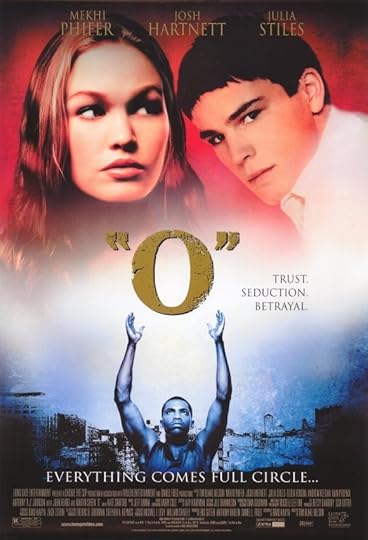
Isn't this reason enough to tread carefully on Othello's sacred ground?!
Okay, okay, this is a fucking mess.... I need to stop! I didn't hate it - really, I didn't - but I was left hallow because it takes a very special writer/circumstance to invest me in a situation I already know the outcome of and Galland didn't accomplish that here.

September 6, 2017
This one is definitely one of the best novels I've read this year. If anyone had told me I would stoop to reading a re-hashing of Othello, I would've laughed at their face. But I did, and it was fantastic. Galland writes beautifully and confidently, never trying to "improve" on Shakespeare, but giving more "meat" and facets to the characters, giving them a stronger and richer background and psychological motives, filling in gaps in their stories and making the whole thing come alive with colors, smells and texture. She is a masterful storyteller, keeping you at the edge of your seat the whole time, even though you know exactly how everything ends. Absolutely first-rate novel, don't miss this one because of preconceptions.

May 2, 2012
They called me “honest Iago” from an early age, but in Venice, this is not a compliment. It is rebuke. One does not prosper by honesty.
Othello doesn’t end well. If you are at all familiar with Shakespeare’s tragedies, you know as much. Othello is a tale of jealousy and ambition, love and passion, deception and manipulation. However, one of the most disturbing aspects of the play is Iago. Good, honest Iago. Othello’s right hand man who, when passed over for lieutenancy, determines to ruin the life of the man who has replaced him and the man who has taken his place. For someone who is called “honest” no less than 15 times over the course of the play, his actions seem a bit extreme and inexplicable.
So what does Nicole Galland bring to the story? Iago.
In a society that values artifice, Iago is a bright spot. As a young boy, stealing a legendary egg from a legendary hen, Iago and his best friend Roderigo get caught by a wealthy, influential man. When asked to explain his behavior, Iago’s honesty disarms the man and his friends. They do not expect honesty, and Iago surprises and amuses them, and he learns that though he may not be a true Venetian, he can beguile those who know him and many who do not.
Young Iago knows his place in Venetian society. His father is a silk merchant, and the family is wealthy; however, wealth alone does not bring status in Venice. His older brother will inherit the business, and Iago is expected to go into the military. His romantic spirit seeks the sea, but his father requires him to go into artillery, a more suitable place and one that will put the family in contact with more powerful people.
Iago is skillful and respected for his marksmanship and later, his swordplay. He is revered for his blunt truth telling, and the one time he does lie – about matching swords with a famous swordsman, Agrippa – he is intoxicated with his power, for the men around him believe even the most ludicrous claims because he is…honest Iago. But while Iago enjoys his reputation, he also mocks those who give it to him, and each return to Venice is more galling. He, a soldier, has no real place in society, while the Venetian upper class laze about, drinking and eating during Carnival. When he meets Emilia, a young woman who similarly spurns society and its requirements, Iago marries her, jealous of any man who looks her way.
His father’s ambition becomes Iago’s own, and as he climbs higher, he jealously guards his place of honor. Iago would not be welcome in the upper echelons of Venetian society because he is not a patrician. However, after meeting the Venetian general and Moor Othello and becoming his confidant, Iago finds many doors open to him. It’s intoxicating and heady, and just as his jealousy shows in his relations with his wife, so too does Iago become fiercely protective of his relationship with Othello, desiring to be his most trusted friend and colleague, Othello’s ensign, the honest Iago.
And Iago certainly stores up his untruths, so that when unleashed, they cause a horrific amount of damage, much more than the patricians or merchants of Venice of whom he is so critical. Once Iago realizes the true power he holds precisely because he is known to be so honest, he takes full advantage, understanding that his honesty has given him power over those who hold him dear.
Watching Iago’s duplicity and jealousy take hold of him is disturbing, and though if you’ve read Othello the action won’t surprise you, the change in Iago will. In case you don’t know the story of Othello, I won’t ruin it, but there is a crucial moment between Iago and Emelia at the end of the play that the novel teases out beautifully.
I, Iago is incredibly well written and researched, and Galland gives Iago the life, personality, and motivation he seems to lack in Othello, so much so that I was dreading the moment when Othello names Cassio as lieutenant and hoped, somehow, that Iago would go back to the straight and narrow and remain honest Iago in the end.
Alas, it is not to be.
Othello doesn’t end well. If you are at all familiar with Shakespeare’s tragedies, you know as much. Othello is a tale of jealousy and ambition, love and passion, deception and manipulation. However, one of the most disturbing aspects of the play is Iago. Good, honest Iago. Othello’s right hand man who, when passed over for lieutenancy, determines to ruin the life of the man who has replaced him and the man who has taken his place. For someone who is called “honest” no less than 15 times over the course of the play, his actions seem a bit extreme and inexplicable.
So what does Nicole Galland bring to the story? Iago.
In a society that values artifice, Iago is a bright spot. As a young boy, stealing a legendary egg from a legendary hen, Iago and his best friend Roderigo get caught by a wealthy, influential man. When asked to explain his behavior, Iago’s honesty disarms the man and his friends. They do not expect honesty, and Iago surprises and amuses them, and he learns that though he may not be a true Venetian, he can beguile those who know him and many who do not.
Young Iago knows his place in Venetian society. His father is a silk merchant, and the family is wealthy; however, wealth alone does not bring status in Venice. His older brother will inherit the business, and Iago is expected to go into the military. His romantic spirit seeks the sea, but his father requires him to go into artillery, a more suitable place and one that will put the family in contact with more powerful people.
Iago is skillful and respected for his marksmanship and later, his swordplay. He is revered for his blunt truth telling, and the one time he does lie – about matching swords with a famous swordsman, Agrippa – he is intoxicated with his power, for the men around him believe even the most ludicrous claims because he is…honest Iago. But while Iago enjoys his reputation, he also mocks those who give it to him, and each return to Venice is more galling. He, a soldier, has no real place in society, while the Venetian upper class laze about, drinking and eating during Carnival. When he meets Emilia, a young woman who similarly spurns society and its requirements, Iago marries her, jealous of any man who looks her way.
His father’s ambition becomes Iago’s own, and as he climbs higher, he jealously guards his place of honor. Iago would not be welcome in the upper echelons of Venetian society because he is not a patrician. However, after meeting the Venetian general and Moor Othello and becoming his confidant, Iago finds many doors open to him. It’s intoxicating and heady, and just as his jealousy shows in his relations with his wife, so too does Iago become fiercely protective of his relationship with Othello, desiring to be his most trusted friend and colleague, Othello’s ensign, the honest Iago.
And Iago certainly stores up his untruths, so that when unleashed, they cause a horrific amount of damage, much more than the patricians or merchants of Venice of whom he is so critical. Once Iago realizes the true power he holds precisely because he is known to be so honest, he takes full advantage, understanding that his honesty has given him power over those who hold him dear.
Watching Iago’s duplicity and jealousy take hold of him is disturbing, and though if you’ve read Othello the action won’t surprise you, the change in Iago will. In case you don’t know the story of Othello, I won’t ruin it, but there is a crucial moment between Iago and Emelia at the end of the play that the novel teases out beautifully.
I, Iago is incredibly well written and researched, and Galland gives Iago the life, personality, and motivation he seems to lack in Othello, so much so that I was dreading the moment when Othello names Cassio as lieutenant and hoped, somehow, that Iago would go back to the straight and narrow and remain honest Iago in the end.
Alas, it is not to be.

April 11, 2012
I, Iago, by author of The Fool’s Tale Nicole Galland, is the retelling of Othello, by William Shakespeare (whose birthday is being celebrated around the world today), from the point of view of Iago.
Iago has long been known as one of literature’s greatest villains – he even earned a spot on our the bracket for our Tournament of Villains earlier this year. Galland does her best to make the reader sympathetic to Iago. She tries to make the reader understand that there’s a reason Iago acted the way he did and battles the lifelong debate of whether or not deceiving by omission is still an actual lie.
This story starts out with Iago as a young boy. He wanted to be in the navy, but his father sent him to the artillery. In that moment, we start to see Iago turn from a bright boy into a bitter young man. Iago was known for his blatant honesty all growing up, and as he starts to grow up, he sticks to never telling an outright lie, but he constantly deceives by omission. However bitter Iago was, he excelled in the artillery. He meets Emilia at a masked ball and completely falls in love with her wit and vast knowledge before ever even seeing her natural beauty. Soon after Emilia and Iago marry, Iago meets Othello and becomes Othello’s ensign and closest friend. Or so Iago thought.
Enter Michele Cassio, an alcoholic and womanizer that manages to become Othello’s newest confidant. As soon as Iago discovers that Cassio has been sending love notes between Othello and Desdemona and that Emilia has been arranging for time spent together between them as well, Iago is overcome by his jealousy. He puts together a very intricate plot to destroy both Othello and Desdemona’s relationship and Cassio’s reputation. One of Iago’s deceits after another starts to snowball, until everything spirals completely out of Iago’s control. In the end, well, this is the retelling of a Shakespearean tragedy, so I’m sure you can guess what the big finale is if you haven’t already read Shakespeare’s play.
Within I, Iago there is a beautiful love story between Iago and Emilia. They are simply magnetic and I couldn’t put the book down when reading about them together. Emilia in this story is now one of my favorite characters I’ve ever had the pleasure of getting to know in a novel. She is smart, bold and vivacious. She is passionate about love and helps foster the love interest between Othello and Desdemona by sneaking them time together. She is devoted to her husband. Emilia is the heart and soul of this novel and she definitely steals the stage from Iago.
As for Iago, well, we all know that the road to hell is paved with good intentions. He tries to be a good friend, but in the end his jealousy and passion for being on top in the world overcomes him. I must admit that although Galland makes the reader quite sympathetic towards Iago in the end, she does not make him out to be quite the villain that Shakespeare did.
Overall, the love story between Emilia and Iago within is definitely worth the read! Thanks to the publisher, William Morrow, for sending me a free copy in exchange for an honest review.
Review originally posted at http://blog.hpb.com
Iago has long been known as one of literature’s greatest villains – he even earned a spot on our the bracket for our Tournament of Villains earlier this year. Galland does her best to make the reader sympathetic to Iago. She tries to make the reader understand that there’s a reason Iago acted the way he did and battles the lifelong debate of whether or not deceiving by omission is still an actual lie.
This story starts out with Iago as a young boy. He wanted to be in the navy, but his father sent him to the artillery. In that moment, we start to see Iago turn from a bright boy into a bitter young man. Iago was known for his blatant honesty all growing up, and as he starts to grow up, he sticks to never telling an outright lie, but he constantly deceives by omission. However bitter Iago was, he excelled in the artillery. He meets Emilia at a masked ball and completely falls in love with her wit and vast knowledge before ever even seeing her natural beauty. Soon after Emilia and Iago marry, Iago meets Othello and becomes Othello’s ensign and closest friend. Or so Iago thought.
Enter Michele Cassio, an alcoholic and womanizer that manages to become Othello’s newest confidant. As soon as Iago discovers that Cassio has been sending love notes between Othello and Desdemona and that Emilia has been arranging for time spent together between them as well, Iago is overcome by his jealousy. He puts together a very intricate plot to destroy both Othello and Desdemona’s relationship and Cassio’s reputation. One of Iago’s deceits after another starts to snowball, until everything spirals completely out of Iago’s control. In the end, well, this is the retelling of a Shakespearean tragedy, so I’m sure you can guess what the big finale is if you haven’t already read Shakespeare’s play.
Within I, Iago there is a beautiful love story between Iago and Emilia. They are simply magnetic and I couldn’t put the book down when reading about them together. Emilia in this story is now one of my favorite characters I’ve ever had the pleasure of getting to know in a novel. She is smart, bold and vivacious. She is passionate about love and helps foster the love interest between Othello and Desdemona by sneaking them time together. She is devoted to her husband. Emilia is the heart and soul of this novel and she definitely steals the stage from Iago.
As for Iago, well, we all know that the road to hell is paved with good intentions. He tries to be a good friend, but in the end his jealousy and passion for being on top in the world overcomes him. I must admit that although Galland makes the reader quite sympathetic towards Iago in the end, she does not make him out to be quite the villain that Shakespeare did.
Overall, the love story between Emilia and Iago within is definitely worth the read! Thanks to the publisher, William Morrow, for sending me a free copy in exchange for an honest review.
Review originally posted at http://blog.hpb.com

August 28, 2013
Let me start with what I liked about this book: 1) Galland obviously did her research on Venice. Anytime a novel has great historical credibility, I consider that a 'win.'
2) Iago's characterization: How creative was this?! Galland gives us an Iago who is a mixture of Othello, Desdemona, Macbeth, and Lady Macbeth. Galland's Iago is the "original" Othello--a man driven by passion and jealousy. He is as naïve as Desdemona (read the book to find out why I say this). He has all the ambition of Macbeth--he does whatever it takes to get the lieutenancy from Cassio--and all the boldness of Lady Macbeth in pursuing the positon. I love Shakespeare; therefore, I love to see his characters used creatively in other literature.
Now, I must confess, I really wanted to rate this book higher. I was hooked until the end, even though I knew how the story would end. But I just can't, for one reason: Iago's characterization. Yes, I liked Galland's creativity in making Iago more complex than just "evil incarnate". But, as I read this story, my mind kept saying over and over again, "Shakespeare's Iago has no conscience! This is not a story about the real Iago!" Galland includes a little argument at the end of the book for why she thinks Iago has more of a heart than we've ever given him credit for. Unfortunately, I just don't buy into that argument. Although Galland sticks to Shakespeare's storyline quite closely, she leaves out all the critical soliloquies from Othello that show just how evil Iago really is. As one who's read the play, heard it taught by a college professor I highly respect, and seen a few different productions of it, I just cannot, cannot, cannot accept any interpretation that allows Iago any moral justification for his actions. He's a villain--one of the best villains in all of literature--, and Shakespeare wanted him that way.
Yes, I loved Galland's creativity and writing style. But I'm too much of a Shakespeare purist to accept her Iago. :-)
2) Iago's characterization: How creative was this?! Galland gives us an Iago who is a mixture of Othello, Desdemona, Macbeth, and Lady Macbeth. Galland's Iago is the "original" Othello--a man driven by passion and jealousy. He is as naïve as Desdemona (read the book to find out why I say this). He has all the ambition of Macbeth--he does whatever it takes to get the lieutenancy from Cassio--and all the boldness of Lady Macbeth in pursuing the positon. I love Shakespeare; therefore, I love to see his characters used creatively in other literature.
Now, I must confess, I really wanted to rate this book higher. I was hooked until the end, even though I knew how the story would end. But I just can't, for one reason: Iago's characterization. Yes, I liked Galland's creativity in making Iago more complex than just "evil incarnate". But, as I read this story, my mind kept saying over and over again, "Shakespeare's Iago has no conscience! This is not a story about the real Iago!" Galland includes a little argument at the end of the book for why she thinks Iago has more of a heart than we've ever given him credit for. Unfortunately, I just don't buy into that argument. Although Galland sticks to Shakespeare's storyline quite closely, she leaves out all the critical soliloquies from Othello that show just how evil Iago really is. As one who's read the play, heard it taught by a college professor I highly respect, and seen a few different productions of it, I just cannot, cannot, cannot accept any interpretation that allows Iago any moral justification for his actions. He's a villain--one of the best villains in all of literature--, and Shakespeare wanted him that way.
Yes, I loved Galland's creativity and writing style. But I'm too much of a Shakespeare purist to accept her Iago. :-)

February 2, 2013
“I am honest Iago, and I ask you: might not you be dishonest with yourself?”
--I, Iago by Nicole Galland
I, Iago is a contemporary rendition of the tragic Shakespearean play Othello. I, Iago was written in the first-person through the perspective of the great “honest Iago.” In summary, the character Iago is the antagonist in the play Othello whose deception leads to the tragedy’s conclusion. Interestingly, readers have admired Iago’s mischievous antics for hundreds of years, because Shakespeare’s universal characteristic of the self-proclaimed honest Iago portrays a glimpse into every man’s true conscious.
In other words, every man endures injustices everyday. The injustices may range from office politics to being passed over for promotion to someone stealing a handkerchief. Within every injustice a man feels a need to rectify that injustice with a slightly harsher form of punishment. In essence, a man wants to seek revenge. In the end, Iago proves to be that man that every man wish we could be.
Iago is a man of action. For example, the Moor of Venice promoted the inexperienced Michele Cassio to lieutenant over the battled proven Iago. Feeling sympathetic for Iago being passed-up for promotion, the reader starts to approve of his acts of deception and deceit in order to avenge the injustice.
In the story, Iago’s wife, Emilia, and other patrician thought Iago was the logical man for the job. This reigns so true in life. Everyday people are wrongfully passed-up for promotions. And each and everyday those thoughts of revenge conjure in one’s conscious to seek revenge upon the boss for promoting the ass-kissing new guy over the experience and reliable older guy. Interestingly, it’s fear of failing that prevent one from seeking revenge.
Iago’s unquestionable confidence is what the reader admires. Even though Iago plot to gain the lieutenancy failed and everyone dies in the end, he still went for it. Where as, the average man would be crippled by fear. Emerson puts it into perspective: “we all live in quite desperation.” Honest Iago was a man of action as well as a thinking man. In truth, Iago was the whole man. He had it all except, ironically, honesty. Introspectively, the average man whom doesn’t act upon his thoughts is in truth not honest. The question arises, what would be a more appealing life? Living a short life of action and dishonesty or living a long life of quiet desperation?
Every man must ask himself the same question Iago ask at the end of the novel, “am I honest with myself?” Iago was honest with himself, but dishonest with everyone else. Where as, people tend to be dishonest with themself but seemingly honest with other. Fascinating is the character of Iago, because Iago portrays the true character of all human beings, hence why Iago is honest.
--I, Iago by Nicole Galland
I, Iago is a contemporary rendition of the tragic Shakespearean play Othello. I, Iago was written in the first-person through the perspective of the great “honest Iago.” In summary, the character Iago is the antagonist in the play Othello whose deception leads to the tragedy’s conclusion. Interestingly, readers have admired Iago’s mischievous antics for hundreds of years, because Shakespeare’s universal characteristic of the self-proclaimed honest Iago portrays a glimpse into every man’s true conscious.
In other words, every man endures injustices everyday. The injustices may range from office politics to being passed over for promotion to someone stealing a handkerchief. Within every injustice a man feels a need to rectify that injustice with a slightly harsher form of punishment. In essence, a man wants to seek revenge. In the end, Iago proves to be that man that every man wish we could be.
Iago is a man of action. For example, the Moor of Venice promoted the inexperienced Michele Cassio to lieutenant over the battled proven Iago. Feeling sympathetic for Iago being passed-up for promotion, the reader starts to approve of his acts of deception and deceit in order to avenge the injustice.
In the story, Iago’s wife, Emilia, and other patrician thought Iago was the logical man for the job. This reigns so true in life. Everyday people are wrongfully passed-up for promotions. And each and everyday those thoughts of revenge conjure in one’s conscious to seek revenge upon the boss for promoting the ass-kissing new guy over the experience and reliable older guy. Interestingly, it’s fear of failing that prevent one from seeking revenge.
Iago’s unquestionable confidence is what the reader admires. Even though Iago plot to gain the lieutenancy failed and everyone dies in the end, he still went for it. Where as, the average man would be crippled by fear. Emerson puts it into perspective: “we all live in quite desperation.” Honest Iago was a man of action as well as a thinking man. In truth, Iago was the whole man. He had it all except, ironically, honesty. Introspectively, the average man whom doesn’t act upon his thoughts is in truth not honest. The question arises, what would be a more appealing life? Living a short life of action and dishonesty or living a long life of quiet desperation?
Every man must ask himself the same question Iago ask at the end of the novel, “am I honest with myself?” Iago was honest with himself, but dishonest with everyone else. Where as, people tend to be dishonest with themself but seemingly honest with other. Fascinating is the character of Iago, because Iago portrays the true character of all human beings, hence why Iago is honest.

April 12, 2012
All you need to know about this book is that it's Othello from Iago's perspective.
Iago is one of my two favorite Shakespearean villains (the other being Lady Macbeth, and Iago wins because he doesn't go crazy. In fact, he's basically like, "Yeah. I engineered ALL OF THIS and I will not tell you why.") and so it was very interesting to read a book from his perspective.
Although it starts with his childhood, the book doesn't really get going until he meets and falls in love with Emilia. And, of course, he meets Othello.
There's a lot of dramatic irony in this book (my personal favorite is when Othello tells Iago he isn't a jealous man) but I don't think you necessarily need to have read Othello to appreciate this. (I haven't read Othello since high school, and I enjoyed this book a great deal. It probably helped that I only remembered the barest outline of the play, because it wasn't like I was expecting things to happen*, so I could just appreciate the book at its own pace.
It was incredibly interesting watching Iago get increasingly jealous and paranoid that his position as Othello's best friend and confidante was being usurped (as well as getting increasingly sure that Othello and Emilia were closer than they should be), especially after Cassio arrived. Interesting but also upsetting, because obviously it also became increasingly obvious (even, I'm sure, to people unfamiliar with the play) that nothing good could come of a paranoid Iago.
I'm sure Othello fans will enjoy I, Iago.
* = beyond "And then they died." And I don't consider that a spoiler because it's based on a Shakespearean tragedy, and you know what happens in Shakespearean tragedies? They die. :)
Iago is one of my two favorite Shakespearean villains (the other being Lady Macbeth, and Iago wins because he doesn't go crazy. In fact, he's basically like, "Yeah. I engineered ALL OF THIS and I will not tell you why.") and so it was very interesting to read a book from his perspective.
Although it starts with his childhood, the book doesn't really get going until he meets and falls in love with Emilia. And, of course, he meets Othello.
There's a lot of dramatic irony in this book (my personal favorite is when Othello tells Iago he isn't a jealous man) but I don't think you necessarily need to have read Othello to appreciate this. (I haven't read Othello since high school, and I enjoyed this book a great deal. It probably helped that I only remembered the barest outline of the play, because it wasn't like I was expecting things to happen*, so I could just appreciate the book at its own pace.
It was incredibly interesting watching Iago get increasingly jealous and paranoid that his position as Othello's best friend and confidante was being usurped (as well as getting increasingly sure that Othello and Emilia were closer than they should be), especially after Cassio arrived. Interesting but also upsetting, because obviously it also became increasingly obvious (even, I'm sure, to people unfamiliar with the play) that nothing good could come of a paranoid Iago.
I'm sure Othello fans will enjoy I, Iago.
* = beyond "And then they died." And I don't consider that a spoiler because it's based on a Shakespearean tragedy, and you know what happens in Shakespearean tragedies? They die. :)

October 4, 2012
This book bored me to death - I just so didn't care about anyone, and it was all so predictable. Stick with Shakespeare

December 3, 2017
I picked this up after reading her collaboration with Neal Stephenson (The Rise and Fall off D.O.D.O, which I loved). it's a novelization of Shakespeare's Othello, written from Iago's point of view in the first person. Her writing goes down easy -- it's generally incisive and fast-moving at the same time.
The first half or so of the book, before the events of the play, is enjoyable on its own as historical fiction set in Renaissance Venice. I completely bought her take on Iago's childhood and family, and on what life in Venice might have been like. Emilia is a great character, and their courtship is delightful. I found the second half slightly less effective, possibly because of course I knew where it was going and possibly in part because I was distracted by the lines of dialogue that paraphrased Shakespeare directly.
I have mixed feelings about her overall take on Iago. She has him justifying his actions to himself almost until the very end; he convinces himself he's the good guy, doing the right thing. This usually works, but sometimes it feels like too much of a stretch. Also, though, it sidesteps any overt examination of racism as part of Iago's motivation, and that felt to me like at best a missed opportunity and possibly a real disservice to the play and the story.
Still, there's a lot to like here. It certainly brings Shakespeare's characters and story to life in more detail than a stage production can do, and her takes on Cassio and Roderigo and the others are convincing. I'll be reading more of her books for sure.
The first half or so of the book, before the events of the play, is enjoyable on its own as historical fiction set in Renaissance Venice. I completely bought her take on Iago's childhood and family, and on what life in Venice might have been like. Emilia is a great character, and their courtship is delightful. I found the second half slightly less effective, possibly because of course I knew where it was going and possibly in part because I was distracted by the lines of dialogue that paraphrased Shakespeare directly.
I have mixed feelings about her overall take on Iago. She has him justifying his actions to himself almost until the very end; he convinces himself he's the good guy, doing the right thing. This usually works, but sometimes it feels like too much of a stretch. Also, though, it sidesteps any overt examination of racism as part of Iago's motivation, and that felt to me like at best a missed opportunity and possibly a real disservice to the play and the story.
Still, there's a lot to like here. It certainly brings Shakespeare's characters and story to life in more detail than a stage production can do, and her takes on Cassio and Roderigo and the others are convincing. I'll be reading more of her books for sure.

November 29, 2023
AUDIO. While you can enjoy this novel on its own, so much is lost and missing if you're not familiar with (at least) the plot of Othello, and even then...meh, you gotta have met the irrepressible Iago. I'd suggest watching a film version of the play; the 1981 with Jenny Aguilar (I believe William Marshall played an extraordinary Othello, and the Iago actor played my favorite version of Iago, and that's saying a lot). Anyway, the 1981 is my favorite version, but there are others available for free. As a result, I thoroughly enjoyed this delightfully wicked romp, which was completely elevated by an excellent narrator. Well done. My American ear needed to slow the audio pace to 90% but that was fine. Highly recommended.

January 6, 2019
Ruthless ambition that leads to disaster. The author is Very committed to complete disaster and ruin in this take on Othello from Iago’s point of view. Who’s the most corrupt? Hard to say in this version based on Shakespeare, a ruthless creator of tragedy. Even true love can’t save these men from their fate. I have not read the play, I think I’ll have my retired English teacher dad tell it to me. He likes to retell stories. Maybe it’ll be more bearable. Kudos to the author who did the story justice for the modern reader. I had a feeling of dread in my belly the last 100 pages!

April 11, 2024
“I stabbed my oldest friend straight through the heart with his own blade…I had not just murdered my oldest friend…I had not just murdered my oldest friend…I had not just murdered my oldest friend. You cannot murder a dead man.”
never read othello so i have NO idea how this compares to the source material but i liked it :) watching iago slowly devolve and become fucking insane and his ego explode was v entertaining highly recommend <3
never read othello so i have NO idea how this compares to the source material but i liked it :) watching iago slowly devolve and become fucking insane and his ego explode was v entertaining highly recommend <3

May 19, 2025
It's been a long time since I read Othello, so now I clearly have to go back and read the original. However, I do remember Shakespeare's Iago as such an iconic villain. This backstory/POV for him was intriguing. I liked, despite the insta-love, the relationship between Iago and his wife and how that humanized him. The spiraling at the end of the book was well done, and I enjoyed the book a lot.

November 2, 2020
An excellent retelling of Othello told from Iago's point of view. We get the full backstory on the mysterious Iago. In Othello, not much is said about his motivation or what led him to be so spiteful and full of vengeance. The author creates a likeable character in the beginning before it all goes downhill. Definitely recommend.

August 23, 2025
I am a big fan of stories being told from a different perspective. Galland does a terrific job giving the back story of one of Shakespeare;s greatest villains: Iago. Fallen from grace, overcome with a need for revenge, Iago became a monster consumed with a sick hatred. The novel expands on all that Shakespeare had set up in his play. This is a gripping tale, artfully told. Highly recommended.

June 19, 2024
I really liked this take on Iago and the play Othello in general. The research into life in historical Venice was really well done, and it fleshed out some characters from the play in interesting ways.

April 13, 2014
Having finished this book, I'm sort of overwhelmed with emotion. Othello has always been one of my favorite plays -- it's fascinating to explore and analyze and discuss, and the potential for character history and background is endless. I, Iago explores one potential history for arguably the most famous character of this Shakespearean drama, Iago. It's a rich history, incredibly well-written and interesting. This novel is a war story on several different levels, but it's also -- as the author acknowledges in the endnotes on why the novel was written -- a love story.
Despite my numerous conversations about Othello, it never occurred to me to question whether Iago loves his wife, Emilia. Having now read this book, this gaping hole in my analysis of the play is really apparent to me. I agree with Galland -- I think Iago does love his wife, which makes his killing her in the final scene that much more heartbreaking and terrible. Throughout the novel, as he acknowledges when she realizes what he's done, she's the only person who fully, 100 percent understands him. She's also the only person that Iago is completely invested in. At the end of the day, there is no one more important to Iago than his wife. That's heartbreaking. It's also devastating, given the end of this play, and it paints his actions in an entirely new light.
What's most interesting about this exploration of Iago's history is the fact that he honestly believes himself to be true, to be acting for the greater good and behaving on a plane of moral righteousness that cannot possibly be condemned, if only he's given the chance to explain his reasoning. To call Iago Honest is not something I ever would have thought to do prior to reading this novel, but the way Galland writes his character makes the description fit in an unexpected way. Iago's treachery lies mostly in the fact that he's so blunt, so willing to tell anyone and everyone exactly what he thinks. I don't know that he necessarily spirals out of control when Cassio is promoted over him, but his behavior does take a twist. Iago is a man of ambition and in many ways, has always been, even as a child pulling pranks with the help of Roderigo. However, as Galland explores, this desire for advancement doesn't make him behave with true malice until rather late in his life and career.
Anyone who's read or discussed Othello knows the ending of this play, and it is a gruesome one. But I found myself forgetting about the terrible eventualities of the script as I read I, Iago. I was swept up in the characters and their histories and their actions, and that escape was really wonderful. This is a book I'll definitely be rereading, though probably not any time soon. As much as I love this story, it hurts like hell to read, so I can only invest myself in it every once in a while.
Despite my numerous conversations about Othello, it never occurred to me to question whether Iago loves his wife, Emilia. Having now read this book, this gaping hole in my analysis of the play is really apparent to me. I agree with Galland -- I think Iago does love his wife, which makes his killing her in the final scene that much more heartbreaking and terrible. Throughout the novel, as he acknowledges when she realizes what he's done, she's the only person who fully, 100 percent understands him. She's also the only person that Iago is completely invested in. At the end of the day, there is no one more important to Iago than his wife. That's heartbreaking. It's also devastating, given the end of this play, and it paints his actions in an entirely new light.
What's most interesting about this exploration of Iago's history is the fact that he honestly believes himself to be true, to be acting for the greater good and behaving on a plane of moral righteousness that cannot possibly be condemned, if only he's given the chance to explain his reasoning. To call Iago Honest is not something I ever would have thought to do prior to reading this novel, but the way Galland writes his character makes the description fit in an unexpected way. Iago's treachery lies mostly in the fact that he's so blunt, so willing to tell anyone and everyone exactly what he thinks. I don't know that he necessarily spirals out of control when Cassio is promoted over him, but his behavior does take a twist. Iago is a man of ambition and in many ways, has always been, even as a child pulling pranks with the help of Roderigo. However, as Galland explores, this desire for advancement doesn't make him behave with true malice until rather late in his life and career.
Anyone who's read or discussed Othello knows the ending of this play, and it is a gruesome one. But I found myself forgetting about the terrible eventualities of the script as I read I, Iago. I was swept up in the characters and their histories and their actions, and that escape was really wonderful. This is a book I'll definitely be rereading, though probably not any time soon. As much as I love this story, it hurts like hell to read, so I can only invest myself in it every once in a while.

March 26, 2012
I once saw a production of Othello where the director took the artistic license to have Othello kill Iago after Iago’s lines end and before Othello kills himself. As more fake blood spluttered onto the stage (and there had been a lot of that in this particular production) I had a jolt of heathen, bloodthirsty, vicarious pleasure. Good! my mind shouted out to see the villain get what he deserves.
At the end of this book I was so very profoundly sorry for Iago.
Galland takes the character of Iago, the villains villain of Western Literature, and makes you sorry for him, makes you root for him, makes you want to see him succeed, cheering every triumph, lamenting every set back, all the while knowing this is all going to end in tears.
There might be a word for it, that painful-pleasure of seeing something good happen to someone you know has been dictated by the Fates to ultimately come to a bad end. There might be a word for it in Yiddish, or Japanese, or Polish, or Swahili, or Russian, but I don’t know what it is, and can only weakly describe how happy I was when he fell in love with Emilia, knowing all the while that he was going to murder in Act III this woman he was professing to love so much in Act I.
Galland has all the charters speaking in modern English, but with a lot of Shakespeare’s phrases thrown in, both from Othello and the rest of his works. So much is borrowed from Taming of the Shrew and Much Ado at one party scene that my hopes were briefly raised that we were going to have a crossover (note to self: if does not exist yet, write it) but sadly, no, all we get is the play’s dramatis persona, with no extras wandering in from other plays.
The story is told from Iago’s point of view, and gives you every bit of motivation and character development you would ever want to see with his character. However, the setting did not pop for me. Venice is a character unto herself, and I don’t think Galland did it enough justice – it didn’t seem real enough, either in a real historical sense or even in the Venice-that-never-was-but-always-will-be that Shakespeare gave to his un-researched place settings.
Still, an excellent re-write of one of the most fascinating antagonists to every walk on stage.
It will give you a lot to think about the word “honest.”

April 10, 2012
I received this book at no cost through Goodreads Giveaway.
I was excited to read this book because I love period fiction. I tried to read it without regards to Othello (the play) to see how it would stand on its own. I think it is a very good read.
We meet Iago when he is fifteen and on the verge of becoming a man. Because his brother died in the military from a self-inflicted wound, Iago's father decides that Iago will join the artillery and help redeem the family name. Iago's parents do not exude warmth at all; the father is consumed with the silk business and it seems as though the mother is on the constant prowl for paramours.
Even at this young age, Iago is a peculiarity in Venice and does not lie. In Venice, it is understood that lying is vital to attaining status and success. However, we already see hints that Iago may not lie outright, but he does deceive by omission. And this, to me, is the theme of the book: is lying by omission any different than lying on purpose when both serve to deceive?
Time and time again, we watch Iago deceive, bend, thwart and ultimately destroy by not telling the complete truth. It is an engaging trait in his youth, but as he ages and becomes more adept and the consequences of his lying by omission of the entire truth become more dire, it is no longer engaging but alarming.
Trying to keep in mind Iago's relative youth, we watch his actions and feelings shape his future and those around him. He is easily consumed with jealousy and rage and seems to lack true remorse. It is so easy for him to watch chaos ensue when someone only has partial information and comes to an incorrect conclusion about a situation. Iago delights in the often disasterous consequences and feels that since he did not lie, he is not liable for any results.
The story builds at a pleasant pace until the end where it races to its frenetic conclusion. Even so, it matches the speed at which Iago's (and my) heart must be racing as he desperately tries to salvage his grandiose plan. At the end, everyone that he cared for and everyone that cared for him is destroyed by his inability or refusal to lie outright.
This was a thoroughly enjoyable read and I did not feel like it dragged or was overly rushed. It was written in a casually elegant manner which made it very easy to read and understand.
I was excited to read this book because I love period fiction. I tried to read it without regards to Othello (the play) to see how it would stand on its own. I think it is a very good read.
We meet Iago when he is fifteen and on the verge of becoming a man. Because his brother died in the military from a self-inflicted wound, Iago's father decides that Iago will join the artillery and help redeem the family name. Iago's parents do not exude warmth at all; the father is consumed with the silk business and it seems as though the mother is on the constant prowl for paramours.
Even at this young age, Iago is a peculiarity in Venice and does not lie. In Venice, it is understood that lying is vital to attaining status and success. However, we already see hints that Iago may not lie outright, but he does deceive by omission. And this, to me, is the theme of the book: is lying by omission any different than lying on purpose when both serve to deceive?
Time and time again, we watch Iago deceive, bend, thwart and ultimately destroy by not telling the complete truth. It is an engaging trait in his youth, but as he ages and becomes more adept and the consequences of his lying by omission of the entire truth become more dire, it is no longer engaging but alarming.
Trying to keep in mind Iago's relative youth, we watch his actions and feelings shape his future and those around him. He is easily consumed with jealousy and rage and seems to lack true remorse. It is so easy for him to watch chaos ensue when someone only has partial information and comes to an incorrect conclusion about a situation. Iago delights in the often disasterous consequences and feels that since he did not lie, he is not liable for any results.
The story builds at a pleasant pace until the end where it races to its frenetic conclusion. Even so, it matches the speed at which Iago's (and my) heart must be racing as he desperately tries to salvage his grandiose plan. At the end, everyone that he cared for and everyone that cared for him is destroyed by his inability or refusal to lie outright.
This was a thoroughly enjoyable read and I did not feel like it dragged or was overly rushed. It was written in a casually elegant manner which made it very easy to read and understand.

May 17, 2012
Well, this definitely will be included in my top reads of 2012! I was a little concerned over the redundancy of this after having recently read Iago by David Snodin back in December, but, other than the common source for the story, the two are completely different. Galland's version is told from the point of view of Iago himself, tracing his childhood and adult experiences in the military up to his infamous plot on Cyprus. Along the way, Galland throws in a great deal of information on Venetian society, particularly its idiosyncrasies and the general foppish nature of its higher echelon.
The cast of characters proved to be quite unexpected. Iago begins as a fairly likable character, sharing his sarcastic reflections upon higher society in a generally humorous manner. I never expected to laugh while reading a retelling of a tragedy! Iago's wife, Emilia, likewise proves an interesting and charming character, as do Othello and Desdemona. I was really enjoying reading about their lives in Venice and in the military, the developing bond of deep friendship between Othello and Iago, and the relationships between each couple. Too bad the whole tragedy part of Othello had to begin developing about halfway through...
The biggest shame about the book? As with Shakespeare's play, Cassio is the only main character to survive - and he's the one no one likes. Cassio is a complete fop, while the other characters are likable and engaging. Oh, and doesn't Cassio get appointed governor at the end of Othello? What an ironic laugh!
The other great things about Galland's novel are her writing and her development of Iago's character. Galland has a truly excellent writing style, and she cohesively weaves together the difficult plot structure so that all of its developments make perfect sense and never seem out of place. She makes out Iago not as a villain, but as someone whose personal beliefs and aspirations cloud his mind until the results of his actions spiral out of his control. The shift from likable character to "villain" is fluid and expertly developed, making this one of the most superb retellings of a classic tale that I've ever had the good fortune to read.
Disclaimer: I received my copy of this book from the First Look program in return for an honest review.
The cast of characters proved to be quite unexpected. Iago begins as a fairly likable character, sharing his sarcastic reflections upon higher society in a generally humorous manner. I never expected to laugh while reading a retelling of a tragedy! Iago's wife, Emilia, likewise proves an interesting and charming character, as do Othello and Desdemona. I was really enjoying reading about their lives in Venice and in the military, the developing bond of deep friendship between Othello and Iago, and the relationships between each couple. Too bad the whole tragedy part of Othello had to begin developing about halfway through...
The biggest shame about the book? As with Shakespeare's play, Cassio is the only main character to survive - and he's the one no one likes. Cassio is a complete fop, while the other characters are likable and engaging. Oh, and doesn't Cassio get appointed governor at the end of Othello? What an ironic laugh!
The other great things about Galland's novel are her writing and her development of Iago's character. Galland has a truly excellent writing style, and she cohesively weaves together the difficult plot structure so that all of its developments make perfect sense and never seem out of place. She makes out Iago not as a villain, but as someone whose personal beliefs and aspirations cloud his mind until the results of his actions spiral out of his control. The shift from likable character to "villain" is fluid and expertly developed, making this one of the most superb retellings of a classic tale that I've ever had the good fortune to read.
Disclaimer: I received my copy of this book from the First Look program in return for an honest review.
This entire review has been hidden because of spoilers.

November 25, 2013
I enjoyed this one a lot (at least until close to the end). Galland set out to explore one of the great unanswered questions in Shakespeare: how did Iago get to be the way he is? She gives it to us straight from the horse's mouth, so to speak, as Iago tells his own story of growing up the unappreciated youngest son of a mercantile family in Venice, where his congenital honesty is considered more liability than virtue. The no-nonsense life of a soldier suits him perfectly, until Othello--his beloved general and confidant--has his head turned by that pesky Desdemona and makes the mistake of promoting that foppish Cassio to the lieutenancy that he (Iago) so richly deserves. Along with the compelling story and narrator, I enjoyed the richness of the historical detail (and the many Shakespeare references deftly dropped in by the author). The last sixty pages or so, though, lost a lot of steam. At that point, the bloody events are quite familiar from the play, of course. But rather distractingly, the narrator keeps stopping to explain (indeed to protest far, far too much) how he really didn't mean for things to get as out of hand as they did. Having taken us into the mind of "honest Iago" from his boyhood, I wish Galland had trusted her readers enough not to tell us (over and over) how he didn't quite intend all the death and destruction he caused and never understood how easily he could deceive. Still, I'm glad I read this one and will be reading another of hers soon.

March 24, 2012
I found Nicole Galland’s novel a compelling read from start to finish. The story is told from the main character Iago’s perspective and gives his account of what lead to the tragic events we know from Shakespeare’s play Othello. Ms. Galland richly describes Venetian culture and society. I felt drawn in by the descriptions of day to day life and the parties that Iago was loath to attend as a man who hated hiding behind masks both figuratively and literally as was the custom of the time. Yet this is where he meets his beautiful and intelligent wife Emilia and the charismatic Othello, both of whom are intricately woven into the rich tapestry of love, desire, jealousy, and ambition.
Through Iago’s eyes, we can see the unintended consequences of a plan set into motion and rationalize the how and why of it. Iago is the villain in Shakespeare play, but Nicole Galland gives us an opportunity to examine the actions that lead to the events and put ourselves into the character’s mind. He may not be so singularly evil after all, and the author’s layered characterization evokes the reader’s empathy.
I would recommend this story to anyone who enjoys historical fiction or those who appreciate Shakespeare, but are not necessarily purists when it comes to the Bard of Avon. I thought the author did a remarkable job retelling a story by a less than sympathetic character’s point of view.
Through Iago’s eyes, we can see the unintended consequences of a plan set into motion and rationalize the how and why of it. Iago is the villain in Shakespeare play, but Nicole Galland gives us an opportunity to examine the actions that lead to the events and put ourselves into the character’s mind. He may not be so singularly evil after all, and the author’s layered characterization evokes the reader’s empathy.
I would recommend this story to anyone who enjoys historical fiction or those who appreciate Shakespeare, but are not necessarily purists when it comes to the Bard of Avon. I thought the author did a remarkable job retelling a story by a less than sympathetic character’s point of view.

January 27, 2014
I just loved this book. I read Othello back in high school but I have only the barest memory of it so I evaluated this primarily as an independent work.
Iago was a fantastically rich anti-hero. My favorite type of villainy is the type that is nuanced and understandable, where the villain believes him/herself to be acting in the right and you the audience can see why they feel this way. Iago was a seductively flawed protagonist because I could see why he took every step that he did and I even found myself temporarily accepting his rationalizations no matter how dastardly his behavior. After all, you can argue that Iago exploits the already existent weaknesses in others. His schemes rely upon the moral failings of Othello, Cassio and Roderigo to succeed. This book definitely makes you wonder why Othello is considered a tragic hero and Iago a villain. Galland gave Iago a great narrative voice. I loved the way he saw he saw and described the world and how the audience experienced Venice through Iago's eyes. Galland's prose is top notch, as is her level of psychological insight into her characters.
Nuanced characters, a gripping plot, vivid sensory detail in the descriptions. Highly, highly recommended.
Iago was a fantastically rich anti-hero. My favorite type of villainy is the type that is nuanced and understandable, where the villain believes him/herself to be acting in the right and you the audience can see why they feel this way. Iago was a seductively flawed protagonist because I could see why he took every step that he did and I even found myself temporarily accepting his rationalizations no matter how dastardly his behavior. After all, you can argue that Iago exploits the already existent weaknesses in others. His schemes rely upon the moral failings of Othello, Cassio and Roderigo to succeed. This book definitely makes you wonder why Othello is considered a tragic hero and Iago a villain. Galland gave Iago a great narrative voice. I loved the way he saw he saw and described the world and how the audience experienced Venice through Iago's eyes. Galland's prose is top notch, as is her level of psychological insight into her characters.
Nuanced characters, a gripping plot, vivid sensory detail in the descriptions. Highly, highly recommended.
June 12, 2012
In short, intriguing but ultimately disappointing.
This is the kind of story about Iago (easily my favorite Shakespeare character) that I could have seen myself wanting to write,and Galland makes a decent go of it but ultimately there are clear flaws. The prose exemplifies it: quick-witted and clear, but at times rambling and sometimes jarringly anachronistic. The same plus/minus nature plagues the plot as well: Iago's development is solid - gradual and logical, and perhaps as good a backstory as one could hope for. His descent is sudden and his rationalizations inconsistent with the character. It's a pleasantly different take from Shakespeare that lacks in execution.
A final problem: at times, it is clear that the book is written by a woman recreating the inner life of a man. Perhaps because I am male, the contrast jumps out at me, but it's pops up frequently in the book (one could say it colors much of Iago's motivation) and it created an inconsistency for me.
Recommended for Shakespeare fans (Galland's use of the occasional borrowed phrase is delightful) and a fun enough read, but not a must.
This is the kind of story about Iago (easily my favorite Shakespeare character) that I could have seen myself wanting to write,and Galland makes a decent go of it but ultimately there are clear flaws. The prose exemplifies it: quick-witted and clear, but at times rambling and sometimes jarringly anachronistic. The same plus/minus nature plagues the plot as well: Iago's development is solid - gradual and logical, and perhaps as good a backstory as one could hope for. His descent is sudden and his rationalizations inconsistent with the character. It's a pleasantly different take from Shakespeare that lacks in execution.
A final problem: at times, it is clear that the book is written by a woman recreating the inner life of a man. Perhaps because I am male, the contrast jumps out at me, but it's pops up frequently in the book (one could say it colors much of Iago's motivation) and it created an inconsistency for me.
Recommended for Shakespeare fans (Galland's use of the occasional borrowed phrase is delightful) and a fun enough read, but not a must.

August 14, 2022
Iago, within the confines of this book, is a redeemed villain. Maybe not necessarily a good person but it does expose the reasoning and also the cruelties of others around him. I really enjoyed the focus on truth and how Iago's so painfully honest that it hurts him when others lie - and how the greatest harm comes from his own lies. I thought it was compelling and fascinating, a worthy read if you already know Othello.
Does it redeem Iago from the play? I don't think so. Othello is a play so deeply about race and racism and this book barely touches on it. When I first started reading, I made a comment on " I wonder how this book will explain the racist aspect of Iago's actions " The answer? It doesn't. Iago makes a few comments about how HE isn't racist, but it doesn't feel like enough. Especially when Iago, in the book, still drops lines filled with micro (and macro) aggressions.
I would recommend it to read and maybe as a supplement to Othello, but it doesn't change my reading of Othello.
Does it redeem Iago from the play? I don't think so. Othello is a play so deeply about race and racism and this book barely touches on it. When I first started reading, I made a comment on " I wonder how this book will explain the racist aspect of Iago's actions " The answer? It doesn't. Iago makes a few comments about how HE isn't racist, but it doesn't feel like enough. Especially when Iago, in the book, still drops lines filled with micro (and macro) aggressions.
I would recommend it to read and maybe as a supplement to Othello, but it doesn't change my reading of Othello.

September 23, 2015
This book starts off painfully slow, but once you get past the beginning, it turns into a well written tale that beautifully evokes the drama and decadence of medieval Venice.
Unfortunately, the concept of the book, while intriguing at first, fell flat for me in the end. The author comes off a little desperate for the reader to see Iago as a tragic hero rather than the notorious villain he is in Shakespeare's play. She largely goes about this by beating the reader over the head with the other characters' flaws and trying to brush over the pettiness and cruelty of Iago's actions. In the end, Iago just comes off as a less potent and far more irritating villain than Shakespeare originally wrote him.
Othello is one of my favorite plays, and a big reason for that is Iago, who is easily one of the best and most disturbing villains ever written. Personally, I'd rather keep him that way and forget about the whiny, petty jerk Nicole Galland has written about here.
Unfortunately, the concept of the book, while intriguing at first, fell flat for me in the end. The author comes off a little desperate for the reader to see Iago as a tragic hero rather than the notorious villain he is in Shakespeare's play. She largely goes about this by beating the reader over the head with the other characters' flaws and trying to brush over the pettiness and cruelty of Iago's actions. In the end, Iago just comes off as a less potent and far more irritating villain than Shakespeare originally wrote him.
Othello is one of my favorite plays, and a big reason for that is Iago, who is easily one of the best and most disturbing villains ever written. Personally, I'd rather keep him that way and forget about the whiny, petty jerk Nicole Galland has written about here.
Displaying 1 - 30 of 188 reviews