In An Enemy of the People, Ibsen places his main characters, Dr. Thomas Stockman, in the role of an enlightened and persecuted minority of one confronting an ignorant, powerful majority. When the physician learns that the famous and financially successful baths in his hometown are contaminated, he insists they be shut down for expensive repairs. For his honesty, he is persecuted, ridiculed, and declared an "enemy of the people" by the townspeople, included some who have been his closest allies.First staged in 1883, An Enemy of the People remains one of the most frequently performed plays by a writer considered by many the "father of modern drama."
Works of American playwright Arthur Asher Miller include Death of a Salesman (1949), for which he won a Pulitzer Prize, and The Crucible (1953).
This essayist, a prominent figure in literature and cinema for over 61 years, composed a wide variety, such as celebrated A View from the Bridge and All My Sons, still studied and performed worldwide. Miller often in the public eye most famously refused to give evidence to the un-American activities committee of the House of Representatives, received award for drama, and married Marilyn Monroe. People at the time considered the greatest Miller.
এমনটা তো আকছার ঘটছে। সরকারের দুর্নীতিতে শামিল হচ্ছে জনগণ। কিংবা, জনগণের সেন্টিমেন্টকে তুষ্ট রাখতে, অন্যায়কে প্রশ্রয় দিচ্ছে সরকার। সরকার এবং জনগণ, ঠিক যেন চোরে চোরে মাসতুতো ভাই।
মনোবিজ্ঞানে "সোশ্যাল ইনফ্লুয়েন্স থিওরি" নামের একটা তত্ত্ব আছে যেখানে দেখানো হয়েছে, একজন মানুষ তার আশেপাশের মানুষের চিন্তাভাবনা এবং কাজকর্মের দ্বারা নিজের অজ্ঞাতেই প্রভাবিত হয়ে যায়। চলতি হাওয়াকে অগ্রাহ্য করার কাজটা মানুষের সহজাত নয়।
উদাহরণ হিসেবে বলা যায় : সাম্প্রদায়িক দাঙ্গা। দাঙ্গার সময় মানুষ হিতাহিতজ্ঞানশূন্য হয়ে যায়। দীর্ঘদিনের প্রতিবেশী, যার সঙ্গে কোনোদিন কোনও ব্যক্তিগত শত্রুতা ছিলোনা, তাকেও আক্রমণ করে। আবার সম্পূর্ণ অপরিচিত মানুষ, যাকে সে চেনেই না, তাকেও আক্রমণ করে।
ইবসেনের এই নাটকে একটা অস্বস্তিকর প্রশ্ন তুলে ধরা হয়েছে। দেশের গরিষ্ঠসংখ্যক মানুষ ("মেজরিটি") যদি সরকারের একটা অন্যায় কিংবা ক্ষতিকর কিংবা ভুল নীতিকে সমর্থন করে, তাহলে তার বিরুদ্ধে কীভাবে প্রতিবাদ করা সম্ভব?
এমনিতে তো সম্ভব নয়। ২০১৬ সালের ৮ নভেম্বর তারিখে, ভারতের ৫০০ ও ১০০০ টাকার কাগজের মুদ্রা বাতিল করার হঠকারী, অপরিকল্পিত এবং হাস্যকর সিদ্ধান্ত নিয়েছিলেন নরেন্দ্র মোদি। সেই সময় যারা এই সিদ্ধান্তের বিরোধিতা করেছিলেন, তাদের বলা হয়েছিলো "দেশের শত্রু"।
ঠিক যেমন ইবসেনের এই নাটকেও, একজন চিকিৎসক যখন তাঁর শহরের সাধারণ মানুষের কল্যাণের জন্যে প্রতিবাদ করতে উদ্যত হন, তখন সেই সাধারণ মানুষই তাঁকে "an enemy of the people" আখ্যা দ্যায়। তাঁর জীবন বিপর্যস্ত করে তোলে।
মানুষের দুটো রূপ। একটা রূপ— মানুষ যখন একলা। আরেকটা রূপ— মানুষ যখন গোষ্ঠীবদ্ধ। একলা মানুষ অনেক অন্যায় কাজ করতে পারেনা যেটা গোষ্ঠীবদ্ধ মানুষ একত্র হয়ে করতে পারে। গোষ্ঠীবদ্ধ মানুষের বিচারবিবেচনাবোধ থাকেনা।
রাজনৈতিক নেতারা এই বিষয়টা কাজে লাগায়। তারা প্রোপাগান্ডা তৈরি করে, শ্লোগান তৈরি করে, ছলে-বলে-কৌশলে "মেজরিটি"কে নিজের আয়ত্বে আনার চেষ্টা করে। একবার যদি সেই চেষ্টা সফল হয়, ব্যাস, তাহলেই বাজিমাত!
তখন, কোনো একক মানুষ যদি ন্যায্য কথা বলে, যদি চোখে আঙুল দিয়ে বলে - "তোমরা ভুল করছো", কিংবা " তোমাদের ভুল বোঝানো হয়েছে", মেজরিটি তাঁর জামার কলার চেপে ধমক দিয়ে বলে : "তুই ব্যাটা চুপ করে থাক! তুই দেশের শত্রু!" রাজনৈতিক নেতারা তখন আড়ালে বসে মিটিমিটি হাসে।
"The majority is never right. Never, I tell you! That's one of these lies in society that no free and intelligent man can help rebelling against. Who are the people that make up the biggest proportion of the population — the intelligent ones or the fools?"
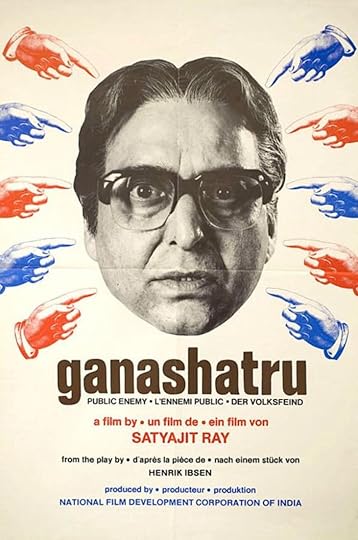
(এই নাটকের কাহিনি অবলম্বনে সত্যজিৎ রায় নির্মিত সিনেমার পোস্টার)
This great work by Henrik Ibsen has become timely again. Just think of all the corporate lies about safe sources of energy and that the GOP wants to do away with the EPA, and you have a strong analog with the mineral bath business in this story (the water is contaminated and needs an EPA to shut it down). Ibsen’s is no simplistic tirade against greed or business. He remembers the cost to communities and individuals on all sides, and gives them due weight, but he comes down on the side of justice, conscience, and dignity even as his characters loose theirs. The story is troubling because it shows that the majority can be wrong when they are ruled by fear and greed, and are subject to the manipulation of the powerful. That hits too close to home!
This is a marvelous and textured work that should be performed in every community that has a Republican in office.
I picked up Arthur Miller’s adaptation of An Enemy of the People after watching Thomas Ostermeier’s powerful stage version, which left me curious about how Ibsen’s moral fury translated through another great dramatist’s lens. Miller’s version sharpens the political edge and gives the dialogue a distinctly American urgency remaining closer to Ibsen’s original piece. It’s less about one man’s truth and more about a society’s inability to face it. Still, the heartbeat of Ibsen remains (idealism clashing with pragmatism and conscience against social comfort), proving how ahead of his time that genius playwright was.
Thankfully in our high tech modern age of information this kind of denial of science and apathy towards public health would never happen, right? RIGHT?!?!?
This play, an adaptation of a play by Henrik Ibsen, was written well enough to be compelling, but it suffered, in my opinion, from its brevity and simplicity. The characters and events, while believable in a broad sense, did not have a chance to unfold into a convincing narrative. As with any short play, the dialogue and events do not beat around the bush, and as a result, you have to suspend a certain amount of disbelief at people's unlikely actions. The play's main focus from the beginning is abuse of authority, mob mentality, and the subsequent perversion of justice. I certainly felt these things churn in my gut as I read (and tried very hard to visualize it all as a performance, since it is in fact a play), and I felt the rage as the town came down on poor Mr. Stockmann for trying to do the right thing, so I feel this play did get everything across that it wanted to. It could have used a little bit more subtlety, though, as the play felt like a blunt instrument being waved in my direction. But, you know... I can't really fault it for that, because I'm sure that's exactly what it was meant to be. And it works.
It makes sense that Miller would find it politically expedient to make the changes he did—but then again not sure he needed anything more incisive than The Crucible to make his point against McCarthy—but removing the doctor’s eugenicism not only removes the historical specificity of Ibsen’s play (while, sure, clarifying his allegorical point) but scrubs clean the complexities of the character—who can be at read as anything from ambitious, clownish, authoritarian to martyr—in the name of recasting him as a Capra-style everyman.
The doctor of a popular tourist destination has proof the water is polluted, bringing down a rain of hate from both the political establishment and the local socialist newspaper. A drama that I think would make a good movie (if not universally beloved).
Good read, feel like I’m not much into plays, but this was quite engaging and enraging; no one listened to what this man had to say, he got cut off more times than he was able to finish his thought. Also when did mayors have real power? I have never heard of an actual mayor who could control a town haha but respect for Thomas for staying and standing up for himself in the end (idk he was literally right, I’d have wanted to stay to see the people realize how the springs fucked up even if everyone hated me)
This entire review has been hidden because of spoilers.
This play was definitely not bad but it also wasn't for me. I just found it boring. The characters were uninteresting and the plot was not something I could be interested in. It was just too political and too much talking. I will say, I did find the motivations behind each character to be really interesting, and I thought it was a well done commentary about society and what we value. There are just so many bureaucratic hoops to jump through when making a change. But overall I was just bored throughout reading this one.
The language of Miller’s adaptation is more rabble-rousing and less inspiring, tailored to a mid-20th-century American audience. I’m not sure Ibsen needed the update, since he already wrote plays that had themes speaking directly to the mindset of the “American century,” despite their firmly based Victorian-era settings and directly translated language. Either version of the play has themes that still resonated with our modern condition.
The author tells more about the characters in his stage directions than he does through dialogue. This would be a great play to hand to a director and cast that may be amateur, as much of the work is already done for them. There is little room for artistic creativity, and little need for the director to have a unique vision. The sets would also leave little room to be creative... a living room, and office, etc. Pretty bland, mostly.
The story is quite preachy. Big money, big lies... business is bad and doesn't look at the needs of the people, because that would have negative impact on shareholder profits.
I loved this play. The majority isn't always right, but money trumps all sensibilities. There are so many times in history when people are complicit in allowing some wrong to continue for the sake of tradition, money, status: Jim Crow Laws, Nazi's and on and on. Even now, what about global warming and Al Gore? Only time will tell how right he may have been.
I would recommend everyone read it (it's an easy read.)
Miller presents the readers with a conflict from the start: Dr. Stockmann discovers poison in the town’s water supply but instead of being honored for his findings, he is criticized by everyone. This play demonstrates how sometimes it is easier to not accept the truth and follow others instead of being a leader among the followers.
Amazing how long ago this was written. This play could be set and staged in any era and scare an audience all too aware the plot could happen still.
I read this sometime in the mid 90s to mid 2000’s, the decade where after studying several plays in college English courses I remained interested in the form and continued reading plays that interested me, and attending productions when possible.
An enemy of the people – or, as the current president of the United States sometimes puts it in all-caps when denouncing the mainstream media, “AN ENEMY OF THE PEOPLE!” The phrase comes up so frequently in the discourse of this presidential administration that I found myself wanting to go back to the source, to turn once again to the work of the writer who first immortalized the phrase – the great Norwegian dramatist Henrik Ibsen. How did he use the phrase?
An Enemy of the People -- or En Folkefiende, as it was titled for its initial Norwegian staging in 1882 – came about because Henrik Ibsen knew what it was like to be declared an enemy of the people. His earlier play Ghosts (1881), with its frank portrayal of issues like adultery, incest, and sexually transmitted disease, shocked conservative 19th-century audiences, and predictably the selfstyled “moralists” of his time denounced Ibsen as “immoral.” But if anyone had thought that the furor over Ghosts would force Ibsen to back down and seek out safer subject matter, An Enemy of the People served notice that Ibsen would always champion the right of the individual to speak unpopular truths.
The protagonist of the play – the man who will acquire the unwelcome distinction of “enemy of the people” – is Dr. Thomas Stockmann, who serves as medical officer for Kirsten Springs, a health spa in a Norwegian resort town. As the play begins, Dr. Stockmann has received from a university laboratory confirmation of what he had already suspected – that the water serving the Kirsten Springs Health Institute is poisoned. Industrial waste from a tannery farther up the river has polluted the water; bacteria have already infected and sickened some visitors to the springs, and the situation will only worsen if nothing is done. As Dr. Stockmann grimly puts it, “The miraculous springs that cost such a fortune to build, the whole Health Institute, is a pesthole!” (p. 34)
Dr. Stockmann’s proposed solution is a painful one – “[T]he whole water system has got to be changed….The whole construction’s got to be ripped out!” (p. 36) Perhaps it is no surprise that politicians like Mayor Peter Stockmann (the doctor’s brother) react with disbelief and anger to such a proposal. Like the mayor in Jaws, Mayor Stockmann is worried about the negative publicity and economic damage that this bad news will bring to his resort town, and therefore he works to bring other townspeople around to the idea that this unwelcome information must be suppressed.
At the editorial office of the People’s Daily Messenger, Peter Stockmann denounces his brother to reform-minded editor Hovstad and his moderation-focused publisher Aslaksen, charging Dr. Stockmann with “vindictiveness” and “hatred of authority” and exclaiming that “This is the mad dream of a man who is trying to blow up our way of life! It has nothing to do with reform or science or anything else, but pure and simple destruction!” (pp. 74-75)
And Peter Stockmann, thus preventing the publication of Thomas Stockmann’s findings, effectively does his own work of poisoning only too well – poisoning the minds of the townspeople against his brother. Dr. Stockmann’s plans to give a public talk at the home of a fellow-townsman are undone when Peter Stockmann and Aslaksen turn the lecture into a town meeting, invoke their own version of Robert’s Rules of Order, and effectively silence Dr. Stockmann.
The publisher of the town newspaper, a self-styled “moderate,” eventually introduces the following resolution: “The people assembled here tonight, decent and patriotic citizens, in defense of their town and their country, declare that Doctor Stockmann, medical officer of Kirsten Springs, is an enemy of the people” (p. 97). The resolution is adopted almost unanimously.
How often has that happened? How often has one person been cast out, scapegoated, in this manner? On one side, it is declared, are “the people” – the majority who are summarily defined as “decent” and “patriotic,” and who therefore have all the more reason to do the safe thing and align themselves firmly with that majority. On the other is “the enemy” – the one who has expressed some idea that is so heterodox that he or she must be cast out, rejected.
One thinks in this connection of lawyer Atticus Finch in To Kill a Mockingbird, referring to the Jim Crow racial norms of his Alabama town as "a time-honored code of our society -- a code so severe that whoever breaks it is hounded from our midst, as unfit to live with." How often do the egalitarian ideals of a democracy run up in this manner against rigid social norms -- things that are not written in a constitution, or set down in a code of laws, but are nevertheless ruthlessly enforced by a society's majority because "it's just the right way to do things"?
In Ibsen's play, the full cost of being “an enemy of the people” quickly becomes evident to the Stockmann family. Rock-throwers break all the windows of the Stockmann home, and the glazier won’t come to fix them – public opinion, you know. It may not be their home for long, anyway; they receive a notice of eviction from the property’s landlord. Dr. Stockmann is fired from his position as medical officer for Kirsten Springs. Stockmann’s daughter Petra is fired from her job as a teacher at the town school. The children come home bloody and beaten-up, attacked by classmates at their school.
And Dr. Stockmann is repeatedly tempted to take it all back. Mayor Peter Stockmann tells him that he can have his old job back, and can “gradually” make improvements, if he’ll just say it was all a mistake. Stockmann’s father-in-law, Morten Kiil, whose family built the tannery that pollutes the water, hurries about town, spending the grandchildren’s inheritance to buy all the stock that he can in the springs – doubling down, if you will, to pressure Stockmann not to reveal the truths that would associate the Kiil family name with a poisonous industry.
Hovstad and Aslaksen meanwhile offer to use their media power and influence, their status as leaders of the opposition, to make Dr. Stockmann the hero of the town. They will get Dr. Stockmann’s political adversaries thrown out of office, and will have Dr. Stockmann made head of the springs – if he says nothing that would close the springs and compel the levying of a painful tax to rebuild them.
But Dr. Stockmann stands firm. If the only way to be a friend of the people is to buy into the corruption, Dr. Stockmann says, then “I’ve decided. I am an enemy of the people” (p. 121). The play closes on a note of uncertainty, with Dr. Stockmann saying of himself and his family that “We’re the strongest people in the world…and the strong must learn to be lonely!” (p. 125)
The version of An Enemy of the People that most Americans are likely to know is one that was translated from the Norwegian by American playwright Arthur Miller in 1950. The reasons for Miller’s interest in Ibsen’s play at that point in history are understandable; it was the time of Senator Joseph McCarthy and the House Un-American Activities Committee, when any American civilian could find him- or herself declared “an enemy of the people” by agents of the government, and regarded as “an enemy of the people” by the tuned-in, TV-watching majority of the population.
As a result of such declarations, people were fired, rendered unhirable, rejected by their families, physically attacked, forced into exile. Who cares, after all, what happens to an enemy of the people?
We live in such times now – when simply disagreeing with the leader of a leading democratic nation can get one declared “an enemy of the people,” with millions of Twitter followers ready to take up the accusation and start throwing digital and virtual rocks of their own.
Democracy, I believe, is the best form of government there is; as Winston Churchill remarked in the House of Commons in 1947, “democracy is the worst form of Government except for all those other forms that have been tried from time to time…” At the same time, democracy must not be permitted to morph into majoritarianism, where majority rule means that those who are not in the majority have no rights, not even the right to their own opinion. That message of Henrik Ibsen’s An Enemy of the People has never been more vitally important than it is today.
Now I really want to read Ibsen's original version. This play has the tell-tale signs of Arthur Miller in its phrasing and adaptation. I think a lot of the themes, and the plot, are extremely relevant even today. Science under fire, the majority against the minority despite morality, corruption of the news, and mob mentality all pooling together. I would fit this work in with Camus' The Plague in many ways where a character pursues what their purpose or beliefs are wholeheartedly. Pleased that the doctor did not cave at the end, but I do have to acknowledge the flaw of his character where he could have approached this more carefully or with other potential ways to absolve the issues. I found Peter's character irritating in his continuous implication that his brother was not proper or respectable despite being quite the honorable doctor. The doctor relying on his daughter, Petra, furthered the idea that the next generation surely will do better than the current and so on, a never ending cycle of trying our best and passing the baton.
I read this play for my English class in college and I was pleasantly surprised by the storyline. I was not looking forward to reading it as much as I’d hoped, but I did enjoy the story for the most part.
Written over 100 years ago, this story about suppressing truth mirrors recent events. In class, we discussed the Flint, Michigan Water Crisis, which is almost the exact same situation as the poisoned water crisis in the play. In my opinion, it also mirrors the state of our world today.
The story was very fast-paced, which made it difficult to keep up with the characters. Act Three bursted with new plot twists and surprises. The ending left me wanting answers.
There was quite a bit of profanity (so I blotted them all out—anyone else do that?) which was an instant turn-off for me, but aside from that, it was a decent story.
In the play, both the ruling elite and the "solid majority" promote misinformation and prejudice because doing so serves their political and economic interests. As a result, truth and scientific inquiry are marginalized, and those who advocate for them become targets of suspicion and hostility.
Stop me if you've heard this one before.
Miller's adaptation is excellent, helping to bring Ibsen's scathing social satire to a 20th (and 21st) century audience. I would love to teach this play again someday, given the chance. This is probably my favorite Ibsen plot (up there with A Doll's House). The connections that one can find between this play and to contemporary life are vast.
I found the story and plot to be the same as many others and also simply indicative of our society (granted, Ibsen did focus on realism). This may have been an important period piece at the time, but I found it rather trite and boring now. In brief, the person who speaks out against the majority (whatever majority that happens to be) stands the chance of being cast out, even if telling the truth (now we just call it cancel culture). An underlying theme which interested me more was how easily the media is swayed by its own agenda (which continues even more so today).
I didn't love this play when I saw it performed at the Guthrie a few years ago. However, something about reading a story about an unlikeable scientist who reveals a public health danger, but isn't believed because the truth would harm the town businesses feels pretty poignant right now.
The second act gets dull pretty quickly as it hammers the theme to the point of excess, but still a pretty enjoyable and quick read.