Keito, une jeune femme dessinatrice, tombe sous le charme de Niki. Cette passion semble sans grand espoir, car Niki est une femme publique, peu accessible, instable, en quête de son père.
Ebine YAMAJI (やまじえびね) is a Japanese manga artist who has created several works with a lesbian theme. These include Indigo Blue, the story of a young author discovering her sexuality, Free Soul, and Love My Life. Several of her works were serialized in the josei magazines Feel Young (published by Shodensha) and the now defunct Young You.
My third Shoujo-Ai (Girl-Love) manga of choice is written by Ebine Yamaji, a mangaka famous for her works with lesbian themes. One of them, Love My Life was even made into a live-action film in 2006. So far, I've read Blue and Double House, and both were surprisingly insightful and mediative with little to almost nothing explicit in content. I suppose that I've picked shoujo-ai titles over yuri which isn't intentional at all. I still have at least six other titles and I know some of them do have lesbian fanservice.
That being said, I'm pretty happy that the three lesbian-themed mangas I've read so far focused more on the serious issues of sexual identity and relationships for gay women. Yamaji's Free Soul is definitely the most heartfelt and invigorating manga about lesbian identity I've read as of yet. I no doubt plan on reading and reviewing her two other mentioned works. Going by the content of Free Soul alone, I'm more than happy to tackle on her other fiction then.
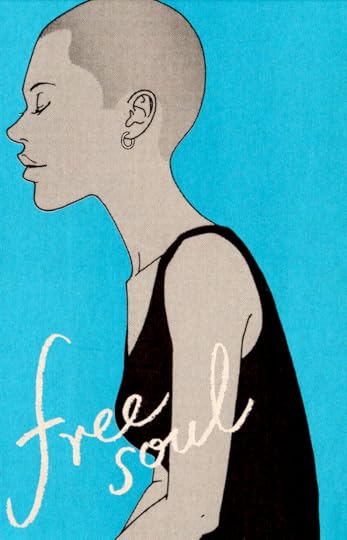
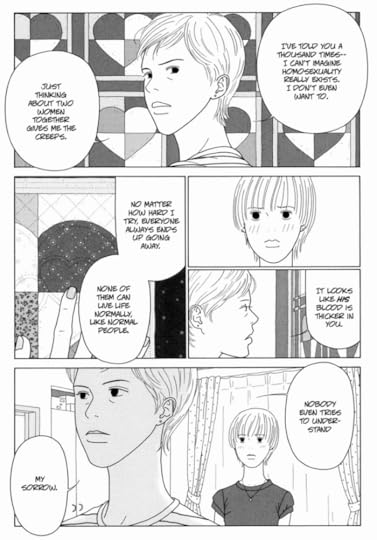
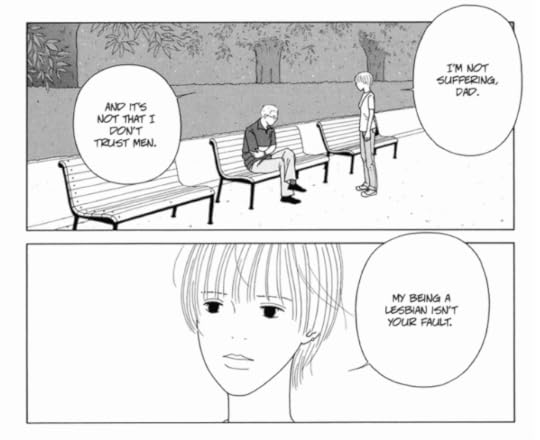
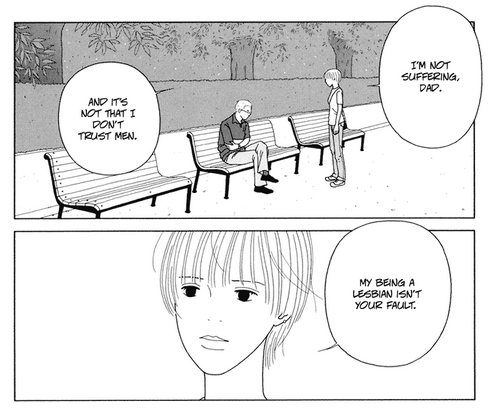
The manga is comprised of eleven chapters plus a bonus chapter and is collected into a single volume. The entire manga is two-hundred and ten pages short, so one can just spend an hour or two reading this. Trust me, it's more than worth the trouble. Free Soul tells the story of Keito, a Japanese woman in her mid-twenties who is a mangaka. She just moved out of her mother's house after her mother couldn't accept that she's gay in a fundamental level because she just couldn't picture two women being romantically together, therefore diminishing her daughter's individuality as a person. Meanwhile, her father--who has been out of the picture since her parents' divorce when she was a kid--blamed himself outwardly for his daughter being gay, thinking it was his abandonment of the family that caused her 'distrust in men'.
Both were ridiculous notions yet understandable. Keito never resented them for thinking in such narrow terms because she knew that ultimately they could never understand her struggle because it is entirely her own. Still, the basic parental rejection from both of them does wound Keito's sense of self, but throughout the manga she will learn to overcome this and embrace that she is a lesbian, and it's neither someone's fault or a crime to be ashamed of.
Out of pure luck and opportunity, Keito moves in with a veteran elderly artist (who became quite taken with her), and her assistant who is also her part-time model, a man named Sumihiko. The three of them fell into an easy, domestic dynamic as Keito continues with her part-time job at a music store, all the while planning and drawing her hopefully next published work. This published work has a protagonist named Angie, an African-American jazz singer who was also a lesbian. Each chapter of Free Soul opens with Keito contemplating on how to develop Angie's characterization, to turn her into a nuanced portrait of lesbianism and courageous individualism.
It's noteworthy that Angie's race (though not central in the flow of the story itself) still played a part in Keito's choice of heroine for her manga. Personally, I think it's Keito's subconscious associating strength to that of a black woman's, seeing that the African race has been been oppressed and persecuted for centuries. It was implicitly implied that Keito wanted Angie to carry the same baggage of her supposed racial suffering, with the added weight of being condemned by being a lesbian as well.
Angie seemed to be everything that Keito longs to be, and so she projects all the strength and insight that she never has in her real life to that of her fictional creation. While Angie was tough, brave and sensible, Keito herself was a timid woman who is slowly but surely coming to terms about her often unhealthy choices in partners, and her perception about her own gay sexuality. In writing Angie, Keito tries to rediscover pieces of her fractured soul so she can make herself whole again. But, of course, Keito only became aware of this once she met a woman who became not just her lover but fixation. Most of Keito's growth and self-worth were explored through how she dealt and coped with this intense love affair with a girl who hardly felt the same way about her. Angie anchored her through the stormy seas of that relationship, and I think Keito only made it through because Angie, in a way, is her alter ego just waiting to finally come forth and be her own person.
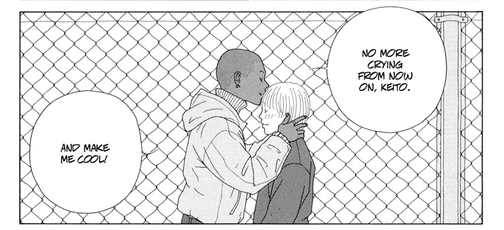
The jazz trumpet player named Niki played Keito's said love interest in this story. Over the course of the manga, I found her to be fickle, selfish and clearly damaged. She was also vibrant, exciting and--in the most shocking ways--tender and earnest. She represents that faction of people who may be a mess, but are also quite a fine mess who are beautiful and intriguing even as they spiral down to rock-bottom. Keito fell so hard for her in a way that's consuming and blind which only ties to Keito's low self-esteem and misdirected affections. Niki, on the other hand, never identified her sexuality as clear-cut, leading me to the conclusion that she must have been pansexual or simply hypersexual. She even had sexual relations with her estranged father months before she finally decided to come back to Keito and try to have a meaningful exclusive relationship together.
But I don't think Free Soul was supposed to be an affirmative love story about two unlikely people bound by kinship like Keito and Niki defeating the odds and becoming better people together as a couple. After reading the end of this manga, that didn't even occur to me at all. I honestly don't believe that their relationship will ever last or become fruitful along the way. In fact, I want to believe that Keito and Niki will just let their relationship sail until its inevitable end. Eventually, they will go their separate ways. But, for now, they are willing to try and make it work. What I believe is the core message of Free Soul is how to be in love with yourself; it reinforces the idea that a woman's identity and self-worth should be tied only to her own, of what she has to make out of it. Keito's obsession for Niki might be present, but it should not be something that will define who she is.
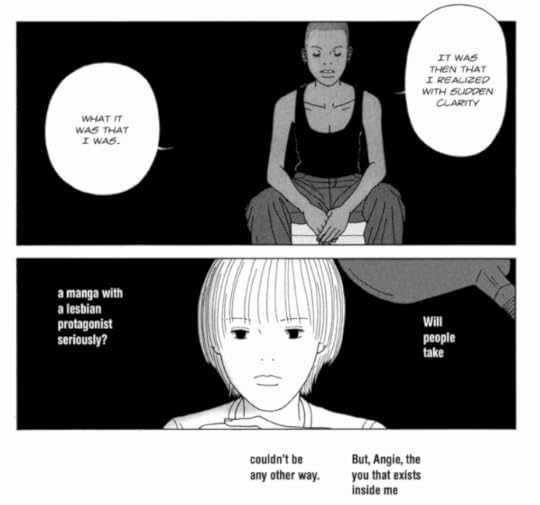
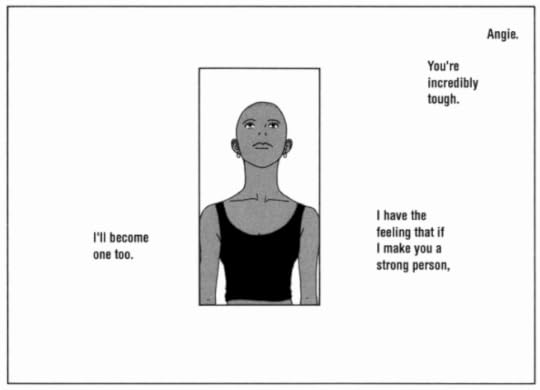
Keito had a conversation with her fictional counterpart Angie in one page of the manga nearing the end, and it established the message that this entire story imparted. For Keito, it was never about finding someone to love and accept her--it's always been about her journey towards loving and accepting herself regardless if there is someone else who could do it for her. Niki became a necessary blind spot; a test for Keito to see if she respected herself to acknowledge that not even another woman should define who she is as an individual. Sure, she and Niki did get together but that wasn't supposed to be her happily-ever-after. Keito's greatest love story must be to herself first, and writing fiction and portraying that level of individualism through her character Angie is for me the victorious end of this manga.
I think Angie said it best concerning about never losing your sense of self in relationships on this panel (as written by Keito herself):
I promote what Angie said in that last panel. I'm the kind of person who had always been more comfortable putting myself above everyone else. It's a brand of individualism that people have condemned as selfish and self-serving. For a time I myself also gave in to that narrow-minded perception that to Love One's Self purely is vain and conceited--even unhealthy. BUT IT'S NOT. People are just so afraid of what happens when there is no one else around; what the solitude and lack of company could reveal to them. They would rather throw themselves recklessly into relationships, offering their hearts to other people who may or may not even understand what they're going through, or who they truly are inside.
And then they would look at me and think I'm pitiful for always insisting I'm better off alone, equating that aloneness with loneliness and alienation. But just think about it for a moment: why can't everyone just be happy by themselves? Why believe someone else should be responsible or be the reason for your own happiness? Because humans are social creatures? Is that all we have to be in order to be happy? Relationships with other people validate us, but not to the point that we could lose our own sense of selves in them that we forget who we are and how valuable we are just by being our own person.
"It's when I'm lonely that my heart isn't bound by anything."
I sincerely believe that. Don't underestimate the power and transcendence that solitude and self-love could do. When one is free from other people's emotional demands and stressful expectations, one can also take the time to be anything--create anything--explore anything--defy anything. Reading a work like Free Soul has reaffirmed that for me. [READ IT ONLINE HERE]
This is an interesting story of a young woman who is basically trying to make it on her own as a manga artist, whose mother doesn't accept that her daughter likes girls, and how a one-night-stand turns into an obsession.
As with all of Yamaji-san's manga, I feel myself connected with all of the characters quite immediately. They all seem so fleshed out, even if they have very little dialogue, or very little actions. As with Yamaji-san's other works, this was a huge part of my coming out, but I think anyone could enjoy reading this. It has a way about it that disregards gender and focuses on situations and emotions, which is the most important part.
This is such a sweet and introspective manga about Keito, a young lesbian who's an aspiring mangaka. She and her two parents are all estranged from one another; Her mom is homophobic and disapproving, and her dad is distant and doesn't understand. Keito struggles to find sources of emotional support, but despite her pain, she is very secure in her identity:
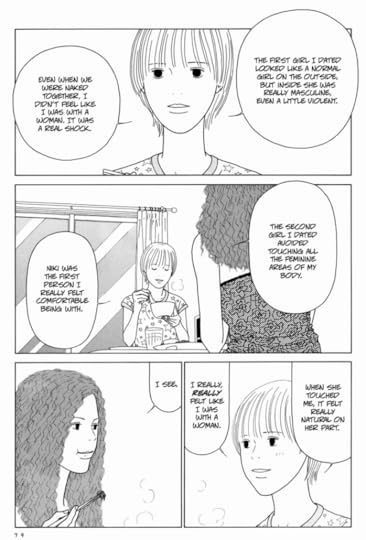
She's disturbed by the prevalence of casual sexual relationships; always the one to hold on tighter and love harder; always the one who's left behind.
What do you all think people are?
I was a bit distracted by some of the side characters; one has some weird implied incest in her life that's quietly mentioned a few times; one is semi noseless and looks creepishly similar to Michael Jackson:
But Keito and is an amazing character, as is Angie, the MC of the manga Keito is working on. As she sketches her, she draws strength from Angie, who she conceives as a bold black singer. Every chapter begins with some ruminations on Angie, or Keito's imagined interactions with her, which are very touching:
This is the best manga I've read recently; very soft and contemplative and angsty, and refreshingly not male gazey. Recommended!!
Angsty and naive but not in a very annoying way. The lovesick estranged protagonist is actually writing an even more naive manga within this one. It looks like it’ll be a gay High Fidelity, what with the classic soul inside covers, but in fact there’s almost no music nerd detail despite the record shop setting. It has no detail really - no music trivia, no drawing mechanics, no sex mechanics.
Everyone is a dumb Freudian, including leaping into bed to reify> the role?? Sudden needle-scratch happy ending?? Painfully clean panels. But I don’t mean to berate it, it’s no doubt levels above its medium.
It was mostly sweet. I especially liked the extra chapter with Angie. The main characters obsession with Niki was a bit too much sometimes. Also, what was with the random and flippant mention of Niki being incestuous with her father?
This wasn't as compelling as Indigo Blue. I enjoyed the POV character's attempts to work through her life through her manga character, but the relationship didn't quite make sense to me and, as with the last one, the ending didn't quite feel earned. The most impactful part were probably the confrontations with her explicitely homophobic mother and .
I liked the idea of the manga, but it could be much better..I got bored w some parts keep repeating (kaito keeps meeting Niki w same thing only happens not real talks), the conversations w her boss, ppl she lives w or see r so dill..she wants to find luv, but she searches for it in wrong please. .Niki wasn't a good person, I didn't like that they got together in the end.
This was a very introspective and chill read. I really liked it but I don't care for it much tho, I think I'm not feeling stories that are so dens on emotions and thinking theses days.
Oh, the second hand embarrassment was real. However, this book felt extremely realistic. I have had love similar to this. God humans are so complicated.
I was a little concerned over the main character's attitude towards her love interest. She seemed borderline obsessive, and not the healthy kind. I'm still uncertain about her mental well being because at times she seemed really manipulative.
Still, this ia a very meaningful manga. It paints the realities of MOGAI, and seriously, too. There is very little fan service and this is meant to be taken seriously.