Jump to ratings and reviews
Rate this book

Oríon

Rate this book
Através do mágico destino de sete crianças judias, deportadas pelo rei D. João II de Portugal para o arquipélago de São Tomé e Príncipe, é a aventura do homem diante da Criação que se narra aqui. Abel, contador destas histórias, regista além das suas seis crónicas de maravilha, a de Raquel, a realizadora de feitiços, a de Débora, a dona de bordel, a de Caim, o senhor da traição, a de Benjamim, o menino deus, a de Séfora, a proprietária de engenho, a de Jairo, o traficante de escravos. E em todos estes relatos o sobressalto do diálogo com o poder, igual em vários lugares e em vários tempos, a manha e a coragem de que se tece, a agrura e a exaltação que dele resultam.

200 pages, Paperback

First published February 1, 2003

1 person is currently reading
24 people want to read

About the author

Mário Cláudio

85 books33 followers
Mário Cláudio, pseudónimo de Rui Manuel Pinto Barbot Costa, nasceu no Porto a 6 de Novembro de 1941. Frequentou o curso de Direito em Lisboa, tendo-o terminado na Universidade de Coimbra. Frequentou a Universidade de Londres, graduando-se como Master of Arts. De regresso a Portugal, tem exercido funções como técnico do Museu Nacional de Literatura e como professor universitário. Ganhou o prémio APE de Romance e Novela em 1984 com a obra 'Amadeo'. É considerado um dos mais importantes autores portugueses das últimas décadas. Embora se tenha dedicado à poesia, ao teatro e ao ensaio, é no romance que Mário Cláudio mais se tem destacado. Em 2004 foi agraciado com o Prémio Fernando Pessoa. Criou um heterónimo, o poeta Tiago Veiga, hipotético bisneto de Camilo, de quem publicou em 2011 uma extensa biografia. Vencedor do Grande Prémio de Romance e Novela APE/DGLAB 2014, com a obra 'Retrato de Rapaz'.
Grande Prémio de Romance e Novela, da APE, em 2019.

Ratings & Reviews

What do you think?
Rate this book

Friends & Following

Create a free account to discover what your friends think of this book!

Community Reviews

5 stars
7 (33%)
4 stars
5 (23%)
3 stars
7 (33%)
2 stars
1 (4%)
1 star
1 (4%)
Displaying 1 - 3 of 3 reviews
Profile Image for Owlseyes .
1,807 reviews308 followers
Want to read
March 2, 2016
MC-"Quis chegar aí partindo da primeira purga maciça antijudaica em Portugal;foram mandadas para São Tomé e Príncipe milhares de crianças judias entre os três e os doze
anos"

-Abel e Caim no enredo de Oríon. Eterna metáfora do bem e do mal?

MC-Pretendo simbolizar que o grande inimigo do homem é
o próprio homem. Neste romance, a partir de um dado momento,
o grande inimigo não é o rei nem a natureza indomável da ilha para onde eram levadas as crianças judias. É o próprio homem que entra em concorrência com a sua espécie".[1]


Mario Claudio, in interview

"Caged like piriquitos", he was once caught by his own hands,
... Abel, now an old man, recalls his childhood. He came with many from Portugal, in the time of King D.João II, a time of purging from the nation of the Jews descendants. So, he's recalling that morning of April 1492 in Praça da Ribeira, by the Tagus,seagulls sounds as well as mothers'...many children came from different regions of Portugal.

"A noute tombou e mantiveram-nos naquela grande Praça da Ribeira ...enroscados debaixo de uma lua indiferente" [2]


Of that day, a special episode marks his recalls: the funeral of the little 12 year old girl--Rachel--which, under close inspection, reveals to be a kind of trick: just an attempt to escape the purge.A man got close to that girl body, from Rilhafoles ...blew in her nostrils: sneezing-Rachel came to life...and her mother cried: take me, instead.


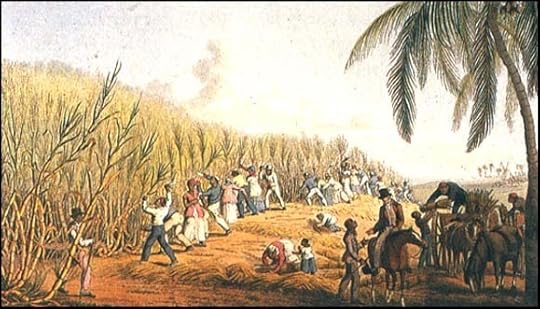
Memories of 1493, in an isle of beauty...blacks work on sugar cane...Abel held on to the Tora at nights. His tutor, a franciscan who taught him the letters, denied him calling him "father".

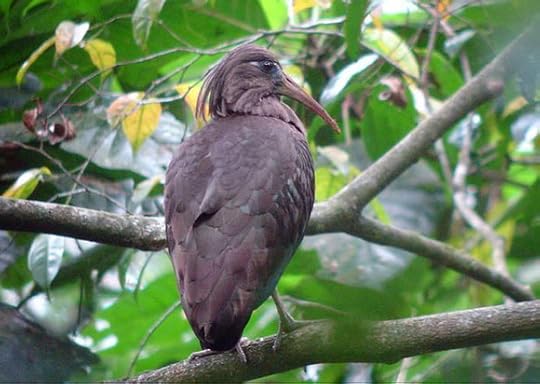
When Abel came he'd seen the beauty of birds,and their chanting...he had lice on his hair and was missing his mother. These were his first impressions, while arriving.


---
[1]MC-"I wanted to get there starting with the first massive anti-jewish purge in Portugal; to Sao Tome and Principe were sent thousands of children aged between 3 and 12 years old"

-Abel and Cain in the plot of Orion.Eternal metaphor of evil and good?

MC-"It's my intention to symbolize that the great enemy of man is man himself. In this novel, from a certain moment onwards, the great enemy is neither the king nor the untamable nature of the isle where Jewish children were taken into. It's man himself competing with his own species".

[2] "The night fell and they kept us together in that great plaza of Ribeira...curled up under an indifferent moon"
---
Further reading recommended:
- “A Forgotten Fragment of the
Diaspora: the Jews of São Tomé Island, 1492-1654”,
in The Expulsion of the Jews 1492 and After.

- “Judaic Research in the Balearic Islands and
São Tomé”, in
Jews in Places You Never Thought Of.

- “The Two Thousand Missing
Portuguese-Jewish Children”, in
Studies on the History of Portuguese Jews

-Forced Conversion and Abduction:
The Children of São Tomé”, in
Sects, Sex, and
Identity. Selected Papers of the Jewish Studies Seminar.


Profile Image for Helena Braga.
45 reviews
May 25, 2012
Este livro é cheio de cor e cheiro mas de dor e incompreensão. Os sentimentos não são compreendidos pelas personagens e os actos não efectuados com objectivos precisos. Torna-se o livro triste e confuso.
Displaying 1 - 3 of 3 reviews

Can't find what you're looking for?

Get help and learn more about the design.