

What do you think?
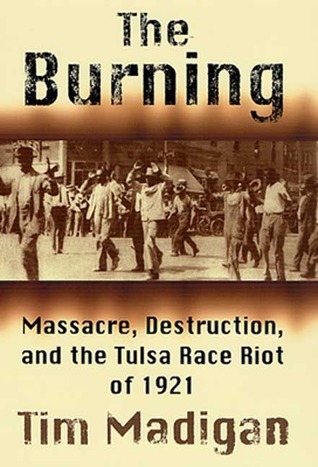
The Burning: Massacre, Destruction, and the Tulsa Race Riot of 1921
On the morning of June 1, 1921, a white mob numbering in the thousands marched across the railroad tracks dividing black from white in Tulsa, Oklahoma, and obliterated a black community then celebrated as one of America's most prosperous. 34 square blocks of Tulsa's Greenwood community, known then as the Negro Wall Street of America, were reduced to smoldering rubble.
And now, 80 years later, the death toll of what is known as the Tulsa Race Riot is more difficult to pinpoint. Conservative estimates put the number of dead at about 100 (75% of the victims are believed to have been black), but the actual number of casualties could be triple that. The Tulsa Race Riot Commission, formed two years ago to determine exactly what happened, has recommended that restitution to the historic Greenwood Community would be good public policy and do much to repair the emotional as well as physical scars of this most terrible incident in our shared past.
With chilling details, humanity, and the narrative thrust of compelling fiction, The Burning will recreate the town of Greenwood at the height of its prosperity, explore the currents of hatred, racism, and mistrust between its black residents and neighboring Tulsa's white population, narrate events leading up to and including Greenwood's annihilation, and document the subsequent silence that surrounded the tragedy.
And now, 80 years later, the death toll of what is known as the Tulsa Race Riot is more difficult to pinpoint. Conservative estimates put the number of dead at about 100 (75% of the victims are believed to have been black), but the actual number of casualties could be triple that. The Tulsa Race Riot Commission, formed two years ago to determine exactly what happened, has recommended that restitution to the historic Greenwood Community would be good public policy and do much to repair the emotional as well as physical scars of this most terrible incident in our shared past.
With chilling details, humanity, and the narrative thrust of compelling fiction, The Burning will recreate the town of Greenwood at the height of its prosperity, explore the currents of hatred, racism, and mistrust between its black residents and neighboring Tulsa's white population, narrate events leading up to and including Greenwood's annihilation, and document the subsequent silence that surrounded the tragedy.
304 pages, Hardcover
First published November 2, 2001
About the author
Tim Madigan
33 books101 followersTim wrote his first book in 1968 when he was eleven years old. Every week in the autumn of that year, he scribbled down his account of the latest University of Minnesota football game in a notebook. Sales were modest.
But a love of books, words and writing never left released him, leading from his small-town Minnesota upbringing to a career writing newspaper stories and eventually books that were more formally published and found slightly larger audiences.
After college at the University of North Dakota, Tim worked as a sportswriter at a small paper in that state. Then came the cop beat in Odessa, Texas, and feature writing at the Fort Worth Star-Telegram. By the mid-1990s, Tim had become one of the most decorated newspaper reporters in recent Texas history (three times named the state’s top reporter), while writing about everything from sick children, to serial killers, cowboy poets, to his own experiences as a husband and father.
His first book, See No Evil: Blind Devotion and Bloodshed in David Koresh’s Holy War was published in 1993, followed eight years later by The Burning: Massacre, Destruction and the Tulsa Race Riot of 1921. In its review, the New York Times called The Burning, published by St. Martins in New York, “A powerful book, a harrowing case study made all the more so by Madigan’s skillful, clear-eyed telling of it.”
Tim’s 2006 book, I’m Proud of You: My Friendship With Fred Rogers, (Gotham/Penguin) reveals his life-altering friendship with Fred Rogers, which began in 1995 when he profiled the children’s icon for the Star-Telegram. In 2012, Tim published a second edition of I’m Proud of You under his own imprint, Ubuntu Books. The book continues to sell steadily, and inspire readers around the world. Tim also tells the story of his friendship with Mister Rogers in lectures around the country.
Fred Rogers was one of the first readers of Tim’s first novel, Every Common Sight, which was published by Ubuntu in February. It is the story of Wendell Smith, a hero of the Battle of the Bulge who came home to Texas with horrible memories of the battlefield, debilitating emotional trauma, and a secret, the one thing about the war he could not confide to the love of his life. The beautiful young woman Claire had a secret of her own. After a chance meeting, the two developed an unusual friendship of haunted survivors. But would the bond heal them, or destroy them both? The book has resonated deeply with early readers.
When not writing books or newspaper stories, Tim enjoys spending time with his wife, Catherine, being a dad, playing the guitar, coaching and playing ice hockey, and backpacking in the Canadian Rockies.
But a love of books, words and writing never left released him, leading from his small-town Minnesota upbringing to a career writing newspaper stories and eventually books that were more formally published and found slightly larger audiences.
After college at the University of North Dakota, Tim worked as a sportswriter at a small paper in that state. Then came the cop beat in Odessa, Texas, and feature writing at the Fort Worth Star-Telegram. By the mid-1990s, Tim had become one of the most decorated newspaper reporters in recent Texas history (three times named the state’s top reporter), while writing about everything from sick children, to serial killers, cowboy poets, to his own experiences as a husband and father.
His first book, See No Evil: Blind Devotion and Bloodshed in David Koresh’s Holy War was published in 1993, followed eight years later by The Burning: Massacre, Destruction and the Tulsa Race Riot of 1921. In its review, the New York Times called The Burning, published by St. Martins in New York, “A powerful book, a harrowing case study made all the more so by Madigan’s skillful, clear-eyed telling of it.”
Tim’s 2006 book, I’m Proud of You: My Friendship With Fred Rogers, (Gotham/Penguin) reveals his life-altering friendship with Fred Rogers, which began in 1995 when he profiled the children’s icon for the Star-Telegram. In 2012, Tim published a second edition of I’m Proud of You under his own imprint, Ubuntu Books. The book continues to sell steadily, and inspire readers around the world. Tim also tells the story of his friendship with Mister Rogers in lectures around the country.
Fred Rogers was one of the first readers of Tim’s first novel, Every Common Sight, which was published by Ubuntu in February. It is the story of Wendell Smith, a hero of the Battle of the Bulge who came home to Texas with horrible memories of the battlefield, debilitating emotional trauma, and a secret, the one thing about the war he could not confide to the love of his life. The beautiful young woman Claire had a secret of her own. After a chance meeting, the two developed an unusual friendship of haunted survivors. But would the bond heal them, or destroy them both? The book has resonated deeply with early readers.
When not writing books or newspaper stories, Tim enjoys spending time with his wife, Catherine, being a dad, playing the guitar, coaching and playing ice hockey, and backpacking in the Canadian Rockies.
Ratings & Reviews
Friends & Following
Create a free account to discover what your friends think of this book!
Community Reviews
Displaying 1 - 30 of 523 reviews

April 17, 2020
This book is a well rendered historical account of racial violence that occurred on May 31 and June 1, 1921 in Tulsa, Oklahoma. The author first describes incidents leading up to the event while also introducing the reader to several characters who will be part of the story. Then the event itself and all its violence is described with a followup report on its aftermath and the response to it over subsequent years.
Rather than try to summarize the events in this review I've decided to simply select some excerpts from the book which I've posted below with my own introductory comments preceding each quote. If you want to read more about the event I suggest reading this Wikipedia article.
This book is filled with numerous acts of wanton disregard for life (a.k.a. murder). For this review I've decided to limit myself to this one incident:
One reason I find this story shocking is because it happened not too far from where I grew up within the lifetime of my parents.
Link to a very good NYT article:
https://www.nytimes.com/interactive/2...
Article about searching for the graves:
https://www.latimes.com/entertainment...
Here's link to Wikipedia article about the 1917 race massacre of East St Louis.
https://en.wikipedia.org/wiki/East_St...
Here's link to Wikipedia article about the 1898 race massacre of Wilmington.
https://en.wikipedia.org/wiki/Wilming...
Rather than try to summarize the events in this review I've decided to simply select some excerpts from the book which I've posted below with my own introductory comments preceding each quote. If you want to read more about the event I suggest reading this Wikipedia article.
This book is filled with numerous acts of wanton disregard for life (a.k.a. murder). For this review I've decided to limit myself to this one incident:
An old black couple refused to be displaced when the mob stormed down their street that night, so when the whites burst through their door, they found the man and his wife kneeling side by side in prayer at the foot of their bed. Each was immediately shot in the back of the head. Their home was looted and set on fire, incinerating the bodies of the couple inside. (P120)It's interesting to note that for many years nobody would talk about the event, and when it was mentioned many refused to believe it was possible. Fifty years after the event in 1971 an amateur historian decided to write a historical account of the event. He started receiving death threats when word got out about his interviewing of survivors and witnesses. Which makes one wonder, who is issuing death threats fifty years after the event? Are the mob participants who are now in their 70s and 80s making those threats? The following excerpt addresses what appeared to be a "conspiracy of silence."
Scholars and Journalists attempting to reconstruct the great burning in the decades after it happened bumped up against an almost impenetrable conspiracy of silence among Tulsa whites, one inspired by shame in some cases, in others by the lack of a statute of limitations for murder. In any event, within hours of the catastrophe, the mobsters had disappeared back into the fabric of local life, their atrocious tales to be whispered in the secrecy of the Klan meetings or bragged about in speakeasies when a mobster was overly drunk, or recounted on deathbeds when the prospect of hell finally compelled the guilty to unburden themselves. (P143)The massacre left about 10,000 blacks homeless and the black owned commercial business district in ruins. The following excerpt describes the extent of the destruction.
Thirty-five square blocks of the negro community lay almost completely in ruin, save for a number of out houses and a few isolated residences. As the whites had moved north on June 1st they put the torch to more than 1,115 negro homes,—(314 more were looted but not burned)—five hotels, thirty-one restaurants, four drug stores, eight doctor’s offices, the new Dunbar School, two dozen grocery stores, the Negro hospital, the public library, and even a dozen churches including the community’s most magnificent new edifice, Mount Zion Baptist Church. Most personal belongings of the blacks were consumed as well along with monetary savings that Greenwood families typically kept tucked away under mattresses or hidden in cupboards because no black banks existed on the north side of the tracks. (P221)The death toll will never be determined for sure because of the hasty efforts of whites to haul off the bodies and bury them in unmarked graves. The following excerpt is the book's discussion of the widely varying estimates of the number killed.
In the burning’s immediate aftermath, a Tulsa fire official estimated the dead at 185, saying that many of the victims had been incinerated in their homes. But Tulsa’s official estimate was quickly revised downward to seventy-seven dead—nine whites and sixty-eight Negroes, and reduced even further in coming days to ten whites and twenty-six Negroes.In 1996, as the massacre's 75th anniversary neared, the state legislature authorized an Oklahoma Commission to investigate the Tulsa Race Riot (later called a massacre) by appointing individuals to study and prepare a report detailing a "historical account" of the riot. One of their recommendations was for direct payment of reparations to survivors. The State did appropriate some funds for scholarships, construction of memorials, and economic development.
Anyone in Tulsa on the day of the burning knew that death estimate to be ludicrous. For hundreds of Tulsans, the most vivid memories of the tragedy were the surreal scenes of trucks rumbling through town in succession hauling piles of black bodies through the city, apparently en route to burial grounds at unknown destinations out in the country. Dozens of other bodies were seen stacked like firewood onto railroad flatcars. (P222-223)
One reason I find this story shocking is because it happened not too far from where I grew up within the lifetime of my parents.
Link to a very good NYT article:
https://www.nytimes.com/interactive/2...
Article about searching for the graves:
https://www.latimes.com/entertainment...
Here's link to Wikipedia article about the 1917 race massacre of East St Louis.
https://en.wikipedia.org/wiki/East_St...
Here's link to Wikipedia article about the 1898 race massacre of Wilmington.
https://en.wikipedia.org/wiki/Wilming...

August 4, 2020
“...wake up we have to go. The white people are killing the colored folks.”
Many people may have heard of the 1921 Greenwood race riot for the first time a few weeks ago when Trump proposed holding a political rally in Tulsa, Oklahoma on Juneteenth. It’s not surprising that no one in the Trump administration had ever heard of the riot by white residents (or of Juneteenth). For decades, both black and white Tulsa residents declined to speak publicly about the riot, possibly from shame or fear. Fortunately, the story finally received the attention it deserves.
Greenwood was a prosperous Negro community in Tulsa. Many of its residents were highly educated professionals but there were people from all walks of life. A minor incident with a white, female elevator operator resulted in the arrest of a black teenaged boy. The harm done consisted of the accidental stepping on a toe. Nevertheless, the white citizens of Tulsa were incensed by the assault on white womanhood and there were rumors that they proposed lynching the accused. A group of men from Greenwood went to the jail to prevent the lynching. A mob of thousands of white men countered this by completely destroying 35 square blocks of Greenwood. They shot people in their homes, then they burned the homes after looting them. Houses, churches, libraries, hospitals, movie theaters, hotels, cafes, stores, doctors offices, hidden savings and all personal property were all completely destroyed. An accurate count of the injured and dead was not maintained, but there were accounts of mass burials and of piles of black (shot and burned) bodies being hauled away in trucks. This riot was not an isolated incident in American history, but the scope of the devastation does make it stand out.
This book is a very detailed and well organized account of the riot and it’s aftermath. Greenwood was rebuilt without much assistance from Tulsa. The riot boosted enrollment in the KKK and most of Tulsa’s civic leaders were members. At the time this book was written in 2001 a commission was investigating the riot and considering reparations. Unfortunately, that is where the book ends.
Many people may have heard of the 1921 Greenwood race riot for the first time a few weeks ago when Trump proposed holding a political rally in Tulsa, Oklahoma on Juneteenth. It’s not surprising that no one in the Trump administration had ever heard of the riot by white residents (or of Juneteenth). For decades, both black and white Tulsa residents declined to speak publicly about the riot, possibly from shame or fear. Fortunately, the story finally received the attention it deserves.
Greenwood was a prosperous Negro community in Tulsa. Many of its residents were highly educated professionals but there were people from all walks of life. A minor incident with a white, female elevator operator resulted in the arrest of a black teenaged boy. The harm done consisted of the accidental stepping on a toe. Nevertheless, the white citizens of Tulsa were incensed by the assault on white womanhood and there were rumors that they proposed lynching the accused. A group of men from Greenwood went to the jail to prevent the lynching. A mob of thousands of white men countered this by completely destroying 35 square blocks of Greenwood. They shot people in their homes, then they burned the homes after looting them. Houses, churches, libraries, hospitals, movie theaters, hotels, cafes, stores, doctors offices, hidden savings and all personal property were all completely destroyed. An accurate count of the injured and dead was not maintained, but there were accounts of mass burials and of piles of black (shot and burned) bodies being hauled away in trucks. This riot was not an isolated incident in American history, but the scope of the devastation does make it stand out.
This book is a very detailed and well organized account of the riot and it’s aftermath. Greenwood was rebuilt without much assistance from Tulsa. The riot boosted enrollment in the KKK and most of Tulsa’s civic leaders were members. At the time this book was written in 2001 a commission was investigating the riot and considering reparations. Unfortunately, that is where the book ends.

August 4, 2021
The Tulsa race massacre was a horrible part of Oklahoma history. And the fact that it was covered up for almost 100 years is astonishing. I was born and raised in Tulsa Oklahoma. My granddad came to Oklahoma on a covered wagon in the early 1900s. But in 1997 when I ask them about what was referred to then as the Tulsa race riots, not one person in my family could answer my questions. In fact, none of my older relatives or my parents had even heard of it! How did a relatively large town in the 1920s cover up such a tragedy for almost 100 years? It truly is Tulsa‘s terrible secret.
At the start of this book the author states he never knew about this tragic story either. Which was comforting and appalling. I really learned a lot from this book. I learned things that should be taught in every history class in the United States. I learned things that angered my soul and caused tears to roll down my pissed off face. I learned things that could have potentially prevented other racial atrocities from being committed. Everyone should educate themselves about what happened in Tulsa Oklahoma in June 1921
At the start of this book the author states he never knew about this tragic story either. Which was comforting and appalling. I really learned a lot from this book. I learned things that should be taught in every history class in the United States. I learned things that angered my soul and caused tears to roll down my pissed off face. I learned things that could have potentially prevented other racial atrocities from being committed. Everyone should educate themselves about what happened in Tulsa Oklahoma in June 1921
February 1, 2019
eye-opening and incredibly sad that more of america doesn't know about this horrible event

September 21, 2021
[3.4] The Burning is the book I found when looking for more information about the Tulsa Massacre of 1921. It is a strong historical account of the destruction of Black Wall Street and the murder of 300 Black people by the White citizens and authorities of Tulsa. I read it as a buddy read over several weeks with my son. Although very informative, we found several problems with it. Madigan refers to Black people throughout the book as Negroes. I found this jarring. Published in 2001, it reads like it was written in the 1950s. His main focus is on reconstructing the events before and during the massacre - highlighting the mayhem and violence. It often reads like a melodramatic true crime book.
Missing is an analysis of the reverberations over the last century of the destruction of life and communal wealth of an entire Black community. What were the pressures to remain silent for dozens of years? In spite of my reservations, I still learned a lot from it and it spurred some good discussions with my son.
Missing is an analysis of the reverberations over the last century of the destruction of life and communal wealth of an entire Black community. What were the pressures to remain silent for dozens of years? In spite of my reservations, I still learned a lot from it and it spurred some good discussions with my son.

May 12, 2021
The Burning
The Tulsa Race Massacre of 1921
by Tim Madigan
St. Martin's Press
I want to thank the publisher and NetGalley for letting me read this book. It's the 100 year anniversary of this carnage and I hope no one forgets this. Some didn't even know about this at all until 1970 when the book was first printed because the event was covered up so well.
This book is a wealth of information about before, during, and after the massacre. It follows several people personally from before, during, and after. It describes the society at the time, what was leading up to this. The layout of the town, the daily routine of the people, what was changing. It also discussed the trigger that set everything off.
It also discussed the rise of the KKK and how it came to be, how it morphed into what if it is now. How is changed the lives of everyone when it was shown as a savior to whites in the movie, 'Birth of a Nation'. The rise of hate, the lust for not just killing, but torture and killing.
It was hard to read this book but I wanted to know the truth. That is something hard to come by these days. Even if it's not what I want to hear, I need the truth. Unfortunately I see a comparison of then and now. The rise of not just the hate but the lust of hate! Not just here in America but across the world. We were never a compassionate people but why can't we learn from our mistakes like this event in the book! A horrible massacre that killed hundreds of innocent people.
I recommend this to all people that have a sliver of hope left for mankind. This book is packed with information and clarity as to the explosive, damaging rage and hate has in our communities. May we become better than this.
The Tulsa Race Massacre of 1921
by Tim Madigan
St. Martin's Press
I want to thank the publisher and NetGalley for letting me read this book. It's the 100 year anniversary of this carnage and I hope no one forgets this. Some didn't even know about this at all until 1970 when the book was first printed because the event was covered up so well.
This book is a wealth of information about before, during, and after the massacre. It follows several people personally from before, during, and after. It describes the society at the time, what was leading up to this. The layout of the town, the daily routine of the people, what was changing. It also discussed the trigger that set everything off.
It also discussed the rise of the KKK and how it came to be, how it morphed into what if it is now. How is changed the lives of everyone when it was shown as a savior to whites in the movie, 'Birth of a Nation'. The rise of hate, the lust for not just killing, but torture and killing.
It was hard to read this book but I wanted to know the truth. That is something hard to come by these days. Even if it's not what I want to hear, I need the truth. Unfortunately I see a comparison of then and now. The rise of not just the hate but the lust of hate! Not just here in America but across the world. We were never a compassionate people but why can't we learn from our mistakes like this event in the book! A horrible massacre that killed hundreds of innocent people.
I recommend this to all people that have a sliver of hope left for mankind. This book is packed with information and clarity as to the explosive, damaging rage and hate has in our communities. May we become better than this.

July 20, 2020
The most catastrophic race riot in American history occurred in the summer of 1921 in Tulsa Oklahoma. Eighty years later, a state committee formed to officially address the tragedy and concluded that the 18 hours of civil unrest that devastated the black neighborhood of Greenwood was more a massacre than a riot.
In 2001, the Oklahoma Commission to Study the Tulsa Race Riot of 1921 reported that up to 300 people were killed and nearly 10,000 people left homeless in just 18 hours of unrestrained white-on-black mob violence.
In The Burning, author Tim Madigan does an excellent job of recounting the ordeal of Greenwood's citizens with stories from actual survivors who, as children, had the terrifying experience branded on their hearts and souls.
Located across the tracks from the white section of Tulsa, the Greenwood neighborhood was known as "Black Wall Street." Greenwood was affluent in its own right and populated with many white-collar professionals. Doctors, lawyers and clergymen -- and the white folks of Tulsa apparently couldn't abide a successful black community.
Throughout history, the Tulsa Race massacre has remained America's best-kept secret. “The incident was not a part of the Oklahoma public schools’ curriculum until 2000, and only recently entered American-history textbooks.” (New York Magazine) Why? By the 1980s, the remaining elderly blacks expressed varying feelings of shame, loss of pride, and fear; while whites expressed fear of exposure of their involvement, (there is no statute of limitations on murder), or shame. In addition to Klansmen, city officials, legislators, and other politicians were involved even if it was a matter of turning a blind eye.
The incident started when a black teen crossed the tracks and flirted with a young white female elevator operator (of ill repute) and as he stepped off the elevator she screamed assault. Of course, he was immediately arrested and jailed. As the Klan would have it, a lynch mob congregated and demanded that the sheriff turn the black boy over to them. Vigilante justice. Blacks in Greenwood heard of it and went out armed, to defend their own. The clash cooled but the incident was written about the next morning by a yellow journalist who slanted the story against the Greenwood men. The newspaper story reignited the incident. Here is where THE BURNING began.

In addition to The well-armed KKK, white men acquired every sort of gun and ammo available. Emptied out every hardware store and crossed the tracks en mass. Think Jim Crow. Whites greatly outnumbered blacks. The national guard was called in and told that the niggers had gotten out of line and started rioting. Fathers shot and then let their little sons shoot at the "niggers." Gallons of petro were sloshed on homes and businesses and torched. Many fled from Greenwood, but flames were so thick it was hard to see their way out, or even to avoid being shot. Two planes flew over and fired on them.

Many couldn't get out. Many feared leaving. The men of Greenwood made a heroic defensive effort, but were outmanned and outgunned.

Survivors tell stories of bodies “stacked like cordwood,” loaded on trucks, dumped in the Arkansas River, thrown down mine shafts or just burned when they didn't make it out of their homes in time.
When it was over, little was left. Reports of lives lost vary to between 26 and 300. Thirty-five city blocks lay in charred ruins, 1,256 homes were burned and another 215 looted.

Survivors had to move into tents and thrown together shacks.
https://youtu.be/KdrSQv09HVE
Permanently scarred they were, but indefatigable they also were. Over time, Black Wall Street was rebuilt. Maybe not as opulent, and maybe missing many prime-time players, it was still home to them.

Mt. Zion Baptist Church Burning

Mt Zion Baptist Church rebuilt
Thanks to Tim Madigan and a few other progressive thinkers for giving voice to what was the greatest race massacre in the last century.
In 2001, the Oklahoma Commission to Study the Tulsa Race Riot of 1921 reported that up to 300 people were killed and nearly 10,000 people left homeless in just 18 hours of unrestrained white-on-black mob violence.
In The Burning, author Tim Madigan does an excellent job of recounting the ordeal of Greenwood's citizens with stories from actual survivors who, as children, had the terrifying experience branded on their hearts and souls.
Located across the tracks from the white section of Tulsa, the Greenwood neighborhood was known as "Black Wall Street." Greenwood was affluent in its own right and populated with many white-collar professionals. Doctors, lawyers and clergymen -- and the white folks of Tulsa apparently couldn't abide a successful black community.
Throughout history, the Tulsa Race massacre has remained America's best-kept secret. “The incident was not a part of the Oklahoma public schools’ curriculum until 2000, and only recently entered American-history textbooks.” (New York Magazine) Why? By the 1980s, the remaining elderly blacks expressed varying feelings of shame, loss of pride, and fear; while whites expressed fear of exposure of their involvement, (there is no statute of limitations on murder), or shame. In addition to Klansmen, city officials, legislators, and other politicians were involved even if it was a matter of turning a blind eye.
The incident started when a black teen crossed the tracks and flirted with a young white female elevator operator (of ill repute) and as he stepped off the elevator she screamed assault. Of course, he was immediately arrested and jailed. As the Klan would have it, a lynch mob congregated and demanded that the sheriff turn the black boy over to them. Vigilante justice. Blacks in Greenwood heard of it and went out armed, to defend their own. The clash cooled but the incident was written about the next morning by a yellow journalist who slanted the story against the Greenwood men. The newspaper story reignited the incident. Here is where THE BURNING began.
In addition to The well-armed KKK, white men acquired every sort of gun and ammo available. Emptied out every hardware store and crossed the tracks en mass. Think Jim Crow. Whites greatly outnumbered blacks. The national guard was called in and told that the niggers had gotten out of line and started rioting. Fathers shot and then let their little sons shoot at the "niggers." Gallons of petro were sloshed on homes and businesses and torched. Many fled from Greenwood, but flames were so thick it was hard to see their way out, or even to avoid being shot. Two planes flew over and fired on them.
Many couldn't get out. Many feared leaving. The men of Greenwood made a heroic defensive effort, but were outmanned and outgunned.
Survivors tell stories of bodies “stacked like cordwood,” loaded on trucks, dumped in the Arkansas River, thrown down mine shafts or just burned when they didn't make it out of their homes in time.
When it was over, little was left. Reports of lives lost vary to between 26 and 300. Thirty-five city blocks lay in charred ruins, 1,256 homes were burned and another 215 looted.
Survivors had to move into tents and thrown together shacks.
https://youtu.be/KdrSQv09HVE
Permanently scarred they were, but indefatigable they also were. Over time, Black Wall Street was rebuilt. Maybe not as opulent, and maybe missing many prime-time players, it was still home to them.
Mt. Zion Baptist Church Burning
Mt Zion Baptist Church rebuilt
Thanks to Tim Madigan and a few other progressive thinkers for giving voice to what was the greatest race massacre in the last century.

March 9, 2021
Absolutely horrifying and sickening. I can’t believe this race riot isn’t more widely discussed. Full review to come.

June 22, 2021
Let the Shaming of Oklahoma continue! If you missed Episodes 1 or 2, find them here:
The Innocent Man by John Grisham
Killers of the Flower Moon by David Grann
And now, for Episode 3...
If the musical "Oklahoma" were actually about Oklahoma's history and not some double-love triangle drama nonsense, it would put the death count and brutality of the Hostel trilogy, and both of the entire Saw and Final Destination franchises to shame, probably many, many times over. What I'm getting at is that Oklahoma has a horrifically brutal and violent history, especially against non-white people. From the murdering and land theft of Native peoples, to the Trail of Tears, to masses of lynchings against black people, to the 10-year span of Osage murders, and then the subject of this book - the massacre of hundreds of Black people living in Tulsa, the destruction of an entire community, and the internment of the survivors, and then 80ish years of complicit silence and covering up of said massacre with a giant "nothing to see here" rug... Yeah, Oklahoma is not OK, despite what it's official abbreviation would have you believe.
That's not to say that it's the ONLY place with a similar history. I'm certain that there's no shortage of places with atrocities under their belt... but it seems like Oklahoma manages a staggering amount of harm in a relatively short amount of time, and just never seems to acknowledge it or even much care.
This book outlines the formation of Greenwood, a neighborhood in Tulsa that was built up and inhabited by black people, who proceeded to do something that the white people of Tulsa just could not abide and took as a personal affront and unforgivable offense: They thrived.
Thoughts like this were running through my head the entire time I read this book. It's just incomprehensible to me how deeply hatred and racism are ingrained in some people that they must destroy a community doing no harm to them. White people felt threatened by the success of the community of Greenwood, and felt it as a direct threat to their authority and privileged status that Black people were doing well, which was a direct contradiction to the stigmas & stereotypes that white people had believed and relied on and used as justification for their atrocities for centuries. You know the ones... Animals, criminals, heathens, etc. Lies told to justify the abhorrent.
{I'm just gonna interject here and do something I never do and warn for content, because I quote some really disturbing, violent passages below. I am not spoiler-hiding them because I think that they should be seen, honestly, but I will clearly mark them to give you the choice.}
This book was full to the gills of the most awful and atrocious depravity outside of a Cenobite's wet dream, and every single bit of it was carried out by white people. The people who claim to be civilized, moral, just, the "Good Christian" people.
CW:
=======================================
=======================================
=======================================
End CW.
Horrific and heartbreaking. This book read like a novel, so it was easy and compelling to read, but it was also SO hard to read because of the content. I had to take several breaks from it, because I had to keep reminding myself that this is NOT fiction, and also that it is not FICTION. Those are two different statements that roughly translate to: There's no authorial decision-making or responsibility regarding the "character" actions because they were real people who actually did this, and OMG REAL PEOPLE ACTUALLY DID THIS. WTF!
I just kept dreading what was happening, and hoping it won't happen and knowing it already did, and that was really hard. It was like a constant gut punch every time.
I know that Madigan took some liberties to make it as readable as it was. This was compiled from newspapers, articles, witness interviews, survivor and perpetrator interviews, etc, and it was put together in a coherent way that made it easy enough to read... There were some parts that really took me out of the moment though, because it seemed really unreal and illogical to ascribe some of the thoughts and "facts" that were included here. For instance, there's just no possible way that Madigan, or ANYONE, knew the dying thoughts of a man who couldn't speak them. Or that a dress was stolen prior to the house being burned down. Is it likely that a pretty dress could have been stolen by people known to loot the homes for valuables before torching them? Sure. Probable? Sure. But FACT? How could anyone know or prove it unless the dress was later seen? And it never was, despite the dress's owner always looking for it.
These embellishments serve to humanize and personalize these people and their stories and their losses... and I get that he was intending it that way, but it's a VERY fine line to walk before it edges into the ridiculous. Claiming that the dying man's last thoughts were of the whereabouts of his dog, while he's dying after being shot, and surrounded by his family... it's just a step too far for me. It makes me question how much else has been embellished.
That being said, I fully believe that people are capable of and given the right set of circumstances would participate in and perform every single act and atrocity related in this book. I put absolutely nothing at all past people who are motivated by fear and resentment, and propped up by mob mentality and centuries of racial biases and hatreds.
I wish this massacre had never happened. I wish that, since it did happen, we would have learned something from it other than how to perpetrate horrific violence and the wholesale destruction of a community in order to subjugate and subdue and terrorize a group of people just trying to live their lives, and then completely cover it up for decades.
This line from the Author's Note struck me: "How can we heal when we don't know what we're healing from?"
I counter that with: "How can we heal when the wound is still being inflicted every single day?"
The Innocent Man by John Grisham
Killers of the Flower Moon by David Grann
And now, for Episode 3...
If the musical "Oklahoma" were actually about Oklahoma's history and not some double-love triangle drama nonsense, it would put the death count and brutality of the Hostel trilogy, and both of the entire Saw and Final Destination franchises to shame, probably many, many times over. What I'm getting at is that Oklahoma has a horrifically brutal and violent history, especially against non-white people. From the murdering and land theft of Native peoples, to the Trail of Tears, to masses of lynchings against black people, to the 10-year span of Osage murders, and then the subject of this book - the massacre of hundreds of Black people living in Tulsa, the destruction of an entire community, and the internment of the survivors, and then 80ish years of complicit silence and covering up of said massacre with a giant "nothing to see here" rug... Yeah, Oklahoma is not OK, despite what it's official abbreviation would have you believe.
That's not to say that it's the ONLY place with a similar history. I'm certain that there's no shortage of places with atrocities under their belt... but it seems like Oklahoma manages a staggering amount of harm in a relatively short amount of time, and just never seems to acknowledge it or even much care.
This book outlines the formation of Greenwood, a neighborhood in Tulsa that was built up and inhabited by black people, who proceeded to do something that the white people of Tulsa just could not abide and took as a personal affront and unforgivable offense: They thrived.
"[...]in Tulsa, nothing inflamed them more than what they saw north across the railroad tracks in Greenwood - the sturdy, brown-brick businesses along Greenwood Avenue, the fancy homes, the cars, and the gold pieces flashed around by bootblacks. In the hierarchy of Black sins, "uppityness" was second only to defiling white women."Black people had created a community and were doing well in it. And for that, they had to be 'put in their place' and reminded that they were second class citizens. White Tulsa was just itching for a reason to do it... it was really only a matter of what would set it off - and being prevented from the extrajudicial torture and murder of a black teenager accused of "assaulting" a white girl, coupled with an incendiary newspaper man (who I'm sure figures heavily in Tucker Carlson, Sean Hannity, and Tomi Lahren's fantasies), and a very active KKK, was just the spark.
"'We told these people to lift themselves up by their bootstraps. [...] And they did, by forming the most successful Black community in America. And once they had lifted themselves up by their bootstraps, we destroyed them for it.'"
Thoughts like this were running through my head the entire time I read this book. It's just incomprehensible to me how deeply hatred and racism are ingrained in some people that they must destroy a community doing no harm to them. White people felt threatened by the success of the community of Greenwood, and felt it as a direct threat to their authority and privileged status that Black people were doing well, which was a direct contradiction to the stigmas & stereotypes that white people had believed and relied on and used as justification for their atrocities for centuries. You know the ones... Animals, criminals, heathens, etc. Lies told to justify the abhorrent.
{I'm just gonna interject here and do something I never do and warn for content, because I quote some really disturbing, violent passages below. I am not spoiler-hiding them because I think that they should be seen, honestly, but I will clearly mark them to give you the choice.}
This book was full to the gills of the most awful and atrocious depravity outside of a Cenobite's wet dream, and every single bit of it was carried out by white people. The people who claim to be civilized, moral, just, the "Good Christian" people.
CW:
=======================================
=======================================
"The white mob cheered raucously as the body of a fallen Black fighter was tied behind a car and dragged through downtown Tulsa, a macabre trophy. In the next several hours, Black corpses dragging behind the cars of white people became a common sight in the streets of the city."
"A white woman [...] slashed a Black woman's throat. White girls roamed the streets beating every Black female they could find. White people shot a black toddler, then tossed its body from a burning building. It was said that the East St. Louis mob set a Black disabled person on fire."
"At about 8:00am, four white men in a new car spotted [a disabled, blind Black man] and roared up to where he sat on his piece of wood. [They] rolled the old beggar off his platform and tied a rope around the longer of his two stumps while the old man begged for mercy. Several bystanders did nothing to help him as the mobsters secured the other end of the rope around their car's bumper and the men roared off, speeding down Main Street as the white people in the car howled with delight."
"By 4:00am, flames had consumed two dozen African American homes and businesses[...]. A small house on Boston Avenue [...] was among the last to go [up in flames]. It was there that Black gunmen were holed up inside, fighting furiously to fend off the advancing mob. The dwelling was torched when the Black gunmen ran out of ammunition. THe white mob listened to the tortured bellows of four Black men who burned to death inside. A fifth was shot down as he attempted to flee. A handful of white people surged forward, retrieved his body from the yard, rushed it through the front door and tossed the man back into the flames."
"An old Black couple refused to be displaced when the mob stormed down their street that night, so when the white people burst through their door, they found the man and his wife kneeling side by side in prayer at the foot of their bed. Each was immediately shot in the back of the head. Their home was looted and set on fire, incinerating the bodies of the couple inside."=======================================
=======================================
End CW.
Horrific and heartbreaking. This book read like a novel, so it was easy and compelling to read, but it was also SO hard to read because of the content. I had to take several breaks from it, because I had to keep reminding myself that this is NOT fiction, and also that it is not FICTION. Those are two different statements that roughly translate to: There's no authorial decision-making or responsibility regarding the "character" actions because they were real people who actually did this, and OMG REAL PEOPLE ACTUALLY DID THIS. WTF!
I just kept dreading what was happening, and hoping it won't happen and knowing it already did, and that was really hard. It was like a constant gut punch every time.
I know that Madigan took some liberties to make it as readable as it was. This was compiled from newspapers, articles, witness interviews, survivor and perpetrator interviews, etc, and it was put together in a coherent way that made it easy enough to read... There were some parts that really took me out of the moment though, because it seemed really unreal and illogical to ascribe some of the thoughts and "facts" that were included here. For instance, there's just no possible way that Madigan, or ANYONE, knew the dying thoughts of a man who couldn't speak them. Or that a dress was stolen prior to the house being burned down. Is it likely that a pretty dress could have been stolen by people known to loot the homes for valuables before torching them? Sure. Probable? Sure. But FACT? How could anyone know or prove it unless the dress was later seen? And it never was, despite the dress's owner always looking for it.
These embellishments serve to humanize and personalize these people and their stories and their losses... and I get that he was intending it that way, but it's a VERY fine line to walk before it edges into the ridiculous. Claiming that the dying man's last thoughts were of the whereabouts of his dog, while he's dying after being shot, and surrounded by his family... it's just a step too far for me. It makes me question how much else has been embellished.
That being said, I fully believe that people are capable of and given the right set of circumstances would participate in and perform every single act and atrocity related in this book. I put absolutely nothing at all past people who are motivated by fear and resentment, and propped up by mob mentality and centuries of racial biases and hatreds.
I wish this massacre had never happened. I wish that, since it did happen, we would have learned something from it other than how to perpetrate horrific violence and the wholesale destruction of a community in order to subjugate and subdue and terrorize a group of people just trying to live their lives, and then completely cover it up for decades.
This line from the Author's Note struck me: "How can we heal when we don't know what we're healing from?"
I counter that with: "How can we heal when the wound is still being inflicted every single day?"

February 13, 2015
In "The Burning," Fort Worth Star-Telegram journalist Tim Madigan has written a riveting and sobering account of an incomprehensible event in American history - the so-called "Tulsa race riot" of May 31-June 1, 1921 that really is more accurately described as a war.
Over the course of two days, a prosperous and vibrant African-American neighborhood called Greenwood, located on the north side of the Frisco railroad tracks near downtown Tulsa, Oklahoma, was literally burned to the ground. Hundreds were killed, although official Tulsa never acknowledged the extent of the human loss. Our history books of the 1960s covered Detroit and Watts and Jackson. Why was this story never included in our histories of the 1920s? If it had been, in the profound manner that Madigan delivers it, might we have averted some of what came after?
One wonders.
If you know Tim Madigan's writing only from his light-hearted "I'm Proud of You," a brief book chronicling his friendship with Fred Rogers of "Mister Rogers' Neighborhood" fame, you'll be shocked by the depth of his investigative and literary work here.
One of the most significant books I've read in the past year.
Over the course of two days, a prosperous and vibrant African-American neighborhood called Greenwood, located on the north side of the Frisco railroad tracks near downtown Tulsa, Oklahoma, was literally burned to the ground. Hundreds were killed, although official Tulsa never acknowledged the extent of the human loss. Our history books of the 1960s covered Detroit and Watts and Jackson. Why was this story never included in our histories of the 1920s? If it had been, in the profound manner that Madigan delivers it, might we have averted some of what came after?
One wonders.
If you know Tim Madigan's writing only from his light-hearted "I'm Proud of You," a brief book chronicling his friendship with Fred Rogers of "Mister Rogers' Neighborhood" fame, you'll be shocked by the depth of his investigative and literary work here.
One of the most significant books I've read in the past year.

May 24, 2020
I was already aware of the Tulsa Race Riots and the major events that lead up to the event and how it was buried for more than half a century.
The book goes into a little more detail than anything I've read or seen and does so in an enjoyable manner. It is well organized, written, and documented.
Definitely a story that needs to get out. It is an example of how we forget our own history, if we are not forced to learn it or acknowledge it.
The book goes into a little more detail than anything I've read or seen and does so in an enjoyable manner. It is well organized, written, and documented.
Definitely a story that needs to get out. It is an example of how we forget our own history, if we are not forced to learn it or acknowledge it.

July 26, 2024
― “Civility, if it had really existed in the United States, had taken a long hiatus, and no place lived closer to outright anarchy than the bustling new oil city in the northeastern part of Oklahoma.”
― Tim Madigan, The Burning: Massacre, Destruction, and the Tulsa Race Riot of 1921
In 1921, Tulsa, Oklahoma’s Greenwood District had become one of the most prosperous African American communities in the United States. Booker T. Washington had nicknamed it Negro Wall Street, which in time was changed to Black Wall Street. Because of its prosperity, Greenwood had become a destination for many blacks in the South fleeing Jim Crow.
That all changed on May 31 of that year when an inflammatory report in the Tulsa Tribune spurred a confrontation between black and white armed mobs. The newspaper’s editor, Richard Lloyd Jones, was a malicious and vocal racist.
― “For arguably, it was Jones and his editorial—Jones more than any other single person—whose actions precipitated the obliteration of America’s most thriving black community.”
― Tim Madigan, The Burning: Massacre, Destruction, and the Tulsa Race Riot of 1921
On the morning of May 30, 1921, a young black named Dick Rowland had taken the elevator in the Drexel Building to use the only public restroom for Black people in segregated Tulsa. The elevator operator was a 21-year-old white woman named Sarah Page. The details of what followed vary from person to person. Accounts of an incident circulated among the city’s white community during the day and became more exaggerated with each telling.
Dick Rowland was a black teenager who worked shining shoes. His arrest for assault in May 1921 was the impetus for the Tulsa race massacre. Rowland was 19 years old at the time. The alleged victim of the assault was a white elevator operator. Rowland tripped getting into Page's elevator and stepped on Page’s foot, causing her to shriek. A white store clerk reported the incident as an “assault” or rape. These charges, which were later dismissed, were highly suspect from the start.
After the report spread, hundreds of white men and boys gathered around the courthouse where Rowland was being held. Commendably, the sheriff barricaded the top floor to protect Rowland. Believing that his personal safety depended on them alone, some Black World War I veterans rushed to the courthouse to defend Rowland. A shot was fired and the outnumbered Blacks began retreating to the Greenwood District. As the confrontation worsened, municipal authorities failed to take actions to calm or contain the situation. In fact, Tulas policemen handed out guns at the National Guard armory and said, “Go kill some niggers.”
As the whites moved north across the railroad tracks that divided black and white Tulsa, they set fire to practically every building in Greenwood, including a dozen churches, five hotels, dozens of restaurants, drug stores, doctor’s offices, more than two dozen grocery stores, the Black public library, and more than 1,200 homes. Before they burned everything, they looted every home and building in the district.
Blacks took cover the best they could as bullets whizzed through their homes. Witnesses reported that low-flying airplanes rained bullets and incendiaries from the skies. Six World War I trainers were confirmed to have been dispatched from Curtis Field outside Tulsa.
― “She heard the dull thuds of bullets hitting the ground around her feet like fat raindrops, and she realized that she and her family were being shot at from the air.”
― Tim Madigan, The Burning: Massacre, Destruction, and the Tulsa Race Riot of 1921
In the aftermath, nearly all of the Greenwood section, 35 city blocks, lay in charred ruins. While the death toll can never be known, historians now believe as many as 300 people may have died that day. More than 10,000 black Tulsa residents were left homeless.
― “The planes disappeared from the sky after a few minutes, so now and then someone in the procession took a moment to ponder the growing wall of smoke to the south. Beneath that cloud, their homes and all their earthly possessions were being incinerated. Back there, they had seen their neighbors tortured in the most hideous ways, or shot down in cold blood, or burned alive.”
― Tim Madigan, The Burning: Massacre, Destruction, and the Tulsa Race Riot of 1921
To add insult to injury, Oklahoma National Guardsmen interned as many as 6,000 Black residents of Tulsa in the Convention Hall and the Fairgrounds, some for as long as eight days. Despite the catastrophic loss of life and property, no Whites was ever charged in relation to the murders, looting, or the destruction of homes and businesses in Greenwood. Nothing was written in Tulsa newspapers about the massacre, nor would it be written about for many decades afterward. The City of Tulsa even tried to prevent Blacks from rebuilding after the massacre by passing a very restrictive ordinance governing the Greenwood community. It took a lawsuit to overturn the ordinance.
― “Thus Tulsa’s remarkable conspiracy of silence was born. Communities across the nation struggled mightily to sweep their racial atrocities under the carpet, but in no other city were the horrors as great and the cultural amnesia so complete as in Tulsa.”
― Tim Madigan, The Burning: Massacre, Destruction, and the Tulsa Race Riot of 1921
At the time, Greenwood was very likely the most prosperous Black community in the country. Author Tim Madigan has provided an important, unflinching account of America’s most horrific racial massacre. It is hard to imagine how such a tragedy could be largely unknown among Americans. As Madigan wrote in the Author’s Note: “Too many in this country remained as ignorant as I was.” While it might be difficult for some readers to journey into the dark corners of our nation’s past, it is essential that we know the full story of racism in this country. While I have read many books on racism and genocide, none were as moving as Tim Madigan’s account of the Tulsa race massacre.
This is a story we need to hear as a nation, for there are again those who, like newspaper editor Richard Lloyd Jones, have used lies and hateful rhetoric to provoke Americans to violence, such as we witnessed on January 6, 2021.
― Tim Madigan, The Burning: Massacre, Destruction, and the Tulsa Race Riot of 1921
In 1921, Tulsa, Oklahoma’s Greenwood District had become one of the most prosperous African American communities in the United States. Booker T. Washington had nicknamed it Negro Wall Street, which in time was changed to Black Wall Street. Because of its prosperity, Greenwood had become a destination for many blacks in the South fleeing Jim Crow.
That all changed on May 31 of that year when an inflammatory report in the Tulsa Tribune spurred a confrontation between black and white armed mobs. The newspaper’s editor, Richard Lloyd Jones, was a malicious and vocal racist.
― “For arguably, it was Jones and his editorial—Jones more than any other single person—whose actions precipitated the obliteration of America’s most thriving black community.”
― Tim Madigan, The Burning: Massacre, Destruction, and the Tulsa Race Riot of 1921
On the morning of May 30, 1921, a young black named Dick Rowland had taken the elevator in the Drexel Building to use the only public restroom for Black people in segregated Tulsa. The elevator operator was a 21-year-old white woman named Sarah Page. The details of what followed vary from person to person. Accounts of an incident circulated among the city’s white community during the day and became more exaggerated with each telling.
Dick Rowland was a black teenager who worked shining shoes. His arrest for assault in May 1921 was the impetus for the Tulsa race massacre. Rowland was 19 years old at the time. The alleged victim of the assault was a white elevator operator. Rowland tripped getting into Page's elevator and stepped on Page’s foot, causing her to shriek. A white store clerk reported the incident as an “assault” or rape. These charges, which were later dismissed, were highly suspect from the start.
After the report spread, hundreds of white men and boys gathered around the courthouse where Rowland was being held. Commendably, the sheriff barricaded the top floor to protect Rowland. Believing that his personal safety depended on them alone, some Black World War I veterans rushed to the courthouse to defend Rowland. A shot was fired and the outnumbered Blacks began retreating to the Greenwood District. As the confrontation worsened, municipal authorities failed to take actions to calm or contain the situation. In fact, Tulas policemen handed out guns at the National Guard armory and said, “Go kill some niggers.”
As the whites moved north across the railroad tracks that divided black and white Tulsa, they set fire to practically every building in Greenwood, including a dozen churches, five hotels, dozens of restaurants, drug stores, doctor’s offices, more than two dozen grocery stores, the Black public library, and more than 1,200 homes. Before they burned everything, they looted every home and building in the district.
Blacks took cover the best they could as bullets whizzed through their homes. Witnesses reported that low-flying airplanes rained bullets and incendiaries from the skies. Six World War I trainers were confirmed to have been dispatched from Curtis Field outside Tulsa.
― “She heard the dull thuds of bullets hitting the ground around her feet like fat raindrops, and she realized that she and her family were being shot at from the air.”
― Tim Madigan, The Burning: Massacre, Destruction, and the Tulsa Race Riot of 1921
In the aftermath, nearly all of the Greenwood section, 35 city blocks, lay in charred ruins. While the death toll can never be known, historians now believe as many as 300 people may have died that day. More than 10,000 black Tulsa residents were left homeless.
― “The planes disappeared from the sky after a few minutes, so now and then someone in the procession took a moment to ponder the growing wall of smoke to the south. Beneath that cloud, their homes and all their earthly possessions were being incinerated. Back there, they had seen their neighbors tortured in the most hideous ways, or shot down in cold blood, or burned alive.”
― Tim Madigan, The Burning: Massacre, Destruction, and the Tulsa Race Riot of 1921
To add insult to injury, Oklahoma National Guardsmen interned as many as 6,000 Black residents of Tulsa in the Convention Hall and the Fairgrounds, some for as long as eight days. Despite the catastrophic loss of life and property, no Whites was ever charged in relation to the murders, looting, or the destruction of homes and businesses in Greenwood. Nothing was written in Tulsa newspapers about the massacre, nor would it be written about for many decades afterward. The City of Tulsa even tried to prevent Blacks from rebuilding after the massacre by passing a very restrictive ordinance governing the Greenwood community. It took a lawsuit to overturn the ordinance.
― “Thus Tulsa’s remarkable conspiracy of silence was born. Communities across the nation struggled mightily to sweep their racial atrocities under the carpet, but in no other city were the horrors as great and the cultural amnesia so complete as in Tulsa.”
― Tim Madigan, The Burning: Massacre, Destruction, and the Tulsa Race Riot of 1921
At the time, Greenwood was very likely the most prosperous Black community in the country. Author Tim Madigan has provided an important, unflinching account of America’s most horrific racial massacre. It is hard to imagine how such a tragedy could be largely unknown among Americans. As Madigan wrote in the Author’s Note: “Too many in this country remained as ignorant as I was.” While it might be difficult for some readers to journey into the dark corners of our nation’s past, it is essential that we know the full story of racism in this country. While I have read many books on racism and genocide, none were as moving as Tim Madigan’s account of the Tulsa race massacre.
This is a story we need to hear as a nation, for there are again those who, like newspaper editor Richard Lloyd Jones, have used lies and hateful rhetoric to provoke Americans to violence, such as we witnessed on January 6, 2021.

February 13, 2022
This is a much needed deeper dive into the Tulsa Massacre than we have been given in schools- of course, a one sentence ad in a newspaper would be deeper than we have been teaching in schools. It was a good introduction and an easy read, as far as such a subject can be called easy. I look forward to even more in-depth examinations.
This unbiased review is based on a complimentary copy provided by the publisher.
This unbiased review is based on a complimentary copy provided by the publisher.

January 8, 2022
At a time of reckoning for our racist history, this is a must read. The book tells the story of the massacre of African Americans that occurred in 1921 in a section of Tulsa that was prosperous and inhabited by blacks. The story demonstrates how racism and jealousy can lead people to participate in ghastly and barbaric actions. Driven by hatred and "egged" on by the KKK elements in the community who held key political offices and a newspaper editor (the equivalent of Fox News today), thousands of blacks were driven from their homes, hundreds killed, and the community burnt to the ground. It is a part of American history that needs to be addressed if there is ever to be "peace" in this country. Although it represents the largest event of its kind, it is not the only one. Reading the book demonstrates clearly to me, that as a country, we need to research our whole history and historians need to write it. It needs to be told in the history books that students read and a full conversation eneeds to take place that might finally result in understanding and forgiveness across our divided nation.
Sorry, maybe not the proper place for a speech but there you have it. I highly recommend this book for the reasons stated above.
Sorry, maybe not the proper place for a speech but there you have it. I highly recommend this book for the reasons stated above.

July 5, 2011
It's an interesting overview, and it's very evocative of the time in which this happened. There's are all kinds of "wow, I never knew that" moments for readers interested in Tulsa history--the race riot was just *not* mentioned in Tulsa for so long (at the end of the book it even talks about threats made to a reporter who was planning to write about it as late as the 1970s) that it's entirely possible to have grown up in Tulsa and have never known that this happened.
That said, however, I dislike the way it's just out-and-out fictionalized with florid descriptions and exact (surmised) dialogue. It's written more like a novel than non-fiction. I realize that this is a common technique in this kind of popular history, and that might be exactly what's needed to get people to read about such a horrific event. It seems like a good stepping-off point for more reading on the topic. I was just looking for a more scholarly book, I guess.
That said, however, I dislike the way it's just out-and-out fictionalized with florid descriptions and exact (surmised) dialogue. It's written more like a novel than non-fiction. I realize that this is a common technique in this kind of popular history, and that might be exactly what's needed to get people to read about such a horrific event. It seems like a good stepping-off point for more reading on the topic. I was just looking for a more scholarly book, I guess.

June 19, 2020
I read this because both of my (older, white) parents read it and loved it and were so interested in this piece of history, and they wanted to talk to me about it. And I was like, oh yeah I watched HBO Watchmen, but, OK.
Anyway I think it is an interesting piece of history and where this book does its best is when it's talking about the climate leading up to the riot, as well as the lingering impact it's had on the survivors of that day. A lot of this history had been lost--literally burned. I was fascinated to read that the Oklahoma Historical Society offered a reward to anyone who could produce a copy of Richard Lloyd Jones' editorial that spurred on the riot. But apparently the text of that editorial is still lost to history.
Where this book faltered for me was its attempts to fill in lost history, with imagined dialogue from people who died or recreations of scenes that there obviously wasn't documentation for? Especially when he was recreating scenes from the POV of white folks who were using the n-word liberally. Like I mean, I'm sure they were, but then it was his choice to like...type the n-word into his book a bunch of times.
Still, clearly well-researched and did a great job of illuminating (so to speak) this moment in history. But you could probably just watch Watchmen instead tbh.
Anyway I think it is an interesting piece of history and where this book does its best is when it's talking about the climate leading up to the riot, as well as the lingering impact it's had on the survivors of that day. A lot of this history had been lost--literally burned. I was fascinated to read that the Oklahoma Historical Society offered a reward to anyone who could produce a copy of Richard Lloyd Jones' editorial that spurred on the riot. But apparently the text of that editorial is still lost to history.
Where this book faltered for me was its attempts to fill in lost history, with imagined dialogue from people who died or recreations of scenes that there obviously wasn't documentation for? Especially when he was recreating scenes from the POV of white folks who were using the n-word liberally. Like I mean, I'm sure they were, but then it was his choice to like...type the n-word into his book a bunch of times.
Still, clearly well-researched and did a great job of illuminating (so to speak) this moment in history. But you could probably just watch Watchmen instead tbh.
March 18, 2022
The Burning is a non fiction book about Tulsa Massacre. It first hand account from people that lived it. This is a part of History I knew nothing about.

June 22, 2020
After watching a program on 60 minutes on the forgotten Tulsa race war of 1921, I knew I had to read this book on a subject I didn't know happened. Its a gripping piece of forgotten history on a disturbing subject matter and the author made it possible without sugar coating the subject. This is essential reading for anyone struggling to understand race relations in America. History repeats itself and what happened in Tulsa in 1921, happened in Rosewood Florida in 1923, Emmet Till in 1955, and George Floyd in 2020. These are just a small fraction of the stories of the discriminations against Afro-Americans, as communities across this nation struggle to sweep their racial atrocities under the carpet. Learn from The Burning as this book gives meaning to an injustice that has been overlooked for to long

June 26, 2020
Very hard to write a review of this exceptionally well written history of an awful tragedy perpetrated by the white people of Tulsa on the black people of Tulsa. 100 years ago white people destroyed a black community, venting their hatred, assisted by police, the KKK and even airplanes firing on the terrified blacks. We can read about Germans killing Jews and other awful massacres and say things like that could never happen here. They did happen here and continue to. Difficult and haunting book but, really, a book that must be read.

March 28, 2021
A great evil, covered up. A great evil, unknown. A great evil that began in individual hearts, which still lies dormant (or maybe not so dormant) in all of our hearts. This event should be widely known. My heart breaks over this story- for the people who lived and/or died through it. It’s appalling.

October 24, 2024
Very well organized research and articulated in a way that it can be understood by someone who is new to the conversation of racial injustice in America, while still maintaining enough information and critical thought about the subject that it is worthwhile for those who have read well into the topic

June 6, 2013
This is a fantastic book about an area of history I know far too little about: so-called "race riots" of the late 19th and early 20th century in the US. I say "so-called race riots" because what is generally implied by the term "race riots" is that people of color rioted, causing a violent response by the white majority. In this case, however (and very possibly in many others), it was white aggression every step of the way. White men wanted a lynching. White men entered the black part of town and started shooting. White men burned the black part of town to ashes. White men herded the black people of the town into camps like animals, *shooting at them from planes*. No points for guessing who was blamed in national media.

May 8, 2021
The Burning is an interesting account of a grossly underreported episode in US history. The lead up to the destruction of Greenwood is particularly well covered. However, the coverage of the incident, itself, and its aftermath is largely through personal accounts of several of the victims. This does not provide the best insight into the overall event. Madigan is also a bit heavy handed in telling readers how the incident should be interpreted. While I agree with many of his opinions, I like forming my own judgements rather than being told what to think.

January 3, 2025
A tough read, I’m sure it was even more difficult to grasp when it was published over 20 years ago. One of the most difficult parts to grasp is the eruption of violence towards people whose faces and homes were known by their neighbors. There’s so much in this work hinting at the power of identity politics and power abuses that could be used in contemporary discussions. But instead, it settles nicely in a narrative of immense pain, refusing to allow us to forget this horrifying piece of our past.

September 4, 2023
I had heard of this tragic event in passing but never looked deeply into it. That something like this happened and was swept under the rug for decades is unreal. Very well researched and executed.

May 13, 2022
The fact that it took 80 years for someone to write a great book about a horrific and astonishing historical event is perhaps as strong of proof as one can find about the underlying racism of America that continued throughout the 20th century. The people and leaders of Tulsa managed to cover up a mass burning and lynching of the black population of the city for long enough that those who should have been punished and those who should have been recompensed were mostly dead and gone. This is a great story, told pretty well, but the author's achievement is somewhat muted by the fact that we're never going to know the half of it. There are probably dozens of families and individuals whose personal experiences during the Tulsa Massacre will never be known because they were terrorized into silence. As good as this was, I think there should be an even bigger, more amazing book that we will probably never have because the victims were silenced.
My schooling in American history was deeply lacking. It presented the American Revolution as the basic starting point in a rather one-dimensional fashion, treated the Civil War as if it was the sad event that magically fixed our country's one major flaw, then jumped ahead to our growing involvement in the world in the two World Wars and the Cold War. It was a heroic story that only covered our successes but didn't acknowledge many of our failures, and the sad decades of Jim Crow and the ongoing undercurrent of racism that this created still goes mostly unresolved. As an adult, I've discovered that American history is much more interesting, but also infinitely more sad when one considers this, the atrocities committed against Native Americans, and the other dark currents that go along with our successes.
My schooling in American history was deeply lacking. It presented the American Revolution as the basic starting point in a rather one-dimensional fashion, treated the Civil War as if it was the sad event that magically fixed our country's one major flaw, then jumped ahead to our growing involvement in the world in the two World Wars and the Cold War. It was a heroic story that only covered our successes but didn't acknowledge many of our failures, and the sad decades of Jim Crow and the ongoing undercurrent of racism that this created still goes mostly unresolved. As an adult, I've discovered that American history is much more interesting, but also infinitely more sad when one considers this, the atrocities committed against Native Americans, and the other dark currents that go along with our successes.

December 3, 2015
Of the 5 books I've read about this little known event in American history, this is probably the most enjoyable read... though you're still left guessing where a story ends and a fact begins.
Written like the narrative of a novel, I was at first thrown off because I'm expecting data: names and numbers. But as the chapters progress, Madigan's story-telling style somehow works. The most chilling part of the book is the ending "Chapter Notes" section, in which Madigan describes how he obtained many first-hand accounts and other research. However, since truth is stranger than fiction, he may still have come out with a stronger book had he not "storified" events. I only know this because all 6 books I read have rather radically different takes.
Still, a surprisingly breezy and engaging read.
Written like the narrative of a novel, I was at first thrown off because I'm expecting data: names and numbers. But as the chapters progress, Madigan's story-telling style somehow works. The most chilling part of the book is the ending "Chapter Notes" section, in which Madigan describes how he obtained many first-hand accounts and other research. However, since truth is stranger than fiction, he may still have come out with a stronger book had he not "storified" events. I only know this because all 6 books I read have rather radically different takes.
Still, a surprisingly breezy and engaging read.

August 23, 2020
The Burning ought to enrage every consumer of American history, certainly as a terrifying act of a hateful and heartless white mob, but more so because of how quickly it vanished from the American consciousness, leaving generations of black families with no sense of an honest, psychological, or emotional recovery, and a century of white families with plenty of room to excuse the past either as a fiction, an embellishment, or the fault of someone else. Had the modern violence of Columbine, or Newtown, or even 9/11 ever been wholly cast aside as the forgotten narratives of American carnage, future generations would have had every reason to be disgusted with our efforts to suppress what happened, if they ever even found out. And yet, the reason we remember the Columbines and the Newtowns and the 9/11s of our history books, or even the fact that we can quickly recall them to mind, is either because they were caught on camera, or because we are reminded of them often. Or maybe, and likely, because the victims were largely white, which seems to always matter more in our broader recollection. Upwards of 300 Americans were killed in Tulsa on June 1, 1921, making it more tragic and more fatal in Oklahoma history than the Oklahoma City bombing, even though that tends to stand out as a more memorable act of violence. Yet again, the victims were mostly white. And that ought to tell us something, about the way we seem to write and maintain our nation’s memory, whitewashing the travesties and the violence against black Americans as barely a footnote.
Historians of the future make note. We need to be more aggressive in our research and our accounts of the eras we bare witness.
Historians of the future make note. We need to be more aggressive in our research and our accounts of the eras we bare witness.

June 12, 2020
 This little book is about the Tulsa Race Riot of 1921. During this riot, the white folk in Tulsa whipped themselves into a racial rage and charged down on the black side of town, burning and killing as they went.
 Historically, racial tensions are always the highest and the strongest in areas where there is not a great deal of economic division and many find themselves in job competition. Sadly, when everyone is ignorant, uneducated, and dirt poor. the race is one of the easiest and most visible characteristics to jump on. The worst is when those who are better off financially are in the minority.. here it is minorities defined by race.. but it could be anything.. This is the worst of adult bullying under the drape of a sheet.
3 stars
Happy Reading!

June 20, 2025
I think that this might have been better for me in print than audio. The reading was a little flat and I really could have done with a map to consult as action during the massacre was described. Utterly horrific and I am glad that it has become more widely known.
Displaying 1 - 30 of 523 reviews