
What do you think?
Rate this book

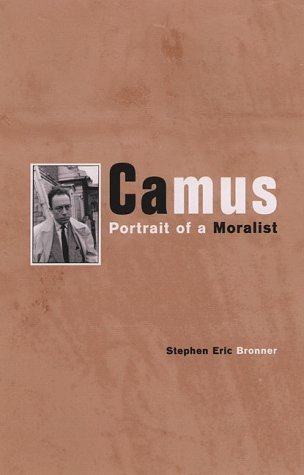
Mass Market Paperback
First published October 1, 1996


"Along with so many others of what has been called the generation of '68, I first read Camus as a teenager. I remember being attracted to his contempt for totalitarianism and his humanism, his strange mixture of pessimism and optimism, and his ability to engage himself in the political world without forgetting about the desire for personal happiness and sensuous experience. There was something unique about his sense of personal responsibility, his lucidity, and his quality of mind. His nobility of sentiment, his willingness to engage in the reconstruction of freedom, still offer a welcome antidote to the cynicism and relativism so common among contemporary intellectuals. The best homage for such a man is less an exhibition of reverence than a critical encounter in which his relevance is not simply taken for granted. This kind of homage is surely what Camus would have wished and it is, just as surely, what this biography seeks to provide." (xi-xii)I think that Bronner succeeds in providing a sympathetic yet critical portrait of Camus and his literary, political, and philosophical writings. Due to its relatively short length, it is inevitably underdeveloped at times—but Camus: Portrait of a Moralist is not meant to be a scholarly, exhaustive biography (though a comprehensive part of Camus's writings is, even if only briefly, covered). As Bronner points out, there are several of those already in existence. What Bronner wants to do is offer a balanced view of Camus, correcting some of the unfair earlier criticism motivated by ideology as well as some of the blind adoration that Camus attracted later. The focus, in the end, is on what Camus can teach us; and for this, Bronner argues, we must see and treat him as a moralist whose sense of justice, tolerance, and compassion, and whose stand against dogmatism and oppression makes him not simply the conscience of a bygone age, but also of our own.


