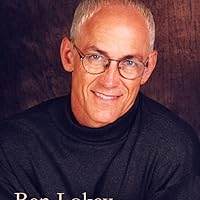
Is an American syndicated columnist and journalist. He specializes in human rights, the historical interplay between economics and politics in the Middle East, petroleum policy, the abuses practiced by corporations, and the financial underpinnings of Nazi Germany.
I don't want to leave a review here. All I want to say is this:
Did you know that from 1930-1960 in America, 64,000 individuals were forcibly sterilized under state-sanctioned programs? That several mental health institutes purposefuly fed their prisoners toberculosis-infected milk upon admission, killing 40% of their patients? That these same eugenics programs served as inspiration for the Holocaust? That they were performed almost entirely on mentally ill women and women of color? These facts may seem painful. They may also seem irrelevant to some. After all, we aren’t in the 1960s.
But those who forget history are doomed to repeat it.
There’s one final question: did you know from 2006-2010 in California, 148 mentally ill women were sterilized by state mental hospitals without their consent? In my state, in my lifetime, 148 women were violated by the state.
History is not one faraway thing; it is a continuum, an endless repeating cycle. And it is something we may never escape.
This was the first book I read about the eugenics movement, and I was surprised that the first big eugenics laws were enacted here in the US. Germany learned from us and from England. There are two different kinds of eugenics - positive (breed the best people to improve the human race) and negative (sterilize the "unfit") - and doctors, politicians, and hospital administrators latched onto negative eugenics and forcibly sterilized thousands of mentally and physically disabled people in the US. While the Nazis took eugenics to a whole 'nother level, the US eugenics movement is a well-hidden secret that more people should learn about. As genetic manipulation becomes more feasible, eugenics continues to be an important issue, and people should understand the history of the movement and what human rights to safeguard in future arguments for genetic improvement of the human race.
It's no secret: although eugenics triumphed in its most despicable and murderous form in Nazi Germany, the Nazis were just carrying on to the next extreme what had been thought and done in the USA during the previous decades. In fact, the Nuremberg Laws and even the sterilization laws that had preceded them were just, at their core, just a copy of the same type of legislation then defining about 27 states in the US. Sadly, though, if the victims of the Nazis regime had been liberated when the gas chambers closed down after the Third Reich's collapse, victims of American eugenics were not that lucky -its practice went well into the 1970s, if not beyond. It's an horrific story, with gruesome parallels, but which deserves to be known.
Edwin Black delivers here a masterpiece and must-read on the topic. His book is magistral, dense, well-researched and meticulous. It also is, despite its challenging length (more than 600 pages!) a very engaging expose of how what happened in Nazi Germany was nothing but the brainchild of a twisted intellectual movement born in the USA. War Against the Weak is highly instructive. It also stands as a powerful warning.
Indeed, the striking and sad thing is, eugenics claimed to be rooted in science and genetics, yet, serious biologists and geneticists even back then knew perfectly well it was everything but. There was nothing in the theory of evolution as outlined by Darwin which justified it; and, more to the point, a basic understanding of Mendelian genetics was amply enough to debunk it outright. In fact, even the man who had coined the word, Francis Galton, had refused until his death in 1911 to align himself with such burgeoning socio-political agenda -he was too clever to rely even on his own assumptions, and, anyway, his was a matter of 'positive eugenics' (encouraging the supposedly fit to procreate) away from the 'negative eugenics' (the getting-rid of the supposedly unfit, through forced sterilizations if necessary) that would ultimately swamp America, and take upon its own genocidal course under Nazism. Not that it mattered, but the impact would be hugely different.
How come, then, such a pseudo-science, such intellectual fraud, came to be so popular? How come major political figures would take it up and enshrine its tenets into laws? Edwin Black here strikes right at the heart of it all: the so-called American 'melting pot', and money.
Racism, of course, always had been pernicious in America. But, if it's obvious and easy to think White vs Black, in a country that were deeply impacted by slavery, a Civil War motivated in part by White Supremacy, and which was then subjected to Jim Crow laws, the author rightly reminds that American racism was also White vs White. There was no such thing as an admirable 'melting-pot' indeed (well, think of the Native-Americans or even the Mexicans...) and Ellis Island was as much a beckon of hope for many fleeing all corners of the world as it was a center to sort out the undesirable -for being of the wrong creed, the wrong colour, including the wrong white. The perceived threat of 'race suicide' terrified many. 'By no mean did the eugenics movement limit its animus to non-English speaking immigrants. It was a movement against non-Nordics regardless of their skin color, language or national origin.'
Where the book truly rings alarm bells and pop red flags, though, is when Edwin Black discusses the crucial influence of powerful business barons and their fortunes. Eugenics surely was nothing but a scientific sham adhered to by looneys, but these looneys, in America, were backed by millions of dollars and, oh boy! They didn't waste it! The Carnegie Institution, the Rockefeller Foundation, Mary Harriman (the widow of a railroad magnate, filthy rich), even IBM... They would all happily fork in to make sure their social prejudices were lobbied as they should -for social prejudices it was too. Being the instrument of the wealthy, eugenics was not only an attack upon the 'inferior races', but, an attack on the poor as well. But here was a complex and wide-ranging program, which would target from the disabled to the criminals, and the poor to the foreigners. 'Eugenics was nothing less than corporate philanthropy gone wild.'
'Big money made all the differences for eugenics. Indeed, biological supremacy, raceology and coercive eugenics battle plan were all just talk until those ideas married into American affluence. With that affluence came the means and the connections to make eugenics theory an administrative reality.'
What about the Nazis, then? Well, I personally knew about the 'intellectual' influence of American eugenicists upon Nazis thinkers. I also knew about American legislations inspiring Hitler (e.g. Carrie Buck vs Bell, or, the Virginia Integrity Act to prevent so-called 'mongrelization' truly were landmark cases indeed...). The author, of course, details it all brilliantly. What I didn't know was, how deeper and closer both side of the Atlantic were intertwined, beyond just mere ideals echoing each other. Richard Davenport was an unrepentant Nazis apologetic until his death in 1944. Harry Laughlin was offered a Honorary Degree from the University of Heidelberg for his influence on 'racial hygiene'. The Kaiser Wilhelm Institutes, where such 'sciences' were performed, had been financed by the Rockefeller Foundation (until the break out of the war, but, still, their money had made some of such institutions possible in the first place). In fact, the sickening collaboration will even have weird consequences: Dr Katzen-Ellenbogen, one of the doctors at Buchenwald, had been Chief Eugenicist in New Jersey (interestingly enough, when Woodrow Wilson was then its Governor...) before emigrating to Europe; while a Otto Hoffman, SS in charge of the Race and Settlement Office, would cite American policies and legislations as his defense during his trial -he couldn't understand how the USA could accuse him of crime against humanity, they who had brainstormed the same kind of policies in the name of the same views! He could be excused; when the Nazis were getting tougher with their eugenics policies: 'While much of the world recoiled in revulsion, American eugenicists covered eugenic developments in Germany with pride and excitement...'
This is not an indictment, though. In fact, Edwin Black is remarkably fair in his account. Yes, he debunks mercilessly the racism and social prejudices of cranks, whose success was owed to unscrupulous financiers fueled by their own agendas. But he also reminds us that, eugenics was also perceived as a charitable movement, its practical use a form of philanthropic endeavour. Case in point: Margaret Sanger. She still is very controversial in America, and so should she! Her views were typical of this grey area illustrating that, well, the road to hell can be paved with good intent indeed... As the author stresses, she was: '...a powerful example of American eugenics' ability to pervade, infect and distort the most dedicated causes and the most visionary reformers. None was untouchables.'
Here's a massive opus, yet engaging and truly leaving the reader with food for thought. Of course, here's an history of American eugenics per se, and how it ideologically impacted the Nazi regime. But, it also is more than that. By reminding us that such pseudo-science would have never triumphed as it did without the powerful backing-up of successful capitalists (in the USA in any case) it serves as a warning too. In the age of genetic engineering and other wonders, is it that a good idea to entrust into the hands of private entrepreneurs and other venture corporates the potential offered by our cracking of the structure of DNA? Money talks; but what it has to say is not always wise... Striking. Brilliant. Important.
Black makes a strong, well documented case that early genetic theory jumped the gun, partial, inconclusive data being adduced in the service of political prejudice. He further substantiates his claim that this, the "science" then called "eugenics", primarily originated in the Anglo-American world and was most powerfully promulgated by American foundations and universities during the first decades of the 20th century, the dreams of domestic eugenicists finding expression in the laws of 29 states of the Union and fullest flowering under the Nazi dictatorship.
While the Nazis and many of the Americans masked racism behind this pseudoscience and its offshoots (such as I.Q. and Scholastic Aptitude tests), contemporary genetic science promises to promote class division as the wealthy will have access while the poor will most likely not.
While this book, like his IBM and the Holocaust, is an eye-opening page-turner, it is flawed by poor editing, far too many redundancies appearing unnecessarily in the text.
So much attention has been paid to the means and methods of the Nazi's appalling atrocities during World War II, to the institutional, bureaucratic and legislative infrastructure created to support those actions and the race hatred that impelled them - but little attention has been paid up to the supposed scientific foundations that underlay all of the Nazis' beliefs and justifications. Everyone knows of the Nazis' belief in racial superiority, in the desire for a 'master race', an Aryan race of Nordic supermen - but those beliefs were founded on a pseudo-science called eugenics.
Surprisingly that pseudo-science found its greatest 'success', at least until the advent of Hitler and the totalitarian state of Nazi Germany, in America. Indeed, in this book Black convincingly argues that the 'science' of eugenics was founded in America and later transplanted to Germany. Whilst the term and the concept largely originated in England, there it was never more than theory, whereas it took root and actual expression in many states in America. Through organisations and experimental laboratories founded in large part by notable philanthropic bodies such as the Carnegie Institute and Rockefeller Foundation, American eugenicists, including Margaret Sanger of Planned Parenthood, lobbied Congress, state governments, public health bodies, institutions and care homes, to institute a national program aimed, effectively, weeding out the 'inferior stock' and increasing the ranks of the superior, namely the Anglo-Saxon and Nordic 'races'.
Whilst America never went as far as involuntary euthanasia, many states (over half) did implement laws legislating for involuntary sterilization, marriage restrictions, segregation, immigration restrictions - all designed to prevent those deemed inferior - whether because of intelligence levels, race, religion, hereditary illness or even alcoholism - from breeding and therefore perpetuating and spreading their 'defects' through the body public. California in particular led the way in this movement, with over one third of all compulsory sterilizations in the United States taking place in that state, some 20,000.
One of the truly horrifying revelations in this book was the extent of the legislation and how long the influence of eugenics lingered, and continues to do so. Even though the concept of 'eugenics' fell from favour after World War II and the revelations of the Holocaust, many advocates simply slipped quite effortlessly into the new field of 'genetics', a field Black argues is simply eugenics under another name and shorn of its social and racial elements. Many states took decades after WW2 to repeal their eugenics and miscegenation legislation, and some states continued to perform compulsory sterilization. Indeed, there is evidence that compulsory sterilization is still taking place within California's penal system.
This wasn't an easy read, both in style and in content. The author notes in his preface that each chapter could have been a book on its own, and I can see why. Many chapters feel like stand-alone papers, and Black does occasionally repeat himself or go over the same ground from a slightly different angle. By the time I'd read certain quotes three or four times in different contexts I was getting a little tired. But it is an immensely important book, shedding real light on a topic that has shamefully managed to evade the glaring light of public and academic scrutiny for too long and serving as a real warning to scientists who focus so minutely on aspects of human biology that they become lost in the biology and forget the humanity.
gives an in depth account of one of the US's darkest secrets. can get a little too full at times, as there is alot of information thrown in, and it can be watered down. for the most part, its historical documentation that makes connections to how remnants of eugenics are still visible today. (in particular, margeret sanger as a proponent of eugenics. and margeret sanger is.. one of the founders of planned parenthood. think about it...)
This is a very detailed account of how America invented eugenics, then how Germany copied our program and implemented it during World War II. Not an easy read, but it is history that needs to be remembered.
This is a bad book about a truly awful but important movement, Eugenics, which is now overlooked, forgotten and written out of our history. The problem is that this is not the book this subject needs and the way the author presents information results in overkill and misrepresentation. No one likes to criticize a book or author who is on the side of the angels, but there is distortion here and in particular the author overplays the degree that eugenics was accepted or respected as a science - by the 1920s the days of any real respectability for eugenics were over - of course there were plenty of people - obsessives, charlatans, racists etc. who still clung onto the myths of eugenics - but no proper scientist, anthropologist or sociologist had anything to do with eugenics because its methodology had long been discredited - but like a lot of pseudoscience today - the rejection by mainstream academia can often only give true believers a greater determination to believe.
By ignoring what Franz Boaz did to demolish the foundations of Eugenics Mr. Black distorts the story to make it seem that Eugenics was accepted and respected in academia. This is bad history - and a disservice to truth and the men and women like Boaz who established it.
It also must be born in mind that just because things were on statute books or had powerful politicians or others behind them does not mean there was not a strong current against eugenics. It is important that that perspective is remembered otherwise you will give the utterly awful people who believed eugenics a greater degree of support and respectability than they deserve.
The over sensationalised and simplified presentation not only distorts what was happening but could lead any half knowledgeable reader, never mind one who is totally uninformed, to question and doubt much of the reality behind what Mr. Black is writing about. This would be a pity and I recommend that anyone interested in the history of Eugenics to start with, for example, 'In the Name of Eugenics' by Daniel J. Kelves (I read the 1985 edition, there are later ones and I don't know how much has been updated, but while his chapters dealing with the current position of Eugenics are clearly out-of-date - it doesn't change the soundness of his coverage of the early (that is pre WWII) history of Eugenics). Because the way that Eugenics was challenged and discredited as a serious science is as important as all the early support and respectable acceptance it received. Also excellent is the way Kelves places the development of Eugenics within a broader context, particularly what was said/done/or not done in the UK. By over emphasizing the place of amateur racists, no matter how popular they were in the US culture of the 1920s, he fails to address or explain how Eugenics could have attracted interest and support in so many Southern and Eastern European and South American countries. After all these places were, along with Ireland, the homelands of most of the 'degenerates' that were ruining the USA according to Madison and others of his ilk. Reprehensible as those animal breeders and over moneyed nincompoops' may have been, no matter their easy access to major media outlets and damaging and dreadful as their influence may have been in some states they were a 'fringe' force by the 1920s in any serious academic situation because they could not prove or support any of their claims by serious research. Their bark was loud but their bite was tiny in terms of establishing a serious representation - one can only hope that today's spurious science like 'Creationism' for all the money and bluster they attract will equally fade away because they are equally vacuous and without merit.
Finally let me repeat the story of Eugenics needs to be told, again and again, but it has been, and will be, but the way this author presents it is distorted and does a disservice to a subject that needs no exaggeration or amplification. Such tactics will only help those who want to keep this story secret.
Finally as I have said before, distortions, misrepresentations, exaggerations, etc. by an author in one book only leads me to be wary of what similar failings are present in other books this author may have written. Honestly it has put me off reading and wary of anything else this author has written, in any context.
The book is divided into three distinct Parts: The Birth of Eugenics, Eugenics and World War II, and the change from Eugenics to Genetics.
The first part is impeccably well constructed, with a clear relationship between the history and the influence that eugenics had on social policy. There's plenty of detail and documentation, and the author is clearly well versed in the minutiae of the subject. Eugenics as a "science" at the dawn of the twentieth century and it's role in social welfare, birth control, and post-reconstruction jim crow legislation in the south.
The second section is where things start to lose focus. There is a considerable amount of time spent defining the impact that eugenics had on social policy, and a bit too much speculation presented as fact about Hitler's specific and personal interest in the subject. I'm not as much of an "intentionalist" and more of an "opportunist" when it comes to describing Hitler's policy motivations.
While I think many around Hitler had very clear eugenicist social goals, I think Hitler latched onto eugenics as a way to focus anti-semitic and pro-nationalist fervor. While he may well have become a true believer, I think he came to that as much from self-convincing and opportunism. Just looking at the quotes from Mein Kampf and his early speeches included in the book tend to make me feel less like he was a knowledgeable follower of eugenic thought early on and more like he found something compatible with his views...a sort of perfect "scientific excuse" for his pogrom methods.
The author (who's prior work was "IBM and the Holocaust, which is another excellent summation of how something uncontroversial had a very controversial role in the tragedies of the Third Reich) struggles to present an alternative viewpoint, and several of those points feel a bit labored. This wasn't really the significant issue I had with the second section, I had a harder time with the disjointed sequencing of the description of peoples and events.
Several times people would be introduced, followed by a rather exhaustive description of the post war events in their lives, then followed by an out of sequence descriptions of their eugenics based activities. This was most difficult in the sections on Auschwitz and Birkenau as both focused more on the range of activities conducted at those places and the people conducting them, with very convoluted sequences of explanation.
Also, several times there are references to world conferences or local conferences on Eugenics in the pre-war and early-war period (early 1920s through late 1930s) that often get described in the context of the subject the author is focusing on and not in the sequence of the conferences themselves. This only added to the sense of confusion in this section, as you would jump repeatedly across two decades of strained social history with only occasional dates for clarification.
That bit of confusion is the reason I pulled back from a five-star review.
Finally, we get into the third section, which is the transition from Eugenics to Genetics. Just as Alchemy evolved into Chemistry, the pseudo-science of Eugenics has transformed into the pure science of Genetics. This section leaves me both frustrated and concerned. At the dawn of a new century we must look back at how history has a habit of repeating itself, and once again we must focus on the potential human cost to scientific decisions. The author presents his position rather clearly, but for those of us who have faced genetic issues in our own children, made tragic and heart-wrenching decisions about life and death, the last section is neither comforting nor condemning. It s what it is, a simple description of science rushing again to define "what can be done" and rushing away from the philosophy of "what should be done."
I truly hope our species can remember our past enough not to be doomed to repeat it.
This is a very dense book so I would not recommend this as a quick or light read. However it was extremely interesting. Some of the information was a little repetitive and it jumped around on the timeline. I think it was written more as a reference book versus sit down and read the whole thing.
Some of the interesting tidbits: the Carnegie foundation and the Rockefeller family were critical in developing the american eugenics movement (forced sterilization of those deemed less) and therefore the early funding and founding of the nazi research that led to the extermination camps. They also took a shockingly long time to realize what they were funding, and that they probably needed to jump off that bandwagon.
Margaret Sanger founded Planned Parenthood not as a women's right movement, but rather as a way to control the poor from overbreeding. She actually was highly opposed to charity work. She wrote "More children from the fit, less from the unfit-That is the chief issue of Birth Control." She also wrote "Organized charity itself is the symptom of a malignant social disease." Not exactly what planned parenthood likes to tout itself as these days...
In this book, Black presents scrupulously documented history of the eugenics movement in America. I was amazed to find that this idea of restraining the procreation of "defective" people groups and promoting the procreation of "fit" groups of people was a popular line of thinking at the end of the 19th and into the turn of the century (20th century). The entrance of Darwinian thinking into this time period helped to add fuel to the fire of "the survival of the fittest" mentality that was the foundation of eugenics. It had its roots with people who were extreme racists in their thinking and who came up with the theories of racial inequality and then worded their theories with scientific jargon ... who can argue with science ... right??!! These supposedly scientifically based theories claimed that for example tuberculosis and polio were caused by defective genes rather than outside germs. In 1929 eugenicists from all over the Western world met in Rome as the International Federation of Eugenic Organizations. The two men who "ruled supreme" at this conference were two of America's leading eugenicists, Charles Davenport and Eugen Fischer. Together with leaders from other countries they pinpointed on a large map entire populations that they deemed "unfit" in each of their countries. At this congress they advocated for the permanent incarceration of "paupers, mental defectives, criminals, alcoholics and other inferior strains". Eugenicists in America were the first of all the Western civilized world to introduce state-sanctioned sterilization laws and other eugenic legislation. I was stunned to find that it was to America that Nazi Germany sent leaders of their eugenics movement to in order to find out how our legislation was working and how the public perceived it. I was stunned to find out that American Academia as well as American foundations such as the Rockefeller Foundation and The Carnegie Foundation helped fund most of the eugenic "research" in this country and that they sent thousands of dollars to Britain and Germany to fund their "research". In Part II of his book entitled "Eugenicide", Black details how the American eugenics movement supported Hitler's regime and their move to rid their country of "defective" elements. Even while some in the eugenics movement in the U.S. began to pull away from support of the Nazis , the staunchest in the eugenics movement continued their support and praise of Germany's ethnic cleansing throughout the WWII. While the horrors of WWII and Hitler's evil genocide sullied the reputation of the eugenics movement, it did not go away after WWII. Black tells how eugenicists came together to "rename" their movement to the familiar area of research we call "genetics". While much of this current research is being used for the battle against inherited diseases, the mentality still remains in place for people to think that if they can just perfect genetic material, people can completely avoid having anything but "perfect" children. Black goes on to say that the need is great for ethics and morality to keep pace with the rapidly changing flood of information found in the field of genetics. This book was incredibly informative and at times chilling.
For years I was told of the horror of Hitler and the Nazi's eugenic campaign and how America fought this evil. This, it turns out, was just another lie I learned in US History classes! The "contributions" in the US to the idea that people, classes, races, and cultures can be graded by their genetic makeup involve a who's who of US politicians, jurists, scientists, educators, businesses, and foundations. IBM created hardware and software to help the Nazis, the Carnegie foundation funded eugenic campaigns in the US and in Europe, several US states instituted involuntary sterilization programs, and Justice Oliver Wendell Holmes Jr. pushed the agenda through the courts as the "good gene families" worked to "clean out" the inferior. Edwin Black did years of research to bring these horrifying facts to life. This book should be a required text in all US history classes.
The idea of the "Master Race" did not originate with Hitler and the Nazis. It began much earlier and was endorsed in many countries (including the U.S.!) beginning in the 1800's. Humans were measured and analyzed and many discussions were done about weeding out defective members of society ("culling the herd"). If farmers could improve their livestock by selective breeding, why couldn't the human race be enhanced with the same techniques? Certain groups (blacks, Jews, aboriginal tribes, homosexuals, handicapped and mental patients) were listed as being "undesirable" and should be prevented from breeding and carrying on their "defective" qualities. In the 1930's these theories were put into practice with the Nazis' "Final Solution".
Exhaustively researched. 'Eugenics' is a junk science that flowered around the turn of the century in America. Eugenicists sought racial purity, to get rid of 'defectives' like the developmentally disabled, diseased, elderly, and of course every race except Nordics. Eugenics caught on and went to further extremes in Germany by the '30s. In America thousands of blacks, poor, epileptics, natives, etc were sterilized (rendered unable to reproduce); several states also outlawed marriage between races, based on eugenic principles--Alabama had anti-miscegination legislation on their books until 2000, no shit. The book takes a real commitment to get through, but it's a trove of information.
This is the most complete reference book on any subject that I've read. It's huge in scope, tortuous is it's honesty of the facts on a subject that is at one moment unbelievable and at the next infuriating. It reveals American history at it's worst. Honest and absurd. It's a large book, over 500 pages, excellently written. The author often refers to himself as "this reporter", and indeed, the material is approached as if by a reporter, with a sound sense of objectivity. If you enjoy American history, late 1800's to the present, this is a must read, in your process of putting the pieces of a complicated puzzle together. Ben Lokey
The bulk of the book, which established the connnections between US eugenics programs and the Nazis' acts of genocide were great. The atrocities committed on both sides of the Atlantic are stunning. The last chapter, which focused on how genetics could be used in the future, felt more like a fearful flight of fancy than fact.
2½. There is a wealth of incredible information here, but as I realized how repetitive and redundant it was becoming, my fascination transformed into exasperation. I believe about 150 pages could and should have been lopped off, at least.
Author Edwin Black dedicates this expose on the topic of eugenics to his mother, who never got to read its original published edition but was witness to the implementation of the pseudoscience in Nazi-occupied Poland. He thanks several volunteer researchers from across the globe and American organizations such as Planned Parenthood, indicating that there were some roadblocks in his research such as the United States Holocaust Memorial Museum refusing some of his Freedom of Information Act requests, although he acknowledges that journalists tend not to halt their research amidst refusals to disclose data.
Black follows with a lengthy introduction indicating that eugenics affected America’s population for the first six decades of the twentieth century, given the forbiddance of Americans by governmental mandates to continue their bloodlines. Eugenics, he notes, depended upon widespread academic fraud with limitless corporate philanthropy to establish persecution rationales. Victims of eugenics included individuals such as poor urban citizens, “white trash” across America, immigrants, and the like.
The writer follows with a note that there are occasional inconsistencies within his resources, using phrases in his attempt to remaining loyal to the original texts, indicating that citing the Internet, given its constant evolution, proved a constant challenge. The first main chapter tells of the sterilization in the 1930s of the Brush Mountain hill folk scattered throughout the Appalachian Mountains, who lived in poverty. The cases of specific individuals such as Buck Smith and Mary Donald are mentioned, with American eugenicists commanding money, prestige, and international academic exchange to export their pseudoscience to other countries like Germany.
Black commences the second chapter by indicating that mankind’s quest for perfection almost always turns dark, with xenophobia towards fellow humans existing in virtually every culture throughout history and finding its way into science. He briefly discusses the history of charity that began when the Black Death ravaged Europe from 1348 to 1350, with the suffering of the poor intensifying during the mid-1500s with silver imported from the New World, and charity becoming a government responsibility with Pope Clement VII refusing to annul Henry VIII’s marriage to Catherine of Aragon.
The following chapter notes that in America, class was largely a measure racial and ethnic. Feminist authors such as Victoria Woodhull indicated the evolving view that positive and negative breeding were essential for social improvement, America’s romantic myth of the “melting pot” (a term coined by British playwright Israel Zangwill) not existing even in the time of mass immigration to the United States. The 1880 Census Bureau Director Francis Walker coined the term “race suicide” regarding diversity, the author noting that thousands of black and white Americans were lynched between 1889 and 1918.
The Carnegie Institution’s Station for Experimental Evolution at Cold Spring Harbor opened in 1904, its first years dedicated to preparatory work and initial experiments on animals, leading to the establishment of the Eugenics Record Office (ERO) in October 1910. The Amish were an initial target of eugenicists, with the increasing population of the American West largely making the tracing of genealogy difficult. The human rights attorney Louis Marshall questioned the constitutionality of compulsory sterilization, with a few eugenic supporters proposing polygamy as a means by which to multiply “desirable” bloodlines.
When Sir Francis Galton’s eugenic principles crossed the ocean from Britain to America, Kansan physician F. Hoyt Pilcher became the first doctor in modern times to castrate someone to prevent procreation. Similarly, Dr. Harry Clay Sharp, a physician at the Indiana Reformatory in Jeffersonville, castrated a man to prevent his self-gratification, with compulsory vasectomy performed even when not legal. Indiana would ultimately become the first jurisdiction in the world to legalize forced sterilization of its mentally-impaired patients, poorhouse residents, and prisoners, and eugenics would find several prominent supporters such as future American President Woodrow Wilson and future British Prime Minister Winston Churchill.
Most Americans opposed eugenics, although the pantheon of eugenics was not interested in furthering democracy, but rather creating a supremacy. Dr. John Harvey Kellogg of Battle Creek, Michigan, would found the Race Betterment Foundation, and famed telephone inventor Alexander Graham Bell yearned for the emphasis of researching positive traits in humans rather than those negative, as other eugenicists desired. The Rockefellers would become major financial backers of eugenics, and the pseudoscience found other prominent supporters such as U.S. President Theodore Roosevelt and a few Episcopalian priests.
Black dedicates a chapter to Margaret Sanger’s birth control advocacy, with the dissemination of information on the subject criminalized in her time, birth control advocates and early feminists identifying with the eugenics movement. Sanger became a Social Darwinist, disdainful of charity, believing insanity cost taxpayers millions and seventy percent of America was feebleminded, and allying with racists and white supremacists. She advocated negative eugenics over constructive implementation of the pseudoscience, with eugenicists wanting birth control separate from their own movement, somewhat crippled by the onset of the Great Depression.
Blindness prevention became one of the eugenics movement’s priorities in the 1920s, with the condition seen as hereditary, Lucien Howe becoming a legendary champion in the cause of better vision, wishing to halt marriage among those whom they considered “defective,” and suggesting that the blind receive the choice of isolation or sterilization. Margaret Sanger pervaded this movement, and Howe died before his radical plans took effect.
The American Census Bureau would not cooperate with the eugenics movement, although advocates perpetually attempted to get them to change their minds. A Virginian registrar of vital statistics named Walter Ashby Plecker became a raceologist and eugenicist despite having fond childhood memories of his family’s Negro servant Delia, hoping to halt marriage between whites and those with even one drop of non-white blood, antagonizing a fellow registrar from Pera, Virginia named Pal S. Beverly for having some Negro blood. Black ends the first part of the book suggesting that the eugenics movement at this time was ready to go overseas.
Immigration became a hot-button issue among eugenicists for their alleged “contamination” of American bloodlines, with the country in economic and demographic turmoil after the First World War, postwar immigrants booming and concentrating on urban centers. The 1920 Census revealed for the first time in the country’s history, the population’s majority had shifted from rural to urban areas, and eugenicists exploited the best and worst of the nation’s feelings about immigration, ultimately leading to the passage of the Immigration Act of 1924 to reduce non-Nordic migrants, which ended in 1952 with the McCarran-Walter Immigration and Naturalization Act.
Although some considered England the cradle of eugenics, British eugenic science and doctrine were almost completely imported from the United States, with Americanized eugenics taking root in the early twentieth century thanks to Liverpool surgeon Robert Reid Rentoul. Home Secretary Winston Churchill assured eugenicists that Britain’s alleged twelve-hundred-thousand feebleminded citizens would have their bloodlines terminated. Minister of Health and future Prime Minister Neville Chamberlain further supported a sterilization act. Although Pope Pius XI condemned eugenics as a fraudulent science, the movement would continue to gain ground.
American eugenicists saw mankind as a biological cesspool, taking this attitude globally at the 1912 First International Congress of Eugenics in London, countries such as Canada and Germany dabbling in the pseudoscience. The lethal chamber would emerge in Britain during the Victorian era as a humane means of euthanizing dogs and cats, with worldwide debate on its use in humans, some “defective” newborns euthanized. A movie called The Black Stork would become propaganda for eugenicists, and a certain Austrian-turned-German named Adolf Hitler would take notice of the eugenics movement.
Other Germans such as physician Gustav Boeters advocate eugenic laws, with social theorist Alfred Jost arguing in his 1895 booklet The Right to Death that the state had the inherent right to kill the unfit and useless. After the First World War, the Treaty of Versailles crippled German finances given their owing of war reparations. Hitler would lead an unsuccessful coup in November 1923 at the Beer Hall Putsch in Munich and would ultimately seize power following an inconclusive election on January 30, 1933, spearheading the country’s eugenics movement.
On September 27, 1929, prominent eugenic leaders met in Rome at the Central Statistical Institute to deliberate and agree that paupers, mental defectives, criminals, alcoholics, and other “inferior” strains of humans deserved en masse incarceration, with Americans having financial connections to German biomedicine, and Hitler wanting his atrocities known to the world. Two separate chapters deal with Nazi atrocities respectively at Buchenwald and Auschwitz, the latter of which would be the last stand for the genocidal pseudoscience, the Nazis especially fascinated by twins, even Jewish, not to mention dwarfs and the physically-deformed.
The final part of Black’s book deals with the aftermath of the Nazi regime and the hunt for various war criminals such as Josef Mengele, camp doctor of Auschwitz and nicknamed “the Angel of Death.” Fellow eugenicist Dr. Otmar Freiherr von Verschuer also eluded prosecution, becoming a corresponding member of the newfound American Society of Human Genetics. The pursuit of Nazi perpetrators continued into the 1960s, with their doctors’ writings permeating both American medical journals and American doctoral literature.
Both Hitler’s ascend in Germany and eugenics’ founding father’s departure from Cold Spring Harbor caused a retreat of interest in the pseudoscience, with the American Philosophical Society today containing the largest consolidated eugenic collection anywhere. Despite America’s retreat from eugenics, its consequential policies did not, with sterilization of “defectives” still continuing. The American Civil Liberties Union would file lawsuits on behalf of the sterilized, and in 2000, Alabama became the last American State to repeal its anti-miscegenation law. The concept of “genocide” would be codified into the laws of the United Nations.
The eugenics movement would be renamed genetics, with some former eugenicists even going so far as to condemn Hitler’s policies. Planned Parenthood itself condemns its eugenic legacy and copes with the dark side of founder Margaret Sanger. Contemporary news would provide regular updates on genetic research, with DNA identification banks amassing, the events of September 11, 2001 accelerating fascination with genetics. The main text concludes with Black saying that global consensus is necessary to act against genetic abuse since no single nation’s law can alone anticipate the evolving nature of global genomics.
Edwin Black acknowledges a personal journey in the production of this book, which overall provides a detailed glimpse into a dark chapter of American history that pretty much every contemporary historical textbook ignores, with only a few errors the editor overlooked. The text somewhat hit home to this reviewer, who is on the autism spectrum and would have very likely in the period the story covers been considered “defective.” There are certain events throughout America’s history some believe its citizens should be ashamed of, and the book definitely shows that the eugenics movement is among them.
A difficult book to read. Not because it is poorly written. But because it is so disappointing to read about the American history of oppressing the weak.
The pseudo-science of eugenics is the application of evolutionistic natural selection to humankind. If humans are descended from animals and still evolving then some portion of humankind could conceivably be further ahead than others. And if this is true, should not the human race be bettered by encouraging the propagation of this portion of our race and discouraging the continued breeding of those that may be further down the evolutionary ladder? Especially those that carry hereditary diseases, deformities, a high probability of mental defect, or propensity to engage in criminal misconduct. Or so eugenic theory would have you believe.
Some of the research backing this idea followed families through multiple generations and tracked the fact that most member's of this family were criminals. If these people were sterilized so they could not continue to have children the state and society would be safer and see a significant savings in the criminal justice arena. The same argument was presented for families with a history of expensive medical issues.
This "reasonable" view of evolution and society was cloaked in the blessing of science and used to create sterilization laws and laws prohibiting interracial marriages. These views and the corresponding laws were not the result of a groundswell of public sentiment calling for sterilizations to be accomplished on those found unfit or laws prohibiting interracial marriages. Rather, these laws were promulgated, lobbied for, and supported by a highly educated portion of the American scientific community funded by major philanthropic monies.
Part of the basis of this philanthropy was the idea of some that charity rewards people for failure and that human kind should mirror nature in letting the weak die off and the strong continue. Charity was viewed as unnatural meddling in the natural way of life. Eugenics was viewed as a way of restoring balance. Margaret Sanger, founder of planned parenthood believed in this view of charity as well as well as the importance of eugenics.
There were several doctors that performed uncalled for sterilizations on people they thought were unfit prior to laws being passed allowing the procedure. Indiana was the first state to legalize sterilization of the unfit. At least 29 other states followed that lead. California by far completed the most recorded sterilizations. And the funding to start the process was provided by New Englands wealthy. A victory showing what a small group of educated people with a vision and funding can accomplish while the majority of people are not really paying attention.
What did this movement cost America? The idea as a science and the word "eugenics" was British in origin (invented by Sir Francis Galton). However, it was in American where this idea became popular and applied in an active way. In the 20s and 30s these ideas accepted in America were globalized. American model legislation for sterilization was sent to many European countries and enacted there creating sterilization programs in Switzerland, Denmark, Norway, and Germany. German efforts to cleanse their race of those deemed unfit were highly admired in America. And it was because of successful eugenic efforts to restrict immigration into America of the unfit that many Jews were unable to escape Europe and holocaust to come.
American philanthropic efforts were not confined to the United States. Rockefeller and other wealthy New Englanders funded most of the eugenic scientist in Germany after WWI. The research and books that guided Hitler to understanding how the unfit made the German people weak were funded with American monies. Hitler even wrote an admiring thank you letter to one of the leading eugenics proponents in the United States.
We tend many time to tie up our righteous anger for the holocaust to the leader of the German people that led them into murdering millions and the SS who carried out his vision. We like to say Adolph Hitler was a racist, and that is true fact. But his racism was not merely some backwoods silly hatred based on people being different than he was. Rather, his hatred was based on the science of eugenics.
We should not forget that when Jews and other people that were considered unfit (not always based on race) got off the train at Auschwitz and other death camps it was not Hitler personally that decided who would be treated in what ways. Nor was it always the SS trooper. Rather usually there was someone there with medical credentials and eugenics training in their background making this decision. The SS were the trigger man. Hitler was the government leader that made the horrors of the holocaust possible politically. But it was the scientists and doctors, funded by American money that created the basis for all these horrors. How could ordinary people do such terrible things to other people in death camps and elsewhere? First, they were taught eugenics and that not all people are equal, and the unfit drag the rest of society down. Before they tried to kill off entire races they worked hard to cleanse their own race; sterilizing or killing the weaker parts of their society in nursing homes and insane asylums. It is clear that we cannot trust science alone to create a moral compass for society.
Much as I hate to admit it, America carries some moral responsibility for what happened in Europe with the holocaust. Because of the outrage and condemnation of the holocaust and Germany's eugenic actions the American eugenic community melted away into the background. Usually changing their names from eugenics to something with genetics. It still took many years to change all the laws that the American eugenic movement put into the books in the United States. It was not until the 1960s that laws against interracial marriages were set aside and people were being sterilized without their consent into the 1970s. Several states till have laws on the books for sterilization. But they have not been utilized for years.
This book is well written and researched. If anything there is probably much left unexamined for the sake of preserving a comprehensible narrative and story of a reasonable length. Clocking in at over 500 pages it's not a swift read.
I know my rating doesn't make sense because I enjoyed this book a lot. It was very educational and I'll need to read it again. Take notes. Make a PowerPoint. I want to retain more but the problem was that a lot of information is thrown at me and I haven't had a chance to fact check or research more. Once I have it verified and work on this topic more, I'll likely raise my rating.
Want an eye-opening nonfiction book that shows America’s complicity in eugenics, sterilization, and how it influenced hitler and the Nazi party in the Holocaust? A long, complicated read with over a hundred pages of references in the notes.
Though students study the Holocaust in school, this book describes one piece of history they don't learn much about: The core of Nazi racial ideology originated mainly in the United States.
Edwin Black did an in-depth study of the American eugenics movement and its influence both at home and abroad. "The concept of a white, blond-haired, blue-eyed master Nordic race didn't originate with Hitler. The idea was created in the United States...decades before Hitler came to power."
The movement was led by "America's finest universities, most reputable scientists, most trusted professional and charitable organizations, and most revered corporate foundations."
The movement eventually spread to Germany where Hitler embraced it in in the early 1920s. During the 1930s, the Nazis pursued racial purity with mass sterilization of the "unfit," involuntary euthanasia, and eventually extermination of Jews, Gypsies and others deemed inferior.
Here is how Black defines the dubious science: "Eugenics was nothing less than an alliance between biological racism and mighty American power, position and wealth against the most vulnerable, the most marginal and the least empowered in the nation."
Among the weak were tens of thousands of Americans who were forcibly sterilized to prevent them from reproducing. Some were deemed feeble-minded. Some were poor hillbillies. Others were truants or petty criminals.
The majority of states enacted mandatory sterilization laws. These laws stemmed from the fraudulent science of negative eugenics. It's goal was to improve the human race by preventing "defective" people from reproducing and passing on their defects.
In addition to sterilization, the methods used in the USA were segregation, deportation, marriage prohibition, and passive euthanasia. Nazi Germany emulated those policies, but adopted active euthanasia, and during WWII, extermination. At Nuremberg, forced sterilization was declared a crime against humanity.
"I have studied with great interest," Hitler told a fellow Nazi, "the laws of several American states concerning prevention of reproduction by people whose progeny would, in all probability, be of no value or be injurious to the racial stock."
Zoologist Charles Davenport was the leader of the American eugenics movement. Seeking to shape human evolution, he received funding in 1903 from the Carnegie Institute to research racial breeding. Believing Nordics were superior to other groups, Davenport staunchly opposed racial mixing. He needed evidence, however, to support his theories, such as that blacks could never be intellectual equals of Caucasians.
Davenport found a receptive audience at the American Breeders Association, which consisted of animal breeders and seed experts. They knew that the quality of farm animals could be improved by selective breeding, and believed the same could be done with the human animal.
The Breeders shared Davenport's alarm about what they called "mongrelization," and proposed that defectives be prevented from reproducing by segregation, sterilization or euthanasia. Once unwanted races were eliminated in the U.S., wrote the ABA president, the same solution could expanded worldwide.
Davenport proposed creating a Eugenics Record Office (ERO) to collect data on the genetic backgrounds of all Americans. It was affiliated with the Carnegie Institute. One of the ERO presidents was Alexander Graham Bell. It was funded by the widow of railroad magnate E.H. Harriman. The new Rockefeller Foundation also provided generous financial support. Without financing from a few very wealthy families, the eugenics movement would not have made much headway.
Despite the absence of solid evidence, the ERO assumed that disabilities were inherited. Consequently, the organization collected data on epileptics, the feebleminded, alcoholics, paupers, the insane and so on. Ten percent of the nation's population were deemed unfit by the ERO.
Leading medical authorities advocated vasectomizing prisoners to reduce the number of "born criminals" as well as of "imbeciles, perverts and paupers," wrote the co-founder of the American College of Surgeons.
David Star Jordan, the first president of Stanford University, was the first eminent eugenic theorist. Blood is the immutable basis for race, he wrote, and "the pauper is the victim of heredity."
In 1907, Indiana became the world's first jurisdiction to legally authorize forced sterilization of residents of mental institutions, poorhouses and prisons. Within a few years, 28 other states had enacted their own versions. The New Jersey bill was signed into law by governor Woodrow Wilson, who would be elected president the following year campaigning for his program that he called the New Freedoms.
An international eugenics conference was held in London in 1912. Winston Churchill represented the king. The future prime minister was concerned about the growing population of "persons...of mental defect." Secretary of State Knox, a former lawyer for Andrew Carnegie, helped to promote the conference. The U.S. participants dominated the conference with their theories of racial eugenics.
One weakness of eugenics was the lack of a clear-cut definition of unfitness. In 1905, Alfred Binet developed the first intelligence test. He also demonstrated that training could improve test scores. Binet did not believe that intelligence was simply predetermined by heredity.
Nonetheless, American eugenicists used the IQ test to advance their agenda. The term "moron" was invented to describe persons who scored under 70 but were above imbeciles and idiots.
When psychologist and ardent eugenicist Henry Goddard gave IQ tests to immigrants at Ellis IsIand, he reported that 60 percent of the Jewish immigrants "classify as morons."
Two books revered by eugenicists were "The Passing of the Great Race" by Madison Grant and "The Rising Tide of Color Against White World Supremacy" by Lothrop Stoddard. Grant presented Nordics as the superior race, while Stoddard warned about the growth of "bad stock."
"The laws of nature require the obliteration of the unfit," Grant wrote, "and human life is valuable only when it is of use to the community or race." Hitler called Grant's book his "bible." Hitler also studied publications by other American eugenicists.
Eugenics influenced the American intelligentsia and the powerful. Among the believers of racial hygiene was Teddy Roosevelt, who wrote in 1913 that "society has no business to permit degenerates to reproduce their kind."
The common people, however, did not know much about grandiose plans for mass sterilization and segregation. In 1915, the Hearst newspapers began to write about these plans that the Harrimans, Carnegies had Rockefellers had for the humble masses.
A case testing the Virginia sterilization law was appealed to the SCOTUS in 1927. It involved Carrie Buck, 18, who had been declared feebleminded and immoral. Her mother had also been committed to an asylum. Her six-month old illegitimate baby was also deemed deficient. What were actually deficient were the evaluations and diagnoses of Carrie and her baby.
In upholding the Virginia law, Justice Oliver Wendell Holmes wrote the opinion for Buck v. Bell stating, "It is better for all the world if...society can prevent those who are manifestly unfit from continuing their kind. Three generations of imbeciles are enough."
With a judicial green light, the number of mandatory sterilizations greatly increased. Between the Holmes decision and 1940, 30,000 Americans were sterilized, including Carrie Buck.
The eugenics movement influenced various other reform movements. One of them was the fight to legalize birth control. Margaret Sanger, an ardent eugenicist, led that fight. Her birth control organizations advocated mass sterilization of defectives, mass incarceration of the unfit, and slamming the door on most immigrants. Referring to the lower classes as "human waste," Sanger opposed giving assistance to the unfit because that helps them to survive and to procreate.
Sanger saw birth control as an essential tool of eugenics. She invited Lothrop Stoddard on the board of the American Birth Control League. Sanger's magazine repeatedly labeled lower classes as more dangerous than rats and bugs.
Certain of eugenic premises, she even advocated the ultimate solution. In Collier's magazine in 1925, she wrote, "Stop permitting criminals and weaklings to reproduce...We have enormous insane asylums and similar institutions where we nourish the unfit and criminal instead of exterminating them." She was not the only prominent American eugenicist to advocate extermination. So did Yale professor Irving Fisher.
In 1924, Virginia enacted the Racial Integrity Act. It provided that residents could register as white so long as they had no negro ancestry. Even a drop of black blood would prevent the person from being considered white.
Restricting immigration was a priority among eugenicists. Rep. Albert Johnson chaired the House Committee on Immigration and Naturalization for 12 years. A staunch eugenicist and opponent of immigration, Johnson worked closely with the ERO to craft legislation to weed out defectives before they could immigrate the U.S.
In 1924, President Coolidge signed into law the notorious Immigration Act. The law's purpose was to radically reduce non-Nordic immigration. It established immigration quotas of two percent of the number of U.S. residents who had come from each country according to the census, but not from the most recent one in 1920. Instead, the quotas were based upon the census of 1890, which was just prior to the major influx from southern and eastern Europe. Since there were few Italians, Poles, and Jews prior to 1890, few could be admitted under the new law.
In addition to restricting immigration and sterilization, the eugenics movement embraced euthanasia. What the movement had in mind was not merciful killing of the terminally ill to spare them from pain. Instead, it meant painless killing of people deemed unworthy of life. In other words, extermination.
The landmark "Textbook on Mental Deficiency" endorsed active euthanasia for imbeciles and idiots. "It would be an economical and humame procedure were their existence to be painlessly terminated... The time has come when euthanasia should be permitted."
Some doctors implemented euthanasia. In 1915, the passive euthanasia of a baby born with several abnormalities made national headlines. The doctor who had refused to try to save the infant for eugenic reasons avoided penalties. Hollywood made a movie -- "The Black Stork" -- starring the doctor.
The U.S. was the center of eugenic research and activism. The movement wanted to spread internationally so defectives everywhere might be stopped from reproducing. Consequently, Davenport and other leaders set up international conferences to spread the eugenics gospel. They found willing allies in much of western Europe.
The British developed the first gas chamber, called the "lethal chamber," as a humane way to kill stray dogs and cats. Before long, there was talk of dispatching criminals that way. In 1910, eugenicist George Bernard Shaw had suggested that eugenics leads to "extensive use of the lethal chamber" because "a great many people would have to be out of existence, because it wastes other people's time to look after them."
The widely used textbook "Applied Eugenics" suggested that execution was the easiest way to eliminate feeblemindedness. "Its value in keeping up the standard of the race should not be underestimated." In 1921, Nevada became the first place in the world to execute with the gas chamber.
German eugenicists had an active relationship with Davenport and his American colleagues. However, "in eugenics, the United States led and Germany followed." Various states had sterilization laws and marriage restrictions many years before Germany. German genetics research grew in the 1920s thanks to major funding from The Rockefeller Foundation.
In 1913, a German book on eugenics that was a basic reference for German biology students stated, "Galton's dream that racial hygiene should become the religion of the future is being realized in America...America wants to breed a new superior race."
While in prison during the early 1920s, Hitler firmed up his master race ideology, relying heavily on American race science. The most prominent German eugenic text was written by three scientists who were closely allied with Davenport.
In Hitler's book, "Mein Kampf," he advocated preventing defectives from reproducing and euthanasia. He also complimented the U.S. immigration act of 1924, and condemned the concept of charity, just like Sanger and other American eugenicists.
After Hitler came to power in 1933, new eugenics laws were modeled on existing U.S. laws. The Nazis passed a compulsory sterilization law and announced that 400,000 Germans would be sterilized.
The ERO reacted with pride, noting how closely the German law copied the American model. In 1934, the American Journal of Public Health ran a long article defending the Nazi's mass sterilization.
An American eugenicist who toured Germany in 1934, C.M. Goethe, wrote to congratulate a colleague in California: "Your work has played a powerful part in shaping the opinions of the group of intellectuals who are behind Hitler. Everywhere I sensed that their opinions have been tremendously stimulated by American thought."
Despite growing condemnation in the U.S. of Nazi persecution of Jews, leading America eugenicists continued praising Nazi racial policies in mid- and late 1930s. "Hitler was their eugenic hero." The Holmes quote was widely repeated by eugenicists in both countries: "Three generations of imbeciles are enough."
By 1939, thousands of mentally handicapped adults in Germany were being killed in gas chambers. In 1940, mass gassings with carbon monoxide were used, with the bodies being disposed of in crematoria.
The doctors in charge of these programs were eugenicists, some of whom had been in contact with Davenport and his American colleagues for years. Dr. Otmar Verschuer, for instance, directed twin research at Auschwitz by Dr. Josef Mengele.
Nazi General Otto Hoffman was prosecuted for war crimes after the war. Among the charges were forcibly sterilizing non-Nordics and preventing marriages in Nazi-occupied areas. In his defense, Hoffman pointed to the forcible sterilization laws in 29 states and restrictions on interracial marriage in 30 states. His defense didn't work.
It was not until after the Nazi invasion of Poland in 1939 that the Carnegie Institution shut down the ERO. Eugenic policies continued, however, as 15,000 Americans were forcibly sterilized in the 1940s, another 10,000 in the 1950s, and several thousand more in the 1960s.
With eugenics tainted by Hitler and the Holocaust, most of the movement began moving away from the controversy by replacing "eugenics" with the word "genetics." Black devotes his final chapter to developments in modern genetics that pose new threats.
For example, genetics could be used to isolate and discriminate against people with certain genes. The life insurance industry, for example, may resort to "genelining" to reject people with genes predisposing carriers to deadly disease. National genetic databases already exist for at least two nations, Iceland and Estonia, and more seem likely.
Another inevitable development is wealthy parents being able to choose designer babies with superior genes. This may lead to development of a superior race or species, while others languish in a genetic underclass. It could lead, Black warns, to another war on the weak.
0n the other hand, Tay Sachs disease among Ashkenazi Jews has been greatly reduced through voluntary genetic testing and by selective mating and abortion.
In sum, the eugenics movement to improve the human race had severe consequences in the first half of the Twentieth Century. Thanks to "War Against the Weak," we now know the true origins of the philosophy that led to consequences so tragic. -30-
Those who warned us against the evils of socialism upon human liberty, and the horror of bolshevism upon culture and civilization, launched at the same time their own murderous utopia based on the self-serving criteria of the West's "natural rulers." Their goal - to purge the human race of the "underman," thereby curing crime, poverty, hunger, disease, and leaving wealth and power to those who had it.
Black's research team was meticulous and he did the most thorough job possible of integrating all this into a coherent narrative. Many researchers would lose themselves in this forest of documentation for its leaves of data. In his concluding remarks, Black sums up the psychology of the eugenics movement in the single word "arrogance." I agree. Having myself read many of the original eugenicist monographs, what struck me - beyond the Protestant prudery, typical racism, and patrician snobbery - was the gloating meanness, even sadism, lurking in the pages. Dr. Mengele's ghost hovers close indeed in reading Goddard's "Kallikaks." H. G. Wells' Dr. Moreau may be more prophetic than we care to acknowledge as the "new genetics" of engineered human genomes takes hold in the coming century. Auschwitz may indeed rise again in even more evil forms.
I can understand where the eugenicists were coming from, because I have branches in my own family who would have made excellent monograph material: poor, part native American ("Redbone"), with notable streaks of substance abuse, sexual promiscuity and illegitimacy, welfare, and felony records - the whole regalia of trashdom. Yet this same "breed" produced stable craftsmen and educated, middle-class professionals. The only purpose of nipping their seed in the bud would be to protect the class privileges of the established against the competition of upwardly-mobile upstarts "who don't deserve opportunity - just look at the kind of people they are!" That, in a nutshell, was the raison d'etre of the eugenics movement.
Black also explores how the social basis of eugenicism was preserved beyond its disgrace by Nazism, in clinical psychology and sociology through the "culture of poverty" thesis. Although more liberal-sounding than their predecessors, this crowd also devolved into a blame-the-victim rationale for punitive social engineering. Of course, the West is not alone in misusing genetic science. Trofim Lysenko's extreme Lamarckism in trying to breed desert-proof corn nearly brought the Soviet Union to famine. Scientific idiocy and professional vanity know no politics, nationality, or religion.
Yet I must take issue with Black's own grandstanding. His status as a well-known journalist and author no doubt facilitated the corporate co-operation he graciously received in digging up dirt on themselves, and the willingness of Virginia to release state files on Carrie Buck. But this is not "uncovering" anything new per se, as Black claims, though it does fill in some fresh details. The eugenic-Nazi connection was already established in works like J. David Smith's "Minds Made Feeble: The Myth and Legacy of the Kallikaks" (1985), or Allen Chase's "The Legacy of Malthus" (1977), or Stephen Jay Gould's "The Mismeasure of Man" (1981), or even Richard Hofstadter's "Social Darwinism in American Thought" (1955). When established publications rave over this work as "groundbreaking," "an eye-opener," "a bombshell" "of remarkable new data" "whose message must be made known," I smell the rat of professional backscratching. Hence the four rather than five stars of my review.
A history of the eugenic movement in the United States in the first half of the last century, which served as a model to its counterpart in Germany but was surpassed by it. American eugenicists merely succeeded at sterilizing tens of thousands of the "feebleminded", most of whom weren't; the daughter of Carrie Buck, the woman whose sterilization was upheld by SCOTUS because "three generations of imbeciles are enough", once made the honor roll in her elementary school. The Germans sterilized hundreds of thousands and killed hundreds of thousands more. Yet the Germans admired the Americans; in the 1920s a German corporal sent letters to two leading American eugenicists praising their books; his name was Adolf Hitler. The (pseudo)scientific foundations of eugenics were delightfully bizarre; Black reproduces a portion of the IQ test two eugenicists developed in 1917, very adequate in testing the intelligence of Iowa farm boys and immigrants from Kasrilevke:
Question: "Five hundred is played with..." Possible answers: rackets, pins, cards, dice. Correct response: cards. Question: "Becky Sharp appears in..." Possible answers: Vanity Fair, Romola, The Christmas Carol, Henry IV. Correct response: Vanity Fair. Question: "The Pierce Arrow car is made in..." Possible answers: Buffalo, Detroit, Toledo, Flint. Correct response: Buffalo. Question: "Marguerite Clark is known as a..." Possible answers: suffragist, singer, movie actress, writer. Correct response: movie actress. Question: "Velvet Joe appears in advertisements for..." Possible answers: tooth powder, dry goods, tobacco, soap. Correct response: tobacco. Question: "'Hasn't scratched yet' is used in advertising a..." Possible answers: drink, revolver, flour, cleanser. Correct response: cleanser.
This is a thick book, bursting with documentation and life stories, for example, of a founding member of (American) Eugenic Research Association who killed a thousand people as a prison doctor at Buchenwald, and of perhaps the most prominent American eugenicist who wanted to stop the immigration of, sterilize and even isolate in special camps carriers of genetic diseases such as epilepsy, and who himself suffered from epileptic seizures, sometimes in front of his ERA colleagues. The career of the latter reminded me of the study Harper's magazine once wrote about, which showed strong correlation between a man's hostility to homosexuals and his arousal after watching gay pornography. Yet I couldn't help feeling that much is left unsaid. It is easy to dismiss American eugenics of the 1910s-1930s because it was based on bogus pseudoscience. What if it were based on solid science? What if criminality does have a strong genetic component - would it be wise to discourage criminals from having children? Does everybody have the right to produce as many children as God lets them, even if they cannot support all these children and either have to rely on public welfare or private charity or let these children go hungry? I don't want to answer these questions. In fact, neither does Edwin Black. As Armand Marie Leroi wrote about Stephen Jay Gould, "he believed there were some things better left unsaid, some areas of investigation that were out of bounds if he wanted to have a just society." But this stance robs us of the right to point fingers at the early-twentieth-century eugenicists, who did try to answer them, even though their answers are disgusting to any right-thinking person.
Eugenics that culminated in horrors in German concentration camps began in Long Island laboratories, measuring heads and corroborating body characteristics to superior intelligence. If they had ever found superior intelligence in races other than pale technicoloured ones, they would have abandoned it and buried it under a heap of abuse masquerading as criticism and concern for humanity, but they did not think of measuring intelligent people of sepia or monochromatic races - even though Hardy had indeed found a miraculous example amongst many of his compatriots right around then or a bit before.
So it was conveniently concluded that pale technicolour characteristics were superior in terms of inner characteristics of intelligence and more, quite wrongly, and the genocides happened.
It was not restricted to race of course - those that were deemed unfit were coercively sterilized ("Light In The Piazza" indirectly and gently, charmingly tells the story of such one girl), and laws enacted in 27 states in US that were racist and cruel, with sterilizations taking place even after Nuremberg trials when internationally the who thing was condemned. Master races attempted to be perfect to rule.
Now, over half a century later, with all the supposedly strong education these decades in Germany against nazi doctrine, nevertheless the mindset is only as changed as to allow people to hold virtues of perceiving reality secretly while heaping false abuse and accusations on races not technicolour, assuming everything German is superior while there is no real query or wish to know about any other culture than of Europe and a hostility if such queries are answered truthfully - since another culure might emerge obviously superior in less than a weekend worth of conversation.
So another system of abusing and threatening is adopted with manufactured faults of such other cultures pointed out and begins a very tiresome process of questioning those accusations for their worth. Sometimes though such a closet nazi would would descend to abusing another culture, faith, achievements, openly; that is easier to deal with, they are only a step away from racists pushing around people on train stations.
While I knew that the Nazis' attempt to cleanse Europe of the "lower races" was based on theories developed from Mendel's studies in heredity and Darwin's observations of evolutionary changes in groups, like most people I was unaware that the "science" of eugenics was largely developed in America with the support and financing of progressive people and institutions of the highest influence: Theodore Roosevelt, Margaret Sanger, the Supreme Court, the Rockefeller and Carnegie Foundations, the American Medical Association, Ivy League universities and the US government, to list a few. Using the publications, correspondence, and data of the eugenicists Black details their activities leading up to World War II and following, doggedly listing institutionalizations, sterilizations, experimentations, and miscegenation laws, exposing ties between US and Nazi scientists, and recounting the contribution of corporations such as IBM to Nazi atrocities.
It is impossible to read of these intellectuals urging governments to heed the science and take action before the damage to the human race becomes irreparable, without being reminded of the global warming controversy. In the case of eugenics, the science was slipshod and skewed by the ideology of the true believers, but it was the use of government action that turned their academic urgings into a holocaust. "War Against the Weak" is a cautionary tale and not just in the case of genetics.
I feel like it was a good insight into a ongoing evolving science known as Eugenics. But flawed with poor editing and understanding of human history.
Hitler and other Eugenicists were slowed down by a lack of information and archeological evidence in the early 20th century. But it is now the year 2018 and more evidence of this so called "master race" has popped up. And continues to pop up.
They found a calender in France, its called the Coligny calender. Then there is Gobekli Templi, a megalith found in Turkey. Same people who built stone henge, built Gobekli Templi
Then there is this other intriguing piece of evidence...The Lady of Tarim.
One such mummy of a teenaged girl with blond hair and blue yes, found in a cave, has become quite a tourist attraction in Beijing. She has been nicknamed "The Lady of Tarim" and she is on display to throngs of museum visitors in the Chinese capital.
Apparently she was a princess or a priestess of some kind over 3,000 years ago, for she was buried in fine embroidered garments of wool and leather, along with beautiful jewelry, jars and ornaments of gold, silver, jade and onyx. Her remains are in such a remarkable state of preservation that the dead girl looks as if she were just sleeping."
Black deserves much credit for helping to shatter the myth that Nazism happened because Hitler was a madman. In War Against the Weak, just like in "IBM and the Holocaust," Black answers the "how could the Holocaust happen?" question with an uncomfortable answer: with the material backing of America's wealthy and powerful.
Just as IBM custom-designed punch cards so the Nazi's could more efficiently track and kill Jews and other victims, the Carnegie and Rockefeller foundations poured money into Eugenical pseudoscience that laid the ideological framework for the Nazi final solution. They also donated large sums to Eugenical organizations in Weimar Germany.
Because he blames, in part, people in very high places, he also backs up his claims with seemingly endless documentation. This makes both War Against the Weak and IBM and the Holocaust difficult to read. Both are long and dense.
Very detailed overview of the history of the Eugenics movement from the Mid 1800s to the present day renamed Genetics and Genomics sciences.
While much of this information has already been available in other books, Black puts it into clear linear fashion to show the development from British Colonial Racists, to American Racists, back to Europe thanks to the Rockefeller and Carnegie foundations, to the German Nazis who as Hess said, "National Socialism is nothing but applied biology."
Edwin Black however stretches the truth and so that information becomes propaganda. For example he claims (twice I believe) that the Nazis made Human Skin Lampshades and Soap. Sorry, there have never been a documented case of this. These are simply urban legends. The book while heavily footnoted has a number of examples of this. This does not add to the gravity of the crimes that the Nazis committed.