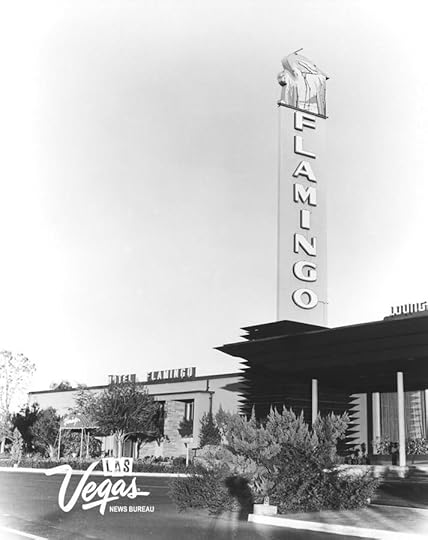
Chicago, 1946. Gambling chief James Ragen is shot right before the eyes of the man hired to protect him: A-1 Detective Agency's Nate Heller. Which mob boss hungry for Ragen's gambling action has made a fool of Heller: cold-blooded Capone heir Jake "Greasy Thumb" Guzik or hotheaded, movie star-handsome Bugsy Siegel? The answer's not in the mean streets of Chicago, because the city's mob wars have moved west, to the glitz of Hollywood and the fabulous-and illicit-potential of a shabby little desert way station they call Las Vegas(.
Received the Shamus Award, "The Eye" (Lifetime achievment award) in 2006.
He has also published under the name Patrick Culhane. He and his wife, Barbara Collins, have written several books together. Some of them are published under the name Barbara Allan.
Book Awards Shamus Awards Best Novel winner (1984) : True Detective Shamus Awards Best Novel winner (1992) : Stolen Away Shamus Awards Best Novel nominee (1995) : Carnal Hours Shamus Awards Best Novel nominee (1997) : Damned in Paradise Shamus Awards Best Novel nominee (1999) : Flying Blind: A Novel about Amelia Earhart Shamus Awards Best Novel nominee (2002) : Angel in Black
Neon Mirage is, as most of Max Allan Collins’ thrillers featuring Nate Heller, intriguing historical fiction—judged improbable by some, but meticulously researched enough to offering an interesting hypothesis on how events “went down.” Sometimes, I am drawn to his novels by the historical situation. This one had me at “…riding literal shotgun in the bodyguard car following James Ragen and his fancy Lincoln Continental down State Street, ….” (p. 3). The first third of the book has regular mentions of places a few footsteps or a few blocks from where I teach. Even more coincidental was the fact that I had just been reading Boss: Richard J. Daley of Chicago, Mike Royko’s quasi-biographical expose on the first Mayor Daley of Chicago, and that volume spent considerable time on Daley’s early days with the machine while corrupt mayors like Kelly created an “open” town in Chicago for all kinds of vices. Neon Mirage rang true to that era.
Of course, the rest of Neon Mirage takes place in Hollywood/Beverly Hills, as well as the nascent Las Vegas Strip. I’m not a gambler, but I covered enough electronic trade shows in Las Vegas to have been in the now departed Aladdin’s, Desert Inn, Dunes, Landmark, and Sands. And when Nathan Heller left the familiar Union Station on Alameda Street in Los Angeles to ride to Las Vegas, I had memories of departing from that station (though not to Las Vegas), too. So, be forewarned, anyone who has read this far, this review has a distinct personal bias in favor of the book. And, while I was never on one of the fabled gambling ships, three miles off the coast of Los Angeles, I did watch episodes of Mr. Lucky on television (and played parts of the score in high school band), so I was very intrigued by the scene on a gambling ship.
Now, before I summarize the book, let me address those readers who love those wild similes and metaphors used by the detective writers of old. I’ll give just a sampling here of those which compelled me to write them down. “A pink-coated waiter, whose English accent struck me as about as real as Mayor Kelly’s campaign promises,…” introduces the reader to St. Hubert’s English Grill where Heller meets with real-life mobster, Jake “Greasy Thumb” Guzik. [St. Hubert’s no longer exists but the church-like façade is still on Federal Street.]. Another establishment south of the Loop didn’t get such good “press” in the book: “The High Life Inn would have been an apt description for the place if you replaced high with low.” (p. 82) [I don’t think that one is a real reference, but it might be.]
Regarding the gambling ships mentioned earlier, I liked his description of music which “…echoed across the water like bad radio reception.” (p. 139) On page 130, Heller has an interview with Virginia Hill of “Bugsy” Siegel fame. Of that meeting, Heller observes: “If calling her drunk was less than fair, calling her sober was less than accurate.” One the same page, Heller describes a picture as having an Old Dutch Masters look, “By which I mean it was like a Rembrandt seen through a lot of cigar smoke.” Even the conversation sparkled with wit quite often. My favorite line was, “This isn’t Dodge City 1880, honey. It’s Chicago 1946. Which is a hell of a lot worse.” (p. 117)
Rarely does a detective thriller advance upon failure after failure, but Neon Mirage does. Heller fails to protect the man he’s guarding, fails as a witness to the crime, fails to persuade his fiancée to avoid unsavory associations, fails to keep from being tarnished by association with mobsters himself, and fails to get out of a major scrape unscathed. However, he is just successful enough that one feels there is a certain amount of justice and a certain amount of reward. Each reader will have to decide if those are both satisfactory. But I already wrote that I was biased. I’m all in on Neon Mirage (and with my risk aversion, I can’t imagine ever saying that across a poker table, so I’ll say it now.).
Three of my favorites genres intersect in the Nate Heller series: mystery, historical fiction and a touch of alternate history. The series makes its way from Prohibition Chicago (with Ness, Capone and Nitti) to the JFK assassination. It's clever, well-written and grounded in fact. This time around, Heller gets involved with Bugsy Siegal, Virginia Hill and the founding of the neon mirage that is Las Vegas. Along the way, Heller finds time to increase his presence in LA, where he will become private eye to the stars, and to start building his business into a nationwide concern. Organized crime is always a presence, although it takes center stage here. When I started the series (admittedly with the last three books), it seemed too daunting to go back 40 years (and 14 books). But now that I have started the journey, I am eager to follow Heller's growth and see what history we can encounter along the way.
The fourth in Max Allan Collins’ Nate Heller series…Collins and his family are diligent in their research into their forays into historical fiction and they are spit on here in “Neon Mirage,” the story of the rise of Bugsy Siegel’s desert dream for Las Vegas…The mobster history, as well the tone and tenor of the post-war Chicago is vivid, but in no way, clutters the telling of the tragic story…Absolutely a page-turner series!!!
It's been less than two months since I finished Collins' "Nitti trilogy." I didn't stay away long from following the further adventures of Nate Heller, P.I.
Why? Because Collins is a writer who has all the skills and knows how to use them, even in what is probably the longest running noir tribute to The Windy City. And, he gets it all so right! It is obvious that he has researched Chicago up and down. The neighborhoods feel right, and I knew many of them. His command of history is not a veneer on top of the story but blended into every paragraph. Take for example Bronzeville, a bit of "negro history" which I have other more scholarly works in my bookcase. Collins version is totally consistent with them, yet he brings it more alive to those of us who didn't live in that era.
The era is just post World War II, 1946. Crime is still part of everyday life in Chicago. Frank Nitti, we have learned, was the criminal who made crime a regular business in Chicago by being a "businessman" about it. Just like Nate Heller is a businessman who now runs a much larger detective agency. The details and the wider circle of personalities that Collins includes flesh out a story that gives insight (somewhat different than in Puzo's The Godfather) about how (and why) Las Vegas became what it now is.
Nate has to walk a narrow path between competing gangs and among the rich and infamous as he looks for motivation in the attempted assassination of the head of a big money racing toutsheet. That guy also happens to be the uncle of Nate's current love interest. And Nate is displaying all his skills and foibles as he moves down that path. Part of what I appreciate in Collins' writing is that, while each story is told from Nate's point of view, I don't have to always like Nate or agree with him while I am totally captive to this fast moving plot. ----- Now that I have finished this book, I can say that Collins isn't coasting in any way. There is none of that "variations on theme" stuff that many series authors fall into. Nate has grown up, even if he hasn't quite matured. His problems are true to his age and the age he lives in. And, the edginess of it all is still front and center.
This one was a slow start but became quite engaging. What I enjoy about Max Allan Collins Nate Heller series are the historical tie ins and how his character fits into the history so seamlessly. This book covers Heller's experience in early Vegas and his dealings with Bugsy(don't call him that) Siegel. I enjoy Collins characters voice. It feels real. This was pretty good.
Nathan Heller mystery where Heller is mixed up with the death of Bugsy Siegel and the establishment of Las Vegas. I really think Bugsy was treated a bit too sympathetically, and the same with George Raft.
Neon Mirage is another very compelling historical crime novel in the Nate Heller series. I have read the first three novels in the series and really enjoyed all of them. This one is no exception. It takes place in 1946-1947 after WWII and Heller has his detective agency up and running in Chicago. He is hired by James Ragen, a Chicago gambling chief who operates a wire service for horse racing bets, to serve as his bodyguard. Ragen has been offered money from the mob to buy out his service but he doesn't want to sell. Then as Heller is following Ragen's car, it is ambushed and Ragen is shot and rushed to the hospital. But who is behind the hit? Is it Chicago crime boss and Capone heir, Jake Guzik, or is it the notorious Ben "Bugsy" Siegel? Heller doesn't necessarily care -- he wants to stay away from the mob -- but his girlfriend is Ragen's niece and she wants to find out who is responsible for the shooting and Ragen's subsequent demise by mercury poisoning. So she decides to go to Hollywood to get in close with Siegel and see what she can find out. Well Heller follows her there and subsequently to Las Vegas where Siegel is trying to get his lavish Flamingo Hotel up and running.
This book was very meticulously researched and includes many real-life characters that played a role in this mostly true account. These include Siegel's girlfriend, Virginia Hill, his Hollywood pal, George Raft, and other movie notables, as well as many characters from the New York, Chicago, and Los Angeles underworld such as Mickey Cohen, Meyer Lansky and Lucky Luciano. The novel was told in hard-hitting prose and the dialog was reminiscent of Mickey Spillane, Dashiell Hammett, and other noir crime novelists. I really enjoyed it and I'm sure I will be reading more in this series.
Neon Mirage is Nate Heller's 1945-46 account of his imagined Bugsy Siegel case, and it keeps up the entertainment standard of the first three Heller novels. MAC does his usual noir historical fiction, interjecting his Zelig like Nate Heller into real life events with real bad guys, outsmarting most of them and coming out like a slightly battered rose.
Despite all the artifice, these Heller books work because the detective is so likeable, shrewd and the background is so beautifully woven into the detective story, it seems natural. This is some trick, and it is based on a tonne of research and hard work. Some of this tale stretches credibility to the breaking point - especially the romance with Peggy Hogan, whom our hero loves, gets jilted by and ends up marrying. But that's a small price to pay for so satisfying a tale. As usual, MAC resolves the mystery part of the story with panache, a fact most appreciated by this reader, who has seen it all before. He springs it on you and it's perfect.
Nate Heller is back. And he again finds himself embroiled with The Outfit and, ultimately, Benjamin "Bugsy" Siegel and the building/opening of The Flamingo in Las Vegas. It's 1946 and Heller has been expanding his A-1 Detective agency. The firm is hired as bodyguards for James Ragen, owner of National News Service, which sends sporting results (mostly racing results) from the event to bookies around the country and the Uncle of Heller's girlfriend. The Outfit wants to buy Ragen out and if he won't sell they may force him out. Trans-American Publishing, is a rival service owned by Ben Siegel. And inevitably their paths cross and Heller ends up in Las Vegas training Siegel's security team for The Flamingo.
At this point you know what you're going to get with Collins' Heller books. Heller is going to be thrust into history and there's most likely going to be something happening that isn't quite the way history portrays it. The research seems to be solid, the execution is fun and compelling and they're a great easy read.
Heller takes on a bodyguard job for a friend, even though he hates the work and knows its never a good idea. By this point, after the war, Heller is well-established as a detective with an operation of several employees and is making enough he has his own place to live in rather than living in his office.
He meets the daughter of his client and they fall in what might be love, and the case gets tangled with Chicago mobsters again. Heller ends up in California working with Ben "Bugsy" Siegel. There, things become complicated both with the girl and with Siegel, and the plot is a bit complicated.
For once, the book does not end with some gut-wrenching betrayal or shocking discovery, and feels more like a book in a series if not quite as compelling as previous ones. The gimmick of Heller being connected to a historical figure or figures is more naturally part of the story in this case as well.
The adventures of Nate Heller, Chicago ex-cop / private eye / mob detective continue. This time we are in post-WWII Chicago, where Nate takes on a bodyguard role for a friend who gets gunned down right in front of him. Following the lead points at either Chicago mobster "Greasy Thumb" Guzik or east coaster Bugsy Siegel who is now building his dream palace in the little dusty town of Las Vegas.
So the action starts in Chicago but moves out west. Along the way Nate falls in love, gets a business partner in Los Angeles, and ends up working for Bugsy Siegel as he tries to get the Flamingo up and running before his mob backers lose patience.
Mr. Collins once again combines history with a rip-roaring, old fashioned private eye story. Enjoy the fun. Especially if you know how the Bugsy story ends...
Just good fun ! Good, solid pulp fiction is an art form and the Heller series does it up right. Enjoyed this reconstruction of the beginnings of Las Vegas. 4 stars
Bugsy Siegel and Heller clash over a girl, a casino and a wire service. We start in Chicago, move to L.A. and then Vegas as the Outfit in the windy city tries to take over a gambling service by assassination and deceit. Add in the East coast mob bosses and a crazy visionary in the desert and you have a disaster in the making. And in the middle is former cop now detective Nate Heller, his girl and his code.
Okay. This has most of the elements of Nate Heller, Nate involved in moment of American History (ie development of Las Vegas), gangsters, and women.
Other Nate Heller novels Max Allen Collins creates suspense/mystery surrounding a real historical event (ie who really shot Huey Long, what really happened at Roswell, the shooting at the 1932 Democratic Convention) by combining it with great historic details.
The character of Nate also is usually intersting as he is definetly gray--he is a former Chicago cop who played on both sides of the line and continues to be associated with the Chicago Outfit. He is also not opposed to killing or setting one up where necessary.
The problem is that in this novel there is not the same historic elements and Heller is missing his edge. Regarding the historic angle, the fight over race wires between Reagan and Guzik is interesting, but the part with Ben Seigel and Virginia Hill was disappointing. Unlike his other novels, Collins does not bring in much new historic angle. If you have seen the movie Bugsy or read James Ellroy's American Tabloid you have seen/heard all the same characters and angles ie George Raft, Mickey Cohen, or that Siegel was killed by Luciano and Lansky for going over budget/ripping off the NY Combination.
The other disappointment is that Nate does not have his edge. Much of the novel is spent with him and his relationship with Peg Reagen. SHe has way too much time in the novel. For being the niece of a Chicago mob boss she comes off needy and naive. She seems especially unintersting every time Virginia Hill makes an appearance in the novel!
Nathan Heller is hired to guard racketeer James Ragen. Ragen has been threatened by mobsters who want to take over his gambling wires. Something goes wrong and Ragen is shot in an ambush. Complicating the matters is Ragen's niece Peggy Hogan. Peggy and Nate have a past that is unknown to her family. Peggy wants Nate to find her uncle's attackers. Heller investigates trying to locate who hired the killers. The investigation eventually leads him out west where he meets up with Virginia Hill and finally with Benjamin Siegel. Siegel has gone west with the vision of turning the sleepy town of Las Vegas into a gambling paradise. Before he knows it Heller is involved with Siegal and helping him to train his security staff to spot pickpockets and to find out why so much material is disappearing from the casino sight. Of course all of this is complicated by the lovely Peggy who Nate is completely in love with. The only trouble, she has the hots for Siegal.
The story takes place in Chicago and Las Vegas in 1946. This is great modern noir at its best. Nathan Heller does not disappoint. Pick up this volume and enjoy the gangsters, cops, private eyes, and lovely ladies from the end of the gangster era.
This for me, is the most disjointed of the Nate Heller stories. Although it's held together by historical events, it somehow comes off like two different books jammed haphazardly together. It starts by focusing on Chicago mobster Jim Ragen but mid way, moves to examine the L.A./Las Vegas world of mobster Bugsy Siegel. Yes, the two men had business interests (and possibly contract killings) in common, but the narrative here feels dissonant. The result is, by the end of the story you've forgotten completely about the characters who served as the catalysts for the action.
Still, Heller's fun to follow around and once again Collins unabashedly resorts to a hefty dose of name-dropping to keep things interesting. Now if only he'd stop describing characters as "patting the air" and avoid over-using the word "natty".
I started out liking this right up there with other Nate Heller's I've read, but then it seemed to lose any semblance of a plot. the first half in Chicago is about Nate's love life and the murder of a local wires man. Then it slows way down and eventually Nate ends up in California and Las Vegas with the likes of Virginia Hill, whom he does not like, ang Ben (don't call me Bugsy) Segal. At the very end the first murderis answered by the second. It still has a lot of local and era color to it and Nate's great cynical view of life like this comment on being offered much more money for a job he had already turned down, "that raised my eyebrows and lowered my standards."
Another great entry in the Nathan Heller historical crime series. In the fourth book in the series Heller encounters Bugsy Siegel. A few years ago I stayed at the Flamingo hotel while attending a conference in Las Vegas, so I enjoyed getting some background on its construction and central role in Vegas history. My one disappointment in the book was that Collins failed to write an afterword discussing where he embellished the true story.
I am a devotee of dective Nate Heller and Max Allan Collins' writing style. This particular story covers the late 1930-1947 criminal underworld based in Chicago and winding up in Las Vegas at Ben ("Bugsy") Siegel's financially ruinous attempts to bring the Flamingo Hotel and Casino to fruition. As a fan of the movie "Bugsy," I was pleased that Collins' story line tracked pretty closely. Overall, this was an enjoyable continuation of the Heller detective series.
Not the strongest one in the series so far. But a weak Collins novel is still a pretty damn good novel. Love the characters especially Heller but felt the plot a little light and it seemed to drag a little. As much as i loved the ending and loved that it connected back to the events in Chicago at the beginning of the novel but wished the ending was more satisfying.
An enjoyable romp that explores the seedy, interconnected worlds of mob-tainted national racing wires and the glittering, newly-built gambling palaces of late '40s Las Vegas. As usual, our hard-boiled hero serves as the author's eyewitness to, and often unwilling participant in, underworld history.
I hadn't read any Nate Heller books before, so am not able to compare to the others. I found it to be an interesting old school PI story, though really enjoyed the Chicago references as it is interesting to see them how they were a long time ago and which icons still endure. Seems clear that Collins did a lot of homework for this one.
Nate Heller hires out to bodyguard Jim Ragen who is running a sports wire in defiance of The Mob. When Ragen is gunned down and almost killed, the question is whether the hit was ordered by "Greasy Thumb" Guzik or "Bugsy" Siegel. Heller travels to Hollywood and Las Vegas to investigate Siegel, often in the company of George Raft.
It's not an action-packed nail-biting thriller, but it's an entertaining read none the less. Based on real-life characters and events from the Chicago mob scene in the early 1900s, after Nathan's assignment to protect his friend turns deadly, the investigation which follows leaves him with more professional mob connections than he cares for.
The level of historical detail in the Neon Mirage is up to the high standards of the other Nate Heller stories I have now read. I keep coming back for both the light, lively style of the writing and that attention to detail.