

What do you think?

Somebody: The Reckless Life and Remarkable Career of Marlon Brando
Stefan Kanfer, acclaimed biographer of Lucille Ball and Groucho Marx, now gives us the definitive life of Marlon Brando, seamlessly intertwining the man and the work to give us a stunning and illuminating appraisal. Beginning with Brando's turbulent childhood, Kanfer follows him to New York where he made his star-making Broadway debut as Stanley Kowalski in "A Streetcar Named Desire" at age twenty-three. Brando then decamped for Hollywood, and Kanfer looks at each of Brando's films over the years--from "The Men" in 1950 to "The Score" in 2001--offering deft and insightful analysis of his sometimes brilliant, sometimes baffling performances. And, finally, Kanfer brings into focus Brando's self-destructiveness, ambivalence toward his craft, and the tragedies that shadowed his last years.
350 pages, Paperback
First published January 1, 2008
About the author
Stefan Kanfer
48 books20 followersStefan Kanfer is the author of fifteen books, including the bestselling biographies of show business icons: GROUCHO; BALL OF FIRE (Lucille Ball); SOMEBODY (Marlon Brando); and TOUGH WITHOUT A GUN (Humphrey Bogart). He has also written many social histories, among them THE LAST EMPIRE, about the De Beers diamond company, and STARDUST LOST, an account of the rise and fall of the Yiddish Theater in New York.
Kanfer also wrote two novels about World War II and served as the only journalist on the President’s Commission on the Holocaust. He was the first by-lined cinema critic for Time magazine, where he worked as writer and editor for more than two decades. He has been given many writing awards and was named a Literary Lion of the New York Public Library. He lives in New York where he serves as a columnist for the City Journal of the Manhattan Institute.
Kanfer also wrote two novels about World War II and served as the only journalist on the President’s Commission on the Holocaust. He was the first by-lined cinema critic for Time magazine, where he worked as writer and editor for more than two decades. He has been given many writing awards and was named a Literary Lion of the New York Public Library. He lives in New York where he serves as a columnist for the City Journal of the Manhattan Institute.
Ratings & Reviews
Friends & Following
Create a free account to discover what your friends think of this book!
Community Reviews
Displaying 1 - 30 of 50 reviews

October 11, 2017
In the early years he knew each and every one of his lines but he improvised. He insisted on many takes and each one was different, and, they said, each one brilliant. Later on, he didn’t bother to learn his lines at all, he’d have cue cards stuck all over the place, for instance on the shirt of the actor he was playing opposite, and he’d explain this by saying that in real life people didn’t know what they were going to say before they said it. So he would be looking around for the right cue card and that would be more realistic.
He had wives, ex-wives and girlfriends all over the place. He said he always had four or five plates spinning in the air, meaning women, so if one dumped him it didn’t matter. Pretty much none of it mattered to him. Wives, girlfriends, one night stands, whatever. What did you say your name was? From the age of 22 he just had to tilt an eyebrow and they’d be right there. So many you couldn’t count.
He had a huge house on Mulholland Drive and some islands near Tahiti which were a money pit, he thought he could turn them into an eco-tourist paradise and it was a disaster.
He had a lot of kids and most of them did matter and there you get the other side of paradise which is the pure sheer hell of when your kids screw themselves up so bad and you can’t do anything, I don’t care if your name is Marlon fucking Brando. So, famously, his oldest son shot and killed the boyfriend of his oldest daughter. It was a whole circus, you can imagine. You think that was bad enough, but no – five years later the daughter hanged herself.
Everyone knows that this greatest screen actor of all time was mostly in total turkeys. But did you know how many? After Guys and Dolls in 1955 you have to wait until The Godfather in 1972 for a movie people actually liked; and only two of the SEVENTEEN movies made between 1955 and 1972 have you actually heard of…. 17 turkeys all in a row, including Bedtime Story, The Chase, A Countess from Hong Kong … I could go on. The two you have heard of in this 16 year period were Mutiny on the Bounty and Reflections in a Golden Eye, both of which were hated.

Time said about Mutiny on the Bounty: it wanders through the hoarse platitudes of witless optimism until at last it is swamped with sentimental bilge. Oh yes and I gotta tell you this one. In the preliminary discussions about Mutiny Marlon said they should shoot it in Tahiti, a place which at that point he didn’t actually know that much about. So they went there, because he suggested it, and hired a group of Tahitian women on the spot to work as extras.
Their come-hither looks turned out to be unusable because their teeth were marred by brown stains and streaks, the result of chewing betel nuts. To cover these flaws, they were required to wear temporary dentures. Some five thousand were flown in from the United States. The women were delighted, they took the teeth caps and vanished to admire themselves in their home mirrors. They went missing for days…. The sand was equally disappointing. It was black powdered lava, ugly to the camera. Tons of white sand had to be trucked in from a faraway beach.

So this incredible reputation depends on seven performances –
A Streetcar Named Desire
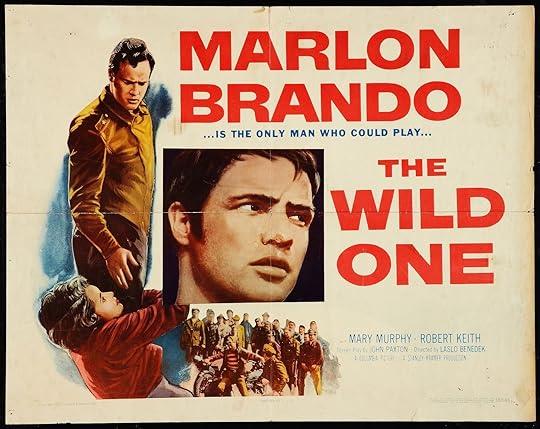
The Wild One
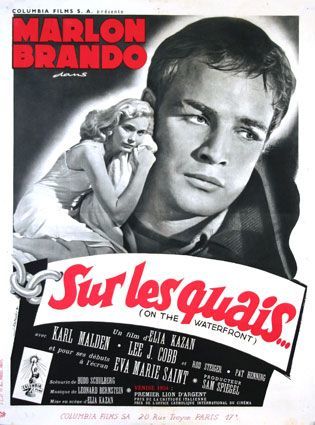
On the Waterfront
Guys and Dolls (maybe)
The Godfather
Last Tango in Paris
Apocalypse Now
I must say that I just saw A Streetcar Named Desire for the first time, and they’re not wrong about the impact he has in that otherwise fairly kitschy melodrama - he’s brilliant. And likewise in the other six listed above.
But when I look at the films of Robert de Niro I see fifteen great performances before he decided to phone it in and make all those stupid comedies.
So this is strange. Marlon Brando is like Elvis Presley. Wham! From 1956 to 1959 Elvis upended popular culture and gave the world rock and roll. Then after 1960 he Xeroxed himself twice a year in those endless stupid musicals and otherwise ate burgers.
Marlon and Elvis : the Burger Kings of popular culture.
On Bob Dylan’s album Tempest he has a song “Long and Wasted Years” – Bob has had a few himself (the 1980s) but Elvis and Marlon are the Lords of Wasted Years. The great albums Elvis could have made, but didn’t… the great movies Marlon could have made, but didn’t. Instead, he charged the earth for being in stuff like The Nightcomers, The Freshman and Christopher Columbus.
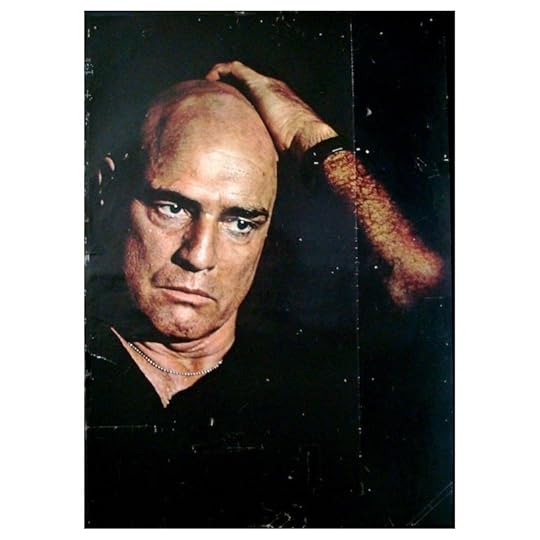
Finally Francis Ford Coppola finished Apocalypse Now, except for one tiny little thing – he needed Brando for one last closeup (The horror! The horror! ). No more than an hour of his time. Brando replied that he would have to pay for a whole day of his time which would be $70,000.
I’m in the Marlon Brando business. I sell Marlon Brando. Would you go to the president of General Motors and ask him for a seventy thousand dollar favour?
So he had more of everything than you can imagine, money, sex, food, fame, adulation and also vituperation, tragedy, misery, depression.
I bet in the future they figure out a way that we can all be a famous person and live a year of their life, like a participatory computer game. A lot of people wouldn’t mind being Marlon Brando in 1956. Nobody would want to be him after 1960.
Elaine Stritch summed it all up:
There was never anyone remotely like Marlon Brando. Thank God.
He had wives, ex-wives and girlfriends all over the place. He said he always had four or five plates spinning in the air, meaning women, so if one dumped him it didn’t matter. Pretty much none of it mattered to him. Wives, girlfriends, one night stands, whatever. What did you say your name was? From the age of 22 he just had to tilt an eyebrow and they’d be right there. So many you couldn’t count.
He had a huge house on Mulholland Drive and some islands near Tahiti which were a money pit, he thought he could turn them into an eco-tourist paradise and it was a disaster.
He had a lot of kids and most of them did matter and there you get the other side of paradise which is the pure sheer hell of when your kids screw themselves up so bad and you can’t do anything, I don’t care if your name is Marlon fucking Brando. So, famously, his oldest son shot and killed the boyfriend of his oldest daughter. It was a whole circus, you can imagine. You think that was bad enough, but no – five years later the daughter hanged herself.
Everyone knows that this greatest screen actor of all time was mostly in total turkeys. But did you know how many? After Guys and Dolls in 1955 you have to wait until The Godfather in 1972 for a movie people actually liked; and only two of the SEVENTEEN movies made between 1955 and 1972 have you actually heard of…. 17 turkeys all in a row, including Bedtime Story, The Chase, A Countess from Hong Kong … I could go on. The two you have heard of in this 16 year period were Mutiny on the Bounty and Reflections in a Golden Eye, both of which were hated.
Time said about Mutiny on the Bounty: it wanders through the hoarse platitudes of witless optimism until at last it is swamped with sentimental bilge. Oh yes and I gotta tell you this one. In the preliminary discussions about Mutiny Marlon said they should shoot it in Tahiti, a place which at that point he didn’t actually know that much about. So they went there, because he suggested it, and hired a group of Tahitian women on the spot to work as extras.
Their come-hither looks turned out to be unusable because their teeth were marred by brown stains and streaks, the result of chewing betel nuts. To cover these flaws, they were required to wear temporary dentures. Some five thousand were flown in from the United States. The women were delighted, they took the teeth caps and vanished to admire themselves in their home mirrors. They went missing for days…. The sand was equally disappointing. It was black powdered lava, ugly to the camera. Tons of white sand had to be trucked in from a faraway beach.
So this incredible reputation depends on seven performances –
A Streetcar Named Desire
The Wild One
On the Waterfront
Guys and Dolls (maybe)
The Godfather
Last Tango in Paris
Apocalypse Now
I must say that I just saw A Streetcar Named Desire for the first time, and they’re not wrong about the impact he has in that otherwise fairly kitschy melodrama - he’s brilliant. And likewise in the other six listed above.
But when I look at the films of Robert de Niro I see fifteen great performances before he decided to phone it in and make all those stupid comedies.
So this is strange. Marlon Brando is like Elvis Presley. Wham! From 1956 to 1959 Elvis upended popular culture and gave the world rock and roll. Then after 1960 he Xeroxed himself twice a year in those endless stupid musicals and otherwise ate burgers.
Marlon and Elvis : the Burger Kings of popular culture.
On Bob Dylan’s album Tempest he has a song “Long and Wasted Years” – Bob has had a few himself (the 1980s) but Elvis and Marlon are the Lords of Wasted Years. The great albums Elvis could have made, but didn’t… the great movies Marlon could have made, but didn’t. Instead, he charged the earth for being in stuff like The Nightcomers, The Freshman and Christopher Columbus.
Finally Francis Ford Coppola finished Apocalypse Now, except for one tiny little thing – he needed Brando for one last closeup (The horror! The horror! ). No more than an hour of his time. Brando replied that he would have to pay for a whole day of his time which would be $70,000.
I’m in the Marlon Brando business. I sell Marlon Brando. Would you go to the president of General Motors and ask him for a seventy thousand dollar favour?
So he had more of everything than you can imagine, money, sex, food, fame, adulation and also vituperation, tragedy, misery, depression.
I bet in the future they figure out a way that we can all be a famous person and live a year of their life, like a participatory computer game. A lot of people wouldn’t mind being Marlon Brando in 1956. Nobody would want to be him after 1960.
Elaine Stritch summed it all up:
There was never anyone remotely like Marlon Brando. Thank God.

April 8, 2012
I don't read many celebrity biographies, but this was a decent and fair look at an infuriating and fascinating subject. Literate, too; there were words in here that I didn't know, so it's written above the standard tabloid journalism. This has made me want to watch the good Brando films again.
April 18, 2013
It is hard to justify the blurb's characterisation of this book as a 'definitive' book on Brando (there are dozens of others, of course, including Peter Manso's 1000-page monster), but it is certainly a well-written roadmap through a bizarre and extraordinary life. Brando is probably the most influential actor in the history of Hollywood (Streetcar, Waterfront, Godfather, Last Tango, Apocalypse Now) and also made more outright turkeys than any other leading actor (almost everything in the 1960s and after Apocalypse) - similarly, he always took pains to trash the acting profession completely and to cynically boast that he would sweep up the set if Paramount paid him $3m for doing that (his going rate in his late period). Born of alcoholic parents, he always had a morbid fear of mental illness, and, with the help of the Method, turned this vulnerability (allied to his amazing physical beauty, at least when young, before he got to 300lb) into a new form of acting, which became a model. As Michael Winner, of all people, noted, before him actors acted, and after him, they behaved. Famously impossible on set, Brando would refuse to learn his lines on the basis that people in real life did not do this [though Brando's experience of 'reality' as usually lived was quite limited one might assay], and idiot cards would have to be stuck on the set, on lamps, backs of doors on ceilings, which may also account for his famous pauses. He would also insist on script changes, often ad-libbed on the spot (such as Kurtz's bonkers speech at the end of Apocalypse, which makes the film truly memorable and not just another lament for Americans fucking up in Vietnam) and create his own look - disastrously on Missouri Breaks but brilliantly on Godfather. As he became more successful, Brando became increasingly interested in politics, and setn a Native American woman to collect his Oscar, which then backfired badly when it emerged that she was not a true Indian and had won a Miss Vampire contest in 1970. This sort of typifies his well-meaning but dilettantist approach to emancipatory politics; likewise his decampment to the South Seas island of Tetiora, which he bought for $70K, after acting (brilliantly) as Mister Christian the remake of Mutiny on the Bounty (1962). This was his refuge from the pressures of being Marlon Brando, though obviously only possible if you actually were Brando in the first place -he hoped to turn this into an eco-paradise but it became a living hell, with the killing of his daughter's boyfriend by his drunk son, and then the suicide of the daughter. As his fame grew, so did his girth and he became a figure of some fun - Tennesse Williams cattily joked that Marlon was being paid 'by the pound'. Likewise, his wives and children accumulated (Marlon had three wives, numreous children by various women and innumerable affairs), which forced him to take any offers going, usually for $3-5m, on which he wasted his talent with studied indifference. His death, living as a virtual recluse, too obese to leave his house (which was next door to Michael Jackson's) is really quite sad and pitiful to read. Jack Nicholson bought his house [for $5m] after his death and found it to be almost derelict and full of mould, encapuslating the general feeling of neglect of the physical that typifies the life described in this book.
March 10, 2022
Read two books on Brando. A shitty memoir written by a friend and a very slapdash bio. Since Mark Harris probably doesn’t take requests, I was sure that’s as good as it would get. Luckily, I caught wind of this and this was mostly what I wanted. Not a hardcore Brando fan but like Sinatra he is iconic and the scope and tragedy of his life has always fascinated me. Tons of great little stories and little insights about the only major 50s icon to really live past the 50s. Glad I finally found a book that did him even a little justice.

April 14, 2013
I thought Kanfer`s Somebody: The Reckless Life and Remarkable Career of Marlon Brando was very articulate and well written. It is obvious that a lot of research went into the writing of this book. However, my problem is that it was way too depressing and centred more around the recklessness than the remarkable. I could hardly read from chapter to chapter without feeling total despair and impending doom lurking around every corner. On one hand, one could say, well, the truth is the truth. Nonetheless, there are many different dimensions to any given situation. Brando was difficult, Brando was disorganized, Brando was unprepared and Brando was self-centred.
Surely, given Brando’s intelligence and experience, there was more to the story than these often one-sided interpretations. That said, there were moments of redemption for Brando, but they were few and far between. It’s my opinion that there was too much negativity written about the man who was far more sensitive and complex. As well, the treatment alone by the press was another element of the book that perturbed me. For example, after The Missouri Breaks opened, one reviewer stated: ``Marlon Brando at fifty-two has the sloppy belly of a sixty-two year old, the white hair of a seventy-two year old, and the total lack of discipline of a precocious twelve year old.`` The book is inundated with constant insults and disrespect for the man. It is no wonder to me that Brando loved to curl up on the couch with his dog Tim and block out a world that judged, criticized and scrutinized him on a constant basis. All the drama aside,unless Brando visits me from the afterlife to tell me otherwise, I will not let the negativity permeate his genius and passion.
Surely, given Brando’s intelligence and experience, there was more to the story than these often one-sided interpretations. That said, there were moments of redemption for Brando, but they were few and far between. It’s my opinion that there was too much negativity written about the man who was far more sensitive and complex. As well, the treatment alone by the press was another element of the book that perturbed me. For example, after The Missouri Breaks opened, one reviewer stated: ``Marlon Brando at fifty-two has the sloppy belly of a sixty-two year old, the white hair of a seventy-two year old, and the total lack of discipline of a precocious twelve year old.`` The book is inundated with constant insults and disrespect for the man. It is no wonder to me that Brando loved to curl up on the couch with his dog Tim and block out a world that judged, criticized and scrutinized him on a constant basis. All the drama aside,unless Brando visits me from the afterlife to tell me otherwise, I will not let the negativity permeate his genius and passion.

January 17, 2009
Extremely good bio and analysis of a troubled, talented soul. Very well written. And I hardly ever read books about movie stars.

October 10, 2016
This book is utter crap! The detail kill's it. you only find out about him as a adult near the end.
I liked the pictures though.
I liked the pictures though.

June 21, 2017
"I could always hold my breath longer than anyone else."

April 13, 2015
It's very hard to keep my thoughts on Brando separated from my thoughts on the book. I can't quite put a finger on how accurate it is since it's the first I read on him, but meanwhile I'd read articles and another bio thingy (Sophia Loren's autobiography, which is what made me curious about Brando in the first place) and in those I found additional information, some contradicting those that were in this very book: for instance, was Monty Clift his rival, his friend or-wait for it-his lover? Did Brando hit on Loren like she claims, or insult her from the start like he claims? (I believe Loren, for the record). But such info belong to gossip columns, rather, I would have loved to read little trivia on the Oscar pictures with Grace Kelly or the cheesecake episode with Frank Sinatra. What can I say, I'm a sucker for those things and I like very detailed biographies.
Still, Kanfer does provide a lot of info on Brando's movies and his (varying) commitment to them, as well as to social justice matters (although something more on him and Martin Luther King would have been nice), and most sections really affected me in terms of interest for Brando's work and in personal terms too. I now feel like I understand the guy, which is what counts, and reaching the last section I found myself thinking back of that day of July 2004 where my family and I were on our way to the Alps and read of Brando's death on a newspaper. My uncle was so shocked you'd have believed he thought him immortal. Not that he isn't.
Still, Kanfer does provide a lot of info on Brando's movies and his (varying) commitment to them, as well as to social justice matters (although something more on him and Martin Luther King would have been nice), and most sections really affected me in terms of interest for Brando's work and in personal terms too. I now feel like I understand the guy, which is what counts, and reaching the last section I found myself thinking back of that day of July 2004 where my family and I were on our way to the Alps and read of Brando's death on a newspaper. My uncle was so shocked you'd have believed he thought him immortal. Not that he isn't.

December 10, 2008
Kanfer seems to have poured over all available research resources that include books and articles by and about Brando and interviews of those who were associated with him at various points in his life and career as well as any other relevant historical material that would help to establish a frame-of-reference for dominant influences and major developments in Brando's "reckless life and remarkable career." Kanfer offers a wealth of insights into Brando's most significant and invariably dysfunctional relationships, as with his parents. Marlon senior earned more than enough to maintain his family in solid comfort. Affection, however, was in short supply. "He grew up rude and misogynistic, given to binge drinking and bullying." As for Dorothy ("Dodie") Brando, "the neighbors whispered that [she] was the kind of woman who saw the glass as half full. That was because she had drunk the other half...Too many afternoons [she] disappeared into an alcohol-saturated haze, unreachable by her children" who included two daughters, Frances ("Frannie") and Jocelyn ("Tiddy"). Kanfer helps his reader to understand why, once Brando became a father, he was a dysfunctional parent. Why, while growing up feeling inadequate and unworthy, he could not later accept praise or offer it to others. And why he became convinced that "if you want something from an audience, you give blood to their fantasies. It is the ultimate hustle."

March 23, 2015
On early Brando:
Kirk Douglas:"I went up for a part in Truckline. I didn't get it. Bitter, I went to see the play, watched another actor play my role. I loved the first two acts-he was terrible. I congratulated myself on how much better I would have been. Suddenly, in the third act, he erupted, electrifying the audience. I thought, 'My God, he's good!' and looked in the programme for his name: Marlon Brando."
John Huston, after a screening:""Christ! It was like a furnace door opening-the heat came off the screen. I don't know another actor who could do that."
On the torment of his tragic, family life:
Brando:"The messenger of misery has visited my house."
After his death:
Jack Nicholson:"Marlon Brando is one of the great men of the twentieth and twenty-first centuries, and we lesser mortals are obligated to cut through the shit and proclaim it. This man has been my idol all of my professional life, and I don't think I'm alone in that. The impact of movies is enormous, and his impact in the movies was bigger than anyone else's-ever....I think Marlon knew he was the greatest. I don't think he dwelled on it, nor did he ever say as much to me. But, come on, there was a reason people expected so much from him right to the end. That's why people always expected him to be working. And believe me, there were times when he told me he wanted to work and couldn't. It disturbs me that toward the end, all some people could speak about was his weight."
Kirk Douglas:"I went up for a part in Truckline. I didn't get it. Bitter, I went to see the play, watched another actor play my role. I loved the first two acts-he was terrible. I congratulated myself on how much better I would have been. Suddenly, in the third act, he erupted, electrifying the audience. I thought, 'My God, he's good!' and looked in the programme for his name: Marlon Brando."
John Huston, after a screening:""Christ! It was like a furnace door opening-the heat came off the screen. I don't know another actor who could do that."
On the torment of his tragic, family life:
Brando:"The messenger of misery has visited my house."
After his death:
Jack Nicholson:"Marlon Brando is one of the great men of the twentieth and twenty-first centuries, and we lesser mortals are obligated to cut through the shit and proclaim it. This man has been my idol all of my professional life, and I don't think I'm alone in that. The impact of movies is enormous, and his impact in the movies was bigger than anyone else's-ever....I think Marlon knew he was the greatest. I don't think he dwelled on it, nor did he ever say as much to me. But, come on, there was a reason people expected so much from him right to the end. That's why people always expected him to be working. And believe me, there were times when he told me he wanted to work and couldn't. It disturbs me that toward the end, all some people could speak about was his weight."
October 17, 2009
As a Brando fan, I was disappointed to learn the inside story of his irresponsible and ultimately depressing and uninteresting life. A chatty, mediocre effort.

April 9, 2012
Honestly this book was so factual and boring and whatever.

September 16, 2019
Not the most interesting book on Brando’s life. I’ve read others that were far better.

March 1, 2022
⭐️⭐️⭐️⭐️ 4 stars. One of the most authoritative Brando books not written by Brando.
The American Film Institute names Brando as the fourth top star in American cinema, surpassed only by Humphrey Bogart, Cary Grant and James Stewart; two of his characters’ lines occupy positions #2 and 3 in the list of the best movie quotations.
In Marlon’s final years more was written about what he registered on the scales than what he did on the screen. Scrutinizing the newspaper coverage, Peter Bogdanovich remarked that almost every obit showed photographs from the first six films and The Godfather, barely acknowledging the other thirty-three movies. “Had his death come twenty-five years earlier,” he wrote “it felt as though the references about his professional legacy would not have been very different”.
Unfortunately, the press developed a fascination with his debts, his night escapades, his reclusion, his fights with directors, his eleven children from 7 different mothers (five known, two unknown) and Petra Brando, whom he adopted from his assistant and James Clavell (author of Shogun), Christian’s prison sentence, Cheyenne’s suicide and psychiatric internment, and of course with his girth.
The most poignant words belong to his friend and neighbour, Jack Nicholson (who purchased the Brando estate after Marlon’s death) writing an hortatory encomium for Rolling Stone “Marlon Brando is one of the great men of the twentieth and twenty-first centuries, and we lesser mortals are obligated to cut through the shit and proclaim it. This man has been my idol all of my professional life, and I don’t think I’m alone in that. The impact of movies is enormous, and his impact in the movies was bigger than anyone else’s —ever
“I think Marlon knew he was the greatest. I don’t think he dwelled on it, nor did he ever say as much to me. But, come on, there was a reason people expected so much from him right to the end. That’s why people always expected him to be working. And believe me, there were times when he told me he wanted to work and couldn’t. It disturbs me that toward the end, all some people could speak about was his weight.”
Rest in Peace, Marlon. Bigger than life at times, and seemingly bigger than death.
The American Film Institute names Brando as the fourth top star in American cinema, surpassed only by Humphrey Bogart, Cary Grant and James Stewart; two of his characters’ lines occupy positions #2 and 3 in the list of the best movie quotations.
In Marlon’s final years more was written about what he registered on the scales than what he did on the screen. Scrutinizing the newspaper coverage, Peter Bogdanovich remarked that almost every obit showed photographs from the first six films and The Godfather, barely acknowledging the other thirty-three movies. “Had his death come twenty-five years earlier,” he wrote “it felt as though the references about his professional legacy would not have been very different”.
Unfortunately, the press developed a fascination with his debts, his night escapades, his reclusion, his fights with directors, his eleven children from 7 different mothers (five known, two unknown) and Petra Brando, whom he adopted from his assistant and James Clavell (author of Shogun), Christian’s prison sentence, Cheyenne’s suicide and psychiatric internment, and of course with his girth.
The most poignant words belong to his friend and neighbour, Jack Nicholson (who purchased the Brando estate after Marlon’s death) writing an hortatory encomium for Rolling Stone “Marlon Brando is one of the great men of the twentieth and twenty-first centuries, and we lesser mortals are obligated to cut through the shit and proclaim it. This man has been my idol all of my professional life, and I don’t think I’m alone in that. The impact of movies is enormous, and his impact in the movies was bigger than anyone else’s —ever
“I think Marlon knew he was the greatest. I don’t think he dwelled on it, nor did he ever say as much to me. But, come on, there was a reason people expected so much from him right to the end. That’s why people always expected him to be working. And believe me, there were times when he told me he wanted to work and couldn’t. It disturbs me that toward the end, all some people could speak about was his weight.”
Rest in Peace, Marlon. Bigger than life at times, and seemingly bigger than death.

May 24, 2018
This biography of Marlon Brando by Stefan Kanfer was a very satisfying read. I enjoy reading books about figures from the film industry, but too often these types of books lean too heavily towards celebrity gossip and don't devote enough attention to the movies themselves, which, to me, is what makes these people interesting. This book does contain gossip, of course. A book about Marlon Brando wouldn't be complete without it, but it also describes the production, release, and reception of each of Brando's many movies, as well as a lot of insight into his approach to his craft and his ambivalence to his fame. Kanfer does get into psychobiography a bit, which is something I usually have little patience for, but with a subject like Brando it's understandable and unavoidable. Fortunately, Kanfer doesn't overdo it.
This is a smart and thoughtful book, but it also contains its share of fun facts, such as that Brando and Wally Cox (TV's Mister Peepers, but to me he'll always primarily be the voice of Underdog) were childhood friends. And that Edward G. Robinson was among the actors considered to play the part of Vito Corleone in The Godfather. (I can't say that they made a wrong choice by going with Brando, but I do love trying to imagine old Edward G. in that role.)
Many years ago, I read Kanfer's biography of Groucho Marx. I've read a lot of books about Groucho, so I can't say I remember any particulars about that particular book. Given how much I liked his Marlon Brando book, I may have to revisit his Groucho book. I'll also have to give his biography of Lucille Ball a try at some point.
This is a smart and thoughtful book, but it also contains its share of fun facts, such as that Brando and Wally Cox (TV's Mister Peepers, but to me he'll always primarily be the voice of Underdog) were childhood friends. And that Edward G. Robinson was among the actors considered to play the part of Vito Corleone in The Godfather. (I can't say that they made a wrong choice by going with Brando, but I do love trying to imagine old Edward G. in that role.)
Many years ago, I read Kanfer's biography of Groucho Marx. I've read a lot of books about Groucho, so I can't say I remember any particulars about that particular book. Given how much I liked his Marlon Brando book, I may have to revisit his Groucho book. I'll also have to give his biography of Lucille Ball a try at some point.

January 23, 2025
Brando: An Interpretative Biography Designed to Explore the Actor’s Imprint Through the Many Facets of Jewish Identity.If you've ever wondered which yiddish words Brando frequently utilized (in casual conversations), or which prominent Jewish figures affected his livelihood most [in bed], or how many instances of philosemitism Brando included in his own autobiography ...this Brando bio is just for you!
Otherwise, aside from the author’s narrow introspection, there’s very little new here (if, like me, you’re familiar with, Songs My Mother Taught Me and at least one other Brando monograph).
I didn’t really need the tangent narrative thread(s) commemorating Ben Hecht’s activism + creation of Palestine & the establishment of Israel; Extended background on the Yiddish Theatre; Or the many, many copy-pasta Great American Jewish Lives (Yale University series) as it pertained to Brando film projects [albeit, either produced, aborted/bankrupt, or shelved indefinitely].
Also, the author is kind of a Tony Kaye apologist, imo.

September 16, 2024
This isn't the first biog of Brando I have read, but it's a very good one &, as far as I can ascertain, pretty fair-handed. The unique performer (in the 1st scene of Streetcar Brando does little more than sit there eating a tomato, yet it's a master class in screen acting) & the unparalleled pain in the arse get equal time & a fair attempt is made to get to the bottom of the problems, & there were many, that blighted Brando's life. Any performing arts person should check this out. A very good read.

January 27, 2024
Any biography with a subject who acts as his own worst enemy at times can sadden a reader, perhaps, but Brando’s personality is so original and absorbing that the injudicious behaviors seem easier to take. Stefan Kanfer deserves some of the praise for this. This is the third book of his I have read, all biographies, all well researched and thought through, all intelligent.

January 30, 2019
It was interesting to get a perspective on the life of this infamous actor. The book doesn't seem to have too much of a perspective, which is good and bad. I would recommend it for informational purposes.

February 26, 2018
Just read Brando’s own book. That’s where most of this came from. Not bad.

May 26, 2019
I appreciated the honesty of this biography.

July 4, 2019
So good.

September 13, 2022
I've never read this book yet but I've heard good reviews about it and I look forward to reading it soon

June 27, 2024
The book is mainly about the movies where Brando played , nothing from personal life his adventures of love affairs.

February 3, 2013
This book deals mainly with each of the films that Marlon Brando made throughout his career. It does get in some detail about his personal life. Brando was an Adult Child of an Alcoholic (so am I) his Mother spent his entire childhood drunk and his Father was a critical tyrant. Consequently Brando’s self-esteem from childhood on into adulthood suffered.
Knowing what this experience is like I have a lot of compassion for Brando and can understand his feelings of never being good enough, not able to stay in any long term relationship and live his life as a loner once he became famous.
No matter what some may think of Brando the person to some he was the greatest American male method actor that ever lived. This past weekend I watch the first movie he made called “The Men.” In it you immediately notice his charm, sensitivities, very handsome looks and masculinity on screen. The following 5 movies he made, A Streetcar Named Desire, Viva Zapata!, Julius Caesar, The Wild One, and On the Waterfront shot him to super stardom.
After On the Waterfront between 1955 to 1972 he never really was able to land good movie roles because he was so difficult and egocentric to work with. In 1972 The Godfather gave him a comeback but it was short-lived. Brando even when he made movies that flopped most always came across as an interesting character. Maybe that’s the true sign of an acting genius, being able to make horrible material entertaining just by the power of your skill and personality.
One strange fact I learned was that Wally Cox was his best friend. After he died he mixed his ashes with Cox and both were spread in Death Valley and Tahiti.
One thing is certain Brando was a tortured self indulgent genius and his influence on popular culture can’t be underestimated.
Knowing what this experience is like I have a lot of compassion for Brando and can understand his feelings of never being good enough, not able to stay in any long term relationship and live his life as a loner once he became famous.
No matter what some may think of Brando the person to some he was the greatest American male method actor that ever lived. This past weekend I watch the first movie he made called “The Men.” In it you immediately notice his charm, sensitivities, very handsome looks and masculinity on screen. The following 5 movies he made, A Streetcar Named Desire, Viva Zapata!, Julius Caesar, The Wild One, and On the Waterfront shot him to super stardom.
After On the Waterfront between 1955 to 1972 he never really was able to land good movie roles because he was so difficult and egocentric to work with. In 1972 The Godfather gave him a comeback but it was short-lived. Brando even when he made movies that flopped most always came across as an interesting character. Maybe that’s the true sign of an acting genius, being able to make horrible material entertaining just by the power of your skill and personality.
One strange fact I learned was that Wally Cox was his best friend. After he died he mixed his ashes with Cox and both were spread in Death Valley and Tahiti.
One thing is certain Brando was a tortured self indulgent genius and his influence on popular culture can’t be underestimated.
December 13, 2021
This book truly delves deep into the life and mind of the greatest, yet most enigmatic artist of out time. Even those who are not Brando fans will appreciate this book as a study in the human condition. Its amazing that someone wit so much genius, so much talent, and (eventually) so much wealth, could be so profoundly unhappy- but how and why? This book helps answer that

February 7, 2009
This book is a well-reported specimen, but little more recommends it. If you know Marlon Brando as no more than a name and Vito Corleone, Somebody is a good place to start.
Much of this is rehashed and borrowed from the numerous other biographies and exposes of Brando, which is fine. It is a little awkward whenever author Stefan Kanfer goes the psychoanalytic route. It reads like something one might expect in a promotional spot on the “Oprah” set, but there we are.
It is not entirely Kanfer’s fault. Brando – unaware of the origin of his talent as any professional athlete – also wasted decades with psychologists. Mostly they told him what they thought he might think he wanted to hear, always carefully kneading his propensity for safe private rebellions. That’s the way it goes. After Freud, psychology hasn’t attracted too many geniuses – whatever it opines of itself – and therefore the discipline is fairly well unable to fathom genius. Mostly it seems to regard it as a dysfunction and tries to cure it with hugs, tales of childhood and drugs.
Somebody reports all the action of Brando’s life without doing very much new with the nature of his genius.
Much of this is rehashed and borrowed from the numerous other biographies and exposes of Brando, which is fine. It is a little awkward whenever author Stefan Kanfer goes the psychoanalytic route. It reads like something one might expect in a promotional spot on the “Oprah” set, but there we are.
It is not entirely Kanfer’s fault. Brando – unaware of the origin of his talent as any professional athlete – also wasted decades with psychologists. Mostly they told him what they thought he might think he wanted to hear, always carefully kneading his propensity for safe private rebellions. That’s the way it goes. After Freud, psychology hasn’t attracted too many geniuses – whatever it opines of itself – and therefore the discipline is fairly well unable to fathom genius. Mostly it seems to regard it as a dysfunction and tries to cure it with hugs, tales of childhood and drugs.
Somebody reports all the action of Brando’s life without doing very much new with the nature of his genius.
January 20, 2009
Stefan Kanfer wrote a detailed run through of Brando's life, which is almost impossible to mess up, considering all the amazing stories he lived through. Kanfer does has a tendency to lose track a bit in his storytelling, digressing into other stories sometimes, but what I most felt when finishing this book was MORE character study, including a lot more quotes. I didn't feel there were enough quotes. Somehow after reading Kanfer's biography, Brando remains a mystery to me. But maybe that's just how it's supposed to be.
September 21, 2012
The book was more even and fair than many other Brando biographies. Any criticisms I have are more toward some shoddy family research and a lack of some easily available public information. (example: Rebecca is not Tarita's daughter as he mentions a few times. And that Dad [Sam Gilman] isn't mentioned at all even though it's in the public record that Marlon, Dad and Wally Cox had their ashes spread together. Dad also appeared in many movies with Marlon starting with his first, "The Men.") Minor critiques however.
Displaying 1 - 30 of 50 reviews