

What do you think?

Wish You Were Here
From the prizewinning author of the acclaimed Last Orders, The Light of Day, and Waterland, a powerfully moving new novel set in present-day England, but against the background of a global "war on terror" and about things that touch our human core. On an autumn day in 2006, on the Isle of Wight, Jack Luxton--once a farmer, now the proprietor of a seaside caravan park--receives the news that his brother Tom, not seen for years, has been killed in combat in Iraq. The news will have its far-reaching effects for Jack and his wife, Ellie, and compel Jack to make a crucial to receive his brother's remains, but also to return to the land of his past and of his most secret, troubling memories. A gripping, hauntingly intimate, and compassionate story that moves toward a fiercely suspenseful climax, Wish You Were Here translates the stuff of headlines into heartwrenching personal truth.This eBook edition includes a Reading Group Guide.
338 pages, Kindle Edition
First published January 1, 2011
About the author
Graham Swift
63 books727 followersGraham Colin Swift is a British writer. Born in London, UK, he was educated at Dulwich College, Queens' College, Cambridge, and later the University of York.
Ratings & Reviews
Friends & Following
Create a free account to discover what your friends think of this book!
Community Reviews
Displaying 1 - 30 of 265 reviews

April 26, 2012
"Wish you were here". An old chestnut, but oh, it can be so painfully heartfelt. I immediately think of the great Pink Floyd song: http://youtu.be/DPL_SV3n7IU
And then there's the epigraph,
Here is the complete paragraph,
Albion is the ancient name of Britain, and the earlier part of the poem refers to the possibility of love between father and son, and between brothers.
Now you have a vague idea what this book is about.
Some background music will further the plot along and supply the mood. Spoiler alert on these songs:
Escape http://youtu.be/cbCu4Tg-hS4
Prelude to the Afternoon of a Faun http://youtu.be/9_7loz-HWUM
Song to the Moon http://youtu.be/CvJZFP1eT3o
World at War http://youtu.be/eqONgYHYo88
Symphony No.9 Largo (Coming Home) http://youtu.be/BoeOWVB2eJo
Wake Up http://youtu.be/ZaA0IctGTDw
Standing In The Doorway http://youtu.be/as0wYF-0bxk
Way Over Yonder In The Minor Key http://youtu.be/mMBvzpCLGHg
Indeed, this is a book in the minor key. "There is no end to madness" the very first words warn. Madness immediately settles in. There is the mad cow disease that ruins the lives of the Luxtons, a farm family. But there is the worse madness that drives people to bolt, to run away and never return. Or run away and realize there is nowhere to go. Mad rash acts result in heroism. The mad belief that a gun can instantly solve all the years of pain and trouble.
The main events happen in November, under grey skies. Either it's raining or a dusting of snow dulls the landscape. Remembrance Day and war are major themes. The two Luxton brothers grow up hearing about the heroism in World War I of their great uncles, another pair of brothers, long dead on the battlefield of the Somme. History seems about to repeat itself. Only one in the later pair becomes a soldier, but the other has a gun.
The setting is in modern times, in the background are the war on terrorism, Iraq, and the waning of the English farm. But the stories of the two sets of brothers seem to happen on a parallel course, as if the main events could be happening in 1917, or the long dead uncles had recently died in the sand of Iraq rather than in the mud of the trenches.
The oak tree has become the symbol of the returning soldier. There is a grand old one on the Luxton farm but it has no yellow ribbon tied around it. Rather, it has a small mysterious hole in the trunk. How it got there - and I mean the entire reason - is what this book is about.
This is a grim, quiet book, yet full of intensity. It's a read in one long sitting sort of book. And it's so right to read in November: grey skies, snow already on the graves of the soldiers, cold metallic clouds in the sky. It's going to be a long winter. Wish you were here.
And did they get you to trade
Your heros for ghosts?
Hot ashes for trees?
Hot air for a cool breeze?
Cold comfort for change?
And did you exchange
A walk on part in the war
For a lead role in a cage?
And then there's the epigraph,
Are these things done on Albion’s shore?
William Blake: ‘A Little Boy Lost’
Here is the complete paragraph,
And burned him in a holy place
Where many had been burned before;
The weeping parents wept in vain.
Are such thing done on Albion's shore?
Albion is the ancient name of Britain, and the earlier part of the poem refers to the possibility of love between father and son, and between brothers.
Now you have a vague idea what this book is about.
Some background music will further the plot along and supply the mood. Spoiler alert on these songs:
Escape http://youtu.be/cbCu4Tg-hS4
Prelude to the Afternoon of a Faun http://youtu.be/9_7loz-HWUM
Song to the Moon http://youtu.be/CvJZFP1eT3o
World at War http://youtu.be/eqONgYHYo88
Symphony No.9 Largo (Coming Home) http://youtu.be/BoeOWVB2eJo
Wake Up http://youtu.be/ZaA0IctGTDw
Standing In The Doorway http://youtu.be/as0wYF-0bxk
Way Over Yonder In The Minor Key http://youtu.be/mMBvzpCLGHg
Indeed, this is a book in the minor key. "There is no end to madness" the very first words warn. Madness immediately settles in. There is the mad cow disease that ruins the lives of the Luxtons, a farm family. But there is the worse madness that drives people to bolt, to run away and never return. Or run away and realize there is nowhere to go. Mad rash acts result in heroism. The mad belief that a gun can instantly solve all the years of pain and trouble.
The main events happen in November, under grey skies. Either it's raining or a dusting of snow dulls the landscape. Remembrance Day and war are major themes. The two Luxton brothers grow up hearing about the heroism in World War I of their great uncles, another pair of brothers, long dead on the battlefield of the Somme. History seems about to repeat itself. Only one in the later pair becomes a soldier, but the other has a gun.
The setting is in modern times, in the background are the war on terrorism, Iraq, and the waning of the English farm. But the stories of the two sets of brothers seem to happen on a parallel course, as if the main events could be happening in 1917, or the long dead uncles had recently died in the sand of Iraq rather than in the mud of the trenches.
The oak tree has become the symbol of the returning soldier. There is a grand old one on the Luxton farm but it has no yellow ribbon tied around it. Rather, it has a small mysterious hole in the trunk. How it got there - and I mean the entire reason - is what this book is about.
But the hole, some three feet or more up the trunk, remained, its aperture reduced but defined as the bark grew a ring-like scar around it. It was there when Jack, with five others, lowered his brother’s coffin into its grave. It’s there now. The surrounding stain on the bark remained too, despite that sluicing down on the day itself by PC Ireton. Unlike the stains on the ground, which soon disappeared, it weathered gradually and came to look like some indeterminate daub of the kind sometimes seen near the base of trees, or like some fungal blemish associated with that odd puncture in the trunk. What was it there for? Had someone once tried to hammer something, for some strange agricultural purpose, into the wood?
Of course, Jack knew how it had got there, and a few other involved parties would have been able to explain, very exactly, its cause. But to any outsider or newcomer to Jebb Farm—and there would be newcomers—the hole would have been a puzzle, if not a very detaining one.
This is a grim, quiet book, yet full of intensity. It's a read in one long sitting sort of book. And it's so right to read in November: grey skies, snow already on the graves of the soldiers, cold metallic clouds in the sky. It's going to be a long winter. Wish you were here.

February 21, 2016
Description: On an autumn day in 2006, on the Isle of Wight, Jack Luxton, former Devon farmer and now the proprietor of a seaside caravan park, receives the news that his soldier brother Tom, has been killed in Iraq. For Jack and his wife Ellie this will have a potentially catastrophic impact. For Jack in particular it means a crucial journey.
Opening: THERE IS NO END to madness, Jack thinks, once it takes hold. Hadn't those experts said it could take years before it flared up in human beings? So, it had flared up now in him and Ellie.
 I'm very fond of Graham Swift, so am looking forward to cracking this one open. It is tempting to see Tom as Syd Barrett: Pink Floyd's Wish You Were Here
 A quietly masterful and intelligent story of misery on a stick, with added iraqi war and foot and mouth disease.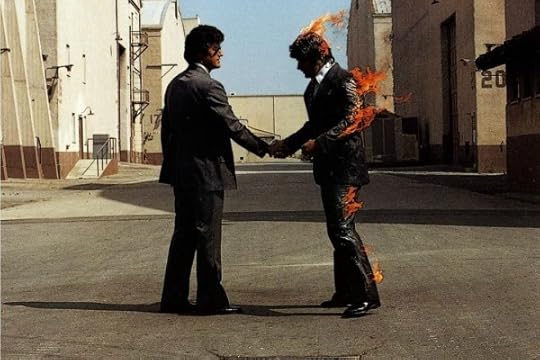
So, so you think you can tell Heaven from Hell, blue skies from pain.
Can you tell a green field from a cold steel rail?
A smile from a veil?
Do you think you can tell?
Did they get you to trade your heroes for ghosts?
Hot ashes for trees?
Hot air for a cool breeze?
Cold comfort for change?
Did you exchange a walk on part in the war for a lead role in a cage?
How I wish, how I wish you were here.
We're just two lost souls swimming in a fish bowl, year after year,
Running over the same old ground.
What have we found?
The same old fears.
Wish you were here.
3* The Sweet Shop Owner (1980)
5* Waterland (1983)
5* Ever After (1992)
3* The Light of Day (2003)
4* Wish You Were Here (2011)
4* Last Orders (1996)

April 14, 2012
A Marriage, several Deaths, a Soldier, and the Dream of Palm Trees.
This is the best book I’ve read so far in 2012. Swift presents an intricacy of loyalties, emotions, and attachments between a boy and a girl who grew up together outside Devon, England. Their families had adjoining dairy farms that barely scraped by during the years of animal diseases that were feared to infect people. The farmers were forced to kill many seemingly healthy animals as a preventative. Many farmers were forced out of business. As young adults Jack Luxton and Ellie Merrick feel desperate to get away from their childhood farms, at the same time they feel a loyalty and a sense of obligation to stay and help their parents. Jack feels almost desperate when his much younger brother escapes to join the army leaving Jack even more tethered to the farm. Their eight year age difference and the loss of their mother when Tom was eight and Jack was 16 made Jack feel even more fatherly towards Tom. Their father had always been distant and unemotional towards them. Jack also has tender memories of rocking the infant Tom’s bassinet and holding him as he slept. When Tom leaves Jack has to work hard to bury his fatherly sense of love and loss. After several tragedies and many years Jack and Ellie finally manage to gain their freedom but the cost is high, it impacts their marriage.
Swift shows great skill in portraying the push and pull of the ties of love and loyalty versus the need for individuality, the pain of losing loved ones and the desire to maintain old ties versus the longing for freedom and the desire to start a new life and a family of your own, he does it with a sweetness that has no cloy to it. The emotions felt so real it almost broke my heart. I’ve read Swift’s “Last Orders” (Booker 1996) and liked it a lot. The intricacy of “Wish You Were Here” was on a completely higher level in my opinion.
This is the best book I’ve read so far in 2012. Swift presents an intricacy of loyalties, emotions, and attachments between a boy and a girl who grew up together outside Devon, England. Their families had adjoining dairy farms that barely scraped by during the years of animal diseases that were feared to infect people. The farmers were forced to kill many seemingly healthy animals as a preventative. Many farmers were forced out of business. As young adults Jack Luxton and Ellie Merrick feel desperate to get away from their childhood farms, at the same time they feel a loyalty and a sense of obligation to stay and help their parents. Jack feels almost desperate when his much younger brother escapes to join the army leaving Jack even more tethered to the farm. Their eight year age difference and the loss of their mother when Tom was eight and Jack was 16 made Jack feel even more fatherly towards Tom. Their father had always been distant and unemotional towards them. Jack also has tender memories of rocking the infant Tom’s bassinet and holding him as he slept. When Tom leaves Jack has to work hard to bury his fatherly sense of love and loss. After several tragedies and many years Jack and Ellie finally manage to gain their freedom but the cost is high, it impacts their marriage.
Swift shows great skill in portraying the push and pull of the ties of love and loyalty versus the need for individuality, the pain of losing loved ones and the desire to maintain old ties versus the longing for freedom and the desire to start a new life and a family of your own, he does it with a sweetness that has no cloy to it. The emotions felt so real it almost broke my heart. I’ve read Swift’s “Last Orders” (Booker 1996) and liked it a lot. The intricacy of “Wish You Were Here” was on a completely higher level in my opinion.

August 25, 2021
4 stars
And anyway....
Swift's back on familiar ground-- history, memory, landscape and being emotionally involved with someone heavily associated with death -- and it is simply dazzling.
When taken as a whole work.
There are niggling problems with the novel, of course. The narrative focus dwells on insignificant details for too long, almost laundry list style at times. There are some POVs that don't *exactly* forward the plot much and feel like 10 pages of filler. Then there is the concentration breaking use of 'thought within a thought' sentences in which one thought, but then books could be like that, is interrupted by another. (Which is an example of just that type of sentence. 'but then books could be like that' breaking the main thought.) And the marital love between Ellie and Jack pales terribly in comparison to Jack's love for his brother Tom. As if it's a fake kind of love, or one that burns much cooler.
That, however, doesn't mar the overall effect.
Mostly constructed of patchwork flashbacks, the plot initially moves forward slowly and in an leisurely wander, juddering and stumbling around in the middle, but picking up speed in the last 100 pages to an absolutely dazzle of an ending. Powerful, gripping and bringing all the threads together in a bundle. Love, lineage, courage, soldiering on, security, loss, death and the value of one's own life in the broader scheme of things.
You have to be patient with this one and let it lead you along. It pays off in the end.
And anyway....
Swift's back on familiar ground-- history, memory, landscape and being emotionally involved with someone heavily associated with death -- and it is simply dazzling.
When taken as a whole work.
There are niggling problems with the novel, of course. The narrative focus dwells on insignificant details for too long, almost laundry list style at times. There are some POVs that don't *exactly* forward the plot much and feel like 10 pages of filler. Then there is the concentration breaking use of 'thought within a thought' sentences in which one thought, but then books could be like that, is interrupted by another. (Which is an example of just that type of sentence. 'but then books could be like that' breaking the main thought.) And the marital love between Ellie and Jack pales terribly in comparison to Jack's love for his brother Tom. As if it's a fake kind of love, or one that burns much cooler.
That, however, doesn't mar the overall effect.
Mostly constructed of patchwork flashbacks, the plot initially moves forward slowly and in an leisurely wander, juddering and stumbling around in the middle, but picking up speed in the last 100 pages to an absolutely dazzle of an ending. Powerful, gripping and bringing all the threads together in a bundle. Love, lineage, courage, soldiering on, security, loss, death and the value of one's own life in the broader scheme of things.
You have to be patient with this one and let it lead you along. It pays off in the end.

May 19, 2011
I've liked Swift's short stories very much in the past, finding them told with a masterly reticence and economy (eg "Seraglio"). I was disappointed in this novel because it showed just the opposite qualities.
In the first place it's "writerly" in the wrong way; it shows a lot of fancy writerly tics that in my view just get in the way of a good story (not that there is one, in this case). I can see why he uses tricksy narrative methods like a lot of flashing back and forward, changing viewpoints etc: he needs to distract attention from the fact that in the actual timeframe of the story, nothing much is happening. But some of these tics get downright irritating, particularly the one that goes "if he'd done such and such, x and y might have happened". This can go on for pages - eg one passage that starts on page 314 with "Had Bob Ireton and Jack found themselves together, soon after the funeral, on what was now the Robinsons' property [...] they might have had a conversation about security". He then goes on for, literally the next 3 pages about what might have happened but didn't - "here, Bob might have looked at Jack carefully [...] but, on the other hand, Bob might have said"... And this is far from the only occasion when this "might have" scenario crops up. Now this device is most famously used in Tobias Wolff's cracking short story "Bullet in the Brain" where he lists all the things his dying protagonist might have thought of, before telling us the one thing that did in fact pass through his mind. There, of course, it's being done as a handy way of showing us the man's whole life; this may not, contrary to the old saying, pass through his head at the moment of death, but thanks to authorial brilliance it does pass through the reader's. It works as a one-off in a short story otherwise crowded with incident, where the slowing-down comes as a surprising and welcome change of pace; I don't think it works as a repeated device in a quite slow-paced novel, where the reader's reaction tends to be "stop telling me what didn't happen and get on with what did.".
It feels, in fact, a bit like a device for filling up pages, as does another whereby he rabbits on (or has his characters do so) for ages about something inconsequential - there's a weird digression at one point about kettles. Of course what seems inconsequential can turn out not to be, but it didn't here.
However, this wasn't the main reason for my disappointment. This is a book with a contemporary setting, dealing with the effects on a farming family of BSE, foot and mouth, the leisure industry, and also with the effects on soldiers and their relatives of the Iraq war (the twin towers make a couple of peripheral appearances too). And it always felt to me as if he'd decided to write a book dealing with these things, and then invented some characters specifically for the purpose of having those experiences - let's see, they have to be farming family, but one of them can run off and join the army so I can get the Iraq war in... They never felt like characters who could live outside the book, rather they were pure narrative constructs to hang the issues on.
Now in one sense this is always so. I'd not long since read Barbara Kingsolver's "The Lacuna", about a man who lives through the Thirties, experiences Diego Rviera's chaotic household and Trotsky's murder, then gets caught up in the McCarthyite purges in the fifties. Of course he's a narrative construct invented for this purpose, but he never feels like that; rather he feels like a real person in whose inner life the author was interested enough to write the story. Swift's characters in this novel never come alive for me quite like that. Indeed the multiple viewpoints sometimes work against him by explaining too much about their motivation, particularly when it isn't credible. If we saw only through Jack's eyes, Ellie's decision not to attend a funeral with him might be mysterious but believable, but we get her viewpoint too and her reasons don't sound remotely convincing. And the climax depends on our believing Jack might possibly do a certain thing and unfortunately I never for a moment believed he would. This fuzzy motivation, I think, can only indicate that the characters haven't been fully realised and that's even true of Jack, the protagonist, who gets nearest to coming alive for the reader.
There is some very polished writing, which occasionally becomes better than polished, ie moving and beautiful. But I found the pace achingly slow, the characters too much their author's puppets and the whole thing too constructed, too "written" rather than imagined and told.
In the first place it's "writerly" in the wrong way; it shows a lot of fancy writerly tics that in my view just get in the way of a good story (not that there is one, in this case). I can see why he uses tricksy narrative methods like a lot of flashing back and forward, changing viewpoints etc: he needs to distract attention from the fact that in the actual timeframe of the story, nothing much is happening. But some of these tics get downright irritating, particularly the one that goes "if he'd done such and such, x and y might have happened". This can go on for pages - eg one passage that starts on page 314 with "Had Bob Ireton and Jack found themselves together, soon after the funeral, on what was now the Robinsons' property [...] they might have had a conversation about security". He then goes on for, literally the next 3 pages about what might have happened but didn't - "here, Bob might have looked at Jack carefully [...] but, on the other hand, Bob might have said"... And this is far from the only occasion when this "might have" scenario crops up. Now this device is most famously used in Tobias Wolff's cracking short story "Bullet in the Brain" where he lists all the things his dying protagonist might have thought of, before telling us the one thing that did in fact pass through his mind. There, of course, it's being done as a handy way of showing us the man's whole life; this may not, contrary to the old saying, pass through his head at the moment of death, but thanks to authorial brilliance it does pass through the reader's. It works as a one-off in a short story otherwise crowded with incident, where the slowing-down comes as a surprising and welcome change of pace; I don't think it works as a repeated device in a quite slow-paced novel, where the reader's reaction tends to be "stop telling me what didn't happen and get on with what did.".
It feels, in fact, a bit like a device for filling up pages, as does another whereby he rabbits on (or has his characters do so) for ages about something inconsequential - there's a weird digression at one point about kettles. Of course what seems inconsequential can turn out not to be, but it didn't here.
However, this wasn't the main reason for my disappointment. This is a book with a contemporary setting, dealing with the effects on a farming family of BSE, foot and mouth, the leisure industry, and also with the effects on soldiers and their relatives of the Iraq war (the twin towers make a couple of peripheral appearances too). And it always felt to me as if he'd decided to write a book dealing with these things, and then invented some characters specifically for the purpose of having those experiences - let's see, they have to be farming family, but one of them can run off and join the army so I can get the Iraq war in... They never felt like characters who could live outside the book, rather they were pure narrative constructs to hang the issues on.
Now in one sense this is always so. I'd not long since read Barbara Kingsolver's "The Lacuna", about a man who lives through the Thirties, experiences Diego Rviera's chaotic household and Trotsky's murder, then gets caught up in the McCarthyite purges in the fifties. Of course he's a narrative construct invented for this purpose, but he never feels like that; rather he feels like a real person in whose inner life the author was interested enough to write the story. Swift's characters in this novel never come alive for me quite like that. Indeed the multiple viewpoints sometimes work against him by explaining too much about their motivation, particularly when it isn't credible. If we saw only through Jack's eyes, Ellie's decision not to attend a funeral with him might be mysterious but believable, but we get her viewpoint too and her reasons don't sound remotely convincing. And the climax depends on our believing Jack might possibly do a certain thing and unfortunately I never for a moment believed he would. This fuzzy motivation, I think, can only indicate that the characters haven't been fully realised and that's even true of Jack, the protagonist, who gets nearest to coming alive for the reader.
There is some very polished writing, which occasionally becomes better than polished, ie moving and beautiful. But I found the pace achingly slow, the characters too much their author's puppets and the whole thing too constructed, too "written" rather than imagined and told.

November 23, 2018
An introspective piece of examined drawn-out tragedy that is sodden with remorse and blame, but also with the type of grief that can only come from real love.
This was one of those reads, though I thought I would enjoy, managed to surprise me; set a seed in my mind that only with patience and building could fully germinate. With a quiet ugly sort of beauty that only revealed itself layer by layer, a story that divulges a depth that while illuminating is also haunting. A well thought-through, writerly novel with a reticent nature that one has to be prepared to witness and accept as it washes over the reader.
A solid, stolid, hulk of a man is our protagonist, Jack Luxton. He tends to leave one with a bit of a bovine-like impression, this former cattle farmer, but is a complicated tumult below the surface following a notice that his only brother has died in combat. The ghosts of our pasts never stay buried forever and Jack's were only ever half-buried to begin with. Now the last Luxton, Jack has to see to his brother's remains and the memories of the rest of a bygone family, a bygone home, a bygone life. He is a character that has to reckon with his own decisions, his inactions, and his relationships. Jack is a man that takes the weight of his world upon his own broad shoulders while steadily plodding towards what must be done, towards some sort of conclusion. The question of whether escape and abandonment are one in the same, and whether a man can come back from breaking point are at the fore.
In this book over half of the characters are dead as we embark on the story and yet there is a vitality and desperation in their interactions, both prior to and after their collective demises. Almost Gothic in nature, we are haunted by those already gone from the mortal world. The reader is privy to peaks behind the masks and glimpses from within the very personal shadows. It is dark and yet inspires hope, as the writing is pure humanity, which we can often only discover with the aid of loss. Who are we? What defines us?
This was one of those reads, though I thought I would enjoy, managed to surprise me; set a seed in my mind that only with patience and building could fully germinate. With a quiet ugly sort of beauty that only revealed itself layer by layer, a story that divulges a depth that while illuminating is also haunting. A well thought-through, writerly novel with a reticent nature that one has to be prepared to witness and accept as it washes over the reader.
A solid, stolid, hulk of a man is our protagonist, Jack Luxton. He tends to leave one with a bit of a bovine-like impression, this former cattle farmer, but is a complicated tumult below the surface following a notice that his only brother has died in combat. The ghosts of our pasts never stay buried forever and Jack's were only ever half-buried to begin with. Now the last Luxton, Jack has to see to his brother's remains and the memories of the rest of a bygone family, a bygone home, a bygone life. He is a character that has to reckon with his own decisions, his inactions, and his relationships. Jack is a man that takes the weight of his world upon his own broad shoulders while steadily plodding towards what must be done, towards some sort of conclusion. The question of whether escape and abandonment are one in the same, and whether a man can come back from breaking point are at the fore.
In this book over half of the characters are dead as we embark on the story and yet there is a vitality and desperation in their interactions, both prior to and after their collective demises. Almost Gothic in nature, we are haunted by those already gone from the mortal world. The reader is privy to peaks behind the masks and glimpses from within the very personal shadows. It is dark and yet inspires hope, as the writing is pure humanity, which we can often only discover with the aid of loss. Who are we? What defines us?

April 5, 2012
Graham Swift’s previous novel, “Tomorrow” (2007), was such a fiasco that a grim kind of suspense built up around his new book. Would “Wish You Were Here” inspire another round of jeering on both sides of the Atlantic?
We shouldn’t have worried. “Tomorrow” was clearly just a Booker winner’s misstep, an awkward exorcism of some writerly kink. “Wish You Were Here” is an extraordinary novel, the work of an artist with profound insight into human nature and the mature talent to deliver it just the way he wants. The 62-year-old British author has set this unhurried exploration of grief and longing in the English countryside, but it’s infected with the violent terrors of contemporary life. As he did with “Waterland” (1983) — as every truly great novelist does — in this new book, he demonstrates that perfect coordination between style and story. You could no more separate this plot from the way Swift constructs it than you could detach the melody from a symphony.
Take that as a warning, too: Swift’s closest musical counterpart is probably Philip Glass, so if the mere mention of that composer gives you leg cramps and flashbacks of being trapped in the Kennedy Center, flee. Swift introduces a few characters, a handful of scenes, two or three objects and then ruminates on them for 300 pages, setting aside chronology to cycle through the same events, thoughts and phrases again and again, from this angle and that, building and elaborating toward a crescendo that is absolutely gorgeous.
“Wish You Were Here” opens in 2006 on the Isle of Wight off the southern coast of England, a setting of almost magical natural beauty, but Jack Luxton’s thoughts are of madness. He’s recalling the 65 head of healthy cattle that had to be shot and burned on his family’s old farm back in Devon. Mad cow disease crippled their precarious livelihood. Then his angry father died. Then terrorists flew planes into office buildings in New York. And now his brother, 30, has been killed while fighting in Iraq. It’s a ghastly collection of disparate events, separated by thousands of miles and significant degrees of import but connected by the rage that seems emblematic of our modern age.
The novel’s present-day action takes place in no more than a few hours, while Jack sits with his shotgun at the upstairs window looking out at the sea, waiting for his wife to drive home in the rain. But Swift splashes through time with abandon, following Jack’s tortuous thoughts on this dark morning as he considers how everything went off its hinges.
This is a writer who can turn the whole world around during a long sigh. Jack’s memories reach back to the lingering illness of his mother, who kept their 160-acre farm running. And even further back to the birth of his little brother, Tom. Stilled by grief, Jack recalls how intensely he loved that boy, how he admired him throughout their adolescence and how shaken he was when Tom ran off to enlist on his 18th birthday. Now called by the army to collect his brother’s body, Jack considers the sweep of their shared history, a flood of memories that threatens to disrupt the new life he and his wife have constructed. It’s a bracing exploration of the conflicted feelings of fraternal love and jealousy.
Swift is a careful curator of the tiny elements of our lives that become freighted with meaning over time: a distant relative’s war medal, a dog’s old blanket, the hole in a giant oak tree. They’re just stray bits, inconsequential until they’ve been polished for years in these characters’ minds, and Swift has developed an elegantly recursive style to convey that ruminative action. Even short strands of dialogue are recalled and probed with incredulity the way we do when we just can’t fathom how a loved one could possibly have said such a thing. “There’s a version of it all that Jack tells only himself,” Swift writes, “an over-and-over revisited version that allows more room for detail and for speculation.”
In summary, this may sound like a novel that suffers from tedious repetition, but the story draws us forward by suspending the revelations that are haunting Jack’s thoughts. We work backwards, exploring the wound before discovering the cause. In “Tomorrow,” that technique failed miserably because the final disclosure was so tiny, so completely out of proportion to the anxious fretting we had to endure for hundreds of pages, but “Wish You Were Here” is a vastly more complex story. It doesn’t rest on one great announcement but on the accretion of a lifetime’s worth of little cruelties and subsequent tragedies that convey the intricacies of mourning, the capacity of sorrow to make us harm those we love.
And yet there are moments of plaintive comedy here, too, that render Jack’s distress all the more affecting. Riding panicked through a boisterous city, he can almost appreciate what a country bumpkin he is. Large and painfully self-conscious, he feels deeply ill at ease during the Army’s repatriation ceremony, which manages to be solemn even while showcasing the weirdness of our death rituals.
Fans will recall the author’s Booker-winning “Last Orders” (1996), which also dealt with a man’s remains, but here Swift has produced a more honed and driven story. Honestly, I can’t remember when I cared so passionately about how a novel might end. It’s impossible not to echo the “great, unearthly howl” that grief rips from Jack.
http://www.washingtonpost.com/enterta...
We shouldn’t have worried. “Tomorrow” was clearly just a Booker winner’s misstep, an awkward exorcism of some writerly kink. “Wish You Were Here” is an extraordinary novel, the work of an artist with profound insight into human nature and the mature talent to deliver it just the way he wants. The 62-year-old British author has set this unhurried exploration of grief and longing in the English countryside, but it’s infected with the violent terrors of contemporary life. As he did with “Waterland” (1983) — as every truly great novelist does — in this new book, he demonstrates that perfect coordination between style and story. You could no more separate this plot from the way Swift constructs it than you could detach the melody from a symphony.
Take that as a warning, too: Swift’s closest musical counterpart is probably Philip Glass, so if the mere mention of that composer gives you leg cramps and flashbacks of being trapped in the Kennedy Center, flee. Swift introduces a few characters, a handful of scenes, two or three objects and then ruminates on them for 300 pages, setting aside chronology to cycle through the same events, thoughts and phrases again and again, from this angle and that, building and elaborating toward a crescendo that is absolutely gorgeous.
“Wish You Were Here” opens in 2006 on the Isle of Wight off the southern coast of England, a setting of almost magical natural beauty, but Jack Luxton’s thoughts are of madness. He’s recalling the 65 head of healthy cattle that had to be shot and burned on his family’s old farm back in Devon. Mad cow disease crippled their precarious livelihood. Then his angry father died. Then terrorists flew planes into office buildings in New York. And now his brother, 30, has been killed while fighting in Iraq. It’s a ghastly collection of disparate events, separated by thousands of miles and significant degrees of import but connected by the rage that seems emblematic of our modern age.
The novel’s present-day action takes place in no more than a few hours, while Jack sits with his shotgun at the upstairs window looking out at the sea, waiting for his wife to drive home in the rain. But Swift splashes through time with abandon, following Jack’s tortuous thoughts on this dark morning as he considers how everything went off its hinges.
This is a writer who can turn the whole world around during a long sigh. Jack’s memories reach back to the lingering illness of his mother, who kept their 160-acre farm running. And even further back to the birth of his little brother, Tom. Stilled by grief, Jack recalls how intensely he loved that boy, how he admired him throughout their adolescence and how shaken he was when Tom ran off to enlist on his 18th birthday. Now called by the army to collect his brother’s body, Jack considers the sweep of their shared history, a flood of memories that threatens to disrupt the new life he and his wife have constructed. It’s a bracing exploration of the conflicted feelings of fraternal love and jealousy.
Swift is a careful curator of the tiny elements of our lives that become freighted with meaning over time: a distant relative’s war medal, a dog’s old blanket, the hole in a giant oak tree. They’re just stray bits, inconsequential until they’ve been polished for years in these characters’ minds, and Swift has developed an elegantly recursive style to convey that ruminative action. Even short strands of dialogue are recalled and probed with incredulity the way we do when we just can’t fathom how a loved one could possibly have said such a thing. “There’s a version of it all that Jack tells only himself,” Swift writes, “an over-and-over revisited version that allows more room for detail and for speculation.”
In summary, this may sound like a novel that suffers from tedious repetition, but the story draws us forward by suspending the revelations that are haunting Jack’s thoughts. We work backwards, exploring the wound before discovering the cause. In “Tomorrow,” that technique failed miserably because the final disclosure was so tiny, so completely out of proportion to the anxious fretting we had to endure for hundreds of pages, but “Wish You Were Here” is a vastly more complex story. It doesn’t rest on one great announcement but on the accretion of a lifetime’s worth of little cruelties and subsequent tragedies that convey the intricacies of mourning, the capacity of sorrow to make us harm those we love.
And yet there are moments of plaintive comedy here, too, that render Jack’s distress all the more affecting. Riding panicked through a boisterous city, he can almost appreciate what a country bumpkin he is. Large and painfully self-conscious, he feels deeply ill at ease during the Army’s repatriation ceremony, which manages to be solemn even while showcasing the weirdness of our death rituals.
Fans will recall the author’s Booker-winning “Last Orders” (1996), which also dealt with a man’s remains, but here Swift has produced a more honed and driven story. Honestly, I can’t remember when I cared so passionately about how a novel might end. It’s impossible not to echo the “great, unearthly howl” that grief rips from Jack.
http://www.washingtonpost.com/enterta...

Read
January 8, 2026DNF Well there it is. My first DNF of the year and I truly wanted to like Wish You Were Here by Graham Swift. It has been on my list for a very long time and I enthusiastically jumped into the novel and regretfully quit after reading one third of this bleak and dark story. I found the characters to be miserable and selfish. Just witnessing them living in their own heads page after page after page was something I was not prepared to do till the bitter end. I will not be rating or reviewing this novel. This is strictly my own opinion and many have loved and will love Wish You Were Here.

September 28, 2011
I’ve read a couple of books by Graham Swift: I discovered his Last Orders when it won the Booker (see my review at The Complete Booker) and I read and enjoyed Waterland with one of my online book groups. (It’s on the 1001 Books I Must Read list too). On the strength of that, I bought Tomorrow for the TBR and some Op Shop finds as well : The Sweet Shop Owner and Ever After.
So having established my credentials as an enthusiast, I’m not best pleased about having to admit that Wish You Were Here didn’t really appeal to me very much. It’s the story of a Devonshire farmer-turned-caravan-park-owner on the Isle of Wight, and his fraught relationships with everybody. The novel begins with the news that Jack Luxton’s estranged brother Tom has been killed in Iraq, and this news is the catalyst for an appalling argument with his wife Ellie. There is a great deal of death and estrangement in the story and as the backstory is revealed the reader feels a growing sense of alarm about how Ellie’s flight from Jack might be resolved.
Jack is one of those bovine silent types, bottling up emotion for decades and so unwilling to invest in relationships for fear of losing them that he isn’t even willing to do something as ordinary as having children.
To see the rest of my review please visit http://anzlitlovers.wordpress.com/201...
So having established my credentials as an enthusiast, I’m not best pleased about having to admit that Wish You Were Here didn’t really appeal to me very much. It’s the story of a Devonshire farmer-turned-caravan-park-owner on the Isle of Wight, and his fraught relationships with everybody. The novel begins with the news that Jack Luxton’s estranged brother Tom has been killed in Iraq, and this news is the catalyst for an appalling argument with his wife Ellie. There is a great deal of death and estrangement in the story and as the backstory is revealed the reader feels a growing sense of alarm about how Ellie’s flight from Jack might be resolved.
Jack is one of those bovine silent types, bottling up emotion for decades and so unwilling to invest in relationships for fear of losing them that he isn’t even willing to do something as ordinary as having children.
To see the rest of my review please visit http://anzlitlovers.wordpress.com/201...

May 7, 2011
I found this a highly moving, intelligent novel and I hope I can do it a bit of justice in my review. In this novel Graham Swift writes movingly about families and relationships, the secrets that are held inside, the things that go unspoken and that we never know about others, and in particular, even about those closest to us. Jack Luxton and his brother Tom grew up at Jebb dairy farm in North Devon, with parents Michael and Vera. A young Jack sends a postcard from the seaside on the two holidays he takes in his childhood with his mother and brother, in which he writes to his young sweetheart Ellie who lives on neighbouring Westcott farm, proclaiming `Wish You Were Here'. Years later, an adult Jack, in his new life as a caravan park proprietor on the Isle of Wight, receives news that brother Tom, now a soldier, has been killed in Iraq, and so begins, with the occurence of this death, the massive literal and actual return journey for Jack, taking a path backwards into the physical country of his past, and into the buried thoughts and people of his past. Primarily, but not always, focusing on Jack, the narrative drifts in time back and forth with the movement of Jack's thoughts and memories, as they intertwine with the present experiences he is going through.
There is a terrific tension building throughout the novel, right from the scene that is set in the first chapter, in the present, through to the last scene, again in the present.
I felt that Jack had seemed as if he had not entirely been in control of his life, as if somehow others had made the decisions for him by taking their own paths, and he almost has to follow in the wake of their actions. I think this lies at the heart of how much he questions himself and wonders about the events that have shaped his past and put him where he is today.
Graham Swift has touched on the climate of fear post September 11, the resulting war on terror, and, at the core of the novel, the changing outlook for farmers since the BSE and foot-and-mouth epidemics, and how the inhabitants of the countryside has changed.
There is such a sadness hanging over Jack. He is also fearful and begins to imagine some strange scenarios when he returns to the mainland to receive Tom's remains and to attend the funeral. Indeed, the very opening passage of the novel refers to the feelings of madness that seem to have taken hold of his mind at times.
Altogether I found this an engrossing novel about humanity, one that tries to get to the heart of human relationships, between husband and wife, between brothers, and between a father and mother and son, and the heart-wrenching failings really tear at the reader and illustrate the frustration and heartache that is often simmering beneath our skin or buried but lurking in the back of our minds only to be brought fresh to the fore when something stirs them up.
I would like to write more but feel that it would begin to give away parts of the novel that should be left for the reader to discover themselves.
There is a terrific tension building throughout the novel, right from the scene that is set in the first chapter, in the present, through to the last scene, again in the present.
I felt that Jack had seemed as if he had not entirely been in control of his life, as if somehow others had made the decisions for him by taking their own paths, and he almost has to follow in the wake of their actions. I think this lies at the heart of how much he questions himself and wonders about the events that have shaped his past and put him where he is today.
Graham Swift has touched on the climate of fear post September 11, the resulting war on terror, and, at the core of the novel, the changing outlook for farmers since the BSE and foot-and-mouth epidemics, and how the inhabitants of the countryside has changed.
There is such a sadness hanging over Jack. He is also fearful and begins to imagine some strange scenarios when he returns to the mainland to receive Tom's remains and to attend the funeral. Indeed, the very opening passage of the novel refers to the feelings of madness that seem to have taken hold of his mind at times.
Altogether I found this an engrossing novel about humanity, one that tries to get to the heart of human relationships, between husband and wife, between brothers, and between a father and mother and son, and the heart-wrenching failings really tear at the reader and illustrate the frustration and heartache that is often simmering beneath our skin or buried but lurking in the back of our minds only to be brought fresh to the fore when something stirs them up.
I would like to write more but feel that it would begin to give away parts of the novel that should be left for the reader to discover themselves.

August 24, 2012
Wish I had been Elsewhere…
As a fan of Swift’s novels in the past, I was very much looking forward to reading WISH YOU WERE HERE.
However, I felt tedium overtake the pace, plot, and cast of characters throughout most of the novel. As much as Swift can be mesmerizing and brilliant in passages, I slogged through what felt much like a slow monotonous and bereaved dullness.
Jack Luxton bottled up as bovine in his sentience symbolic of his cattle.
Ellie, self-centered and unsupportive in her relationship with Jack, couldn’t garner any affection from me either.
Jack’s melancholic character seemed to be nothing but cheerlessness punctuated by endless death and despair….hardly a 'joie de vivre’ existence.
"Death, Jack thought, looking out at brilliant exposing sunshine in Okehampton, was in many ways a great place of shelter. It was life and all its knowledge that was insupportable."
Jack's father blew his brains out in the middle of the night without a care for Jack or how he might react. The beloved family dog’s execution dragged on as we watched a terrified animal…its eyes all too aware of what was about to happen. Jack’s younger brother ‘escapes’ to fight in Iraq, only to be blown to pieces and returned to a very bleak funeral. The diseased cattle are burned in flaming pyres. It’s grey weather, it’s November in England…everything is so desolate.
A loaded shotgun lays on Jack’s bed in Chapter One.
Swift attempts to inject a foreboding tension into the narrative with the shotgun.
He continues the narrative methods with a lot of flashing back and forth, changing angles, directions and viewpoints. This method was distracting from the concrete duration of the time frame of the novel because nothing much is happening while he waits by the bed.
So he postures “what-ifs” abundantly... "If he'd done such and such, this or that might have or have not have happened"…often filling pages and pages!
On page 314; "Had Bob Ireton and Jack found themselves together, soon after the funeral, on what was now the Robinsons' property”…. “they might have had a conversation about security". This turns into several more pages of what might have been or what they might have said on the other hand! This repetitive tactic did little to draw me closer to the story.
The ending was a nice change, but felt like a polite anticlimax as well.
Nevertheless, Wish You Were Here is intelligently crafted, albeit more constructed than imaginatively told….It just drained the happy endorphins from my brain while reading.
There was, to be sure, an occasional ‘goldmine’ of beautifully constructed sentences that I gleefully enhanced with a bit of succulent dark chocolate alongside my reading table! :-)
As a fan of Swift’s novels in the past, I was very much looking forward to reading WISH YOU WERE HERE.
However, I felt tedium overtake the pace, plot, and cast of characters throughout most of the novel. As much as Swift can be mesmerizing and brilliant in passages, I slogged through what felt much like a slow monotonous and bereaved dullness.
Jack Luxton bottled up as bovine in his sentience symbolic of his cattle.
Ellie, self-centered and unsupportive in her relationship with Jack, couldn’t garner any affection from me either.
Jack’s melancholic character seemed to be nothing but cheerlessness punctuated by endless death and despair….hardly a 'joie de vivre’ existence.
"Death, Jack thought, looking out at brilliant exposing sunshine in Okehampton, was in many ways a great place of shelter. It was life and all its knowledge that was insupportable."
Jack's father blew his brains out in the middle of the night without a care for Jack or how he might react. The beloved family dog’s execution dragged on as we watched a terrified animal…its eyes all too aware of what was about to happen. Jack’s younger brother ‘escapes’ to fight in Iraq, only to be blown to pieces and returned to a very bleak funeral. The diseased cattle are burned in flaming pyres. It’s grey weather, it’s November in England…everything is so desolate.
A loaded shotgun lays on Jack’s bed in Chapter One.
Swift attempts to inject a foreboding tension into the narrative with the shotgun.
He continues the narrative methods with a lot of flashing back and forth, changing angles, directions and viewpoints. This method was distracting from the concrete duration of the time frame of the novel because nothing much is happening while he waits by the bed.
So he postures “what-ifs” abundantly... "If he'd done such and such, this or that might have or have not have happened"…often filling pages and pages!
On page 314; "Had Bob Ireton and Jack found themselves together, soon after the funeral, on what was now the Robinsons' property”…. “they might have had a conversation about security". This turns into several more pages of what might have been or what they might have said on the other hand! This repetitive tactic did little to draw me closer to the story.
The ending was a nice change, but felt like a polite anticlimax as well.
Nevertheless, Wish You Were Here is intelligently crafted, albeit more constructed than imaginatively told….It just drained the happy endorphins from my brain while reading.
There was, to be sure, an occasional ‘goldmine’ of beautifully constructed sentences that I gleefully enhanced with a bit of succulent dark chocolate alongside my reading table! :-)
February 7, 2021
Another great novel by Swift, this time a sobering portrayal of loss and death through the lens of a farming family. As ever, Swift blends intimate narrative with universal themes to paint a bleak but convincing picture of reality.
I found reading this a wonderfully refreshing read in a culture which runs away from talking about death because it has no answers. Swift - despite also having no answers - confronts the subject with courage and bleak realism. All done through the gripping and suspenseful personal story of Jack Luxton.
Some parts of the plot fell flat, and at points I was confused by the chronology. Nonetheless a dramatic and thought provoking read.
I found reading this a wonderfully refreshing read in a culture which runs away from talking about death because it has no answers. Swift - despite also having no answers - confronts the subject with courage and bleak realism. All done through the gripping and suspenseful personal story of Jack Luxton.
Some parts of the plot fell flat, and at points I was confused by the chronology. Nonetheless a dramatic and thought provoking read.

September 24, 2024
My first Swift, but I guess it was an unfortunate choice. A book about loss on many levels, Jack a dutiful, good natured and dull farmer, has a very limited circle of people that make up his life, which he lives through with a stiff upper lip as he loses the pillars of his world through. misfortune and the inevitable cycle of life.
The problem is the the over writing, his misery covers a significant amount of pages filled with physical details, like food, clothes, surroundings and emotional details like thoughts and even hypothetical situations on every other page. What ifs and could haves. The following line is a baffling example: do caravans know things? Have feelings? Premonitions?
Along with meetings between characters that never happened and conversations imagined, I can go on but I will just say what a chore it was. I will try another book for him at some point as he is a celebrated writer and I won't cross him off based on this novel alone.
The problem is the the over writing, his misery covers a significant amount of pages filled with physical details, like food, clothes, surroundings and emotional details like thoughts and even hypothetical situations on every other page. What ifs and could haves. The following line is a baffling example: do caravans know things? Have feelings? Premonitions?
Along with meetings between characters that never happened and conversations imagined, I can go on but I will just say what a chore it was. I will try another book for him at some point as he is a celebrated writer and I won't cross him off based on this novel alone.

January 7, 2012
I absolutely loved this, just couldn't put it down. Very much along the lines of Last Orders (another of my favourites) the narrative flow of this book jumps backwards and forwards in time and switches point of view at key points, which keeps you speculating and page-turning, desperate to know what happened. It was funny, touching, heart-wrenching, harrowing, infuriating, quirky, and overall what it was, was human. I know this is a strange word to use, but I mean it was about being human - flawed, emotional, irrational, vulnerable, and all the things we do to try and cover all that up.
*******SPOILER ALERT
I'm not going to spoil the story by saying anything about it except that it was compelling. My only one tiny, tiny criticism was the chapter where we got Tom's POV. While I, like Jack, was desperate to know what was going on in his head, and thought until that point in the book that I'd like to meet Tom, I felt that actually meeting him was a mistake, in that it kind of mitigated all Jack's actions but only we, as the reader knew that. I felt it was a sort of appeasement chapter, and we didn't need appeased - Jack acted as he did, and he would have to live with the guilt of what he did (or not) for the rest of his life. Knowing that he didn't have to was frustrating rather than helpful for me. (Inicidentally, none of this will make sense unless you've read the book.)
***************END OF SPOILER
Overall though, this was a fabulous read for me and I'm already looking forwared to re-reading it.
*******SPOILER ALERT
I'm not going to spoil the story by saying anything about it except that it was compelling. My only one tiny, tiny criticism was the chapter where we got Tom's POV. While I, like Jack, was desperate to know what was going on in his head, and thought until that point in the book that I'd like to meet Tom, I felt that actually meeting him was a mistake, in that it kind of mitigated all Jack's actions but only we, as the reader knew that. I felt it was a sort of appeasement chapter, and we didn't need appeased - Jack acted as he did, and he would have to live with the guilt of what he did (or not) for the rest of his life. Knowing that he didn't have to was frustrating rather than helpful for me. (Inicidentally, none of this will make sense unless you've read the book.)
***************END OF SPOILER
Overall though, this was a fabulous read for me and I'm already looking forwared to re-reading it.

July 29, 2014
Swift is a brilliant, deft writer, and this novel amply displays his gifts--examining ordinary people grappling with the often bewildering and terrorizing aspects of human existence: love, loss, identity, family. While Jack, the main character, is forced to confront the death of his younger brother in Iraq and reconcile that with the tragic suicide of his father by a self-inflicted gunshot wound, there is no grand event in this novel, no key occurrence that provides a convenient hook. Rather, we see his efforts to continue his life with his wife Ellie in the face of growing doubts about his own role in the deaths of his loved ones. These are complex themes, and this is not a simple book to digest. It requires the reader to think and process very disparate, and seemingly innocuous, events. But that's just like life, isn't it? What we end up with is a portrait of survivors--flawed yet endearingly human--trying their best to get on with the supreme challenge of living.

August 7, 2018
The writing style of this book was really good! I enjoyed the different perspectives, but there were parts in the book that absolutely bored me to tears. The last 50 pages or so were definitely suspenseful, as the back of the book told me, but - in my opinion - the ending was a letdown and messily written compared to the rest of the book. I like a quirky ending, but this just felt like a whole chapter was left out. Nonetheless, I want to give it 3 stars, because the writing was really beautiful and the gloomy atmosphere of the book reminded me of a gloomy/stormy day on the English coast, which transported me right into the setting of the story. Don't be fooled by the back cover, and you might actually enjoy this book more than I did. My expectations were simply too high, due to a professor telling me this was one of the best books he's ever read. I still have to read the book that can live up to those kinds of expectations, haha.

May 9, 2022
3.5 stars. A compassionate, moving, skilfully written novel, mainly about Jack Luxton’s grief upon learning of the death of his younger brother, Tom.
It is a book of two halves. The first half is quite eventful as we learn about Jack and Tom Luxton as youngsters on their Devon farming property. Ellie, a young girl living on the neighbouring farming property, gradually becomes Jack’s serious girlfriend. When Tom is eighteen he joins the British army and is stationed in Iraq.
Eight years pass and it’s 2006. Jack is notified by letter of Tom’s death in Iraq. The second half of the novel describes in detail Jack’s feelings about the death of Tom and the army funeral, which Jack goes to by himself.
Overall, a moving and at times compelling read. However the second half of the novel has some dull moments.
This book was first published in 2011.
It is a book of two halves. The first half is quite eventful as we learn about Jack and Tom Luxton as youngsters on their Devon farming property. Ellie, a young girl living on the neighbouring farming property, gradually becomes Jack’s serious girlfriend. When Tom is eighteen he joins the British army and is stationed in Iraq.
Eight years pass and it’s 2006. Jack is notified by letter of Tom’s death in Iraq. The second half of the novel describes in detail Jack’s feelings about the death of Tom and the army funeral, which Jack goes to by himself.
Overall, a moving and at times compelling read. However the second half of the novel has some dull moments.
This book was first published in 2011.

May 4, 2020
Graham Swift es autor de una de mis novelas favoritas de todos los tiempos, pero Ojalá estuvieras aquí se me ha hecho bola. ¿Que tiene un estilo que te va envolviendo como un ovillo, pero hacia el interior mismo de los sentimientos de sus personajes? He de decir que sí. Y sin embargo, quizá por lo plomizo y tristón de todo lo que cuenta se me ha hecho muy pesado. Ha conseguido contagiar la especie de depresión que parece aquejar a sus personajes y ahí se gana sus estrellas, pero no es una lectura para este momento vital.

June 24, 2012
“A good novel,” Graham Swift wrote in a recent essay in the New York Times Book Review, “is like a welcome pause in the flow of our existence; a great novel is forever revisitable. Novels can linger with us long after we’ve read them — even, and perhaps particularly, novels that compel us to read them, all other concerns forgotten, in a single intense sitting.”
Swift has it right, and has given us another great novel in “Wish You Were Here.” Like his Booker Prize-winning “Last Orders,” his newest novel is an intimate portrait of relationships — family and romantic, complicated and happy and fraught. Triggered by one event — in both books, a death — the story unfolds out over the course of years, a little here, a little there, and soon it feels as if the characters are a part of your life.
Set in England in the recent past, “Wish You Were Here” opens with Jack Luxton, a former farmer nearing middle age, in his bedroom with a shotgun, obviously in a moment of extreme personal distress. What has precipitated his crisis, we don’t yet know.
We learn, though, that Jack and his younger brother, Tom, lost their mother at an early age; that their father was not a warm or loving presence in their lives; that their family dairy farm was devastated first by mad-cow disease and then by hoof-and-mouth. We learn about Jack’s secret-at-first romance with the girl next door, Ellie, who later became his wife. We learn about the two Luxton ancestors who died in the first World War and the medal that one of them won; we learn that early on the morning of his 18th birthday, Tom fled the farm and joined the army, leaving Jack, “the big, obedient brother” behind to explain — or not — to their father. We learn that after Jack’s father died and Ellie’s father died, they gave up their adjacent farms and moved to the Isle of Wight to run a vacation campground Ellie inherited.
And we learn that Tom has been killed in Iraq, leaving Jack the last of the Luxtons.
Tom’s death is the catalyst, setting the story in motion. Jack must go claim his body at a military base, return it to their hometown, and arrange the funeral. Usually a go-along-to-get-along kind of person not given to waxing philosophic, Jack becomes pensive and reflective: “Death, Jack thought … was in many ways a great place of shelter. It was life and all its knowledge that was insupportable.”
The story hops around between time periods and shifts focus among the characters — Jack is the center but others have their stories as well, including the people who bought the Luxtons’ farm — but is never hard to follow. Swift doles out pieces and gradually the whole puzzle takes shape. His writing has a quiet beauty to it, never showy but harnessing the power of the well-chosen word: a sickroom is like “some compartment of disaster”; Jack and Ellie have to decide whether to sell up or be “the proud and penniless owners of massive liabilities.”
I didn’t read “Wish You Were Here” in a “single, intense sitting” — it’s a book to be savored, mulled over, reflected on, not plowed through. Perhaps the best testament to how strongly entwined with the book I felt was that I put off reading the last 50 pages or so for two whole days because I was so afraid of what might happen to Jack — if I didn’t look, he necessarily stayed all right. To have a reader so vested in a character: I can’t think of a much higher compliment to an author’s skills than that.
Swift has it right, and has given us another great novel in “Wish You Were Here.” Like his Booker Prize-winning “Last Orders,” his newest novel is an intimate portrait of relationships — family and romantic, complicated and happy and fraught. Triggered by one event — in both books, a death — the story unfolds out over the course of years, a little here, a little there, and soon it feels as if the characters are a part of your life.
Set in England in the recent past, “Wish You Were Here” opens with Jack Luxton, a former farmer nearing middle age, in his bedroom with a shotgun, obviously in a moment of extreme personal distress. What has precipitated his crisis, we don’t yet know.
We learn, though, that Jack and his younger brother, Tom, lost their mother at an early age; that their father was not a warm or loving presence in their lives; that their family dairy farm was devastated first by mad-cow disease and then by hoof-and-mouth. We learn about Jack’s secret-at-first romance with the girl next door, Ellie, who later became his wife. We learn about the two Luxton ancestors who died in the first World War and the medal that one of them won; we learn that early on the morning of his 18th birthday, Tom fled the farm and joined the army, leaving Jack, “the big, obedient brother” behind to explain — or not — to their father. We learn that after Jack’s father died and Ellie’s father died, they gave up their adjacent farms and moved to the Isle of Wight to run a vacation campground Ellie inherited.
And we learn that Tom has been killed in Iraq, leaving Jack the last of the Luxtons.
Tom’s death is the catalyst, setting the story in motion. Jack must go claim his body at a military base, return it to their hometown, and arrange the funeral. Usually a go-along-to-get-along kind of person not given to waxing philosophic, Jack becomes pensive and reflective: “Death, Jack thought … was in many ways a great place of shelter. It was life and all its knowledge that was insupportable.”
The story hops around between time periods and shifts focus among the characters — Jack is the center but others have their stories as well, including the people who bought the Luxtons’ farm — but is never hard to follow. Swift doles out pieces and gradually the whole puzzle takes shape. His writing has a quiet beauty to it, never showy but harnessing the power of the well-chosen word: a sickroom is like “some compartment of disaster”; Jack and Ellie have to decide whether to sell up or be “the proud and penniless owners of massive liabilities.”
I didn’t read “Wish You Were Here” in a “single, intense sitting” — it’s a book to be savored, mulled over, reflected on, not plowed through. Perhaps the best testament to how strongly entwined with the book I felt was that I put off reading the last 50 pages or so for two whole days because I was so afraid of what might happen to Jack — if I didn’t look, he necessarily stayed all right. To have a reader so vested in a character: I can’t think of a much higher compliment to an author’s skills than that.
November 18, 2012
-So what did you think about the new Graham Swift?
-Hmmm.
-Hmmm...what?
-I've mixed emotions about it.
-Why? He's the bloke who wrote Waterland, Last Orders, modern classics if ever there were! Let's not forget Shuttlecock, The Light of Day, and the short story 'Learning to Swim' either. What the hell's NOT to like?
-He wrote Out of this World and Tomorrow, too. Two suckfests if ever there were.
-Oh, picky picky. Anyway. We're back in vintage Swift territory - landscape and memory.
-Meaning, he's doing the same old thing.
-Nah. Every writer has their territory, their zone of interest. The rural parts of the story ring true, done beautifully. Ironic, really, given that he's writing at the time foot and mouth is erupting and cattle are burning in great, satanic pyres. He's one of the few authors writing with conviction about the present.
-Umm, he's writing about 2006.
-Oh, close enough. Before you say it, he's not just a headline-skimmer either. Swift's gift is for finding the cracks through which the 'little guys' can shine, the round-about lyric beauty and depth of their thoughts. 'It was almost his first thought as he'd read that letter, that the next-of-kin thing would have applied. That was why this piece of paper was in his hand. As he'd stared at it and tried to make it not be real, he'd thought: and now there wasn't any next of kin, not for him, not in the true meaning'.
-Any more examples?
-Too many. 'Clouds are charging over Holn Head. A November gale is careering up the Channel. The sea, white flecks in its greyness, seems to be travelling in a body from right to left, west to east, as if some retreat is going on. Rain stings the glass in front of him.' Look at that - how deftly and exactly he sums up a landscape! One of the many perks of Swift's late style is how quotable he's become.
-Or easier to parody. But leaving style aside, how much of the story can you recall after you'd put the book down? Especially from the middle, where most books sag?
-'Story?'
-Yeah, You know - what actually happened?
-Well, Jack Luxton, introvert and ex-Farmer gets the news that his brother Tom has died in Iraq. He's got to go and dispose of his remains.
-That - like the forenames - sounds a wee bit familiar.
-...and the resulting journey forces the character and his wife, Ellie...
-He has a wife? If that's true, she must have received less attention than even Mandy in Last Orders. One and only Northern character in the book.
-...to re-examine their loyalties, live and loves. This is Swift doing his thing: uncovering complex emotional truths.
-Same old Swift emotional calculus, then.
-To finish: Swift on his usual form. Low-key, down-to-earth, spare, quietly but passionately concerned with the lives of ordinary people.
-Little here to disappoint the faithful, then. Then again, the faithful liked Tomorrow as well.
-There's just no pleasing some people is there?
-Hmmm.
-Hmmm...what?
-I've mixed emotions about it.
-Why? He's the bloke who wrote Waterland, Last Orders, modern classics if ever there were! Let's not forget Shuttlecock, The Light of Day, and the short story 'Learning to Swim' either. What the hell's NOT to like?
-He wrote Out of this World and Tomorrow, too. Two suckfests if ever there were.
-Oh, picky picky. Anyway. We're back in vintage Swift territory - landscape and memory.
-Meaning, he's doing the same old thing.
-Nah. Every writer has their territory, their zone of interest. The rural parts of the story ring true, done beautifully. Ironic, really, given that he's writing at the time foot and mouth is erupting and cattle are burning in great, satanic pyres. He's one of the few authors writing with conviction about the present.
-Umm, he's writing about 2006.
-Oh, close enough. Before you say it, he's not just a headline-skimmer either. Swift's gift is for finding the cracks through which the 'little guys' can shine, the round-about lyric beauty and depth of their thoughts. 'It was almost his first thought as he'd read that letter, that the next-of-kin thing would have applied. That was why this piece of paper was in his hand. As he'd stared at it and tried to make it not be real, he'd thought: and now there wasn't any next of kin, not for him, not in the true meaning'.
-Any more examples?
-Too many. 'Clouds are charging over Holn Head. A November gale is careering up the Channel. The sea, white flecks in its greyness, seems to be travelling in a body from right to left, west to east, as if some retreat is going on. Rain stings the glass in front of him.' Look at that - how deftly and exactly he sums up a landscape! One of the many perks of Swift's late style is how quotable he's become.
-Or easier to parody. But leaving style aside, how much of the story can you recall after you'd put the book down? Especially from the middle, where most books sag?
-'Story?'
-Yeah, You know - what actually happened?
-Well, Jack Luxton, introvert and ex-Farmer gets the news that his brother Tom has died in Iraq. He's got to go and dispose of his remains.
-That - like the forenames - sounds a wee bit familiar.
-...and the resulting journey forces the character and his wife, Ellie...
-He has a wife? If that's true, she must have received less attention than even Mandy in Last Orders. One and only Northern character in the book.
-...to re-examine their loyalties, live and loves. This is Swift doing his thing: uncovering complex emotional truths.
-Same old Swift emotional calculus, then.
-To finish: Swift on his usual form. Low-key, down-to-earth, spare, quietly but passionately concerned with the lives of ordinary people.
-Little here to disappoint the faithful, then. Then again, the faithful liked Tomorrow as well.
-There's just no pleasing some people is there?

June 13, 2011
Book of Lamentation
As part of his investigations into the properties of light, Isaac Newton poked around behind his own eyeball with a bodkin. In this novel, Graham Swift undertakes an equally painful investigation of the darkness that lies behind the demise of a traditional farming family.
Jack Luxton and his wife Ellie run the Lookout Caravan Park on the Isle of Wight, when one November - and in this book it is always November - Jack is notified of the death of his younger brother Tom, a soldier on active service in Iraq.
In his mind, Jack goes over and over the events that led to this point. Remembering their life on Jebb Farm in Devon where the Luxton family had lived for generations. The death of their mother, their cattle having to be culled because of mad cow disease, the death of the farm dog, the death of their father, the death, the death, the death. No wonder Tom left home to join the army on his eighteenth birthday.
When Tom's body is repatriated, Jack attends a ceremony in which a bugler plays the reveille, and that is what this novel reminded me of: one long reveille - a griefful musical canon reverberating incessantly. Like a billiards player compiling a lengthy break from nursery cannons, Graham Swift's skill as a writer is as mesmerising as it is monotonous.
Jack Luxton is a doleful character whose whole life seems to be nothing but dullness punctuated by bereavement - full of whatever the exact opposite of 'joie de vivre' is:
"Death, Jack thought, looking out at brilliant exposing sunshine in Okehampton, was in many ways a great place of shelter. It was life and all its knowledge that was insupportable."
Jack's father had the right idea: he blew his brains out in the middle of the book. Regrettably, I didn't have a shotgun, so I had to carry on to the (not-so-)bitter end.
Jack lays a loaded shotgun on his bed in chapter one, in a transparent attempt by the author to inject some tension into the narrative, but I had little hope of it going off by the end - literary fiction of this calibre can only end with a polite anticlimax. Chekhov might not be impressed.
Nevertheless, Wish You Were Here is truly well written, but be warned: reading it temporarily sucks all trace of happiness out of the world, so make sure you have plenty of chocolate to hand before opening it.
This entire review has been hidden because of spoilers.

January 13, 2022
If I had to pick one word to describe this book it would be 'putdownable'. A story that spun its wheels relentlessly, that would have more properly been a short story, yet was stretched out to tedious lengths. I don't mind a good character study (e.g., Stoner by John Williams comes to mind as an excellent example), but Swift doesn't give us that.
Although the back cover blurb speaks of the repatriation of the brother of Jack, the main character, killed in Iraq, and suggests it's the inciting event for the story, this doesn't happen till around page 150. Till then, we go around in circles (flash forwards and flash backs) as Swift repeats background information and tries to wring suspense by dropping hints of dark deeds to come. Jack awaiting his wife Ellie. Ellie awaiting Jack. Again and again. Rinse and repeat.
Swift portrays Jack, a former farmer, as a simple and stoic man who also seems driven on countless occasions to wonder what others think of him. This man is so self-conscious and introspective, yet never articulates his wounds in any way that allowed me to connect with him. Did he have real insight? Was he in genuine indelible pain or was this simply temporary grief manifesting irrationally, as many would feel? Damned if I know.
That absence of inner understanding made me quite indifferent as the climactic event (such as it is) unfolded at the very end. Why did Jack feel he needed to make his choices in that fashion? And what about Ellie, in her decision not to attend the repatriation and funeral of her husband's only immediate family? I had no idea why she let him down in such a way because it seems at odds with the little I know of her character.
But wait - there's less! Further bloating this thin story is the fact that Swift elects to give us the POVs of secondary characters who have no true impact on the story. The hearse drivers, for chrissakes. And the people who bought Jack's farm. To no purpose, basically a diversion.
All in all, this book felt quite pointless as either a study of character or the times. Although Swift can write (the only reason this isn't a one-star review), I hated this book for consistently failing to deliver.
Although the back cover blurb speaks of the repatriation of the brother of Jack, the main character, killed in Iraq, and suggests it's the inciting event for the story, this doesn't happen till around page 150. Till then, we go around in circles (flash forwards and flash backs) as Swift repeats background information and tries to wring suspense by dropping hints of dark deeds to come. Jack awaiting his wife Ellie. Ellie awaiting Jack. Again and again. Rinse and repeat.
Swift portrays Jack, a former farmer, as a simple and stoic man who also seems driven on countless occasions to wonder what others think of him. This man is so self-conscious and introspective, yet never articulates his wounds in any way that allowed me to connect with him. Did he have real insight? Was he in genuine indelible pain or was this simply temporary grief manifesting irrationally, as many would feel? Damned if I know.
That absence of inner understanding made me quite indifferent as the climactic event (such as it is) unfolded at the very end. Why did Jack feel he needed to make his choices in that fashion? And what about Ellie, in her decision not to attend the repatriation and funeral of her husband's only immediate family? I had no idea why she let him down in such a way because it seems at odds with the little I know of her character.
But wait - there's less! Further bloating this thin story is the fact that Swift elects to give us the POVs of secondary characters who have no true impact on the story. The hearse drivers, for chrissakes. And the people who bought Jack's farm. To no purpose, basically a diversion.
All in all, this book felt quite pointless as either a study of character or the times. Although Swift can write (the only reason this isn't a one-star review), I hated this book for consistently failing to deliver.

July 18, 2022
A damning, introspective indictment of the UK (or the West more generally) in the years after 9/11 - mad cow disease, the war in Iraq, and gentrification of the farmland in rural England. Jack, main character, learns about 1/5-way through the book that his brother, Tom, has passed away in Iraq. Much of the rest of the book focuses on the small details, the minutiae, of each and every moment that leads to Jack's repatriation, his funeral, and the aftermath of his wife's Ellie's refusal to attend (or even support her husband) in her brother-in-law's funeral. Tom and Ellie have started a caravan tourism business on their new property (the Jebb farm, as we learn at the end of the book, .
Other portions of the book focus on Jack's parents, Ellie's dad, and the tragedies that befall them. The effect of the author's writing style is that of a weary realism, an acknowledgement of a family that sticks together, caught in the cross hairs of modernity and traditionalism, despite having been so familiar with each other for so long.
Most impressive is Swift's sense of precision, his ability to catch every thought, moment, nuance of an observation (e.g. the placement of the UK flag on Jack's coffin), an interaction between two people (e.g. between Jack or Tom, and their dad), or details of a hotel room, for example. Though at times a bit slow-moving, Swift in this sense is really strong at his craft.
I look forward to reading an earlier work, Waterland. Glad to have discovered this author.
Other portions of the book focus on Jack's parents, Ellie's dad, and the tragedies that befall them. The effect of the author's writing style is that of a weary realism, an acknowledgement of a family that sticks together, caught in the cross hairs of modernity and traditionalism, despite having been so familiar with each other for so long.
Most impressive is Swift's sense of precision, his ability to catch every thought, moment, nuance of an observation (e.g. the placement of the UK flag on Jack's coffin), an interaction between two people (e.g. between Jack or Tom, and their dad), or details of a hotel room, for example. Though at times a bit slow-moving, Swift in this sense is really strong at his craft.
I look forward to reading an earlier work, Waterland. Glad to have discovered this author.

July 28, 2011
I loved this - very possibly the best book I've read this year.
All the reviews I've seen seem to concentrate on it being a story based around the return home of the body of a soldier from Iraq. However I don't think that's really the centre of the story. It's certainly a story with a lot to do with death, dying and legacies left behind, but the return of a soldier is only one part of it and not to my mind the most important part. He's just part of the story of the end of a Devon farming family.
It's a really deep read giving you plenty to think about and although there were a couple of places where I thought it went rather off track - possibly to prevent it from being too dark a read - it was still the most interesting book I've read in ages. I was rather surprised to find it's not on this year Booker Prize longlist, so I'm hoping there are some really *really* good books on the list!
All the reviews I've seen seem to concentrate on it being a story based around the return home of the body of a soldier from Iraq. However I don't think that's really the centre of the story. It's certainly a story with a lot to do with death, dying and legacies left behind, but the return of a soldier is only one part of it and not to my mind the most important part. He's just part of the story of the end of a Devon farming family.
It's a really deep read giving you plenty to think about and although there were a couple of places where I thought it went rather off track - possibly to prevent it from being too dark a read - it was still the most interesting book I've read in ages. I was rather surprised to find it's not on this year Booker Prize longlist, so I'm hoping there are some really *really* good books on the list!
June 23, 2026
I had a hard time warming up to this book if I’m honest. The pace is deliberately slow, dragging moments out right before climactic scenes in a way that is sometimes maddening.
Swift is also not getting any brownie points for writing complex, interesting, or fleshed-out women.
“What’s mine is yours” being a brother’s thought process on whether or not his wife ever slept with his brother is pretty unpleasant to read.
But in all honesty, I felt myself getting more and more engrossed in the story, in the wavering pace and deep daydreams and distant flashbacks. It got to the point where I found myself looking forward to when I could pick the book up again, reading faster and faster as the drama mounts.
The book has its flaws, but I’ll be thinking back on this one a lot. Fitting for the subject matter, it has a very haunting quality to it.
Swift is also not getting any brownie points for writing complex, interesting, or fleshed-out women.
“What’s mine is yours” being a brother’s thought process on whether or not his wife ever slept with his brother is pretty unpleasant to read.
But in all honesty, I felt myself getting more and more engrossed in the story, in the wavering pace and deep daydreams and distant flashbacks. It got to the point where I found myself looking forward to when I could pick the book up again, reading faster and faster as the drama mounts.
The book has its flaws, but I’ll be thinking back on this one a lot. Fitting for the subject matter, it has a very haunting quality to it.
Read
January 17, 2024A very sad story about emotional wounds and the (sometimes) impossibility of fully healing from them. Everybody overthinks everything. Suicide plays an almost inevitable role. And even though the resolution is not as catastrophic as it might be, there is little hope.

February 5, 2024
Kwam heel traag op gang, maar naar het einde toe erg goed.
September 10, 2025
I loved this book but if you don’t like exploring people’s internal monologues in depth, don’t bother.
January 22, 2025
Schrijfstijl:5
Inhoud:5
Verhaal:4,5
Opbouw/Uitwerking:4,5
Inhoud:5
Verhaal:4,5
Opbouw/Uitwerking:4,5

January 5, 2015
Ultimately this book is about guilt and everyone’s individual way of dealing with their own regrets. Told mostly from Jack’s point of view, we also get enough of Ellie to not see her as a complete villain. I thought the additional two chapters (one from Tom’s perspective and one from that of the Robinsons were unnecessary). The story takes place in about an hour (while Jack waits for Ellie’s return) in which he relives his life and his most emotional moments. Simultaneously, Ellie sits in the car about 3 miles down the road and thinks through the same period of time. Swift artfully captures the importance of these points in our lives when we re-evaluate everything, these moments at which everything seems to hang suspended and we each question our own choices and motivations.
I thought Swift’s treatment of Micheal’s point of view and his death was delightfully underdone. Micheal may be the most guilty of all the characters (not that he did anything wrong, but that he would feel it so much with the loss of his wife and the cattle, everything he would want for his sons is gone, slipped through his hands) and his suicide is the epitome of this. And yet, suicide is so unforgivable. Jack certainly understands this when he emphasizes that the only thing preventing him from suicide is the desire NOT to leave Ellie to pick up all the pieces.
Ellie is mostly a selfish character. Yes, she loves Jack and sticks with Jack and yes, she shows him the path to a new life (and who can argue that poverty-stricken farming would have been better than comfortable living in the Lookout Cottage), but she requires not only to be first in Jack’s affection but to be the ONLY ONE in his life. She is so jealous of his mother and his brother and his life on the farm and is completely relieved when she has extracted him from his former life. And yet, I was able to be empathetic to her thinking: “all the stupid, patient, stubborn lengths a woman will go to for a man. All the things she will do. All her life long. When he wasn’t even, perhaps, when you stood back and looked, that much to speak of really, that much to bloody write home about. Other women might say, ‘Him?’” It was not so much that she required anything of Jack, but that she was bound to him and couldn’t bear the thought of sharing.
On one hand it seems silly to think that she would have to share, but then Jack reaffirms her jealousy twice during his trip to repatriate and bury Tom. First, in the car he wonders who he would rather have (and acknowledges his understanding that it is a choice) between Tom and Ellie and answers himself with Tom. Second, at the funeral he feels as if he is a groom (rather than the grieving brother).
The point of the novel (in my not so humble) was that we are haunted by EVERYTHING from our past (not just the dead) and certainly that the psychological hauntings are relevant. It was unnecessary for Tom to actually appear or for Toby Robinson to be momentarily “possessed” by Micheal and frighten Claire. That was just drama.
There were two quotes that made me smile; one about the establishment of family and the right of a woman to become a presence in her husband’s line: “He’d sometimes daringly think that the business of birthright might work in reverse. That his mother’s birthing him, more than her taking his father’s name, had made a Luxton out of her.” And the other about those significant moments that require pause when everyday practices become filled with meaning: “Certain moments in life, it seemed, required the filling of a kettle. Kettles got filled every day, without a thought, several times over. Nonetheless, there were certain moments.”
Overall, it is very well done. I hesitated between 4 and 5 stars, but ended on 4 simply because I thought the ghost stuff was overdone and unnecessary.
I thought Swift’s treatment of Micheal’s point of view and his death was delightfully underdone. Micheal may be the most guilty of all the characters (not that he did anything wrong, but that he would feel it so much with the loss of his wife and the cattle, everything he would want for his sons is gone, slipped through his hands) and his suicide is the epitome of this. And yet, suicide is so unforgivable. Jack certainly understands this when he emphasizes that the only thing preventing him from suicide is the desire NOT to leave Ellie to pick up all the pieces.
Ellie is mostly a selfish character. Yes, she loves Jack and sticks with Jack and yes, she shows him the path to a new life (and who can argue that poverty-stricken farming would have been better than comfortable living in the Lookout Cottage), but she requires not only to be first in Jack’s affection but to be the ONLY ONE in his life. She is so jealous of his mother and his brother and his life on the farm and is completely relieved when she has extracted him from his former life. And yet, I was able to be empathetic to her thinking: “all the stupid, patient, stubborn lengths a woman will go to for a man. All the things she will do. All her life long. When he wasn’t even, perhaps, when you stood back and looked, that much to speak of really, that much to bloody write home about. Other women might say, ‘Him?’” It was not so much that she required anything of Jack, but that she was bound to him and couldn’t bear the thought of sharing.
On one hand it seems silly to think that she would have to share, but then Jack reaffirms her jealousy twice during his trip to repatriate and bury Tom. First, in the car he wonders who he would rather have (and acknowledges his understanding that it is a choice) between Tom and Ellie and answers himself with Tom. Second, at the funeral he feels as if he is a groom (rather than the grieving brother).
The point of the novel (in my not so humble) was that we are haunted by EVERYTHING from our past (not just the dead) and certainly that the psychological hauntings are relevant. It was unnecessary for Tom to actually appear or for Toby Robinson to be momentarily “possessed” by Micheal and frighten Claire. That was just drama.
There were two quotes that made me smile; one about the establishment of family and the right of a woman to become a presence in her husband’s line: “He’d sometimes daringly think that the business of birthright might work in reverse. That his mother’s birthing him, more than her taking his father’s name, had made a Luxton out of her.” And the other about those significant moments that require pause when everyday practices become filled with meaning: “Certain moments in life, it seemed, required the filling of a kettle. Kettles got filled every day, without a thought, several times over. Nonetheless, there were certain moments.”
Overall, it is very well done. I hesitated between 4 and 5 stars, but ended on 4 simply because I thought the ghost stuff was overdone and unnecessary.
Displaying 1 - 30 of 265 reviews