Jump to ratings and reviews
Rate this book

Japan, an attempt at interpretation

Rate this book
An authoritative book by Lafcadio Hearn, scholar and travel writer, who spend decades in Japan, eventually adopting it as his home country. Perhaps more than any other writer, Hearn is responsible for documenting and interpreting Japan for Western audiences. We appreciate your interest.

Hardcover

First published January 1, 1904

90 people are currently reading
505 people want to read

About the author

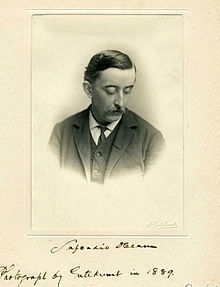
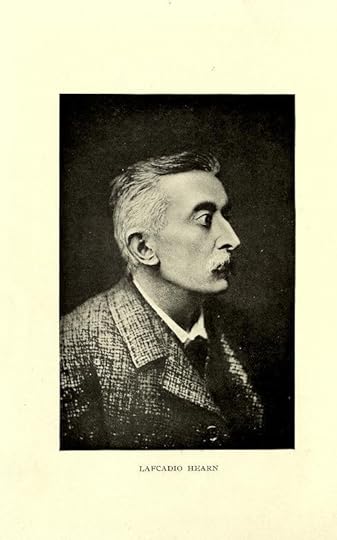
Lafcadio Hearn

1,461 books449 followers
Greek-born American writer Lafcadio Hearn spent 15 years in Japan; people note his collections of stories and essays, including Kokoro (1896), under pen name Koizumi Yakumo.

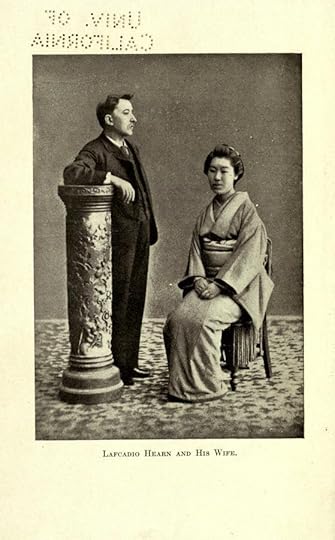
Rosa Cassimati (Ρόζα Αντωνίου Κασιμάτη in Greek), a Greek woman, bore Patrick Lafcadio Hearn (Πατρίκιος Λευκάδιος Χερν in Greek or 小泉八雲 in Japanese), a son, to Charles Hearn, an army doctor from Ireland. After making remarkable works in America as a journalist, he went to Japan in 1890 as a journey report writer of a magazine. He arrived in Yokohama, but because of a dissatisfaction with the contract, he quickly quit the job. He afterward moved to Matsué as an English teacher of Shimané prefectural middle school. In Matsué, he got acquainted with Nishida Sentarô, a colleague teacher and his lifelong friend, and married Koizumi Setsu, a daughter of a samurai.
In 1891, he moved to Kumamoto and taught at the fifth high school for three years. Kanô Jigorô, the president of the school of that time, spread judo to the world.

Hearn worked as a journalist in Kôbé and afterward in 1896 got Japanese citizenship and a new name, Koizumi Yakumo. He took this name from "Kojiki," a Japanese ancient myth, which roughly translates as "the place where the clouds are born". On that year, he moved to Tôkyô and began to teach at the Imperial University of Tôkyô. He got respect of students, many of whom made a remarkable literary career. In addition, he wrote much reports of Japan and published in America. So many people read his works as an introduction of Japan. He quit the Imperial University in 1903 and began to teach at Waseda University on the year next. Nevertheless, after only a half year, he died of angina pectoris.

Ratings & Reviews

What do you think?
Rate this book

Friends & Following

Create a free account to discover what your friends think of this book!

Community Reviews

5 stars
72 (30%)
4 stars
84 (35%)
3 stars
59 (25%)
2 stars
15 (6%)
1 star
5 (2%)
Displaying 1 - 30 of 42 reviews
Profile Image for Owlseyes .
1,805 reviews305 followers
December 27, 2022
He took on the roles of the psychologist, the sociologist and the anthropologist at the same time to write down this book.


Born in Greece, Lafcadio (1850-1904), the son of a Greek mother and an Irish father, had a peculiar life trajectory. From Dublin he went to America at the age of 19. He served as a reporter in New Orleans. His prose-style was both “macabre and vivid”.


(What was he looking at?? you may wonder)

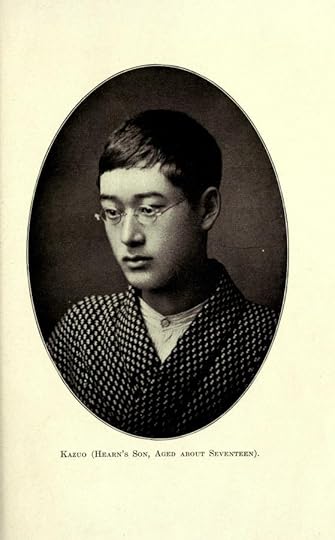
From 1896 till 1903 he lectured at the University of Tokyo. He would become a resident in the Japanese territory for 14 years. He married a Japanese woman. They had a son. Lafcadio became Koizumi Yakumo.


The book Japan: an attempt at interpretation is a way in, a deeper look into the Japanese life, way-beyond the surface. You cannot really know/understand a Japanese painting, or sculpture or even any decoration work, if you don’t understand the religion.

Just like understanding Shakespeare; you got to have some knowledge of the Christian belief. As for the language, Lafcadio said your knowledge of the European languages won’t help.

So, he was confronted with this “outward strangeness”, and “ethical charm”; plus, this feeling of weirdness; this “queer odd small street”; this “odd small people”. “I cannot understand them at all”.

Fourteen years on Lafcadio still recalled the wonder and “delight of the vision” in his first encounters; yet, he could not understand them at all.

The houses' construction was strange; so were the foods, the emblems and masks and toys. Even the physical actions of the Japanese seemed "unfamiliar". All evoking a sense of “contrariety”, so well expressed by Percival Lowell: the Japanese “speak and read backwards”. Always: “the left is the right side”.

Back to the understanding of the language, the best solution would be to “be born again”. European languages don’t help.

“The whole of the Japanese mental superstructure evolves into forms having nothing in common with western psychological development; the EXPRESSION OF THOUGHT BECOMES REGULATED AND THE EXPRESSION OF EMOTION INHIBITED IN WAYS THAT BEWILDER AND ASTOUND”.

As for religion, Lafcadio’s thesis is that “the main religion of Japan is ancestor worship”, with three distinct rites, some influenced by the Chinese ceremonial.

Shinto may take three forms: State cult (for imperial ancestors, it’s the national religion), the communal cult (the clan or tribal aspect; for local divinities) and, finally, the domestic cult (for the worshiping of family ancestors). It's Shinto (meaning the ancient way), the common branch between those cults.

There’s the way of the Gods and Buddhism Butsudo (the way of the Buddha).


Very, very good, so far.
Profile Image for Sinem A..
486 reviews291 followers
December 7, 2016
Bu tarz kitaplar özellikle bir yabancı tarafından yazılmışsa bazen güvenilmez olabiliyor. Ancak yıllarca orda yaşamış, yıllarca gözlemlemiş ve hatta Kawaidan gibi bir kitabın yazarınca kaleme alınmışsa durumu biraz daha lehe çeviriyor.
Zaten bir Japon'un kendi ülkesini bir yabancıya anlatmasını beklemek biraz zor bir ihtimal gibi, bunu dışardan biri daha iyi yapabiliyor sanki.
1,213 reviews165 followers
August 12, 2019
Awed analysis by infatuated foreigner

Lafcadio Hearn lived a kind of loose cannonball life, but both interesting and productive. Born half Greek on an Ionian island to a British military doctor and local woman, he grew up there, in Ireland, England, and France with little or no home life. Deserted by his parents and ultimately by all his relatives, he was sent to America where he struggled to survive but eventually became a newspaperman in Cincinnati. He married an African-American woman for a couple of years, but they separated. He then worked ten years in New Orleans and reported from Martinique for a couple of years as well. He translated works of Zola, Maupassant, and Flaubert into English. Sent to Japan as a correspondent, he fell in love with the country, became a Buddhist, married a Japanese, changed his name and became a citizen. He taught English in the provinces, but eventually wound up a professor at Tokyo Imperial University, dying of a heart attack at age 54 in 1904 after 14 years in Japan. If I were you, I’d read any of his interesting writings on all these places where he lived or his collections of ghost stories and other tales. I probably wouldn’t read this particular volume.
The reason I say this is that Japan basically flummoxed him. Westerners had scarcely begun to delve into Japanese history or culture. Anthropology was quite new and had nothing written on Japan yet. I found this book in the tone of “Wow! These people are so strange and different. You will never understand them, no matter what. You may love the place, but it will remain outside your ken.” In 2019, I don’t think this is a plausible direction. If you learn the language, if you come to know the culture and history, if you live among them, you may understand quite well. On the other hand, I don’t believe anyone can totally understand any large country, nor even small societies. It’s a question of your personality and your personal history as to how you perceive what surrounds you. So, the intoning and constant comparisons with Greece, the defense of Japan as a “great civilization worthy of respect and study” are very much out of date. You may grow tired quickly of such stuff. However, the man himself deserves to be remembered as one who did not look down on the Japanese, who did not want to convert them to Christianity, and tried to explain their ways to the West.
Profile Image for Türkay.
440 reviews45 followers
April 11, 2018
Lafcadio Hearn'ün kitabı, Japonya'yı, Japon kültürünü anlamak isteyenler için bir hazine niteliğinde...

Geçtiğimiz yüzyılın başında yazılmış olmasına rağmen, ele aldığı tarihsel-antropolojik-kültürel mirasa bakış, bu günün Japonyasını anlayabilecek önemli veriler içeriyor...

Sadece Japonya'nın unutulmaz usta yönetmenleri Akira Kurosawa, Yasujirô Ozu filmlerini; Hayao Miyazaki'nin muhteşem animasyonlarını; günümüz usta Japon yönetmenlerinden Takeshi Kitano, Hirakazu Koreeda filmlerini; Japon anime ve mangalarını daha iyi anlayabilmek, tadına varabilmek için dahi mutlaka okunması gereken bir kitap...

Değerli Oğuz Adanır'ın pırıldayan Türkçesi, özeni ile okuma zevki yüksek, muhteşem bir kitap olmuş.
Profile Image for Javier.
222 reviews82 followers
August 18, 2024
Podemos considerarlo la gran obra de Lafcadio y el colofón a toda una vida dedicada a desentrañar el misterio de Japón. Es un texto académico, alejado del romanticismo de sus obras más conocidas, con el que pretende explicar el carácter japonés pasando de puntillas, sin aburrir, por los momentos más relevantes de su historia. No nos engañemos: aunque es ameno a veces se hace duro, y definitivamente no lo recomendaría de buenas a primeras salvo que se esté muy metido en el tema y / o se conozca más de la obra de Hearn. De hecho lo he ido dejando siempre para el final y creo que ha sido una decisión acertada. Lo complementé poco después con La magia de Japón y hacen un muy buen tándem para entender cómo respira este pueblo tan maravilloso. Consejo a futuros lectores: evitar la segunda edición de Satori (portada con un mapa) pues por algún motivo le cascaron un tamaño de letra minúsculo.
Profile Image for AC.
2,220 reviews
February 19, 2012
This book is a classic, and deservedly so. A journalist and autodidact, a man free of conventional biases of all sorts, it seems… Hearn lived in Japan for 15 years. He taught there and married there – and brought to bear his exquisitely honed powers of observation and sympathetic insight, and his keen intelligence… to the study of a culture that fascinated him to no end. And yet, though under the spell of Japan, he could see it clearly, as often only an outsider can.

The book is written in the highly articulated style of late 19th cen. Letters – where every clause and word betrays an analytical intention…, and so cannot be read too quickly. Its aim is to reveal the essentially archaic nature of Japan, of old Japan – rooted in the ancestral cults of Shintoism – which, despite the rapid modernization that took place after the Meiji Restoration (and there is, in fact, a brilliant discussion of Meiji in the context of the Shinto Revival of the early to mid-19th century)… and which, at its heart, is akin to the pre-Christian worlds of ancient Greece. Indeed, in his discussion of the religion and old ancestral worship of Old Japan, the name of Fustel de Coulanges is everywhere present just below (and sometimes upon) the surface. In the purity of the Japanese mentalité (though formed in their case by the edge of the sword, as he notes), Hearn feels himself nearly immersed in the old Mediterranean air of Sappho and Alcaeus…

This is a marvelous book and, along with Ruth Benedict’s equally controversial Sword and Chrysanthemum, shows just how far the riddle of old Japan (and hence of New Japan) can and must be solved by the old and simple tools of the traditional western anthropologist.
Profile Image for Brian.
670 reviews87 followers
August 9, 2016
I lived in Japan for years, and even visited Hearn's old house in Shimane-ken, but before now I had never read any of his books. And, capsule review: Japan: An Attempt at Interpretation makes me want to look at some of the others.

The first half of the book is devoted entirely to religious matters, primarily drawing a connection from the practices of the "ancestor cult" to the organization of Japanese society. He draws all the usual connections you would expect from such an association--filial piety obviously, but also the point that the strong emphasis on children is for continuing the family line so that descendants will remain to pay proper homage, and that the group mindset is because of the primacy of the family over the individual--but the most interesting point to me was his continuing comparison to Greek and Roman religion. It's not something that would have occurred to me previously, but I think it's quite apt in many ways. The Roman family, with its genius loci and lares and pater familias, would have been very familiar to the ancient Japanese and, to a degree, probably even to those today.

This main thesis is basically that you can understand nearly everything about Japan by relating it back to the practices of ancestor worship. Buddhism took root in Japan to the degree that it's basically co-equal with Shinto because of its tolerance for ancestor worship. Christianity failed, and the Shogunate attempted to utterly exterminate it, because of its intolerance for ancestor worship. The Shogunate promoted sakoku in order to protect ancestor worship from foreign influence. The clan and family was the primary social unit, and the individual was barely considered, because of the importance of family ancestors in religious life. You get the idea.

There is a somewhat hilarious interlude about midway through the book where Hearn takes time to opine that the Japanese are totally unfit for democracy because of their group orientation, devotion to the Emperor as the embodiment of the national ancestor cult, etc., etc., you've probably heard all this before. This is especially hilarious in light of Embracing Defeat, which talks about how many of the professional Asiologists in the American government made the same arguments after the war when America was restructuring the Japanese government and how, much to the Americans' annoyance, the Japanese took to free speech and democracy like a fish to water, and much of the structure of post-war Japanese governance can be traced to MacArthur allowing the wartime oligarchs to retake positions of power because it was better than letting the damn commies possibly win an election. Which is pretty much the position of post-war American foreign policy in general, come to think of it. But anyway, it makes me wonder how much Hearn himself was affected by the supposed vast gulfs between the "Oriental" and "Occidental" minds, and how much of the attitudes he reports were tatemae instead of honne.

There's another chapter entitled "The Jesuit Peril." It contains pretty much what you expect from the title, and doesn't really relate to the main thesis of the book, so I won't deal with it any further.

And of course, like so many white dudes in Japan, Hearn stops to write an ode to the greatness of Japanese women. I quote:
For it has well been said that the most wonderful aesthetic products of Japan are not its ivories, nor its bronzes, nor its porcelains, nor its swords, nor any of its marvels in metal or lacquer--but its women. Accepting as partly true the statement that woman everywhere is what man has made her, we might say that this statement is more true of the Japanese woman than of any other. Of course it required thousands and thousands of years to make her; but the period of which I am speaking beheld the work completed and perfected. Before this ethical creation, criticism should hold its breath; for there is here no single fault save the fault of a moral charm unsuited to any world of selfishness and struggle. It is the moral artist that now commands our praise,--the realizer of an ideal beyond Occidental reach. How frequently has it been asserted that, as a moral being, the Japanese woman does not seem to belong to the same race as the Japanese man!

Considering that heredity is limited by sex, there is reason in the assertion: the Japanese woman is an ethically different [362] being from the Japanese man. Perhaps no such type of woman will appear again in this world for a hundred thousand years: the conditions of industrial civilization will not admit of her existence. The type could not have been created in any society shaped on modern lines, nor in any society where the competitive struggle takes those unmoral forms with which we have become too familiar.
Plus ça change, plus c'est la même chose.

Finally, there are some simply baffling statements. For example, Hearn claims that cultures based on ancestor worship instead of individualism have no individual misery. Either everyone suffers, as in times of famine, or no one does. This is just bizarre after he already admitted that slavery was practiced in the past and mentions the existence of the burakumin--though maybe that counts as collective misery.

These criticisms are, however, just a small portion of the book, and I only mention them because they particularly leapt out at me from the surrounding text, which is overall quite good. Despite his blunder about Japan's democratization, I think his overall points about many of Japan's cultural elements stemming from ancestor worship have a lot of merit. In the tiny mountain town where I lived, most of the old family homes we visited had their ancestral shrines in them, and the surrounding slopes were dotted with graves that children and grandchildren came back to visit every August. The old rituals still exist, though their surrounding context has changed. Many schoolchildren still pray for success on their entrance exams at the local shrine, and many people go to their local shrine at midnight on New Year's Eve, but they typically don't do it for what Westerners would recognize as religious feeling. They do it because that's what it means to be Japanese. That's where this book really shines, in the end. It does a pretty good job of showing just what the underlying assumptions are about those things that are done because that's what Japanese people do.

Hearn died in 1904, and I have to wonder what he would think of modern Japan. At the end of the book, after some brief meandering, he lays out his fears for the future of Japan, which are basically that the classic system of clan and feudal loyalty, ancestral devotion, group orientation and so on worked fine when the country was essentially or literally isolated, but that it is a poor fit for a country that is trying to become a major world power. He worries that the essential nature of Japan will vanish, and the systems that have guided it for thousands of years will be sacrificed on the altar of progress.

So I wonder, what would he have made of the Greater East Asian Co-Prosperity Sphere? Of the atrocities in south-east Asia and China? Of the tens of thousands who killed themselves at the battle of Okinawa? Of the American-written post-war constitution and the new Japanese government? Of Japan's rise to technological prominence, the fascination with their business culture, and the collapse of the property bubble and subsequent Lost Decade?

That would also be an extremely interesting book. And while it will never be written, I feel like Japan: An Attempt at Interpretation gives me at least a glimpse at what it would be like.
Profile Image for Phrodrick slowed his growing backlog.
1,077 reviews68 followers
January 12, 2020
Lafcadio Hearn’s Japan: an Attempt at Interpretation was written just after the start of the 20th Century. His contemporary Japan was at the beginning of what would become a the highly nationalized, militarized and horrific Japan of World War II. He may have had a glimmering of the wonderful modern and traditional place that Japan would become after the destruction of that deliberately corrupted Samurai self-image. This book represents his understanding of what Japan had been and how he wished the Western world would come to appreciate the older culture, and specifically its ingrained ancestor worshiping history.

I found it generally accessible. Because he would have to use Japanese names and concepts, having an ear for the language will greatly help the reader. If you are looking to add some depth to your understanding of Japan My recommendation is that you get some context and maybe a more deliberate history on your shelf before turning to Lefadio Hearn.

It is also possible to think of this as a western scholar seeking to explain Japan to westerners, here is some information about Lecadio Hearn or as he was known in Japan: Koizumi Yakuma.

Lefcadio Hearn was the son of a Irish/Greek family. His father, a Staff Surgeon 2nd class in the Army left him with family in Ireland, where he was abandoned by his mother. He was raised by relatives, first on the island of Lefkadain Greece and later in Ireland. At 19 he was ”shipped” to America where he became a newspaperman and editor. Much of this time was in New Orleans. Which is where I first came to know of him and seek out his books.

Whatever his given name he took Lefcadio from the island of his birth. Arriving in and finding work in Cincinnati, he married an African American woman. At the time such a mixed-race marriage was illegal. Whatever the strain on the marriage it failed after 3 years.

Skipping his New Orleans and Caribbean years he arrived in Japan in 1890 He would live, write and teach at the university level, until his death in 1904.

He became so enamored of Japan was he that he adopted the name Koizumi Yakuma. This was taken from his Japanese wife’s Samurai family name and he would become a Buddhist. His memory is highly respected in Japan where they maintain a museum in his name. I can tell you that many Japanese recognize his name as an important person in the history of Japan.

The book, Japan: an Attempt at Interpretation, is just that. The mix of scholarship and personal experience should be understood as no more than he explains in the introduction. It is his belief that no understanding of the history of Japan can be attempted without a deep appreciation for the central role of the Shinto religion. It is his belief that all cultures begin with some variation of ancestor worship. Japan at least up to just before Hearn’s time never gave it up. His use of language may give the impression that he believes this a lesser degree of national progress, but from the context I conclude that they made ancestor worship work and never felt the need to ‘progress’ beyond it.

In making the case for a religion based on ancestor worship he states that such a religion needs no doctrine and my not appear as a religion in any western sense. In this system the effect of the ancestral line is that everyone is being watched, judged and either aided or punished according to the degree of respect shown to the generations past. Everyone has a ridged place in a rigid society. Sumptuary laws specified your living conditions down to the maximum size of your house and the gifts permitted your children.

Your behavior was always being judged, fist by your familial ancestors and then through them to the layers of ancestors connected you to your community and eventually to your nation. Your roles in the household, community and nation were rigidly circumscribed. Failure to live according to your role could bring punishment, banishment or shame from above, by senior members of the family or from below if the community or your family ruled that the otherwise senior was excessive or lax in living according to tradition.

By the 1900, many of these restrictions were being relaxed but Hearn tells us that they still influenced behaviors and in more remote communities were preferred over new freedoms. He is also of the belief that at its height, these traditions created communities where the police had no work and criminals did not exist. Those in power had no motive to work towards holding more and anyone could be punished for failure to conform. We are to believe that the general population was content to have virtually no freedom, no hope for advancement and no motive for greed or chance to transgress. Maybe so or maybe a romantic willingness to believe the older folks.

By the time Hearn was writing, he knew he was speaking of a past soon to disappear. His intent was to remind his contemporary readers about the cultural traditions of the emerging more national and more militaristic Japan. Much of what he says about this would prove to be darker than he imagines.


Profile Image for Andrea (abooksplace).
121 reviews115 followers
February 16, 2025
La única pena es que este libro fuera escrito a primeros del siglo XX y que, por lo tanto, no pueda analizar la evolución de Japón en el último siglo. Dicho esto, es la llave para entender una sociedad que, aún hoy y pese a todo su desarrollo tecnológico, de cerca se sigue sintiendo lejana por unas costumbres socioculturales que permanecen pese a los avances industriales.
Profile Image for Carole.
39 reviews13 followers
January 18, 2014
Lafcadio Hearn does a wonderful job of providing a very comprehensive insight into the Japanese culture of the past up till his time (the end of 19th Century).

Academically speaking, this book is a useful ethnography about Japan’s religious and social life throughout its known history. Full of details, anecdotes and personal observations, this is a rare option to look at a world that has already disappeared.

Hearn’s approach is also the typical 19th Century ethnographer/sociologist’s approach and as such, is as useful today as it would have been then. As a student of Herbert Spencer, the theories and concepts of society and religion expressed are in keeping with Spencer’s, which means that his methodology can be neatly placed within the different approaches to anthropology (the science that he ultimately starts to fall into).

This book is a perfect starting point to compare with modern Japanese ethnographies and with Japanese history. It creates a good bridging point between the two disciplines.

In terms of the quality of reading, Hearn is typically 19th century in his style, but highly readable – he combines the best of a good standard of language and of readability, avoiding the dryness that can often accompany academic writing in any time!
Profile Image for Yalin.
98 reviews13 followers
August 31, 2018
Bu kitap aslında Japonya hakkında - özellikle de Meiji Restorasyonu sonrası imparatorluk dönemine ait - bir toplum analizi/tarihi okumak isteyen biri için gayet elverişli. Japonya'da varolan dini yapılara ve etkilerine çok ağırlık verildiği düşünülebilir, ancak bu yapıların ne kadar da kuvvetli ve nüfuzlu olduklarına bakıldığında bu yaklaşımın doğruluğu da ortaya çıkıyor. Eğer Japonya ile ilgili ve özellikle belirttiğim tarihsel döneme ait, giriş seviyesinde denebilecek bir eser okumak istiyorsanız bu kitabı öneririm.
Profile Image for Max Nemtsov.
Author 187 books576 followers
August 29, 2017
Пыльновато, но очень обстоятельно для 1904 года. Крайне рекомендуется начинающим японоведам - для построения фундаментальных представлений о "стране предполагаемого противника".
Profile Image for Rob Hocking.
248 reviews12 followers
August 22, 2019
This is a unique book - both in terms of the author's approach and in terms of the circumstances under which it was written. Most history books I read describe a sequence of events, possibly with some analysis as to how the events are related. In this book, however, the author devotes the first half of the book to describing Japanese beliefs (religious and otherwise), and only then goes into history. As such, the book is as much a window into the Japanese mind at that time as a history of Japan. Simultaneously, because the book was published over one hundred years ago, it is a window into the European mind at that time. Regarding the latter, there certainly were a few places where the authors perspective, viewed from today, is at best naive and at worst offensive. Be that as it may, I deeply enjoyed the book.

The author is Lafcadio Hearn, a European who moved to Japan in 1890 and remained there until his death in 1904. The author died between the completion of the book and its publication. Having lived in Japan for 14 years, become a naturalized Japanese citizen, and married a Japanese woman, so I think he is reasonably qualified for the task he set out to do in this book. As I said earlier, the first half of the book is a description of Japanese beliefs, most of the emphasis being on the religion of ancestor worship. I think, had I known at the outset that I would be reading a book about Japanese religion, I would not have bought the book, as I did not think that this was a subject I was interested in. However, the author began the book by insisting that in order to understand a people, you must first study their beliefs - in particular, religious beliefs - and I now agree that this statement is reasonable.

Simply put, ancestor worship firstly is the idea that your dead ancestors still exist as ghosts, and moreover, that they depend upon you for nourishment (given in the form of sacrifices). Secondly, it is the idea that ghosts are responsible for natural phenomena both good and bad, and therefore just as they depend on you, you depend on them (for a good harvest, avoiding natural disaster, etc). In other words, in ancestor worship, you have a two-way transaction between the living and the dead - the living provide the dead with nourishment, and in return, the dead protect the living against natural disasters.

This has helped me to understand why Eastern cultural fathering a son being seen as the all-important filial piety (duty to parents)? I had assumed that the motivation came from some vague notion of "continuing the proud family name". In fact, it is far more pragmatic. After you die, you will be depending on your descendants for nourishment. Moreover, "descendants" is defined in such a way that female children don't count. Therefore, should you fail to father a son, after you die you, your parents, and all your other ancestors will be completely fucked. One way to think of it is that death really just means being sent to an old folks home to you live forever together with all of your already dead ancestors. Food in this old folks home is not free - your living descendants must send food money every month. Now, imagine that you die without fathering a son. You show up at the old folks home, and now your dad and all of your other ancestor's food money that they have been enjoying is abruptly cut off, forever. Moreover, it's 100% your fault - your dad shakes his head and says "Son...what the fuck. What have you done..."? Now you have to spend eternity in this old folks home with all of your ancestors, all of whom hate you, and with no money for food. This doesn't sound that far off from the Christian concept of hell. Therefore, from the economic perspective of incentives, the main difference between ancestor worship and Christianity is the conditions under which one is condemned to an eternity in hell.

With this in mind, practices in China such as wife-kidnapping (where girls as young as 12 are kidnapped and sold to farmers in distant parts of the country as wives) and selective abortion of girls under the one-child policy, make perfect sense - they are natural responses to incentives. Or, to be more precise, it makes sense provided the dogma of ancestor worship continues to be taken literally today. As I go about my daily life in Taiwan, I see evidence of the ritual of ancestor worship everywhere - old men and woman burning paper money in little bins on the sidewalk as I walk to and from the university, tables covered with offerings of potato chips, beer, and other snacks amidst burning incense sticks arranged in front of storefronts. What is less clear is whether the people doing this are just going through the motions of ritual without really believing, much like many modern-day Christians in the west. I haven't had a chance to investigate this, but my guess is that in the big cities, this may well be the case. However, I find it highly plausible that in the remote and poorly educated countryside of China - which is where wife-kidnapping is most common - these beliefs might still be taken literally.

The actual history portion of the book was interesting in that it was written prior to either of the world wars. Towards the end, the author made some speculations as to the future tribulations of both Japan and Europe, some of which was prescient.
Profile Image for Laren.
Author 8 books113 followers
Read
March 4, 2010
My father's wife, Takeko, an enigmatic, charming, Japanese aristocrat, gave me this book as if to say,
Here, here's a manual of style so you can understand why you don't understand me. I treasure it more than the pearls she gave me...If you neglect to pour the tea, Takeko apologizes.... Well that's no longer puzzling...of course I look for enchantment everywhere and within this book...which attempts to deconstruct "the underlying strangeness of this world,— the psychological strangeness," I found fairy....

Yes — for no little time these fairyfolk can give you all the soft bliss of sleep. But sooner or later, if you dwell long with them, your contentment will prove to have much in common with the happiness of dreams. You will never forget the dream,— never; but it will lift at last, like those vapours of spring which lend preternatural loveliness to a Japanese landscape in the forenoon of radiant days. Really you are happy because you have entered bodily into Fairyland, — into a world that is not, and never could be your own. You have been transported out of your own century — over spaces enormous of perished time — into an era forgotten, into a vanished age, — back to something ancient as Egypt or Nineveh. That is the secret of the strangeness and beauty of things, — the secret of the thrill they give, — the secret of the elfish charm of the people and their ways. Fortunate mortal! the tide of Time has turned for you ! But remember that here all is enchantment, — that you have fallen under the spell of the dead, — that the lights and the colours and the voices must fade away at last into emptiness and silence.
Profile Image for Patrick McCoy.
1,083 reviews93 followers
October 8, 2023
Lafcadio Hearn is one of the most famous foreign residents of Japan. He wrote extensively about his adopted country, taught English Literature at universities, and collected ghost stories-for which he is probably most famous for. He is of Irish Greek origin but lived in America before coming to Japan and was a journalist know for his writings about New Orleans. In Japan he first settled in Matsue, Shimanae before moving onto Kumamoto in Kyushu and eventually Tokyo. Japan An Attempt At Interpretation (1904) is Hearns' scholarly attempt to explain his adopted country. Many have complained that he is something of an apologist looking at Japan with rose-colored glasses. In this volume he seems very careful to not make judgements or sweeping generalizations. He often cites examples of Greek and roman history to show how the Japanese way is not so different from the foundations of major modern western countries. Here are some of the chapter headings: "Difficulties," "Strangeness And Charm," "The Religion of the Home," "The Japanese Family," "The Communal Cult," Developments of Shinto, " Worship And Purification," The Rule of the Dead, " "The Introduction of Buddhism, " etc. The first third of the book is devoted to religion and overall it is a bit dry. I had expected more first person accounts of Hearn's personal observations and at the end of the book he makes some observations about the Japanese being in the midst of the war with Russia. I think I would still like to read his collected ghost stories Kwaidan.
Profile Image for Anjana Prabhu-Paseband.
Author 6 books10 followers
January 2, 2021
For a book which was written a 100 years ago, this is a fantastic thread of thoughts which has solid basis on religion, culture and civilisation. History is lucidly explained and the correlation in the behaviour of Japanese people is well illustrated with the historically relevant clans and communal duties and obligations. The existence of Shintoism, then Buddhism, Christian interruption and finally the revival of Shintoism is well explained.
One has to often remember that this was written well before the infamous Second World War. Hence the attitude of the author remains charmed by the Japanese nationalism and culture. As a traveller, I often found various elements from different countries stacked seamlessly in the Japanese lives. The go so very well with the existing Japanese minimalistic materials that it would be impossible to point out a flaw in the ensemble.
This very well threw light on some areas where I was hazy about the cultural implications. And I also had an unexpected encounter with a good explanation of Buddhist philosophy of consciousness in this book! Well, things us readers encounter!
Profile Image for Daniel Silveyra.
101 reviews3 followers
January 24, 2011
If you have a Kindle then get this book, no questions asked. It's free.

If you don't have a Kindle, it becomes a little more difficult to recommend. Essentially, the book is a collection of musings on Japan from an English professor who's lived there for several years.

The magical thing about current-day Japan is that you can still see the ghost-like traces of the way things were in the Meiji era (as here described). Add an extra star to the rating if you're reading this while in Japan.

Hearn is an enormous fan of Herbert Spencer and quotes him uncritically and unceasingly, so many of the "sociological" observations that he makes about the Japanese feel quaint and dated.

There's a lot of interesting details about life in late 19th century Japan in this book, and the prose is entertaining. In the end, you can't help but wonder at a "modern English gentleman's" point of view on the subject as much as at the Japan that he describes.
Profile Image for Elisa.
516 reviews88 followers
October 28, 2013
Having been recently in Japan, I read this book while on my trip and after it and I found a lot of truth in Hearn's study of Japanese society.

The author relies on the famous Herbert Spencer to explain the sociological aspect of the Japanese and gives a sincere and knowledgeable interpretation of the religious, social, political, and economic reality of these amazing islanders.

The most surprising thing is that this book was written at the beginning of the 20th century and yet you still see the same wonderful traits in Japanese society today.

There is an extremely interesting letter in the Appendix of this book; a letter written by Herbert Spencer to a policy maker in Japan, where Spencer strongly advices against the Japanese mixing with other races (and, meanwhile, venting his own adamant opposition to interracial relationships in general). Spencer even adds at the end a caution against these views of him ever getting out. You won't want to miss it.

I have read other works by Lafcadio Hearn on Japan but I think this one comes closest to explaining the Japanese.

Profile Image for Kristijan.
217 reviews70 followers
June 15, 2014
Izuzetan pokušaj tumačenja onoga što čoveku sa zapada deluje izuzetno mistično, drugačije i neshvatljivo. Lafkadio Hern na veoma pitak i slikovit način (često koristeći poređenja sa zapadnom čoveku poznatim društvima i društvenim uređenjima) prikazuje celokupnu japansku kulturu. Teško je na 400 stranica sažeti nešto što se hiljadama godina formiralo i krilo od bilo kakvog pogleda i uticaja, ali Hern u tome uspeva.
Ovo je vodič kroz Japan kakvog danas nema, jer nijedno društvo nije moglo da se spase bilo kakvog spoljašnjeg uticaja, ali bezvremenost i aktuelnost ovog dela leže u tome što u njemu možemo pronaći korene stavova i načela koje Japanci i danas reflektuju i po kojima se možda čak i nesvesno vode u svom društvu (na primer pitanja časti i estetike smrti).

Ovo je knjiga od koje svaki zaljubljenik u Japan treba da počne.
Profile Image for Eric Aguirre.
100 reviews44 followers
July 10, 2017
Este libro me ha encantado. No estoy de acuerdo con muchas de las teorías expresadas aquí, pero entiendo, que eran otros tiempos y las ideas eran muy distintas a las de ahora. El libro en resumen, nos habla de la importancia que tiene la religión en la vida y el desarrollo de Japón como nación. El sintoísmo, es lo que se esconde detrás de la sociedad Japonesa y fue está la que les dio una moral a prueba de todo.

Fascinante la resistencia que mostró el pueblo japones hacia los europeos. Todas esas historias sobre los jesuitas portugueses, nos demuestran hasta donde fueron capaces de llegar los japones para salvar su cultura.

Lafcadio Hearn hace un análisis muy potente sobre Japón, inclusive diría que este libro es esencial para conocer al país del sol naciente.
Profile Image for Julia.
549 reviews27 followers
January 3, 2015
Greece-born Lafcadio Hearn spent decades of his lifetime in Japan, even marrying a Japanese woman, thus becoming a Japanese citizen by the name of 小泉 八雲 (Koizumi Yakumo). He wrote many books on Japan, especially about its folklore. In this posthumously published book, he takes a closer look at Japan's religious history. How it developed from ancient beliefs into Shintoism, resisted suppression attempts by Buddhism and Christianity and how – despite efforts of westernizing Japan during the era known as Meiji Restoration – it remained the basis for Japanese society. Even today, over 100 years after this book was written, some of the described traditions and fundamental ideas still exist.
Profile Image for Mina.
1,137 reviews125 followers
dnf
March 21, 2017
Japan, An Interpretation shows his dawning realization of the grim sides of the Japanese character, after the cherry-blossom business has lost its novelty. I shall not have much to say about cherry-blossom; it was not flowering when I was in Japan. - Bertrand Russell, The Problem of China
Profile Image for Nevzat.
26 reviews
Read
November 2, 2022
Apart from everything, it’s scary to get into the intellectual world of 19th century led by thinkers such as spencer and renan, the “science” of races, knowing what it led to a couple of decades later.
Profile Image for Liz Wager.
232 reviews8 followers
Read
October 10, 2011
Not as much fun as Isabella Bird but quite interesting about shinto, etc.
Profile Image for Lee Belbin.
1,279 reviews8 followers
August 23, 2015
One of the first serious insights into Japanese culture by a westerner. Hearn's books (if you can find them) are all a fabulous read.
53 reviews2 followers
May 29, 2017
Very well written with a lot of info but very dry. Perhaps, that was the writing style a century ago..
Profile Image for Ly.
31 reviews
September 10, 2022
El autor, occidental, llegó a Japón a finales del siglo XXI, justo a tiempo de ver cómo el país rompía con el sistema político de los últimos siglos para abrirse al exterior. Profundiza muchísimo en comprender el punto de vista japonés tradicional sin dejarse ninguna circunstancia sin analizar (religión, historia, política, ley, vida rural y urbana, clases sociales, género...), por lo que se experimenta todo un viaje en el tiempo. Pero a la vez analiza los cambios de la Restauración Meiji y cómo estos están afectando a la sociedad japonesa, y se aventura a lanzar hipótesis sobre el futuro que, leídas ya en el siglo XXI, a veces no están demasiado desencaminadas (aunque creo que Hearn se sorprendería si viese el Japón actual).

Naturalmente, es una obra escrita en su época y es de esperar encontrarse conceptos como "razas superiores e inferiores", biología rancia y mujeres equiparadas a "obras de arte". Pero más allá de esto, el discurso es bastante neutral, en especial en lo que respecta a religión (Hearn se muestra extremadamente crítico con la intolerancia de las misiones cristianas en todas partes del mundo y cuestiona bastante la justificación del colonialismo). Al mismo tiempo, aunque evidentemente enamorado de la cultura japonesa, analiza también todo lo negativo que hay en ella, especialmente en lo que respecta a las libertades del individuo.

Es un libro muy interesante, no sólo por lo que se profundiza en la vida cotidiana del Japón tradicional sino por el contexto tan crucial de la historia japonesa en el que fue escrito.
Displaying 1 - 30 of 42 reviews

Can't find what you're looking for?

Get help and learn more about the design.