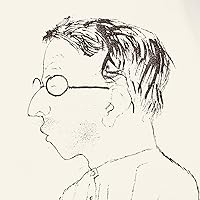
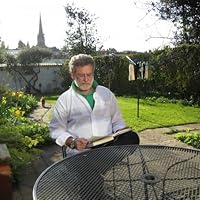
William De Witt Snodgrass, pseudonym S. S. Gardons, is an American poet and a 1960 Pulitzer Prize for Poetry winner.
Snodgrass's first poems appeared in 1951, and throughout the 1950's he published in some of the most prestigious magazines: Botteghe Oscure, Partisan Review, The New Yorker, The Paris Review and The Hudson Review. However, in 1957, five sections from a sequence entitled Heart's Needle were included in Hall, Pack and Simpson's anthology, New Poets of England and America, and these were to mark a turning-point. When Lowell had been shown early versions of these poems, in 1953, he had disliked them, but now he was full of admiration.
By the time Heart's Needle was published, in 1959, Snodgrass had already won the The Hudson Review Fellowship in Poetry and an Ingram Merrill Foundation Poetry Prize. However, his first book brought him more: a citation from the Poetry Society of America, a grant from the National Institute of Arts, and, most important of all, 1960's Pulitzer Prize in Poetry. It is often said that Heart's Needle inaugurated confessional verse. Snodgrass disliked the term. Still, it should be pointed out that the genre he was reviving here seemed revolutionary to most of his contemporaries, reared as they had been on the anti-expressionistic principles of the New Critics. Snodgrass's confessional work was to have a profound effect on many of his contemporaries, amongst them, most importantly, Robert Lowell.
This Pulitzer Prize winner is considered to be the first volume of "confessional poetry." Snodgrass hated the term, but it can't be denied that something new began with Heart's Needle (1959). It is as resolutely formal as Yeats or Frost, yet remarkably frank about the particulars of its pain.
Snodgrass grew up in small towns north of Pittsburgh, and was attending local Geneva College when he was drafted into the Navy in the latter days of WW II. After demobilization, he returned home, alienated and drifting, until he anchored himself to Miss Lila Jean Hank. They were married in 1946, Lila soon giving birth to a daughter, Cynthia. Snodgrass decided to transfer his college credits and relocate, so the family packed up and moved to Iowa, where he attended The Writer's Workshop on the G.I. Bill (and was mentored by Berryman and Lowell).
He returned to his hometown of Beaver Falls with a couple of M.A.'s (English, Fine Arts), but no job prospects in higher education. He worked a few low-level jobs, in a hotel and a hospital: it was a difficult period for Snodgrass, and by 1954 his marriage to Lila was over. Soon a new wife, Jan, blessed his life with a new stability, and he began working as an English instructor, first at Cornell and Rochester. Meanwhile, Lila was granted full custody of Cynthia, and Snodgrass saw her only on special occasions: visits to the park, the museum, the zoo, etc. But he continued to cherish her and their time together and--of course--he continued to write poetry.
This is not a particularly remarkable biography of a postwar poet in his early thirties. What is remarkable about it is the sharpness and the honesty with which Heart's Needle conveys its emotional essence--minus many of the names and dates--to the reader.
For example, the alienation of a man returning home from war is touched upon in "Ten Days Leave" and "Returned to Frisco 1946," where Snodgrass speaks of parents who have kept "his dreams asleep here like a small homestead/ Preserved long past its time," and presents the Golden Gate bridge as both a welcome and a barrier to Eden:
Off the portside through the haze we could discern Alcatraz, lavender with flowers. Barred, The Golden Gate, fading away, astern Stood like the closed gate of your own backyard.
Just as moving is "Orpheus," in which the poet cannot save his wife from being lost in a ravaged post-war underworld, a "blank, remembering maze where/ smoke rose."
Most remarkable, however, is the ten poem sequence that gives the book its name. (The title comes from an old Irish saying: "an only daughter is the needle of the heart.") It is the chronicle of the brief, awkward visits that limit and define his relationship with Cynthia, the daughter of his first marriage.
The sequence begins with Cynthia's birth in the wintertime during the Korean war:
Child of my winter, born When the new fallen soldiers froze In Asia’s steep ravines and fouled the snows, When I was torn
By love I could not still, By fear that silenced my cramped mind To that cold war where, lost, I could not find My peace in my will,
All those days we could keep Your mind a landscape of new snow Where the chilled tenant-farmer finds, below, His fields asleep
In their smooth covering, white As quilts to warm the resting bed Of birth or pain, spotless as paper spread For me to write . . .
And it ends in springtime, some years later, in a park with a zoo:
With crocus mouths, perennial hungers, into the park Spring comes; we roast hot dogs on old coat hangers and feed the swan bread crumbs,
pay our respects to the peacocks, rabbits, and leathery Canada goose who took, last Fall, our tame white habits and now will not turn loose.
In full regalia, the pheasant cocks march past their dubious hens; the porcupine and the lean, red fox trot around bachelor pens
and the miniature painted train wails on its oval track: you said, I’m going to Pennsylvania! and waved. And you’ve come back.
If I loved you, they said, I’d leave and find my own affairs. Well, once again this April, we’ve come around to the bears;
punished and cared for, behind bars, the coons on bread and water stretch thin black fingers after ours. And you are still my daughter.
Heart's Needle is a milestone of personal expression in poetry. If you do not wish to read the whole book, read this sequence. It is dense, rich, and very moving.
First published in 1960, W. D. Snodgrass's Heart's Needle is one of the finest single-volume collections of poetry I have ever read, a work of sustained verbal and conceptual intensity and remarkable consistency of vision and execution. The structure of the book is loosely narrative, tracing as it does the dissolution of a marriage and the resultant aftermath -- the title poem, which comprises the second half of the volume, is famously addressed in absentia to the poet's young daughter. The voice is by turns astringent, rueful, and defiant, and the prosody consists largely of vigorous yet flexible quatrains, a strong, classical driving line. The poems are full of sadness, but staunchly bereft of self-pity; they achieve a stinging emotional pitch while remaining fundamentally grave and austere. Taken as a whole, they are an achingly perfect expression of a certain kind of middle-aged American Protestant male poetic sensibility -- yearning, loss-haunted, full of inchoate nostalgia -- that I find deeply affecting.
I don't generally care so much for the Confessional poets, but Snodgrass is an exception. A lot of really touching poems here, none better than the title poem - or more accurately, series of ten poems - chronicling his difficult relationship with his estranged daughter. My favorite moment is the seventh entry, which runs as follows:
Here in the scuffled dust is our ground of play. I lift you on your swing and must shove you away, see you return again, drive you off again, then
stand quiet till you come. You, though you climb higher, farther from me, longer, will fall back to me stronger. Bad penny, pendulum, you keep my constant time
to bob in blue July where fat goldfinches fly over the glittering, fecund reach of our growing lands. Once more now, this second, I hold you in my hands.
As if I'd never heard what the birds' song means; as if I'd ask a bird to mortify his body. Wait; from the next ravine, he's singing again, already.
And he outspeaks a vital claim to know his needs; his song's a squatter's title on his tree and the half acre in which he hunts and breeds and feeds the best he's able.
To enemies and rivals, to mates and quick beetles, he sings out for survival: "I want my meals and loving; I fight nobody's battles; don't pardon me for living.
The world's not done to me; it is what I do; whom I speak shall be; I music out my name and what I tell is who in all the world I am."
Not super into the rhyming verse stuff. Lot of the stuff in the middle I wasn’t super into. That being said, the title poem made the entire collection 4 stars imo. Stunning. Also the first few I loved as well. I found, with snodgrqss, the more confessional the better. Whereas some of the other confessional poets I find it the other way around.
This first collection of Snodgrass’ poetry deservedly won him accolades for his distinctive voice and poetic moxie.
“These trees stand very tall under the heavens. While they stand, as I walk, all stars traverse this steep celestial gulf their branches chart. Though lovers stand at sixes and at sevens While civilizations come down with the curse, Snodgrass is walking through the universe.” “These Trees Stand,” W. D. Snodgrass
Favorite Poems: “Orpheus” “The Cardinal” “These Trees Stand . . .”
Honestly I have never heard of Snodgrass until I started reading the letters of Anne Sexton, and when she said this book (in particular the poem sharing the same title) was what inspired her to become a poet I knew I needed to read this. This collection of poems from the 1960 Pulitzer Prize is definitely a need to read for any fan of poetry.
Well, let them look me up and take their own sweet time; I've come to set up shop under this blue spruce and tinker at my rhymes. God knows it's little use;
God knows I have spent ages peering like a stuffed owl at these same blank pages and, though I strained to listen, the world lay wrapped with wool far as the ends of distance.”
This book of poems is a beautifully written collection. The title poem, written to his daughter, is full of emotion and lyrical beauty. A favorite passage: “We shout along our bank to hear our voices returning from the hills to meet us. We need the landscape to repeat us.”
This was such a great collection of poetry. My favorite was "A Cardinal" and should definitely be read aloud. I was skeptical coming into it as it has been called "confessional," but I found it to be one of the best books of poetry I have ever read.
Pale soul, consumed by fear of the living world you haunt, have you learned what habits lead you to hunt what you don't want; learned who does not need you; learned you are no one here?
This was a beautiful collection of poetry, so expertly crafted, accessible yet deep, and rooted in hard emotion that achieved at once the rare combination of sentimentality and objectivity. This book had a great influence on my writing. Stelios
This was a very good book. The poems "Orpheus" and "The Operation" were very good, and "Heart's Needle", about his daughter who is became estranged from after his divorce, was great. The rest of the collection was decent but a bit lackluster and extremely personal. He tells readers a lot about himself and his life in his poems. All of the poems in this collection were also both metrical and rhyming, which is fine; they were very well done, but this is not generally my favorite style of poetry when read in large quantities. His second book, After Experience, was better, even though this was the Pulitzer Prize winner.
This is one of my favorite collections. Snodgrass's poems are intensely personal, but still have a universal appeal. I can identify with so many small moments that it almost feels as if Snodgrass is inside my head. Even the poems with which I don't identify (like the title poem, which is about an estranged relationship between father and daughter) speak to emotional truths that offer striking epiphanies of insight. Perhaps the best way I can describe these poems is "wounding": they pierce the reader, leaving memorable traces that reflect the scars felt by the poet. Highly recommended.
This poem was unconditionally touching. It's no wonder W.D. Snodgrass (or "De" as one my favorite poets, Anne Sexton, called him) won a Pulitzer for this raw - and refreshingly real - account of his divorce's effect on his and his daughter's relationship. I also have a strange affinity for compass references (not sure why? maybe something about them pointing people in the right directions?)...one is in the first section of the poem.
Favourite poems: "Heart's Needle", "Home Town", "The Cardinal", "The Campus on the Hill", and "April Inventory" I don't usually like confessional poems, but I read an interview with Snodgrass published in the 80s and was drawn to this work because of it. While I still find confessional poets self-indulgent, this work is vital to understanding the nuances of that genre. What I enjoyed best was that he uses simple words and phrases to comment on strange and complex emotions.
This won the pulitzer for poetry in ’59. kind of hard to review poetry quickly and I wouldn’t want to dismiss this enitre work by simply calling it “good times.” Not as experimental (or nearly as fun) as his later work The Fuehrer Bunker, but is widely considered one of the first collections of confessional poetry. A little mild for my taste but is moody enough to make you think.
I really liked this collection, I can see where many poets, specifically in the 60's received their inspiration from. This work was considered the first in the style of "confessionalism" and I really liked to see where it all started. I do think I would have enjoyed it more had it been less rhyme, but I like his structure.
A recommendation from my dear friend, Mr. Ryan Winet. This guy is a master of form, but I didn't find a lot here to get excited about. One of those, "it's not you, it's me" books.
Meeting Mr. Snodgrass, and then really reading his work, completely changed my understanding and perspective on confessional poetry. His importance can not be overstated!