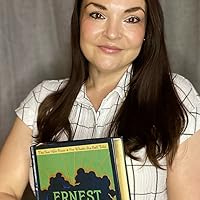
BLACK RIVER ORCHARD [2024] By Chuck Wendig
My Review 3.0 Stars Out Of 5
Wendig’s lengthy terror tome about the evil of cursed apples was just released this past fall and climbed the charts faster than a squirrel on speed. The novel became a National Bestseller and the Starred Review in Publisher’s Weekly prophesized that “the masterful outing” would continue to earn Wendig comparisons to Stephen King. Editorial Reviews were replete with a host of prominent horror author endorsements with varying degrees of glowing praise as shiny as the sheen of one of Little Dan’s “red-black gleaming beautiful” and perfectly presented apples.
The novel was a designated book club selection for this month, and I noticed it was comparatively expensive to buy. Thus, I was both surprised and delighted to rent a digital copy almost immediately. The teaser description on Amazon says a small town is transformed when seven strange trees begin bearing magical apples. A potential reader might skim over that very quickly but for the qualification “in this masterpiece of horror.” The endorsements carry one by a popular horror scribe who I am pretty sure ate the apple, [“This will undoubtedly be heralded as one of the finest horror novels of the twenty-first century.”—] Others were more conservative proclaiming the novel to be an “epic saga” and a “propulsive horror novel.”
All fun and satire aside, I personally found the novel to be somewhat intimidating. Wendig is an exceptionally talented writer, and he is masterful with description of the surroundings, and the interesting and diverse characters who populate the novel. The author crafts a similarly chilling and increasingly horrifying progression of the power, magnetism, and aftershocks that befall the cult of the Harrowsblack Apple, its evil potential unleashed by Little Dan with just a little push from a visiting demon who had vested interest in the proceedings.
The author includes Prologues which speak to the current enchantment of Little Dan Paxson when he returns home with the scion wood for grafting and passionately confides his dreams for the future to his daughter Calla Lily. “Everything starts with this apple.” In the second Prologue dated the year 1901, the reader learns a little about the legendary Henry Hart Golden who owned the Goldenrod Estate in Bucks County, Pennsylvania.
Wendig introduces a diverse handful of protagonists to fight the good fight, albeit if all of them can rise to the occasion. The orchard master in present-day in this tale is Dan Saxson (called Little Dan derisively by the privileged and wealthy men who surround him and gather in their elite meetings). The reader initially feels some degree of compassion for Dan as we are informed through the story that his father killed himself because he was a failure with the orchard and in life. However, Dan Saxson is our (albeit enhanced) human villain in the novel.
Our first sympathetic character is 17-year-old Calla, Dan’s daughter who was mentioned earlier in the first prologue. She is a likeable teenager who aspires to be a media influencer. I considered her boyfriend Marco, athletic, handsome, good-natured Marco, to be a sympathetic character as well, until he was not.
Our “Rambo” in this outing with evil is one John Compass, an “apple hunter” and an Iraqi veteran who was a decorated sniper in the war. However, John is now a passivist, and a Quaker who endeavors to combat evil by bringing the light to it. John is an interesting yet difficult to understand individual, and his best friend in the world was another “apple hunter” Walt Purvin. Walt’s skeletal remains have been accidentally discovered along the banks of Black River. It was clear that his friend had been murdered.
We are introduced to Joanie Moreau in the affluent part of town, happily married to smart, gentle hubby Graham Jacobs. The couple, well, particularly Joanie, plays an integral role in this lengthy scourge of the apples from Hell. I really liked this couple and Joanie was colorful, candid, and chillingly efficient with her gun.
Finally, we Emily, one-half of a female couple married for five years. The stronger more stereotypical provider and organizer Meg is an attorney, and has a supportive mother. The couple have relocated to “reset” the relationship after Emily’s temporary lapse in judgment which she had confessed to her stony silent spouse Meg.
The author writes first person POVs for the main soldiers (Calla, John, Joanie, and Emily). It was interesting that the former soldier teamed up with the disillusioned Emily, and Calla gravitated toward the strength of Joanie.
The momentum in the novel has been called “propulsive” (and it may be for many readers), but it was mind-numbingly protracted in my case. I called the book bad words (No, I will not repeat them here).
The author has a canvas larger than Texas (figuratively) and he uses it to meander down side roads and long winding paths. I would get really engaged when one of the “good guys” was in trouble, and then by the time the story returned to that character’s plight I had halfway forgotten it. The author used the same technique with all of the “good guys” ostensibly to pace the narrative. Wendig did nothing as amateurish as “information dumps” to flesh out characters, but he did go on it seemed for days once the camera was on a given character…. John back to Iraq, etc.
Now here I do not want to get into trouble, because, I like Chuck Wendig’s writing and his contributions to the horror genre. I also have zero interest in the author’s world view. There is many words used to elucidate said point of view, and from the minds and using the words of his characters. In my humble opinion, the novel could have been streamlined in the ways I list above. Editing could have really added to my personal enjoyment of the book for certain.
Overall, I found the plot to be original with the characters almost deliberately diverse. The details of the entire evil enterprise were eked out masterfully as the narrative progressed. My favorite writer ploy to infuse necessary information on the nature of the evil was Wendig’s use of the yellow tabby. I loved it.
Finally, I can say that there were stops and starts in the lengthy book that pulled me in, but then I found myself lost again and impatient. I liked the ending of the novel despite a few casualties. The horror was more bizarre and jarring than it was what I would deem as “extreme horror”. The book is more akin to the “occult” which is bolstered by its genre designation.
I was careful to (hopefully) not divulge any spoilers. I wanted to provide a general “feeling” of reading the book without giving too much away. There were points in the narrative where I thought the book would stack up higher. But it did not.
LIKE A LONG DRIVE IN THE COUNTRYSIDE, STOPPING EVERY FEW MILES TO VISIT POINTS OF INTEREST