Jump to ratings and reviews
Rate this book

A Shepherd's Life (Penguin Classics) by W. H. Hudson

Rate this book
This work has been selected by scholars as being culturally important, and is part of the knowledge base of civilization as we know it. This work was reproduced from the original artifact, and remains as true to the original work as possible. Therefore, you will see the original copyright references, library stamps (as most of these works have been housed in our most important libraries around the world), and other notations in the work. This work is in the public domain in the United States of America, and possibly other nations. Within the United States, you may freely copy and distribute this work, as no entity (individual or corporate) has a copyright on the body of the work.As a reproduction of a historical artifact, this work may contain missing or blurred pages, poor pictures, errant marks, etc. Scholars believe, and we concur, that this work is important enough to be preserved, reproduced, and made generally available to the public. We appreciate your support of the preservation process, and thank you for being an important part of keeping this knowledge alive and relevant.

Paperback

First published January 1, 1910

59 people are currently reading
718 people want to read

About the author

William Henry Hudson

347 books98 followers
William Henry Hudson was an Anglo-Argentine author, naturalist and ornithologist. His works include Green Mansions (1904).

Argentines consider him to belong to their national literature as Guillermo Enrique Hudson, the Spanish version of his name. He spent his youth studying the local flora and fauna and observing natural and human dramas on then a lawless frontier, publishing his ornithological work in Proceedings of the Royal Zoological Society, initially in an English mingled with Spanish idioms. He settled in England during 1874. He produced a series of ornithological studies, including Argentine Ornithology (1888-1899) and British Birds (1895), and later achieved fame with his books on the English countryside, including Hampshire Days (1903), Afoot in England (1909) and A Shepherd's Life (1910). People best know his nonfiction in Far Away and Long Ago (1918). His other works include: The Purple Land (That England Lost) (1885), A Crystal Age (1887), The Naturalist in La Plata (1892), A Little Boy Lost (1905), Birds in Town and Village (1919), Dead Man's Plack and an Old Thorn (1920), and A Traveller in Little Things (1921).

Ratings & Reviews

What do you think?
Rate this book

Friends & Following

Create a free account to discover what your friends think of this book!

Community Reviews

5 stars
78 (34%)
4 stars
94 (41%)
3 stars
45 (19%)
2 stars
8 (3%)
1 star
4 (1%)
Displaying 1 - 27 of 27 reviews
Profile Image for Ian.
982 reviews60 followers
December 11, 2025
Those who are kind enough to read my reviews will know that this type of book tends to appeal to me, and I had seen various quotes praising this particular one. In the end though, I think my view of the book was affected by the curse of high expectations.

The author was born in Argentina in 1841 but moved to England in 1874. He was a naturalist and a prolific author. This book was published in 1910. The first few chapters are basically a love letter to rural Wiltshire and its villages. There’s also a chapter on the town of Salisbury. It’s all very inoffensive, but that’s probably the best I can say for it. I must acknowledge though that, throughout the book, the text is accompanied by charming illustrations of the villages being described.

Hudson made a point of seeking out and talking to the oldest of the local residents, taking down their memories. He comments that there was no point in trying to do this via a set of questions. His approach was engage the other person in general conversation, in a way that would lead them naturally to relate old stories. He developed a particular friendship with a former shepherd, Caleb Bawcombe, who was about 80 years old. Now that name - Caleb Bawcombe – could you possibly have found a more fitting name for a 19th century West Country shepherd?

In the next few chapters, after the opening section, Bawcombe relates stories of local characters and of activities like deer-poaching. At this point I felt I had probably made a mistake in starting the book, but I found some of the later chapters to be of more interest. Hudson spoke to some elderly residents, by then in their 90s, who could remember the disorder of the year 1830, when England came closer to a general rural revolt than it has ever done since. He also tells of the “rotten boroughs” – Parliamentary constituencies with very few voters - that existed prior to 1832, where someone who held the vote would expect the sum of twenty guineas to cast that vote for a particular candidate. This was more than a year’s wages for someone like Caleb. There’s also a chapter describing the sometimes harsh treatment of sheepdogs, and another describing the local gypsy community. Hudson, something of a nomad himself, instinctively identifies with the gypsies’ rejection of the settled life.

Hudson doesn’t present the past through rose-tinted spectacles. He describes grinding poverty, iniquitous justice, and, to his particular regret, the extermination of local wildlife. Despite all that, he somehow leaves the reader with a sense of regret over the disappearance of the old ways.
Profile Image for Bettie.
9,977 reviews5 followers
March 6, 2014
Esther returned a 4*

Gutenberg: http://www.gutenberg.org/ebooks/7415

Opening: Wiltshire looks large on the map of England, a great green county, yet it never appears to be a favourite one to those who go on rambles in the land. At all events I am unable to bring to mind an instance of a lover of Wiltshire who was not a native or a resident, or had not been to Marlborough and loved the country on account of early associations. Nor can I regard myself as an exception, since, owing to a certain kind of adaptiveness in me, a sense of being at home wherever grass grows, I am in a way a native too. Again, listen to any half-dozen of your friends discussing the places they have visited, or intend visiting, comparing notes about the counties, towns, churches, castles, scenery—all that draws them and satisfies their nature, and the chances are that they will not even mention Wiltshire.

A Shepherd's Life: Impressions of the South Wiltshire Downs by W. H. Hudson

Summer 2013
ebook> Gutenberg
BR>Eng>Wiltshire
Non-fic>Hist>travel
pub 1910
pastoral
smuggling + poaching + sheep-stealing
137 pages in the online version


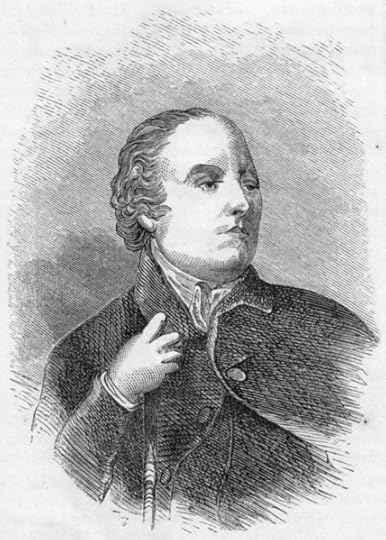
William Gilpin (4 June 1724 – 1804) was an English artist, Anglican cleric, schoolmaster, and author, best known as one of the originators of the idea of the picturesque.
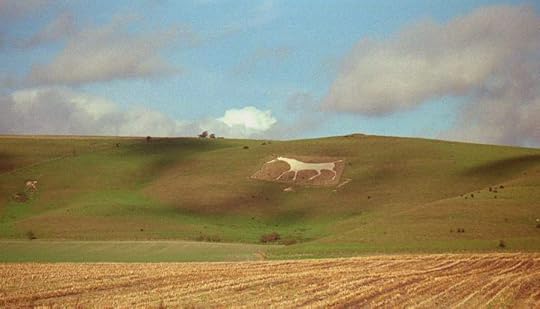
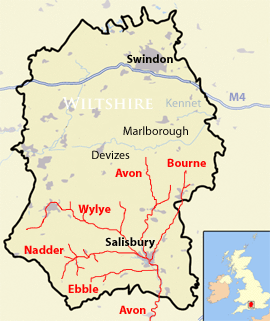
[image error] Salisbury Plain


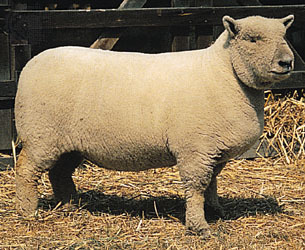
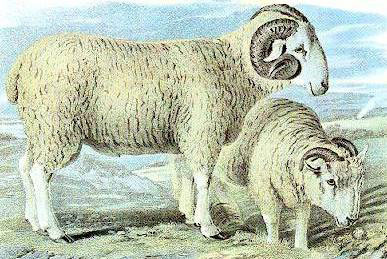
Old Wiltshire Sheep

Southdown Sheep

The greatest change of the last hundred years is no doubt that which the
plough has wrought in the aspect of the downs. There is a certain
pleasure to the eye in the wide fields of golden corn, especially of
wheat, in July and August; but a ploughed down is a down made ugly.


One must lament, too, the destruction of the ancient earth-works,
especially of the barrows, which is going on all over the downs, most
rapidly where the land is broken up by the plough.


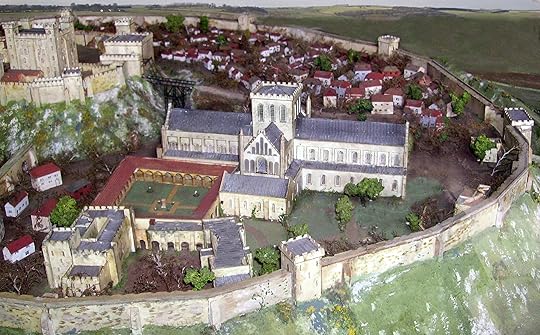
Old Sarum reconstruction

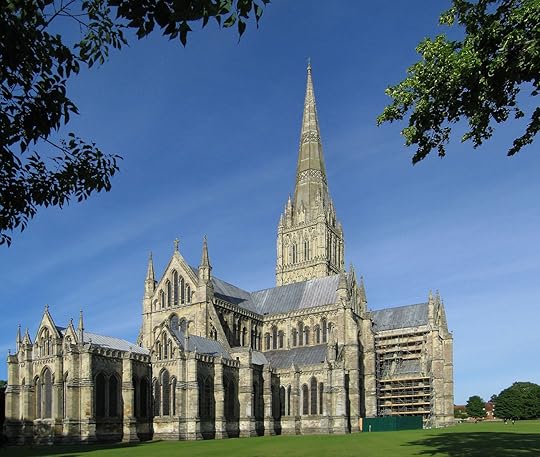
Salisbury Cathedral: There is nothing in the architecture of England more beautiful than that
same spire.


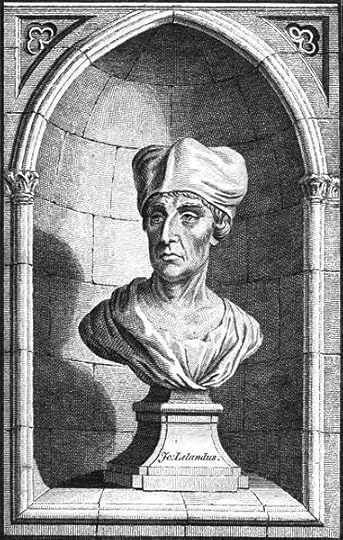
John Leland, also Leyland (13 September, ca. 1503 – 18 April 1552), was an English poet and antiquary:
"There be many
fair streates in the Cite Saresbyri, and especially the High Streate and
Castle Streate.... Al the Streates in a maner, in New Saresbyri, hath
little streamlettes and arms derivyd out of Avon that runneth through
them. The site of the very town of Saresbyri and much ground thereabout
is playne and low, and as a pan or receyvor of most part of the waters
of Wiltshire."


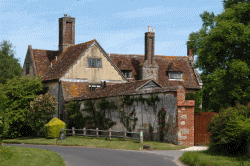
The manor house in the village of Martin. From Martin Parish Council:
- Martin is the star of A Shepherd's Life by W.H. Hudson. In the book the name is changed to Winterbourne Bishop and features one Caleb Bawcomb, shepherd. Bawcomb was based on a real Martin character. If you want to know who, then you'll have to visit the church!

- General Sir Pitt-Rivers, known as the Father of Modern Archaeology, undertook many of his most famous excavations on and around Martin Down and published his findings in Excavations in Cranborne Chase.

- Blagdon, on the Cranborne side of Martin Down was made a Royal Park in 1321 by Edward II.


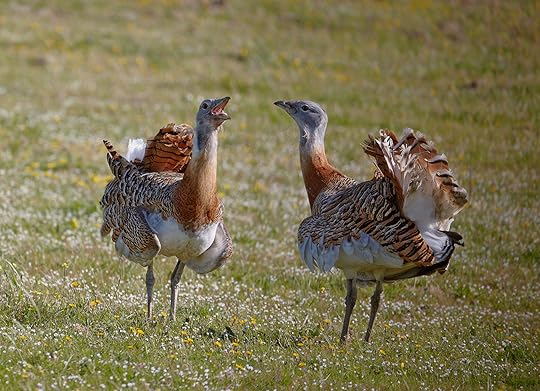
Great Bustard

Mr. Justice Park, at the Spring Assizes at Salisbury
1827, said that though the calendar was a heavy one, he was happy to
find on looking at the depositions of the principal cases, that they
were not of a very serious character. Nevertheless he passed sentence of
death on twenty-eight persons, among them being one for stealing half a
crown!


Best chapter?: CHAPTER XIX

THE DARK PEOPLE OF THE VILLAGE

How the materials for this book were obtained--The hedgehog-hunter--A
gipsy taste--History of a dark-skinned family--Hedgehog eaters--Half-bred
and true gipsies--Perfect health--Eating carrion--Mysterious knowledge
and faculties--The three dark Wiltshire types--Story of another dark
man of the village--Account of Liddy--His shepherding--A happy life
with horses--Dies of a broken heart--His daughter


So, the Wiltshire Downs are not just about Tiffany Aching and The Wee Free Men then.
Profile Image for Sherrie.
655 reviews24 followers
October 17, 2024
Written over a hundred years ago, the language was quite formal at first but quick to get used to. The reminiscences of shepherd Caleb Bawcombe, it captures a bygone age, Wiltshire in the 1800's. Not particularly romantic, it was a hard life for the ordinary person. Lovely photos and illustrations.
120 reviews53 followers
February 2, 2016
I was drawn into reading this book by a favourable reference in James Rebank's The Shepherd's Life. Rebanks's wrote that reading Hudson's A Shepherd's Life by "the sudden life-changing realization it gave me that we could be in books – great books", it "turned me into a book obsessive".

It is an odd sort of book, but it has its charms. The title is slightly misleading. Hudson uses the connecting thread of the reminiscences an old shepherd he met on the Wiltshire downs, probably during the 1890s, to describe the lives of agricultural labourers in the 1830s, when their way of life was under great stress - it was the time of the Captain Swing riots.

At the same time I was reading the work of the poet John Clare, who wrote about agriculturalists lives in Northamptonshire during the same period, so this book nicely complimented that.

One down note is a chapter near the end of the book, where there is racist language about Roma.
38 reviews2 followers
April 18, 2016
Oh man. This book. I found this book just after I started taking the Bible seriously. I saw it on the bookshelf of a care home while my mother worked a night shift. Having never heard of the author before I really didn't know what I was in for. I was only drawn to the book because of the word 'Shepherd' in the title, and having recently learned about Jesus being the good shepherd and laying his life down for his flock, I wanted to see if this book could tell me anything about anybody who took the narrow path instead of the wide; who went through the gate instead of hopping the fence.

The book did not disappoint me. It's mainly about the author's experience with shepherds and shepherding on the Wilshire, Summerset and Dorset downs in the 19th century, around the time of agricultural revolution. One particular shepherd he interviews is a man called Isaac. Isaac the Shepherd happened to carry a new testament in his pocket and would dip into it during his working day. You can see why I was charmed by this book. God gave it to me at the right time.

There's a lot in this book. So many wonderful observations about the natural world, the way it is when people work outside and the kind of communities they enjoy. It was definitely a hard life, Hudson doesn't make any effort to romanticize it, evidenced in one or two chapters about the shepherds treatment of sheepdogs. However, he makes good observations and that makes it educational and joyful to peer into the lives of people in the easily forgotten past.
Profile Image for Sylvester (Taking a break in 2023).
2,041 reviews87 followers
July 23, 2013
A look into an old way of life. The first 2 chapters were awful (long, loving descriptions of countryside - more for the benefit of the author than the reader), and the rest was wonderful. Story after story about specific shepherds, sheepdogs, cats, birds and wildlife, gamekeepers and poaching,and, wouldn't you know it, gypsies (is this the new theme I'm going to repeatedly come across in my reading? last year it was Victoria's Jubilee). It seems that every generation has an individual who sees what is passing into extinction and mourns it for the rest of us. W.H. Hudson is certainly one of these. And what a wealth of knowledge and skill has vanished forever! I enjoyed stepping back into a time I could otherwise never enter. This reminded me of "Ask the Fellows Who Cut the Hay", another favorite of mine.
Profile Image for Mary Teresa.
Author 2 books6 followers
September 14, 2024
Delightful

WH Hudson writes wonderfully of the shepherd he met in Wiltshire and of his life. I feel I've time traveled to the 19th century and spent time on the downs with him myself. Delightful memoir!
Profile Image for David Smith.
98 reviews
June 28, 2025
For me this is a powerful book about the importance of listening to the small still voice in our culture. Read this book slowly and thoughtfully.
Profile Image for Helen Castle.
221 reviews5 followers
February 6, 2024
Written as a series of reminiscences, recounted by elderly shepherd Caleb Branscombe at the beginning of 20th century, the book relates stories of human and natural life on the Wiltshire South Downs. These are meandering tales of poaching, foxes, bird life, sheep dogs and local characters, evoking an oral tradition of storytelling. At times, Caleb’s old wife sits at his side during the telling, prompting him and butting in.

Caleb intrigues us a local character, who represents a disappearing way of life in tune with the landscape. However, Hudson makes it clear that his own admiration for Caleb stems from their rapport as naturalists. Caleb has an innate ability to remember incidents in nature ‘because he had sympathy for the creatures he observed …because he had seen them emotionally’. These elevate Caleb’s observations and anecdotes, whether it is the way he ‘vividly’ remembers ‘the various characters’ of his ‘sheep dogs’ or ‘the feeling’ he had for ‘the most minute and unconsidered’ animals, such as shrews.
1,085 reviews3 followers
March 21, 2019
I acquired a used copy during a visit to Cambridge, UK. It was listed as a "heritage" book. Hudson begins his book on the Salisbury Plain and focuses on an uninteresting village in Wiltshire (Winterbourne Bishop) that has no manor house or powerful lord. He writes down the discussions he has with an elderly shepherd, Caleb Bawcoube, along with everyone he could find who remembered the agricultural riots of the 1820s-1830s. He is trying to record the life of those who lived close to the land, paralleling his knowledge of working people in Argentina. His view of gypsies is racist and consist with 1910 science, but still he respects and admires them. There is much detail on how the plantain grows, birds, and the relationship between the shepherd and his dogs--more on dogs actually than sheep.
Profile Image for Brian Lavis.
36 reviews
June 20, 2018
A lovely story, simple and gentle, nothing horrible in it but lots of nice tales. An interesting historical record to normal non industrialised country folk.

I found the first chapter hard work but once Hutson had explained his love of Wiltshire, and started telling tales of the Shepard and other characters it became very readable.

Makes me want to seek out the villages he mentions in the book.
Profile Image for Daniel.
14 reviews1 follower
October 14, 2018
A rather boring descriptive piece about an openly boring county, as described by the author himself. There are a handful of interesting tales about life in the 1800s but they are lost amongst the pages of dull writings about the land.
This said, his talk on birds and dogs were intriguing, but I struggled to keep patience with the endless, lack of speech in his stories. He is not the shepherd in the title of the novel and I expect that if he was, the stories would be more relatable and fun.
434 reviews1 follower
October 9, 2024
This is a book based on the reminiscences of a shepherd Caleb Bawcombe who lived and worked in Wiltshire in the nineteenth century and woven together by WH Hudson a skilled writer on the English countryside . It is a patchy piece of work , some fascinating stories some less so , some uncomfortable stories of human and animal maltreatment and a deep dive into the challenges of living in the countryside at that age as well as appreciation of its beauty .
Profile Image for Lynn.
933 reviews
April 11, 2024
This was a very quiet book based on interviews with a shepherd in the late 1800s who lived and worked on Salisbury Plain. I first heard about it reading James Rebanks' book. I didn't realize it was based on another man's reminiscences until I began reading. It's an interesting look at a past time. Mostly, the pen drawings in my copy were beautiful.
Profile Image for Mark McKenny.
404 reviews2 followers
June 13, 2018
He's not actually the Shepherd? Disappointing. Felt more like an ode to Wiltshire too, a county I love, but not this much. Did enjoy the paragraphs about the cats and the train tracks though, never be able to forget that.
Profile Image for John Quarmby.
4 reviews
September 12, 2020
gett along, its fine see also, James Rebanks different sheep anddifferent grass

Anyone possibly about sheep and grass. Similar problems.


More tractors and other machinery. Not a lot about vets or medicine, dogs or women
Profile Image for Simon Evans.
Author 1 book7 followers
May 27, 2018
A delightful book full of charming anecdotes, which provide a vivid snapshot of rural life in 19th century England.
Profile Image for The Book.
1,046 reviews23 followers
June 24, 2018
Read this as James Rebanks mentioned it a few times in his book. Interesting, just not quite what I was expecting. A good glimpse of rural life as it was though!
271 reviews
August 4, 2020
Nice romp thru Salisbury district in England in the late 19th and early 20th century.
Profile Image for Mike Mason.
29 reviews1 follower
December 23, 2022
Still relevant today. Lots of foreboding which ended up being bang on. Dry in places but bound to be with the time it was written in
Profile Image for Lynn Mann.
9 reviews
May 31, 2024
I read this book after hearing a talk about W H Hudson. As it was written over a century ago, I thought it would be hard to get into, with long sentences like Dickens, but even though it was long it was very readable, a chapter a night before going to bed. These days much of nineteenth English country life is presented to us through the eyes of literate gentlemen and women, living in mansions now looked after by the National Trust, but the people that Hudson spoke to in order to write this book are the ordinary working people: even though some could read and write they would not have thought to write down their thoughts and observations. (Caleb the Shepherd could write - but never wrote to his brother even though he often wondered how he was). He researched the 1831 Salisbury assizes that resulted in hanging and transportation to the colonies, after rioting over the introduction of threshing machines, including interviews of very elderly people who could remember it. It was shocking to read about child labour and the exploitation of many men who only had seasonal work. He went to interview the Roma gypsies in their encampments as well. Some lovely passages about the life and work of the shepherds, the sheep drovers and the dogs. Hudson could see a decline in Nature even then - e.g. because of game keepers killing every predator that would interfere with pheasant shooting and egg collectors extirpating the stone curlews. Loved it.
Profile Image for Donna.
Author 12 books20 followers
March 25, 2017
This is an old book (originally published in 1910) which I picked up after reading James Rebanks' book of the same title, which references the Hudson work.

The writing style is a bit dated, but it's rather charming, and certainly heartfelt. Some of the latter chapters had some good ol' fashioned class and race prejudice, which was somewhat wince-inducing (I thought seriously of reducing my rating by a star, but the work is a product of its era as well as its "gentleman" author, and I took that into consideration). Hudson's observations of the natural world as well as his obvious admiration for Caleb, the subject of most of the book, were both the book's main attraction and its saving grace.
Profile Image for Debbie.
1,160 reviews3 followers
January 1, 2018
Well written set of anecdotes told to the author at the beginning of the twentieth century, which owing to the age of some of the people interviewed stretch back to the bad old 1830's which was a time when farm workers were treated badly by their employers.
Displaying 1 - 27 of 27 reviews

Can't find what you're looking for?

Get help and learn more about the design.