""Readers will discover here an amazing spiritual wealth . . . covering vast areas of vital significance for Orthodoxy - as Church, as theology, as history, as worship, as a way of life. . . a refreshing spiritual and intellectual achievement." Archbishop Demetrios of America"
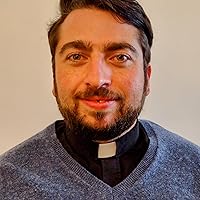
Fr. Theodore Stylianopoulos has taught at Hellenic College and Holy Cross since 1967, specializing in the New Testament and also teaching courses in the areas of Orthodox theology and spirituality. He became tenured professor of New Testament in 1979 and was named the Archbishop Iakovos Professor of Orthodox Theology in 2003.
His main academic interests include the theology of the Gospel of John, the life and thought of St. Paul, the origins and growth of the early Church in its relationship to Jews and Gentiles, the spirituality of scripture and tradition, and the hermeneutical issues pertaining to the gospel, scripture, tradition, Church, Christian mission and pastoral life.
Fr. Stylianopoulos's introductory book on Orthodox hermeneutics entitled The New Testament: An Orthodox Perspective, Vol. 1, Scripture, Tradition Hermeneutics (Brookline: Holy Cross Press (1997) has been translated into Arabic and Ukrainian and is forthcoming in Russian. He is also the author of The Good News of Christ (1991) and The Way of Christ: Gospel, Spiritual Life and Renewal in Orthodoxy (2002).
Over his many years Fr. Stylianopoulos has been engaged in extensive ecumenical work as official Orthodox representative through organizations and dialogues, has lectured in various colleges and universities, and has conducted numerous retreats in Orthodox parishes throughout the United States and Canada. Throughout his ordained life (since 1965) he has also pastored several parishes in New England, including St. George Greek Orthodox Church, Keene, N.H. (1978-to present).
Stylianopoulos' The Way of Christ: Gospel, Spiritual Life and Renewal in Orthodoxy is can perhaps be conceptualized as somewhat of an introduction to the lack of true evangelism and spiritual zeal within the contemporary Orthodox Church. The author, who is a respected theologian and professor within Orthodox circles in America and Greece, organizes the book into three parts which correspond to and address the subjects of its subtitle, namely: Gospel, spiritual life and renewal. Each of these parts build upon each other in a sequential and systematic fashion, although it would perhaps be possible to read them independent of one another.
In Part One, Stylianopoulos first establishes what the Orthodox actually mean when they refer to the Gospel. Is the Gospel simply a book or biography about Jesus Christ? Stylianopoulos explains the position of perhaps the greatest Church Father, St. John Chrysostom. The author writes that according to St. John, "the written Gospels are many, yet the Gospel is one, and is centered on Christ, His incarnation, death and resurrection" (18). The Gospel also encompasses the involvement of the Holy Spirit, in that, "...God's power [is] manifested in two essential events: the resurrection of Christ and the pentecostal gift of the Spirit" (21). In Orthodoxy, the Gospel has less to do with, "rigidity, narrowness, legalism, formalism, and ritualism" (31) and more to do with, "the creative power and authority of tradition" (33). The tradition of the Orthodox is to evangelize through its tradition of both teaching and worship. In fact, "a prayerful liturgist not only proclaims but acts out the contents of the Gospel, actualizing its blessings amidst God's people" (37). The point of this section is not to undermine the essential nature of ritual and tradition to Orthodoxy as such, but rather to caution against the view of, "the Church [as] a religious institution with primary reference to itself and its survival, rather than to the risen Lord and its mission in the world" (49).
The evangelism that Stylianopoulos writes about in The Way of Christ is not a pie-in-the-sky type of evangelism. He is rather advocating for a very concrete realization of the evangelical mission of the Church in the context of the parish and the immediate community within which one finds oneself in. Stylianopoulos speaks of, "the actualization of the Gospel in the parish" (53), to those who are culturally conflicted about their faith rather than personally conflicted - i.e. it is not so much that Orthodox don't believe in God as much as it is they believe in the truth of the American secular religion of materialism. Who is to blame for the falling away of the faithful from the Gospel and the Church? In Stylianopoulos' estimation, it is not helpful to create a 'dichotomy of blame' in which it is necessarily the case that either the secular culture or the Church is to blame. Rather, "the better way is to center on Christ, to refocus on the good news [...] all in the context of the treasures that we already possess and celebrate as Orthodox Christians" (61). The author concludes this section with the assertion that, "evangelism entails the announcement not merely of an abstract truth but of the active and transforming presence of God as Trinity" (86).
Part Two of The Way of Christ focuses on the centrality of prayer in the live and evangelical calling of the Orthodox Christian. Stylianopoulos notes that, "the elements of prayer as invocation, relationship and communion parallel the three main stages of spiritual life: purification, illumination, and perfection" (104). A wonderful example of the prayer and spiritual life in action is the life of Saint Silouan of Mount Athos. Saint Silouan was a Russian peasant who moved to Mount Athos in order to become a monk. Silouan made a, "distinction between learning about God through studies, books and research, and knowing Him through the Holy Spirit" (113). It is in this sense that the Gospel is preached primarily by one's prayer life and communion with God, rather than through theological inquiry. The prayer life testifies to the power of the Gospel in that through it, one comes to know salvation. "Each Christian participates in the mystery of salvation through a personal response of his total being [and] when a Christian exalts himself or subtly lapses into self-reliance, God withdraws from him and delivers him to suffering" (118-9). It is only through prayer that we learn to completely rely on God, not only for our daily sustenance, but for our salvation as well. A Church that does not emphasize the spiritual life is one that is not proclaiming the fullness of the Gospel and is likewise one that is open to attack from Evil, as "the chief qualification of Church leadership is spiritual life" (136). If even the leadership of the Church does not participate in the spiritual life as 'invocation, relationship and communion' with God, where does that leave the laity? Where is the Gospel to be found in such a situation?
In the final part of the books, entitled 'Faith, Tradition and Renewal', Stylianopoulos reexamines the message of the Gospel in relation to what was previously discussed. Stylianopoulos upholds Paul as a great example to the Orthodox of what it looks like to be converted from being 'Law-centered' to 'Christ-centered' (143).