Explicitly political, The Screens is set within the context of the Algerian War. The play’s cast of over fifty characters moves through seventeen scenes, the world of the living breaching the world of the dead by means of shifting the screens—the only scenery—in a brilliant tour de force of spectacle and drama.
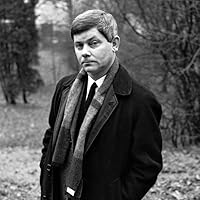
Jean Genet was a French novelist, playwright, poet, essayist, and political activist. In his early life he was a vagabond and petty criminal, but he later became a writer and playwright. His work, much of it considered scandalous when it first appeared, is now placed among the classics of modern literature and has been translated and performed throughout the world.
I'm conflicted with this play. I've only read it, but it seems like the use of the screens as a trick for scenery (a fun technique in many plays) doesn't entirely mesh with the story being told here, and I'm a bit confused why he decided to combine the two. In addition it doesn't seem like he utilizes them to their full potential (except in the scene of the burning orange grove and the first scene in the land of the dead), which is a good challenge for any director. Again, I withhold these reservations for if/when i can see it on it's feet.
These being said: the Mother is a wonderful character, the morality of the world is wonderfully complex, and the land of the dead is a fascinating parallel to Thorton Wilder's.
Just not sure how well this sprawling landscape fits together into an effective story. I guess I was just a bit disappointed.
Its hard not to give a poor rating for a play that cannot be staged. Therefore, it is impossible to know if the staging would work--and if it did with the few performances that were put on--the length and complexity would render the play and point useless with a 6 hour performance. Not to mention there is way too much going on, way too many characters, sideplots that really have no purpose, etc. There are other ways of describing the complexity of the Algerian War, without writing an unstageable play. A very regrettable piece of drama.
Genet always surprises me, especially since his plays feel incredibly slippery and hard to follow on the page. In this case that's partly the fault of whoever edited this thing since character names change for little reason between scenes, among other issues. And it's definitely not all gold - as in The Blacks his writing on race doesn't really hold up, although I think there's more merit than most readers today might assume (no one in France would touch this play for its sympathy to Algerian freedom fighters when it was written). So a mixed experience, but definitely a worthwhile one, with some fantastic images and ideas.
took a minute to get into this, because unrelenting cynicism, rage, and vulgarity isn't my typical register, but it is actually really really good. And the staging would be amazing. And also it's as long as a freaking novel, so not sure who/when would stage it. But still good. If not exactly a cogent anti-colonialist treatise, it is still real mad about colonialism. And satisfyingly theatrical.
Une pièce chaotique, pleine de violence, de cynisme et d'errance. Globalement incompréhensible, trop de personnages, de descriptions, de dialogues interminable, mais Genet aborde son sujet avec une sensibilité inimitable.
« Le lecteur de cette pièce s’apercevra vite que j’écris n’importe quoi. […] Dans cette pièce — mais je ne la renie pas, oh non ! — j’aurai beaucoup déconné. » … tout est dit.
Like most Genet that I've read, it was so long ago (although I think I probably read this one much more recently) that I barely remember it. I remember its only scenery being screens. Genet, always political, does something that always interests me: he makes explicit political commentary at the same time that he manages to transcend the obvious w/ a higher formal level. Just as he used role-playing in The Balcony to unhinge the fixedness of people's role-playing in daily life, here I interpret his use of screens as a meta-device for partitioning off different levels of 'reality'. Just as in math, "grouping" can be used to determine whether an infinite series equals 1 or 0, here screens can be used to partition off matters of life & death & make them more ambiguous w/o taking away the hard study that Genet makes of them.
Novel and ingenious use of screens as formal device to emphasize play's substance (different social worlds, different levels of reality, different dimensions even!). Yet I have a lingering feeling that the play is too expansive, too over-extended to be able to maximize the form of the screens. I feel this would have been more effective with more focus.