

What do you think?

Venticinque Agosto 1983 e altri racconti inediti
Volume in onore di J. L. Borges nel suo 80simo compleanno.
25 agosto 1983
Rosa di Paracelso
Tigri azzurre
Utopia di un uomo che è stanco
Borges uguale a se stesso : intervista di María
Esther Vásquez
Cronologia
Bibliografia borgesiana
25 agosto 1983
Rosa di Paracelso
Tigri azzurre
Utopia di un uomo che è stanco
Borges uguale a se stesso : intervista di María
Esther Vásquez
Cronologia
Bibliografia borgesiana
147 pages, Paperback
First published January 1, 1980
About the author
Jorge Luis Borges
1,630 books15.1k followersJorge Francisco Isidoro Luis Borges Acevedo was an Argentine short-story writer, essayist, poet and translator regarded as a key figure in Spanish-language and international literature. His best-known works, Ficciones (transl. Fictions) and El Aleph (transl. The Aleph), published in the 1940s, are collections of short stories exploring motifs such as dreams, labyrinths, chance, infinity, archives, mirrors, fictional writers and mythology. Borges's works have contributed to philosophical literature and the fantasy genre, and have had a major influence on the magic realist movement in 20th century Latin American literature.
Born in Buenos Aires, Borges later moved with his family to Switzerland in 1914, where he studied at the Collège de Genève. The family travelled widely in Europe, including Spain. On his return to Argentina in 1921, Borges began publishing his poems and essays in surrealist literary journals. He also worked as a librarian and public lecturer. In 1955, he was appointed director of the National Public Library and professor of English Literature at the University of Buenos Aires. He became completely blind by the age of 55. Scholars have suggested that his progressive blindness helped him to create innovative literary symbols through imagination. By the 1960s, his work was translated and published widely in the United States and Europe. Borges himself was fluent in several languages.
In 1961, he came to international attention when he received the first Formentor Prize, which he shared with Samuel Beckett. In 1971, he won the Jerusalem Prize. His international reputation was consolidated in the 1960s, aided by the growing number of English translations, the Latin American Boom, and by the success of Gabriel García Márquez's One Hundred Years of Solitude. He dedicated his final work, The Conspirators, to the city of Geneva, Switzerland. Writer and essayist J.M. Coetzee said of him: "He, more than anyone, renovated the language of fiction and thus opened the way to a remarkable generation of Spanish-American novelists."
Born in Buenos Aires, Borges later moved with his family to Switzerland in 1914, where he studied at the Collège de Genève. The family travelled widely in Europe, including Spain. On his return to Argentina in 1921, Borges began publishing his poems and essays in surrealist literary journals. He also worked as a librarian and public lecturer. In 1955, he was appointed director of the National Public Library and professor of English Literature at the University of Buenos Aires. He became completely blind by the age of 55. Scholars have suggested that his progressive blindness helped him to create innovative literary symbols through imagination. By the 1960s, his work was translated and published widely in the United States and Europe. Borges himself was fluent in several languages.
In 1961, he came to international attention when he received the first Formentor Prize, which he shared with Samuel Beckett. In 1971, he won the Jerusalem Prize. His international reputation was consolidated in the 1960s, aided by the growing number of English translations, the Latin American Boom, and by the success of Gabriel García Márquez's One Hundred Years of Solitude. He dedicated his final work, The Conspirators, to the city of Geneva, Switzerland. Writer and essayist J.M. Coetzee said of him: "He, more than anyone, renovated the language of fiction and thus opened the way to a remarkable generation of Spanish-American novelists."
Ratings & Reviews
Friends & Following
Create a free account to discover what your friends think of this book!
Community Reviews
Displaying 1 - 30 of 60 reviews

March 10, 2024
link: source
We are two and we are one.
There is nothing strange as dreams are, though strangeness of dreams does not conform to our notion of bizarreness as if the world of dreams belongs to another realm altogether wherein there is no such thing to be called as normal, for it transcends the boundary of ordinary and extraordinary. The things which might put you in a state of bewilderment in reality, may not disturb your consciousness too much in dreams so as to question their very existence, even if they catch you off guard by proportions of unusual oddity.
Does it mean that in dreams, we can do what we can’t do in real world, does it also mean that we can achieve in dreams what we may not think to in reality; so can we say that dreams may become our saviors, for they may save us from our existential ordeals and may help us to re-write our history as we always want to by expunging our seemingly blunders (but that may cut off the fabric of evolution itself and may put our very existence in jeopardy). It is also imperative to say that we may do as we please in our dreams, thereby to alter our reality as per our desires (or needs), perhaps to create an alternative reality; and if the world of dreams is so delightful why can’t we live just there, even if they are induced too (of course, the question of authenticity of our existence there would be an entirely different matter), what if what we take as reality is actually our dream or what if it is actually someone else’s dream and we are just the mere characters (not)existing there.
Dreams had been one of the most passionate fascinations of Borges, throughout his life. He explored the realm of dreams the way no one has been able to, for he pushed the possibility in dreams to the outrageous limits which muddles the thin line between reality and dreams. 25th August, 1983 is about an author who meets his older self who is at the verge of dying or perhaps the older self meets the younger self, well we can’t say for sure, but it can be said with authority that it is actually a twin story- in a sense that a younger self fearing the unknown future and an older self contemplating upon a past one can’t alter, as we always do in our lives so does it represent our own life, own anguishes and anxieties in life which we keep on working upon throughout our lives. The story may come across as melancholic in nature as it deals with an author’s self- absorbing musing upon his own life.
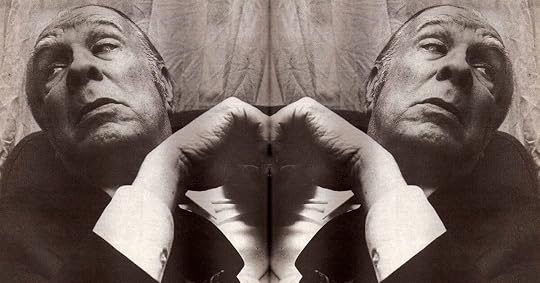
Borges explores the literary motif of the double to a great effect here, for he contemplates upon the passions, obsessions and fixations of an author about his writing itself. What Borgesian stories do to you? It is often said that Borges’s stories make you think rather than to feel and it is correct in a sense that his fiction makes you realize the unexpected limits of your consciousness, when the usual things of life are stretched to unusual borders, that is where the fantastical takes birth out of reality. And what about these doubles, used by the author in the story, are they two different beings communicating through some another dimension or rather two selfs of a single being- such as good and evil which belongs to a single entity, or the two versions who are situated apart in the domain of time, and our dreams are perhaps our memories from another time, but how monstrous and savage it would if we can’t forget our memories of other times (since their weight is not light enough to shed them off), we may become slaves to our memories and then unable to brave out our existential ordeal. Perhaps these memories from different times exist simultaneously, for we never know if past, present and future exist concurrently and anyone of them is as real as the others. One of the weirdest possibilities could be that both Borges exist simultaneously in different times and thereby in different universes, and perhaps their shared dream is their medium of communication.
The prose of the story is convoluted as we expect from Borges, for the reader can’t ascertain that, of both Borges, who is dreamer and who has been dreamt, it looks convincing that the younger self may be dreaming about the older self but the logic goes for a toss when another possibility springs up from the hell of nothingness to suggest that it looks all the more probable that the older Borges might be dreaming about the younger one, and it goes on and on. So could it said that it keeps on repeating itself like our universe does, as suggested by Roger Penrose in his Conformal Cyclic Cosmology model, which essentially means that an author is bound to write what he has been writing no matter how much he questions his decisions or his very instinct for that matter. And therefore, does it also imply that a man is bound to live his fate, no matter how hard he tries to fight his destiny through various choices he made in his life, and which means it can also be inferred that our ‘free will’ is not actually free.
link: source
The Borgesian story also poses another intriguing dilemma (which is, of course, literary in nature) that an author ends up being his least intelligent disciple, as proposed by one of the two Borges in the story and accepted by the other. Is it safe to suggest then that an author keeps on writing the same book throughout his life, as proclaimed by Borges, and it also brings up the name of another author from anonymity and reminds me of László Krasznahorkai, who always maintains that he has been writing just one book throughout his life. Another fascinating literary conundrum knocks here on our consciousness and that is to arguably proclaim that perhaps we have been reading just a few authors throughout the history of humanity and all other authors are only imitators of those a few authors so why we have so many authors as our disposal that an entire lifetime may not be sufficient to assimilate their creations, perhaps all these authors have been various versions of those a few authors and will continue to spring up in future too.
Borges challenges our concept of originality, for he forces us to question our understanding of our universe as our limited comprehension constraints our ability to describe it. Borges argues that it also reduces our great claims of literature we have written are not more than our show of vanity and narcissism, for the exceptional creations of literature belong to no one, as they have their own beings. It digresses me to an intriguing problem of creator and creation, which is that once created all literary artifacts stand on their own, these creations do not have anything to do with their creators after it, rather they belong to the language and tradition. It further questions the authenticity of us – the readers- as well, for we who take so much pride in our existence could actually be imaginary beings and perhaps that lies central to the works of Borges; for he created a world of ‘unreal realities’ which confronts the very understanding of the readers about their world and compels them to doubt its very existence, thereby freeing himself from the anguish of our inherently meaningless world.
Borges’s own diminishing eyesight perhaps helped his imagination to grow leaps and bound than to cause harm to him, which resulted in such an extraordinary achievement in world literature. He mentions that blindness is not darkness, rather it is a form of loneliness as your shared space crumbles into pieces of painful memories, but we may have other media of sharing our existential anguish which perhaps thereby allow us to look deep inside us. Death also plays important role in the Borgesian world as in any great literary universe, the author argues through his various stories as if death can relieve us from our existential ordeal and thereby may send to some higher domain of life beyond death, in this story too, the older self of Borges takes leaf from stoicism and suggests his former self to not to afraid from transcending to life beyond death by breaking the prisons of earthly existence.
Borges, the critic has dealt quite astutely with the literary and aesthetic problems of the literature- in which he raises profound doubts upon our identity and existence, for he remains a life long honest critic of his works by questioning the very relationship of an author and reader and forces the readers to enact in his story through playing an active part by triggering their mind to work along with him- Borges, the author. Borges spend his childhood in a grand library of his father, the library was paradise to him, he in turn creates a paradise in literature (through his various selves) which transcends the most (perhaps all) boundaries of time and space, and his literature became a reflection of itself.

March 22, 2024
"Outside were other dreams, waiting for me."
"Blindness isn't darkness--it's a form of loneliness."
"Every writer ends by being his own least intelligent disciple."
"Blindness isn't darkness--it's a form of loneliness."
"Every writer ends by being his own least intelligent disciple."

April 12, 2024
Read with the Short Story Club
Finally a Borges I liked. A young Borges meets and older one in a hotel room. Strange but interesting.
Finally a Borges I liked. A young Borges meets and older one in a hotel room. Strange but interesting.

May 10, 2016

In a hotel room late at night, Borges encounters a much older version of himself. A provocative, ingenious tale of identity, time, dream and the paradox of the one and the many. Here is a list of my ten incentives to read this literary mindblower.
One: Do you take your familiar world of streets, buildings, work, home, family, friends and neighbors as a firm foundation to define who you are? August 25, 1983 will have you question any such stable underpinning as a method of establishing identity.
Two: You will be given a chance to see what it might be like to come face-to-face with another older you, an older you who could tell you what the future holds for you, in as much detail as you would like.
Three: What is it about the nature of dreams? Like a series of very large spider webs, this Borges tale spins and weaves a web of questions around how and when a dream begins and a dream ends.
Four: How steady or consistent is time? Do you experience the flow of time as an unbroken series of discrete, distinct moments registered on a clock or as elastic, pliable mind-created silly putty; or perhaps one or the other or both, depending on your mood and alertness?
Five: Can we really interact with another person, or are other people forever filtered through the alembic of our own ideas, predilections, dreams, projections and illusions?
Six: How does what we envision as the future inform our own lives? If we knew ahead of time how successful we would be in reaching our personal or creative goals, would such knowledge alter what we do?
Seven: Are we really individual selves with me over here and you over there? Or, perhaps, is there but one self, one identity, one being extending out in space, taking on multiple forms that are ultimately an illusion?
Eight: I have a good idea what I would ask a much older version of myself, an older Glenn Russell on the eve of his death. Could you likewise come up with a list of questions?
Nine: How much of your life tends to be a repetition of past experiences and ways of doing things? What is a fresh human experience, anyhow?
Ten: How comfortable are you with making physical contact with other people? In this tale, a younger Borges recoils from the outstretched hand of older Borges. Does this question speak to how comfortable you are with your own body?
If you think I'm entirely serious asking any of these questions, it's time to read August 25, 1983.


March 3, 2024
Story in 3-D
Typical Borges, and typically unique. This story reflects on Dreams, Duality, and Death, handled with a light touch.
Borges checks into a hotel, only to find he’s just done so: the ink is still wet in the register. In the highest room, the 61-year old meets his 83-year old self.
“We are two and we are the same. But nothing is strange in dreams.”
But:
“Who is dreaming of whom?... It must be settled whether there is one man dreaming or two, dreaming each other.”
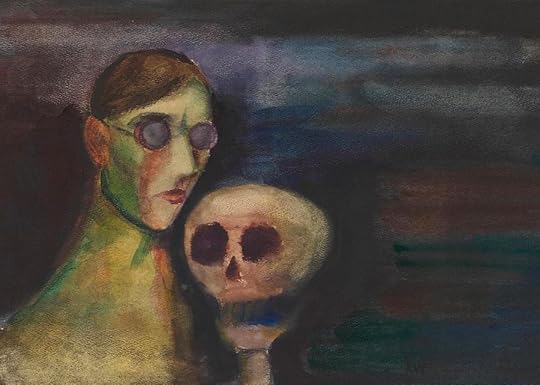
Image: “Self Portrait with Death”, c1932, by Karl Wiener. (Source)
They talk of life, death, and writing. Borges tells Borges that:
“In 1979 you will see that your supposed career has been nothing but a series of drafts… and you will give in to the vain and superstitious temptation to write your great book.”
But that it will be “taken for a clumsy imitator”, and ultimately, he will have failed.
The elder says the Stoics taught not to complain of living, because the door of the prison is open.
“My words, which are now your present, will one day be but the vaguest memory of a dream.”
When he writes the words we’re reading, will he have written them as a fiction, a dream, or something more?
The final D
Borges went blind in middle-age, as his father had, and mentions it often in his later works, including this:
“Blindness is not darkness; it is a form of solitude.”
He died of cancer, in Geneva, aged 86.
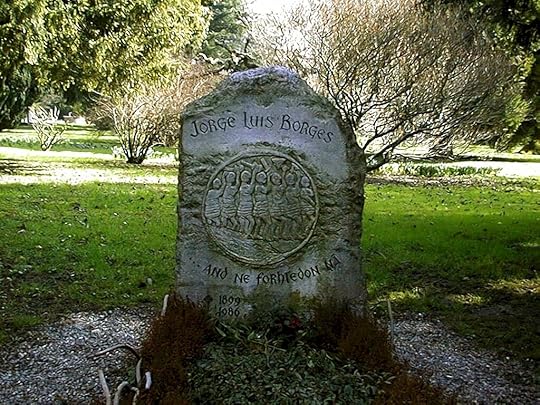
Image: Borges’ tombstone, adorned with carvings derived from Anglo-Saxon and Old Norse art and literature. (Source)
See also
Dip into Borges, and you go through rabbit and wormholes, reflections and circularity.
• I’ve reviewed Borges Collected Fictions, with links to individual reviews, HERE.
• This particular story is one of his later works, published in the collection Shakespeare’s Memory, which I reviewed HERE.
This story has links with several of his others, including:
• Avelino Arredondo, in which August 25, 1897 is the key date. It was published in The Book of Sand, which I reviewed HERE.
Meeting oneself, and issues of who is dreaming who, are reflected in:
• The Other has a younger Borges learning from an older Borges. “The encounter was real, but the other man spoke to me in a dream.” It was published in The Book of Sand, which I reviewed HERE.
• Borges and I, opens, “It’s Borges, the other one, that things happen to” and ends, “I’m not sure which of us it is that’s writing this page”. It was published in Dreamtigers (aka The Maker), which I reviewed HERE.
• Jay Parini adapted the title of “Borges and I” for his delightful roadtrip memoir, Borges and Me, which I reviewed HERE.
Short story club
I reread this in Black Water: The Anthology of Fantastic Literature, by Alberto Manguel, from which I’m reading one story a week with The Short Story Club, starting 4 September 2023.
You can read this story here - though it mistranslates the age of the younger Borges: in the Spanish original, he’s 61.
You can join the group here.
Typical Borges, and typically unique. This story reflects on Dreams, Duality, and Death, handled with a light touch.
Borges checks into a hotel, only to find he’s just done so: the ink is still wet in the register. In the highest room, the 61-year old meets his 83-year old self.
“We are two and we are the same. But nothing is strange in dreams.”
But:
“Who is dreaming of whom?... It must be settled whether there is one man dreaming or two, dreaming each other.”
Image: “Self Portrait with Death”, c1932, by Karl Wiener. (Source)
They talk of life, death, and writing. Borges tells Borges that:
“In 1979 you will see that your supposed career has been nothing but a series of drafts… and you will give in to the vain and superstitious temptation to write your great book.”
But that it will be “taken for a clumsy imitator”, and ultimately, he will have failed.
The elder says the Stoics taught not to complain of living, because the door of the prison is open.
“My words, which are now your present, will one day be but the vaguest memory of a dream.”
When he writes the words we’re reading, will he have written them as a fiction, a dream, or something more?
The final D
Borges went blind in middle-age, as his father had, and mentions it often in his later works, including this:
“Blindness is not darkness; it is a form of solitude.”
He died of cancer, in Geneva, aged 86.
Image: Borges’ tombstone, adorned with carvings derived from Anglo-Saxon and Old Norse art and literature. (Source)
See also
Dip into Borges, and you go through rabbit and wormholes, reflections and circularity.
• I’ve reviewed Borges Collected Fictions, with links to individual reviews, HERE.
• This particular story is one of his later works, published in the collection Shakespeare’s Memory, which I reviewed HERE.
This story has links with several of his others, including:
• Avelino Arredondo, in which August 25, 1897 is the key date. It was published in The Book of Sand, which I reviewed HERE.
Meeting oneself, and issues of who is dreaming who, are reflected in:
• The Other has a younger Borges learning from an older Borges. “The encounter was real, but the other man spoke to me in a dream.” It was published in The Book of Sand, which I reviewed HERE.
• Borges and I, opens, “It’s Borges, the other one, that things happen to” and ends, “I’m not sure which of us it is that’s writing this page”. It was published in Dreamtigers (aka The Maker), which I reviewed HERE.
• Jay Parini adapted the title of “Borges and I” for his delightful roadtrip memoir, Borges and Me, which I reviewed HERE.
Short story club
I reread this in Black Water: The Anthology of Fantastic Literature, by Alberto Manguel, from which I’m reading one story a week with The Short Story Club, starting 4 September 2023.
You can read this story here - though it mistranslates the age of the younger Borges: in the Spanish original, he’s 61.
You can join the group here.

March 5, 2024
5★ (I read it - no audio.)
“I picked up the pen chained to the register stand, dipped it in the brass inkwell, and then, as I leaned over the open book, there occurred the first of the many surprises the night would have in store for me—my name, Jorge Luis Borges, had already been written there, and the ink was not yet dry.”
This is my kind of story – mysterious dream or time-shifting reality? The author tells us he checked into a hotel but has discovered his still-damp signature already on the register. The owner apologises for asking him to sign again.
“ ‘I thought you'd already gone upstairs,’ the owner said to me. Then he looked at me more closely and corrected himself: ‘Oh, I beg your pardon, sir. You look so much like the other gentleman, but you are younger.’
‘What room is he in?’ I asked.
‘He asked for Room 19,’ came the reply.
It was as I had feared.”
We aren’t told what it was he feared or why, but he races to the back room to find himself older and dying in bed.
I found the conversation between Borges the Younger and Borges the Elder interesting as the Younger tries to trick the Elder into some kind of explanation. Is this a dream, and if so, who is dreaming whom?
Is the Younger dreaming his older self, or is the Elder dreaming something from his past, or perhaps even re-dreaming this one that he first dreamed when young?
I really enjoyed the mind-games this made me play. The Younger Borges recognises the voice that greets him as what he sounds like himself on recordings.
“‘How odd,’ it was saying, ‘we are two yet we are one. But then nothing is odd in dreams.’
‘Then ...’ I asked fearfully, ‘all this is a dream?’
‘It is, I am sure, my last dream.’ He gestured toward the empty bottle on the marble nightstand. ‘You, however, shall have much to dream, before you come to this night. What date is it for you?’
‘I'm not sure,’ I said, rattled. ‘But yesterday was my sixty-first birthday.’
‘When in your waking state you reach this night again, yesterday will have been your eighty-fourth.
Today is August 25, 1983.’
‘So long to wait,’ I murmured.
‘Not for me,’ he said shortly.”
There is something about the quality of a dream that can make it feel real, whether it’s because it originated in my own mind and mine alone (I assume!), or that I’m in a kind of captive state when I’m dreaming it.
I can imagine dreaming something like this and even having a conversation like this in a dream. It’s curious and intriguing and it’s Borges.
I read it in the anthology Collected Fictions by Jorge Luis Borges and with the Short Story Club Group here on Goodreads, which is always a good place for interesting conversations.
https://www.goodreads.com/group/show/...
You can download a PDF with both the original text and the English translation here:
https://phalanx.in/pdf/borges.pdf
“I picked up the pen chained to the register stand, dipped it in the brass inkwell, and then, as I leaned over the open book, there occurred the first of the many surprises the night would have in store for me—my name, Jorge Luis Borges, had already been written there, and the ink was not yet dry.”
This is my kind of story – mysterious dream or time-shifting reality? The author tells us he checked into a hotel but has discovered his still-damp signature already on the register. The owner apologises for asking him to sign again.
“ ‘I thought you'd already gone upstairs,’ the owner said to me. Then he looked at me more closely and corrected himself: ‘Oh, I beg your pardon, sir. You look so much like the other gentleman, but you are younger.’
‘What room is he in?’ I asked.
‘He asked for Room 19,’ came the reply.
It was as I had feared.”
We aren’t told what it was he feared or why, but he races to the back room to find himself older and dying in bed.
I found the conversation between Borges the Younger and Borges the Elder interesting as the Younger tries to trick the Elder into some kind of explanation. Is this a dream, and if so, who is dreaming whom?
Is the Younger dreaming his older self, or is the Elder dreaming something from his past, or perhaps even re-dreaming this one that he first dreamed when young?
I really enjoyed the mind-games this made me play. The Younger Borges recognises the voice that greets him as what he sounds like himself on recordings.
“‘How odd,’ it was saying, ‘we are two yet we are one. But then nothing is odd in dreams.’
‘Then ...’ I asked fearfully, ‘all this is a dream?’
‘It is, I am sure, my last dream.’ He gestured toward the empty bottle on the marble nightstand. ‘You, however, shall have much to dream, before you come to this night. What date is it for you?’
‘I'm not sure,’ I said, rattled. ‘But yesterday was my sixty-first birthday.’
‘When in your waking state you reach this night again, yesterday will have been your eighty-fourth.
Today is August 25, 1983.’
‘So long to wait,’ I murmured.
‘Not for me,’ he said shortly.”
There is something about the quality of a dream that can make it feel real, whether it’s because it originated in my own mind and mine alone (I assume!), or that I’m in a kind of captive state when I’m dreaming it.
I can imagine dreaming something like this and even having a conversation like this in a dream. It’s curious and intriguing and it’s Borges.
I read it in the anthology Collected Fictions by Jorge Luis Borges and with the Short Story Club Group here on Goodreads, which is always a good place for interesting conversations.
https://www.goodreads.com/group/show/...
You can download a PDF with both the original text and the English translation here:
https://phalanx.in/pdf/borges.pdf

August 3, 2024
When the time to draw the final conclusions about your life and work comes, the dreams help you to take a look in the mirror without fear and accept things.
'Blindness isn't darkness - it's a form of loneliness.'
--------------------------------------------------------------------------------
'Every writer ends by being his own least intelligent disciple.'
'Blindness isn't darkness - it's a form of loneliness.'
--------------------------------------------------------------------------------
'Every writer ends by being his own least intelligent disciple.'

July 9, 2023
Babil Kitaplığı 2000li yılların başında Dost Kitabevi Yayınları tarafından basılmış ve hayli sorunlu ve pahalı teliflerin de etkisiyle dilimize oldukça geç giren kitaplar, o zamanlar çok ilgi uyandırmıştı. Ne yazık ki kitapların çoğunluğu uzun bir süre baskı görmedi ve seçki zamanla, hiç gereği olmamasına rağmen -yayınevinin tercihleri yüzünden- zor bulunur ve pahalı bir sahaf itemı haline geldi. Ancak birkaç yıl önce nihayet başka bir yayınevi, Kırmızı Kedi Yayınları telifleri topladı ve Borges’in bu küçük ve güzel seçkisi, yine biz fanilerin de böbreğini satmadan sahip olabileceği kitaplar olarak raflarımıza girdi.
Kırmızı Kedi, bu sefer sondan başlıyor ve ilk kitap olan 25 Ağustos 1983 ve Diğer Öyküler ile açıyor seriyi. Ancak kitaba gelmeden önce, hepsini okuyup yorumlamayı düşündüğüm seçkinin kendisinden ve ismini aldığı öyküden bir miktar bahsetmek istiyorum;
Babil Kitaplığı
Babil Kitaplığı adını Borges’in yine aynı isimli öyküsünden alan sonsuz, mitik bir kitaplıktı. İçindeki kitapların her biri 410 sayfa uzunluğunda ve 25 temel karakterin bütün permütasyonlarını içeriyordu. Aynı zamanda popüler kültürde, edebiyatta, sinemada da sıklıkla referans olarak kullanılan sonsuz kitaplık imgesi, şu ana kadar yazılmış ve yazılacak olan tüm kitapları içeriyordu. İnsanların sonsuza değin içinde dolaştığı bir alt evrendi burası. Kimi burada spesifik bir kitabı arayarak ömrünü harcıyor, kimiyse anlamsız kitapları yok ederek kütüphaneye düzen getirmeye çalışıyordu (çünkü tüm permütasyonlardan oluştuğu için kitaplar, büyük bir bölümü de aslında bir anlam ifade etmiyor).
Yani Borges, 1941 yılında Babil Kitaplığı’nı yazdığında, aslında bir kısa öyküden fazlasını yapmıştır. Yazar bir anlamda kendi cennetini anlatıyordu. O yıllarda Arjantin’de kitap tanıtımları yapan, okuduğu kitaplar üzerine eğlenceli yazılar yazan bir insandı ve yazdıklarında da, yazar kimliğinden ziyade okur kimliğini öne çıkarıyordu.
Aynı zamanda dünyanın en tanınmış körlerinden biri olan yazar, her zaman görme duyusunu elinden alacağını bildiği ailesinden miras hastalığın farkındalığı ve tehdidiyle hayatına devam ediyordu. Borges, söyleşilerinde sıklıkla, “cenneti bir kitaplık olarak düşlediğini” söylerdi. 50’lerin ortasında Arjantin Ulusal Kütüphane müdürlüğüne atandığında ve kendini bir milyon kitaptan sorumlu halde bulduğunda ise, her zaman ensesinde asılı duran tehdit artık tetiklenmişti ve Borges göremiyordu. Hatta tam da bu zamanlar, cennetine kavuşmuş fakat göremiyor oluşunu, “Bana muhteşem bir ironiyle hem geceyi hem de kitapları hediye eden tanrıyı, ne gözyaşları, ne de sitem karalasın” diye değerlendirecekti.
Borges asla bir Magnum Opus oluşturmaya çalışmadı. Bunun yerine dünyaya onlarca hikaye, anekdot, yazı, deneme bıraktı ardında. Ancak Babil Kitaplığı imgesi onun için hep önemli oldu. Sonsuz sayıda altıgenin birleşimi ile oluşmuş (altıgen, mimari olarak mümkün olan en verimli şekillerden biridir bu arada. Evlerimizi, binalarımızı, yaşama ve çalışma alanlarımızı da altıgen yerine dikdörtgenlerden yapıyor olmamız devasa bir kerizliktir medeniyet olarak) bir kütüphane evreni olan Babil Kitaplığı, onun cenneti ile hep uyuştu.
İşte bu efsanevi evrenin bizim dünyamızdaki yansıması da, Arjantinli (Bu Latinler neden bu kadar yetenekli?) yazarın hazırladığı, sanki ilham kaynağının işlevini taklit etmeye çalışan 30 kitaplık bir seçki. Nasıl efsanevi Babil Kitaplığı, yazılmış ve yazılmış olan tüm edebiyat eserlerini içeriyorsa, bizim dünyamızdaki Babil Kitaplığı adlı öykü seçkisi de dünya edebiyat tarihinin bir kısa özetini içeriyor adeta. Oscar Wilde’dan Poe’ya, Bloy’dan Kafka’ya, Jack London’dan Wells’e, Voltaire’den Henry James’e, genişçe bir temsil alanına sahip. Buna karşılık içerdiği kitaplar küçük ve öyküler kısa. Borges’in “Az miktarda okuyun, ama tekrar tekrar okuyun; gerçek ve kurmaca arasında hiçbir fark yoktur ve geçmişin tamamı belleğimizde kalanlardan ibarettir.” sözünü hatırlatırcasına, her biri hemen, hızlıca okunabilecek ama zaman içinde, tekrar tekrar da kendini raftan indirtecek kitaplar.
Tüm kitapları okuduktan sonra, -kuvvetle muhtemel 30. kitap olan, Rüyalar Kitabı altında- konu başlığına, Babil Kitaplığı’na tekrar dönebilmeyi, tüm seri hakkında bütünleşik bir yorum yapabilmeyi umuyorum, kitaplığın benim için ne ifade ettiğini/edeceğini anlatmayı arzuluyorum. Ama şimdi biraz da asıl konumuzdan, Borges’in öykülerinden bahsetmek istiyorum.
Dört küçük öyküden oluşan kitapta, zarif ve sadece bir anlatımı var Borges’in. Edebi dilinde, çeviri ile dahi kaybolmamış estetik üslup, öykülerin tamamına yayılmış durumda. Bu kadar kısa bir kitap için – ki öyküleriyle dolu dolu olan son kitap için pek hevesli olduğumu belirteyim bu yüzden- yazarın genel tarzını şaşırtıcı ölçüde iyi temsil ediyor. Nasıl Babil Kitaplığı, sonsuz edebiyatın homojen bir kesitini taşımak gibi biraz yüksek bir hedef güdüyorsa, bu dört öykü de Borges’in özeti bir nevi. Yine gerçek ve gerçek üstü sıklıkla birbirine karışıyor, büyülü dünyalarda geziniyoruz okurken. Metafizik ve felsefi kavramlar, kurgunun etrafına örüldüğü olaylar ile birbirine sarılmış biçimde sunuluyor ve zaman, gerçeklik, benlik, kimlik, sonsuzluk gibi kavramlar her zamanki gibi hakim temalar arasında. Anlatıcılar yine aktif roller üstleniyor. Mitlere ve klasiklere daha az atıf taşısa da bu öyküler, sorgulamalar, şüphe ve paradokslar bu kitapta da hatırı sayılır bir yer tutuyor. Yine yazarın imzalarından bir diğeri olan, kurgusal karmaşıklığın kendisinin tema olarak kullanımı göze çarpıyor ve yine Borges’in kullanmaya bayıldığı labirent, ayna ve kaplan temaları öykülerde yerini alıyor.
Aynı zamanda kitaba da ismini veren ilk öykü 25 Ağustos 1983 yazarın kendi ile yüzleşmesi hakkında: Borges, kaldığı otelin resepsiyonuna uğrar ve o gece için zaten otele giriş yaptığını öğrenir. Ardından odasına çıktığında kendisiyle karşılaşır.
Kimin kimi rüyasında gördüğünün belli olmadığı, tuhaf ama aynı ölçüde sakin bir karşılaşma bu. 24 Ağustos yazarın doğum günü ve hikayenin anlatıcısı Borges, daha bir önceki gün yetmiş yaşına girmişken, karşılaştığı Borges ise bu noktaya varmasının seksen dört yıl aldığını, onun için tarihin 25 Ağustos 1983 olduğunu belirtiyor. Bunun hayatta geçirdiği son gün olduğunu, Borges’in, Borges’le karşılaşmasının ölüm anında gerçekleştiğini açıklıyor. Bu arada bir not; Borges bu hikayede anılan tarihten bir yıl kadar sonra, 1986 yazının sonunda hayatını kaybedecekti. (bkz: Borges’i Borges’e kırdırmak)
Borges’in ölüm döşeğindeki Borges ile konuşması, hakikaten ilginç bir sohbet. Edebiyatta aşina olduğumuz, kendisiyle karşılaşan insanların tedirgin kişilik bölünmesi yerine, anlayış ve empatiyle sarılı, aşinalığın etrafına diyaloglar içermesi, hikayeyi benzerlerinden farklı bir konuma yerleştiriyor ve okuma şevkini perçinliyor. Örneğin, “her an ölebilirim, bilinmezliğin içinde kendimi kaybedebilir ve ikizimle beraber rüyalar görmeye devam edebilirim. Aynaların ve Stevenson’ın ilham ettiği o malum konu” dediğinde Borges, Stevenson’ı anmasının ukalalık değil bir çeşit veda olduğunu anlıyor Borges ve “Ben O’ydum ve anlıyordum. Shakespeare olmak hatırlanmaya değer cümleler sarf etmek için dakikalar yeterli değildi.” diyor.
Borges Borges’e, yazacağı kitaplardan ve yazdığı şiirlerden, gideceği ve gittiği yerlerden bahsediyor. Seviniyor ve öfkeleniyor, kabul ediyor ve itiraz ediyor. Kendisine yalan söylüyor ve kendisine dürüst oluyor. Ancak içlerinden biri sustuğunda rüyaya dönüşecek ve ancak o andan sonra rüyan görenin kim olduğu bilinecek bir gerçeği anlatıyor.
İkinci öykü Paracelsus’un Gülü ve bu sefer inanç hakkında bir hikaye. Üstat Paracelsus ve onun öğrencisi olmak isteyen bir çömez arasındaki konuşma, öğrencinin tüm hayatını ustaya ve öğretiye adamak için küçük bir kanıt görmek istemesi, ustanın ise bunu göstermemesi, mutlak ve temelsiz bir inanç talep etmesinden ibaret. Hikaye güzel, belli belirsiz ama tatlı bir mizah da taşıyor ve filozofların tamamının dalyo olduğuna yönelik fikrimi pekiştirip, dosyalanmak üzere zihnimin arka odalarında yerini alıyor; Lan yap işte çocuğa bir gösteri, eline mi yapışır?
Mavi Kaplanlar ise kitapta en sevdiğim hikayeydi. Borges denince aklına gelen üç şey deseler, kitaplar ve körlükten sonra yapıştırırım kaplanı. Bir Batı Felsefesi hocası olan anlatıcının ağzından, “çocukluğumdan beri kaplanlara tutkunumdur,” diyerek giriyor hikayeye. Küçükken, hayvanat bahçesinde kaplan kafesi önünden ayrılamamasını, Kipling’in Orman Kitabı’nda, Shere Khan’ın baş düşman olduğunu öğrenince nasıl da canının sıkıldığını anlatıyor.
Bir gün kahramanımız Ganj Deltası’nda mavi renkli bir kaplan keşfedildiğine dair bir yazı okuyor. Haberin muhtemelen düzmece olduğun farkında ancak yavaş yavaş ruhuna yayılan tutkuya teslim oluyor ve kaplanların peşine düşüyor. Tutkusu onu mavi kaplanlara götürmüyor ama yolculuğunun sonunda, Ganj’da bir köyde, tuhaf mavi taşlarla karşılaşıyor.
Taşlar, mavi kaplanlardan çok daha ilginç ve tuhaf. Bir ve ikinin toplandığında üç etmediği, kimisi tekinsizce kaybolan, kimisi aniden ortaya çıkan taşlar bilinen evrenin kurallarından hiç de haberdar gibi durmuyor. Bazen saf entropiden yapılmış gibi sayılamayan, devamlı sayıları değişen, asla tek görünmeyen taşlar, kümelere ayrıldığında sayılarını değiştiriyor, o tuhaf mavi renkleri dışında asla sabit kalamıyor. Kısa sürede anlatıcının zihnindeki kaplan takıntısı, taşlarla yer değiştiriyor ve çok daha büyük ve gizemli bir takıntı oluşturuyor.
Kahramanın rasyonalize etmeye çalıştığı, bir düzene sokmaya çalıştığı ama başaramadığı taşlara olan yaklaşımı oldukça ilgi çekici. Büyük bir tutkuyla taşları tanımlamak, kategorize etmek ve taşların davranışlarını açıklayabilecek bir kural zinciri, aksak da olsa bir formül oluşturmak istiyor ve bunda başarısızlığa uğradıkça artan bir hırsla denemeye devam ediyor. Ve aniden bir gün, taşların tamamını sadaka olarak bir dilenciye veriyor. Tüm o çabasından sonra, son derece dikkat çekici bir uyarıyla beraber taşları elinden çıkarıyor.
Problemlere yaklaşım ile ilgili hikayenin taşıdığına inandığı argümanları kabul etmiyorum. Bu düşünce biçiminin kesinlikle zararlı olduğunu düşünüyorum, zaten Borges’in fikirlerinin neredeyse tamamına karşıyım ama bir bütün halinde beni soktuğu düşünce dizisinden hayli hoşlandığımı da söylemek zorundayım.
Son hikaye Yorgun Bir Adamın Ütopyası ise aklımı en çok kurcalayan öykü oldu: Yetmiş yaşındaki edebiyat profesörü ve fantastik öyküler yazarı Eudoro Acevedo yolculuğu sırasında bir ev görür ve içeri girer. Uzun bpylu, Latince konuşan, gelecekten gelen bir adam ile karşılaşır ve konuşmaya başlarlar.
Gelecekten gelen bir adamla yenilen akşam yemeğinde sorular ve cevapları ile şekillenen bir ütopya anlatısı olan öykü, zaman gezgininin ”olaylar `yalnızca yaratmak ve akıl yürütmek için birer çıkış noktasıdır`” deyişine de uygun olarak, basit bir mekanik üzerinden hareket ediyor ve bir ağaç gibi onlarca dala ayrılıyor bu gövdeden.
İyi ve kötü çeşitli öngörüler kısa öykü boyu üzerimize yağıyor. Konuşma sırasında Eudoro, iki bin kadar kitabı olduğundan bahsettiğinde gelecekten gelen adam, “Kimse iki bin kitap okuyamaz. Yaşadığım dört yüz yıl boyunca on beşi geçemedim. Ayrıca asıl mesele okumak değil, yeniden okumak. Matbaa denen şey, ki artık ortadan kalktı, insanoğlunun en berbat icadıydı, gereksiz metinleri baş döndürücü bir miktara kadar çoğaltma heveslisi..." diyor. Nihayet yok olmuş paradan bahsederken “Artık kimse acı vermesi anlamsız olan fakirlikten ya da bayağılığın en rahatsız edici şekli olan zenginlikten muzdarip değil. Herkes bir işle meşgul.” diyor.
İnsan türünün gereğinden fazla çoğalmak için sebebinin olmadığı bir dünyadan, kötülüklerin ve ölümün dokunmadığı bir dünyadan bahsediliyor. Borges’in kahramanı ise dünü unutmayı tercih eden bir dünyada elbette müzeleri ve kütüphaneleri merak ediyor. Borges, birden fazla yönüyle hayalini kurduğum ütopyaya yakın ama kimi yönleriyle içimi kıyan, ne aydınlık ne de karanlık diye kestirip atabileceğim bir geleceği anlatıyor. Üzerinde konuşması güç, kafa karıştıran bir hikaye. Ve kesinlikle tuhaf bir biçimde bitiyor, ardında bir miktar soru işareti bırakıyor.
Öyküler burada sona eriyor. Kitabın geri kalanı, Borges ile yapılmış Maria Esther Vazquez Söyleşisi. Aslında kitaba, öykü okuma beklentisiyle girdiğim için, ilk anda hayal kırıklığı yaratmıştı söyleşi ile karşılaşmak. Ancak o kadar eğlenceliydi ki metin, kısa sürede bu düşüncem tamamen silindi.
Söyleşiyi hazırlayana Maria Esther Vazquez, Borges’in sekreteri olarak çalışmış, kitaplarını dikte etmiş, kendisini de hayli iyi tanıyan bir insan. Bu aşinalığı sayesinde de, hem sorduğu sorularla sohbeti güzelce yönlendirebilmiş, hem de Borges açık yüreklilikle cevap verdiğinden, ortaya iyi bir metin çıkmış. Bu arada hazır konu açılmışken, María Esther Vázquez’den mütemadiyen “Borges’in hayat arkadaşı” diye bahsediliyor özellikle ülkemizde. Oysa yok öyle bir şey. Gerçekten de bir ilişki yaşamışlar ama mevzu hiç de öyle hayat arkadaşlığı durumuna falan gelmemiş. Sekreteri olarak çalışan Maria, Borges’i reddedince konu kapanmış aslında. Bu varoş bilgi de, kuvvetle muhtemel dramayı bayılan ahraz Tr edebiyat çevresinin dedikoduculuğu yüzünden hala dolaşımda. Bir mektubunda şöyle de açıklık getirmiş Borges zaten konuya:
“İtiraf edeyim ki, María Esther’le ilişkimiz, bir süre sonra yazılarımı dikte ettirmenin bir hayli ötesine geçiverdi. Benim çok sevdiğim, ‘Tanrı bana kitapları ve geceyi birlikte bağışladı’ mısrası ile başlayan Poema de Los dones’i (Armağanlar Şiiri) ona adamıştım. Evlilik teklifimi reddetmesi, sonraki baskılarda bu ithafı kaldırmamın hakiki sebebiydi ama Vazquez’e yüklediğim anlamı inkâra asla yeltenmedim.”
- Gözleri Görmeyen İki Adam: Cemil Meriç - Jorge Luis Borges
Söyleşi, hayat hikayesinden bahsederken kronolojik olarak bölünmüş, ardından tematik olarak güzelce segmentlere ayrılmış. Borges’in Edebiyatla ilk tanışmasından, Grimm Masalları’nı ilk okuyuşundan alıp, ergenlik yılları, savaş yılları, gençliği, eserlerinin incelenmesi biçiminde devam ediyor.
Bu anlatıların arasında gayet eğlenceli anekdotlar da var. Örneğin röportajın bir yerinde, çocukluğunda çevirilerin nasıl yapıldığından bahseden Borges’in sözleri, bugün çevirilerle özel olarak derdi olan bir sinir küpü olarak benim dikkatimi çekti:
”Yazar hakları diye bir şey söz konusu değildi; kitaplar hemencecik çevrilir, basılır, yazar da herhangi bir yüzde almazdı. Çoğu zaman daha iyisini yapmak adına, diyelim ki kitap yirmi bölüme ayrılmış olsun, kitabı yirmi ayrı çevirmene verirlerdi. Her biri kendi bölümünü çevirirdi (kitabın yayımlanmasını hızlandırma niyetiyle); bu yüzden bir bölümde ismi Guillermo olan bir karakter başka bir bölümde William ya da Wilhelm diye adlandırılabilirdi. “
Niran’dan daha kötüsü de varmış demek...
Söyleşinin devamında Borges’in kullandığı temalar; aynalar, labirent, kaplan, Buenos Aires, bıçaklar, cesaretten bahsediyor, dilin hayatındaki yeri anlatılıyor, Borges ailesinden ve politik yaklaşımlardan, erdemden bahsediyor.
Yazarı biraz olsun merak eden her okurun ilgisini çekebileceğine inandığım söyleşinin son sorusu ise ölüm hakkında: Vazquez’in “Siz başka bir yaşam olduğuna inanıyor musunuz?” sorusuna, Borges -beni hiç de şaşırtmayan bir biçimde- şöyle yanıt veriyor:
“Hayır. Başka bir yaşamın olmadığını, olsaydı da bunun hoşuma gitmeyeceğini düşünüyorum. Ölümden sonra hatırlanacağım fikri de hiç hoşuma gitmiyor. Ölmeyi ve unutulmayı ümit ediyorum.
***
İşte böyle. 25 Ağustos 1983 ve Diğer Öyküler, benim için güzel bir girişti Babil Kitaplığına. Bu yazıyı yazdığım an itibariyle de ikinci kitap olan Leon Bloy’un Sevimsiz Öyküler’ini henüz bitirmiştim. Borges’in bu küçük kitabını okumak güzel deneyimdi benim için. Serideki diğer kitapları okudukça aşağıdaki listeyi editlemek ve başta da belirttiğim gibi otuz kitabı da okuduktan sonra bir bütün olarak değerlendirmek istiyorum. Ancak bundan bağımsız olarak Borges’in bu kitabını da büyülü gerçekçi hikayeleri, yükte hafif pahada ağır öyküleri seven tüm okurlara öneririm.
Babil Kitaplığı incelemeleri:
1. 25 Ağustos 1983 ve Diğer Öyküler - Jorge Luis Borges
2. Sevimsiz Öyküler - Léon Bloy
3. Sesler Adacığı - Robert Louis Stevenson
4. Aşık Şeytan - Jacques Cazotte
5. Ölümün Dostu - Pedro Antonio de Alarcón
6. Lord Arthur Savile'in Suçu - Oscar Wilde
7. Kaçan Ayna - Giovanni Papini
8. Kâtip Bartleby - Herman Melville
9. Dilek Evi - Rudyard Kipling
Kırmızı Kedi, bu sefer sondan başlıyor ve ilk kitap olan 25 Ağustos 1983 ve Diğer Öyküler ile açıyor seriyi. Ancak kitaba gelmeden önce, hepsini okuyup yorumlamayı düşündüğüm seçkinin kendisinden ve ismini aldığı öyküden bir miktar bahsetmek istiyorum;
Babil Kitaplığı
Babil Kitaplığı adını Borges’in yine aynı isimli öyküsünden alan sonsuz, mitik bir kitaplıktı. İçindeki kitapların her biri 410 sayfa uzunluğunda ve 25 temel karakterin bütün permütasyonlarını içeriyordu. Aynı zamanda popüler kültürde, edebiyatta, sinemada da sıklıkla referans olarak kullanılan sonsuz kitaplık imgesi, şu ana kadar yazılmış ve yazılacak olan tüm kitapları içeriyordu. İnsanların sonsuza değin içinde dolaştığı bir alt evrendi burası. Kimi burada spesifik bir kitabı arayarak ömrünü harcıyor, kimiyse anlamsız kitapları yok ederek kütüphaneye düzen getirmeye çalışıyordu (çünkü tüm permütasyonlardan oluştuğu için kitaplar, büyük bir bölümü de aslında bir anlam ifade etmiyor).
Yani Borges, 1941 yılında Babil Kitaplığı’nı yazdığında, aslında bir kısa öyküden fazlasını yapmıştır. Yazar bir anlamda kendi cennetini anlatıyordu. O yıllarda Arjantin’de kitap tanıtımları yapan, okuduğu kitaplar üzerine eğlenceli yazılar yazan bir insandı ve yazdıklarında da, yazar kimliğinden ziyade okur kimliğini öne çıkarıyordu.
Aynı zamanda dünyanın en tanınmış körlerinden biri olan yazar, her zaman görme duyusunu elinden alacağını bildiği ailesinden miras hastalığın farkındalığı ve tehdidiyle hayatına devam ediyordu. Borges, söyleşilerinde sıklıkla, “cenneti bir kitaplık olarak düşlediğini” söylerdi. 50’lerin ortasında Arjantin Ulusal Kütüphane müdürlüğüne atandığında ve kendini bir milyon kitaptan sorumlu halde bulduğunda ise, her zaman ensesinde asılı duran tehdit artık tetiklenmişti ve Borges göremiyordu. Hatta tam da bu zamanlar, cennetine kavuşmuş fakat göremiyor oluşunu, “Bana muhteşem bir ironiyle hem geceyi hem de kitapları hediye eden tanrıyı, ne gözyaşları, ne de sitem karalasın” diye değerlendirecekti.
Borges asla bir Magnum Opus oluşturmaya çalışmadı. Bunun yerine dünyaya onlarca hikaye, anekdot, yazı, deneme bıraktı ardında. Ancak Babil Kitaplığı imgesi onun için hep önemli oldu. Sonsuz sayıda altıgenin birleşimi ile oluşmuş (altıgen, mimari olarak mümkün olan en verimli şekillerden biridir bu arada. Evlerimizi, binalarımızı, yaşama ve çalışma alanlarımızı da altıgen yerine dikdörtgenlerden yapıyor olmamız devasa bir kerizliktir medeniyet olarak) bir kütüphane evreni olan Babil Kitaplığı, onun cenneti ile hep uyuştu.
İşte bu efsanevi evrenin bizim dünyamızdaki yansıması da, Arjantinli (Bu Latinler neden bu kadar yetenekli?) yazarın hazırladığı, sanki ilham kaynağının işlevini taklit etmeye çalışan 30 kitaplık bir seçki. Nasıl efsanevi Babil Kitaplığı, yazılmış ve yazılmış olan tüm edebiyat eserlerini içeriyorsa, bizim dünyamızdaki Babil Kitaplığı adlı öykü seçkisi de dünya edebiyat tarihinin bir kısa özetini içeriyor adeta. Oscar Wilde’dan Poe’ya, Bloy’dan Kafka’ya, Jack London’dan Wells’e, Voltaire’den Henry James’e, genişçe bir temsil alanına sahip. Buna karşılık içerdiği kitaplar küçük ve öyküler kısa. Borges’in “Az miktarda okuyun, ama tekrar tekrar okuyun; gerçek ve kurmaca arasında hiçbir fark yoktur ve geçmişin tamamı belleğimizde kalanlardan ibarettir.” sözünü hatırlatırcasına, her biri hemen, hızlıca okunabilecek ama zaman içinde, tekrar tekrar da kendini raftan indirtecek kitaplar.
Tüm kitapları okuduktan sonra, -kuvvetle muhtemel 30. kitap olan, Rüyalar Kitabı altında- konu başlığına, Babil Kitaplığı’na tekrar dönebilmeyi, tüm seri hakkında bütünleşik bir yorum yapabilmeyi umuyorum, kitaplığın benim için ne ifade ettiğini/edeceğini anlatmayı arzuluyorum. Ama şimdi biraz da asıl konumuzdan, Borges’in öykülerinden bahsetmek istiyorum.
Dört küçük öyküden oluşan kitapta, zarif ve sadece bir anlatımı var Borges’in. Edebi dilinde, çeviri ile dahi kaybolmamış estetik üslup, öykülerin tamamına yayılmış durumda. Bu kadar kısa bir kitap için – ki öyküleriyle dolu dolu olan son kitap için pek hevesli olduğumu belirteyim bu yüzden- yazarın genel tarzını şaşırtıcı ölçüde iyi temsil ediyor. Nasıl Babil Kitaplığı, sonsuz edebiyatın homojen bir kesitini taşımak gibi biraz yüksek bir hedef güdüyorsa, bu dört öykü de Borges’in özeti bir nevi. Yine gerçek ve gerçek üstü sıklıkla birbirine karışıyor, büyülü dünyalarda geziniyoruz okurken. Metafizik ve felsefi kavramlar, kurgunun etrafına örüldüğü olaylar ile birbirine sarılmış biçimde sunuluyor ve zaman, gerçeklik, benlik, kimlik, sonsuzluk gibi kavramlar her zamanki gibi hakim temalar arasında. Anlatıcılar yine aktif roller üstleniyor. Mitlere ve klasiklere daha az atıf taşısa da bu öyküler, sorgulamalar, şüphe ve paradokslar bu kitapta da hatırı sayılır bir yer tutuyor. Yine yazarın imzalarından bir diğeri olan, kurgusal karmaşıklığın kendisinin tema olarak kullanımı göze çarpıyor ve yine Borges’in kullanmaya bayıldığı labirent, ayna ve kaplan temaları öykülerde yerini alıyor.
Aynı zamanda kitaba da ismini veren ilk öykü 25 Ağustos 1983 yazarın kendi ile yüzleşmesi hakkında: Borges, kaldığı otelin resepsiyonuna uğrar ve o gece için zaten otele giriş yaptığını öğrenir. Ardından odasına çıktığında kendisiyle karşılaşır.
Kimin kimi rüyasında gördüğünün belli olmadığı, tuhaf ama aynı ölçüde sakin bir karşılaşma bu. 24 Ağustos yazarın doğum günü ve hikayenin anlatıcısı Borges, daha bir önceki gün yetmiş yaşına girmişken, karşılaştığı Borges ise bu noktaya varmasının seksen dört yıl aldığını, onun için tarihin 25 Ağustos 1983 olduğunu belirtiyor. Bunun hayatta geçirdiği son gün olduğunu, Borges’in, Borges’le karşılaşmasının ölüm anında gerçekleştiğini açıklıyor. Bu arada bir not; Borges bu hikayede anılan tarihten bir yıl kadar sonra, 1986 yazının sonunda hayatını kaybedecekti. (bkz: Borges’i Borges’e kırdırmak)
Borges’in ölüm döşeğindeki Borges ile konuşması, hakikaten ilginç bir sohbet. Edebiyatta aşina olduğumuz, kendisiyle karşılaşan insanların tedirgin kişilik bölünmesi yerine, anlayış ve empatiyle sarılı, aşinalığın etrafına diyaloglar içermesi, hikayeyi benzerlerinden farklı bir konuma yerleştiriyor ve okuma şevkini perçinliyor. Örneğin, “her an ölebilirim, bilinmezliğin içinde kendimi kaybedebilir ve ikizimle beraber rüyalar görmeye devam edebilirim. Aynaların ve Stevenson’ın ilham ettiği o malum konu” dediğinde Borges, Stevenson’ı anmasının ukalalık değil bir çeşit veda olduğunu anlıyor Borges ve “Ben O’ydum ve anlıyordum. Shakespeare olmak hatırlanmaya değer cümleler sarf etmek için dakikalar yeterli değildi.” diyor.
Borges Borges’e, yazacağı kitaplardan ve yazdığı şiirlerden, gideceği ve gittiği yerlerden bahsediyor. Seviniyor ve öfkeleniyor, kabul ediyor ve itiraz ediyor. Kendisine yalan söylüyor ve kendisine dürüst oluyor. Ancak içlerinden biri sustuğunda rüyaya dönüşecek ve ancak o andan sonra rüyan görenin kim olduğu bilinecek bir gerçeği anlatıyor.
İkinci öykü Paracelsus’un Gülü ve bu sefer inanç hakkında bir hikaye. Üstat Paracelsus ve onun öğrencisi olmak isteyen bir çömez arasındaki konuşma, öğrencinin tüm hayatını ustaya ve öğretiye adamak için küçük bir kanıt görmek istemesi, ustanın ise bunu göstermemesi, mutlak ve temelsiz bir inanç talep etmesinden ibaret. Hikaye güzel, belli belirsiz ama tatlı bir mizah da taşıyor ve filozofların tamamının dalyo olduğuna yönelik fikrimi pekiştirip, dosyalanmak üzere zihnimin arka odalarında yerini alıyor; Lan yap işte çocuğa bir gösteri, eline mi yapışır?
Mavi Kaplanlar ise kitapta en sevdiğim hikayeydi. Borges denince aklına gelen üç şey deseler, kitaplar ve körlükten sonra yapıştırırım kaplanı. Bir Batı Felsefesi hocası olan anlatıcının ağzından, “çocukluğumdan beri kaplanlara tutkunumdur,” diyerek giriyor hikayeye. Küçükken, hayvanat bahçesinde kaplan kafesi önünden ayrılamamasını, Kipling’in Orman Kitabı’nda, Shere Khan’ın baş düşman olduğunu öğrenince nasıl da canının sıkıldığını anlatıyor.
Bir gün kahramanımız Ganj Deltası’nda mavi renkli bir kaplan keşfedildiğine dair bir yazı okuyor. Haberin muhtemelen düzmece olduğun farkında ancak yavaş yavaş ruhuna yayılan tutkuya teslim oluyor ve kaplanların peşine düşüyor. Tutkusu onu mavi kaplanlara götürmüyor ama yolculuğunun sonunda, Ganj’da bir köyde, tuhaf mavi taşlarla karşılaşıyor.
Taşlar, mavi kaplanlardan çok daha ilginç ve tuhaf. Bir ve ikinin toplandığında üç etmediği, kimisi tekinsizce kaybolan, kimisi aniden ortaya çıkan taşlar bilinen evrenin kurallarından hiç de haberdar gibi durmuyor. Bazen saf entropiden yapılmış gibi sayılamayan, devamlı sayıları değişen, asla tek görünmeyen taşlar, kümelere ayrıldığında sayılarını değiştiriyor, o tuhaf mavi renkleri dışında asla sabit kalamıyor. Kısa sürede anlatıcının zihnindeki kaplan takıntısı, taşlarla yer değiştiriyor ve çok daha büyük ve gizemli bir takıntı oluşturuyor.
Kahramanın rasyonalize etmeye çalıştığı, bir düzene sokmaya çalıştığı ama başaramadığı taşlara olan yaklaşımı oldukça ilgi çekici. Büyük bir tutkuyla taşları tanımlamak, kategorize etmek ve taşların davranışlarını açıklayabilecek bir kural zinciri, aksak da olsa bir formül oluşturmak istiyor ve bunda başarısızlığa uğradıkça artan bir hırsla denemeye devam ediyor. Ve aniden bir gün, taşların tamamını sadaka olarak bir dilenciye veriyor. Tüm o çabasından sonra, son derece dikkat çekici bir uyarıyla beraber taşları elinden çıkarıyor.
Problemlere yaklaşım ile ilgili hikayenin taşıdığına inandığı argümanları kabul etmiyorum. Bu düşünce biçiminin kesinlikle zararlı olduğunu düşünüyorum, zaten Borges’in fikirlerinin neredeyse tamamına karşıyım ama bir bütün halinde beni soktuğu düşünce dizisinden hayli hoşlandığımı da söylemek zorundayım.
Son hikaye Yorgun Bir Adamın Ütopyası ise aklımı en çok kurcalayan öykü oldu: Yetmiş yaşındaki edebiyat profesörü ve fantastik öyküler yazarı Eudoro Acevedo yolculuğu sırasında bir ev görür ve içeri girer. Uzun bpylu, Latince konuşan, gelecekten gelen bir adam ile karşılaşır ve konuşmaya başlarlar.
Gelecekten gelen bir adamla yenilen akşam yemeğinde sorular ve cevapları ile şekillenen bir ütopya anlatısı olan öykü, zaman gezgininin ”olaylar `yalnızca yaratmak ve akıl yürütmek için birer çıkış noktasıdır`” deyişine de uygun olarak, basit bir mekanik üzerinden hareket ediyor ve bir ağaç gibi onlarca dala ayrılıyor bu gövdeden.
İyi ve kötü çeşitli öngörüler kısa öykü boyu üzerimize yağıyor. Konuşma sırasında Eudoro, iki bin kadar kitabı olduğundan bahsettiğinde gelecekten gelen adam, “Kimse iki bin kitap okuyamaz. Yaşadığım dört yüz yıl boyunca on beşi geçemedim. Ayrıca asıl mesele okumak değil, yeniden okumak. Matbaa denen şey, ki artık ortadan kalktı, insanoğlunun en berbat icadıydı, gereksiz metinleri baş döndürücü bir miktara kadar çoğaltma heveslisi..." diyor. Nihayet yok olmuş paradan bahsederken “Artık kimse acı vermesi anlamsız olan fakirlikten ya da bayağılığın en rahatsız edici şekli olan zenginlikten muzdarip değil. Herkes bir işle meşgul.” diyor.
İnsan türünün gereğinden fazla çoğalmak için sebebinin olmadığı bir dünyadan, kötülüklerin ve ölümün dokunmadığı bir dünyadan bahsediliyor. Borges’in kahramanı ise dünü unutmayı tercih eden bir dünyada elbette müzeleri ve kütüphaneleri merak ediyor. Borges, birden fazla yönüyle hayalini kurduğum ütopyaya yakın ama kimi yönleriyle içimi kıyan, ne aydınlık ne de karanlık diye kestirip atabileceğim bir geleceği anlatıyor. Üzerinde konuşması güç, kafa karıştıran bir hikaye. Ve kesinlikle tuhaf bir biçimde bitiyor, ardında bir miktar soru işareti bırakıyor.
Öyküler burada sona eriyor. Kitabın geri kalanı, Borges ile yapılmış Maria Esther Vazquez Söyleşisi. Aslında kitaba, öykü okuma beklentisiyle girdiğim için, ilk anda hayal kırıklığı yaratmıştı söyleşi ile karşılaşmak. Ancak o kadar eğlenceliydi ki metin, kısa sürede bu düşüncem tamamen silindi.
Söyleşiyi hazırlayana Maria Esther Vazquez, Borges’in sekreteri olarak çalışmış, kitaplarını dikte etmiş, kendisini de hayli iyi tanıyan bir insan. Bu aşinalığı sayesinde de, hem sorduğu sorularla sohbeti güzelce yönlendirebilmiş, hem de Borges açık yüreklilikle cevap verdiğinden, ortaya iyi bir metin çıkmış. Bu arada hazır konu açılmışken, María Esther Vázquez’den mütemadiyen “Borges’in hayat arkadaşı” diye bahsediliyor özellikle ülkemizde. Oysa yok öyle bir şey. Gerçekten de bir ilişki yaşamışlar ama mevzu hiç de öyle hayat arkadaşlığı durumuna falan gelmemiş. Sekreteri olarak çalışan Maria, Borges’i reddedince konu kapanmış aslında. Bu varoş bilgi de, kuvvetle muhtemel dramayı bayılan ahraz Tr edebiyat çevresinin dedikoduculuğu yüzünden hala dolaşımda. Bir mektubunda şöyle de açıklık getirmiş Borges zaten konuya:
“İtiraf edeyim ki, María Esther’le ilişkimiz, bir süre sonra yazılarımı dikte ettirmenin bir hayli ötesine geçiverdi. Benim çok sevdiğim, ‘Tanrı bana kitapları ve geceyi birlikte bağışladı’ mısrası ile başlayan Poema de Los dones’i (Armağanlar Şiiri) ona adamıştım. Evlilik teklifimi reddetmesi, sonraki baskılarda bu ithafı kaldırmamın hakiki sebebiydi ama Vazquez’e yüklediğim anlamı inkâra asla yeltenmedim.”
- Gözleri Görmeyen İki Adam: Cemil Meriç - Jorge Luis Borges
Söyleşi, hayat hikayesinden bahsederken kronolojik olarak bölünmüş, ardından tematik olarak güzelce segmentlere ayrılmış. Borges’in Edebiyatla ilk tanışmasından, Grimm Masalları’nı ilk okuyuşundan alıp, ergenlik yılları, savaş yılları, gençliği, eserlerinin incelenmesi biçiminde devam ediyor.
Bu anlatıların arasında gayet eğlenceli anekdotlar da var. Örneğin röportajın bir yerinde, çocukluğunda çevirilerin nasıl yapıldığından bahseden Borges’in sözleri, bugün çevirilerle özel olarak derdi olan bir sinir küpü olarak benim dikkatimi çekti:
”Yazar hakları diye bir şey söz konusu değildi; kitaplar hemencecik çevrilir, basılır, yazar da herhangi bir yüzde almazdı. Çoğu zaman daha iyisini yapmak adına, diyelim ki kitap yirmi bölüme ayrılmış olsun, kitabı yirmi ayrı çevirmene verirlerdi. Her biri kendi bölümünü çevirirdi (kitabın yayımlanmasını hızlandırma niyetiyle); bu yüzden bir bölümde ismi Guillermo olan bir karakter başka bir bölümde William ya da Wilhelm diye adlandırılabilirdi. “
Niran’dan daha kötüsü de varmış demek...
Söyleşinin devamında Borges’in kullandığı temalar; aynalar, labirent, kaplan, Buenos Aires, bıçaklar, cesaretten bahsediyor, dilin hayatındaki yeri anlatılıyor, Borges ailesinden ve politik yaklaşımlardan, erdemden bahsediyor.
Yazarı biraz olsun merak eden her okurun ilgisini çekebileceğine inandığım söyleşinin son sorusu ise ölüm hakkında: Vazquez’in “Siz başka bir yaşam olduğuna inanıyor musunuz?” sorusuna, Borges -beni hiç de şaşırtmayan bir biçimde- şöyle yanıt veriyor:
“Hayır. Başka bir yaşamın olmadığını, olsaydı da bunun hoşuma gitmeyeceğini düşünüyorum. Ölümden sonra hatırlanacağım fikri de hiç hoşuma gitmiyor. Ölmeyi ve unutulmayı ümit ediyorum.
***
İşte böyle. 25 Ağustos 1983 ve Diğer Öyküler, benim için güzel bir girişti Babil Kitaplığına. Bu yazıyı yazdığım an itibariyle de ikinci kitap olan Leon Bloy’un Sevimsiz Öyküler’ini henüz bitirmiştim. Borges’in bu küçük kitabını okumak güzel deneyimdi benim için. Serideki diğer kitapları okudukça aşağıdaki listeyi editlemek ve başta da belirttiğim gibi otuz kitabı da okuduktan sonra bir bütün olarak değerlendirmek istiyorum. Ancak bundan bağımsız olarak Borges’in bu kitabını da büyülü gerçekçi hikayeleri, yükte hafif pahada ağır öyküleri seven tüm okurlara öneririm.
Babil Kitaplığı incelemeleri:
1. 25 Ağustos 1983 ve Diğer Öyküler - Jorge Luis Borges
2. Sevimsiz Öyküler - Léon Bloy
3. Sesler Adacığı - Robert Louis Stevenson
4. Aşık Şeytan - Jacques Cazotte
5. Ölümün Dostu - Pedro Antonio de Alarcón
6. Lord Arthur Savile'in Suçu - Oscar Wilde
7. Kaçan Ayna - Giovanni Papini
8. Kâtip Bartleby - Herman Melville
9. Dilek Evi - Rudyard Kipling

March 2, 2024
A young Jorge Borges visits a dying Jorge Borges. They are the same person, but at different ages, each dreaming about his double or mirror. The older Borges tells his younger self about things he will experience in the future, but says he won't remember it because it's buried deep in a memory of a dream.

March 18, 2024
The brilliance of this story lies in its metafictional play. We encounter a Borges, checking into a familiar yet strangely unsettling hotel. There, he confronts his own specter, an older Borges, weathered by additional years, on the precipice of death. The two Borges grapple with the concept of selfhood, the nature of memory, and the legacy of a writer. We are invited to consider the story not just as a narrative, but as a reflection on Borges's own life and anxieties as a writer nearing the end. Borges employs his characteristic sharp wit as the two versions grapple with the concept of self. The question, "Which was the most terrible moment of our life?" posed by the older Borges, hangs heavy. Their simultaneous lie underscores the elusiveness of a singular identity.
With remarkable economy of language, Borges forces us to explore identity, memory, and the writer's struggle with mortality.
The story is peppered with quotable gems like:
I felt, as on so many other occasions, the relief and resignation inspired by places we know well
Blindness isn't darkness - it's a form of loneliness.
Every writer ends by being his own least intelligent disciple.
Read with the Short Story Club
With remarkable economy of language, Borges forces us to explore identity, memory, and the writer's struggle with mortality.
The story is peppered with quotable gems like:
I felt, as on so many other occasions, the relief and resignation inspired by places we know well
Blindness isn't darkness - it's a form of loneliness.
Every writer ends by being his own least intelligent disciple.
Read with the Short Story Club

August 17, 2021
These stories are my first conscious contact with Borges, and I find it hard to express the impression they made on me.
Just stating that I liked them doesn't do them justice - and also isn't helpful in a review, even if it's a short one.
What they reminded me of, were fever dreams or maybe dreams of someone intoxicated. But at the same time, they were clear, rational and structured in a way dreams never are.
I fear this isn't much better, so maybe I'll just stick with "I liked them" after all.
Just stating that I liked them doesn't do them justice - and also isn't helpful in a review, even if it's a short one.
What they reminded me of, were fever dreams or maybe dreams of someone intoxicated. But at the same time, they were clear, rational and structured in a way dreams never are.
I fear this isn't much better, so maybe I'll just stick with "I liked them" after all.

December 22, 2018
La mia prima raccolta di racconti di Borges, e l’ho trovata bellissima. Quattro racconti legati al fantastico, in apparenza semplici ma ogni parola in essi ha un peso notevole.
25 agosto 1983.
Un sogno, un doppio io in una stanza. Un presente e un futuro che si incrociano. Un io- sogno appagato, e un io- realtà insofferente alla visione. O è il contrario? Un io-reale appagato e un io- sognato insofferente? Chi sogna e chi è sognato? Un gioco di doppi, di specchi, ripreso dal suo caro Stevenson.
La rosa di Paracelso.
La strada che porta alla conoscenza è lunga e difficile. E’ fatta di fatica, pazienza e fiducia.
Una rosa è una rosa è una rosa? Qui la rosa per un discepolo è la via che porta alla conoscenza. Per Paracelso è solo il mezzo per raggiungere una fede, una fiducia che a monte deve già esserci.
“Io ti dico che la rosa è eterna, e solo la sua apparenza può cambiare” .
La fine, una piccola poesia.
Tigri azzurre.
Un piccolo gioiello in cui riesce con poche parole a rendere omaggio a grandi scrittori, umilmente, come Blake, Chesterton e Kipling e allo stesso tempo celebrare la sua passione per le tigri. Ma sono davvero tigri quelle di cui Borges ci parla?
Un espediente semplice per parlare di qualcosa di filosofia, matematica e misticismo. Pietre azzurre che si moltiplicano, spariscono per poi ricomparire. Sono sempre le stesse? Hanno la stessa identità?
“Se tre più uno possono essere due o possono essere quattordici, la ragione è una follia”
Utopia di un uomo che è stanco.
Un futuro terrificante, che mi fa paura. In cui l’uomo incontra di nuovo il suo doppio ed è slegato da ogni vincolo. E’ libero di vivere come di morire ma la sensazione che se ne ricava è di disagio fortissimo. Sarà per la landa desolata in cui viene inserito, o per il Crematorio come scelta voluta e finale, è forse quello fra i quattro che mi è piaciuto meno.
Interessante l’intervista finale. Dà una cornice in più dell’uomo Borges.
25 agosto 1983.
Un sogno, un doppio io in una stanza. Un presente e un futuro che si incrociano. Un io- sogno appagato, e un io- realtà insofferente alla visione. O è il contrario? Un io-reale appagato e un io- sognato insofferente? Chi sogna e chi è sognato? Un gioco di doppi, di specchi, ripreso dal suo caro Stevenson.
La rosa di Paracelso.
La strada che porta alla conoscenza è lunga e difficile. E’ fatta di fatica, pazienza e fiducia.
Una rosa è una rosa è una rosa? Qui la rosa per un discepolo è la via che porta alla conoscenza. Per Paracelso è solo il mezzo per raggiungere una fede, una fiducia che a monte deve già esserci.
“Io ti dico che la rosa è eterna, e solo la sua apparenza può cambiare” .
La fine, una piccola poesia.
Tigri azzurre.
Un piccolo gioiello in cui riesce con poche parole a rendere omaggio a grandi scrittori, umilmente, come Blake, Chesterton e Kipling e allo stesso tempo celebrare la sua passione per le tigri. Ma sono davvero tigri quelle di cui Borges ci parla?
Un espediente semplice per parlare di qualcosa di filosofia, matematica e misticismo. Pietre azzurre che si moltiplicano, spariscono per poi ricomparire. Sono sempre le stesse? Hanno la stessa identità?
“Se tre più uno possono essere due o possono essere quattordici, la ragione è una follia”
Utopia di un uomo che è stanco.
Un futuro terrificante, che mi fa paura. In cui l’uomo incontra di nuovo il suo doppio ed è slegato da ogni vincolo. E’ libero di vivere come di morire ma la sensazione che se ne ricava è di disagio fortissimo. Sarà per la landa desolata in cui viene inserito, o per il Crematorio come scelta voluta e finale, è forse quello fra i quattro che mi è piaciuto meno.
Interessante l’intervista finale. Dà una cornice in più dell’uomo Borges.

September 8, 2018
Başlıkta öykülerden oluşacağı izlenimi veriyor ama yarısından sonrası Borges ile olan röportaja ait. Normalde böyle otobiyografi, röportaj vs tarzı şeylerden hoşlanmam ama gerçekten okuması keyifliydi. Dolu ve egosunun zincirlerini elinde tutan insanları dinlemek ne kadar keyifliyse bu kitapta o kadar keyifliydi.
Bir keresinde Macedonio Fernández bana kısa bir hikâye anlatmıştı. Şöyle diyordu: “Ne garip! Hiçbir zaman nasıl soluk alıp verdiğimle ilgilenmemiştim, ama Montevideo’daki Capurro plajında bir dalga beni dibe batırınca, beni ne kadar da yakından ilgilendirdiğini fark ettim. Daha da garip bir şey, kurtulunca gene ortadan kayboldu.
Bir keresinde Macedonio Fernández bana kısa bir hikâye anlatmıştı. Şöyle diyordu: “Ne garip! Hiçbir zaman nasıl soluk alıp verdiğimle ilgilenmemiştim, ama Montevideo’daki Capurro plajında bir dalga beni dibe batırınca, beni ne kadar da yakından ilgilendirdiğini fark ettim. Daha da garip bir şey, kurtulunca gene ortadan kayboldu.

June 30, 2019
“Bernard Shaw der ki, diş ağrısı çeken biri, dişi ağrımayanın mutlu olduğunu düşünme hatasına düşer. Aşık olmamak, hastalanmak, bunlar hep diş ağrısının farklı biçimleri.”
Babil Kitaplığı serisinin şimdiye dek okuyup da en sevdiğim kitabının Borges’e ait olması elbette ki kimseyi şaşırtmaz. Beni de şaşırtmadı. Borges’e ait dört öykünün ve bir de uzun Borges söyleşinin (yukarıdaki cümle söyleşiden) yer aldığı kitaptaki en sevdiğim öykü başlıkta adı geçen öykü oldu.
Borges muazzam bir yazar. Enis Batur’un önsözde dediği gibi “Binbir Gece Masalları ile en modern çağın arasındaki yüzyılları bir nefeste kateden özel bir yazar.”
Babil Kitaplığı serisinin şimdiye dek okuyup da en sevdiğim kitabının Borges’e ait olması elbette ki kimseyi şaşırtmaz. Beni de şaşırtmadı. Borges’e ait dört öykünün ve bir de uzun Borges söyleşinin (yukarıdaki cümle söyleşiden) yer aldığı kitaptaki en sevdiğim öykü başlıkta adı geçen öykü oldu.
Borges muazzam bir yazar. Enis Batur’un önsözde dediği gibi “Binbir Gece Masalları ile en modern çağın arasındaki yüzyılları bir nefeste kateden özel bir yazar.”

May 24, 2018
Quattro brevi lezioni di irrealtà
Franco Maria Ricci rende omaggio a Borges inserendo questo volume nella babelica collana nata grazie alla loro collaborazione. Rendendo omaggio all'argentino, rende un ottimo servigio ai suoi appassionati lettori: partendo dal fondo, abbiamo bibliografia e cronologia dell'Autore. Sono utili, ma non indispensabili: la bibliografia, in particolare, lascia un retrogusto amarognolo per la mancata indicazione delle traduzioni italiane. Vero, c'è Internet, ma la sensazione è di lavoro completato a metà.
Abbiamo poi, sempre andando à rebours, un'interessantissima intervista rilasciata a MarÍa Esther Vázquez: si va dai ricordi d'infanzia (letteraria), alla passione per le lingue, spesso imparate "per osmosi" attraverso la lettura, quasi si trattasse di smisurati rebus, per arrivare alle opere e ai temi più cari a Borges - labirinti, specchi, cicli, tigri e via dicendo. Intervista interessantissima, dicevo: per me, almeno, e per gli ammiratori di Borges; per i lettori casuali, probabilmente, l'interesse sarebbe assai minore (anche se si impara sempre qualcosa, grazie all'acume e all'enciclopedica cultura dell'intervistato).
Per concludere, dunque per iniziare, abbiamo i quattro racconti inediti. Borges allo stato puro, dunque possono risultare stupendi o meno a seconda del rapporto che si ha con l'Autore. Se, come nel mio caso, si è sensibili ai suoi giochi di doppi, sfasamenti temporali, riflessi e riflessioni, alchimisti e ricerca della verità, la lettura sarà oltremodo piacevole.
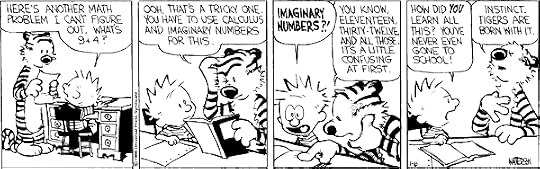
...oppure, più semplicemente, Borges non aveva ancora scoperto i numeri immaginari di Calvin & Hobbes :)
Franco Maria Ricci rende omaggio a Borges inserendo questo volume nella babelica collana nata grazie alla loro collaborazione. Rendendo omaggio all'argentino, rende un ottimo servigio ai suoi appassionati lettori: partendo dal fondo, abbiamo bibliografia e cronologia dell'Autore. Sono utili, ma non indispensabili: la bibliografia, in particolare, lascia un retrogusto amarognolo per la mancata indicazione delle traduzioni italiane. Vero, c'è Internet, ma la sensazione è di lavoro completato a metà.
Abbiamo poi, sempre andando à rebours, un'interessantissima intervista rilasciata a MarÍa Esther Vázquez: si va dai ricordi d'infanzia (letteraria), alla passione per le lingue, spesso imparate "per osmosi" attraverso la lettura, quasi si trattasse di smisurati rebus, per arrivare alle opere e ai temi più cari a Borges - labirinti, specchi, cicli, tigri e via dicendo. Intervista interessantissima, dicevo: per me, almeno, e per gli ammiratori di Borges; per i lettori casuali, probabilmente, l'interesse sarebbe assai minore (anche se si impara sempre qualcosa, grazie all'acume e all'enciclopedica cultura dell'intervistato).
Per concludere, dunque per iniziare, abbiamo i quattro racconti inediti. Borges allo stato puro, dunque possono risultare stupendi o meno a seconda del rapporto che si ha con l'Autore. Se, come nel mio caso, si è sensibili ai suoi giochi di doppi, sfasamenti temporali, riflessi e riflessioni, alchimisti e ricerca della verità, la lettura sarà oltremodo piacevole.
Se tre più uno possono essere due o possono essere quattordici, la ragione è una follia
...oppure, più semplicemente, Borges non aveva ancora scoperto i numeri immaginari di Calvin & Hobbes :)

February 5, 2017
Borges'in tarzını,kendisini,düşüncelerini,kişiliğini merak ediyordum ne zamandır.Dört kısa öyküden sonra,kitabın ikinci yarısında,onunla yapılmış birkaç sohbet de yer alıyordu;böylece onun hakkında daha fazla bilgi edinip,kendisini zahmetsizce tanıma fırsatım oldu.
Sohbette;Peki sizin için dünya nedir,diye sorulduğunda şöyle cevap veriyor Borges: "Benim için dünya sürprizlerin,kafa karışıklıklarının,hezimetlerin ve kimi zaman da mutlulukların tükenmez kaynağıdır."
Kendisini ise agnostik olarak tarif ediyor Borges.
Öyküler öyle bir çırpıda okuyup bitireceğimiz,sabun köpüğü cinsinden değil,bir süre sizi rahat bırakmıyorlar.
Öyküleri Kabala'yla,mistisizmle,ezoterizmle,dualizmle ilişkilendirip ilişkilendirmemek tamamen size kalmış.Ayrıca her okuduğunuzda farklı farklı anlamlar da çıkartabilirsiniz belki de.
Bazı okuduğu,özümsediği şairlere,yazarlara,filozoflara göndermelere rastlıyoruz;bu da daha fazla düşündürtüyor bizi okurken.
Borges öykülerinin anlamlarını sadece hakedenin anlayabileceği şekilde tasarlamış-ezoterik öğretilerdeki dereceler misali-,bazı anlamları ise kendine saklamış besbelli...
Tanışmaya değer!
Sohbette;Peki sizin için dünya nedir,diye sorulduğunda şöyle cevap veriyor Borges: "Benim için dünya sürprizlerin,kafa karışıklıklarının,hezimetlerin ve kimi zaman da mutlulukların tükenmez kaynağıdır."
Kendisini ise agnostik olarak tarif ediyor Borges.
Öyküler öyle bir çırpıda okuyup bitireceğimiz,sabun köpüğü cinsinden değil,bir süre sizi rahat bırakmıyorlar.
Öyküleri Kabala'yla,mistisizmle,ezoterizmle,dualizmle ilişkilendirip ilişkilendirmemek tamamen size kalmış.Ayrıca her okuduğunuzda farklı farklı anlamlar da çıkartabilirsiniz belki de.
Bazı okuduğu,özümsediği şairlere,yazarlara,filozoflara göndermelere rastlıyoruz;bu da daha fazla düşündürtüyor bizi okurken.
Borges öykülerinin anlamlarını sadece hakedenin anlayabileceği şekilde tasarlamış-ezoterik öğretilerdeki dereceler misali-,bazı anlamları ise kendine saklamış besbelli...
Tanışmaya değer!
October 4, 2017
Il volume pensato da Franco Maria Ricci per celebrare gli 80 anni di Borges contiene 4 racconti, una lunga intervista e si chiude con una cronologia e una bibliografia.
La cronologia della vita e delle opere è interessante per avere sott'occhio tutto Borges in poche pagine, l'intervista che l' autore ha rilasciato a Maria Esther Vazquez è molto interessante, un Borges anziano e quasi cieco si confronta sulle sue ossessioni, le sue passioni, ripensa la sua vita con onestà. lucidità ed un pizzico di civetteria.
I racconti, inediti in Italia fino a questa pubblicazione, sono ovviamente il succo del volume.
Per me, in una parola, magnifici!
Si parte con "25 agosto 1983", ennesima variazione sul tema del doppio, dei cicli, del tempo. Nessuna idea particolarmente originale ma la prosa limpida di Borges è irresistibile e favorisce la riflessione.
"Rosa di Paracelso" è un breve racconto zen-alchemico sulla possibilità o impossibilità di trasmettere la conoscenza.
Pensavate che la matematica fosse una legge universale? Allora leggete "Tigri azzurre" dove la magia regna sovrana, quella magia che inquieta, che spaventa, che sorprende, perché fa quello che deve fare la magia: sovverte le regole del mondo per come lo conosciamo.
"Utopia di un uomo che è stanco" è un piccolo racconto distopico dove di nuovo fa capolino il tema del suicidio.
Borges si ripete? Riscrive sé stesso? Si compiace? Io preferisco pensare semplicemente a Borges che si riflette, si sdoppia, e con un sorriso ci invita a fare altrettanto.
Chiudo con una citazione:
...................................
- E alla fine hai capito di aver fallito?
- Qualcosa di peggio. Ho capito che era un capolavoro nel senso più opprimente della parola. Le mie buone intenzioni non erano andate oltre le prime pagine; nelle altre c'erano i labirinti, i coltelli, l'uomo che si crede un'immagine, il riflesso che si crede vero, il tigre delle notti, le battaglie che tornano nel sangue, Juan Murana cieco e fatale, la voce di Macedonio, la nave fatta con le unghie dei morti, l'inglese antico ripetuto per giornate.........
Benvenuti nel mondo di Borges.
Voto: 9
La cronologia della vita e delle opere è interessante per avere sott'occhio tutto Borges in poche pagine, l'intervista che l' autore ha rilasciato a Maria Esther Vazquez è molto interessante, un Borges anziano e quasi cieco si confronta sulle sue ossessioni, le sue passioni, ripensa la sua vita con onestà. lucidità ed un pizzico di civetteria.
I racconti, inediti in Italia fino a questa pubblicazione, sono ovviamente il succo del volume.
Per me, in una parola, magnifici!
Si parte con "25 agosto 1983", ennesima variazione sul tema del doppio, dei cicli, del tempo. Nessuna idea particolarmente originale ma la prosa limpida di Borges è irresistibile e favorisce la riflessione.
"Rosa di Paracelso" è un breve racconto zen-alchemico sulla possibilità o impossibilità di trasmettere la conoscenza.
Pensavate che la matematica fosse una legge universale? Allora leggete "Tigri azzurre" dove la magia regna sovrana, quella magia che inquieta, che spaventa, che sorprende, perché fa quello che deve fare la magia: sovverte le regole del mondo per come lo conosciamo.
"Utopia di un uomo che è stanco" è un piccolo racconto distopico dove di nuovo fa capolino il tema del suicidio.
Borges si ripete? Riscrive sé stesso? Si compiace? Io preferisco pensare semplicemente a Borges che si riflette, si sdoppia, e con un sorriso ci invita a fare altrettanto.
Chiudo con una citazione:
...................................
- E alla fine hai capito di aver fallito?
- Qualcosa di peggio. Ho capito che era un capolavoro nel senso più opprimente della parola. Le mie buone intenzioni non erano andate oltre le prime pagine; nelle altre c'erano i labirinti, i coltelli, l'uomo che si crede un'immagine, il riflesso che si crede vero, il tigre delle notti, le battaglie che tornano nel sangue, Juan Murana cieco e fatale, la voce di Macedonio, la nave fatta con le unghie dei morti, l'inglese antico ripetuto per giornate.........
Benvenuti nel mondo di Borges.
Voto: 9

May 18, 2017
Kitabı okurken ikiye bölündüm. Bir yanım " çok cahilim keşke ölsem " diyordu diğer yarım ise " bu güzel kitaba denk gelmek için kime ne iyilik yaptım acaba? " diye şükür namazına koşmak istiyordu. Borges okumak büyük keyif ama her öyküsünde en az iki yazar, bir sair veya bir öğretiden bahsettiğini dikkate aldığımızda zor da olabiliyor. Hele kitabın ikinci yarısını oluşturan bir söyleşi var ki tadından yenmez. Sevdiğim yazarların yazdıkları eserler dışında denemelerini ve biyografilerini okumayı da sevdiğim için ( çünkü orada yazar artık öyküsünü anlatıp bitirmiş ve kendine dönmüş oluyor benim gözümde ) söyleşi hediye gibi oldu. Sadece söyleşi için bile okunabilir, yazarı yakından tanımak için bire bir. Favori öyküm ise 25 Ağustos 1983 oldu.
Yalnız Kırmızı Kedi baskısında yer yer imla hataları ve anlatım bozuklukları göze çarpıyor. Ayrıca çeviriden kaynaklı olsa gerek, bazı yerlerde kitabı okumak zorlaşıyor. Bunu da belirtmek istedim.
Yalnız Kırmızı Kedi baskısında yer yer imla hataları ve anlatım bozuklukları göze çarpıyor. Ayrıca çeviriden kaynaklı olsa gerek, bazı yerlerde kitabı okumak zorlaşıyor. Bunu da belirtmek istedim.
December 23, 2016
Babil Kitaplığı'nın ilk cildi olma özelliğini taşıyan bu kitap, aynı zamanda Borges'e giriş niteliğine de sahip.
Kitap iki bölümden oluşmakta. İlk bölümde Borges'e ait birbirinden çarpıcı dört öyküye yer verilmiş. İkinci bölüm ise Borges ile yapılmış bir söyleşiyi içeriyor. Bu söyleşi sayesinde Borges'in edebi geçmişine, hayatı algılayış biçimine, sanata bakış açısına ilişkin kısıtlı ama değerli bir izlenim edinebiliyoruz. Yine aynı bölüm sayesinde Borges'i etkilemiş edebiyatçılar ve bu kişilerin Borges için taşıdıkları anlamlar hakkında fikir sahibi olmamız da mümkün. Belki de en önemlisi, öykülerinde sıklıkla kullandığı belli başlı simgelerin Borges'in zihninde neye karşılık düştüğünü öğrenme fırsatı buluyoruz.
Özetle, gerek Borges ile ilk kez tanışanlar için olsun, gerekse onu biraz daha yakından tanımak isteyen eski okurları için olsun, bu kitap önemli bir referans niteliği taşıyor.
Kitap iki bölümden oluşmakta. İlk bölümde Borges'e ait birbirinden çarpıcı dört öyküye yer verilmiş. İkinci bölüm ise Borges ile yapılmış bir söyleşiyi içeriyor. Bu söyleşi sayesinde Borges'in edebi geçmişine, hayatı algılayış biçimine, sanata bakış açısına ilişkin kısıtlı ama değerli bir izlenim edinebiliyoruz. Yine aynı bölüm sayesinde Borges'i etkilemiş edebiyatçılar ve bu kişilerin Borges için taşıdıkları anlamlar hakkında fikir sahibi olmamız da mümkün. Belki de en önemlisi, öykülerinde sıklıkla kullandığı belli başlı simgelerin Borges'in zihninde neye karşılık düştüğünü öğrenme fırsatı buluyoruz.
Özetle, gerek Borges ile ilk kez tanışanlar için olsun, gerekse onu biraz daha yakından tanımak isteyen eski okurları için olsun, bu kitap önemli bir referans niteliği taşıyor.

July 7, 2018
Dört öykü ve yazar ile yapılan bir söyleşiden oluşuyor ‘25 Ağustos 1983 ve Diğer Öyküler’.Söyleşiyi okuduktan sonra daha da anlam kazandı kitaptaki öyküler.Borges’in yaşamı ilham alınacak pek çok ayrıntı barındırıyor ve bu ayrıntılar diline de yansıyor.
Özellikle ‘yorgun bir adamın ütopyası’ kısa olmasına rağmen fazlasıyla düşündürüyor.Paracelsus’un Gülü ise sonuyla okurun yüzünde bir gülümseme bırakıyor.
Bir de alıntı:
“Karanlık körlükle eş anlamlı değil,karanlık yalnızlığın bir şekli.”
Özellikle ‘yorgun bir adamın ütopyası’ kısa olmasına rağmen fazlasıyla düşündürüyor.Paracelsus’un Gülü ise sonuyla okurun yüzünde bir gülümseme bırakıyor.
Bir de alıntı:
“Karanlık körlükle eş anlamlı değil,karanlık yalnızlığın bir şekli.”

April 17, 2018
3.5
'Yazarın kaderi, en sonunda kendisinin en aptal taklitçisi olmaktır.' S:16
'Yazarın kaderi, en sonunda kendisinin en aptal taklitçisi olmaktır.' S:16

July 17, 2021
Kitabın yarısı öykü, diğer yarısı söyleşi şeklinde. Borges söyleşisi çok iyiydi bana göre. Öyküler de güzel fakat Borges'i yeterince anlatacak öyküler değil normal olarak. Yazarın gerçeküstü tarzını iyi yansıttıkları ise bir gerçek.
Entelektüel seviyesi arşa doğru giden bu müthiş insanla tanışmak için çok uygun bir kitap olduğuna inanıyorum. Arjantin'li ustayı daha yakından tanımak isteyeceğinize eminim.
Babil kitaplığına da giriş yapıyoruz bu eserle. Hadi bakalım.
Entelektüel seviyesi arşa doğru giden bu müthiş insanla tanışmak için çok uygun bir kitap olduğuna inanıyorum. Arjantin'li ustayı daha yakından tanımak isteyeceğinize eminim.
Babil kitaplığına da giriş yapıyoruz bu eserle. Hadi bakalım.

October 25, 2024
Pocas veces podría ponerle menos de cinco estrellas a la obra de Borges. Esta, no es una de ellas. Veinticinco Agosto, 1983 y Otros Cuentos es una de las obras compilatorias de Jorge Luis Borges. Quizá a la edición le pondría unas 4 estrellas, específicamente porque más de la mitad del libro se va en una entrevista y en la biografía del autor. Pero a su contenido, sin duda, cinco se le queda corto.
Borges, como autor, a lo largo de su vida, exploró los laberintos del tiempo, la identidad y el infinito. Este libro, publicado en 1983, es un compendio de relatos que, aunque breves, están cargados de significado y complejidad y, más o menos, recogen una muestra de todos los temas que se trazan en la obra de Borges.
Los cuentos incluidos son: "Veinticinco Agosto 1983", "La Rosa de Paracelso", "Tigres azules" y "Utopía de un Hombre que está cansado". La obra no solo destaca por su contenido literario, sino también por la inclusión de una entrevista con Borges que ofrece una visión íntima y reflexiva sobre su vida y su pensamiento. Su biografía es un poco sosa, propia de los grandes hombres que recibieron grandes premios por todos lados.
Análisis de los Cuentos
Veinticinco Agosto 1983
Este cuento es un ejercicio de especulación y metafísica, donde Borges juega con la idea de los mundos paralelos y la naturaleza del tiempo. La fecha elegida tiene un peso simbólico: es un momento que, en la narración, se convierte en un punto de inflexión para la existencia del protagonista. La estructura del cuento es laberíntica, reflejando la obsesión borgiana por el infinito y el destino. El protagonista, en su búsqueda de significado, se enfrenta a la incertidumbre y la memoria, temas recurrentes en la obra de Borges.
La rosa de Paracelso
En este relato, Borges se adentra en el mundo de la alquimia y la búsqueda de la verdad oculta. La rosa se convierte en un símbolo de transformación y conocimiento, donde el autor entrelaza el esoterismo con la búsqueda de la identidad. Aquí, Borges cuestiona la naturaleza de la realidad y la percepción, sugiriendo que el conocimiento puede ser tanto liberador como peligroso. La prosa es densa y poética, invitando al lector a reflexionar sobre la dualidad de la existencia.
Tigres azules
Este cuento destaca por su exploración del lenguaje y su capacidad para crear realidades alternativas. Los tigres, en su magnificencia, representan tanto lo salvaje como lo sublime, y Borges juega con la idea de que el lenguaje puede encerrar y liberar a la vez. Este relato es un testimonio del poder de la imaginación y de cómo la literatura puede trascender la realidad. Borges nos invita a cuestionar lo que consideramos posible, y en este proceso, revela la fragilidad de nuestras construcciones mentales.
Utopía de un Hombre que está cansado
Aquí, Borges presenta una crítica de la utopía y la idealización del futuro. A través de la voz de un hombre fatigado, el autor plantea la idea de que la búsqueda de la perfección puede llevar a la desilusión. La utopía se convierte en una trampa, y el protagonista reflexiona sobre la naturaleza de la satisfacción y el deseo. Este cuento es una meditación sobre la condición humana, donde el anhelo de un mundo mejor se enfrenta a la cruda realidad de la existencia.
Análisis de la Entrevista
Borges igual a sí mismo, entrevista con María Esther Vásquez
La inclusión de la entrevista "Borges igual a sí mismo", realizada por María Esther Vázquez, mujer brillante, añade una capa de profundidad a la obra. En esta conversación, Borges reflexiona sobre su vida, su relación con la literatura alemana, inglesa, francesa, sus influencias y sus pensamientos sobre la muerte y la existencia. Esta sección revela al lector no solo al escritor, sino también al hombre detrás de las palabras. Borges habla de su juventud en Europa y cómo su formación intelectual moldeó su obra, ofreciendo un contexto que enriquece la lectura de los cuentos.
Los temas borgianos como la memoria, el infinito, el tiempo y la identidad se entrelazan en sus respuestas, mostrando la coherencia de su pensamiento. La entrevista no solo complementa los relatos, sino que también ofrece un vistazo a la mente de un genio literario, invitando al lector a explorar más allá de las páginas de la ficción.
De la biografía, no quiero hablar.
Veinticinco Agosto, 1983 y Otros Cuentos es un testimonio de la maestría de Borges como cuentista y filósofo. Borges nos invita a cuestionar nuestras propias percepciones y a explorar los laberintos de nuestra existencia. Este libro es, sin duda, una lectura indispensable para aquellos que buscan entender no solo la obra de Borges, sino también la complejidad de la vida misma.
Borges, como autor, a lo largo de su vida, exploró los laberintos del tiempo, la identidad y el infinito. Este libro, publicado en 1983, es un compendio de relatos que, aunque breves, están cargados de significado y complejidad y, más o menos, recogen una muestra de todos los temas que se trazan en la obra de Borges.
Los cuentos incluidos son: "Veinticinco Agosto 1983", "La Rosa de Paracelso", "Tigres azules" y "Utopía de un Hombre que está cansado". La obra no solo destaca por su contenido literario, sino también por la inclusión de una entrevista con Borges que ofrece una visión íntima y reflexiva sobre su vida y su pensamiento. Su biografía es un poco sosa, propia de los grandes hombres que recibieron grandes premios por todos lados.
Análisis de los Cuentos
Veinticinco Agosto 1983
Este cuento es un ejercicio de especulación y metafísica, donde Borges juega con la idea de los mundos paralelos y la naturaleza del tiempo. La fecha elegida tiene un peso simbólico: es un momento que, en la narración, se convierte en un punto de inflexión para la existencia del protagonista. La estructura del cuento es laberíntica, reflejando la obsesión borgiana por el infinito y el destino. El protagonista, en su búsqueda de significado, se enfrenta a la incertidumbre y la memoria, temas recurrentes en la obra de Borges.
La rosa de Paracelso
En este relato, Borges se adentra en el mundo de la alquimia y la búsqueda de la verdad oculta. La rosa se convierte en un símbolo de transformación y conocimiento, donde el autor entrelaza el esoterismo con la búsqueda de la identidad. Aquí, Borges cuestiona la naturaleza de la realidad y la percepción, sugiriendo que el conocimiento puede ser tanto liberador como peligroso. La prosa es densa y poética, invitando al lector a reflexionar sobre la dualidad de la existencia.
Tigres azules
Este cuento destaca por su exploración del lenguaje y su capacidad para crear realidades alternativas. Los tigres, en su magnificencia, representan tanto lo salvaje como lo sublime, y Borges juega con la idea de que el lenguaje puede encerrar y liberar a la vez. Este relato es un testimonio del poder de la imaginación y de cómo la literatura puede trascender la realidad. Borges nos invita a cuestionar lo que consideramos posible, y en este proceso, revela la fragilidad de nuestras construcciones mentales.
Utopía de un Hombre que está cansado
Aquí, Borges presenta una crítica de la utopía y la idealización del futuro. A través de la voz de un hombre fatigado, el autor plantea la idea de que la búsqueda de la perfección puede llevar a la desilusión. La utopía se convierte en una trampa, y el protagonista reflexiona sobre la naturaleza de la satisfacción y el deseo. Este cuento es una meditación sobre la condición humana, donde el anhelo de un mundo mejor se enfrenta a la cruda realidad de la existencia.
Análisis de la Entrevista
Borges igual a sí mismo, entrevista con María Esther Vásquez
La inclusión de la entrevista "Borges igual a sí mismo", realizada por María Esther Vázquez, mujer brillante, añade una capa de profundidad a la obra. En esta conversación, Borges reflexiona sobre su vida, su relación con la literatura alemana, inglesa, francesa, sus influencias y sus pensamientos sobre la muerte y la existencia. Esta sección revela al lector no solo al escritor, sino también al hombre detrás de las palabras. Borges habla de su juventud en Europa y cómo su formación intelectual moldeó su obra, ofreciendo un contexto que enriquece la lectura de los cuentos.
Los temas borgianos como la memoria, el infinito, el tiempo y la identidad se entrelazan en sus respuestas, mostrando la coherencia de su pensamiento. La entrevista no solo complementa los relatos, sino que también ofrece un vistazo a la mente de un genio literario, invitando al lector a explorar más allá de las páginas de la ficción.
De la biografía, no quiero hablar.
Veinticinco Agosto, 1983 y Otros Cuentos es un testimonio de la maestría de Borges como cuentista y filósofo. Borges nos invita a cuestionar nuestras propias percepciones y a explorar los laberintos de nuestra existencia. Este libro es, sin duda, una lectura indispensable para aquellos que buscan entender no solo la obra de Borges, sino también la complejidad de la vida misma.

February 19, 2020
Stupenda questa breve antologia:mi ha fatto tornare una voglia matta di rileggere Borges.
Di questi quattro brevi racconti il migliore è forse quello che da il titolo alla raccolta e che mi ha dato un insistente senso di deja-vou (infatti alcune frasi sono state prese di peso nella canzone "il sosia" di Gaber).
Bellissimo anche "Utopia di un uomo che è stanco" che sono sicuro di aver già letto nel mio periodo Borges piú o meno due anni fa, anche se non ricordo dove, e "La rosa di Paracelso" un vero trattato filosofico-fantastico!.
È inutile: questo autore non smetterà mai di incantarmi e confondermi esattamente come la prima volta che ho letto una sua pagina.
Di questi quattro brevi racconti il migliore è forse quello che da il titolo alla raccolta e che mi ha dato un insistente senso di deja-vou (infatti alcune frasi sono state prese di peso nella canzone "il sosia" di Gaber).
Bellissimo anche "Utopia di un uomo che è stanco" che sono sicuro di aver già letto nel mio periodo Borges piú o meno due anni fa, anche se non ricordo dove, e "La rosa di Paracelso" un vero trattato filosofico-fantastico!.
È inutile: questo autore non smetterà mai di incantarmi e confondermi esattamente come la prima volta che ho letto una sua pagina.
August 10, 2020
"Marcel Proust demiş ki, bir yerin özlemini duyduğumuzda,gerçekte,o yere karşılık gelen zaman dilimini arıyoruzdur; yerleri değil, zamanları özleriz."
sf.99
sf.99

February 26, 2024
ogni volta che leggo borges rimango stupefatta
October 10, 2025
A heavy read which makes you think.

March 12, 2020
Borges'in okuduğum ilk kitabı oldu. Dört kısa öyküsünden ve bir söyleşisinden oluşuyor. Öyküler: (1) 25 Ağustos 1983, (2) Paracelsus'un Gülü, (3) Mavi Kaplanlar ve (4) Yorgun Bir Adamın Ütopyası.
Her şeyden önce kitabın düzenlemesinin yanlış olduğunu düşünüyorum. Söyleşi kitabın sonunda yer alıyor. Önce söyleşi, daha sonra öyküleri okumak daha iyi olurdu. Söyleşide kitaptaki öykülere ve genel olarak Borges'e dair birçok bilgi var.
25 Ağustos 1983 öyküsünde ayna teması işleniyor. Dostoyevski'nin Öteki, Stevenson'un Dr. Jekyll ve Bay Hyde'ındaki gibi olmasa da farklı benlikleri paylaşan aynı kişinin hayatını kronolojik açıdan değerlendirmesi ve kendisiyle hesaplaşmasını konu alıyor. Tabii böyle bir konunun çok kısa bir şekilde ele alınması öykünün etkileyiciliğini azaltmış.
Paracelsus'un Gülü öyküsünde inanç teması işleniyor. Bu kitapta en beğendiğim öykü oldu.
Mavi Kaplanlar öyküsünde Borges'in kaplanlara duyduğu ilgiyi görebiliyoruz. Ayrıca öykü günlük yaşama hükmeden rasyonalitenin meşruluğunu da sorguluyor.
Yorgun Bir Adamın Ütopyası öyküsünde ise Borges'in gelecek hakkındaki düşüncelerini görüyoruz.
Söyleşi gerçekten güzel. Borges samimi cevaplar vermiş, kendisi hakkındaki birçok konuyu açık ediyor.
Uzun lafın kısası, Borges'e giriş için okunmasında fayda olan bir kitap. Eserlerini anlamak kendisini tanıdıktan sonra daha kolay olur diye düşünüyorum.
Her şeyden önce kitabın düzenlemesinin yanlış olduğunu düşünüyorum. Söyleşi kitabın sonunda yer alıyor. Önce söyleşi, daha sonra öyküleri okumak daha iyi olurdu. Söyleşide kitaptaki öykülere ve genel olarak Borges'e dair birçok bilgi var.
25 Ağustos 1983 öyküsünde ayna teması işleniyor. Dostoyevski'nin Öteki, Stevenson'un Dr. Jekyll ve Bay Hyde'ındaki gibi olmasa da farklı benlikleri paylaşan aynı kişinin hayatını kronolojik açıdan değerlendirmesi ve kendisiyle hesaplaşmasını konu alıyor. Tabii böyle bir konunun çok kısa bir şekilde ele alınması öykünün etkileyiciliğini azaltmış.
Paracelsus'un Gülü öyküsünde inanç teması işleniyor. Bu kitapta en beğendiğim öykü oldu.
Mavi Kaplanlar öyküsünde Borges'in kaplanlara duyduğu ilgiyi görebiliyoruz. Ayrıca öykü günlük yaşama hükmeden rasyonalitenin meşruluğunu da sorguluyor.
Yorgun Bir Adamın Ütopyası öyküsünde ise Borges'in gelecek hakkındaki düşüncelerini görüyoruz.
Söyleşi gerçekten güzel. Borges samimi cevaplar vermiş, kendisi hakkındaki birçok konuyu açık ediyor.
Uzun lafın kısası, Borges'e giriş için okunmasında fayda olan bir kitap. Eserlerini anlamak kendisini tanıdıktan sonra daha kolay olur diye düşünüyorum.

August 2, 2017
Poche piccole pietre preziose del maestro….
4 racconti di Borges: 25 agosto 1983, Rosa di Paracelso, Tigri azzurre, Utopia di un uomo che è stanco. Nonostante le poche pagine, questo libretto riesce a dare un'impressione dello stile unico e grande del maestro argentino, dei suoi temi preferiti: il doppio, la sospensione del tempo, il magico raccontato scientificamente.... Per chi lo adora come me, una lettura splendida; per chi non lo conosce, una lettura che può farlo incontrare e stimolare la ricerca delle sue pagine più note....
4 racconti di Borges: 25 agosto 1983, Rosa di Paracelso, Tigri azzurre, Utopia di un uomo che è stanco. Nonostante le poche pagine, questo libretto riesce a dare un'impressione dello stile unico e grande del maestro argentino, dei suoi temi preferiti: il doppio, la sospensione del tempo, il magico raccontato scientificamente.... Per chi lo adora come me, una lettura splendida; per chi non lo conosce, una lettura che può farlo incontrare e stimolare la ricerca delle sue pagine più note....


May 13, 2016
Öyküler çok güzeldi ancak uyarmakta fayda var, kitabın yarısı söyleşiden oluşuyor. Borges'i tanımak için iyi bir söyleşi olsa da, tabii ki hikayeler ile kıyaslanamaz.
4 öykünün her biri insanı düşünmeye iten, Borges'in büyülü gerçeklik dünyasına adım atmak için çok güzel hikayeler. Özellikle geleceğe yolculuk ve gelecekte dillerin, ülkelerin olmadığı öyküsünü çok sevdim.
Bu kitap aynı zamanda Borges'in seçkisi olan Babil Kitaplığı'na ilk adımım oldu, devamı gelecek!
4 öykünün her biri insanı düşünmeye iten, Borges'in büyülü gerçeklik dünyasına adım atmak için çok güzel hikayeler. Özellikle geleceğe yolculuk ve gelecekte dillerin, ülkelerin olmadığı öyküsünü çok sevdim.
Bu kitap aynı zamanda Borges'in seçkisi olan Babil Kitaplığı'na ilk adımım oldu, devamı gelecek!
Displaying 1 - 30 of 60 reviews