Sam Shepard gas been described by the New Yorker as 'one of the most original, prolific and gifted dramatists at work today'. Here are seven of his finest plays: Buried Child, Curse of the Starving Class, The Tooth of Crime, La Turista, Savage Love, Tongues and True West. The collection is introduced by Richard Gilman, who provides a fascinating profile of the author and places the plays firmly in the context of contemporary American drama.
'He is the greatest US playwright of his generation and since 1964 he has mapped out a huge mythic territory . . . like Whitman, his is vast and contains multitudes, his plays soar over the empty tracts of the Midwest, celebrate the space, energy and naive optimism of the new-found lands.' Time Out
Sam Shepard was an American artist who worked as an award-winning playwright, writer and actor. His many written works are known for being frank and often absurd, as well as for having an authentic sense of the style and sensibility of the gritty modern American west. He was an actor of the stage and motion pictures; a director of stage and film; author of several books of short stories, essays, and memoirs; and a musician.
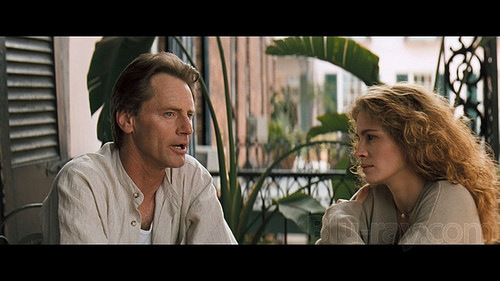
HOMO FABER Sam Shepard in “Homo Faber-Passioni violente” di Volker Schlöndorff, 1991, adattamento del romanzo omonimo di Max Frisch. Accanto a Shepard, Julie Delpy e Barbara Sukova.
Già negli anni Settanta Sam Shepard era un apprezzato scrittore di teatro sia in US che in UK, con proficui soggiorni, sia dal punto di vista artistico che esistenziale, a New York, Londra, San Francisco (nel 1979 vinse il Pulitzer con Buried Child). Nel 1970 è tra gli sceneggiatori di Zabriskie Point di Michelangelo Antonioni. Ma è all’inizio degli anni Ottanta che esplode a livello internazionale.
Zabriskie Point, come visto da me, che certo non sono Alfio Contini, men che meno Antonioni.
L’incontro con Wenders nel 1984, Paris, Texas, un centro col botto, l’anno dopo adatta e interpreta il suo stesso play per Robert Altman ed è un altro centro (Fool for Love - Follia d’amore, 1985), due successi che lo consacrano.
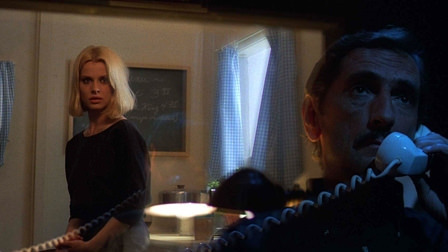
”Paris, Texas” di Wim Wenders, 1984, con Harry Dean Stanton, Nastassja Kinski, Dean Stockwell.
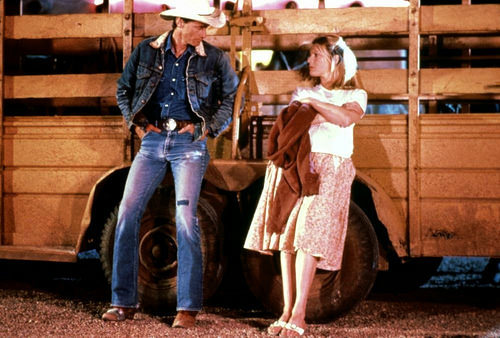
Contemporaneamente ci sbatte in faccia dal grande schermo la sua maschia bellezza, l’incisivo spezzato più affascinante del west, una carezza in un pugno, un classico moderno, Marlboro Man diventato artista.
Shepard vestito da Marlboro Man con Kim Basinger in “Fool For Love-Follia d’amore” di Robert Alman, del 1985.
Quante interpretazioni che ci ha regalato e ci siamo dimenticati perché sullo schermo si muove sottotono, senza esagerazioni, sempre sfuggente?! Per me indimenticabile nel capolavoro di Terrence Malick del 1978, Days of Heaven - I giorni del cielo. E poi in The Right Stuff - Uomini veri, di Philip Kaufman, regista gentile e colto che parla italiano e ha insegnato a Firenze. Il lungo sodalizio affettivo con la magnifica Jessica Lange (oltre vent’anni insieme, due figlie), che sullo schermo diventa Frances, Country, Crimini del cuore. Ha recitato anche accanto ad attrici del calibro di Kim Basinger (Follia d’amore), Susan Sarandon (Safe Passage - Ritrovarsi), Diane Keaton (The Only Thrill - Amori sospesi, e Baby Boom), Barbara Hershey (il già citato The Right Stuff - Uomini veri, ma anche Defenseless - Senza difesa).
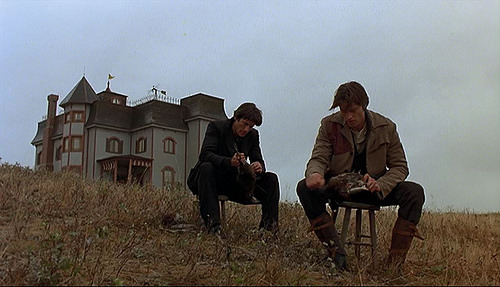
Il capolavoro di Terrence Malick, "Days of Heaven - I giorni del cielo", 1978, l’anno dopo miglior regista e Palma d’Oro a Cannes, e anche Oscar per la miglior fotografia (Nestor Almendros). Nell’immagine, insieme a Shepard, il protagonista Richard Gere.
Come posso non ricordare il professore universitario della ricercatrice Julia Roberts che salta in aria nella sua bella macchina in The Pelican Brief - Il rapporto Pelican, quando John Grisham era ancora super hot (nel senso di ogni romanzo un successo e un film di successo, milioni di dollari dietro milioni di dollari).
Con Julia Roberts in “The Pelican Brief-Il rapporto Pelican” dal romanzo di John Grisham, diretto da Alan J. Pakula, 1993. Nel cast anche Denzel Washington, Stanley Tucci, John Heard, John Lithgow.
Ancora bravo protagonista di Homo Faber - Passioni violente di Volker Schlöndorff, adattamento del celebre romanzo di Max Frisch, tra Julie Delpy e Barbara Sukova (1991). Mitico generale Garrison in Black Hawk Down di Ridley Scott (2002)! Di nuovo con Wenders e Jessica Lange, sceneggiatore e protagonista di Don’t Come Knocking - Non bussare alla mia porta (2005). E ancora e di più, di recente in tv padre patriarca della famiglia protagonista della serie Bloodline.
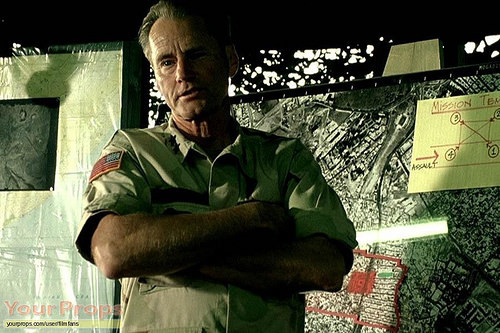
”Black Hawk Down” di Ridley Scott, 2001. Nel film Shepard è il generale che comanda le forze americane di stanza in Somalia che il 3 ottobre del 1993, cercando di catturare i signori della guerra di Mogadiscio, persero 19 uomini. Un episodio che spinse gli USA, e altre nazioni occidentali, a frenare le missioni di pace ONU.
Qui sono raccolti i suoi testi teatrali soprattutto degli anni Settanta ("The Tooth of Crime" 1972, "Buried Child" 1978, "Curse of the Starving Class" 1978, "Tongues" 1978) – il più vecchio è "La Turista" del 1967, i più ‘recenti’ sono dei primissimi anni Ottanta ("True West" 1980, e "Savage Love" 1981).
Sam Shephard is a living classic. That being said, this collection is a bit hit or miss for me. Personally, I thought Buried Child, True West, and Curse of the Starving Class were the high points. As for the others, they aren't so much low points as they are simply different, avant garde, or absurdist (in the theatrical sense of the term), and, generally speaking, a bit odd. For instance, The Tooth of Crime is essentially a hiphop musical that, it seems, just tries a bit too hard; La Turista opens with a promising scene, then devolves into a silly, almost non-sensical absurdist piece; Savage Love is poetry, which is extremely difficult to pull off on the stage, and, having both seen and read this one, I can say that it isn't my favorite; and Tongues is really a borderline Beckettian performance art experiment, and I say that with as much respect as I can for someone as brilliant as Shepard. Each play is certainly worth a read or a trip to the theatre, but, caveat lector, in my opinion, they aren't all his best work.
Like no other, Sam Shepard chronicles the desperate and lonesome American underbelly with his plays. The cold, skeletal walls of living rooms and kitchens; the coarse, broken hearts of those living inside them: these environments are more hostile than any desert landscape. Sam Shepard was a renegade poet and one of the greatest artists America has produced.
Too lazy to go through and write a review of each individual play, but suffice to say Sam Sheppard is a genius able to dig into the filthy alcohol-soaked and drug-addled corners of American life while maintaining an eye on the surreal wonder and joy at the center of all life no matter how depraved. Many of these are brutal and real and many of them are distant and absurd to the point of barely hanging on. They cruise down the wide open highway of the American soul out into the audience, in this case me reading alone in bed, and into untouched avenues of the great mystery. I'd sure hate to die.
Buried Child: Fabulous, but why the dude with a prosthetic leg? Curse of the Starving Class: very good Tooth of Crime: a travesty, a horribly juvenile trainwreck of a play that could only be staged by a mentally defective boomer True West: a masterpiece La Turista: meh, just okay, clearly a begginer's work
The others are just short little filler to make the book seem more substantial.
Sam Shepard will have to slug it out with Lanford Wilson for Best American Playwright of the last quarter of the 20th Century.
Whatever the outcome Shepard is in contention for his startling ability to delineate the various degrees of obscene psychic cruelty that family members are capable of inflicting on one another, and to put this on the stage in a way that's not only palpable, but riveting, and even comic -- without ever diminishing our comprehension of the horrors being perpetrated.
I have no idea if Shepard's plays meet the definition of "tragedy" (and Thank God I don't have to take a position on that). But one thing I know is that when I see, read, or hear one of his plays I come away with a severe case of almost giddy Catharsis -- which is, I suppose, what brings me back to him again and again.
نفرین طبقه گرسنه سام شپرد یکی دیگر از تراژدی های خانوادگی این نویسنده است.گرسنگی نام برده شده در کتاب،گرسنگی جسم نیست،گرسنگی روح است،گرسنگی هویت.نمایشنامه از سه پرده در آشپزخانه یک خانه تشکیل شده است.مانند کتاب خدای دوزخ اثر همین نویسنده،خانواده در خانه ای روستایی در تگزاس زندگی می کنند و یکی از اعضای خانواده(در اینجا وسلی) رویای ریشه دواندن در همین خاک و دامپروری و کشاورزی در سر می پروراند.نمایشنامه با بگو مگوی مادر و فرزندان در پرده اول شروع می شود و در پرده آخر،در نهایت خانواده تا مرز فروپاشی تمام پیش می رود و تمام هستی خود را از دست می دهد.وستون(پدر) و اما(دختر) هرکدام جداگانه به مکزیک فرار می کنند.تولد دوباره پدر در پرده سوم(تعویض لباس ها)و پوشیدن لباس ها توسط وسلی(فرزند)نقطه اوج نمایش است
talented, brilliant, incredible, amazing, show stopping, spectacular, never the same, totally unique, completely not ever been done before, unafraid to reference or not reference, put it in a blender, shit on it, vomit on it, eat it, give birth to it. sometimes I forget how much of a genius he was since it's sort of just taken for granted in my world. also just watched that god awful mess of a movie fool for love dir. Robert Altman. genius playwright and genius director come together to ruin an amazing play. I digress, hurried child and curse of the starving class blow my mind every time. tooth of crime is such a romp he is truly the scat man. Sam Shepard you are the man of my dreams and it is the great tragedy of my life that we will never be wed. rip hottie.
A definitive reader from one of the most influential American playwrights, and Gilman writes a solid foreword to the book. Shepard is best known for the parlance of his characters, but people shouldn't overlook his capacity for imagery, for letting the images on stage inform the viewers/readers in ways much more effective than any lines of dialogue. He doesn't "connect the dots" for you, but chooses images that are sometimes subtle, sometimes brutal to convey his deeper intentions. This style of storytelling places more onus on the viewer/reader, but the payoff far outweighs the work involved.
This is such a large collection of works which varies from traditional stories of terrible life in middle America, to alternate rock-n-roll universe gang warfare, to highly experimental poetry and sound performances. So rather than try to wrap all that up together, I wrote reviews for each of them as I was reading them.
True West - Talk about a powerhouse of a play to start the collection off with. I don’t know if I’ve ever read something that so immediately resonated exactly with the vibe I was looking for out of a story. I’m so glad this is the play they decided to put first. The dialogue is so snappy, the characters' motivations are clear and intense, and there’s this inevitability to where this is leading that is fun and tragic to get to. If I have one complaint, the ending does feel a little too nebulous and I would probably prefer it to wrap up in a more conclusive way, but I absolutely loved this and would kill to see it in person. 9/10
Buried Child - Weirdly, not as dark of a show as I thought it would be, which is neither here nor there but with a title like “Buried Child” you might think it would be a bit edgier. That said, Sam Shepard does one of my favorite tropes in this play, which is to say that it is full of people who refuse to talk about the elephant in the room and would rather go on pretending like it doesn’t exist. One of those great “worst people you know pretend like they aren’t” kind of shows. So many striking visuals and insane things you almost certainly haven’t seen in a play before. And that ending? Chilling. Just fantastic. 10/10
Curse Of The Starving Class - This one felt like a little bit of a step down from the other two, but still a fun read. I feel like of the Shepard plays I’ve read so far this one feels the grungiest and most pessimistic. My read on it is that it’s about how people can not or will not stop the cycle of violence in their life and you are doomed to become whoever raised you. Even the characters' names mirror this. Like Weston and his son Wesley, Ella and her daughter Emma. As much as you fight against it, it will happen. Great and interesting little show, but lacks the momentum of some of his other work. 7/10
The Tooth Of Crime - Okay. I’ve heard of Cyber-punk before. I’ve heard of Steam-punk before. But I ain’t ever heard of Rock-punk before. This show is completely unhinged. It’s so unhinged that it feels like this HAS to be Sam’s favorite show of his. It’s too weird, too specific, too everything for it not to be a full passion project. The dialogue is so entrenched in its weird rock-world vernacular I didn’t even know what people were saying 70% of the time. I certainly did enjoy the names a whole bunch (Hoss, Galactic Jack, Starman, Crow) but apparently in later additions many of these names were changed(?)... Why? It’s like the best part of the show, man. Other changes in later editions do make sense. I for one did not need to have the greater ensemble dressed like cheerleaders mooning the audience, so I can understand its removal. It’s peculiarity may allow it to grow on me over time, but for now it’s going to sit very low for me in the Shepardverse. 3/10
La Turista - This was… really really hard to follow. The characters, the “plot”, the dialogue… all of it. Very hard to see what he was going for with this one. It feels like an angry show. Like he wanted to create an experience that has never been had before in a theater but couldn’t find a way to do that without deconstructing the entire idea of what a play is. I assume there’s a lot going over my head here, but more so I think Sam Shepard is not a coward and didn’t want to get comfortable only writing his middle class America shows. He wanted to keep trying and experimenting with a million things. And to be fair, you don’t really get to those culture changing works of art without throwing out the rulebook first. So is this good? Did I like it? No and no. But I certainly have some degree of respect for the intention and a couple moments of dialogue. 2/10
Tongues - Talk about a weird show to include in this book. I don’t want to call it a play as much as a lengthy poem. Which would be fine and all but there is rhythmic underscoring which is absolutely necessary to the work as a whole (it’s actually written exactly into the script as it should be preformed). I found that I couldn’t get into it until I started reading it out loud and following the stage directions on how it should be said. Once again, this is highly experimental, but I found it WAY more coherent than La Turista. It’s weird in a good way but there are sections that I felt didn’t tonally match the others so it didn’t rock my world or anything. Still was a fun read and had some strong emotion in it if nothing else. 4/10
Savage/Love - Contrary to Tongues, I feel like I don’t understand actually how you perform this one. Tongues is like a long poem, but this literally is a collection of poems. The poems have names and everything. There is hardly any stage direction, there aren’t any characters written in. Nothin. That aside, I thought this was okay as a collection. It strives to write about the unspoken moments that happen in relationships and I think it does a really nice job at that. There’s a couple in there that feel actually kinda silly though... which is odd. Why put a comedy palate cleanser in a collection of works that spans 15 pages? I liked some of it, but didn’t love it. 3/10
As much as over half of the plays didn’t resonate with me, I'm very happy with this collection. It has shown me some of my new favorites and it forced me to read and engage with a good amount of Sam Shepard works I wouldn’t have touched otherwise. I still am always going to lean more into his “tragic middle America” style shows, but I feel like I learned a lot about him as an artist from this. In fact, let’s live a little and give this an 8/10
Most of these plays have NOT aged well. Even the prize here, True West, reads sub-Mamet. Buried Child won a Pulitzer, but I found it terribly overwrought and clunky. At least one of these plays, The Tooth of Crime was almost completely unreadable. It's a rock and roll musical set in a apocalyptic future with characters called Hoss and Crow. Wowsa.
It's possible that Shepard is a hero of American theater that I have just not appreciated. I would still like to read Fool for Love, but based on this selection, I don't think we're ever going to get on.
No regrets, Coyote...your plays just aren't my cup of tea True West - 4 Stars Buried Child - 3.5 Stars Curse of the Starving Class - 3.25 Stars The Tooth of Crime - 2 Stars La Turista - 3 Stars Tongues (With Joseph Chaikin) - 2 Stars Savage/Love (With Joseph Chaikin) - 3.5 Stars
we read the little trilogy: buried child, curse of the starving class, and then true west. Buried Child,,FABULOUS!!! Curse, good, would’ve liked to see a well done adaptation. True West, meh. Still counting it as a win because i enjoyed buried child that much!! symbolism for dayssss #iloveyouvince #theycouldnevermakemehateyou
Even though some of these did not really resonate with me, I appreciate the variety that art does bring. From the plays to the poetry to the spoken word with sounds, it's all so cool. Some of it might not be my cup of tea but it's all definitely worth performing.
for me this collection is really more like "3 Plays and 4 Bonuses". that is to say that I really really enjoyed the first three in here (especially Buried Child) and then the latter 4... much less so. the two experimental pieces that close the collection are pretty cool I guess, but those middle two really grated on me in very distinct ways. all in all though, much worth the metaphorical price of admission for those first three plays alone and my rating pretty much exclusively reflects them.
Take all of this with the largest boulder of salt that you can, as reading plays in no way captures the experience of seeing one. It's not quite as wonky as reading lyrics very plainly versus hearing the actual song, as you can get a good sense of the dialogue's rhythm, but I'm pretty sure it wasn't Sam Shepard's intention for people to experience his stageplays for the first time via reading them. But for me, "Seven Plays" had some high highs and some baffling lows
"True West" was a masterpiece. I have some familiarity with the gist of the plot, as I played Austin in a college acting class 2-scene assignment (the destiny of every kinda-white guy in a college acting class), but reading it front to back for the first time was really something. Hilarious, manic, and tense all at once, the play is definitely the best of the bunch here. Then, its a pretty big chasm to my other favorites.
I was really surprised with how much I liked "Curse of the Starving Class". Probably the sneaky gem of "Seven Plays" it encapsulates everything awesome and everything frustrating about Shepard's plays. He captures familial disfunction and the feeling of being constantly financial strapped in America so well, but I feel like there's some context to elements of the play that I'm missing. If a metaphor or allegory are so deeply rooted that to the point of being entirely missed, I have a hard time engaging with the human beings of a story and more time trying to figure out what the fuck any of it is supposed to tell me about living.
This is especially true in "Buried Child". Even if I wore a tower of hats, the meaning of the strife and intensity portrayed in the piece still went over my head. There were definitely elements I liked, and Shepard's dialogue is explosive as all get out. I can see why actors and fellow writers would be drawn to his work - it lets every character have a "don't keep your eyes off of me" moment. This is the play I want to give another chance seeing in person, because reading it did not do it the justice it probably deserves.
Everything else? Weird and suffocatingly confusing. I got 15 pages into "The Tooth of Crime" and decided to ditch finishing it. "La Turista"'s first act had short sprints of stuff that drew me in, but again, I feel like there's some cultural & historical context I'm missing. It's like watching a film from the 1940s that relies of deep references to current events of the time - without understanding of them, it sounds like discombobulating gibberish.
"Tongues" and "Savage Love" probably have nuggets of brilliance in there, but it goes back to what I first said about reading lyrics. Not worth it with a sense of the the rhythm.
All of that being said, if you're a writer, "Seven Plays" is absolutely worth checking out. At the very least, "True West" is a must. "Curse of the Starving Class" and "Buried Child" are also pretty good. It's important to still comb through the work you don't like to codify what about it isn't your vibe and how you can apply that to your own work. I'll definitely be revisiting this collection again down the line, hopefully by seeing it unfold in the mouths of people on a stage rather than in my head or on my nightstand.
In their parents’ kitchen, two brothers rekindle their relationship. Austin returns from northern Texas to complete his screenplay. His brother Lee, returns from the stark wilderness of an unspecified western plain. Over nine acts, we learn how these two men relate, how their upbringing shaped their personalities, and how they survive. The superb Steppenwolf adapation of “True West” is on youtube (highly recommend) with a pensive straight laced Gary Sinese, and a glowering capricious John Malkovich in conversation, never more than a few feet from the table. Shepard commands language - showing how the mythologies of the untame western spirit, and the mythology of Hollywood fame hang as albatrosses of desire for the two men. Desire, madness and danger are twisted into the dialogue of the men as they unravel throughout a dark night of the soul.
Just as effective for me was the unrelenting “Buried Child”. An aged couple family occupies a farm that is fallow and emotionally barren. Children and grandchildren come back to the farm, and they return as deranged, catatonic or simply strangers. The vestiges of a loving emotionally supportive family are encountered through fresh crops, or Vincent returning from his western home, or in the wraithlike presence of a son who died too young. The play borders on surreal, but never parody. The tranquil midwestern American home is uprooted in disconnection from failed promises, failed potential, and bad faith.
The other play that floored me was “Tooth of Crime”. A rock n roll kingpin, looks to keep his throne against an ascendant challenger. Gritty if more cartoonish. Dialogue is highly stylized, with a lyrical node to 60s pop songs, and beat authenticity. The two men duel with words, similar to a rap-battle, and challenge each other for supremacy. In their exchanges, vulgarity, threats are exchanged, and the dark undercurrent of unchecked power reigns.
The experimental plays “Tongues” and “Savage Love”, although not linear or narrative driven, give a powerful example of Shepard’s pushing the form toward abstract extremes. Finding meaning in tonalities of voice, shamanistic chants, and the brief flares of connection between peoples.
If it were simple provocation, would these plays endure, I don’t think so. Sure there’s the grit, the despair, the brutalism, but all of this reveales deeper truths. Themes of the promise of the west, the safety of the traditional family, and the ability to transcend our circumstances are poked at here. The journey to find roots, belonging, and security is a human instinct. These plays give space for characters that don't have any of this..often are maleovent, socipathtic, drug-addled or broken. Creating a space for the dark impulses of the id and the brutal realtiies of the lonely disconnected West, Shepard creates a particularly dangerous world. And I’d imagine to see these works performed would be as revealing now as they were when written in the 1970s. All of this bravery... just steps from the kitchen table.
True West, Starving Class, and Buried Child are all great plays and the obvious standouts. I like the Tongues / Savage/Love project overall. La Turista and Tooth of Crime — take em or leave em. Unique American voice overall. Middle American impulses intersect with postmodern experimentalism in all these cool ways.
“Is this me calling you up / Or are you appearing? / Volunteering yourself? / Beckoning?”
“I want to strangle your dreams / Inside mine”
“The crown sticks where it fits and right now it looks about your size.”
“Without a code it’s just crime. No art involved. No technique, finesse.”
“The whole thing’s geared to invisible money.”
“That’s what I want to be like, mom. Except I wouldn’t blow my cool. Not about a hat anyway. A hat’s just something you wear to keep off the sun. One hat’s as good as another. You blow your cool about other shit. Like when a man spits in your face.”
“The mind ain’t nothing without the old body tagging along behind to follow things through. And the old body ain’t nothing without a little amoeba.”
“Now we’re acting the estrangement / Now we’re acting the reconciliation / Now we’re acting that the reconciliation was a success / Now we’re acting that our love has been deepened by the crisis”
“The only way to be an individual is in the game.”
“Could you give me something / Anything at all / I’ll accept whatever it is”
“You tried to show me you didn’t see me shaking”
“Today the tree bloomed without a word. / Tonight I’m learning its language.”
“That’s why you need a hard table once in a while to bring you back. A good hard table to bring you back to life.”
I took an author's class for my English degree in college, which happened to be focused on Sam Shepherd. An absurdist with a taste for shock and the avant garde, Shepherd, along with Samuel Beckett, introduced me to absurdism and contemporary theater.
As a playwright, Shepherd is a little overblown in importance. He has a Western vibe and draw for horses that was probably inspired by literary influences from author Charles Bukowski. However, like most contemporary theater productions, his plays rely less on plotting and scenes, more on basic acts and set designs.
Shepherd mostly wrote one and two act plays, afraid of pastiche stylings of 3 and 5 act structures high schoolers trained on the works of William Shakespeare would be more familiar with. His dialogue is outlandish, and the situational madness of families falling apart over hidden secrets counters conservatives' dreams of a gloried good ol' days in 1950s America.
His drama is passable, but he does not have much to say outside of his absurdism and commentary on unfulfilled desires. Shepherd was also a terrible poet who lacked discipline and refinement, as most boomers are afraid to receive, and is mostly celebrated by university elites who find his absurd style a refreshing contrast to the stiffness that has become theater education.
Contemporary theater has its place, but looking back to the past, many long for more heightened drama where the stakes were often more than a divorce or forgotten inheritance. His work is acceptable, but not nearly as substantial or important as one would be led to believe. Shepherd was more known as a Hollywood actor who gained recognition for his portrayal as Chuck Yeager in the movie The Right Stuff, more than anything else...
First time reading anything of Sam Shepard or even hearing his name as a young thespian, wishing to further appreciate theatre. I think the intro was extremely overdone, annoying, unbearable ect, ect. But other than that pretentious word slop, I enjoyed the most of these plays. The dialog between characters is both so entertaining but also the most effective, especially the characters that are family. In curse of the Starving Class and True West, for instance--incredible. Families are challenging to write bc they've known each other all their lives, their relationships are so deep and complicated, and you only have so many pages to communicate the whole of your characters and their relationship in your script. And the way he does it in these plays is so skillful. Just two pages into these plays and you feel like you know the whole history of these families (even when you couldn't know anything, like in Buried Child).
RATE:
Buried Child- 5/5 Curse of the Starving Class- 5/5 The Tooth of Crime- 3.5/5, didn't make sense at all but it was a gas La Turista- 3/5 Tongues- DNF, so sorry Savage Love- 4/5, I love poetry True West- 5/5, the dialog that I mentioned earlier, but also the symbolism of the two becoming each other and going off the rails, i loved it, very suspenseful
I read Buried Child in college in the mid 90s and it's how I discovered he was a playwright. All I had known about his was his incredible performance as Chuck Yeager in the film "The Right Stuff", one of my favorite films as a kid, and other movies. I later picked up this collection of six additional plays by Shepard and realized Buried Child wasn't just a one off for him, he was a genius playwright that somehow is unknown to most people; I certainly had no idea.
My favorites:
Buried Child is a story of a very dysfunctional farm family. There is so much symbolism here you can pick each scene part for days. Yet, for all the themes and social commentary on the breakdown of "Americana", where the dream was out of reach for most, it is entertaining. One of my favorite plays.
Curse of the Starving Class features another dysfunctional farm family, here the theme is more focused on how business interest take advantage of people. Again, very entertaining, many spectrums of emotions.
True West is a story of two brothers, one a screenwriter, one a thief/con-man who drive each other crazy. There is a funny role reversals and eventually they both sink to their base levels.
If you can't attend any plays written by Sam Shepherd, this is a good collection to go to. The creativity and unique perspective of this playwright is all here. I think the first three plays in this collection ("True West," "Buried Child," & "Curse of the Starving Class") are excellent. I found it hard to maintain interest in the middle two plays ("The Tooth of Crime" & "La Turista"). The last two in the collection, "Tongues" and "Savage/Love," were a marvelous surprise in their themes, lyrical writing, & creativity. With the first five plays, a unifying thread is the conflicted people who are Shephard's characters. They try to avoid what they have become or lost, and they have to come to grips with that. The last two pieces are voices dealing with aspects of live, death, and stages of love. The Introduction by Richard Gilman is helpful in understanding the importance of Sam Shepard and what to look for in this collection.
This was a great collection! I found the plays super readable and enjoyable, though somewhat impenetrable in a traditional sense. I have little experience with plays so I didn't have any preconceived notion of what a play is SUPPOSED to be. They certainly didn't read like anything traditional, in terms of plot and character. I want to feel these plays, smell the sweat, and feel the sudden jerky shifts in all their intensity. True West was a great introduction. Each play dove deeper and deeper down the rabbit hole, making the assimilation process easier. Overall, great stuff.
Favs were True West, Buried Child, Curse of the Starving Class, and Savage/Love. If I had to pick one, it'd be True West. My playwriting teacher saw a performance of True West with Philip Seymour Hoffman and John C. Reilly. What a gift. Apparently, they switched roles halfway throughout. Happy birthday, PSH. I hope you're okay out there.
I've read only the Family Trilogy from this book, namely True West, The Buried Child and The Curse of the Starving Class. They all deal somehow with dynasty, and the passage of roles between generations. - True West: the play deals with a conflict between two brothers, one a successful screenwriter and the other a small town thief. Nice play, at times confusing, but certainly innovative. My least favourite of the three. - The Curse of the Buried Child: depicts a family which has lost all the success it once had. With the surprise return of the grandson in the house a new dynamic appears. Also here there are times in which one is unsure what is going on, but nonetheless the play is engaging and with beautiful images. - The Curse of the Starving Class: depicts a family in conflict. The family claims to be starving, but they are not. It concerns the failure of the American Dream, effects which can be seen on the father of the family. My favourite play of the three