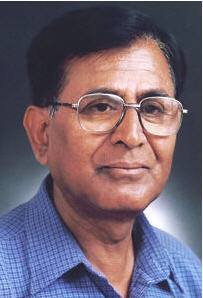
Joothan: The Testimony of A Community.
Written by: Om Prakash Valmiki
Genre: Non-fiction, Autobiography.
Publishers: Radha-Krishna Paperbacks.
Language: Hindi.
“To those who say that these things do not happen here…I say that only those who have suffered this anguish know its sting" writes Om Prakash Valmiki in the preface of his much acclaimed biography Joothan.
Joothan, written by Dalit activist and writer, lacks the playful nostalgia and a bitter- sweet remembrance that is traditionally associated with autobiographies. On the contrary, Valmiki’s account of his life (even childhood) are far from hunky dory. Autobiography as a medium thus becomes in Valmiki’s hands a medium not to relive his memories, but to revisit trauma and overcome it. The title, which points towards the tradition wherein the leftovers or joothan of the upper-caste members of the society were consumed by the Dalit families, becomes a wider metaphor to encapsulate the leftover and outcaste status of the Dalit community under the savarna hegemony. Valmiki, thus, is not only chronicling his story, but of all those whose legs have been ensnared by the caste system.
The youngest child of his family, Valmiki is encouraged by his father and brothers to receive an education. But his school experience proves to be a nightmare as he is mocked by his classmates for wearing ragged clothes and is castigated by his teachers if he attempts to look clean. Worse, his new casteist and sadistic principal, unable to bear the idea of a Dalit child studying, makes him clean the entire school- making it a demonic everyday ritual. But this is where Joothan differs from other Dalit texts, written by non-Dalit writers. Rather than making it a testimony of suffering, Valmiki makes it a testimony of protest. As he is cleaning the school one day, Valmiki, weeping and crying, is spotted by his father who lashes out at the principal for making his child work despite continual threats from the latter. Protest, a leitmotif of Dalit Literature, finds its first articulation here. Further, he narrates the account of his being put out from the chemistry laboratory everyday which led to his failure in the subject, bullying by upper-caste children, the rituals of his own community and the solid family solidarity in the unit. Valmiki also details his realization of the ‘Dalit consciousness’ on reading Ambedkar, a person he had never heard of before: “Reading these books had awakened my consciousness. These book had given voice to my muteness.”
As the narration proceeds and details Valmiki’s economic and educational advancement, the horrors of untouchability are replaced by the subtle ways in which casteism functions and perpetuates itself. A simple act of asking one’s surname in a colloquial conversation or keeping different cups of tea for people of different castes in one’s house- Joothan shows how prejudice and bigotry functions in a supposedly modern urban setup.
The narrative of Joothan is simple, lacking any flamboyance- the language is rooted in the anger and angst of trauma and features explicit profanity and grotesque descriptions, to which Valmiki himself draws attention to, comparing his literature to those of savarna writers. In a text as political as this, language, story and narration naturally take a backseat, where it is impossible to divorce the writer from his art.
But even a text as hard-hitting and incendiary as this leaves some gaps, especially in the treatment of its female characters. We aren’t given much information about Valmiki’s sister who never got to go to school, his sister-in-law who sacrificed her jewelry for his studies or his mother who wouldn’t let her son go and kill the pigs even if it fetches money necessary for survival. But, such gaps are natural in any text and can only be filled via a retelling, which is where feminist Dalit accounts come into play.
Joothan’s status as a seminal text in Hindi Dalit literature is not because it presents the sorry plight of people living in deplorable circumstances. It is because it collects all those voices and articulates them into a scream so that it becomes a weapon against the giant tentacles of caste, still lingering in Indian society.
***********************