

What do you think?

Cambridge Opera Handbooks
Richard Wagner: Tristan und Isolde
Wagner's Tristan und Isolde occupies a singular position in the history of Western culture. What Nietzsche called the 'sweet and terrible infinity' of its basic nexus of longing and death has fascinated audiences since its first performance in 1865. At the same time, its advanced harmonic language, immediately announced by the opening 'Tristan chord', marks a defining moment in the evolution of modern music. This accessible handbook brings together seven leading international writers to discuss the opera's genesis and the libretto's relationship to late Romantic literary concerns, present an analysis of the Prelude, the music of the drama itself, and Wagner's innovative use of instrumental timbre, and illustrate the production history and reception of the music-drama into the twenty-first century. The book includes the first English translation of Wagner's draft prose of the libretto, a detailed discussion of Wagner's orchestration, and rare pictures from important and influential productions.
232 pages, Hardcover
First published August 1, 1859
About the author
Richard Wagner
3,403 books195 followersGermanic legends often based romantic operas of especially known composer Richard Wagner, who worked
Tannhäuser
(1845) and the tetralogy
Der Ring des Nibelungen
(1853-1876).
From 1872, Richard Wagner lived at Bayreuth to 1883 and designed the opera house, used chiefly for performances of his works.
Works of Jacques Martin Barzun include Darwin, Marx, Wagner (1941).
Wilhelm Richard Wagner conducted, directed theater, and authored essays, primarily for his later called "music dramas." Unlike most other greats, Wagner wrote the scenario and libretto.
https://en.wikipedia.org/wiki/Richard...
From 1872, Richard Wagner lived at Bayreuth to 1883 and designed the opera house, used chiefly for performances of his works.
Works of Jacques Martin Barzun include Darwin, Marx, Wagner (1941).
Wilhelm Richard Wagner conducted, directed theater, and authored essays, primarily for his later called "music dramas." Unlike most other greats, Wagner wrote the scenario and libretto.
https://en.wikipedia.org/wiki/Richard...
Ratings & Reviews
Friends & Following
Create a free account to discover what your friends think of this book!
Community Reviews
Displaying 1 - 30 of 65 reviews

February 27, 2022
Wagner composed Tristan und Isolde while on a hiatus from his monumental Ring of the Nibelung, leaving Siegfried in the middle of a forest and Brünnhilde asleep inside her ring of fire. Much has been said about how revolutionary Tristan was in the western musical canon and how its harmonic innovations ushered in the development of atonality, dodecaphony, serial music and, in general, 20th-century avant-garde. But one cannot stress enough that the musical dissonance Wagner introduced in this work was not a compositional whim but an essential element of the drama itself.
Tristan und Isolde was inspired by a Celtic legend about a Beowulf-type hero, a fair damsel, a love potion, a passionate yet forbidden relationship, and a tragic ending. The source material Wagner used was the chivalric romance by Gottfried von Straßburg. But, as he previously did with the The Poetic Edda and the Völsunga Saga, the composer adjusted the medieval plot to his own design. Therefore, his opera is completely focused on the all-consuming passion of the two lovers; and the luxurious orchestration is entirely set to provide meaning and depth to the story.
Deeper still, Tristan und Isolde is at its core a sort of illustration or commentary of The World as Will and Representation. In essence, Schopenhauer claims that humankind, as a limited manifestation of the Will, is constantly embroiled in inextinguishable desires, endlessly lusting after a myriad of goals and always dissatisfied. In the end, this eternal yearning is forever unfulfilled. The only possible salvation is the renunciation of the Will through asceticism and aesthetic experience—music playing a vital role in this regard.
Thus, what has come to be called the “Tristan chord”, along with many parts of the score, is in effect a disc(h)ord, a harmonic suspension, a dissonance of agonising beauty. And that is precisely because it translates into music this feeling of intense yearning, sensual craving, endless tension, unfulfilled anticipation; the breathless frenzy of the star-crossed lovers. In short, the music goes all in to express the relentless power of the Will.
One of the most potent developments of this idea is exposed during the “Liebesnacht” in act 2. The awe-inspiring duo that takes place after the extinction of the torches revolves, in substance, around the metaphysical conflict between Day and Night. Day as the discordant Representation, the blinding realm of phenomena, individuation, separation, limitation, illusion, the veil of Maya, a tapestry of deceit, struggle, and betrayal. Night as the restored Will, the mysterious realm of noumena, undifferentiation, eternity, oblivion, unity, rapture, bliss.
Ultimately, Tristan und Isolde is not essentially a drama about love. Isolde is to Tristan, and Tristan to Isolde, a mere conduit towards a more profound truth, a sublime, nocturnal, oceanic reality where, like the Draught at the beginning of the drama, Love and Death are fundamentally merged. In so doing, Wagner opens new and fathomless vistas into human desire.
Tristan und Isolde was inspired by a Celtic legend about a Beowulf-type hero, a fair damsel, a love potion, a passionate yet forbidden relationship, and a tragic ending. The source material Wagner used was the chivalric romance by Gottfried von Straßburg. But, as he previously did with the The Poetic Edda and the Völsunga Saga, the composer adjusted the medieval plot to his own design. Therefore, his opera is completely focused on the all-consuming passion of the two lovers; and the luxurious orchestration is entirely set to provide meaning and depth to the story.
Deeper still, Tristan und Isolde is at its core a sort of illustration or commentary of The World as Will and Representation. In essence, Schopenhauer claims that humankind, as a limited manifestation of the Will, is constantly embroiled in inextinguishable desires, endlessly lusting after a myriad of goals and always dissatisfied. In the end, this eternal yearning is forever unfulfilled. The only possible salvation is the renunciation of the Will through asceticism and aesthetic experience—music playing a vital role in this regard.
Thus, what has come to be called the “Tristan chord”, along with many parts of the score, is in effect a disc(h)ord, a harmonic suspension, a dissonance of agonising beauty. And that is precisely because it translates into music this feeling of intense yearning, sensual craving, endless tension, unfulfilled anticipation; the breathless frenzy of the star-crossed lovers. In short, the music goes all in to express the relentless power of the Will.
One of the most potent developments of this idea is exposed during the “Liebesnacht” in act 2. The awe-inspiring duo that takes place after the extinction of the torches revolves, in substance, around the metaphysical conflict between Day and Night. Day as the discordant Representation, the blinding realm of phenomena, individuation, separation, limitation, illusion, the veil of Maya, a tapestry of deceit, struggle, and betrayal. Night as the restored Will, the mysterious realm of noumena, undifferentiation, eternity, oblivion, unity, rapture, bliss.
Ultimately, Tristan und Isolde is not essentially a drama about love. Isolde is to Tristan, and Tristan to Isolde, a mere conduit towards a more profound truth, a sublime, nocturnal, oceanic reality where, like the Draught at the beginning of the drama, Love and Death are fundamentally merged. In so doing, Wagner opens new and fathomless vistas into human desire.

December 30, 2021
A medieval romance turned to opera in 3 acts by Wagner.
In death alone are they united...
O endless Night!
blissful Night!
glad and glorious
lover's Night!
Those whom thou holdest,
lapped in delight,
how could e'en the boldest
unmoved endure thy flight?
How to take it,
how to break it,—
joy existent,
sunlight distant,
Far from mourning,
sorrow-warning,
fancies spurning,
softly yearning,
fear expiring,
sweet desiring!
Anguish flying,
gladly dying;
no more pining,
night-enshrining,
ne'er divided
whate'er betided,
side by side
still abide
in realms of space unmeasured,
vision blest and treasured!
Thou Isolda,
Tristan I;
no more Tristan,
no more Isolda.
Never spoken,
never broken,
newly sighted,
newly lighted,
endless ever
all our dream:
in our bosoms gleam
love delights supreme!
In death alone are they united...
O endless Night!
blissful Night!
glad and glorious
lover's Night!
Those whom thou holdest,
lapped in delight,
how could e'en the boldest
unmoved endure thy flight?
How to take it,
how to break it,—
joy existent,
sunlight distant,
Far from mourning,
sorrow-warning,
fancies spurning,
softly yearning,
fear expiring,
sweet desiring!
Anguish flying,
gladly dying;
no more pining,
night-enshrining,
ne'er divided
whate'er betided,
side by side
still abide
in realms of space unmeasured,
vision blest and treasured!
Thou Isolda,
Tristan I;
no more Tristan,
no more Isolda.
Never spoken,
never broken,
newly sighted,
newly lighted,
endless ever
all our dream:
in our bosoms gleam
love delights supreme!

November 17, 2019
Excelente traducción del libreto y excelente aproximación a una de las ópera más revolucionarias de la historia. Una introducción muy necesaria para acceder a la genial obra de Wagner.

November 11, 2019
Reading Wagner’s works is rather unusual. One is accustomed to hear to the music and to the sung text without understanding what the characters are saying and it all ends plainly accepting that what they’re saying is meaningful and probably beautiful. Tristan und Isolde is maybe the one Wagner’s piece that offer the possibility to enter the overwhelming system of Wagner’s conception of Gesamtkunstwerk in the shortest time. Although the usual running time of the opera can go from three to four hours, reading its libretto took me about four days. These operas aren’t meant to be read (Wagner’s German is demanding in every sense) nor even to be understood by hearing, but to be recieved as a whole transforming experience, thus linking itself with the original function of Greek Tragedy. This is powerful, exacting stuff, but the strain inverted on it is worth every thinking pause, every dictionary search. The epilogue by Egon Voss clarifies key-aspects for a better grasp and it's skillfully written.

May 4, 2022
Wagner’s Tristan and Isolde has the intensity of Romeo and Juliette’s final meeting, but instead of a few lines in Shakespeare’s case this meeting for Tristan and Isolde lasts from the first to the last moment on stage. The plot centres around their tragic fate and growing love. Instead of being born a Montague and a Capulet, they are English and Irish. Wagner lacks Shakespeare’s wit and comedic traits; he is but serious about his sentimentality. The language is carried by this coherent romantic spiral of love. Its pathos without bathos unfolds its power only if the reader lets the last guard down to allow the feeling of such a Wagnerian kind of love, or, of course, if the reader listens to the opera. However, despite this text being part of a Gesamtkunstwerk, the ‘play’, if you will, offers a great experience by itself.
A great tale of love! Relentlessly passionate and emotionally powerful.
A great tale of love! Relentlessly passionate and emotionally powerful.
February 8, 2023
Naja, wofür liest man auch das Libretto?
Sprachlich ist es wie zu erwarten war größtenteils unterirdisch mit wenigen eingestreuten schönen Versen.
Den Stoff finde ich interessant und kulturell relevant, andere Behandlungen haben mich aber deutlich mehr überzeugt.
Lieber nur hören, nicht lesen…
Sprachlich ist es wie zu erwarten war größtenteils unterirdisch mit wenigen eingestreuten schönen Versen.
Den Stoff finde ich interessant und kulturell relevant, andere Behandlungen haben mich aber deutlich mehr überzeugt.
Lieber nur hören, nicht lesen…
August 21, 2014
"Tristan and Isolda Opera in Three Acts" is an English translation of the Richard Wagner libretto for his opera "Tristan and Isolde" which was written between 1857 and 1859. The story is not terribly complex. The hero-knight Tristan falls in love with the Irish princess Isolde while bringing her to be bride to his uncle, King Mark. Isolde wishes Tristan dead for various reasons and instructs her attendant, Brangaena to kill him with poison, who exchanges the draught for a love potion, which both drink. Tristan's friend and rival for Mark's favor, Melot, exposes the helpless lovers and challenges Tristan to fight. Tristan allows himself to be mortal wounded. Tristan's servant carries the dying knight to his home in Brittany. Isolde follows to nurse him, but arrives too late to save Tristan. In the meantime, King Mark has learned the truth of the love potion, and follows to forgive the ill-fated lovers. Isolde dies of a broken heart. If the story sounds a little familiar, there are parallels to the story of King Arthur, Lancelot, and Guinevere as well as to numerous folk tales and legends.
The translation is quite nice, retaining the poetry of the original and providing a good synopsis of the plot for the reader uninitiated to the opera.
The translation is quite nice, retaining the poetry of the original and providing a good synopsis of the plot for the reader uninitiated to the opera.

September 10, 2011
Haymes gives a very good introduction, more a study of Wagner's source material and introduces the reader to the books which Wagner had in his possession. Then he gives the German texts with facing English translation of both Der Nibelungen Mythus and Siegfried's Tod, both accompanied by a short introduction. Essential reading for anyone interested in the evolution of Wagner's Nibelungen drama.
Warning! This is a review of Wagner's Ring in 1848: New Translations of the Nibelung Myth and Siegfried's Death by Edward Haymes and not a review of Richard Wagner' Der Ring des Nibelungen. Someone at goodreads in their infinite wisdom as decided to combine this with translations of Der Ring des Nibelungen. This is a translation and study of Der Nibelungen Mythus and Siegfried's Tod.
Warning! This is a review of Wagner's Ring in 1848: New Translations of the Nibelung Myth and Siegfried's Death by Edward Haymes and not a review of Richard Wagner' Der Ring des Nibelungen. Someone at goodreads in their infinite wisdom as decided to combine this with translations of Der Ring des Nibelungen. This is a translation and study of Der Nibelungen Mythus and Siegfried's Tod.

December 28, 2020
I may not be the best person to be writing a review on such a book, but here goes. This is the English translation of the German Opera written by Robert Wagner.
Having never read an opera, or a play for pleasure (and the last one I read was during my school years), I didn't think I would enjoy the format. However, let me just say that this was translated beautifully in English, and kept the poetry of what I imagine the original to be intact.
This is such an old tale of two young people who fall in love (by a love potion after initially despising each other, on the voyage of her marriage to the King of Cornwall. This is an incredibly old tale, beautifully reimagined. If you are a fan of the Shakespeare's Romeo and Juliet, I believe this to be your next read.
Having never read an opera, or a play for pleasure (and the last one I read was during my school years), I didn't think I would enjoy the format. However, let me just say that this was translated beautifully in English, and kept the poetry of what I imagine the original to be intact.
This is such an old tale of two young people who fall in love (by a love potion after initially despising each other, on the voyage of her marriage to the King of Cornwall. This is an incredibly old tale, beautifully reimagined. If you are a fan of the Shakespeare's Romeo and Juliet, I believe this to be your next read.

July 17, 2013
I never really liked reading old plays but this one managed to entertain me so much. It was a love that actually made sense. One that I could understand why it was forbidden rather than done for mere dramatics. It was such an amazing read that I got through in one sitting!

September 15, 2021
INDUDABLEMENTE, UN LIBRO QUE ME ATRAPO DESDE LA PRIMERA HASTA LA ULTIMA LETRA. LO DISFRUTE Y APRENDI DE ESTE MARAVILLOSO LIBRO.

October 13, 2024
Wagner uses Schopenhauer’s philosophy to bring out the anguish in the legend. I’m not a big fan of his music but Acts 2 & 3 may be the most moving he wrote.

January 25, 2019
Me doy la libertad de escribir una reseña al respecto de este libro ya que no había una hasta el momento.
Antes que nada cabe aclarar que el siguiente libro es el guión de la ópera de Richard Wagner, por lo que está escrito como una adaptación teatral. Esta no es una obra narrativa.
Sí deseas conocer este mito y leyenda, puedes seguir adelante y leer esta obra, pero si ya la conoces y quieres saber los diálogos que se desempeñan durante la ópera. Este libro es perfecto para tí.
Esta es una clásica historia de amor trágico, romance idilio y prohibido. Todo en tres actos.
Por el lenguaje y estilo me ví en la necesidad de dar una segunda lectura a una breve parte que me ayudó a entender más la construcción de los personajes y después mejoró notablemente la narración.
Puede que existan más libros con esta leyenda, con otro estilo, otra narrativa, mejor en muchos o pocos aspectos. Pero después de este. Me siento armado para poder ver la ópera en alemán y tener claro los versos que usa, mientras escucho la orquesta tocando el acordé "Tristán"
Antes que nada cabe aclarar que el siguiente libro es el guión de la ópera de Richard Wagner, por lo que está escrito como una adaptación teatral. Esta no es una obra narrativa.
Sí deseas conocer este mito y leyenda, puedes seguir adelante y leer esta obra, pero si ya la conoces y quieres saber los diálogos que se desempeñan durante la ópera. Este libro es perfecto para tí.
Esta es una clásica historia de amor trágico, romance idilio y prohibido. Todo en tres actos.
Por el lenguaje y estilo me ví en la necesidad de dar una segunda lectura a una breve parte que me ayudó a entender más la construcción de los personajes y después mejoró notablemente la narración.
Puede que existan más libros con esta leyenda, con otro estilo, otra narrativa, mejor en muchos o pocos aspectos. Pero después de este. Me siento armado para poder ver la ópera en alemán y tener claro los versos que usa, mientras escucho la orquesta tocando el acordé "Tristán"

March 26, 2020
A tragedy with a message of the dangers of sensual sin. "O sink' hernieder, Nacht der Liebe!” Tristan is drawn only to the darkness and forsakes the light because it allows him to partake in his carnal desires to be with Isolde.
Not to mention, watch/listen to the opera. Many call it the “beginning of modern music.”
Not to mention, watch/listen to the opera. Many call it the “beginning of modern music.”

August 13, 2017
This is such a fascinating story. I had listened to Wagner as a child and I had heard of this legend a few times as a kid. It wasn't until I was an adult I made a friend who lent me the book to read I couldn't put the book down.
Read
March 24, 2015Tragic love story
Just like the other famous love stories, Tristan and Isolde are forever doomed to be separated despite their powerful love for each other.
Just like the other famous love stories, Tristan and Isolde are forever doomed to be separated despite their powerful love for each other.

Read
July 29, 2020Lectura de la universidad. Muy bueno, de hecho.
July 20, 2024
It is with great reverence that you open the full score and listen to the sublime music. What an experience!
January 30, 2023
em va agradar més que la versió de joseph bedier, és més romàntica i dona més espai als personatges per delirar sobre l'amor i l'existència. estan una mica bojos

November 3, 2020
The only work of Wagner's worth salvaging

May 10, 2021
I'll give it four stars because once I got the hang of it... I did like and enjoy it. Marginally, plays and poetry are a taste thing.

April 5, 2022
I think I will be forever bewildered that someone could have written such a thing as this. Death-obsessed, passionate and romantic to the point of suicidal ecstasy, endless melody and eternally unresolved chromaticism rising and falling like the waves of a pitch-black nighttime sea. Tristan und Isolde is work of art, in short, that makes you feel as though you’re continuously having the ground kicked out from beneath your feet. Every torturously unfulfilled moment of it is so full of life — the unbridled passion and terror of existence, the relentless onslaught of consciousness — that it often seems as though some elusive and profound universal human truth is on the cusp of emerging from the gloom of its ocean-like depths. Even more than the Ring Cycle, then, I think it’s clear that what Wagner wrote here was nothing less than the central artistic achievement of the 19th century, the pinnacle of Romanticism. More to the point, however, is this: I believe that if there is any magic in this life one of the places it is likely to be found is in the searching oneiric mystery of the Liebestod’s majestic closing bars, music to which I listen over and over, hoping one last time to understand the secret.
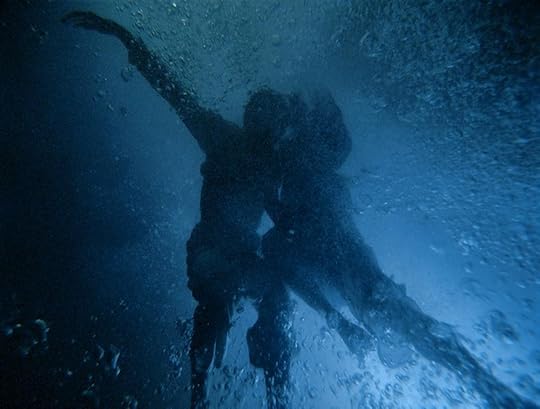
“There is no country, no town, no village that I can call my own. Everything is alien to me and I often gaze around, yearning for a glimpse of the land of Nirvana. But Nirvana quickly turns back into ‘Tristan’; you know the Buddhist theory of the origin of the world. A breath clouds, the clear expanse of heaven: it swells and grows denser, and finally the whole world stands before me again in all its impenetrable solidity.”
— Richard Wagner
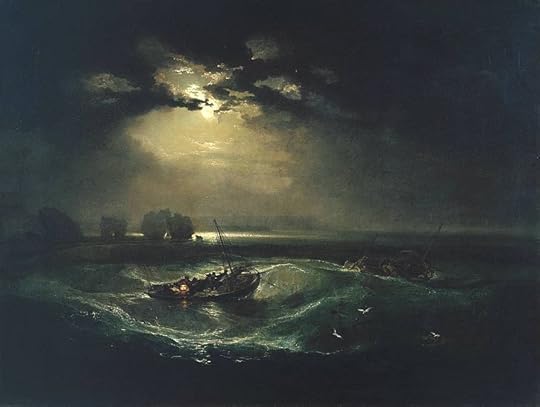
“…then am I
myself the world;
floating in sublime bliss,
life of love most sacred,
the sweetly conscious
undeluded wish
never again to waken.”
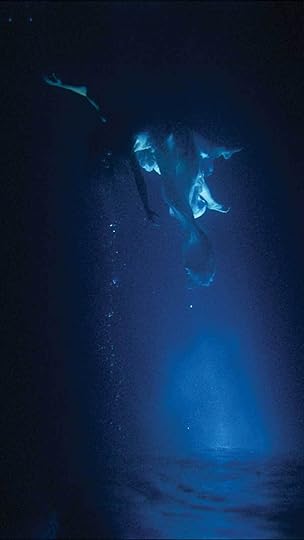
Solitude of night, take us away, cast us adrift in your depths, away from this waking dream.
“There is no country, no town, no village that I can call my own. Everything is alien to me and I often gaze around, yearning for a glimpse of the land of Nirvana. But Nirvana quickly turns back into ‘Tristan’; you know the Buddhist theory of the origin of the world. A breath clouds, the clear expanse of heaven: it swells and grows denser, and finally the whole world stands before me again in all its impenetrable solidity.”
— Richard Wagner
“…then am I
myself the world;
floating in sublime bliss,
life of love most sacred,
the sweetly conscious
undeluded wish
never again to waken.”
Solitude of night, take us away, cast us adrift in your depths, away from this waking dream.

November 15, 2021
Chapter 6, note 51, to the statement of Meyerhold's belief that in opera "Movements and gestures should therefore be rhythmic in character and carefully choreographed, presupposing a certain balletic elegance on the part of the performers.":
Meyerhold quotes approvingly from Der Tanz (Stuttgart, 1906) by the director of the Munich Künstler-Theater, Georg Fuchs: "The German' failure to recognize evn today the beauty of the human body is revealed no more clearly than here, where its absurd distortions are unbearable to watch: Siegfrieds with tight corseted "Bierhuas" bellies; Siegmunds with sausage-shaped legs crammed into tights; Valkyries who appear to spend their leisure in Munich beer halls over plates heaped with steaming offal and steins of foaming beer; Isoldes whose sole ambition is to play the part of fairground fat ladies and exercise their irresistible charms on the imagination of butchers' shop assistants" (Braun [trans. and ed.], Meyerhold on Theatre, 93f.).

December 29, 2011
I've not seen an actual performance of this one, but thanks to my father I've listen to the orchestral work by Wagner from his opera tristan and isolde. The opening: the famous Tristan Chord is amazing! After reading the script now, imaging the music while I was doing so was a great experience. I'm sure if I ever get the chance to see a performance, I have to revisit this and give six stars or something.

January 15, 2014
A very clear romantic novel, its rich vocabulary and expressions make it feel a great novel. It's not a happy-ending, obviously. It's all about an "impossible" love and after getting the "potion", its love is similar as breathe... impossible to live without it! It's not a typical story.. besides, Shakespeare, as our Catalan teacher said today, was influenced by this novel (among others) to write "Romeo and Juliet".
KEEP READING! :)
KEEP READING! :)

February 12, 2019
Le texte est beau. L'histoire, romantique à souhait. Le teste est disponible sur Gallica aussi pour ceux qui ne le trouvent pas en version papier.
Avec la petite fenêtre à gauche pour en faciliter la lecture mais bourré de fautes de frappe.
Avec la petite fenêtre à gauche pour en faciliter la lecture mais bourré de fautes de frappe.
February 20, 2010
The original love story.

March 4, 2011
Simply Amazing.

January 18, 2014
Recuerdo que estaba en nuestra lista de lecturas en literatura de prepa, pero nunca lo pudimos conseguir...muy buen libro! Me encantaría verlo en ópera!

February 24, 2019
At the time it was said: Is there one person who would call this art, poetry, or even German?
Displaying 1 - 30 of 65 reviews