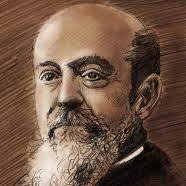
Lynn argues that the condemnation of eugenics in the second half of the 20th century went too far and offers a reassessment. The eugenic objectives of eliminating genetic diseases, increasing intelligence, and reducing personality disorders he argues, remain desirable and are achievable by human biotechnology. In this four-part analysis, Lynn begins with an account of the foundation of eugenics by Francis Galton and the rise and fall of eugenics in the twentieth century. He then sets out historical formulations on this issue and discusses in detail desirability of the new eugenics of human biotechnology. After examining the classic approach of attempting to implement eugenics by altering reproduction, Lynn concludes that the policies of classical eugenics are not politically feasible in democratic societies. The new eugenics of human biotechnology--prenatal diagnosis of embryos with genetic diseases, embryo selection, and cloning--may be more likely than classic eugenics to evolve spontaneously in western democracies. Lynn looks at the ethical issues of human biotechnologies and how they may be used by authoritarian states to promote state power. He predicts how eugenic policies and dysgenic processes are likely to affect geopolitics and the balance of power in the 21st century. Lynn offers a provocative analysis that will be of particular interest to psychologists, sociologists, demographers, and biologists concerned with issues of population change and intelligence.
British Professor Emeritus of Psychology, who is known for his views on racial and ethnic differences.
Lynn was educated at Cambridge University. He has worked as lecturer in psychology at the University of Exeter, and as professor of psychology at the Economic and Social Research Institute, Dublin, and at the University of Ulster at Coleraine.
Most of his books are about the differences of IQ between different etnicities.
This is an excellent book, with the drawback that Lynn has already written the same book at least twice - in Dysgenics (much cheaper and nearly as good in content) and IQ and Global Inequality, and pretty much the same book with some theorizing as Race Differences in Intelligence: An Evolutionary Perspective.
Regardless of any shortcomings in this book it is the best presentation of Lynn that I've read, and I am absolutely and utterly convinced of its conclusions and the necessity to take action to prevent them.
Lynn syllogistically, apodictically demonstrates that a eugenic state will either cause other states to adopt eugenic programs or will achieve global hegemony, a conclusion echoed from Galton's seminal Hereditary Genius: Lynn believes this will be China, as the only state of appreciable size (i.e. not Singapore) with an active eugenic program, and that lack of political will in the West will disable a Western response.
Lynn begins by tracing the concept of eugenics in history, its rise, nigh-universal acceptance, and fall, and how it was unfairly blackened by association with real and alleged National Socialist war crimes (for more background on this see McDonald, 'The Culture of Critique', 2013 Kindle ed., chapters on Boasian anthropology and the Frankfurt School, and MacDonald 1998/2004a passim). Lynn points out correctly that any social policy can be abused.
He then goes on to demonstrate dysgenesis over the past century (see also Dutton, 'The Genius Famine', Lynn 1996) and some of the perverse incentives that have aided and abetted it and overviews previous eugenic proposals and models of intelligence (he focuses mainly on intelligence as the factor to select for and the one under dysgenic pressure) before reaching the meat of his argument: a tripartite division of eugenics in to:
1. POSITIVE EUGENICS (increasing the birth rate of desirables: physically and psychologically healthy individuals of high IQ), and the means by which this can be done (financial incentives, tax support, changing cultural and employment patterns), with a conclusion that the Western liberal political environment disallows it;
2. NEGATIVE EUGENICS (decreasing the birthrate of physically and psychologically unhealthy individuals of low IQ), and the means by which this can be accomplished (parental licensing, provision of birth control, free access to abortion for undesirables and teenage mothers, withdrawal of welfare from multiply single mothers, long-term birth control as a requirement for receiving welfare, up to sterilisation [which is what gave eugenics a 'bad name' as if unfit parents have a right to children]).
He reviews literature on interventions that have been attempted wrt provision of sex education and birth control and finds it ineffective in decreasing dysgenic fertility (this can be attributed to high time preference and extreme hedonistic present-orientation amongst the underclass). He also demonstrates that undesirable parents abuse, neglect, rape, and murder their children at high rates, with over 90% of abuse occurring in the lowest IQ quartile, putting the lie to 'abuse occurs equally everywhere, no matter race or status'.
He then likewise concludes this is even more politically impossible than positive eugenics to implement in Western liberal democracies, and
3. NEOEUGENICS, or the use of biotechnologies such as IVF, embryo screening and selection, and ultimately germline engineering, to enable each set of parents to produce the best offspring they are capable of. He concludes that this is inevitable, and palatable to liberal democracies as long as not done for professedly eugenic purposes (viz. screening for severe abnormalities and genetic diseases and aborting the foetus, as is done with amniocemtesis and trisomy 21), but will inexorably be done with eugenic intent, starting with the rich and (maybe) trickling down to the middle class, or more likely causing a sharp genetic stratification between the 'haves' of neoeugenics and the 'have nots', to a degree unimaginable even to readers of Herrnstein and Murray.
In 'Eugenics', Lynn comes the closest he ever did to overcoming his weakness as a scientific annalist (he is no theoretician, unlike Rushton) here, but not quite; he also conflates studies with very different confidence intervals and p values in the same table, marking the differences in a footnote but reducing the tables to 'maybe trends' often lacking statistical significance.
Като цяло, книга за евгениката не е писана от 70-те, като и преди това популярността на тази дисциплина е постепенно западаща. Настоящата книга има за цел да опише какво точно Е евгениката, каква е била исторически, какви са нейните цели, методи, по какъв начин тя е била прилагана и се прилага в момента, както и какви са перспективите пред нея в бъдеще.
Има какво да се научи от книгата, главно защото през изминалите години евгениката преминава през процес на обществена "демонизация", като единственото, което се говори за нея е избиването на евреите и циганите от нацистите, стерилизирането на инвалиди пак от тях и опити за създаването на "чиста раса" и "супер човек" отново и отново от нацистите.
Това, което е "добре забравено" в наши дни обаче е, че преди Втората световна война евгениката е била изключително модерна и добре приета в повечето интелектуални кръгове по света до степен правилността й да се смята за очевидна от повечето интелектуалци, политици и общественици, а много държави, вкл. скандинавските, прилагат евгенични практики като задължителна стерилизация на слабоумни, затворници и т.н чак до 60-те и 70-те.
Основната теза на евгениката е изключително лесна за разбиране и доста добре представена в първите 2 минути от филма Идиокрация ( https://www.youtube.com/watch?v=YwZ0Z... ) - накратко, в съвременното общество, където никой не мре от глад и бедност, глупавите имат повече деца от умните и тъй като интелигентността е основно наследствена, постепенно обществото ни се изпълва с все повече глупави и все по-малко умни хора. Привържениците на евгениката смятат, че това не е добре и се опитват да вземат различни мерки, за да го променят.
Накратко, мерките са най-различни, като започнем от обучение по сексуална култура и контрацепция, възможност за аборти, различни форми на детски надбавки и социални плащания формирани така, че да не стимулират хората да имат деца, за които не могат да се грижат, различни политики относно емиграцията и т.н.
Книгата е написана систематизирано, просто и ясно и дава основна информация по въпроса. Като недостатък може да се спомене, че авторът си е позволил на места идеологическият му устрем да се ... устреми малко по... устремно отколкото реалността му дава основания да го направи и в книгата има някои пасажи относно бъдещето на света, които очевидно са в сферата на по-скоро на фантастиката.
A very comprehensive book on eugenics by one of its leading advocates in the academia. Beginning with the history of the eugenics movement in the early twentieth century, Lynn explained its foundation and its rise and decline in the west. He then moved on to elucidate the objectives of Galtonian eugenics and cleared up many historical misconceptions surrounding the practice. For example, Lynn asserted that contrary to popular beliefs, the Nazis did not kill the Jews on eugenic grounds. He also argued that much of the killing carried out in the Nazi euthanasia program was not justified on the basis of Darwinism or eugenics.
Lynn dedicated two parts of the book to discuss about the desirable traits that should be selected in an ideal eugenic program, and how such program may be implemented in western liberal democracy nations. The last part of the book is a review of how a new form of eugenics may be effected through the use of biotechnologies that have been developed in the beginning of the twentieth-first century, and the future of the movement.
While I am not very convinced by the scientific arguments Lynn put forth on the practicality of eugenics, I find the moral arguments by Lynn to be very compelling. I love how Lynn shows that many of the moral arguments against eugenics are just so fallacious and would equally-well apply to many of the activities that our society has zero problem engaging in at present. I have always been interested in eugenics, and this book is a great primer on the movement, the practice, and the history of the idea. This is a great book for anyone who is interested in knowing more about eugenics, even those who are critical of it.
Lost stars for this statement, which is repeated many times: "This reversal in attitudes towards eugenics was due principally to the increasing priority accorded to individual rights over social rights, in particular the right of those with genetic disorders and mental retardation and criminals to have an unlimited number of children and to transmit their disabilities and pathologies to future generations at the expense of social rights, one of which is the right of society to protect itself against the social costs incurred when these groups have children". This is, ironically, a total failure to apply hereditarian and eugenic thinking to the meta-problem of the rise and fall of the eugenics movement itself. Quite simply, by the time eugenics came out, the West was already deep into dysgenics, with the rise of feminism and anti-racism already apparent. The movement was neither fast nor effective enough; Lynn discusses how the Nazis of all people, the ones alleged to have a eugenics dictatorship, sterilized a but couple hundred severely behaviorally diseased people during their rein. A few decades later, time was up, and there was no longer enough stock to constitute a eugenics movement, because everyone was too far left; dysgenics had been increasing leftism the whole time thanks to mutational pressure and the lack of selection pressure. The moderately left eugenicists never seemed to realize this, and Lynn had nothing to say about it except for this out of place wordcel quip about "rights" and attitudes towards the "different types of rights." what is this, John Locke?
comprehensive, clear, and generally objective treatment of eugenics; its history, its scientific background, its rationale, its attempted and future implementations, big picture predictions for the course of the future.
Sort of a boring read tbh, Lynn organizes various sections to discuss approaches to eugenics. Funnily, I’ve heard many ideas discussed mentioned by folks from anarchocommunists to ancaps to fascists to capital N neoliberals.
A comprehensive discussion of eugenics as of the end of the 20th century. The book details how eugenic policy would be implemented and if it is feasible under certain social and political conditions. I will definitely keep a lot of these recommendations in mind.
The only problem I have with the book is the authors speculations on geopolitics. They are a bit presumptive. He probably underestimates white people’s willingness to use eugenic policies to enhance their populations when push comes to shove. He’s also overestimating the unity of East Asia and Europe for that matter. Although his broad outlines on the fate of the United States I do agree with.
Geopolitics does not unfolded in clean predestined ways, but besides that an excellent book.