An Anchor Books OriginalSeventy-four distinguished writers tell personal tales of books loved and lost–great books overlooked, under-read, out of print, stolen, scorned, extinct, or otherwise out of commission.Compiled by the editors of A Literary Magazine , Lost Classics is a reader’s an intriguing and entertaining collection of eulogies for lost books. As the editors have written in a joint introduction to the book, “being lovers of books, we’ve pulled a scent of these absences behind us our whole reading lives, telling people about books that exist only on our own shelves, or even just in our own memory.” Anyone who has ever been changed by a book will find kindred spirits in the pages of Lost Classics .Each of the editors has contributed a lost book essay to this collection, including Michael Ondaatje on Sri Lankan filmmaker Tissa Abeysekara’s Bringing Tony Home , a novella about a mutual era of childhood. Also included are Margaret Atwood on sex and death in the scandalous Doctor Glas , first published in Sweden in 1905; Russell Banks on the off-beat travelogue Too Late to Turn Back by Barbara Greene–the “slightly ditzy” cousin of Graham; Bill Richardson on a children’s book for adults by Russell Hoban; Ronald Wright on William Golding’s Pincher Martin ; Caryl Phillips on Michael Mac Liammoir’s account of his experiences on the set of Orson Welles’s Othello , and much, much more.
Gathered here, an impressive array of literary heroes from Margaret Atwood to Edmund White recall a memorable book, almost lost to them, but fondly reconstructed for this edition. The best kind of anthology, even the few essays here by authors I don't particularly fancy, or books I have no intention of reading, proved to be be interesting.
And of course there are the gems that intruige and have jumped into my tbr list. Already some of these titles have been transferred to my eternal quest list, as, like the title indicates, many of these classics are lost. Some of the authors are still listed in the new data bases but most of them are not, however lauded their books in their time. Some of them are rumors. I have heard of Haldor Laxness and Philip Levine and Paul Eluard although the library hasn't.
Where shall I find find them? At least they are no longer lost to me, and as long as a book is remembered, it is not entirely lost.
The subtitle of this book pretty much says it all: “Writers on Books Loved And Lost, Overlooked, Under-read, Unavailable, Stolen, Extinct, or Otherwise Out of Commission.” The writers are mainly Canadian and American, but Australia, Japan, France, Spain, the UK, and Ireland are also represented. The wide assortment of essayists includes Margaret Atwood, Russell Banks, Anne Carson, Robert Creeley, Jeffrey Eugenides, John Irving, Philip Levine, Alan Lightman, W.S. Merwin, Michael Ondaatje, Colm Tóibín, and Edmund White. Warning: This book could be dangerous to your to-be-read list....
Here's the thing. Avid reader can be really snobbish. They want to make sure they've read all the "in" books (including the pretentious ones I suppose) but they also want to be seen as discerning reader, the one that read the marvelous book that nobody else is smart enough to find. Is that why I was reading this? To find some forgotten jewel of a book, read it and stick my nose up on the air? maybe..........softly i whisper my answer..
3stars... some of them couldn't be defined as lost in any interpretation. most are interesting not because the book itself is interesting but the way the writer told it.
It's kind of a literary sampler, and "Lost Classics" probably reveals a lot more about the 74 contributors than the titles they have personally selected as elusive lost classics. Beyond their general obscurity, the common thread in most of the choices is that the champions of each book are delighted with how inventively and persuasively their authors use language to communicate. Most enjoyable are the remembrances from childhood and adolescence where books are truly discovered for the first, but most certainly not the last time. It would be a great waiting room book.
It's a nice anthology. Lost, overlooked, loved, and forgotten authors write about loved, lost, and overlooked books. My reading list grew exponentially.
A cute idea for a collection of book reviews, but the title is not accurate. The vast majority are not ‘classics’ in any sense of that meaning. The subtitle is better: Writers on Books Loved and Lost, Overlooked, Under-read, Unavailable, Stolen, Extinct, or Otherwise Out of Commission.
But here’s an even more accurate description: Mostly obscure books by mostly obscure authors that some relatively famous authors think are good reads.
There are 71 books reviewed by 71 authors. The vast majority are fiction with a few non-fiction mixed in. I think a few of the books reviewed might indeed qualify as classics: Lost Horizon by James Hilton, Jigsaw by Sybille Bedford and The Good Soldier by Ford Maddox Ford.
To be honest, I’m not familiar with the names of the vast majority of the ‘famous’ authors doing the reviewing. Here are ones I recognized: Michael Ondaatje (one of the editors of the book), John Irving, Margaret Atwood, Russell Banks, W. S. Merwin, Anchee Min, Colm Toibin and C. K. Williams.
Here are a few passages that struck me for one reason or another, so this gives you a random sample of what you will find in this book:
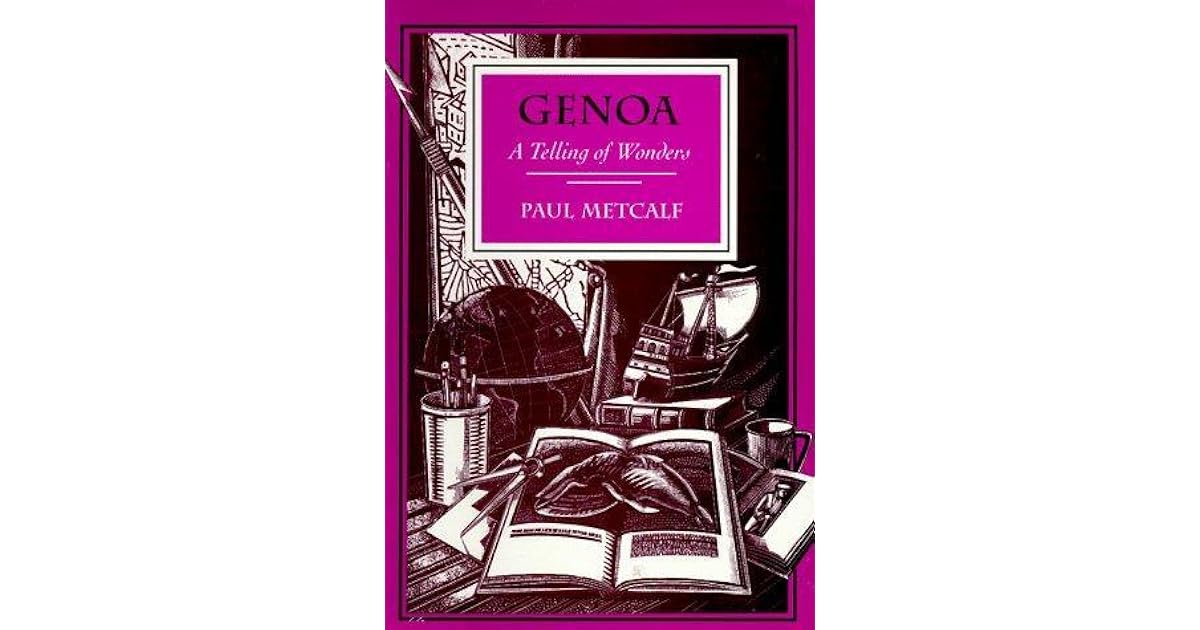
In Joanna Scott’s review of Genoa by Paul Metcalf she writes: “To make something new we must accumulate information and consider, if not fully comprehend, the possibilities of association between unrelated subjects, such as…” She then goes on to list eight unrelated readings such as Melville’s Mardi and Grey's Anatomy.
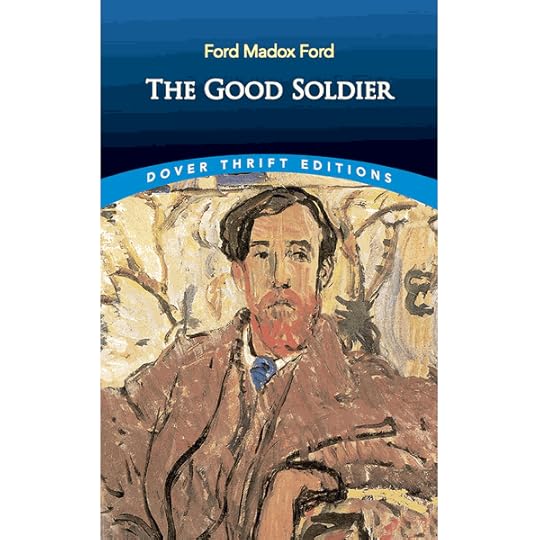
In Andrew Pyper's review of The Good Soldier by Ford Maddox Ford he quotes Iris Murdoch’s response to the question ‘What makes a great novel?’ Her answer was “the story provides something for everyone.” Pyper goes on to say “By this Murdoch didn't mean pandering to satisfy a broad audience, but the synthesizing of every rhetorical tool available to the writer to create a new and particular world that somehow also gives us a sense of the universal.”
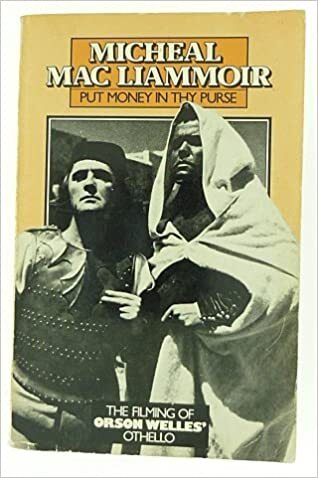
Caryl Phillips reviews Put Money in Thy Purse by Micheal Mac Liammoir, a book about the filming of Orson Welle’s Othello, “…one of the truly great transpositions of Shakespeare to film. It is full of shadowy suggestion, unusual camera angles, big close-ups, and dazzling montage; it is Shakespeare as film noir.”
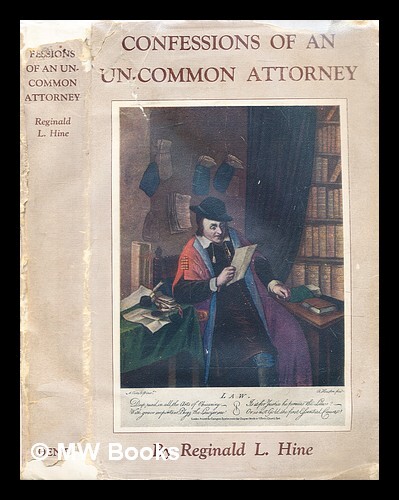
In reviewing the book, Confessions of an Un-common Attorney by Reginald Hine, Douglas Fetherling tells us “Like Thoreau, who said that he had traveled widely in Concord, Hine found the universe in Hitchin. One doesn't need to know or care much about the actual place to understand how perfectly it illustrates how even today the roots of English society go deeply into medieval and postmedieval soil.”
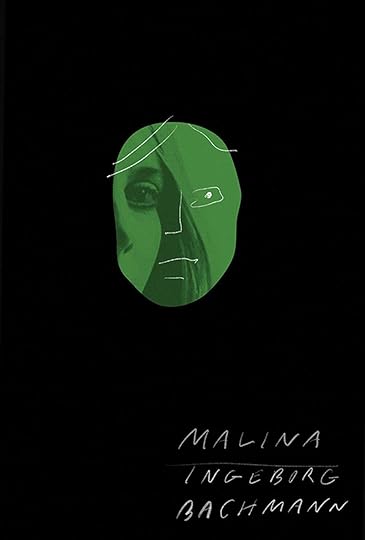
Robert Boyers reviews Malina by Ingeborg Bachmann: “Malina is a first-person novel told by an ‘unknown woman,’ a writer who is more than a little bit mad and more than a little bit brilliant...Malina is not an easy or comforting book. It is rife with anomaly and grievance, with paradox and hysteria. When it is determined to be positive, to renounce perversity and malice, it mistrusts its own tender sentiments and reverts more or less inevitably to its characteristic accent: a compound of the desperate and accusatory. Occasionally fabulist and escapist, the novel is more usually apocalyptic and prophetic.” [Sounds fascinating!]
If you are interested in the table of contents to see all the recommended books, their authors, and who reviewed them, you can find this book on Amazon.com and then click “see inside” even though there is not a book cover picture posted. I tried to copy and paste the table of contents into this review, but no luck.
I'm glad that this book will help some other books get rescued from oblivion. I found several I’d like to read.
Lost Classics is a surprising pleasure. Where many such compilations can read very scripted, like dull Wikipedia entries, this Micheal Ondaatje editted collection of short essays really hits the right note. It's not exactly conceptual, but Lost Classics is really a collection that becomes a unified whole. The premise is to ask writers, a few famous names included, to write about books they consider 'lost' yet worthy of note. The responses are diverse, each 2-3 page entry focussing on one piece of literature (poetry, plays, children's books, historical text - the entire gambit of the written word is included and given the same weight and importance) and why it is valuable. Either by design or by accident, the book addresses the question of what a 'classic' book is and, simultaneously, acts as an elegy to both the act of reading and the beauty of the book as a physical medium. The stories tell of books physically lost, books forgotten and remembered, books searched for in second-hand book shops, books ignored and rediscovered, books published long after their author's death, books underappreciated. But most importantly they tell of books that have a special place in someone's heart. The essays are about the strange and wonderful attachment we have to certain books, how they dig their way into our being and remain there indefinately.
With around 100 essays not every book or essay with appeal. But that isn't the point. There are essays that spark a desire to read the subject matter but one would be unlikely to discover one's own lost classic in these pages. That is entirely the point; these personal choices reveal stories within stories. They are deeply personal and, occasionaly, very emotional. Styles vary greatly. Some essays are purely critiques, journalistic and analytical in tone. Many put forward an argument for the book in question, why they deserve to be read and recognised. Others simply tell the story of the books discovery -a sole copy of "The Journey of the Stamp Animals" is discovered in the possession of its aging author, for example. Some spark journeys or searches, others correspondance between reader and writer. Others tell the history of a place and the texts that reveal them - Johnston's essay on the disappeared literature of Newfoundland is a fascinating piece of literary excavation. There are essays that seek to justify and raise up their forgotten authors like Rusell Banks on Barbara Greene's (cousin of Graham) travelogue. It's remarkable how convincing some of these peices are. In two pages Banks makes his case for Barbara Greene's importance and it is thoroughly persuasive.
We've got everything from Roo Borson discussing Jawaharlal Nehru's "Glimpses of World History", an epic undertaking completed while Nehru was in prison, to the seemingly Banal piece by Carole Corbeil about the memories that surround her reading of "Bernadette" a French girl's magazine. The whole collection makes its own arguments for the value of the written word, in every form. This equality of the written text belies the elitism of the titular 'classics' and shakes up the definition of the term. Some of theses are clearly personal classics and not for everyone, but the same can be said of every book. Each reader create their own canon. Is quickly explored some of the suggestions here - "Address Unknown" by Kressman, "The Five Nations" by Kipling, "The Mouse and his Child" by Hoban, "Lepandu" by Don McKay, "All About H. Hatterer" by G.V. Desani - all intriguing and some wonderful. Of course my own 'lost classics' would be very different and very personal. In fact my own definition of a 'classic' would be different from most of the writers on display here. It all points to the diversity and beauty of the way we tell own stories.
Among the texts here are many writers who approached taboo subjects or who were out of time. An essay on Juan Goytisolo, the untitled "Smut" or "The Story of Harold" by Terry Andrews all deal with sexuality in difficult contexts. There are books lost in translation, or never translated, from outside the English speaking world - "I Want to Go To School" by Yu-pao Gao, "The Ten Thousand Things" by Maria Dermout, "Doctor Glas" by Hjalmar Söderberg, "Malina" by Ingeborg Bachman or "Capital of Pain" by Paul Eluard - and a few forgotten books by recognised authors - Kipling, Golding, Stendhal, Bulgakov, Ford, Ryunosuke - all displaying the incredible depth and colour of own literary world. The book is ended appropriately with an essay by Javier Marias on the disappeaing joys of second-hand book shops. True enough, in the age of the Kindle a lot of these books are easy enough to find, signifying the fantastic rediscovery of many of these lost classics. However, there is a hint of fear in Marias's conclusion that this mystique of the lost and found book, of the very personal book that feels like it belongs to you and you alone, is a thing of the past.
There are too many to mention and a huge proportion of the essays here are of the highest quality. They manage to be interesting whether or not the subject matter appeals. To demonstrate the range, one essays merits a mention, Micheal Turner on "The Bells of Russia". He tells the story of a book written by a member of his family which he is forbidden to read. By the time he grows up enough to be allowed to read this mysterious book, it has departed with his ejected father and he never sees it again. An essay on a 'lost classic' that has never even been read seems to sum of this brilliant collection - a book that leaves a mark on us and our memories without ever being opened. That speaks to the power of books on our consciousness more than anything else. 8
This book sounded interesting and I figured that I was either going to give up within 50 pages, or I'd love it so the most I'd waste is a little bit of time. Books about books tend to be polarising like that. Luckily for me, this book was under "love it" for me.
Lost Classics contains 74 recommendations from various authors (I've heard of two of them, have read maybe one). All the books recommended here are somehow lost, and some of them are just books that the authors met and was unable to read on their reading journey.
What I enjoyed about this book was the sheer variety of books that were recommended. Not every book appealed to me but plenty of them did and now I have a list of books that I'd want to read but probably won't get the chance to. And just so I've written them down somewhere, the books are:
- Too Late to Turn Back by Barbara Greene
- Codex Seraphinianus by Luigi Serafoni
- Glimpses of World History by Jawaharla Nehru
- Classics Revisited by Kenneth Rexroth
- The Five Nations by Rudyard Kipling
- Bernadette, French Girl's Annual
- Beyond the Pawpaw Trees by Palmer Brown
- Address Unknown by Kressmann Taylor (sounds like a really powerful short story set in Nazi Germany)
- The Gate of Horn by G. R. Levy
- The Mouse and His Child by Russell Hoban (it sounds like a lost fairytale which is amazing)
- The Peterkin Papers by Lucretia P. Hale
- The Ten Thousand Things by Maria Dermout (apparently this book is set in Indonesia)
- Jigsaw by Sybille Bedford (sounds like a great autobiography)
The problem with having all these books on my TBR list is that they're lost. I hope that with the advent of the ebook, most of these books will once again be available to the general public. After all, one of the advantages of ebooks is that you don't have to print hundreds of books at a time, which means that you can have books available for the proverbial "long tail."
Fingers crossed.
P.s. Anyone have their own lost book? I have quite a couple but I'm working on getting a copy of them. It's a good thing that the internet exists because I doubt I'd find the books in Singapore or Japan (and anyway I need the internet to find their titles).
Some of my "lost classics"
- The Girl With the Green Ear by Margaret Mahy: It took me forever to find this book (which was really lovely), but it was totally worth it. It makes me want to go and find more of my personal "lost classics".
- The Year of Miss Agnes: I do not remember much about the book, except that it was about a wonderful teacher and I read it while on vacation or just before a vacation (to Genting - anyone used to go there all the time too?) and I don't know, it just stuck with me. Can't even describe why. And I remember the smell of fish.
- True Blue: Read with The Year of Miss Agnes and I went back to MG and snuck into the library to search for this.
- The Search for the Lost Keystone: Actually found this in Singapore, so yay! But I loved the description of the house in this book and that stuck with me for a long time. I also forgot the title but remembered it had the word "stone" in it and eventually found it. Rereading it was pure joy.
“... [Borges] writes of a certain class of objects, very rare, that are brought into being by hope.” 92
This collection of “Lost Classics,” selections from the series in Brick Magazine, celebrates the hope and wonder with which books — especially books we’ve loved and lost — enrich our lives. Highlights for me were the pieces by Margaret Atwood, Javier Marías, Laird Hunt, Michael Ondaatje, Jim Moore, Michael Helm, and Steve Heighton.
“A book that we love haunts us forever; it will haunt us even when we can no longer find it on the shelf or beside the bed where we must have left it. After all, it is the act of reading, for many of us, that forged our first link to the world.”
This book is 20 years old and the books in it are largely unknown and mostly recommended by Canadian authors. If you are one of our friends north of the border, you may connect with these essays more than I did. Some of the choices are quite odd. Just a meh from me.
An enjoyable read. There are some books that peaked my interest, a few I have already read, and also some of the reviewers styles of writing made me want to check them out too. A good book for reading in snatched moments.
I picked up Lost Classics because one of its essays reviews the Codex Seraphinianus--a book I'm mildly obsessed with at the moment. The essays, like the books they review, are a mixed bag. Some are wonderfully written odes to lost gems, and I've added several books to my "to read" list because of them. Some are deeply personal descriptions of childhood reading experiences that can never be recovered. Some I just don't get, but that's okay. Many of the reviews are for books of poetry, and there are a lot of British and Canadian authors represented.
I absolutely adore this book. Originally, I bought this book solely for the essay about Terry Andrews’ The Story of Harold; this is also the only essay in this book that I considered shite. Besides that, this book has introduced me to brilliant insights and books I would love to read in the future. I lost my physical copy of the book though, since my philosophy professor stole it. Oh well. I have an online version too. Regardless - brilliant book!
This volume contains essays about various writers' favorite books that have slipped between the cracks. Lost Classics is much more interesting reading than many 'I recommend this book' books, which tend to repeat the same small number of boring bestsellers and ephemeral mid-list books about the fad-of-the-day.
Different people describe a favourite book that is out of print now. Actually a very enjoyable little book but frustrating because you know the books are not available. Interesting idea though. Like a conversation between friends.
Loved the premise of this book (reminiscing about books that are "lost," in every sense of the word), but it was frustrating to read about so many great books I'll probably never get my hands on. There are a few I will try to track down (Barbara Greene's "Too Late to Turn Back," Palmer Brown's "Beyond the Pawpaw Trees," and Phyllis Hay's "The Journey of the Stamp Animals"), but the rest will remain lost to me. My favourite essays in the collection explained how one book changed an author's life, usually during early adolescence.